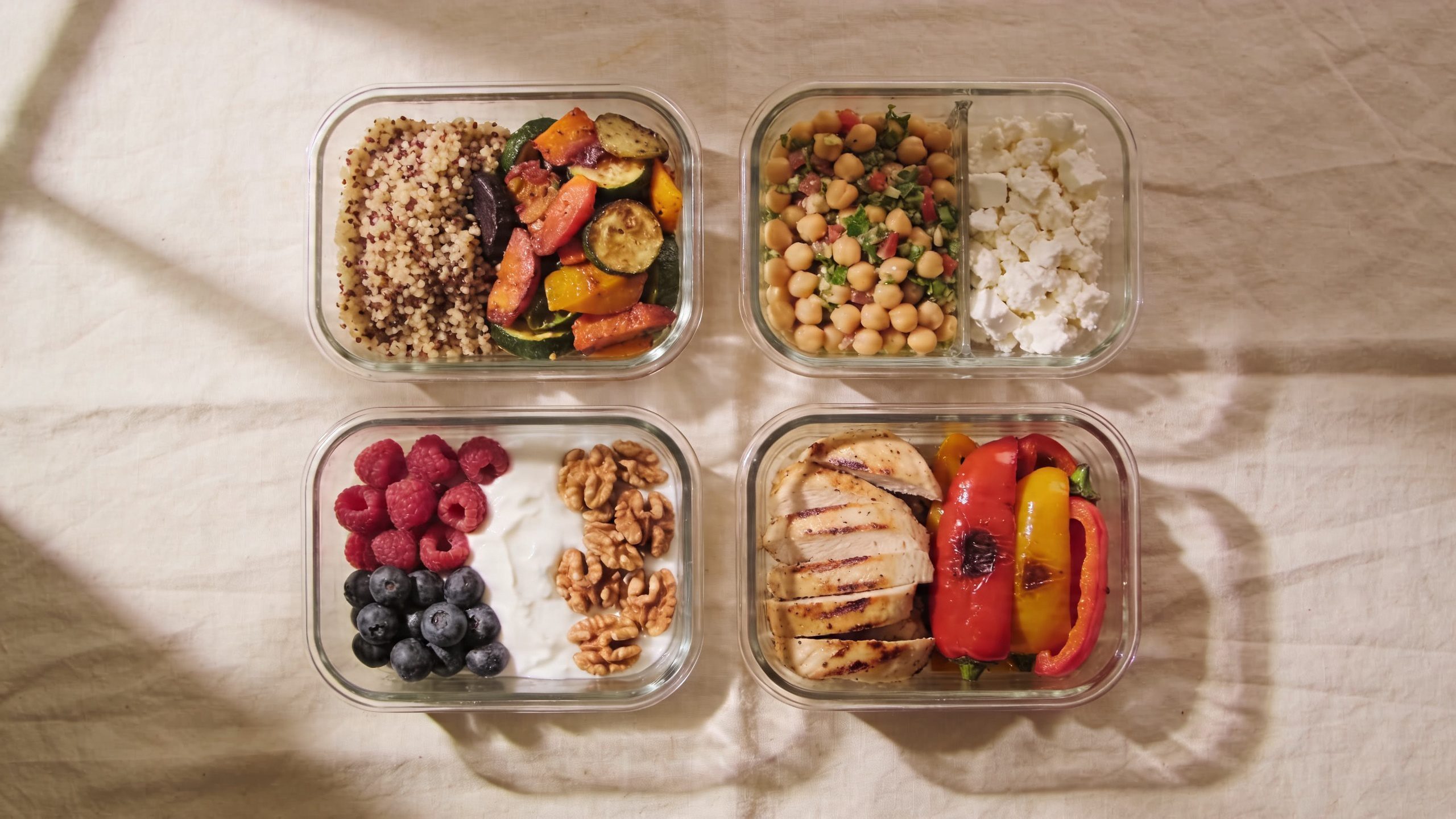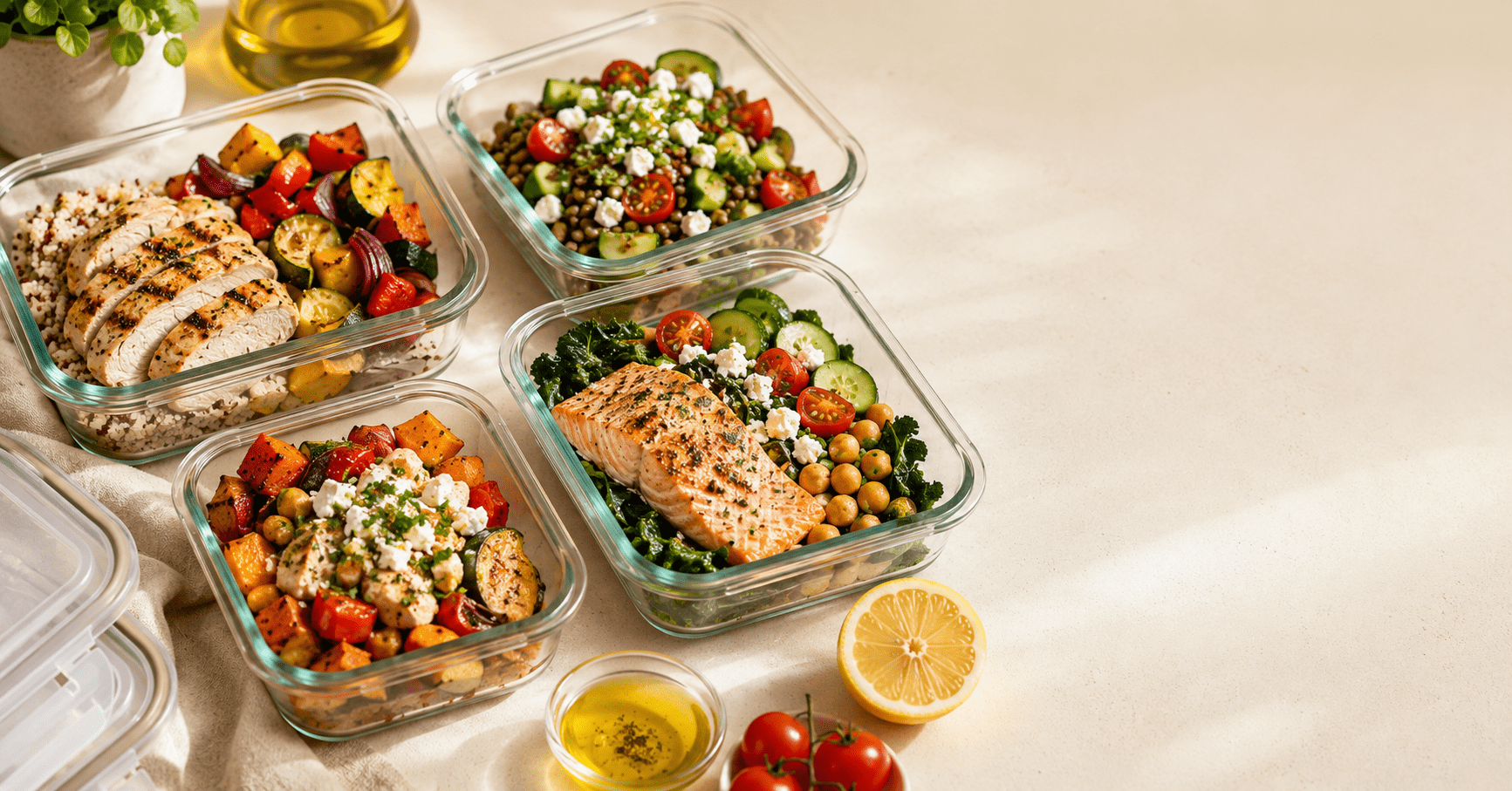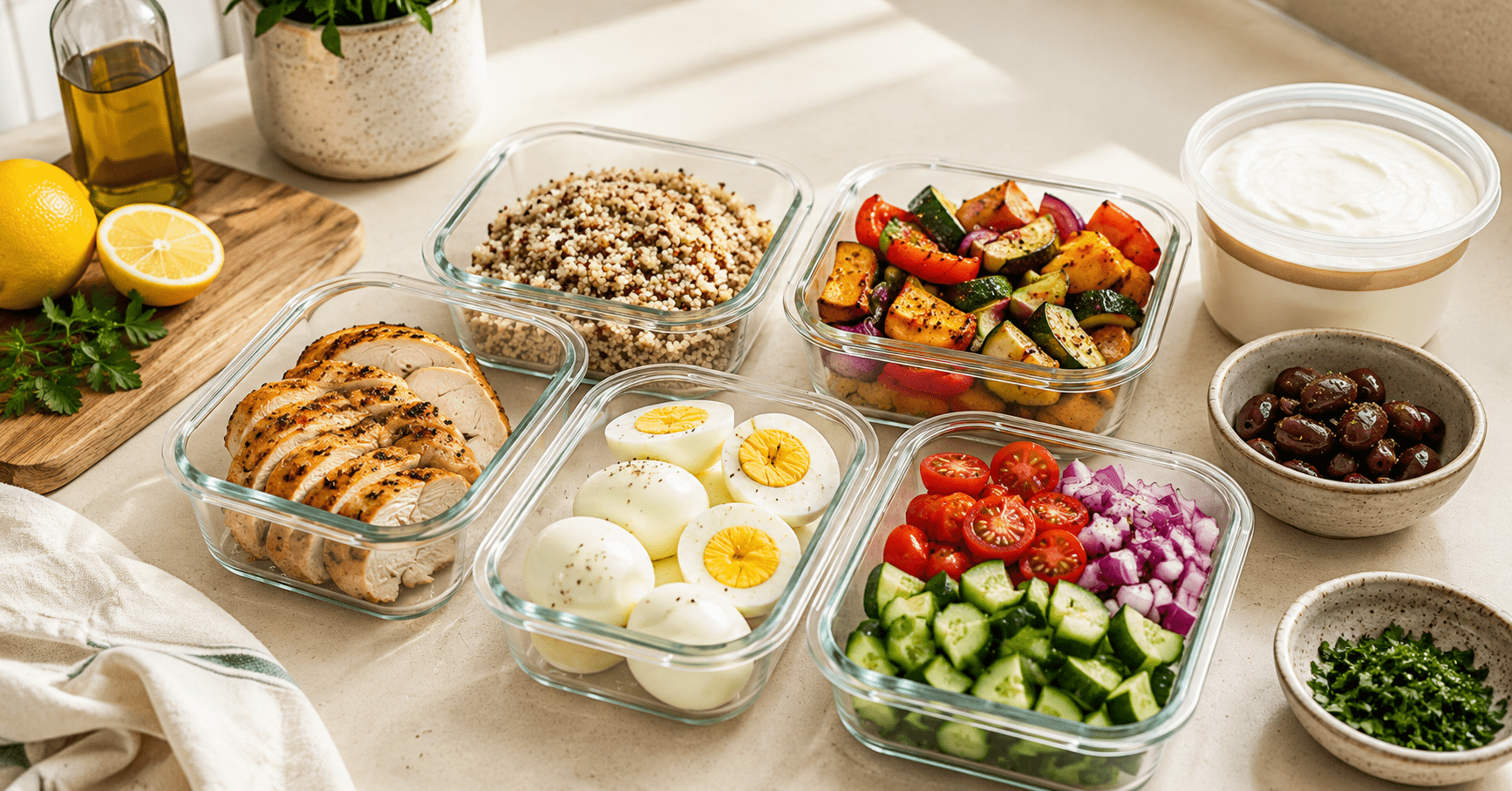
Meal prep sticks best when it’s built around a few reusable components you assemble fresh, not identical pre-made containers that go stale by midweek. This is the simpler system that actually held up.
I will be honest with you. I have never been the person with fifteen identical containers lined up in the fridge on Sunday. I tried it, and by Wednesday the food was tired, a little sad, and I did not want to eat it. I love food that tastes fresh, so heavy meal prep never stuck for me.
What did stick is something simpler, and it changed everything: I prep components, not finished meals. A few proteins, a grain, some chopped vegetables, ready in the fridge. Then all week I assemble real, fresh-tasting, high protein meals in about five minutes. That is the kind of high protein meal prep for the week that actually works, and that actually keeps you full.
What high protein meal prep actually means
Here is the direct answer. High protein meal prep for the week means preparing protein-rich components ahead of time so that every meal you assemble is built to keep you full. The goal is at least 25 to 35 grams of protein per meal, which is what holds most people for hours.
You do not have to cook full meals in advance. In fact, prepping components instead of finished plates keeps everything fresher and far more flexible. You cook the time-consuming parts once, then mix and match all week.
What nobody tells you about meal prep
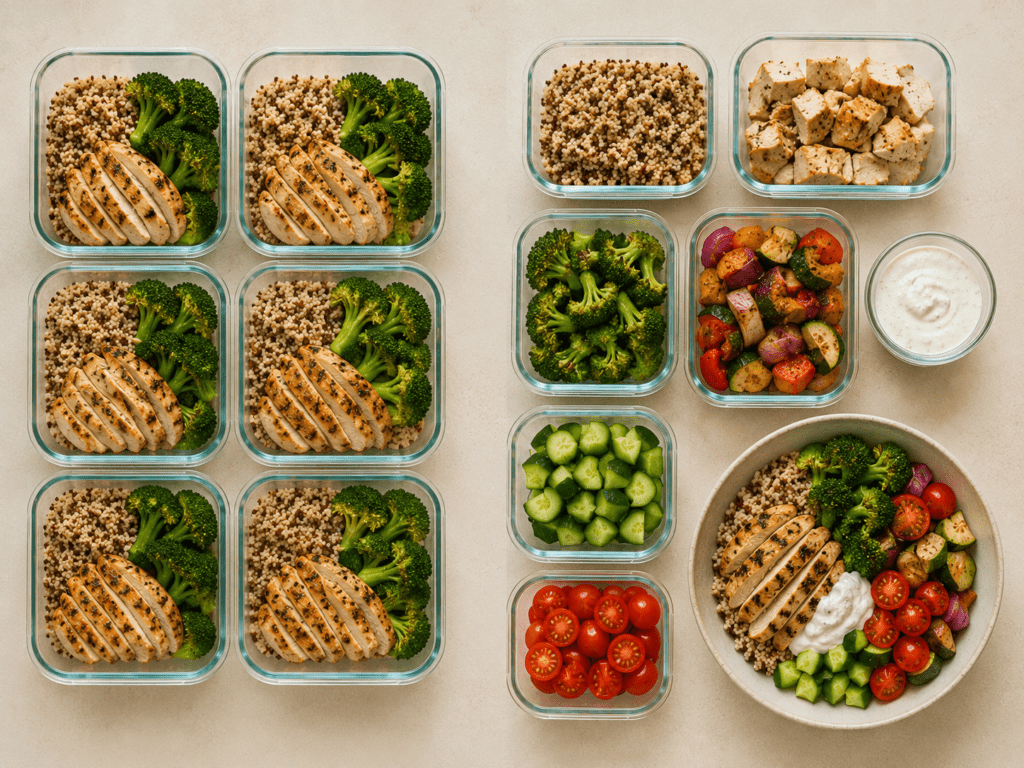
The version of meal prep all over the internet, fifteen identical containers, every meal decided for the week, is exactly why most people quit it. Eating the same thing out of a container for five days straight is joyless, and the food degrades fast. No wonder it does not last.
Meal prep does not mean cooking your whole week on Sunday. It means doing the slow parts once so the rest of the week is fast. That small shift is the difference between a habit that sticks and one you abandon by Tuesday.
I realized the goal was never to pre-make every meal. It was to remove the friction that makes you grab something fast and unsatisfying when you are hungry and tired. Prep the components, and the healthy choice becomes the easy one all week.
The simple high protein prep method
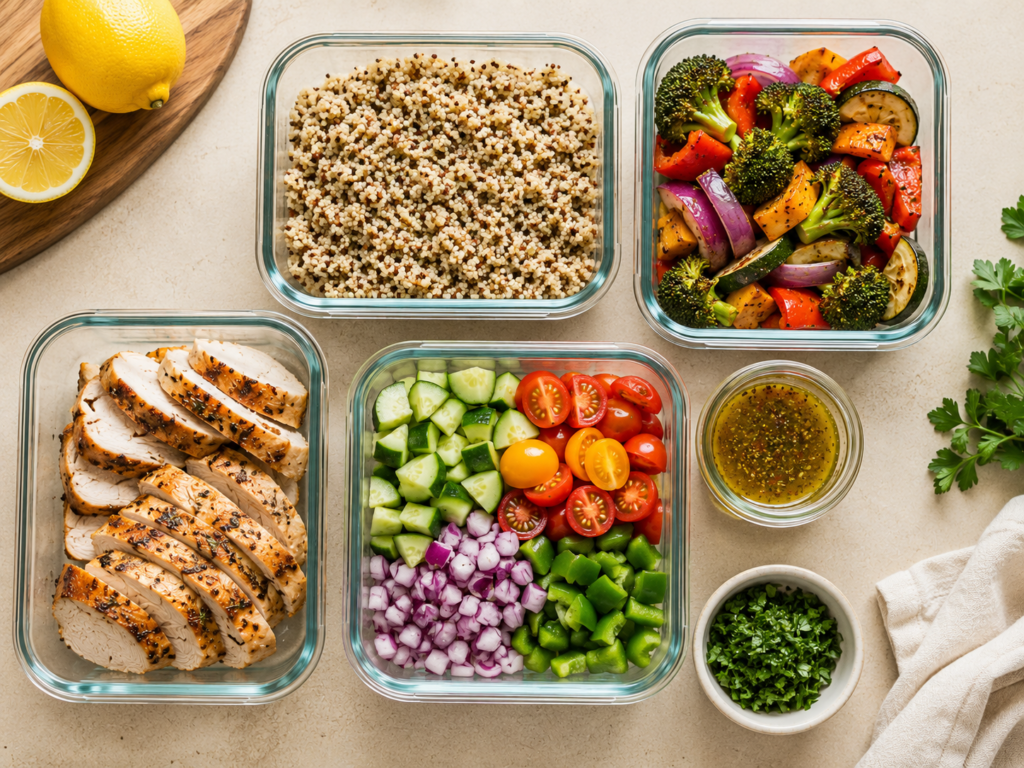
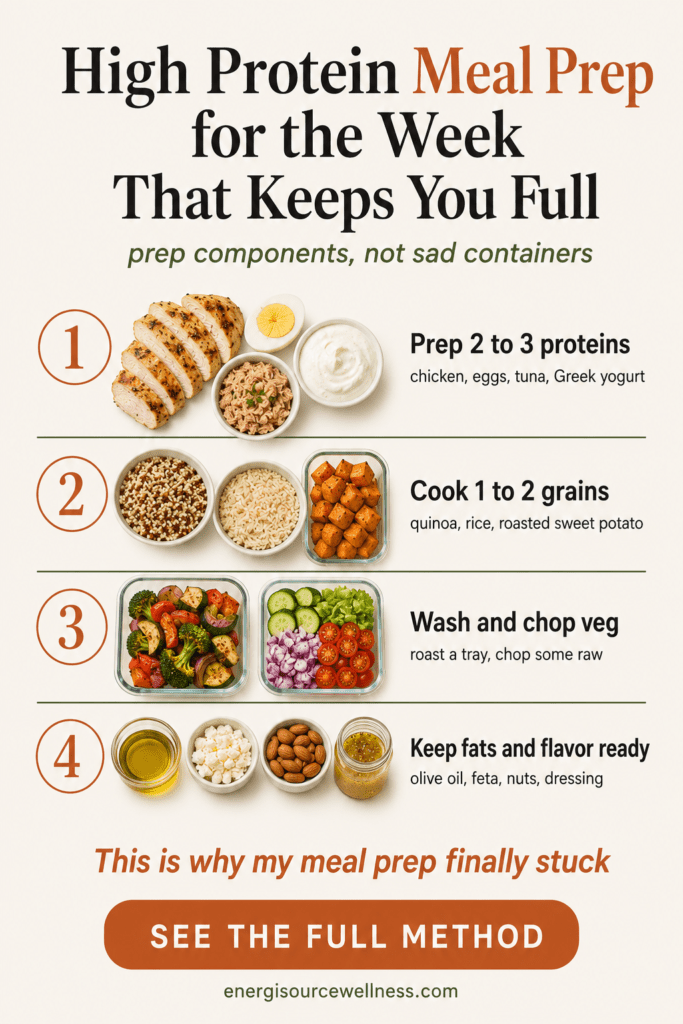
This is the whole system. Spend about an hour at the start of the week prepping four things, then assemble fresh all week.
1. Prep two or three proteins
Cook a batch of chicken, hard boil a dozen eggs, keep canned tuna or sardines and a tub of Greek yogurt or cottage cheese on hand. Proteins are the slow part, so this is where prepping ahead saves you the most time.
2. Cook one or two grains or starches
A pot of quinoa or rice, or a tray of roasted sweet potato. These keep well and give your meals real substance and staying power.
3. Wash and chop vegetables
Roast a tray of mixed vegetables and chop some raw ones (cucumber, peppers, cherry tomatoes). Having them ready is what makes assembling a real meal take two minutes instead of twenty.
4. Keep fats and flavor ready
Olive oil, lemon, feta, avocado, nuts, a good dressing. These bring the meal together and add the healthy fat that helps keep you full.
Want your whole week planned around meals that keep you full? The free Full Plate Method tool builds balanced high protein meals and lets you drop them straight into a weekly planner, no tracking and no counting. It does the planning for you.
Plan your week with the free tool
A sample high protein week
Here is how those prepped components become a full week of fresh, filling meals. Same building blocks, different combinations, so you never get bored.
Breakfasts
Greek yogurt with berries and nuts. A savory cottage cheese bowl. Eggs with avocado and whatever vegetables you roasted. Each one is a few minutes and around 20 to 25 grams of protein.
Lunches
A bowl of your prepped grain, a protein, roasted and raw vegetables, and a dressing. Chicken and quinoa one day, tuna and white beans the next, chickpeas and feta after that. Same parts, fresh combinations, all around 30 grams of protein.
Dinners
Assemble a little more freshly here since you are home. Salmon with your prepped sweet potato and greens. A quick stir fry with prepped protein and vegetables. Dinner is fast because the components are already done.
Snacks
Hard boiled eggs, sardines on crackers, Greek yogurt, a handful of nuts. All prepped or grab and go, all real protein.
What changed with component prep
Before, my meal prep was all or nothing. I would cook a giant batch on Sunday, get sick of it by Wednesday, and end up ordering food the rest of the week, right back to square one. After, prepping just the components meant every meal tasted fresh, I never got bored, and the high protein choice was always the easy one. Same hour of effort on Sunday, a completely different week.
Storing it so it stays fresh
The fresh-tasting part depends on good storage. Keep your prepped components in separate glass containers, proteins, grains, and vegetables apart, and keep any dressing separate until you assemble. That is what keeps everything crisp and appetizing all week instead of turning into a soggy single block of food.
These are the glass containers I use to keep prepped components fresh, and I care what touches my food when I reheat it.
A good olive oil and a few pantry staples like chickpeas make assembling fast all week.
And if the reason healthy eating keeps falling apart is cravings and snacking that derail you no matter how well you prep, that is a fixable pattern, not a willpower flaw. I put everything that worked for me into a short guide.
My 7-day Cravings Control Reset walks you through it.
The bottom line
If meal prep has never stuck for you, you are probably doing the heavy version. You do not have to cook your whole week on Sunday. Prep a few high protein components, store them well, and assemble fresh all week. It keeps you full, it tastes good, and it is the only kind of meal prep I have ever actually kept up. Start with one hour this Sunday and a few good containers.
I gave up on meal prep for years because the container version made food I did not want to eat. Prepping components instead of meals is the thing that finally stuck, fresh food, less effort, full all week. It is the honest way to do this.
Ribert
Keep reading
Mediterranean Meal Prep for the Week
4 Mediterranean Lunch Bowls That Keep You Full
How Much Protein Do You Need to Stay Full
Frequently asked questions
What is high protein meal prep for the week?
It means preparing protein-rich components ahead, like cooked chicken, eggs, grains, and chopped vegetables, so you can assemble filling meals of 25 to 35 grams of protein quickly all week, without cooking full meals in advance.
Is it better to prep full meals or components?
For most people, prepping components keeps food fresher and prevents boredom. You cook the slow parts once, then mix and match, so meals taste fresh all week instead of degrading in a container by Wednesday.
How much protein should each prepped meal have?
Aim for 25 to 35 grams of protein per meal. That is the amount that keeps most people full for hours, which is the whole point of building meal prep around protein.
How long does prepped food stay fresh?
Most cooked proteins, grains, and roasted vegetables keep three to four days in the fridge in glass containers. Keep dressings and delicate greens separate until you assemble, and prep again midweek if needed.
What should I prep first?
Start with the slow parts: cook two or three proteins and one or two grains, then roast and chop vegetables. Keep fats and flavor like olive oil, feta, and nuts ready. That hour of prep makes the whole week fast.
This article shares personal experience and general nutrition information, not medical advice. Adjust portions and ingredients to your own needs.
About Ribert Rodriguez
Ribert is the founder of EnergiSource Wellness. He researches and writes every article on this site personally, cross-checking claims against published research rather than relying on generic wellness advice. His approach is rooted in the Mediterranean framework, built from years of testing meal structures on himself after struggling with cravings, late-night eating, and low energy.