Most people need roughly 25 to 35 grams of protein per meal, not per day, to actually help lower ghrelin and stay full for hours. Spreading protein evenly across meals matters more than hitting a single daily total.
Want your personal number? Use the free protein calculator below. It takes 10 seconds.
There was a stretch of time where I thought I was eating healthy and I was still hungry every two hours. Oatmeal for breakfast. A salad for lunch. Some kind of stir fry for dinner. By 10am I was hunting for snacks. By 3pm I was raiding the cabinets. By 11pm I was ordering doughnuts on Uber Eats.
I blamed myself. I thought I had no discipline. I tried smaller portions. I tried drinking more water. None of it worked.
Then I started looking at my actual meals and noticed something obvious. My breakfast had almost no protein. My lunch had almost no protein. My dinner had some but not enough. I was eating around 40 grams of protein a day. Maybe less.
Once I changed that, almost everything else changed with it.
Related: why you’re still hungry after eating (and the fix)
Free tool
How Much Protein Do You Need to Stay Full?
Enter your weight and pick what fits you best. You’ll get a daily target, how to split it across meals, and a sample Mediterranean day that hits it.
Enter your weight to see your target.
Want this planned for you?
The 7-Day Mediterranean Meal Plan gives you 28 meals and snacks built around protein, fiber, and healthy fat, plus the grocery list.
Prefer to start free? Get the free high-protein snack list
Estimates for healthy adults, based on common dietitian ranges (about 1.0 to 1.6 g per kg of body weight, higher for active people). If you’re in a larger body, entering a goal or reference weight gives a more realistic number. If you have kidney disease, are pregnant, or take GLP-1 medication, check your target with your doctor or dietitian. This is general information, not medical advice.
Protein Is Not About Bodybuilding
Here is what nobody told me earlier. Protein is not just about muscle. Protein is the main thing that tells your brain you are full and keeps your blood sugar steady between meals. If you are not eating enough of it, you will be hungry no matter how much salad you stack on your plate.
Most women in the US are eating between 40 and 60 grams of protein per day. That is not enough to stay full. It is also not enough to keep cravings quiet. That is why the snacking never stops. The body is asking for protein and you keep handing it carbs.
What nobody tells you is that the food industry built its business on processed carbs because they are cheap to produce and addictive to eat. Protein is harder to package. Real protein is harder to ship. So the entire grocery aisle is engineered to keep you hungry.
How Much Protein You Actually Need
Here are the real numbers that I learned matter. Use these as a starting point and adjust based on your body and how you feel.
The Daily Target
Aim for around 0.7 to 1 gram of protein per pound of your goal body weight. For most women, that lands somewhere between 80 and 120 grams of protein per day.
If you weigh 140 pounds, that means about 100 to 140 grams a day. If you weigh 160 pounds and your goal weight is 140, you would aim for around 100 grams. That gives your body what it needs to stay full, hold onto muscle, and stop the cravings cycle.
I personally eat over 100 grams a day. I do not weigh my food. I just make sure protein is on every plate. After about a week of doing that consistently, you stop having to think about it. Your meals start to look right automatically.
The Per Meal Target
This is the part most people miss. The daily total does not matter if your protein is unevenly spaced. You want at least 25 to 30 grams of protein at each of your main meals. Not most of it stuffed into dinner. Spread evenly across the day.
Why this matters. Your body can only use so much protein at a time for satiety signaling. If you eat 80 grams at dinner and 10 grams at breakfast, you will be hungry all morning and afternoon no matter how much protein you eat at night.
I realized this when I tested it. Eating the exact same total grams of protein but spread evenly across three meals made me feel full all day. Cramming it into one meal left me hungry between meals even though the total was the same.
If you want a full walkthrough of how I structure every plate around protein, my Balanced Plate Method article breaks it down step by step.
How to Hit 100 Grams of Protein Without Tracking
I do not track my food. I never have. But I still hit 100+ grams of protein almost every day. Here is how I do it without thinking about it.
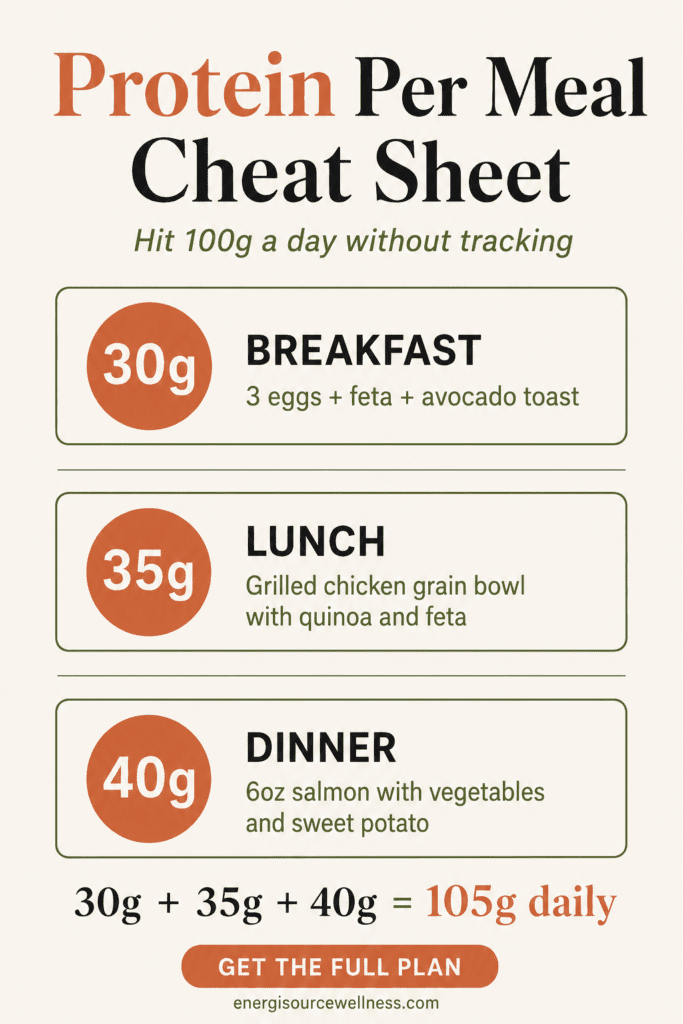
1. Protein First Breakfast (30g target)
Breakfast sets the entire day. If you start with a carb heavy breakfast, you will chase cravings until bedtime. If you start with 30 grams of protein, you stay steady.
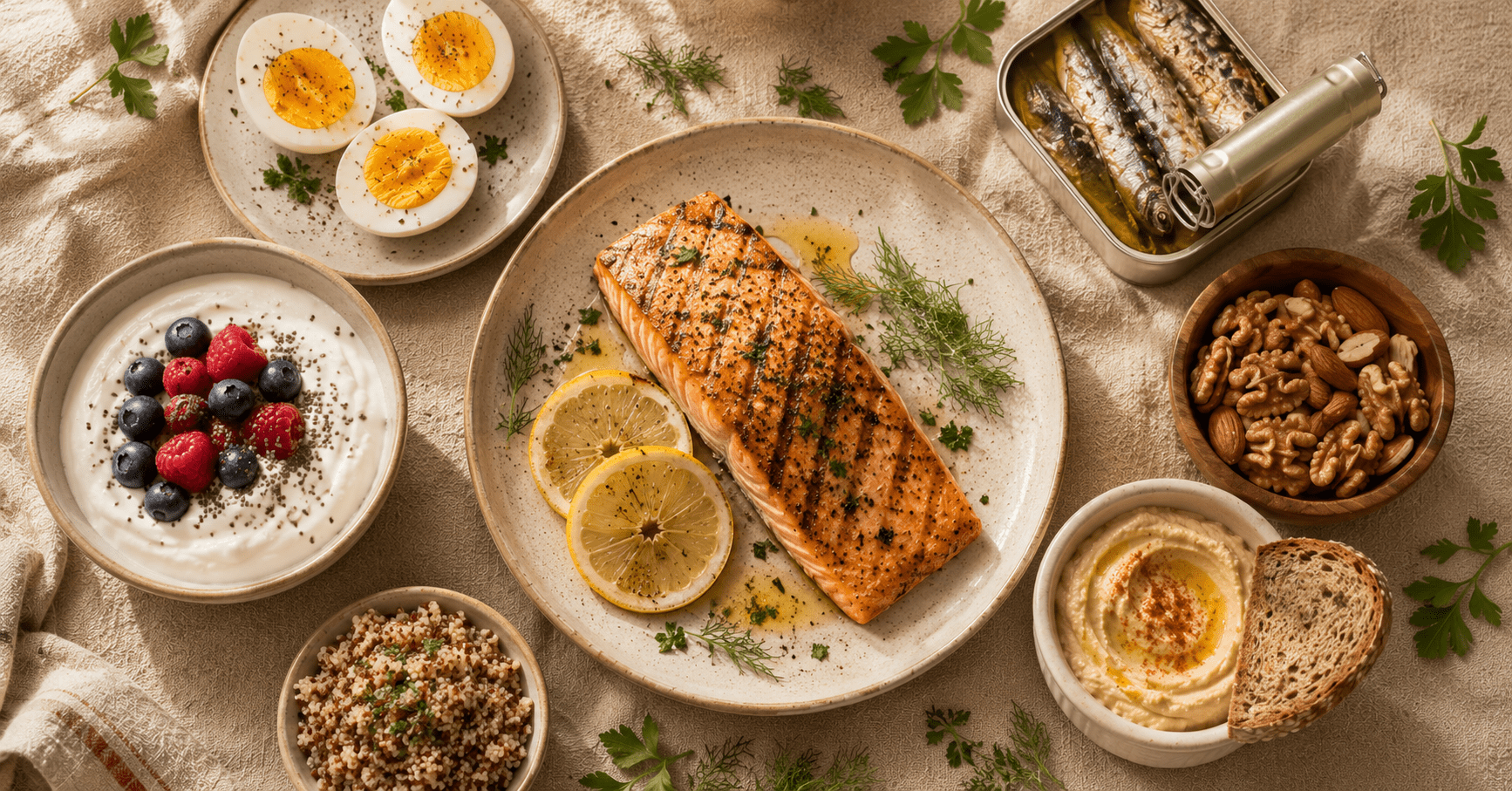
My current rotation is simple. Three eggs scrambled with feta and avocado on whole grain toast. Or a bowl of plain Greek yogurt with berries, chia seeds, and a tablespoon of almond butter. Or smoked salmon with avocado on toast. Each of these hits 28 to 32 grams of protein without trying.
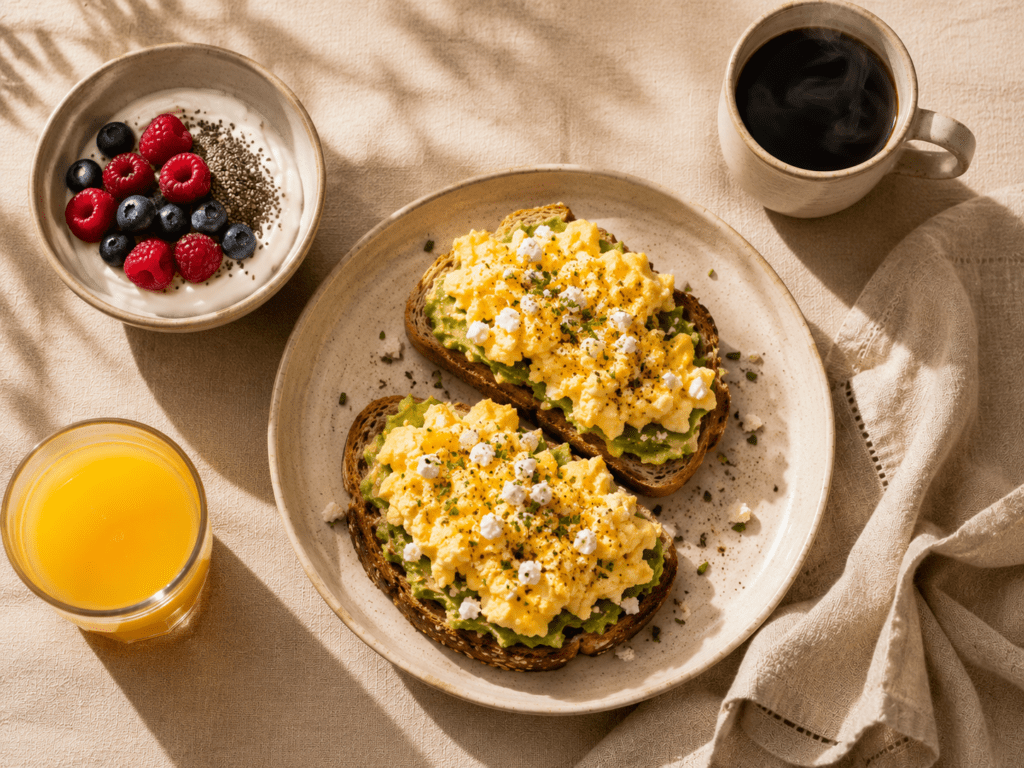
I have a full list of high protein breakfast options in my 5 breakfasts that keep you full for hours article if you want more ideas.
2. Lunch With 30 to 40g of Protein
Lunch is where most people fall short. The classic American work lunch is a sandwich with maybe 15 grams of protein and a bag of chips. That is a recipe for an afternoon crash.
My go to lunches are simple. A grain bowl with grilled chicken, quinoa, vegetables, feta, and olive oil. Or a big salad with two cans of tuna, white beans, olives, and tahini dressing. Or leftover salmon from the night before over greens with chickpeas.
3. Dinner With 35 to 45g of Protein
Dinner is the easiest meal to hit a high protein target because most dinners are already built around a protein. The mistake people make is making the protein portion too small. A typical chicken breast is around 30 grams of protein. Most restaurant chicken portions are smaller than that.
I usually have a six to eight ounce portion of grilled salmon, chicken, or ground beef with a side of vegetables and either quinoa, sweet potato, or brown rice. Real Mediterranean style. Nothing fancy.
4. Strategic Snacks That Travel
On days where my lunch was lower in protein or I am out running errands, snacks fill in the gap. The trick is keeping high protein snacks around that do not need to be cooked.
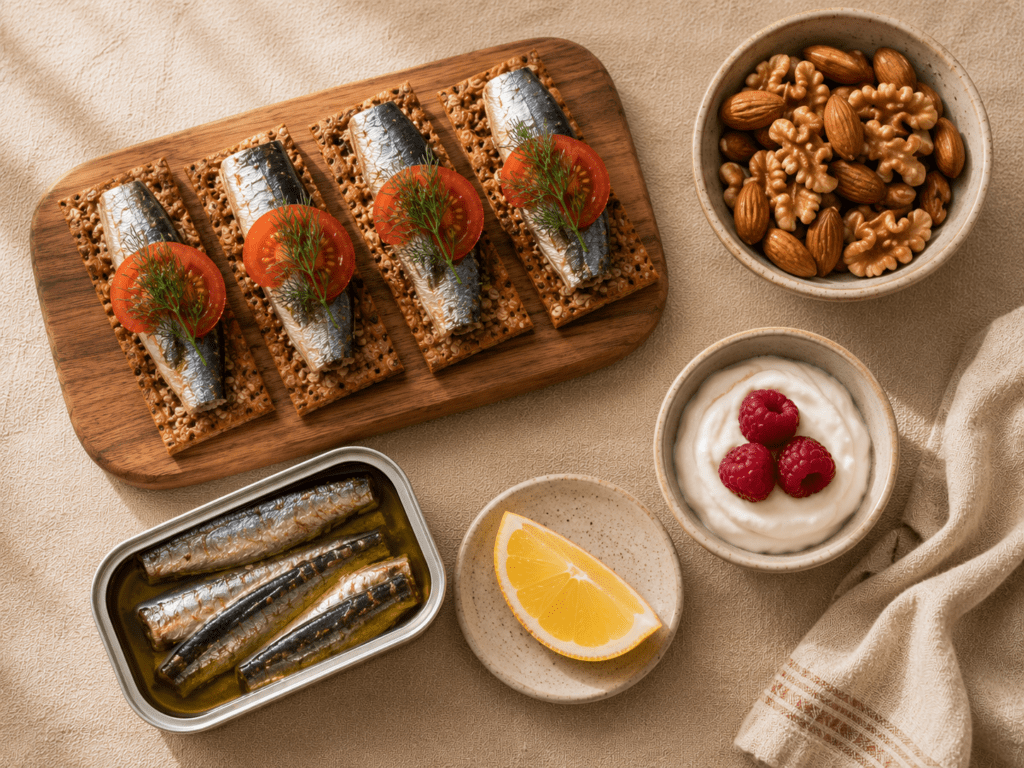
My go to is sardines on whole grain crackers. One can of Wild Planet sardines has 22 grams of protein. Add four crackers and it is a complete snack that travels in my bag.
A handful of mixed walnuts and almonds gets me another 6 to 8 grams of protein with healthy fats that keep me satisfied for hours. I keep a jar at my desk.
Plain Greek yogurt is another easy one. Half a cup with berries hits around 12 grams of protein in two minutes.
Want the Full 7 Day Plan?
If you want every meal mapped out at the right protein targets for an entire week, my Cravings Control Reset PDF gives you the exact plan I use. Seven days. Protein hit at every meal. No tracking required. Currently seven dollars off the regular price.
What Changed When I Hit 100 Grams a Day
Before I started eating real amounts of protein at every meal, my day was a constant battle with hunger. I woke up hungry. I was hungry by 10am. I was foggy by 2pm. I was hunting for sugar by 4pm. I was eating doughnuts at 11pm out of pure boredom.
After I added protein to every meal, the whole pattern shifted. I now eat breakfast at 9am and I am not hungry until 1pm. I eat lunch and I am not hungry until 7pm. I do not even think about snacks most days. The 11pm Uber Eats sessions are gone.
I am also lifting weights three times a week and I noticed I recover faster and have more focus. Cravings are noticeably quieter. Sleep is better. The protein change touched every other area of how I feel.
Do You Need a Protein Powder?
Most people do not need a protein powder if they are eating real food at every meal. But if you struggle to hit your protein target through food alone, or you are vegetarian and missing the gap, a clean protein powder can fill in.
I have a full breakdown of the cleanest protein powders I have researched in my best natural protein powders for appetite control article. Read that if you decide you want one.
For most people though, real food does the job. Eggs are cheap. Sardines are cheap. Lentils are cheap. The protein problem is rarely a money problem. It is usually a planning problem.
Why Protein Stops Sugar Cravings
Here is the part that surprised me most. The more protein I ate, the less I wanted sugar. Not because I was forcing myself. Because the urge stopped showing up.
It works because protein keeps your blood sugar steady. Stable blood sugar means no crashes. No crashes means no panic signal to your brain. No panic signal means no afternoon chocolate hunt. The whole loop stops.
I cover this connection in detail in my how to stop sugar cravings naturally article if you want to go deeper.
You Do Not Need to Track Anything
If you have been told that fixing your hunger means weighing your food, counting macros, and obsessing over numbers, please try this first. You do not need any of that.
You just need to ask one question at every meal. Where is the protein. If you have a real protein source on the plate that fills about a quarter of it, you are probably hitting your target. If you do not see a real protein, add one before you eat.
That is the whole system. One question per meal for one week. Your hunger will start to change before the week is out.
Start With Your Next Meal
If you want help building meals that hit the right protein target without tracking, I built a free tool called the Full Plate Method. You pick a protein, a fiber, a healthy fat, and a complex carb, and it builds a complete meal for you.
You do not need a complicated diet to stay full. You just need protein at every meal. That is the whole secret.
Free printable
Hungry again at 9pm?
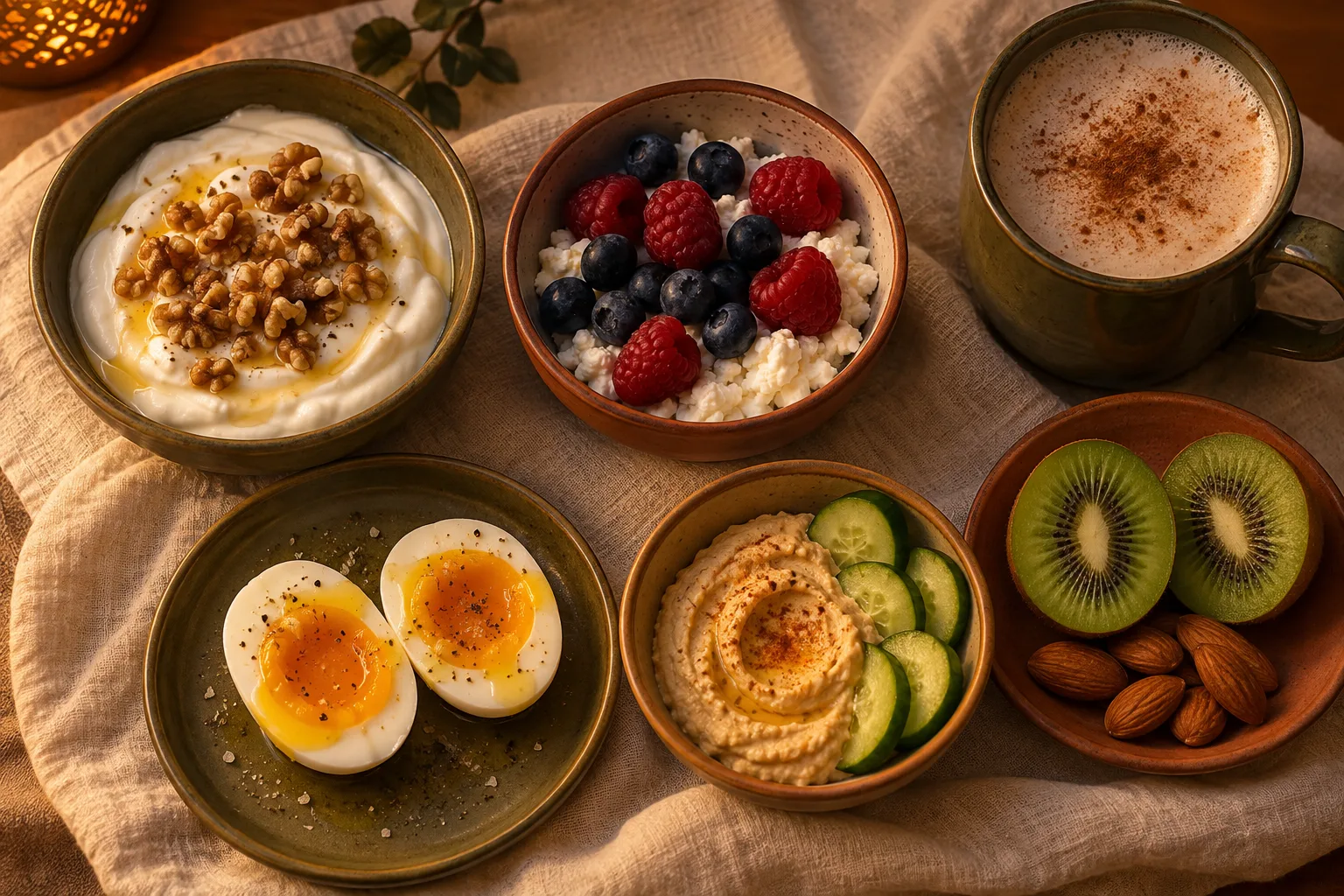
Get the free printable Night Hunger Snack List: 10 Mediterranean snacks with exact portions and protein counts, for the evenings when cravings hit. Enter your email and download it instantly.
Free. No spam. Unsubscribe anytime.
Frequently Asked Questions
How much protein do I need to stay full all day?
Most women need between 80 and 120 grams of protein per day to stay full and stop cravings. Aim for 25 to 30 grams at each main meal. Spreading protein evenly across the day matters more than the daily total because your body needs consistent satiety signals.
Can I eat too much protein?
For most healthy people eating real food, no. Your body uses what it needs and processes the rest. Concerns about protein damaging kidneys apply only to people who already have kidney disease. If you have an existing health condition, talk to your doctor before significantly increasing protein.
What is the best protein source for fullness?
The most filling protein sources are whole food proteins like eggs, Greek yogurt, fish, chicken, and lentils. These contain complete amino acid profiles and digest slowly which keeps you full longer than processed protein products or protein bars.
How long does it take to feel less hungry after increasing protein?
Most people notice a significant drop in hunger and cravings within three to seven days of consistently hitting their protein target at every meal. The first two days can be an adjustment period. After that, the change is noticeable and steady.
Do I have to weigh my food to hit my protein target?
No. Most people can hit their protein target without tracking by simply making sure every meal has a visible protein source that takes up about a quarter of the plate. Use protein density estimates instead of weighing. For example, a palm sized portion of chicken or fish is around 25 to 30 grams of protein.
If you read this far, thank you. Protein changed everything for me. I am not exaggerating when I say it is the single biggest food change you can make to stop fighting your hunger. Try it for a week. You will feel the difference.
Ribert
About Ribert Rodriguez
Ribert is the founder of EnergiSource Wellness. He researches and writes every article on this site personally, cross-checking claims against published research rather than relying on generic wellness advice. His approach is rooted in the Mediterranean framework, built from years of testing meal structures on himself after struggling with cravings, late-night eating, and low energy.