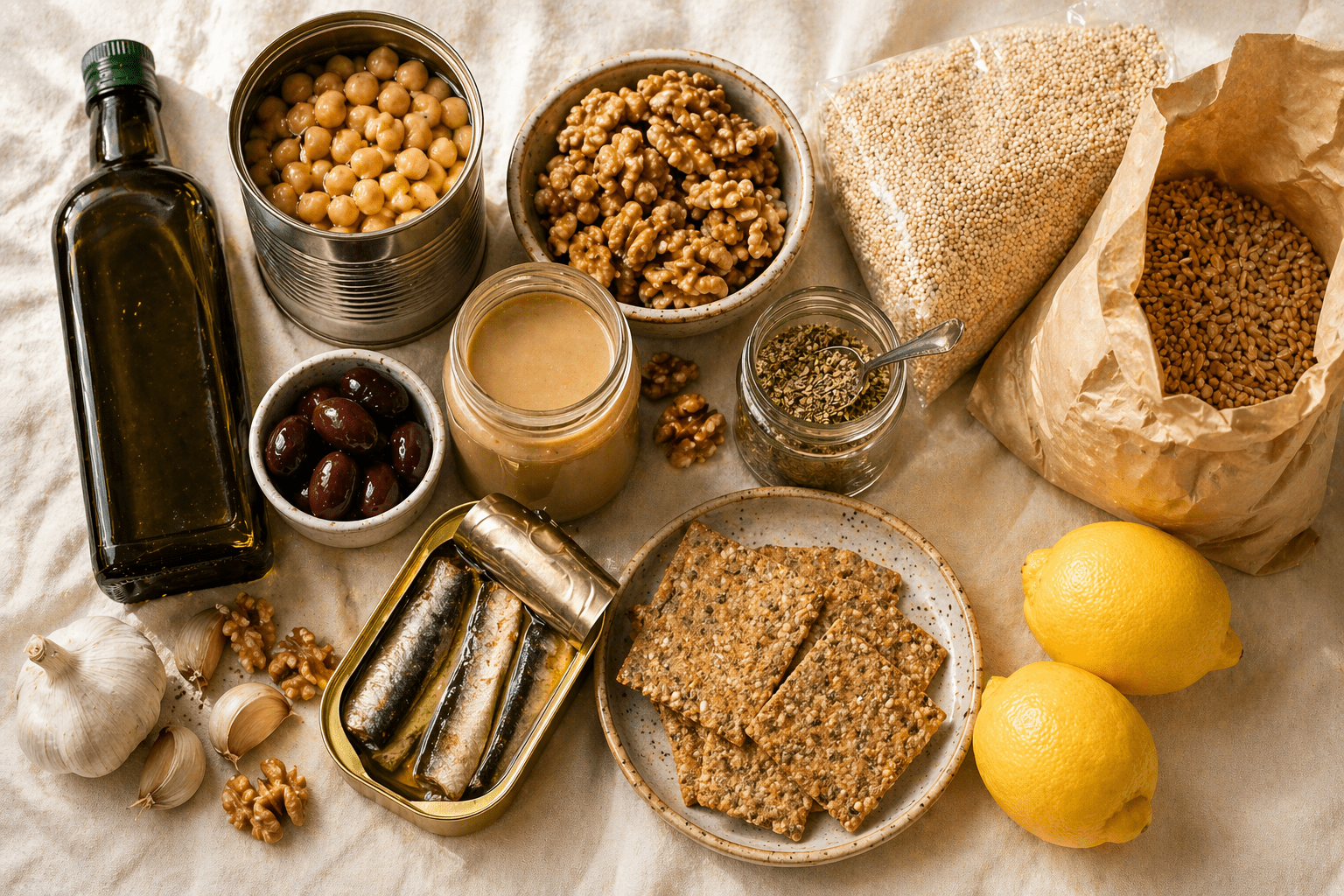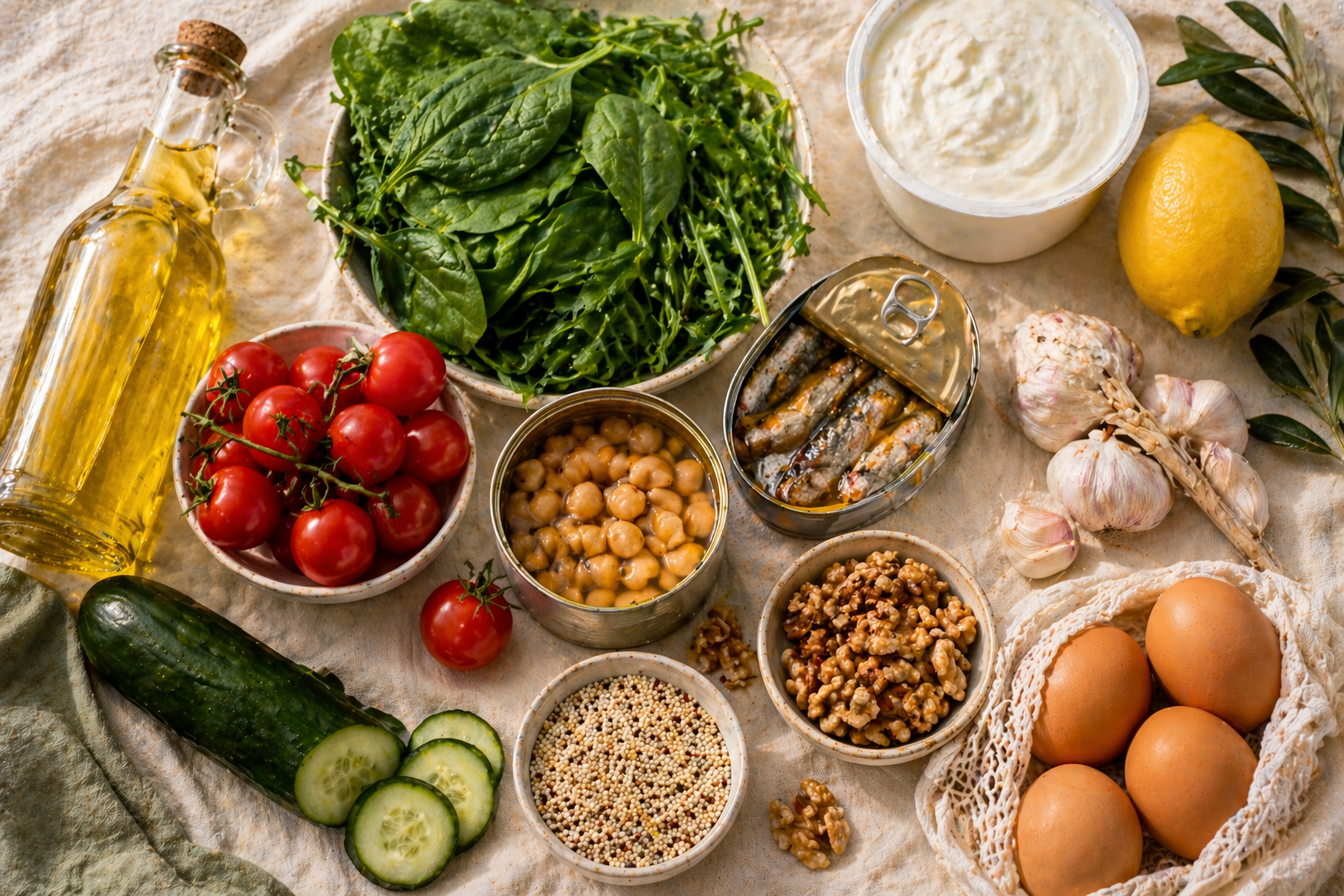
You do not need 60 ingredients to start Mediterranean eating. A starter grocery list of about 25 staples, olive oil, canned fish, beans, whole grains, eggs, yogurt, and seasonal produce, is enough to build a full week of meals.
You’ve decided to try Mediterranean eating. You open a new tab, search “what to buy,” and end up with a list of 60 ingredients you’ve never cooked with, half of which you can’t find at your regular grocery store.
So you close the tab. Order the usual. Tell yourself you’ll figure it out next week.
This is how most people fail at Mediterranean eating before they even start, not because the diet is complicated, but because the entry point is overwhelming. Nobody needs 60 ingredients. Nobody needs specialty items from a Mediterranean import store.
You need about 25 staples. Most of them are already at your regular grocery store. And once they’re in your kitchen, building complete Mediterranean meals takes 10 minutes or less.
This is that list, with exactly why each item matters and how to use it so nothing sits in your pantry unused.
How to Use This List

Before getting into the specific items, one important note about how Mediterranean eating actually works.
You’re not building a recipe collection. You’re building a stocked kitchen.
The Mediterranean approach is fundamentally about having the right ingredients available so that a complete, satisfying meal is always 10 minutes away. Protein, fiber, and healthy fat together at every meal. That’s the entire formula. The items on this list make that formula effortless because they’re versatile, combine naturally with each other, and keep well in your fridge and pantry.
Shop this list once. Stock your kitchen once. Then meal building becomes automatic.
The Complete Mediterranean Diet Grocery List for Beginners
PROTEINS
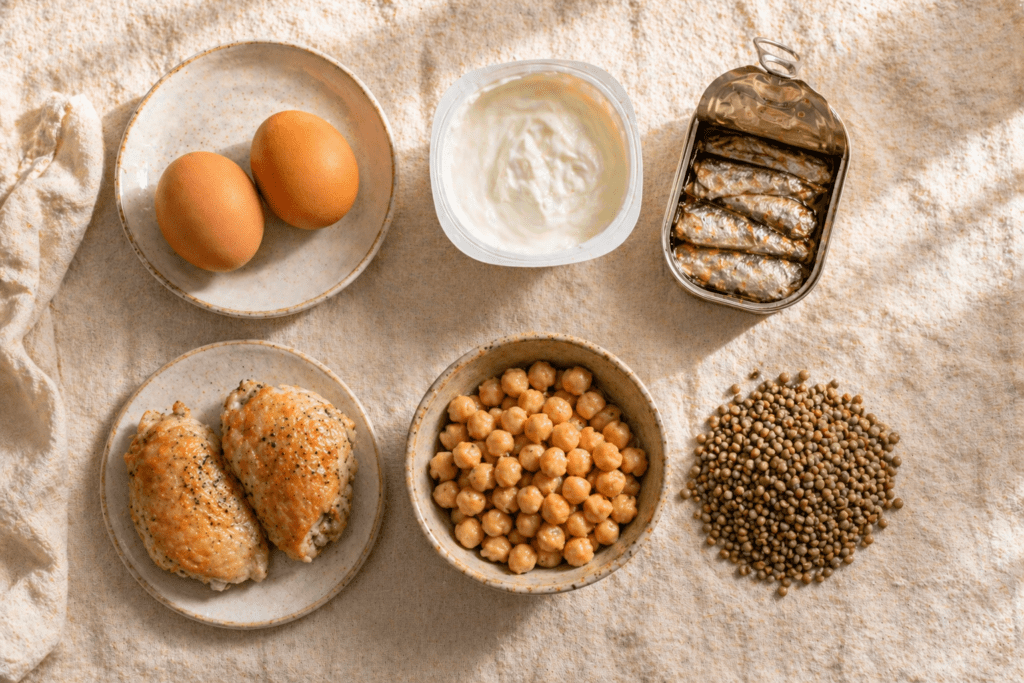
Eggs The most versatile protein in the Mediterranean kitchen. Scrambled with vegetables, hard boiled for meal prep, poached on a grain bowl, eggs work at every meal and keep you full for hours. Buy a dozen every week.
Plain full-fat Greek yogurt Provides 15–20 grams of protein per serving, works for breakfast, snacks, and savory sauces. Full-fat is important, the fat is what sends the satiety signal that keeps you full. Buy the large container and portion throughout the week.
Canned salmon and sardines The most practical way to eat fatty fish consistently. Canned wild salmon and sardines have identical omega-3 content to fresh fish, cost a fraction of the price, and require zero cooking. Wild Planet sardines are the best quality option, packed in olive oil, sustainably caught, and genuinely delicious on crackers or in grain bowls.
Chicken thighs More forgiving than chicken breast, more flavourful, and higher in healthy fat. Bake a tray on Sunday with olive oil, garlic, and oregano and they work in every meal combination for four days.
Canned chickpeas Protein and fiber in a single ingredient. The most efficient satiety food in the Mediterranean pantry. Use in salads, grain bowls, roasted as a snack, or blended into hummus. Buy three or four cans at a time.
Canned lentils or dried lentils Another protein and fiber combination that forms the base of soups, stews, and grain bowls. Eden Organics canned lentils are pre-cooked and ready in seconds. The most convenient option for weeknight meals.
HEALTHY FATS
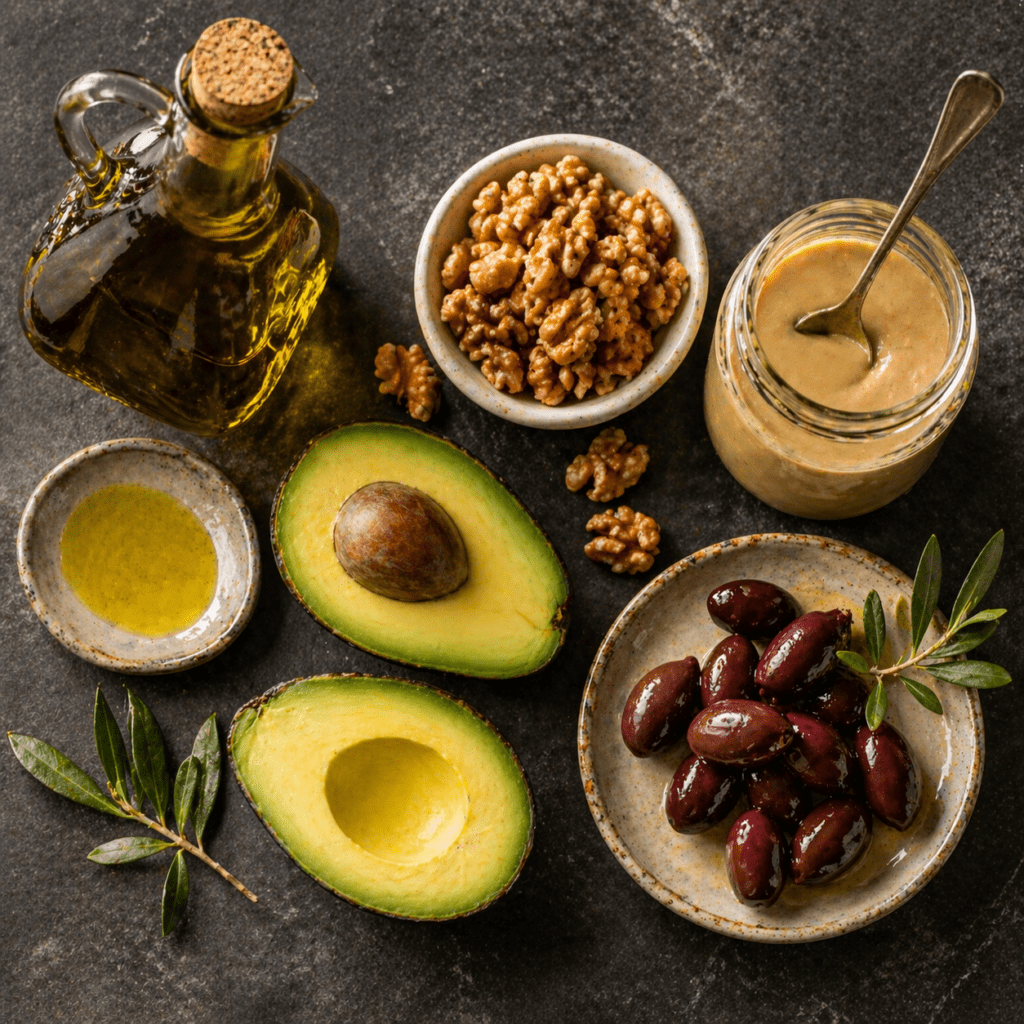
Extra virgin olive oil The single most important item on this entire list. Olive oil is the cornerstone of Mediterranean eating, used for cooking, dressing, drizzling, and finishing virtually every dish. It’s also the most studied anti-inflammatory food compound in nutrition science, containing oleocanthal, a compound a 2023 review in the journal Antioxidants found works through the same anti-inflammatory pathway as ibuprofen.
Buy the largest bottle you can store and use it generously. Quality matters, look for cold-pressed and extra virgin on the label. Atlas Organic Cold-Pressed Extra Virgin Olive Oil is consistently high quality and worth keeping stocked for regular use.
Walnuts The most anti-inflammatory nut available, containing plant-based omega-3, polyphenols, and magnesium. Add to yogurt, salads, grain bowls, or eat as a standalone snack with fruit. Buy raw, unsalted. Raw walnuts in bulk are the most economical option.
Avocado Healthy fat, fiber, and potassium in one ingredient. Works at breakfast on toast or eggs, at lunch in salads, and at dinner as a side. Buy 2–3 per week and let them ripen on the counter.
Tahini Ground sesame seed paste that forms the base of hummus, works as a salad dressing base, and adds richness to grain bowls. One jar lasts weeks. Combined with lemon, garlic, and water it becomes the most versatile sauce in Mediterranean cooking.
Olives Convenient, shelf-stable healthy fat that adds Mediterranean flavor to any dish instantly. Kalamata olives are the most commonly used variety, keep a jar in the fridge at all times.
VEGETABLES
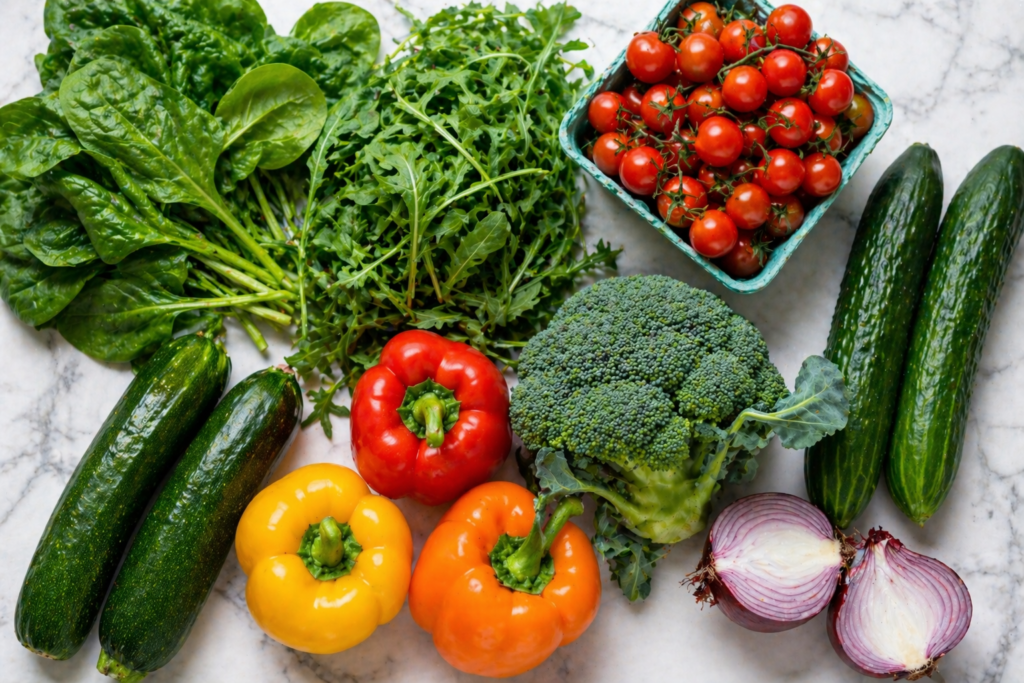
Spinach and arugula The most nutritionally dense greens available, packed with polyphenols, magnesium, folate, and iron. Use as a salad base, wilt into scrambled eggs, or add to grain bowls. Arugula has a peppery bite that makes even simple dishes taste restaurant-quality.
Cherry tomatoes Sweet, no chopping required, work in everything. Roast them with olive oil and they become something extraordinary, concentrated, jammy, and deeply flavorful. Buy two pints per week.
Cucumber The most refreshing Mediterranean vegetable, adds crunch and water content to salads and snack plates without any prep beyond slicing. Essential for chickpea salads and hummus plates.
Zucchini and bell peppers The best roasting vegetables for Mediterranean meal prep. Chop, toss with olive oil and za’atar, roast at 400°F for 25 minutes and you have the vegetable component for every meal combination for the week.
Red onion Adds sharpness and depth to salads, grain bowls, and roasted dishes. Thinly sliced raw red onion transforms a basic chickpea salad into something genuinely delicious.
Broccoli One of the most anti-inflammatory vegetables available, containing sulforaphane, a compound that activates the body’s natural inflammation-fighting enzymes. Roasted with olive oil it becomes crispy, nutty, and completely different from steamed broccoli.
WHOLE GRAINS AND LEGUMES
Quinoa The easiest grain to cook, 15 minutes, foolproof, and complete protein. Works as a base for bowls, alongside roasted vegetables, or mixed into salads. Cook a large batch on Sunday and use all week.
Farro Nuttier and more textured than quinoa, slightly longer cooking time but more satisfying. Excellent in grain bowls and Mediterranean salads.
Brown rice The most familiar whole grain for most people, use it as you normally would, just pair it with protein and fat to prevent the blood sugar spike that white rice causes.
Whole grain bread or sourdough For toast, alongside eggs, and as a base for avocado. Real sourdough from a bakery or whole grain with visible seeds, not “whole wheat” bread made from refined flour with added coloring.
PANTRY STAPLES
Canned whole tomatoes The base of Mediterranean soups, stews, and sauces. One can plus chickpeas, garlic, and olive oil is dinner in 15 minutes.
Dried oregano, cumin, paprika, and za’atar The four spices that make Mediterranean food taste like Mediterranean food. Za’atar (a blend of thyme, oregano, sesame, and sumac), is the single most transformative addition to roasted vegetables and grain bowls.
Garlic Fresh garlic used generously is fundamental to Mediterranean cooking. Sauté it in olive oil as the base of almost any dish and the entire kitchen smells like a Mediterranean restaurant.
Lemons Used more than almost any other flavoring in Mediterranean cooking, in dressings, squeezed over fish, mixed into tahini sauce, and added to grain bowls. Buy four to six per week and use them constantly.
Honey Raw honey for Greek yogurt, drizzled over fruit and nuts, and as a light sweetener. A small amount provides satisfying sweetness without the blood sugar spike of refined sugar.
What to Buy First If You’re Starting From Zero
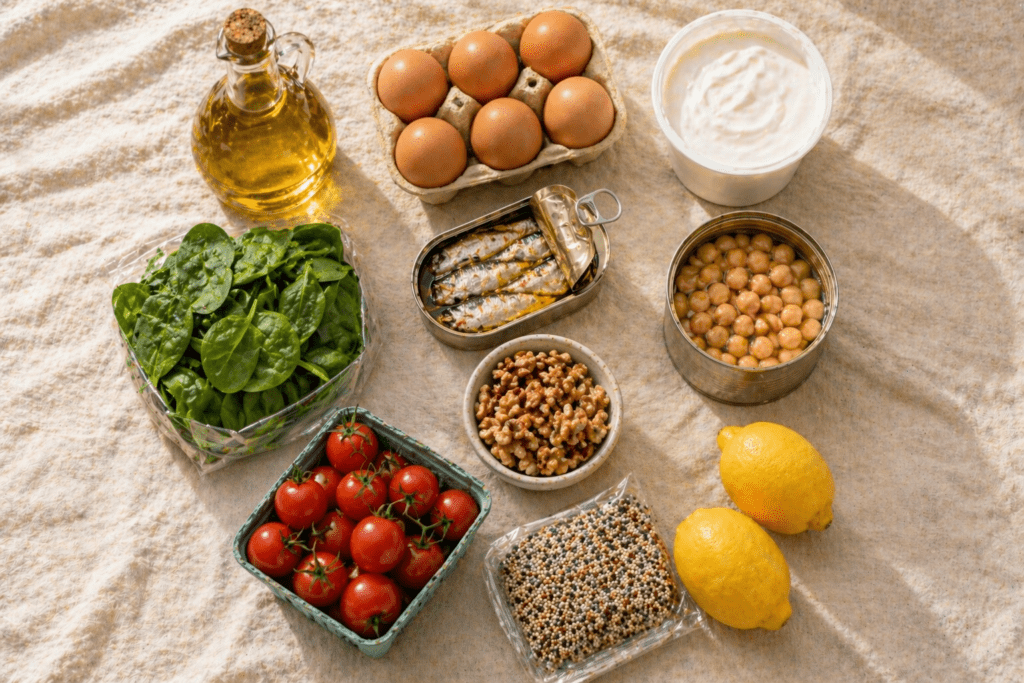
Want to take this list to the store? Download the free printable version below.
If your pantry is currently empty and you want to start Mediterranean eating this week without buying everything at once, here are the ten most important items to get first:
Extra virgin olive oil, eggs, plain Greek yogurt, canned chickpeas, canned salmon or sardines, walnuts, spinach or arugula, cherry tomatoes, quinoa, and lemons.
With just these ten items you can make a complete Mediterranean breakfast, lunch, dinner, and snack every day this week. Everything else on the list adds variety and depth, but these ten are the foundation.
For a full guide to which of these foods are most anti-inflammatory and why, read: How to Reduce Inflammation With the Mediterranean Diet
How to Shop Mediterranean on a Budget
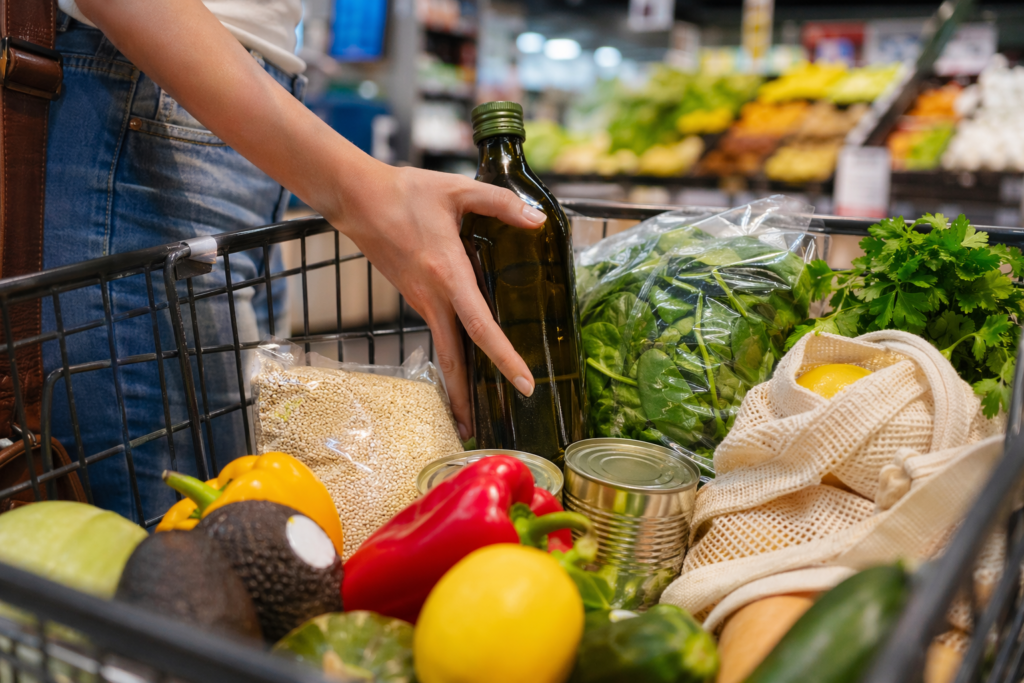
One of the biggest misconceptions about Mediterranean eating is that it’s expensive. It’s actually one of the most budget-friendly diets when you understand which items to prioritize.
Buy canned over fresh for fish and legumes. Canned sardines, salmon, chickpeas, and lentils are nutritionally identical to fresh or dried versions and cost significantly less per serving. A can of sardines costs $2–$3 and provides a complete protein serving with high omega-3 content.
Buy frozen vegetables when fresh is too expensive. Frozen spinach, broccoli, and mixed vegetables retain their nutritional value completely and cost half the price of fresh. Use them for cooked dishes and save fresh for raw salads.
Buy grains and nuts in bulk. Quinoa, farro, walnuts, and almonds bought in larger quantities cost significantly less per serving than small packages. Store in airtight containers and they keep for months.
Make your own hummus. Store-bought hummus costs $4–$6 for a small container. Homemade hummus made from one can of chickpeas, tahini, lemon, and garlic costs under $1 and takes 5 minutes in a food processor.
Use olive oil as your only cooking fat. Replacing butter, vegetable oil, and specialty oils with a single high-quality olive oil simplifies shopping and reduces overall cost.
For help building complete Mediterranean plates using whatever you have stocked, the free Mediterranean Meal Builder assembles a balanced meal from your available ingredients in under 2 minutes.
Connecting Your Grocery List to Your Meal Plan
Having the right ingredients is step one. Knowing how to combine them consistently is step two.
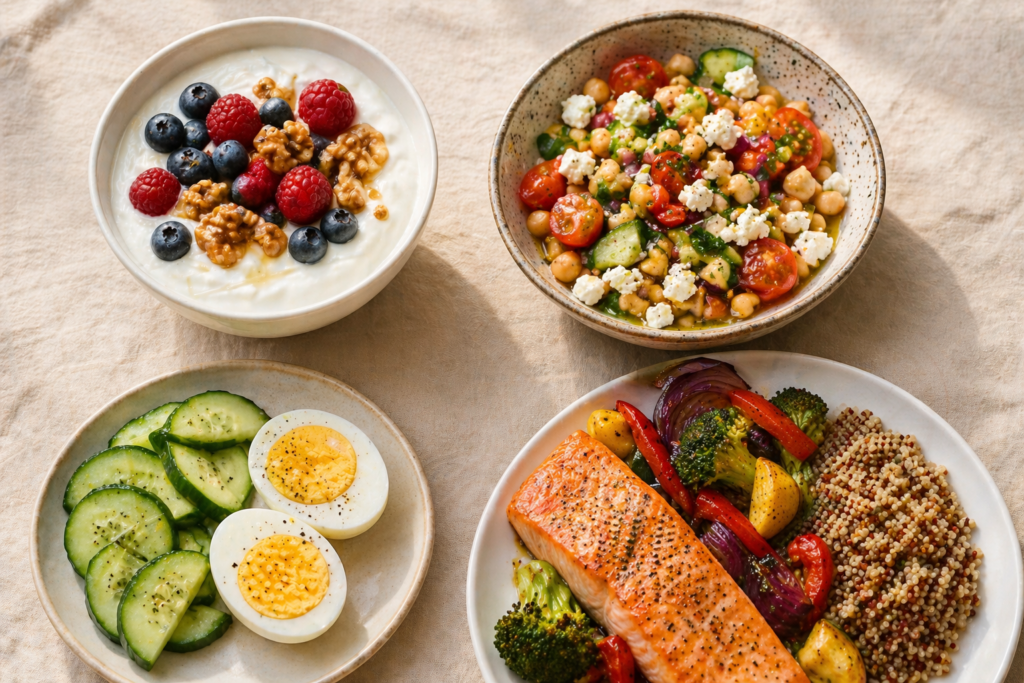
Every meal needs three things: a protein source from the protein section above, a fiber source from the vegetables or grains section, and a healthy fat from the fats section. That formula applies to every single meal, breakfast, lunch, dinner, and snacks.
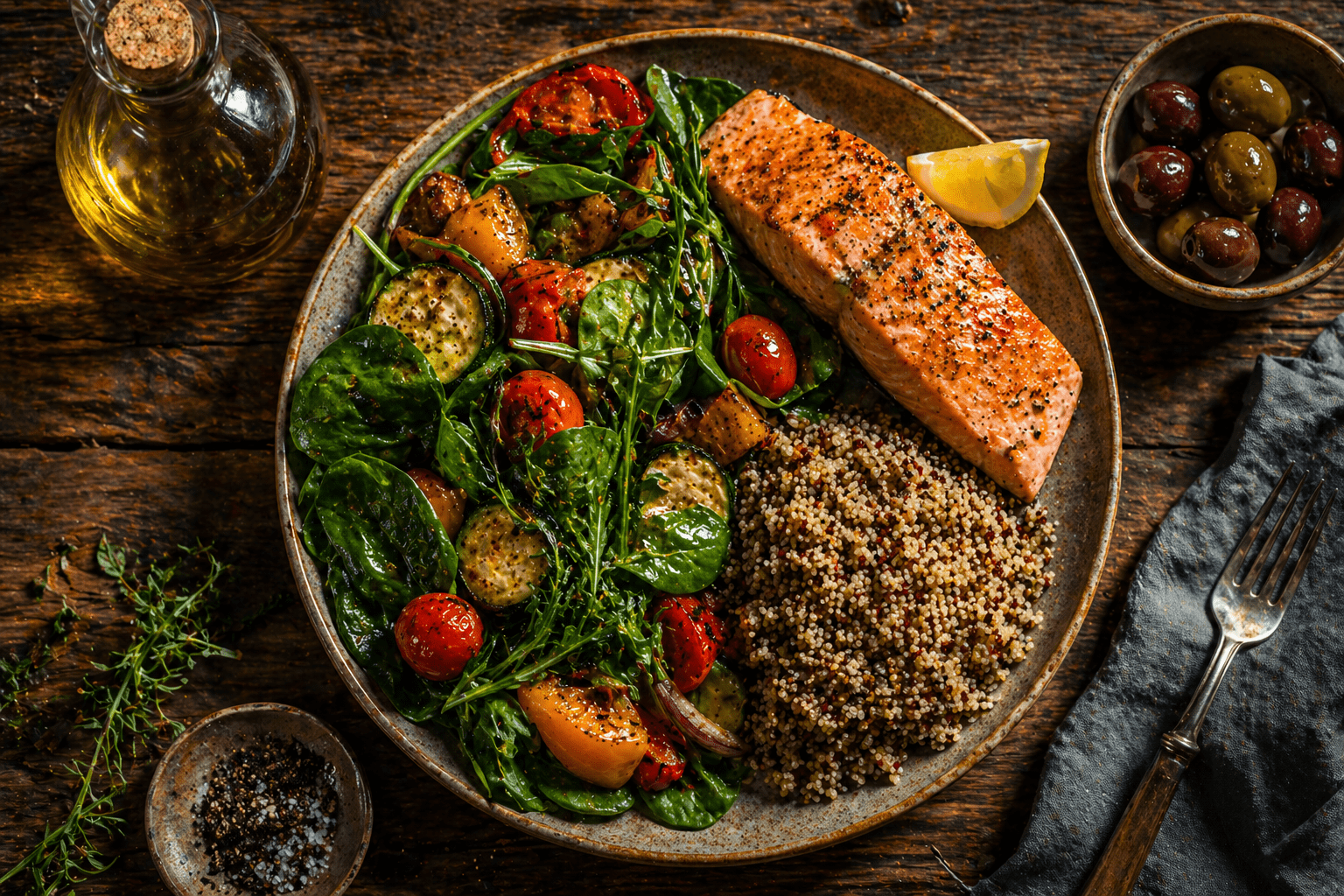
Breakfast example: Greek yogurt (protein) + berries (fiber) + walnuts (fat) Lunch example: Chickpea salad (protein + fiber) + olive oil dressing (fat) Dinner example: Salmon (protein + fat) + roasted vegetables (fiber) + quinoa (fiber) Snack example: Hard boiled egg (protein + fat) + cucumber slices (fiber)
Once you see the pattern, grocery shopping becomes simple. You’re always buying one protein, one fiber source, and one healthy fat per meal occasion. The variety comes from rotating through the options on this list.
For a complete 7-day Mediterranean meal plan with every meal already built using these ingredients, the Cravings Control Reset gives you the entire system in one place. Get instant access for $27 →
Frequently Asked Questions
What is the most important item on a Mediterranean diet grocery list? Extra virgin olive oil. It’s used at virtually every meal, provides the most significant anti-inflammatory benefit of any single food in the Mediterranean diet, and fundamentally transforms the flavor of everything it touches. If you buy nothing else from this list, buy quality olive oil.
Is Mediterranean diet grocery shopping expensive? Not necessarily. The foundation of Mediterranean eating (canned legumes, eggs, frozen vegetables, whole grains, and olive oil), is very budget-friendly. The cost increases when you buy fresh fish regularly, but canned sardines and salmon are equally nutritious and significantly cheaper.
Can I follow a Mediterranean diet without eating fish? Yes. The Mediterranean diet is naturally flexible. Eggs, Greek yogurt, chickpeas, lentils, and white beans provide excellent protein without any fish. Walnuts provide plant-based omega-3 as a partial alternative to the fatty acids in fish.
How much olive oil should I use? Generously. Traditional Mediterranean eating uses olive oil freely, typically 2–4 tablespoons per meal across cooking, dressing, and finishing. This is not excessive. The fat in olive oil is what provides the satiety signal and anti-inflammatory benefit. Don’t use it sparingly.
What grains are best for Mediterranean eating? Quinoa, farro, and brown rice are the most practical options for beginners. Quinoa cooks fastest at 15 minutes and provides complete protein. Farro has the most satisfying texture for grain bowls. Brown rice is the most familiar and easiest starting point.
Do I need to buy organic? Not necessarily for everything. Prioritize organic for the items you consume most, olive oil, eggs, and leafy greens are worth buying organic when budget allows. Canned legumes, frozen vegetables, and whole grains don’t require organic to provide full nutritional benefit.
Get the free printable grocery list sent straight to your inbox.
Once your kitchen is stocked from this list, a few related guides can help you put it to use. Mediterranean Pantry Essentials covers the shelf-stable staples that make this grocery list even easier to shop for next time, and Mediterranean Meal Prep for the Week shows you how to turn everything here into meals in under 30 minutes. If inflammation is part of why you’re making this switch, How to Reduce Inflammation With the Mediterranean Diet breaks down the mechanism, and Mediterranean Foods That Keep You Full Longer highlights which items on this list do the most for satiety. The Balanced Plate Method ties it all into an actual plate formula you can use at every meal.
About Ribert Rodriguez
Ribert is the founder of EnergiSource Wellness. He researches and writes every article on this site personally, cross-checking claims against published research rather than relying on generic wellness advice. His approach is rooted in the Mediterranean framework, built from years of testing meal structures on himself after struggling with cravings, late-night eating, and low energy.