Most people approach healthy eating backwards.
They find a recipe, buy the ingredients, make the meal once, and then those specialty ingredients sit in the back of the cupboard until they expire.
Here’s the truth about how Mediterranean eating actually works in real life: it’s not built around recipes. It’s built around a stocked kitchen.
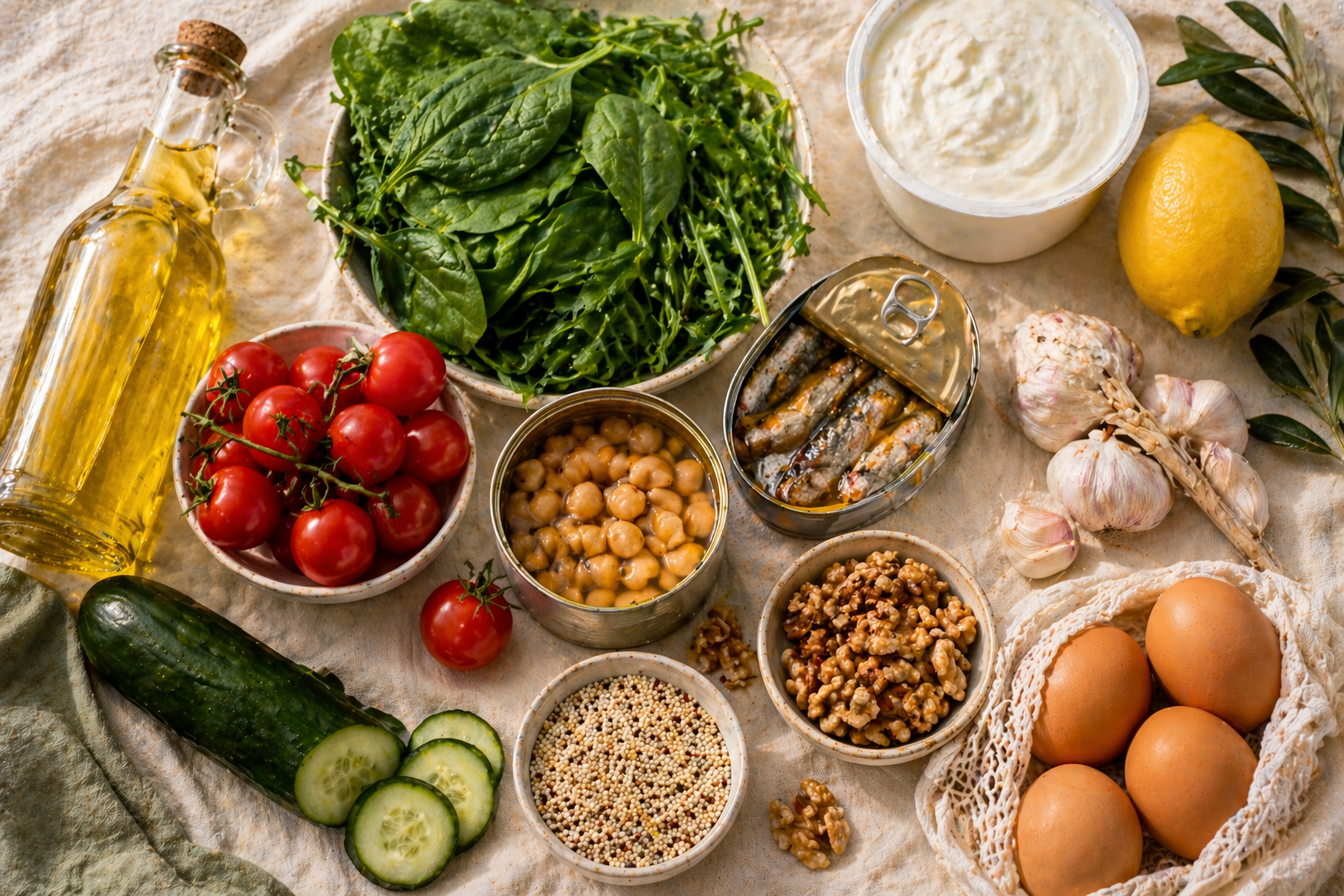
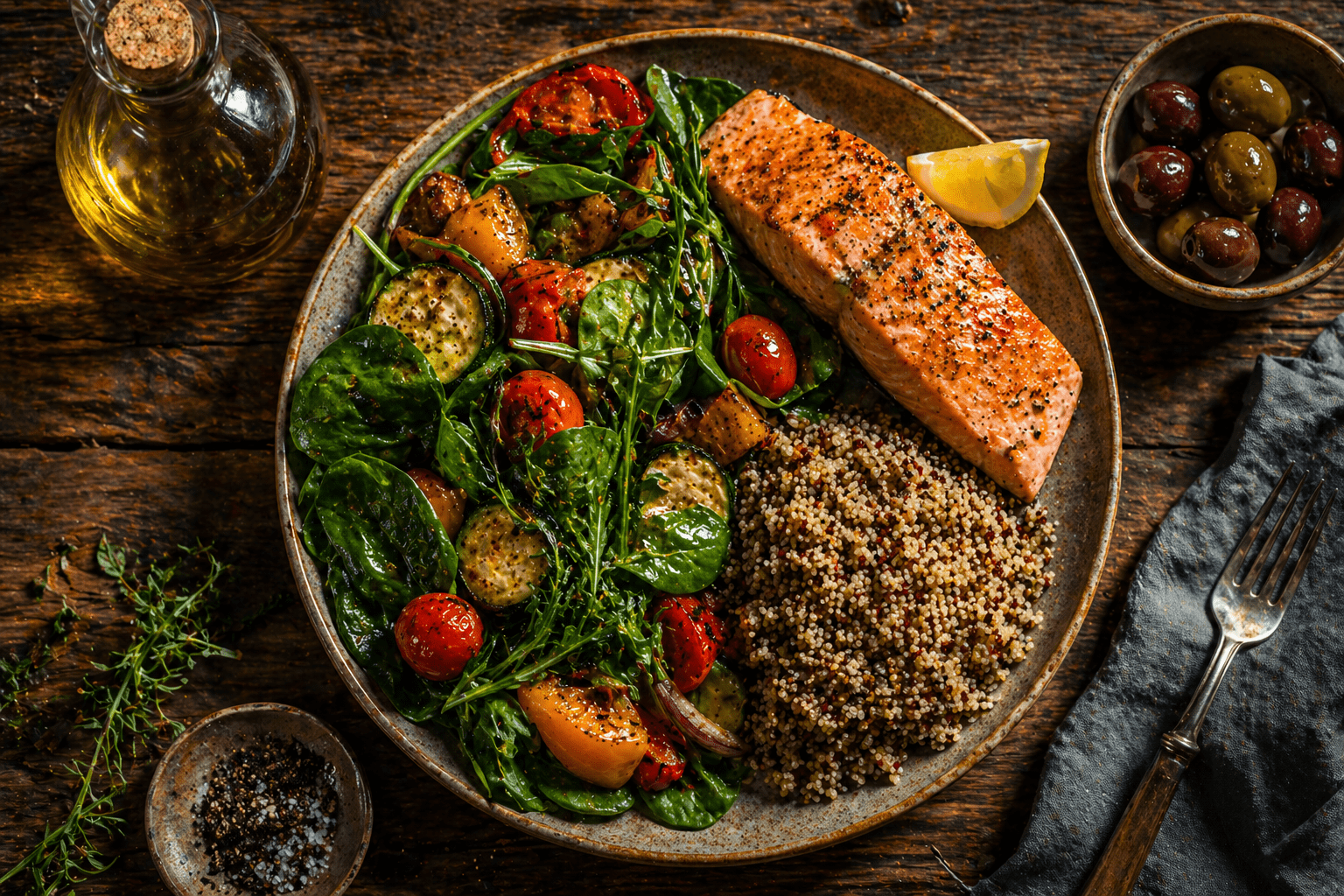
When the right 15 ingredients are always in your pantry and fridge, a complete Mediterranean meal is never more than 10 minutes away, without a recipe, without planning, without thinking too hard about what to eat. You just open the cupboard and build.
That’s the difference between people who eat well consistently and people who don’t. Not discipline. Not motivation. A stocked kitchen.
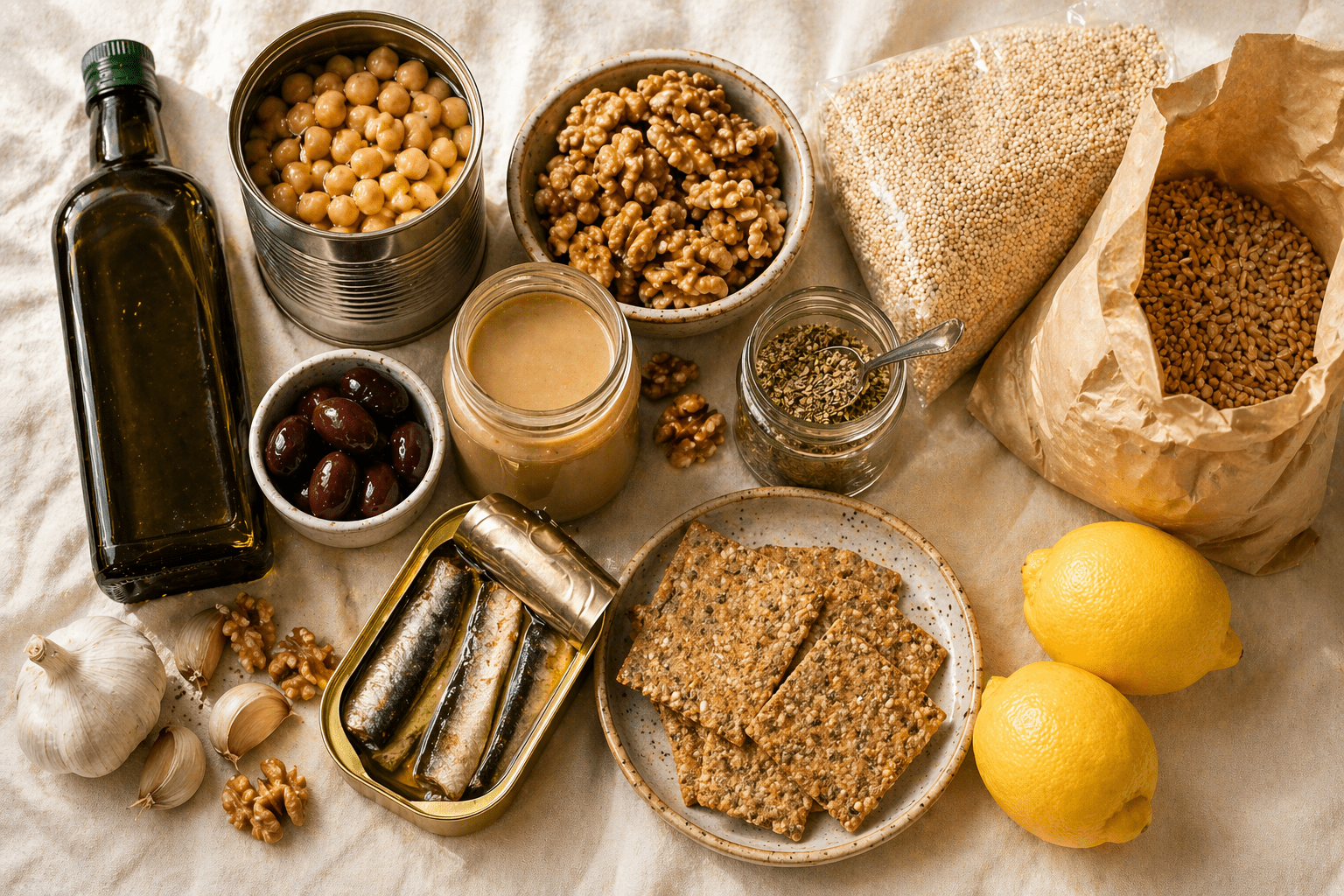
These are the 15 Mediterranean pantry essentials that make that possible.
Why a Stocked Mediterranean Kitchen Changes Everything
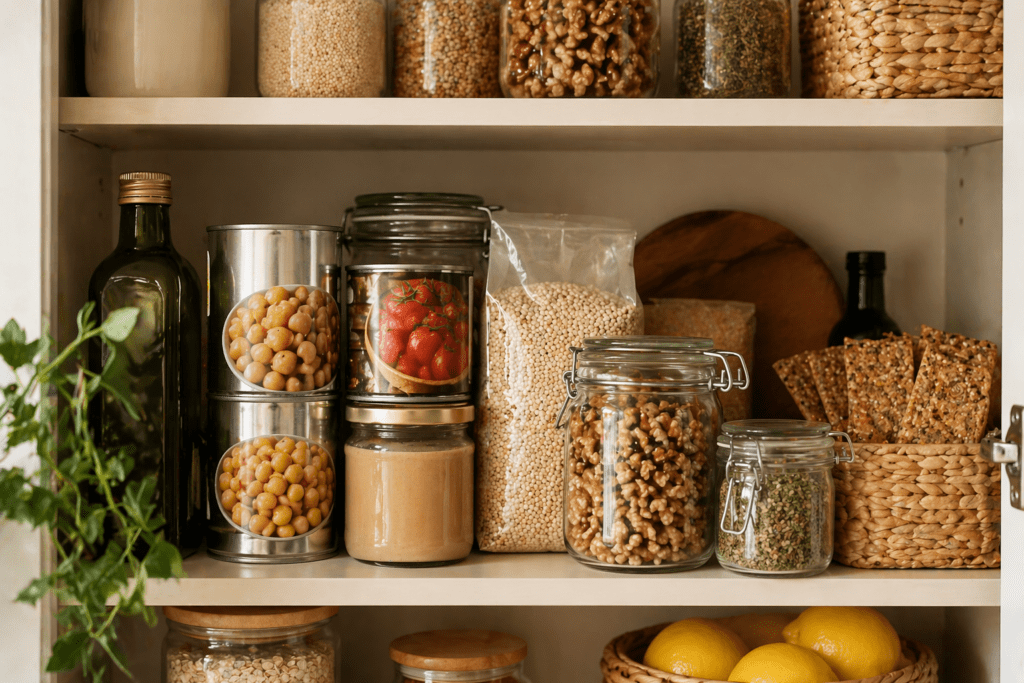
Before getting into the specific staples, it helps to understand what makes Mediterranean eating sustainable when other approaches aren’t.
Most diets work by restricting, removing foods, counting numbers, following strict rules. They fail because restriction requires constant willpower, and willpower is a finite resource.
Mediterranean eating works differently. It’s additive, not restrictive. You’re building meals around real, whole ingredients that naturally satisfy hunger, not white-knuckling your way through a list of foods you can’t eat.
But the sustainability only kicks in when the right ingredients are always available. When you open the fridge and there’s nothing Mediterranean-friendly, you make whatever’s easiest. When the pantry is stocked, the healthy choice becomes the easy choice.
That’s the whole system. Stock the kitchen once a week, build from what’s there, eat well automatically.
For a deeper look at how these ingredients combine into complete meals, read: The Balanced Mediterranean Meal Formula for Stable Energy and Fullness
The 15 Mediterranean Pantry Essentials
These 15 items form the complete foundation of Mediterranean eating. With all of them stocked, you can build breakfast, lunch, dinner, and snacks without a single recipe.
1. Extra Virgin Olive Oil
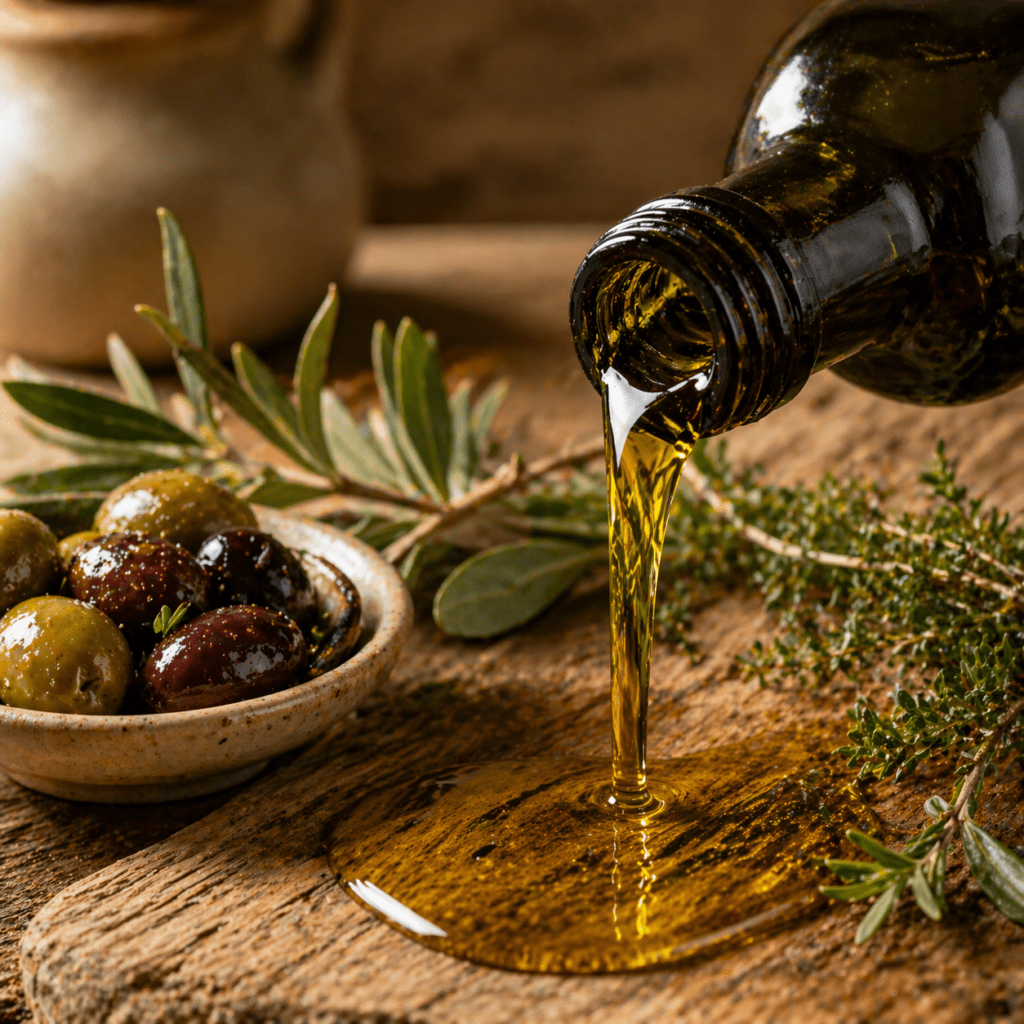
Why it’s essential: Olive oil is the single most important item in a Mediterranean kitchen. It’s used at virtually every meal, for cooking, dressing, drizzling, and finishing. It’s also the most studied anti-inflammatory food compound in nutrition science, containing oleocanthal, a compound a 2023 review in the journal Antioxidants found works similarly to a natural anti-inflammatory, calming the same pathways as ibuprofen.
How to use it: Drizzle over vegetables before roasting, whisk into salad dressings, finish grain bowls, cook eggs. Use it generously, traditional Mediterranean eating uses 2–4 tablespoons per meal.
What to buy: Cold-pressed, extra virgin only. Atlas Organic Cold-Pressed Extra Virgin Olive Oil is consistently high quality and available for regular restocking.
2. Canned Chickpeas
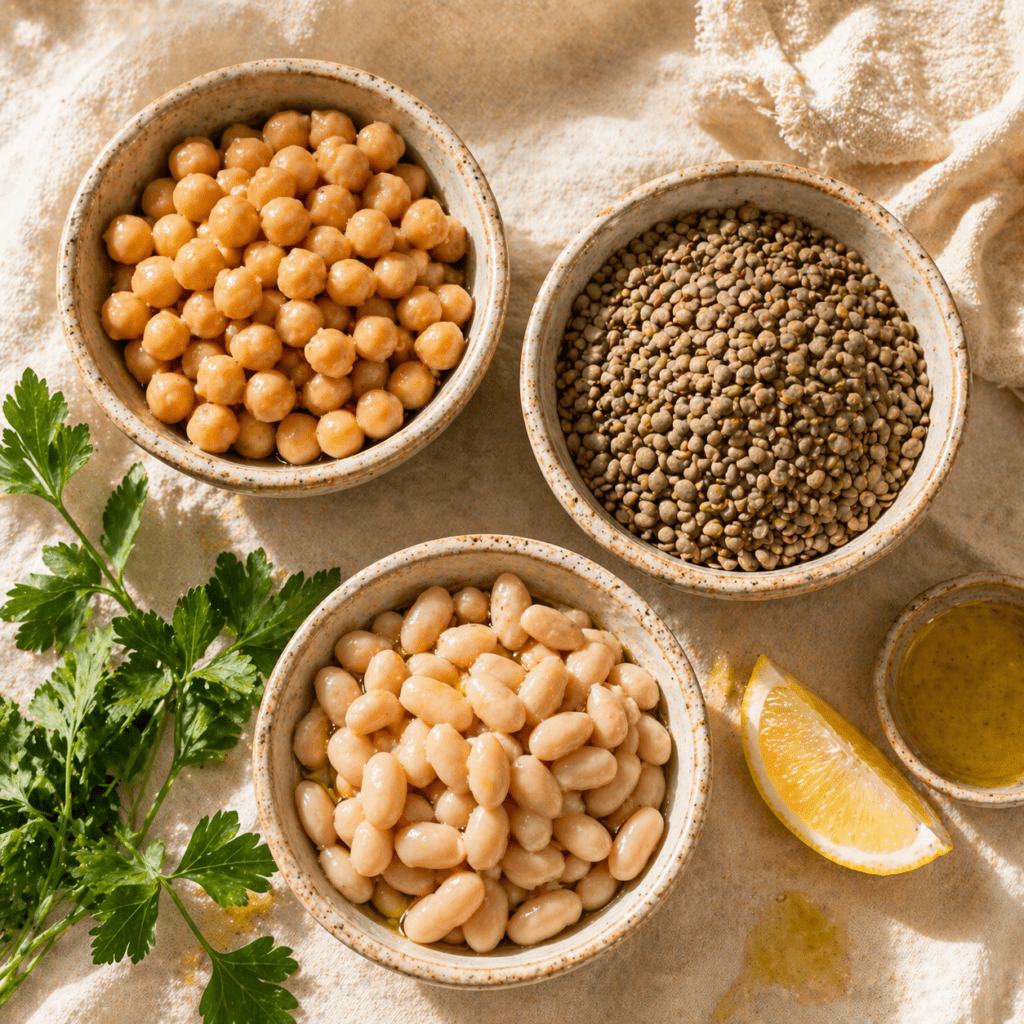
Why they’re essential: Chickpeas provide protein and fiber simultaneously, one of the most efficient satiety foods available. They require zero cooking from a can, work in salads, grain bowls, soups, and roasted as snacks, and cost almost nothing per serving.
How to use them: Drain and rinse, add to any salad or bowl. Roast with olive oil and paprika for a crunchy snack. Blend with tahini and lemon for homemade hummus in 5 minutes.
What to buy: Keep 3–4 cans stocked at all times. Eden Organics canned chickpeas are BPA-free and pre-cooked perfectly.
3. Canned Lentils or Dried Lentils
Why they’re essential: Like chickpeas, lentils are protein and fiber in one ingredient. They form the base of soups and stews, bulk up grain bowls, and make a hearty vegetarian meal in 15 minutes with just olive oil, garlic, and canned tomatoes.
How to use them: Canned lentils are ready immediately, add to salads or bowls cold. Dried lentils cook in 20 minutes without soaking and are even cheaper per serving.
4. Canned Whole Tomatoes
Why they’re essential: The base of Mediterranean soups, stews, and sauces. One can plus chickpeas, garlic, and olive oil is dinner in 15 minutes. They provide lycopene, one of the most powerful antioxidants in the Mediterranean diet, in higher concentrations than fresh tomatoes because cooking concentrates it.
How to use them: Crush by hand into a pan with sautéed garlic and olive oil for an instant pasta or grain sauce. Add to lentil soup. Use as the base for shakshuka eggs.
5. Quinoa
Why it’s essential: The most practical Mediterranean grain, cooks in 15 minutes, provides complete protein (all essential amino acids), and works as a base for virtually any bowl combination. Cook a large batch on Sunday and use throughout the week cold or reheated.
How to use it: Bowl base, mixed into salads, alongside roasted vegetables, combined with chickpeas and olive oil for a 5-minute lunch.
6. Farro
Why it’s essential: Nuttier and more satisfying in texture than quinoa. The grain that makes Mediterranean bowls feel like a real meal. Takes 30 minutes to cook but keeps in the fridge for 5 days. Your most versatile grain for meal prep.
How to use it: Warm grain bowls with roasted vegetables, cold farro salads with olive oil and fresh herbs, mixed with chickpeas and feta for a 10-minute lunch.
7. Tahini
Why it’s essential: Ground sesame paste that forms the base of hummus, works as a salad dressing, adds richness to grain bowls, and provides healthy fat and protein in one ingredient. One jar lasts weeks. Combined with lemon, garlic, and water it becomes the most versatile sauce in Mediterranean cooking.
How to use it: Mix 3 tablespoons tahini with lemon juice, one minced garlic clove, and water until smooth, instant dressing for anything. Organic tahini with no added oils is the best option.
8. Walnuts
Why they’re essential: The most anti-inflammatory nut available, containing plant-based omega-3, polyphenols, and magnesium. Add to yogurt, salads, grain bowls, or eat as a standalone snack. A small handful provides meaningful anti-inflammatory fat that complements every meal.
How to use them: Scatter over Greek yogurt, add to salads, mix into oatmeal, eat with fruit as a snack. Raw walnuts in bulk are the most economical option, store in an airtight container.
9. Canned Sardines or Salmon
Why they’re essential: The most practical way to eat fatty fish consistently. Canned wild sardines and salmon have identical omega-3 content to fresh fish, cost a fraction of the price, and require zero cooking. One can provides a complete protein serving with the highest anti-inflammatory fat content of any pantry item.
How to use them: On whole grain crackers with olive oil and lemon. Flaked into grain bowls. Mixed into pasta with capers and olive oil. Wild Planet sardines packed in olive oil are the best quality option.
10. Kalamata Olives
Why they’re essential: Convenient, shelf-stable healthy fat that adds authentic Mediterranean flavor instantly. Keep a jar in the fridge at all times. They last months and transform any simple dish into something that tastes intentional.
How to use them: Scatter over salads and grain bowls, add to pasta, serve alongside hummus and vegetables as a snack plate, chop into dressings.
11. Extra Virgin Olive Oil (for finishing)
Keep two olive oils, one for cooking at medium heat and a higher-quality finishing oil for drizzling over completed dishes. The finishing oil’s flavor complexity is what makes Mediterranean food taste restaurant-quality at home.
12. Garlic
Why it’s essential: The aromatic foundation of Mediterranean cooking. Sauté in olive oil as the base of virtually any dish and the entire kitchen smells like a Mediterranean restaurant. Fresh garlic used generously is one of the simplest upgrades to any meal.
How to use it: Minced into dressings, sautéed in olive oil as a sauce base, roasted whole as a side, added to tahini dressing.
13. Lemons
Why they’re essential: Used more than almost any other flavoring in Mediterranean cooking. Squeezed over fish, mixed into tahini sauce, whisked into dressings, added to grain bowls. A squeeze of lemon at the end of almost any Mediterranean dish brightens every other flavor and makes simple food taste complex.
How to use them: Keep 4–6 lemons at all times. Use constantly. They’re one of the cheapest ingredients in the kitchen and one of the highest impact.
14. Dried Oregano and Za’atar
Why they’re essential: The two spices that make food taste Mediterranean. Dried oregano adds the herbal backbone that defines Greek and Italian cooking. Za’atar (a blend of thyme, oregano, sesame, and sumac), is the single most transformative spice addition for roasted vegetables and grain bowls.
How to use them: Sprinkle over roasted vegetables before they go in the oven, add to olive oil dressings, mix into tahini sauce, season fish and chicken before cooking.
15. Whole Grain Crackers
Why they’re essential: The most versatile snack base in Mediterranean eating. With sardines, hummus, or tahini on top they become a complete snack with protein, fiber, and healthy fat. They’re also the fastest way to make a satisfying snack at 9pm without cooking anything. Wasa whole grain crackers are the best option, high fiber, no added oils, genuinely satisfying.
How These 15 Items Work Together
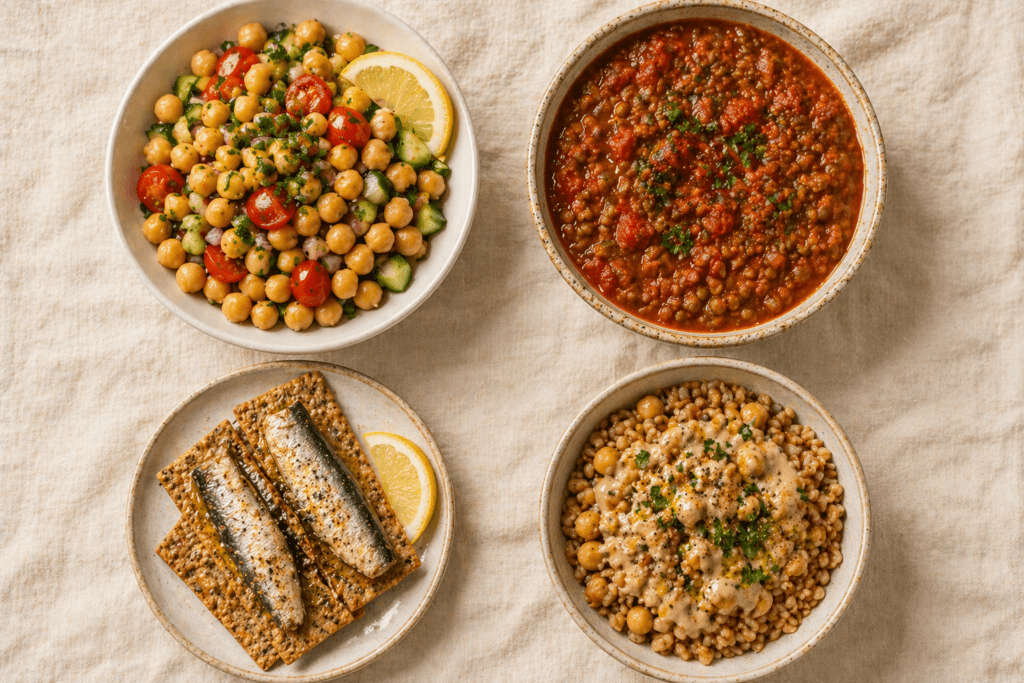
The power of this pantry list isn’t any individual ingredient. It’s how naturally they combine.
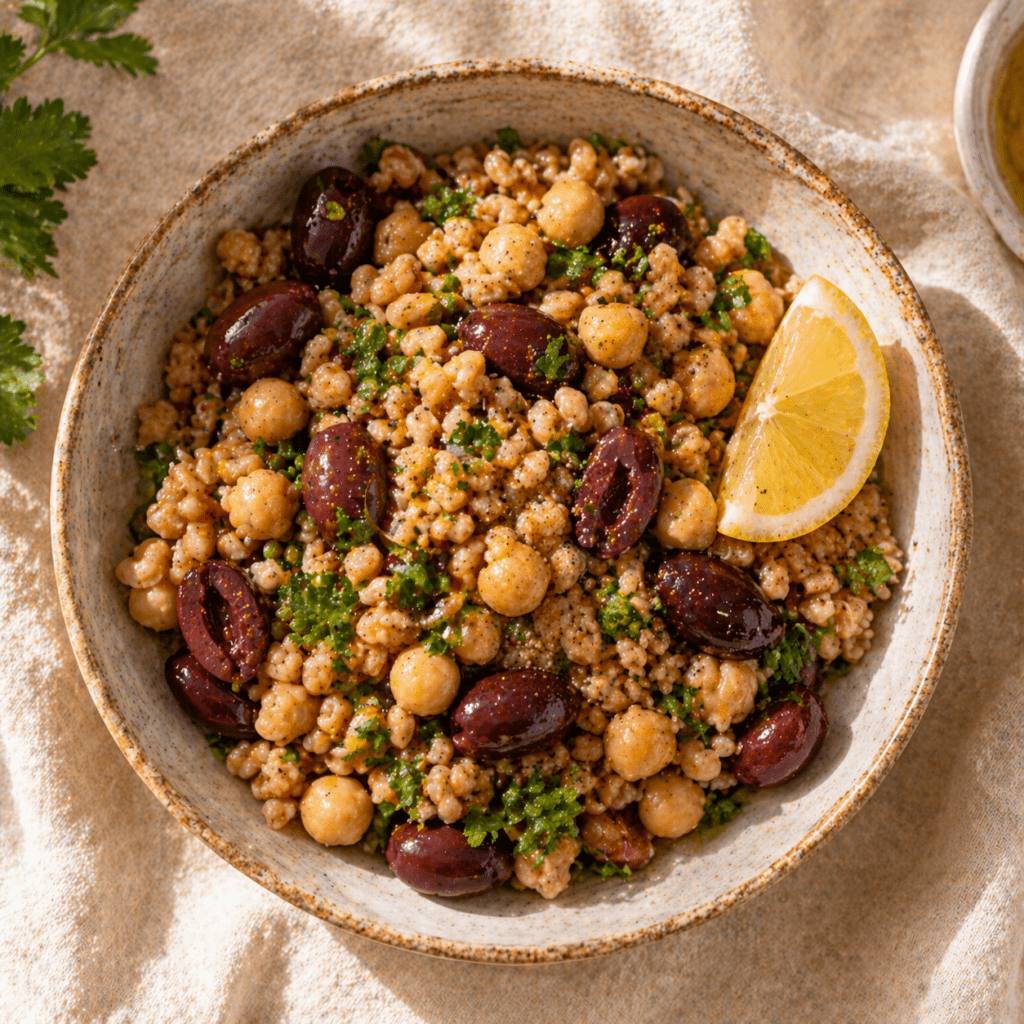
A 5-minute lunch from pantry staples: Canned chickpeas + kalamata olives + olive oil + lemon + dried oregano = Mediterranean chickpea salad
A 15-minute dinner from pantry staples: Canned lentils + canned tomatoes + garlic + olive oil + za’atar = hearty lentil stew
A 2-minute snack from pantry staples: Whole grain crackers + sardines + lemon + olive oil = complete protein snack
A 10-minute grain bowl from pantry staples: Cooked farro + chickpeas + tahini dressing + walnuts = satisfying lunch bowl
Every one of these requires zero fresh ingredients beyond what’s already in your pantry. That’s the point of building this foundation first.
For ideas on how to build a full week of meals from these staples, read: Mediterranean Meal Prep for the Week: 5 Simple Combinations
Building Your Pantry Without Overwhelming Your Budget
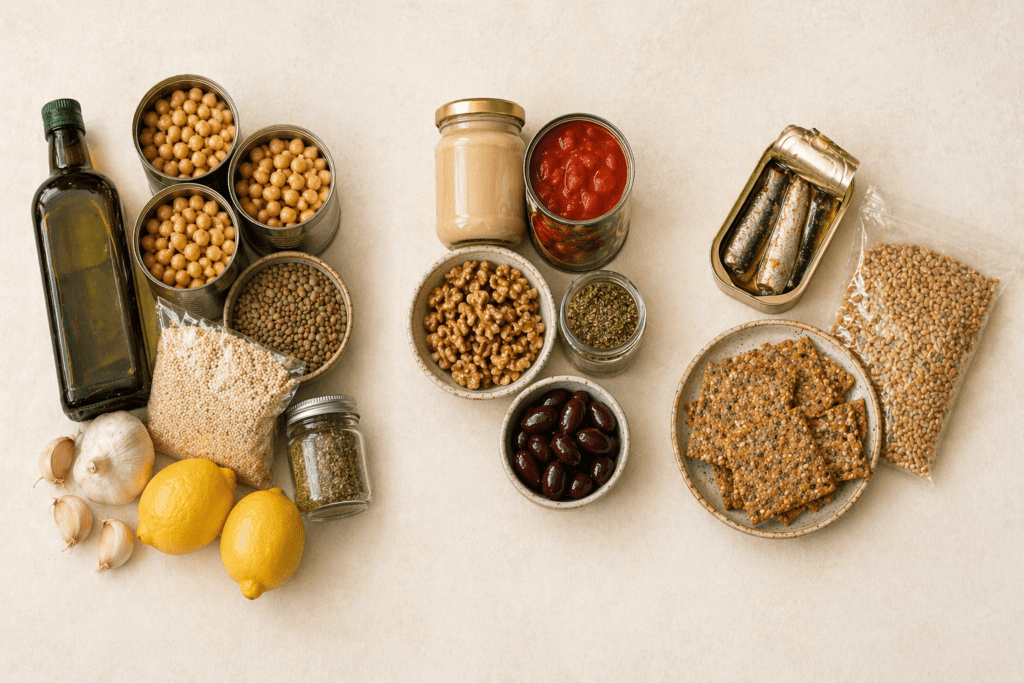
You don’t need to buy all 15 items at once. Here’s how to build the foundation over two to three weeks without a large upfront cost:
Week 1. The foundation (most important): Extra virgin olive oil, canned chickpeas (3 cans), canned lentils, quinoa, garlic, lemons, dried oregano
Week 2. The flavour layer: Tahini, canned whole tomatoes, walnuts, za’atar, kalamata olives
Week 3. The protein layer: Canned sardines or salmon, farro, whole grain crackers
By week 3 your pantry is complete and weekly maintenance shopping is just restocking whatever runs out.
If you want to stock Mediterranean-quality pantry staples at lower prices, Thrive Market delivers organic Mediterranean pantry items at wholesale cost, worth checking if you’re buying these regularly.
For a complete fresh produce shopping list to pair with these pantry staples, read: Mediterranean Diet Grocery List for Beginners
Frequently Asked Questions
What are the most important Mediterranean pantry essentials for a beginner?
Start with extra virgin olive oil, canned chickpeas, canned lentils, quinoa, garlic, and lemons. These six items alone allow you to build complete Mediterranean meals immediately without any other ingredients.
How long do Mediterranean pantry staples last?
Most pantry staples last 1–3 years unopened, canned legumes, whole grains, tahini, and olive oil all have long shelf lives. Once opened, tahini keeps refrigerated for 6 months, olive oil keeps at room temperature for 18 months, and cooked grains keep refrigerated for 5 days.
How is this different from a Mediterranean grocery list?
A grocery list tells you what to buy each week including fresh produce, proteins, and dairy. A pantry essentials list is your permanent kitchen foundation. The shelf-stable items that are always stocked and never run out. You shop for fresh items weekly and replenish pantry staples monthly.
Do I need specialty stores for Mediterranean pantry essentials?
No, every item on this list is available at regular grocery stores including Walmart, Target, and most supermarkets. Canned chickpeas, olive oil, tahini, quinoa, and sardines are mainstream products now available everywhere.
Is a Mediterranean pantry expensive to maintain?
The ongoing cost is very reasonable. Most of these items are bought monthly rather than weekly, a can of chickpeas costs $1.50, dried lentils cost $2 per bag, and walnuts bought in bulk cost $8–10 for a month’s supply. The most expensive ongoing item is olive oil at $15–25 per bottle lasting 2–3 weeks.
How do these pantry staples reduce inflammation?
Olive oil contains oleocanthal which inhibits inflammatory enzymes. Sardines and walnuts provide omega-3 fatty acids that produce anti-inflammatory compounds. Chickpeas and lentils feed beneficial gut bacteria that reduce intestinal inflammation. Together these staples create a consistently anti-inflammatory eating pattern. For a full breakdown read: How to Reduce Inflammation With the Mediterranean Diet
Once these staples are in place, a few related guides can help you build on them. The Mediterranean Diet Grocery List for Beginners walks through a full first shopping trip, and Mediterranean Meal Prep for the Week shows you how to turn these same staples into meals in under 30 minutes. If you want to know exactly which foods do the most to keep you full, Mediterranean Foods That Keep You Full Longer covers that in detail, and the Balanced Plate Method ties everything here into an actual plate formula you can use at every meal. If you’re active, Mediterranean Diet for Runners covers fueling and recovery using the same pantry basics.
About Ribert Rodriguez
Ribert is the founder of EnergiSource Wellness. He researches and writes every article on this site personally, cross-checking claims against published research rather than relying on generic wellness advice. His approach is rooted in the Mediterranean framework, built from years of testing meal structures on himself after struggling with cravings, late-night eating, and low energy.