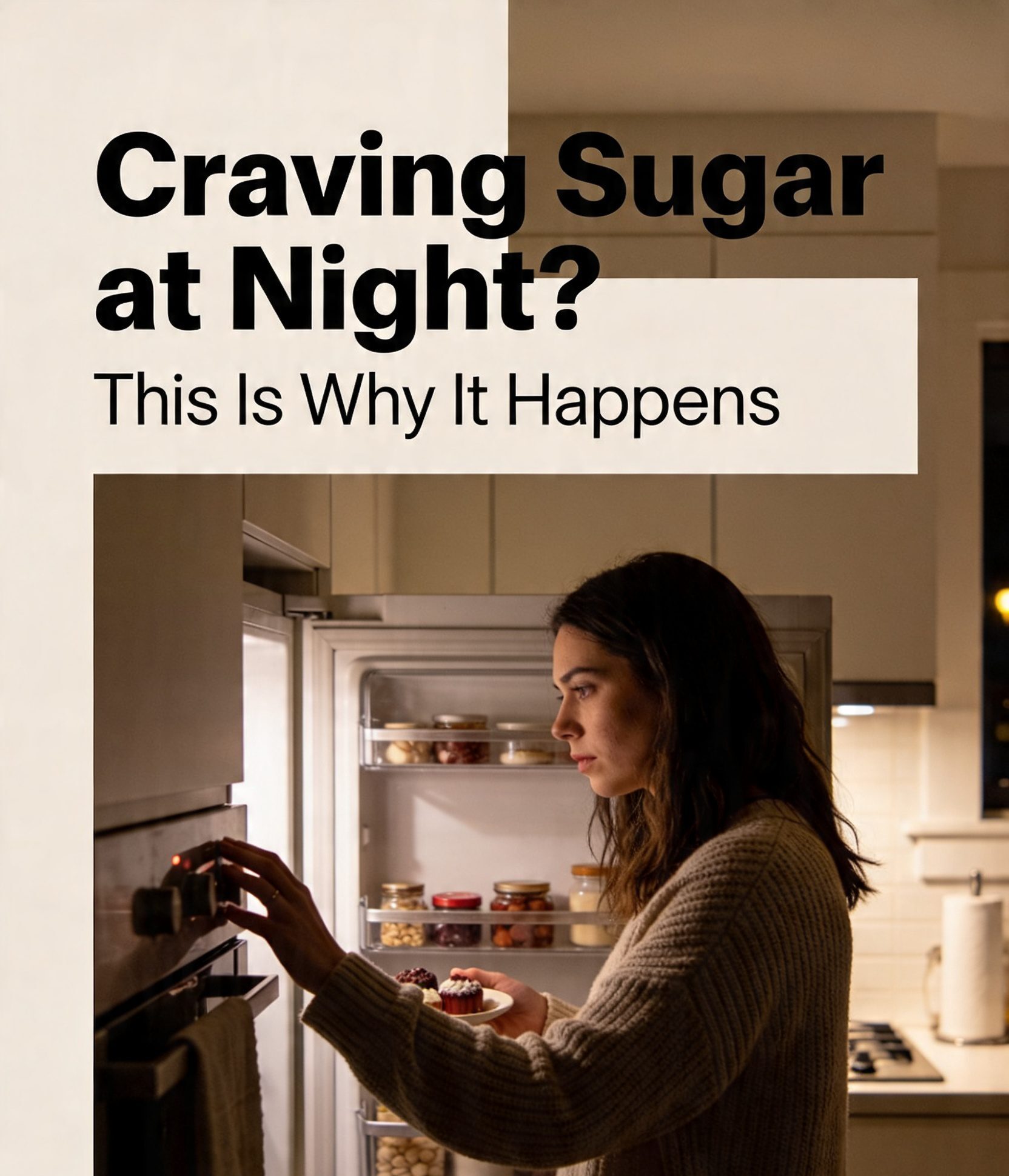
Dinner is over… but you’re still thinking about something sweet
You crave sugar at night because your blood sugar has been on a spike-and-crash cycle all day and your brain is chasing quick fuel, not because you lack willpower. Eating enough protein, fiber, and fat earlier in the day is what actually stops the nighttime pull.
You finished eating.
Your plate is cleared.
You’re not physically hungry.
But something feels… unfinished.
You start thinking about dessert.
Maybe something small. Just a bite.
And before you know it, you’re back in the kitchen
looking for something sweet.
This isn’t just a “habit”
It can feel like it.
Like you just need more control.
Like you should be able to ignore it.
But that pull toward sugar at night?
It’s not random.
And it’s not because you lack discipline.
Your body is trying to tell you something
The real reason you crave sugar at night
There’s one simple cause behind this:
You didn’t eat enough earlier in the day.
That’s it.
What’s actually happening
When your earlier meals don’t give your body enough fuel:
- your energy slowly drops throughout the day
- your body starts looking for quick energy
- sugar becomes the fastest solution
So by the time night comes…
Your body is trying to catch up.
Even if dinner felt “normal,” it’s not enough to make up for the entire day.
What this looks like in real life
This pattern is more common than you think:
- a light breakfast that didn’t hold you
- a rushed or small lunch
- snacks that never fully satisfied
By evening, your body is behind.
And sugar feels like the easiest fix.
Why this keeps happening (even when you eat dinner)
This is the part that confuses most people.
You sit down for dinner.
You eat a normal portion.
You feel full… at least for a little while.
So when cravings show up later, it doesn’t make sense.
But your body isn’t just responding to that one meal.
It’s responding to your entire day.
If your earlier meals were too small, too light, or missing key nutrients, your body is still trying to catch up.
Dinner can’t fully fix that.
So instead, your body looks for the fastest way to get energy back up.
And that’s where sugar cravings come in.
What actually stops night cravings
You don’t need:
- more willpower
- stricter rules
- to cut out sugar completely
You need to eat enough earlier in the day
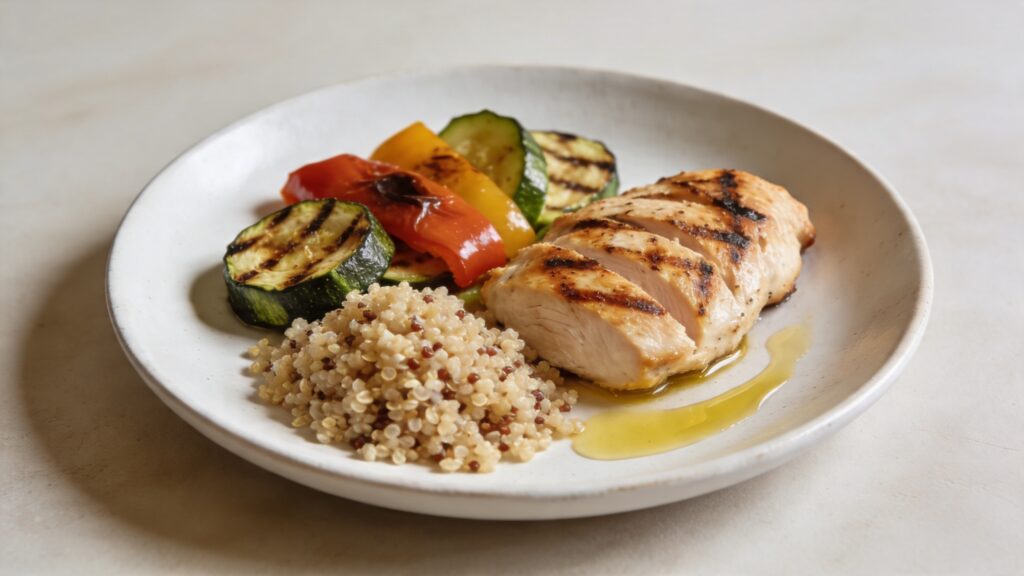
The Full Plate Method (earlier in the day)
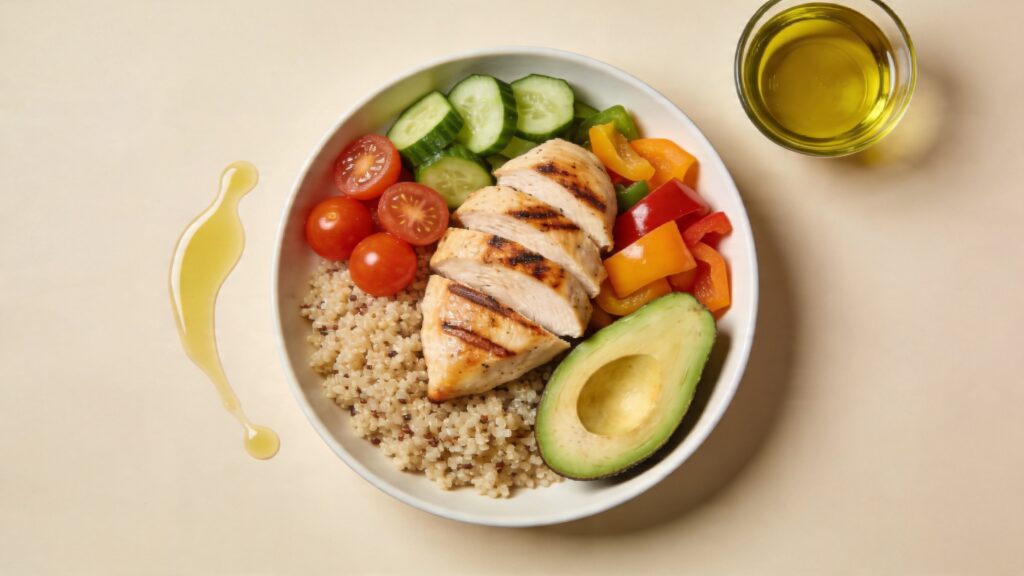
Your meals should include:
Protein + Fiber + Healthy Fat + Complex Carb
This combination:
- keeps energy steady
- prevents dips later
- reduces cravings automatically
How to fix this (simple shifts)
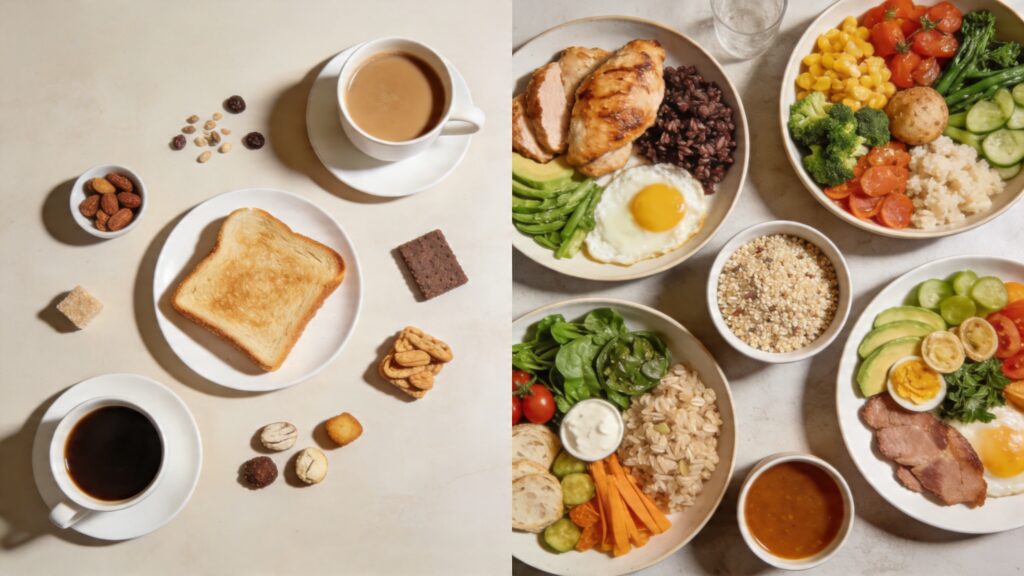
Start with breakfast
Instead of:
- coffee + toast
Add:
- eggs or Greek yogurt
- fruit or oats
- healthy fat like nut butter
Build a real lunch
Instead of:
- something quick or light
Build:
- protein (chicken, fish, beans)
- fiber (vegetables)
- fat (olive oil, avocado)
- carbs (rice, potatoes, grains)
Stop relying on snacks to carry your day
Snacks aren’t the problem.
But they shouldn’t replace meals.
If your meals are solid, you won’t need constant snacking.
Why dinner isn’t the problem
This is where most people get stuck.
They think:
“I ate dinner… why am I still craving something?”
But dinner isn’t the issue.
It’s everything that happened before it.
This is the same pattern explained in
Why Breakfast Doesn’t Keep You Full (And What to Eat Instead)
If your day starts low, your night will feel harder.
Why willpower doesn’t work at night
By the end of the day, your energy is lower.
Your brain is tired.
Your body is depleted.
So even if you want to ignore cravings, it feels harder.
That’s not because you lack discipline.
It’s because your body is trying to solve a problem.
When your meals are balanced earlier in the day, this pressure goes away.
Cravings don’t feel urgent anymore.
They feel optional.
Reset your cravings starting today
If this pattern feels familiar, start here:
This walks you through how to rebuild your meals so cravings stop showing up at night.
Why your body turns to sugar

Sugar is quick energy.
When your body is running low, it doesn’t ask for vegetables or protein.
It asks for the fastest fuel available.
That’s why cravings feel so strong at night.
There’s also a blood sugar piece specific to why this hits at night and not, say, at 10am. If your meals earlier in the day didn’t include enough protein and fiber, your blood sugar has likely been spiking and crashing for hours by the time evening arrives. A 2025 Stanford Medicine study on these swings found that pairing carbs with protein or fiber measurably reduces them, which means an unbalanced day compounds the effect meal after meal. Each of those crashes also triggers a small cortisol release as your body works to bring glucose back up, and by nighttime that repeated swinging leaves you genuinely depleted. Sugar is the fastest way your body knows to fix that feeling immediately. It’s not a lack of discipline. It’s your body reaching for the quickest available fix to a problem that started hours earlier.
A simple way to think about it
If you crave sugar at night, ask yourself:
“Did I eat enough earlier?”
Not just food.
Enough balanced meals.
This is why your cravings feel automatic
It’s not about control.
It’s about your body trying to balance itself.
When your meals support you during the day,
those night cravings start to fade.
Start with tomorrow
You don’t need to fix everything at night.
Start earlier.
Build a better breakfast.
Eat a real lunch.
And notice what happens later.
Because when your body gets what it needs during the day…
It stops asking for it at night.
Signs you’re not eating enough earlier
If this is happening regularly, you might notice:
- you get hungry again shortly after meals
- you rely on snacks to get through the day
- your energy dips in the afternoon
- you feel strong cravings at night
These aren’t random.
They’re signals that your meals aren’t fully supporting you.
Make it simple
If you want this to feel automatic:
Use the Full Plate Method app to build meals that keep you full without overthinking it.
Why it is sugar specifically, and why tired nights are the worst
Night cravings are rarely about hunger. They are about reward. And the less you have slept, the louder that reward signal gets.
Here is what is happening in your brain. When you are short on sleep, the thinking, self-control part of your brain (the frontal cortex) gets quieter, while the reward-seeking part (the amygdala) gets louder. The result is a brain that is worse at saying no and more strongly pulled toward the most rewarding foods, which are almost always sweet and high in calories.
This was shown directly in a study published in Nature Communications by researchers Stephanie Greer and Matthew Walker. After a night of poor sleep, people wanted high-calorie, sugary foods significantly more than when they were rested, and brain scans showed exactly that shift: less control, more reward. Their desire for low-calorie foods did not change. It was specifically the sweet, dense stuff that got more tempting.
So if you crave sugar at night, especially after a rough night of sleep, that is not a character flaw. It is a tired brain doing what tired brains do. The two things that actually help are boringly simple: protect your sleep, and eat enough real food during the day so you are not running on empty when your defenses are already down.
About Ribert Rodriguez
Ribert is the founder of EnergiSource Wellness. He researches and writes every article on this site personally, cross-checking claims against published research rather than relying on generic wellness advice. His approach is rooted in the Mediterranean framework, built from years of testing meal structures on himself after struggling with cravings, late-night eating, and low energy.