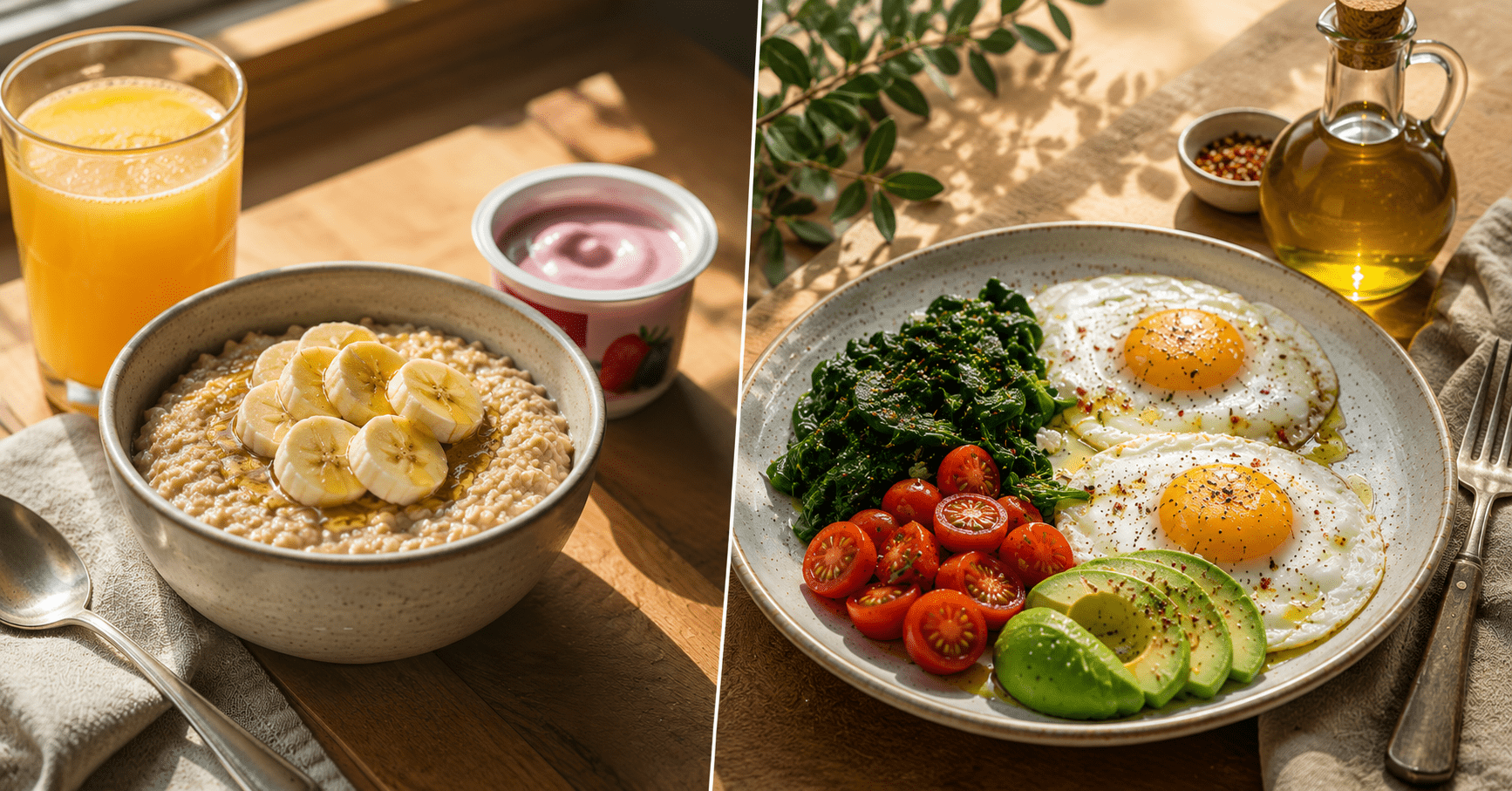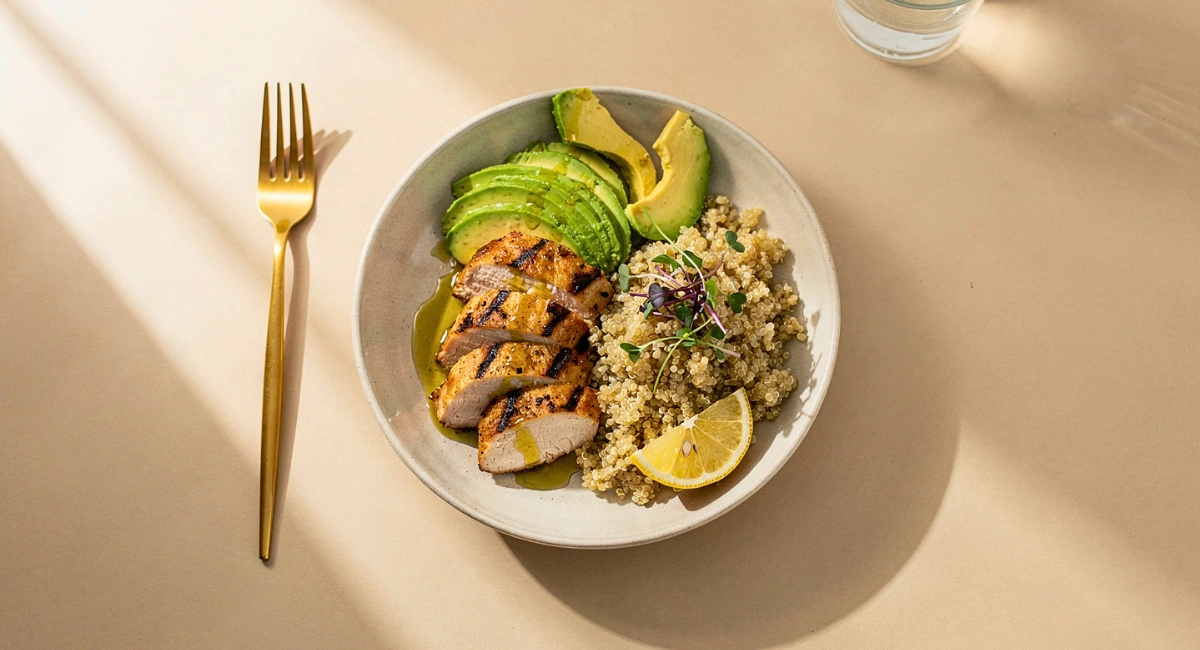
Balancing blood sugar is the real fix for constant hunger and cravings, and it comes down to what your glucose does between meals. Pairing protein, fiber, and fat at every meal keeps blood sugar steady so it never crashes into the cravings you feel by mid-afternoon.
You eat a full meal. A real meal, not a snack. And within an hour you are hungry again. By mid-afternoon you are reaching for something sweet even though you are not sure you actually want it. By 9pm you are standing in front of the fridge looking for anything to make the feeling stop.
This is not a willpower problem. It is not portion control. It is not even about what specific foods you are eating.
It is about what your blood sugar is doing between meals. And once you understand that mechanism clearly, fixing constant hunger and cravings becomes a lot more straightforward than any diet advice you have ever been given.
What Your Blood Sugar Is Actually Doing Between Meals
Every time you eat, your blood sugar rises. That is normal and expected. What matters is how fast it rises and how far it falls afterward.
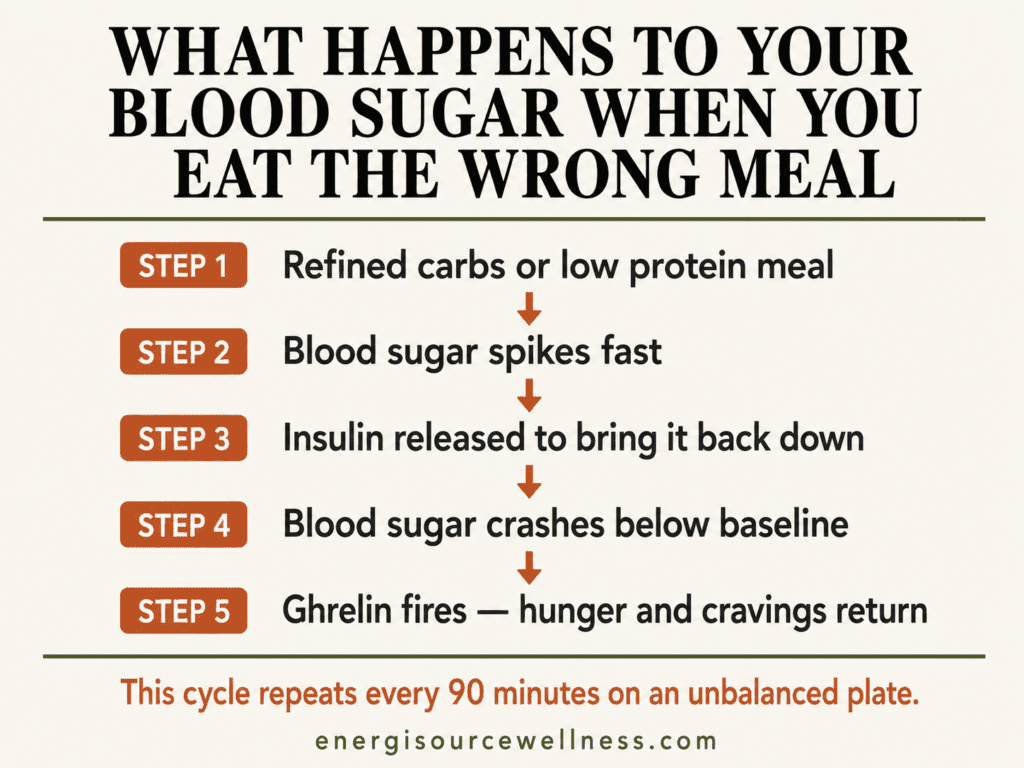
When a meal is built around refined carbohydrates with little protein, fiber, or fat, glucose floods your bloodstream quickly. Your pancreas responds by releasing a surge of insulin to bring blood sugar back down. The problem is that insulin often overcorrects. Blood sugar drops below baseline. Your brain interprets that drop as an emergency and fires ghrelin, your primary hunger hormone, telling you to eat again immediately.
The whole cycle takes about 90 minutes to two hours. Which is why you can eat a full breakfast of toast and orange juice and be genuinely, urgently hungry before lunch. The meal was not too small. It was not structured to prevent the crash.
That crash is also why you crave sugar and carbohydrates specifically. When blood sugar drops your brain wants the fastest source of glucose available. Refined carbs and sugar deliver that fastest. So the craving is not random. It is your brain solving an energy emergency the fastest way it knows how. This is also exactly why you crave sugar specifically at night. The same blood sugar crash mechanism hits hardest in the evening when your earlier meals have already worn off
Understanding this one mechanism changes everything. You stop blaming yourself for lack of discipline and start looking at what your meals are actually doing to your blood sugar in the hours after you eat.
What Throws Your Blood Sugar Off Every Day
Most people think blood sugar instability is only a concern for people with diabetes. But unstable blood sugar affects everyone who eats a modern diet regularly, and it affects hunger, energy, cravings, mood, and focus in ways most people never connect to food.
Here are the daily habits that are almost certainly disrupting your blood sugar without you realizing it.
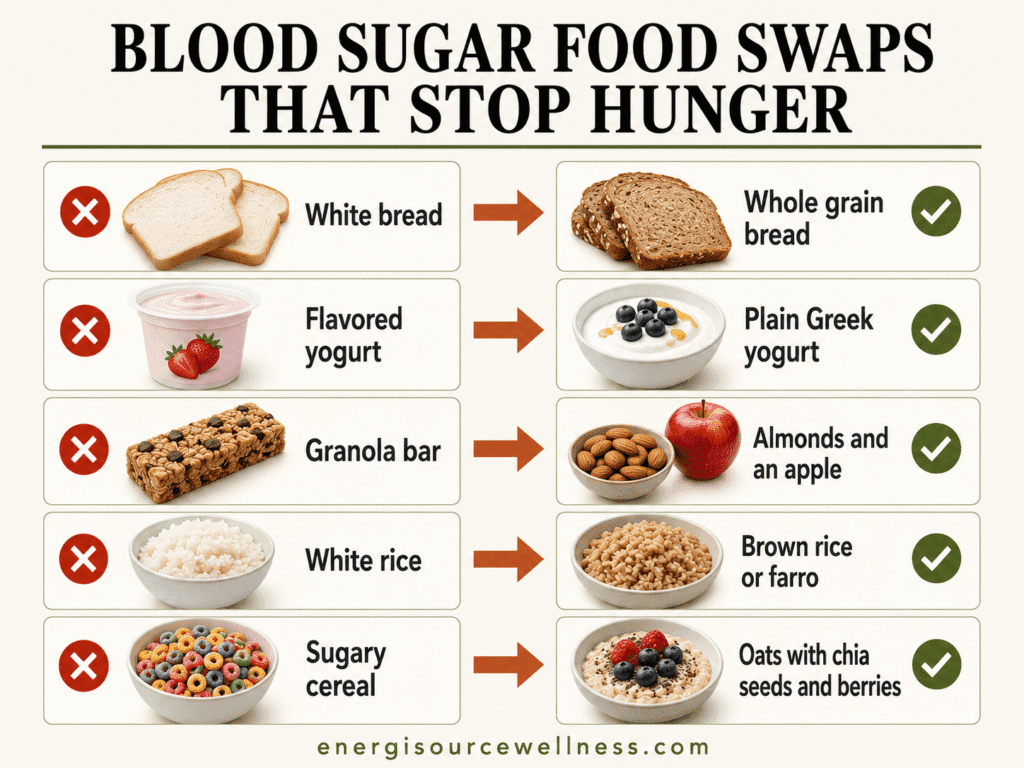
Eating refined carbs without protein or fat. White bread, white rice, regular pasta, most cereals and crackers. These digest so fast that blood sugar rises and crashes before your next meal. Every crash triggers the hunger and craving cycle all over again.
Skipping breakfast or eating too little in the morning. Your blood sugar is already at its lowest point when you wake up. Skipping breakfast or eating something too small means ghrelin runs high all morning. By mid-morning you are not just hungry. You are hormonally driven to eat whatever is available.
Eating carbs alone without a protein or fat anchor. A piece of fruit, a handful of crackers, a granola bar. These snacks send blood sugar up fast and bring it crashing down just as fast. A handful of almonds next to that same piece of fruit changes the entire response. This tracks with a 2025 Stanford Medicine study, which found that pairing carbohydrates with fiber or protein measurably blunted blood sugar spikes.
Caffeine on an empty stomach. Coffee before food raises cortisol which further destabilizes blood sugar. The energy you feel from morning coffee on an empty stomach is partly cortisol and partly adrenaline, not stable fuel. It sets up a crash by mid-morning regardless of how much you ate later.
Ultra-processed foods with hidden sugars. Flavored yogurts, protein bars, packaged sauces, and condiments often contain 15 to 25 grams of added sugar per serving. That sugar is causing blood sugar spikes in foods that do not taste sweet. Reading ingredient labels and looking for added sugar in unexpected places is one of the highest-leverage food awareness shifts you can make.
The Mediterranean Fix That Stabilizes Blood Sugar Naturally
The reason Mediterranean eating has such a consistent track record for blood sugar stability is not because it eliminates any food group. It is because it is built around the exact combination of nutrients that slows glucose absorption and prevents the spike and crash cycle.
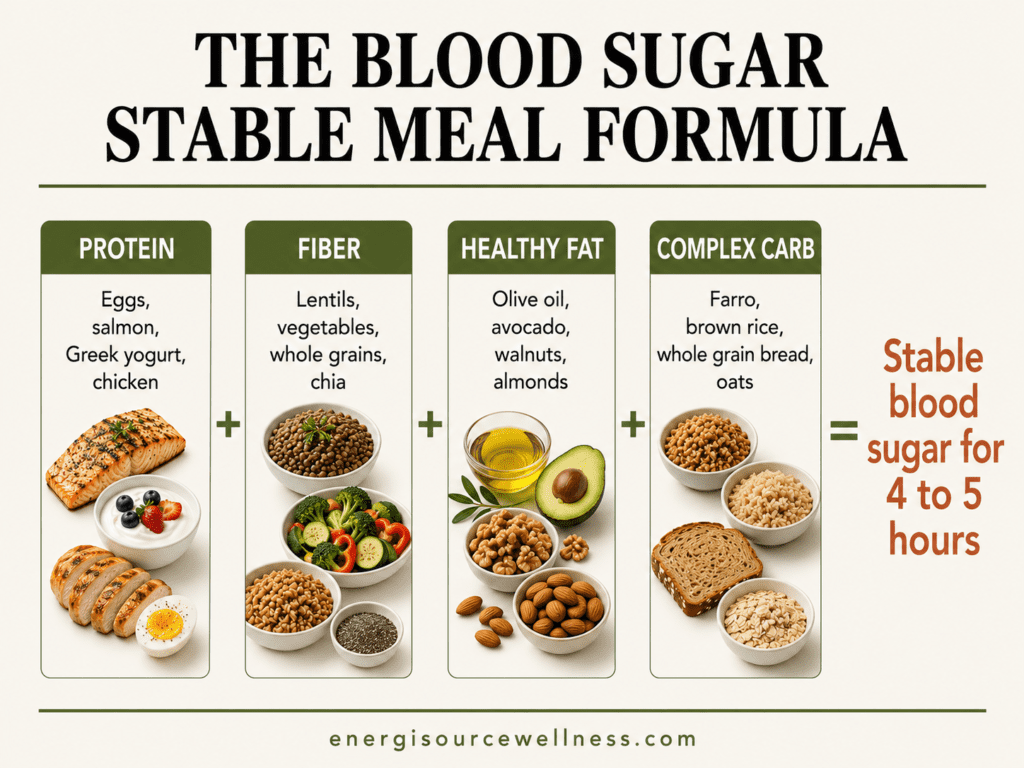
That combination is protein plus fiber plus healthy fat at every meal. Each component plays a specific role.
Protein slows gastric emptying and blunts the insulin response to carbohydrates. When protein is present at a meal, glucose enters the bloodstream more slowly. Ghrelin stays suppressed for significantly longer. Aim for 20 to 30 grams of protein at every meal, starting with breakfast.
Fiber from whole food sources, not supplements, slows the digestion of carbohydrates further and feeds the gut bacteria that produce GLP-1 and peptide YY, your two most powerful satiety hormones. Legumes, whole grains, vegetables, and berries are your primary fiber sources in Mediterranean eating.
Healthy fat slows gastric emptying more than almost any other nutrient. Extra virgin olive oil, avocado, walnuts, and almonds extend how long a meal stays with you by slowing the entire digestive process. This is the reason a salad with olive oil dressing holds you three times longer than the same salad with fat-free dressing.
When all three are present at a meal, your blood sugar rises slowly, stays stable for three to five hours, and falls gradually rather than crashing. Ghrelin does not spike. Cravings do not appear. You feel genuinely satisfied until your next meal.
This is how to build a balanced plate that actually works, and it is the foundation of everything else on this site.
7 Mediterranean Foods That Stabilize Blood Sugar
These are not supplements or superfoods. They are everyday Mediterranean staples that directly support blood sugar stability through real nutritional mechanisms.
1. Eggs One of the most blood-sugar-friendly breakfast foods available. Two eggs provide 12 grams of protein with essentially zero carbohydrates. When paired with whole grain toast and olive oil they create a breakfast that holds blood sugar stable for three to four hours consistently.
2. Greek Yogurt Plain full-fat Greek yogurt provides 15 to 20 grams of protein per cup. The protein and fat combination blunts the blood sugar impact of any carbohydrates eaten alongside it. Add berries for fiber and a small amount of honey for natural sweetness if needed. Never the flavored versions with added sugar.
3. Chia Seeds Two tablespoons of chia seeds add 10 grams of fiber to any meal. The soluble fiber in chia seeds forms a gel in your digestive system that physically slows glucose absorption. Adding chia seeds to oats, yogurt, or a smoothie measurably changes the blood sugar response to that meal.
4. Extra Virgin Olive Oil The healthy fat that anchors Mediterranean eating. Olive oil slows gastric emptying, reduces post-meal blood sugar spikes, and has direct anti-inflammatory effects on insulin sensitivity. Use it liberally on everything. Salads, roasted vegetables, eggs, whole grains. This is not an indulgence. It is a functional blood sugar tool.
5. Lentils and Chickpeas Legumes are the most blood-sugar-friendly carbohydrate source available. They are high in both fiber and protein which means they digest slowly, raise blood sugar gradually, and keep you satisfied for significantly longer than any refined carbohydrate at the same calorie count. Building one meal per day around lentils or chickpeas makes a measurable difference in blood sugar stability across the whole day.
6. Walnuts and Almonds A small handful of walnuts or almonds alongside any meal or snack provides healthy fat and protein that blunts whatever blood sugar impact the rest of the meal has. This is why eating an apple alone leaves you hungry in 45 minutes but eating an apple with a handful of almonds holds you for two hours.
7. Salmon and Fatty Fish Omega-3 fatty acids in salmon and sardines directly improve insulin sensitivity over time, meaning your cells become more efficient at taking up glucose from the bloodstream. This reduces the likelihood of blood sugar instability at a deeper level than just slowing digestion.
What a Blood-Sugar-Stable Day Actually Looks Like
This is not a meal plan. It is a structure. The same principles applied at every meal, every day, without counting a single calorie.
Morning: Two scrambled eggs with sautéed spinach and olive oil. One slice of whole grain toast. Coffee after 90 minutes of waking, not before. This gives you 25 grams of protein, real fiber, and healthy fat before 9am. Blood sugar stays stable until lunch without a single mid-morning craving.
Midday: Grilled chicken or canned tuna over a bed of roasted vegetables with chickpeas. Olive oil and lemon dressing. A small serving of farro or brown rice on the side. Protein plus fiber plus healthy fat plus complex carb. Blood sugar rises slowly, stays stable through the afternoon, and falls gradually by evening.
Afternoon: Only if needed. A handful of almonds and a piece of fruit. Or plain Greek yogurt with berries. Not a granola bar. Not crackers. A whole food combination that does not restart the spike and crash cycle.
Evening: Salmon or chicken with a generous portion of roasted vegetables and a small serving of whole grains. Olive oil on everything. No heavy sauces. No refined carbs alone. This meal closes the blood sugar story for the day and prevents the 9pm hunger that most people experience as an uncontrollable craving.
If you want to understand exactly how to build this structure consistently, the 7-day hunger hormone reset walks through the daily meal structure that helps steady blood sugar and appetite over one week.
Want the full daily structure that keeps your blood sugar stable from morning to night? Get the free 1-Day Hunger Reset Formula. The complete Mediterranean daily framework that prevents the spike and crash cycle at every meal. Get the Free Guide
When Food Is Not Enough
Making these food changes is the foundation. For most people, consistently eating this way produces measurable improvements in blood sugar stability, hunger control, and craving reduction within a week.
If you want the simplest place to start, my free Hunger-Free Day Formula walks you through one full day of meals built this way.
Foods That Help Keep Your Energy Steady
No single food controls blood sugar on its own, but some foods digest slowly and make meals steadier when you include them. These are easy ones to keep on hand:
- Beans and lentils: protein and fiber in one food.
- Eggs, fish and chicken: protein with almost no carbs.
- Plain Greek yogurt and cottage cheese: high protein, pair well with fruit.
- Non-starchy vegetables: leafy greens, broccoli, peppers, zucchini.
- Nuts, seeds and olive oil: healthy fats that slow a meal down.
- Whole grains like oats, farro and quinoa: better than refined grains, best eaten with a protein.
- Berries: lower in sugar than most fruit and high in fiber.
The order matters less than the mix. Eat carbs together with protein, fiber and fat instead of on their own. This is general nutrition education. If you have diabetes or another medical condition, follow the advice of your doctor or dietitian.
Frequently Asked Questions
How do I balance my blood sugar naturally? The most effective natural approach is building every meal around protein, fiber, and healthy fat together. This combination slows glucose absorption, prevents blood sugar spikes, and keeps ghrelin suppressed between meals. Mediterranean eating applies this principle naturally at every meal through foods like eggs, Greek yogurt, olive oil, legumes, and whole grains.
Why does my blood sugar crash after eating? Blood sugar crashes after eating are almost always caused by meals that are high in refined carbohydrates and low in protein, fiber, or fat. These meals digest too fast, causing blood sugar to rise quickly and fall steeply. Adding a protein source and healthy fat to any carbohydrate-heavy meal significantly reduces the crash that follows.
What foods stabilize blood sugar the fastest? Protein-rich foods help lower ghrelin and blunt blood sugar spikes most directly. Eggs, Greek yogurt, salmon, chicken, lentils, and chickpeas are the most effective Mediterranean options. Pairing any of these with healthy fat from olive oil, avocado, or nuts extends the stabilizing effect significantly.
Can blood sugar cause constant hunger and cravings? Yes. Blood sugar crashes are one of the primary triggers of ghrelin, your hunger hormone. When blood sugar drops below baseline after a meal, your brain interprets it as an energy emergency and drives hunger and cravings, specifically for fast-digesting carbohydrates and sugar. Stabilizing blood sugar through meal structure is one of the most direct ways to reduce constant hunger.
How long does it take to stabilize blood sugar through diet? Most people notice a meaningful reduction in mid-meal hunger and afternoon cravings within three to five days of consistently building balanced plates. Fuller stabilization, where blood sugar patterns become genuinely steady throughout the day, typically takes one to two weeks of consistent Mediterranean meal structure.
The Bottom Line
Constant hunger and cravings are almost never a willpower problem. They are almost always a blood sugar problem, driven by meals that are missing the combination your body needs to process glucose steadily.
The fix is not complicated. Protein, fiber, and healthy fat at every meal. Mediterranean whole foods that your body actually recognizes. No spike and crash. No mid-morning hunger emergency. No 9pm craving spiral.
Your body knows how to maintain stable blood sugar. It was built to. It just needs meals that give it the right tools to do so.
Start with breakfast. Build the plate right. Notice what your hunger feels like at 10am compared to your usual morning.
That shift is the beginning of everything else changing.
Ready to build every meal around the structure that keeps blood sugar stable? The Full Plate Method gives you the complete meal-building system, protein, fiber, fat, and complex carb in the right combinations at every meal. Try it free, Day 1 is on us
About Ribert Rodriguez
Ribert is the founder of EnergiSource Wellness. He researches and writes every article on this site personally, cross-checking claims against published research rather than relying on generic wellness advice. His approach is rooted in the Mediterranean framework, built from years of testing meal structures on himself after struggling with cravings, late-night eating, and low energy.