Breakfast does not keep you full when it is mostly fast carbs like cereal, toast, or a sweet smoothie, which spike blood sugar and leave you hungry within two hours. A breakfast with 20 to 30 grams of protein plus fiber and healthy fat is what actually holds you until lunch.
You’re halfway through your morning… and already thinking about your next meal
You had breakfast.
You didn’t skip it.
You didn’t just grab coffee and call it a day.
You actually ate something.
But now… you’re checking the time.
Thinking about snacks.
Wondering how it’s possible to feel hungry again this soon.
And it’s not even lunchtime yet.
This isn’t because you’re “just hungry”
It’s easy to blame yourself here.
You might think:
- you didn’t eat enough
- you have no discipline
- you’re just someone who gets hungry fast
But that’s not what’s happening.
You didn’t do anything wrong.
Your breakfast just didn’t hold you.
And most “normal” breakfasts are built this way.
The real reason your breakfast isn’t keeping you full
There’s one simple cause:
Your breakfast is too low in protein.
That’s it.
What’s actually happening
When your breakfast is mostly carbs, it digests quickly.
Your energy rises… then drops.
And your hunger comes back fast.
Even if you ate enough food…
Your body doesn’t feel satisfied.
There’s a reason mornings are unforgiving like this. Your body handles blood sugar better earlier in the day than later. A 2014 study in the Journal of Clinical Endocrinology and Metabolism found the exact same meal causes a smaller blood sugar swing in the morning than it does eaten at night.
Your body was ready for a good breakfast. A carb-only one wastes that.
What this looks like in real life
These breakfasts are common, but they don’t last:
- Toast with jam or butter
- A fruit smoothie
- Cereal with milk
- Pastries or muffins
They’re quick. They’re easy.
But they’re missing the one thing that keeps you full.
What actually keeps you full all morning
You don’t need:
- a bigger breakfast
- fewer calories
- more control
You need a breakfast that’s built to last.
The Full Plate Method (for breakfast)
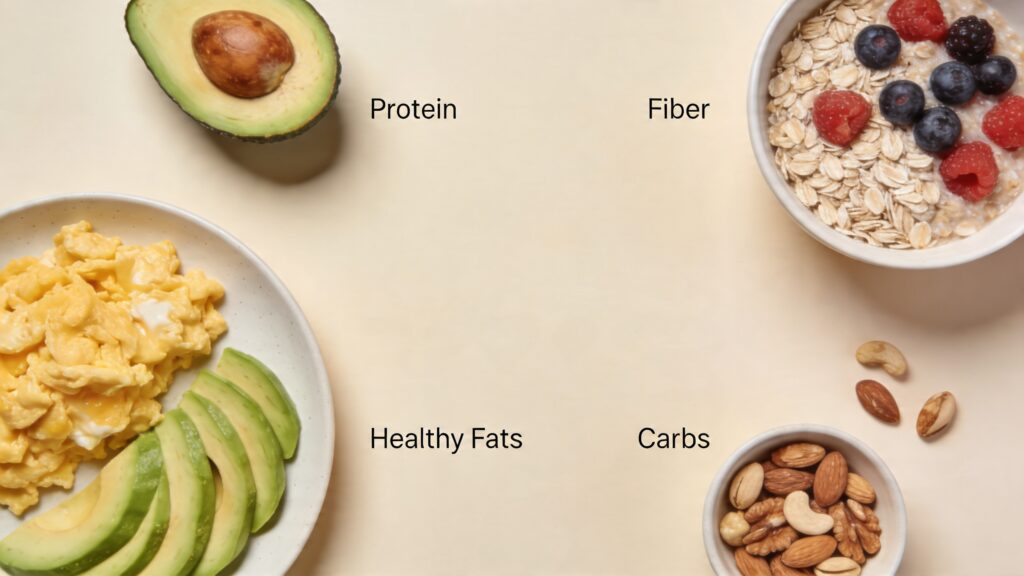
Every breakfast should include:
Protein + Fiber + Healthy Fat + Complex Carb
This combination:
- slows digestion
- stabilizes energy
- keeps you full for 3–5 hours
How to fix your breakfast (real examples)
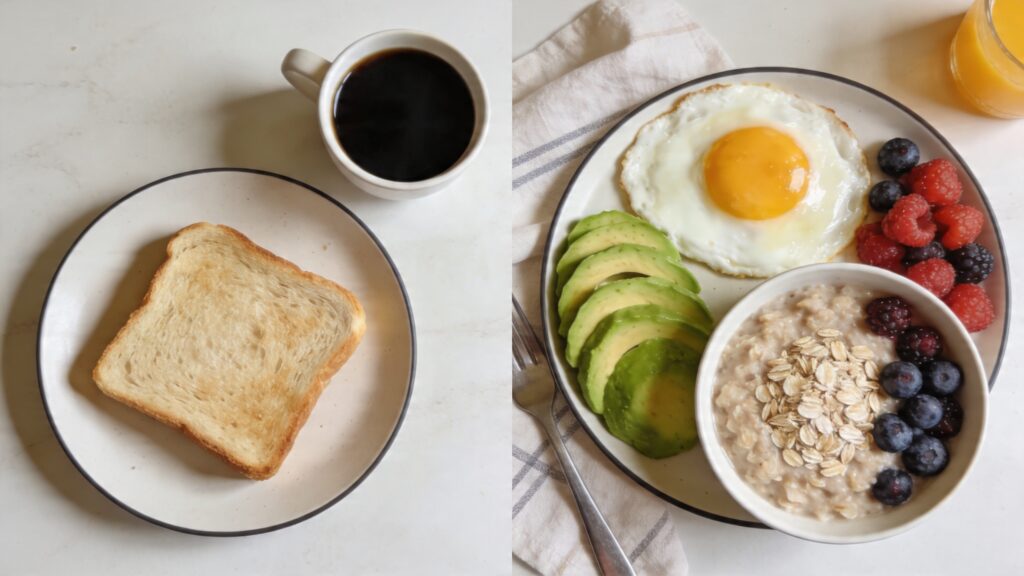
Before:
Toast + coffee
After:
- Protein: eggs or Greek yogurt
- Fiber: berries or oats
- Fat: avocado or nut butter
- Carb: whole grain toast
Before:
Fruit smoothie
After:
- Protein: Greek yogurt or protein powder
- Fiber: chia seeds, spinach
- Fat: nut butter
- Carb: fruit
Before:
Cereal
After:
- Protein: eggs or Greek yogurt
- Fiber: oats or fruit
- Fat: nuts or seeds
- Carb: whole grain cereal
Why this changes your entire day
Breakfast isn’t just one meal.
It sets the tone for everything that comes after.
If your breakfast doesn’t hold you:
- you get hungry mid-morning
- you start snacking
- cravings increase
- energy drops
And the cycle repeats.
This is the same pattern explained in
Why You’re Always Snacking (And How to Build Meals That Actually Last 3–5 Hours
Reset your meals starting today
If your mornings feel like this, start here:
This walks you through how to build meals that actually keep you full
Why protein makes the biggest difference
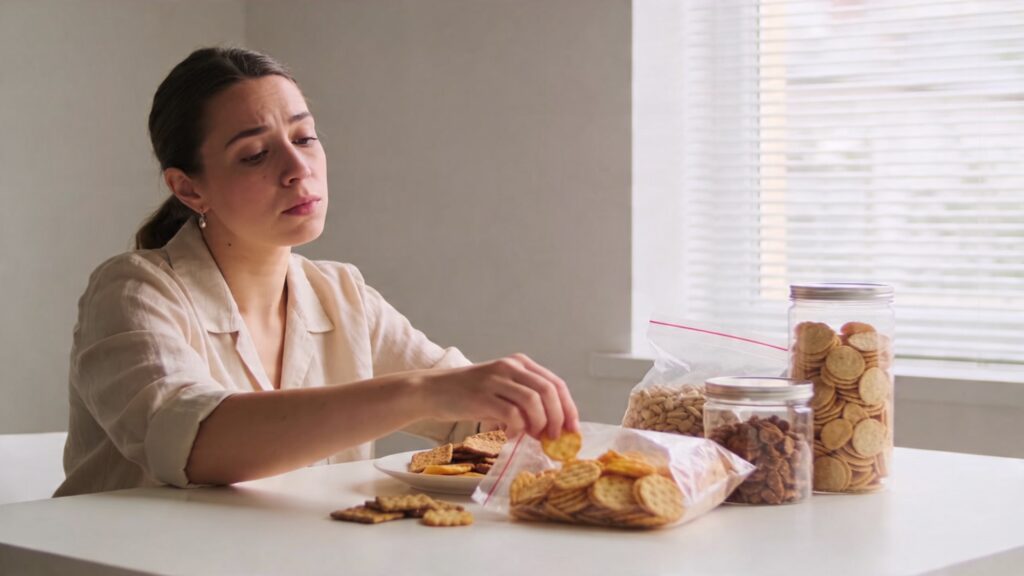
Protein is what turns breakfast into something that lasts.
It slows digestion.
It stabilizes energy.
It reduces cravings automatically.
Without it, your breakfast is just a short-term fix
A simple rule to follow
At breakfast, ask yourself:
If you can’t clearly see it…
That’s why you’re hungry again.
This is why your meals don’t “stick”
This is exactly why systems like
The Balanced Plate Method: Build Meals That Keep You Full for 3–5 Hours
work so well.
They focus on structure, not restriction.
You don’t need a perfect breakfast
You just need a better one.
Even small changes:
- adding eggs
- adding yogurt
- adding protein to your smoothie
can completely change how long you stay full.
Start with your next morning
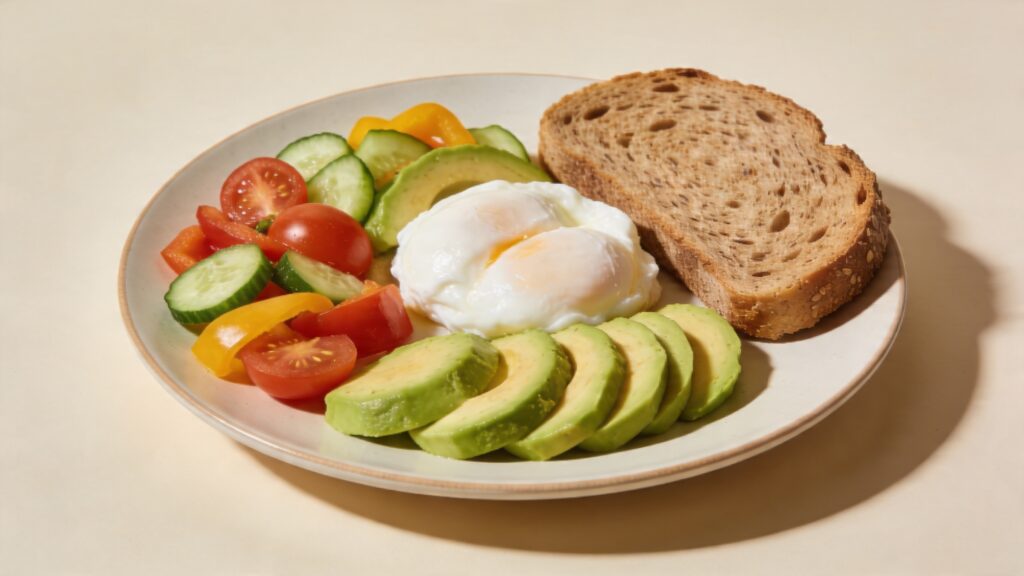
You don’t need to change everything.
Just your next breakfast.
Add a real protein source, and notice what changes.
Because once your mornings feel stable…
Everything else gets easier.
The blood sugar “dip” almost nobody warns you about
Most people know a sugary breakfast gives you a spike. What almost nobody talks about is the part that actually makes you hungry: the dip that comes after the spike.
Here is what happens. A carb-heavy breakfast (cereal, toast, a sweet coffee, most granola) sends your blood sugar up fast. Your body answers with a big rush of insulin to pull it back down, and that rush often overshoots, dropping your blood sugar below where it started about two to three hours later. Your body reads that low as an emergency and switches hunger back on, hard. That is the mid-morning fridge moment.
One of the largest studies on this, the PREDICT study published in Nature Metabolism, tracked blood sugar responses in more than 1,000 people. The ones with the biggest “sugar dips” two to three hours after eating reported more hunger, ate their next meal sooner, and took in roughly 300 extra calories over the day. Same breakfast for everyone. The people who crashed hardest ate the most.
This is exactly why “eating healthy” can backfire. A big bowl of oatmeal with banana and honey sounds virtuous, but if it is mostly fast carbs with nothing to slow it down, it sets off the same spike and dip that leaves you starving by mid-morning. The food is not the villain. The structure of the meal is. The fix is not to fear carbs, it is to never let them ride alone. Pair them with protein and fat, and that steep dip flattens into a gentle slope, which is what keeps hunger quiet until lunch.
Make it simple
If you want this to feel automatic:
Use the Full Plate Method app to build meals that keep you full without overthinking it.
What is actually in a “typical” breakfast that sets off the crash
So if the dip is the problem, what causes it? Almost always, the same recipe: fast, refined carbs with barely any protein or fat to slow them down.
Look at what most people call breakfast. Cereal. Toast or a bagel. A pastry. A glass of juice. A sweet coffee. Granola that is basically dessert. These are refined carbohydrates that digest almost instantly, which is exactly what sends blood sugar up fast and then crashing down.
Researchers have shown this directly. In a controlled feeding study, young people who ate a high-glycemic-load breakfast (the fast-carb kind) were hungrier before their next meal and ate significantly more at it than those given a slower-digesting, lower-glycemic breakfast. The faster the breakfast digested, the harder the crash and the bigger the rebound hunger.
Here is the actionable part. You do not have to cut carbs, you have to give them company. Add a real protein source (eggs, Greek yogurt, cottage cheese), add a fat (avocado, olive oil, nuts), and lean toward slower carbs (oats over sugary cereal, whole fruit over juice). That combination flattens the spike and erases the crash, turning a breakfast that quits on you at 10am into one that carries you to lunch.
7 Quick Breakfasts That Keep You Full
If you want ideas instead of theory, start here. Each of these has at least 20 grams of protein plus some fiber, and takes 10 minutes or less. Protein numbers are approximate.
| Breakfast | Protein | Why it lasts |
|---|---|---|
| 1 cup Greek yogurt, berries, 1 tbsp chia, walnuts | about 27 g | Protein plus fiber and healthy fat |
| 3-egg scramble with spinach and feta, 1 slice whole grain toast | about 26 g | Eggs are one of the most filling breakfast foods |
| 1 cup cottage cheese with fruit and almonds | about 28 g | Slow-digesting protein |
| Overnight oats made with Greek yogurt and chia | about 22 g | Oats alone are mostly carbs, the yogurt fixes that |
| Smoked salmon and cottage cheese on whole grain toast | about 25 g | Protein and healthy fat together |
| 2 hard-boiled eggs, a cheese stick and an apple | about 19 g | Grab and go, no cooking |
| Protein smoothie with Greek yogurt, berries and peanut butter | about 25 g | Add the yogurt, fruit alone will not hold you |
What to Eat for Breakfast to Stop Cravings Later in the Day
Afternoon and evening cravings often start with a light breakfast. When the first meal is toast, cereal, a pastry or just coffee, you spend the rest of the day catching up, and by 3pm or 9pm the cravings feel impossible to ignore. A breakfast with 25 to 30 grams of protein is the simplest thing you can change. In one study, a high-protein breakfast reduced evening snacking compared with a normal-protein breakfast or skipping it (Leidy et al., 2013).
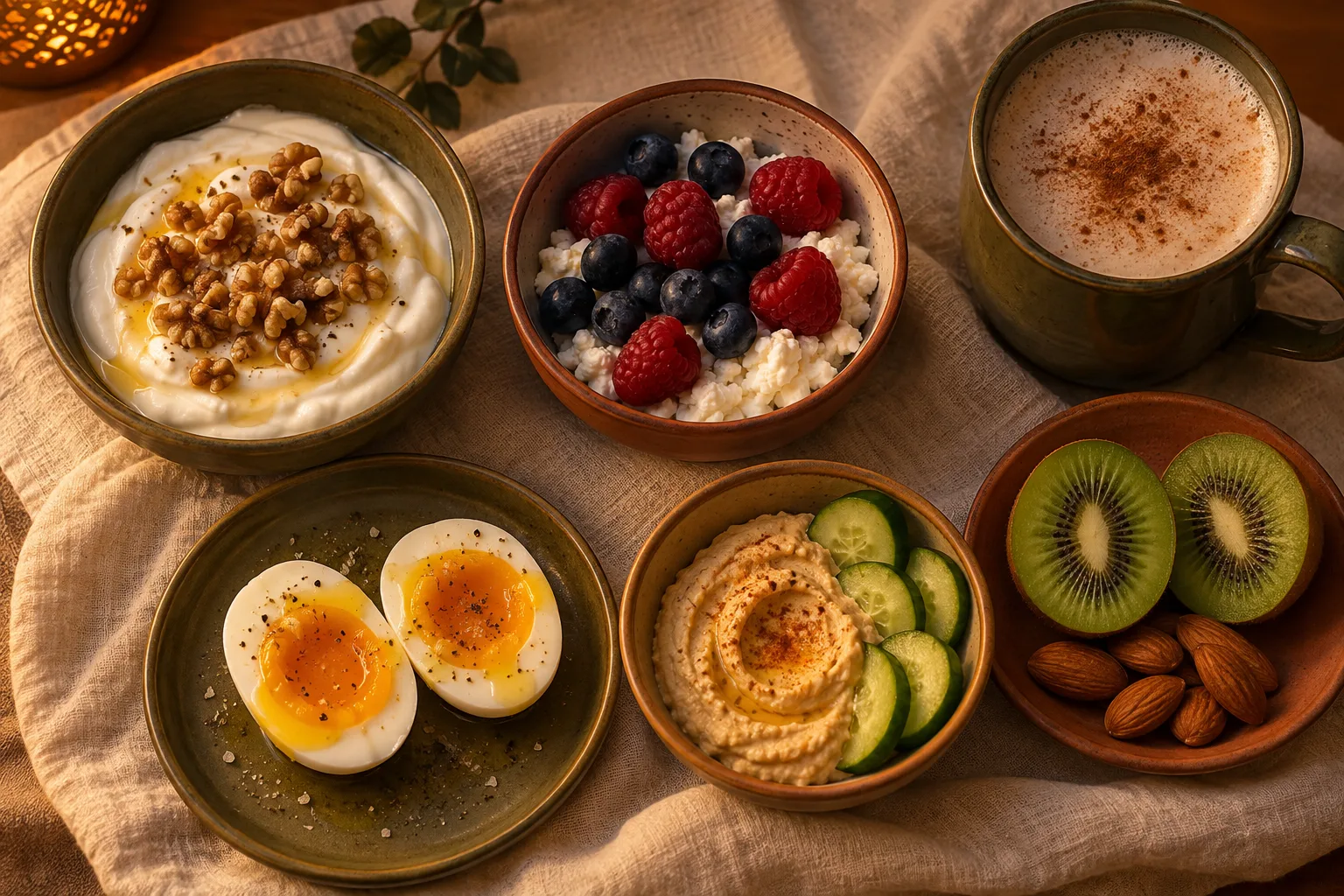
Free printable
Hungry again at 9pm?
Get the free printable Night Hunger Snack List: 10 Mediterranean snacks with exact portions and protein counts, for the evenings when cravings hit. Enter your email and download it instantly.
Free. No spam. Unsubscribe anytime.
The fiber that physically slows the whole thing down
There is one more lever, and it is the reason old-fashioned oats have a reputation sugary cereal never earned: soluble fiber.
Soluble fiber, like the beta-glucan in oats, does something almost mechanical. When it hits your stomach it absorbs water and forms a gel, and that gel physically slows how fast your meal digests and empties. Slower digestion means the sugar from your breakfast trickles into your blood instead of flooding it, which is what blunts the spike and, in turn, the crash that follows.
This has been measured. In a randomized study published in the American Journal of Clinical Nutrition, adding more viscous oat beta-glucan to a breakfast meaningfully slowed gastric emptying and lowered the blood sugar and insulin spike compared with the same breakfast without it. The thicker and more intact the fiber, the stronger the effect.
So a bowl of real oats (steel-cut or old-fashioned, not the instant sweetened packets) does double duty: it is a slower carb to begin with, and its fiber slows everything else on the plate too. Pair it with protein and a little fat, and you have turned the classic crash-prone breakfast into one of the steadiest ways to start the day.
About Ribert Rodriguez
Ribert is the founder of EnergiSource Wellness. He researches and writes every article on this site personally, cross-checking claims against published research rather than relying on generic wellness advice. His approach is rooted in the Mediterranean framework, built from years of testing meal structures on himself after struggling with cravings, late-night eating, and low energy.