

It’s 1pm.
You just finished lunch — a real lunch, not just a coffee and crackers. And somehow, within 20 minutes, you can barely keep your eyes open.
You’re not sick. You got enough sleep. You’re not pregnant. You just… ate.
And now you feel like your body is shutting down.
If this happens to you after every meal , you find that you feel tired after eating breakfast, lunch, dinner — you’re not imagining it. And no, it almost certainly isn’t diabetes.
Here’s what’s actually going on, and exactly how to fix it with the foods you’re already eating.
First — is this normal?
Yes. Feeling some tiredness after eating is a completely normal biological response. Your body redirects energy toward digestion after a meal, and certain hormones shift in ways that can make you feel calmer or sleepier.
But there’s a big difference between slightly relaxed after dinner and can’t function after lunch every single day.
If it’s happening consistently — after every meal, severely enough to affect your focus or productivity — your meals are the problem, not your body.
The good news: this is one of the most fixable things in nutrition.
The real reason you crash after eating (it’s your meal structure)
Most people blame the wrong thing. They think it’s the size of the meal, or eating too fast, or some mysterious health condition.
But for the vast majority of people who experience consistent post-meal fatigue, the answer is simpler: your meals are triggering a blood sugar spike and crash.
Here’s what happens:
You eat a meal that’s high in refined carbs and low in protein and fiber — think white bread, pasta, rice, a wrap, even a “healthy” smoothie. Your blood sugar rises quickly. Your body releases insulin to bring it back down. Blood sugar drops. And in that drop, your energy, focus, and alertness drop with it.
That crash is what you feel as tiredness. It’s not a disease. It’s a biology problem caused by meal composition.
→ Related: How to Balance Blood Sugar to Stop Hunger and Cravings
Why Mediterranean-style eating almost eliminates post-meal fatigue
The Mediterranean diet is built around foods that produce slow, steady blood sugar responses — which means no spike, no crash, no 2pm collapse.
The key is the combination:
Fiber from vegetables and legumes slows how fast glucose enters your bloodstream. Protein from fish, eggs, and Greek yogurt stabilizes insulin response. Healthy fats from olive oil and nuts further slow digestion, extending stable energy for hours.
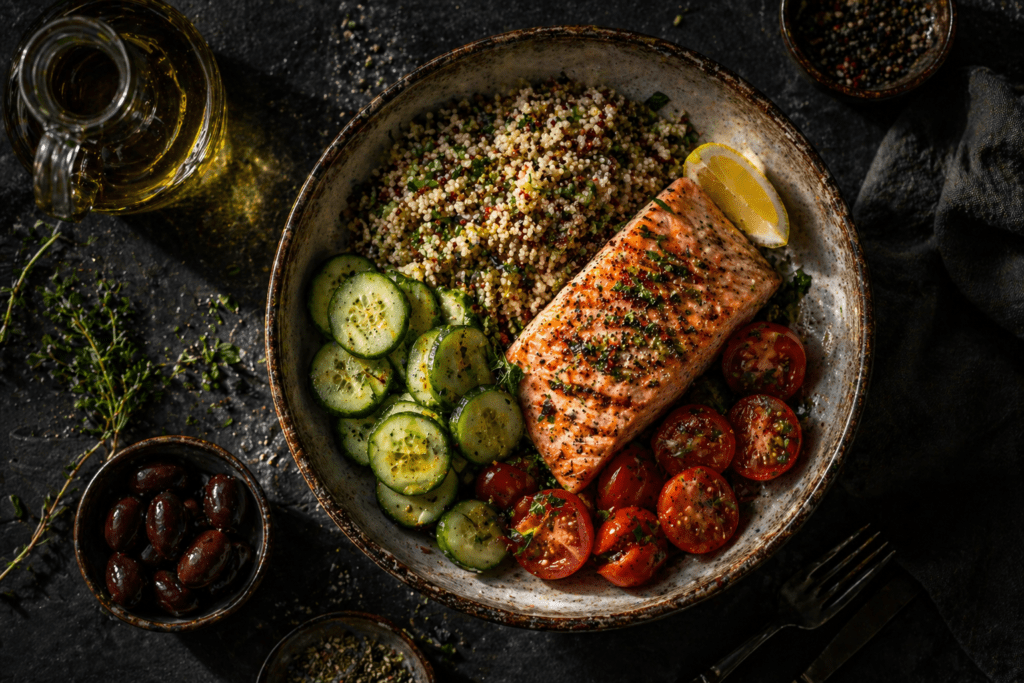
When these three are present in every meal, your blood sugar rises gently after eating — and comes back down just as gently. No crash. No fog. No desperate need for a nap or a third coffee.
→ Related: Mediterranean Foods That Keep You Full Longer
What’s actually making you tired — the 4 most common meal mistakes
1. Eating carbs without protein A bagel, a bowl of oatmeal with no protein, a smoothie, toast with jam — these are all high-carb, low-protein meals that spike your blood sugar fast. Within 90 minutes, you’re crashing.
Fix: Add a protein source to every single meal. Eggs with your oatmeal. Greek yogurt alongside your toast. A handful of nuts in your smoothie.
2. Skipping vegetables entirely Fiber is the brake pedal on your blood sugar response. Without it, glucose floods your system at once. Most people eat meals with almost no fiber — especially at breakfast and lunch.
Fix: Add at least one vegetable or high-fiber food to every meal. Spinach in scrambled eggs. Cucumber and tomatoes alongside your lunch. A handful of greens under whatever protein you’re eating.
3. Eating too fast When you eat quickly, your body doesn’t have time to send satiety or digestive signals properly. You end up eating more than needed, which amplifies the blood sugar spike and the crash that follows.
Fix: Slow down. Eat without your phone. Chew deliberately. It sounds simple because it is.
4. Large, unbalanced meals A huge plate of pasta, a massive burrito, a big sandwich — large meals require significant digestive work and cause more pronounced blood sugar swings. The bigger and more carb-heavy the meal, the worse the crash.
Fix: Use the Mediterranean plate formula below to restructure your meals around balance, not just volume.
The meal formula that stops the crash (use this at every meal)
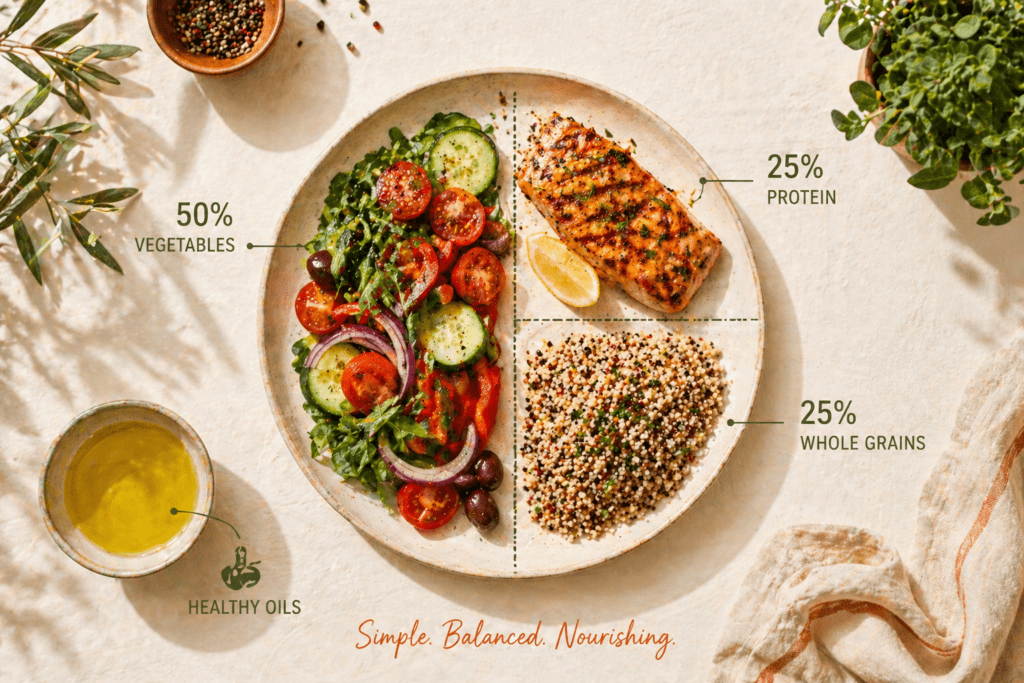
This is the same structure used across Mediterranean eating — and it’s the reason people who eat this way rarely experience the kind of post-meal fatigue that’s so common in Western diets.
½ your plate: non-starchy vegetables Leafy greens, cucumber, zucchini, tomatoes, roasted peppers, broccoli. These are high in fiber and water content — they slow glucose absorption and add volume without spiking blood sugar.
¼ your plate: quality protein Grilled chicken, salmon, sardines, eggs, Greek yogurt, lentils, chickpeas. Protein is the most powerful stabilizer of your post-meal energy. Without it, no meal will keep you crash-free.
¼ your plate: smart carbs Quinoa, whole grain bread, brown rice, potatoes, legumes. These digest more slowly than refined carbs, producing a gentler glucose curve and more stable energy.
A drizzle of healthy fat Olive oil, avocado, a small handful of almonds or walnuts. Fat slows the entire digestion process — extending how long your energy stays stable after eating.
When your plate looks like this, you eat and feel energized — not like you need a nap.
→ Related: How to Stay Full in a Calorie Deficit Without Feeling Deprived
What to eat at each meal to stop the crash
Breakfast (the most commonly skipped or unbalanced meal)
The typical Western breakfast — cereal, toast, a muffin, fruit juice — is almost entirely refined carbs with no protein and no fiber. It’s the fastest way to guarantee a 10am crash.
Instead try:
- 2 eggs scrambled + handful of spinach + whole grain toast
- Greek yogurt + mixed berries + chia seeds + a drizzle of honey
- Overnight oats with protein powder + walnuts + berries
Helpful: Siggi’s Plain Whole Milk Yogurt — high protein, low sugar, no junk. Use as your base.
Lunch (the 1pm crash culprit)
The worst lunch for energy: a big sandwich, a wrap, pasta salad with no protein, or anything from a fast food drive-through. All refined carbs, little fiber, minimal protein.
Instead try:
- Mediterranean bowl: grilled chicken + quinoa + cucumber + tomato + olive oil
- Large salad with salmon or chickpeas + whole grain crackers
- Lentil soup + a small piece of whole grain bread + side of greens
Dinner (sets up tomorrow’s energy)
A heavy, carb-loaded dinner isn’t just a problem tonight — it affects your sleep quality and how you feel the next morning.
Instead try:
- Baked salmon + roasted zucchini and peppers + small portion of potatoes
- Grilled chicken + large Greek salad + hummus
- Chickpea and vegetable stew + whole grain pita
Helpful: Organic Chia Seeds — add to any meal for a fiber boost that stabilizes your post-meal energy.
When tiredness after eating might be worth checking with a doctor

For most people reading this, the fix is purely nutritional. But there are situations where consistent post-meal fatigue can signal something worth investigating:
- You’ve fixed your meal structure and still crash every time you eat
- The fatigue is severe — like you genuinely cannot stay awake after eating
- You also have symptoms like unusual thirst, frequent urination, or unexplained weight changes
- It’s getting progressively worse over time
In those cases, conditions like reactive hypoglycemia, thyroid issues, or anemia can all contribute to post-meal fatigue and are worth ruling out with a simple blood panel.
But if your meals are currently heavy in refined carbs, low in protein, and low in fiber — fix that first. Most people never need to go further.
The simplest way to test this yourself
You don’t need a blood glucose monitor or a dietitian to figure out if your meals are the problem. Try this for three days:
Day 1: Eat your normal meals. Note your energy level 30, 60, and 90 minutes after each one.
Day 2-3: Apply the Mediterranean plate formula to every meal. Half vegetables, quarter protein, quarter smart carbs, drizzle of healthy fat. Note your energy at the same intervals.
Most people notice a difference within 48 hours. The afternoon crash gets lighter. The post-breakfast slump disappears. You stop reaching for coffee at 3pm.
That’s your body running on stable blood sugar instead of a spike-and-crash cycle.
This is what stable energy after eating actually feels like
You finish lunch and you feel satisfied — not stuffed, not foggy, not desperate for caffeine.
An hour later you’re still alert. Still focused. Still functioning like a normal human being.
Two hours later you’re not even thinking about food yet.
That’s not a fantasy. That’s what eating in a way that supports stable blood sugar actually feels like. And it’s available to you at your next meal — no supplements, no special equipment, no diet rules.
Just the right foods in the right combination.
Want a done-for-you version of this? The 3-Day Hunger Reset gives you the exact meals — breakfast, lunch, and dinner — built around the Mediterranean plate formula, completely free. Grab it and start your next three days without the crash.
Frequently Asked Questions
Is it normal to feel tired after eating?
Yes — mild tiredness after a meal is a normal biological response. Your body shifts energy toward digestion and certain hormones fluctuate after eating. The problem is when it happens after every meal and significantly affects your energy and focus. That’s a meal structure issue, not a medical one for most people.
Why do I feel immediately tired after eating?
Immediate fatigue after eating is usually a blood sugar spike followed by a rapid drop. This happens most often when your meal is high in refined carbohydrates and low in protein and fiber. Adding protein and fiber to every meal slows glucose absorption and prevents that sharp crash.
Why am I so tired after eating but not diabetic?
You don’t need to be diabetic to experience post-meal fatigue. The most common cause is simply meal composition — too many refined carbs, not enough protein, not enough fiber. Restructuring your meals around the Mediterranean plate formula resolves this for most people without any medical intervention.
Why do I feel tired after eating lunch specifically?
Lunch fatigue has two causes working together — your meal composition AND your body’s natural circadian dip, which happens between 1pm and 3pm regardless of whether you eat. A high-carb lunch amplifies this natural dip dramatically. A balanced Mediterranean-style lunch minimizes it.
Why do I feel tired after eating breakfast?
Breakfast fatigue is almost always caused by a high-sugar, low-protein meal — cereal, toast, juice, a muffin. These spike blood sugar fast and cause a crash within 60-90 minutes. Switching to eggs, Greek yogurt, or oats with protein eliminates this for most people within a few days.
Can tiredness after eating be a sign of something serious?
For most people, no. But if you’ve improved your meal structure and still experience severe fatigue after eating, it’s worth checking for reactive hypoglycemia, thyroid issues, or anemia with a simple blood panel. See the section above for specific signs that warrant a doctor visit.