Free Meal Planning App, Any Cuisine
Healthy Meal Planning
That Actually Keeps You Full.
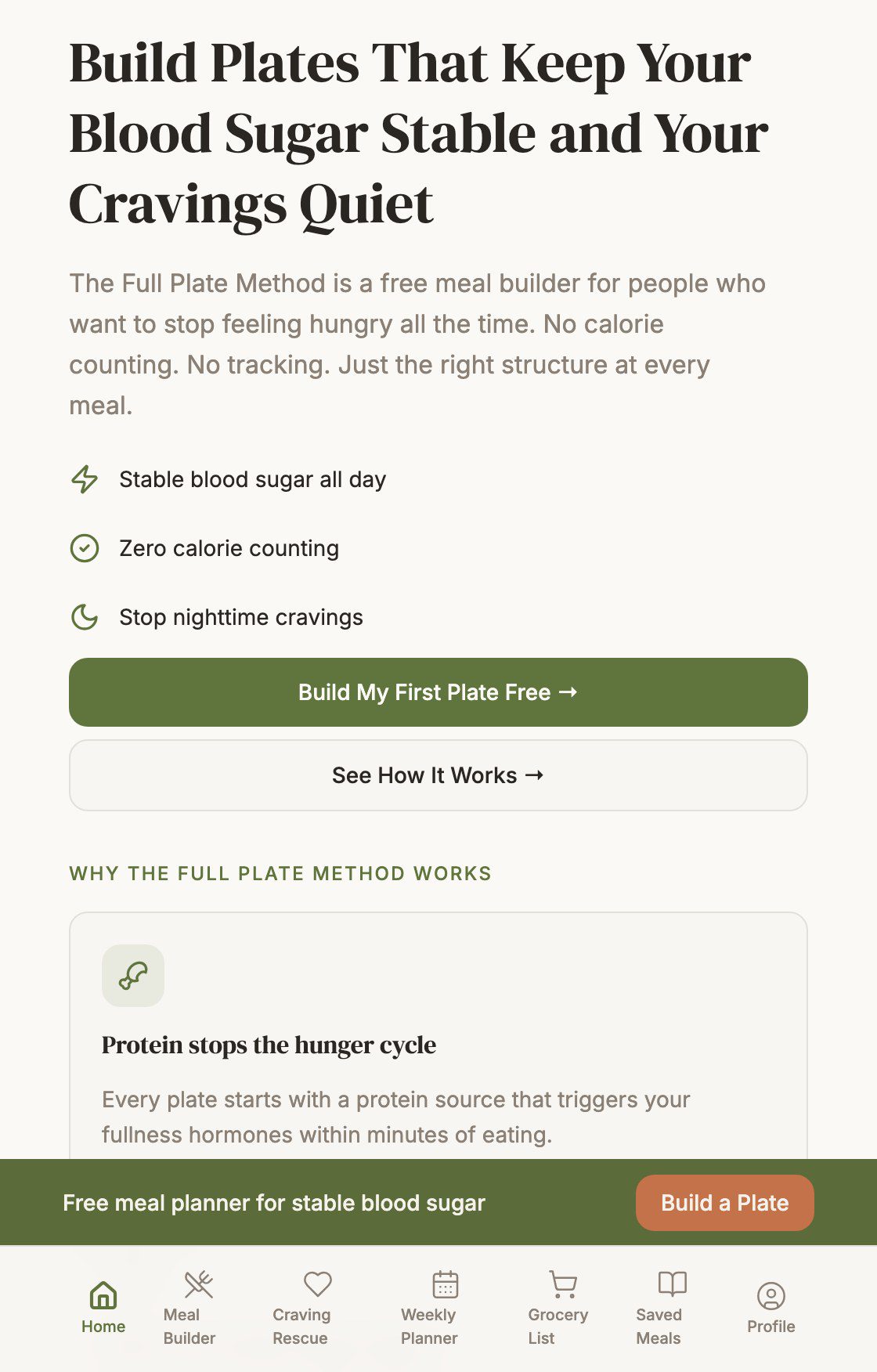
The Full Plate Method is a free meal planning app that works with any cuisine. Mediterranean, Latin, Middle Eastern, Asian, or American clean eating. Same healthy plate method formula. Real food. No hunger. No tracking. No subscription.
Free forever. Any cuisine. No credit card required.
Why most healthy meal planning fails
Your meals are missing three things.
Most meal planning apps focus on calories or macros. The Full Plate Method focuses on structure. When a meal has the right three components, your hunger hormones get the signal to switch off for four to five hours.
Protein Anchor
Protein directly suppresses ghrelin, your primary hunger hormone. Without 20 grams or more per meal, hunger returns within an hour regardless of how much you ate.
Fiber Source
Fiber slows digestion and stabilizes blood sugar. Without it, glucose spikes and crashes, triggering the cravings and energy drops that hit an hour after eating.
Healthy Fat
Fat slows gastric emptying and triggers CCK, the hormone that tells your brain the meal is complete. Without it, meals feel incomplete even when you are physically full.
What is inside the free meal planning app
Everything you need to stop being hungry all day.
Five tools that work together to make healthy meal planning simple. No tracking, no restriction, no overthinking. Choose your cuisine and build meals that actually work for your life.
Tool 1
Cuisine Selector
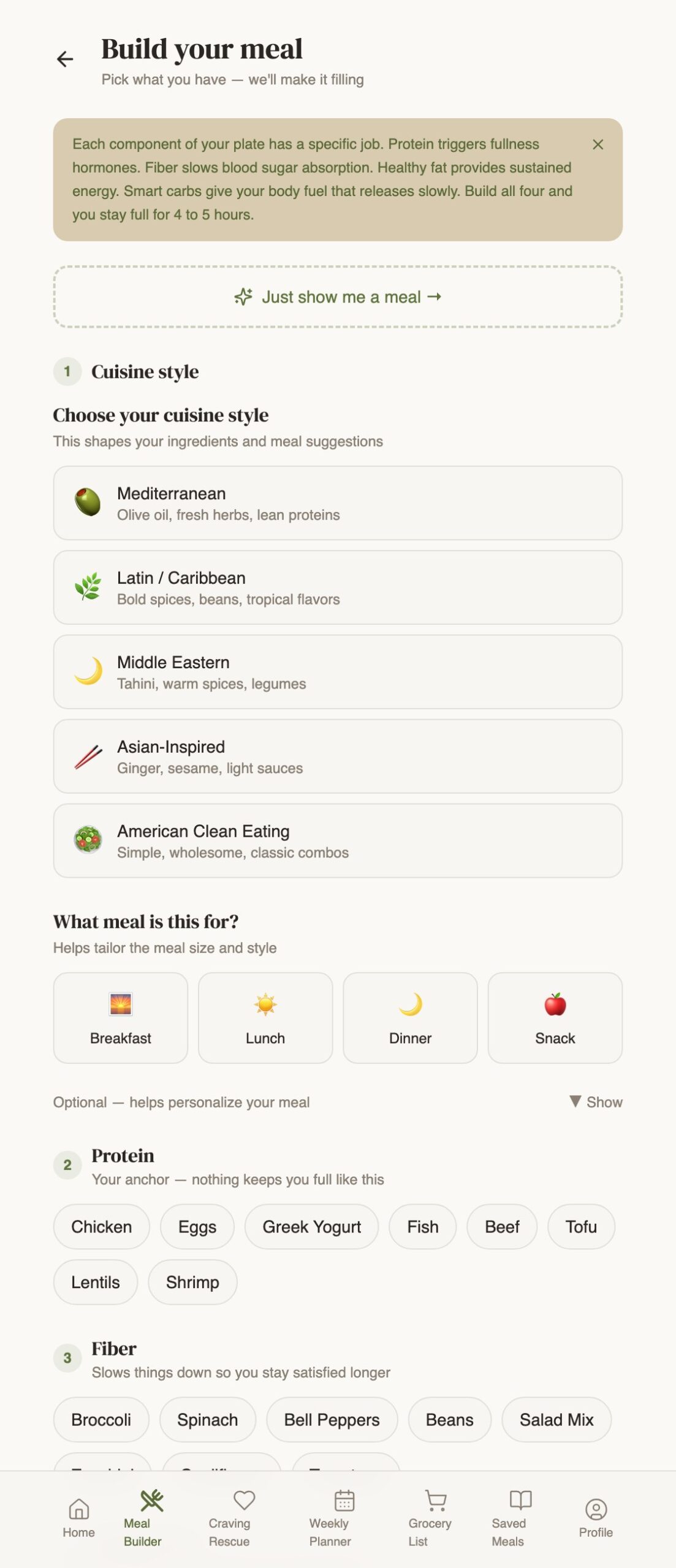
Choose from Mediterranean, Latin/Caribbean, Middle Eastern, Asian-Inspired, or American Clean Eating. The healthy plate method formula stays the same. The food feels like yours.
Tool 2
Meal Builder
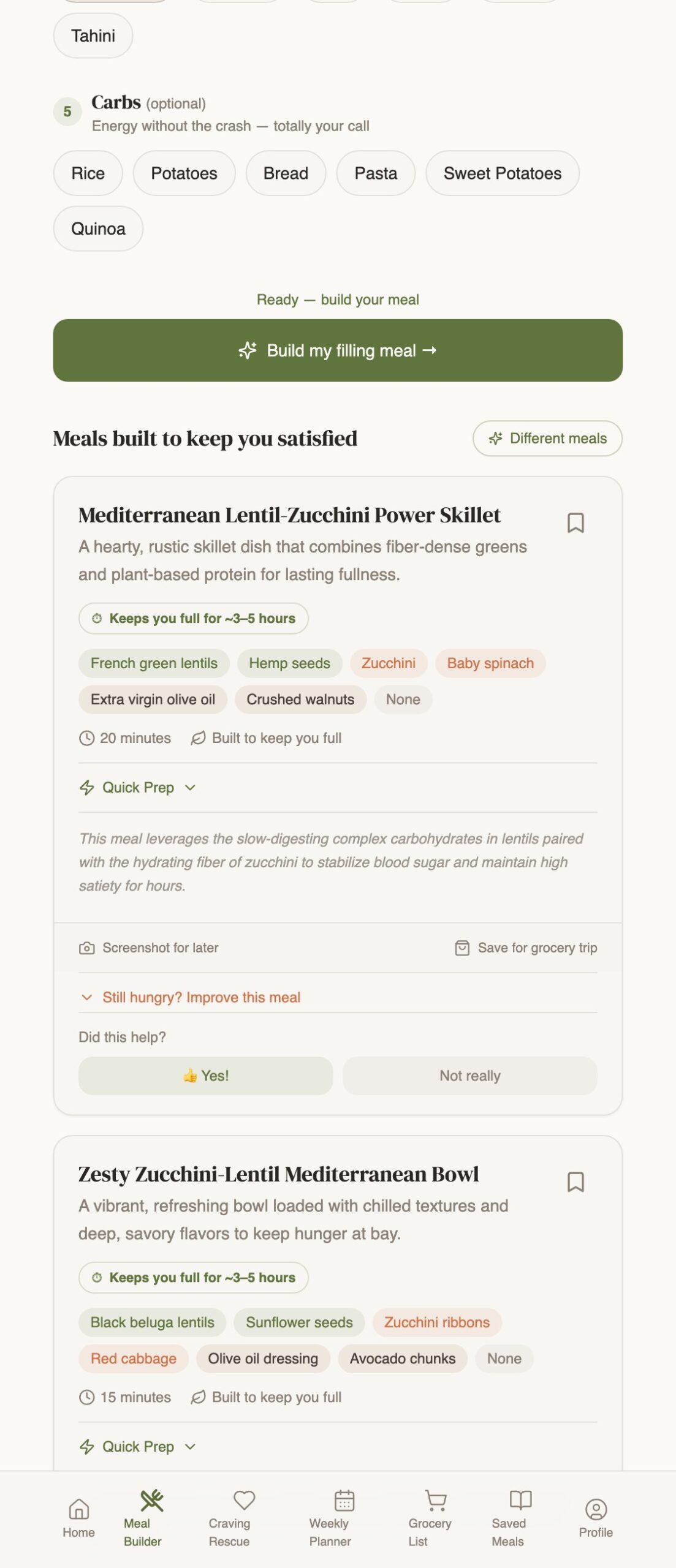
Build a hunger-stopping plate in under 2 minutes. Pick your protein, fiber, and fat. The AI assembles your complete meal automatically based on your cuisine and ingredients.
Tool 3
Craving Rescue
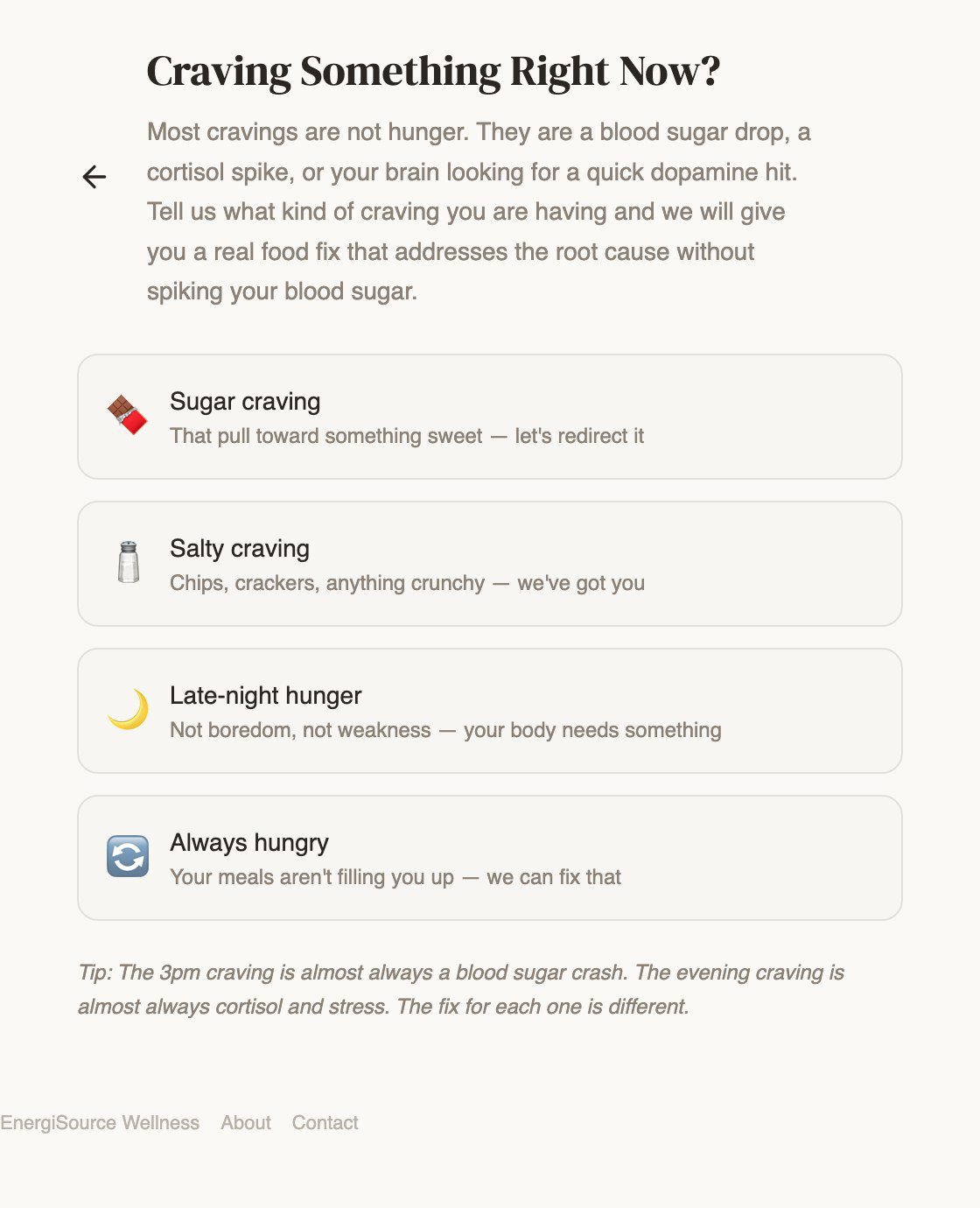
When cravings hit, get an instant alternative that satisfies without disrupting your blood sugar. Matched to your cuisine style so it always feels right.
Tool 4
Mediterranean Meal Prep Planner
Plan your full week of mediterranean meal prep in advance so hunger never catches you off guard. Your grocery list builds automatically from your weekly plan.
Tool 5
Grocery List
Your grocery list builds automatically from your weekly meal plan. Organized by category, ready to shop from every week. One list, one trip, no guessing.
No credit card. No subscription. Free forever.
Free mediterranean diet meal plan example
Built with the Meal Builder in under 2 minutes
Cilantro Lime Chicken Bowl
Protein
Grilled chicken thigh, 32g protein
Fiber
Black beans and sauteed kale
Healthy Fat
Avocado slices and olive oil
Complex Carb
Plantains, roasted
Keeps you full for 4 to 5 hours. No 9pm snack spiral.
Build Your Own Plate FreeYour food. Your culture.
Five cuisines. One healthy plate method.
Mediterranean
Olive oil, fresh herbs, lean proteins, legumes, and whole grains. The original hunger-control cuisine, built around the healthy plate formula naturally.
Latin / Caribbean
Black beans, plantains, avocado, chicken, and bold spices. Real food from real culture, structured the right way so it keeps you full.
Middle Eastern
Tahini, chickpeas, lamb, warm spices, and legumes. Halal-friendly and naturally rich in protein and fiber. Built to satisfy.
Asian-Inspired
Tofu, edamame, salmon, bok choy, sesame, and ginger. Light but filling, structured so hunger stays quiet for hours.
American Clean Eating
Chicken, turkey, cottage cheese, oats, and whole foods. Simple, familiar, and satisfying. No diet rules, just real food structured the right way.
All five cuisines. One free account.
Start FreeHow the meal planning app works
Your first meal in under 2 minutes.
Pick your cuisine
Choose the food that feels like yours
Select from five cuisine styles. The ingredient list adjusts to match your cuisine so every meal feels authentic to how you already eat.
Build your plate
Pick your protein, fiber, and fat
Choose your ingredients from your cuisine list. The AI assembles your complete meal automatically. Name, prep style, and all four pillars of the healthy plate method covered.
Eat and notice
Feel what a structured meal actually does
Check how you feel two hours after eating. When all four components are present your hunger hormones receive the signal they need. The 3pm crash stops. The 9pm snack spiral fades.
Build the habit
Plan your week and shop once
Use the Weekly Planner to map out your mediterranean meal prep in advance. Your grocery list builds automatically. One Sunday session means every meal this week is already figured out.
What you will eat
Real meals. No sad diet food.
Breakfast 🫒 Mediterranean
Greek Yogurt Power Bowl
Plain Greek yogurt with fresh berries, crushed walnuts, and a small drizzle of honey. 20 grams of protein before 9am. Full until lunch without a single snack.
Lunch 🌿 Latin / Caribbean
Black Bean and Plantain Bowl
Black beans over rice with roasted plantains, sauteed kale, and avocado. Warm, filling, and built around the formula so hunger stays quiet all afternoon.
Dinner 🌙 Middle Eastern
Spiced Lamb and Lentil Bowl
Ground lamb with lentils, roasted cauliflower, tahini drizzle, and bulgur. Warm spices, deep flavor, and the kind of fullness that gets you through the night.
Snack 🥢 Asian-Inspired
Edamame and Almond Butter Rice Cake
Steamed edamame with a rice cake topped with almond butter and sesame seeds. Light, quick, and structured so blood sugar stays stable between meals.
If you’d rather have it done for you
The Mediterranean Meal Plan
The meal builder is great for putting together a hunger-stopping plate any time you need one. If you’d rather skip the building altogether, the Mediterranean Meal Plan is the done-for-you version: 7 days of meals, 28 recipes and snacks, and a complete grocery list, all built on the same formula. Real food, no tracking, no guesswork.
Get the plan for $17What is the Full Plate Method meal planning app?
The Full Plate Method is a free meal planning app that builds hunger-stopping meals for any cuisine using a simple four-part formula. No calorie counting, no macro tracking, no subscription required. It is healthy meal planning built around plate structure instead of numbers.
The healthy plate method works because it addresses why most meals fail. A bowl of pasta with marinara. A big salad with dressing but no protein. Toast with jam. These are not bad foods. They are incomplete meals. The structure is missing and your body knows it even if you do not. Every meal the app builds includes a protein anchor, a fiber source, a healthy fat, and a complex carbohydrate. When all four are present, your hunger hormones get the signal to switch off for four to five hours.
What is a mediterranean diet and why does it work so well for hunger control? The Mediterranean diet is the most researched eating pattern in the world for sustained energy, blood sugar stability, and fullness. It is built naturally around the healthy plate formula. Olive oil and fish for healthy fat. Legumes and vegetables for fiber. Eggs and Greek yogurt and lean protein for the protein anchor. Whole grains and sweet potato for the complex carbohydrate foundation. Mediterranean meal prep using this structure keeps you full from morning through evening without willpower or restriction.
This free meal planning app takes that formula and makes it work for any cuisine so you do not have to eat Greek salad every day. You can eat the food you grew up with, structured the right way, and get the same result. Free mediterranean diet meal plan, free for any cuisine, free forever.
Related reading on the blog
What this free meal planner fixes
- Hunger one hour after eating
- 3pm energy crash and cravings
- Late night snacking and sugar cravings
- Blood sugar spikes and crashes
- Not knowing what to eat each week
Frequently Asked Questions
Is this free meal planning app really free?
Yes, completely free. No credit card required, no subscription, no payment of any kind. Sign up with your email and get instant access to all five tools: Cuisine Selector, Meal Builder, Craving Rescue, Weekly Planner, and Grocery List. Free forever.
What is a mediterranean diet and how does this app use it?
The Mediterranean diet is an eating pattern built around olive oil, fish, legumes, whole grains, vegetables, and lean protein. It is the most researched diet for sustained energy and hunger control. This app applies the Mediterranean structure to five different cuisines so you can follow the same healthy plate method with any food you actually enjoy eating.
How is this different from other meal planning apps?
Most meal planning apps focus on calories, macros, or recipes. The Full Plate Method focuses on plate structure. You never see a calorie count. You just build meals that have the right combination of protein, fiber, fat, and complex carb. That combination is what actually stops hunger for four to five hours. The app is also the only free meal planning app that works across five different cuisine styles.
Can I use this for mediterranean meal prep?
Yes. The Weekly Planner tool is specifically designed for mediterranean meal prep. You plan your full week of meals in advance, the app generates your grocery list automatically, and you shop once. The approach is component-based rather than full meal prep so it stays flexible for real life.
Is the app halal-friendly?
Yes. The Middle Eastern cuisine option is fully halal-friendly. No pork or pork-derived ingredients appear in that cuisine. All meals generated under that style are built around halal-compatible proteins and ingredients.
Do I need to track calories or macros?
No. The healthy plate method is built around structure, not numbers. You will never see a calorie count. Just a balanced plate built around your cuisine that keeps you full for four to five hours. Healthy meal planning without the math.
How long will the meals keep me full?
When all four components are present together, protein, fiber, healthy fat, and complex carb, most people stay satisfied for four to five hours between meals. This is what the free meal planning app is specifically designed to achieve regardless of which cuisine you choose.
Get the one-page meal formula, free.
Not ready to build a full plate yet? The one-page Hunger-Free Day Formula shows you the exact protein, fiber, and fat structure that keeps hunger quiet all day. It lands in your inbox in under a minute.
Stop being hungry.
Eat food that feels like yours.
The best free meal planning app for healthy meal planning across any cuisine. No credit card. No subscription. No tracking. Build your first hunger-stopping plate right now using the healthy plate method.
Try the Free Meal Planning App NowFree forever. Join thousands of women who stopped being hungry.