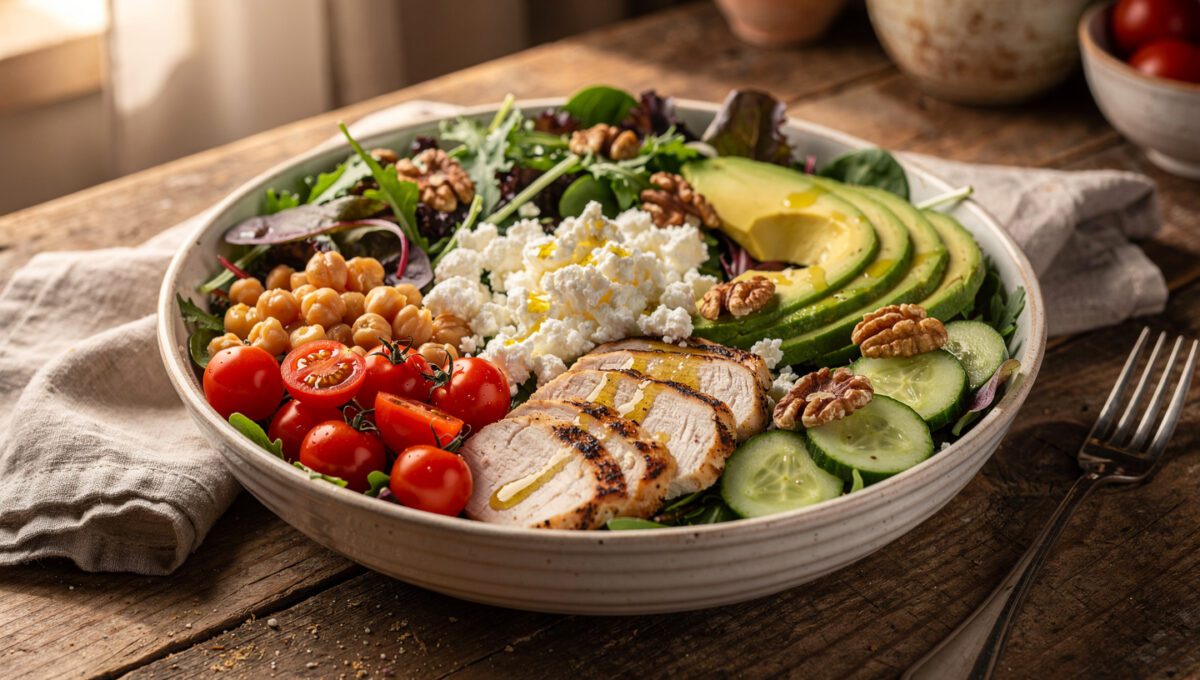
Staying full in a calorie deficit is a meal-structure problem, not a willpower problem. Front-loading protein and fiber, choosing high-volume, low-calorie foods, and keeping healthy fat modest lets you eat fewer calories while still feeling satisfied.
It’s 3pm and you already ate lunch.
If you often feel hungry soon after meals, start with why you are still hungry after eating.
A reasonable lunch. A good lunch, chicken, some greens, a little rice.
But here you are, standing in front of the fridge, feeling like you haven’t eaten since yesterday.
This isn’t a willpower problem. It’s a meal structure problem.
When your meals aren’t built to keep you full, your body will find a way to tell you, loudly, repeatedly, and at the worst possible times.
The fix isn’t eating less. It’s eating in a way that actually satisfies you.
That’s exactly what this article is about.
Why a calorie deficit makes you feel constantly hungry
When you cut calories, your body doesn’t just quietly cooperate.
It fights back, by increasing a hormone called ghrelin, which is your body’s “I’m hungry” signal. At the same time, the signals that tell your brain you’re full get weaker.
That fullness signal has a name: leptin. It’s a hormone released by fat tissue that tells your brain you have enough energy stored and don’t need to eat. A 2008 review in the Journal of Clinical Investigation found that leptin drops during a calorie deficit, and that drop is what signals your brain to push appetite up and energy expenditure down, sometimes before you’ve lost much weight at all. Your hunger in a deficit isn’t you being weak. It’s a real hormonal shift that happens because you’re eating less, on top of whatever your food choices are doing.
So you eat a smaller meal… and your body responds like you barely ate anything.
That’s not failure. That’s biology.
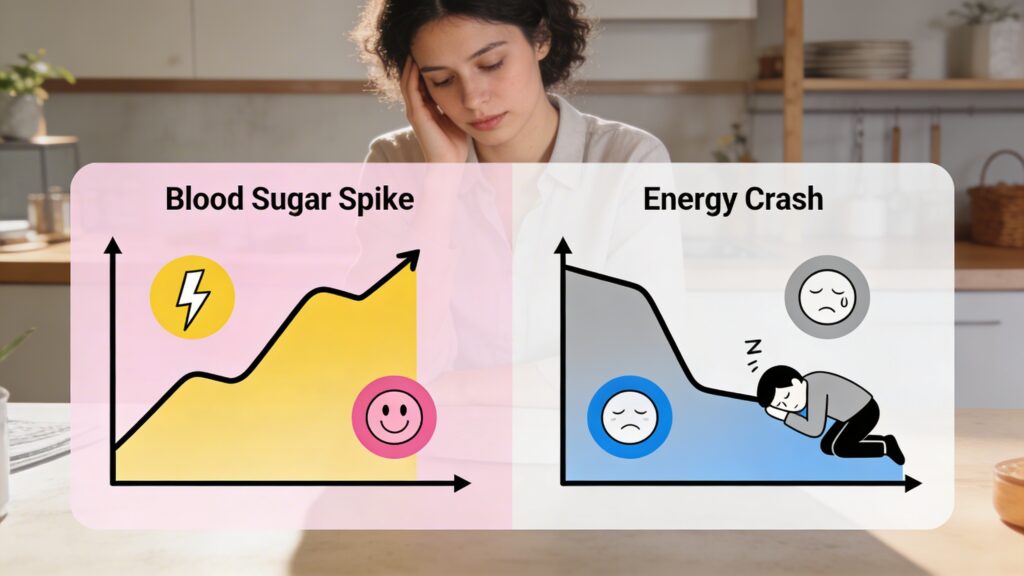
But here’s what makes it worse: most people cut calories by eating less of the same foods, smaller portions of refined carbs, low protein, low fiber. That combination causes your blood sugar to spike and crash, which sends hunger and cravings surging back within an hour or two.
The result feels like a constant battle. And it is, because the meals themselves are working against you.
If this sounds familiar, read this next:
how to balance blood sugar to stop hunger and cravings
The real problem isn’t the deficit. It’s what you’re eating in it.
Two people can eat the exact same number of calories and have completely different hunger levels, depending on how those calories are structured.
Protein, fiber, and food volume are the three levers that control how full you feel. Most calorie-cutting approaches ignore all three.
The Mediterranean plate method. The simplest way to stay full on fewer calories
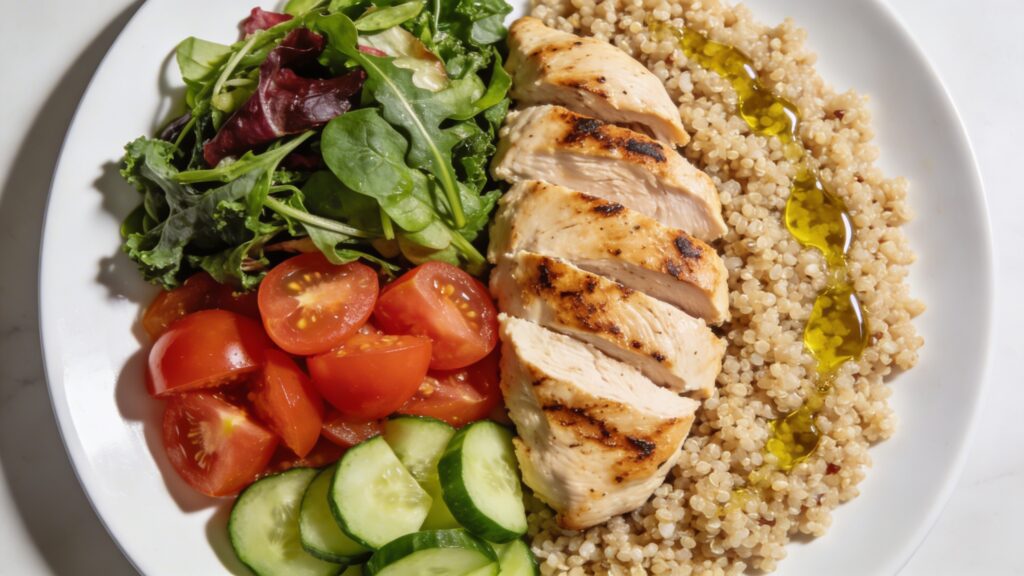
Instead of counting calories, you build every meal around a simple formula that naturally controls hunger.
Here’s what it looks like on your actual plate:
½ your plate: vegetables Leafy greens, cucumbers, tomatoes, zucchini, roasted peppers. These are high in volume and fiber, which means they physically fill your stomach without adding many calories. This is the foundation of every satisfying meal.
¼ your plate: protein Grilled chicken, fish, eggs, or Greek yogurt. Protein is the strongest satiety signal your body receives. Without it, no meal will keep you full, no matter how much you eat.
¼ your plate: smart carbs Quinoa, potatoes, whole grain bread, or legumes. These provide steady energy and prevent the blood sugar crashes that trigger afternoon cravings.
A drizzle of healthy fat Olive oil, a small handful of nuts, or a few slices of avocado. Fat slows digestion and extends fullness, a little goes a long way.
When your plate looks like this, you’re eating more food than a standard “diet” meal, but in a way that keeps you satisfied for 3 to 5 hours.
5 foods that make staying full in a deficit actually easy
These aren’t just “healthy foods.” They’re specifically high on the satiety index, meaning they keep you full longer per calorie than almost anything else.
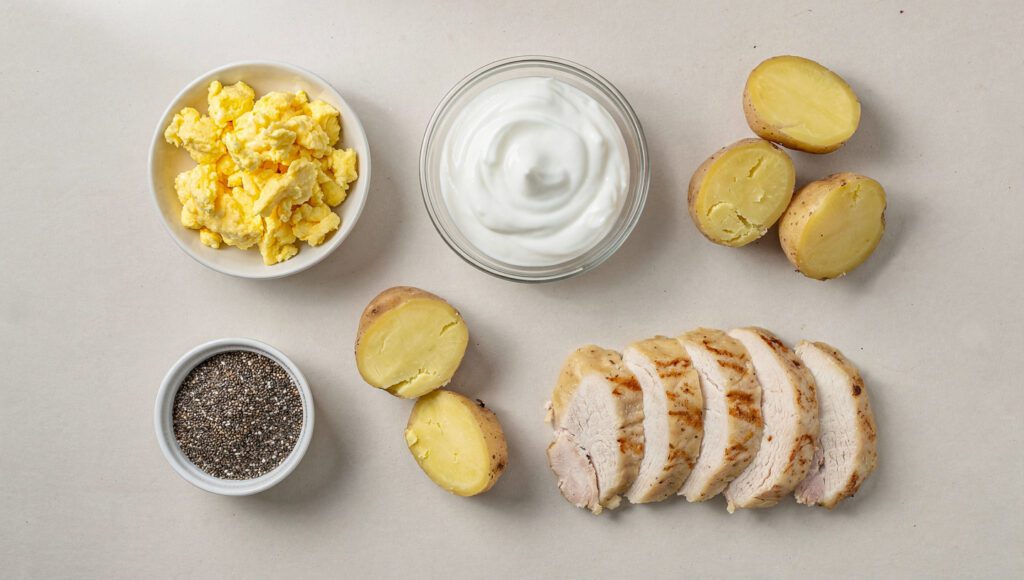
1. Eggs One of the most filling breakfast foods you can eat. The protein and fat combination suppresses hunger hormones for hours. Hard boiled, scrambled, or poached, keep them on hand.
2. Greek yogurt Thick, high-protein, and slow to digest. A cup of plain Greek yogurt has around 17g of protein and keeps hunger quiet for hours. Add berries and chia seeds and you have a meal.
3. Potatoes Ranked as the single most filling food per calorie in research. Not fried, baked or boiled. A medium potato with some protein and greens is one of the most satisfying meals you can build on a deficit.
4. Chia seeds They absorb liquid and expand in your stomach, which creates physical fullness that lasts. Mix a tablespoon into yogurt, oats, or water. Small addition, big difference.
5. Fatty fish (salmon, sardines, mackerel) High protein, high omega-3s, and deeply satisfying. Salmon at dinner means you’re unlikely to be raiding the kitchen at 10pm.
The simple formula that keeps you full for 5 hours
Protein + Fiber + Volume = No more hunger before your next meal
That’s it. Every meal, every time.
When all three are present, your blood sugar stays stable, your hunger hormones stay quiet, and you stop thinking about food between meals.
When one is missing, especially protein, the whole system breaks down and cravings take over.
Use the Mediterranean plate as your visual guide. You don’t need to track macros or count anything. Just look at your plate and ask: do I have protein, fiber, and volume here?
If yes. You’re done.
What a full day of eating actually looks like
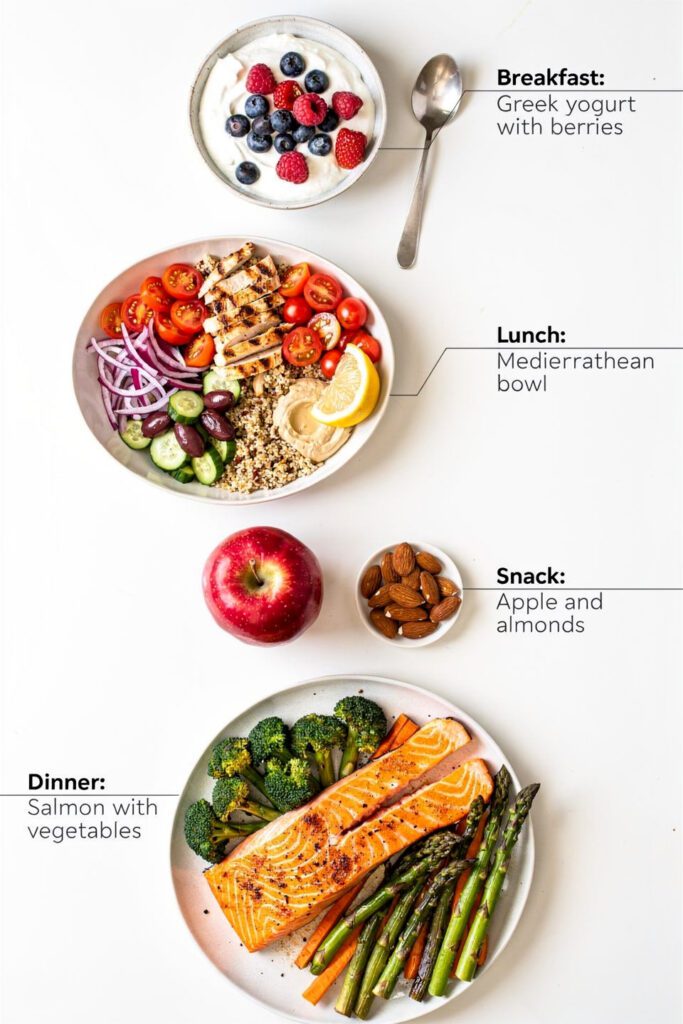
This is what staying full in a deficit looks like in practice, real meals, no suffering.
Breakfast Greek yogurt + mixed berries + chia seeds + a drizzle of honey Protein + fiber + fat. Keeps you full until lunch without thinking about it. (Add a scoop of protein powder if mornings tend to make you hungry faster.)
Lunch Mediterranean bowl: grilled chicken, quinoa, cucumber, cherry tomatoes, spinach, olive oil and lemon This is the Full Plate Method in one bowl. Satisfying, light, and no crash two hours later.
Afternoon snack (if needed) Apple + a small handful of almonds Fiber from the apple, fat and protein from the almonds. Holds you easily until dinner.
Dinner Baked salmon + roasted zucchini and peppers + small portion of potatoes Warm, filling, and exactly the kind of meal that makes a deficit feel sustainable.
Evening (optional) Herbal tea or a small bowl of plain Greek yogurt If late-night hunger hits, this handles it without blowing your deficit.
This is what it should feel like
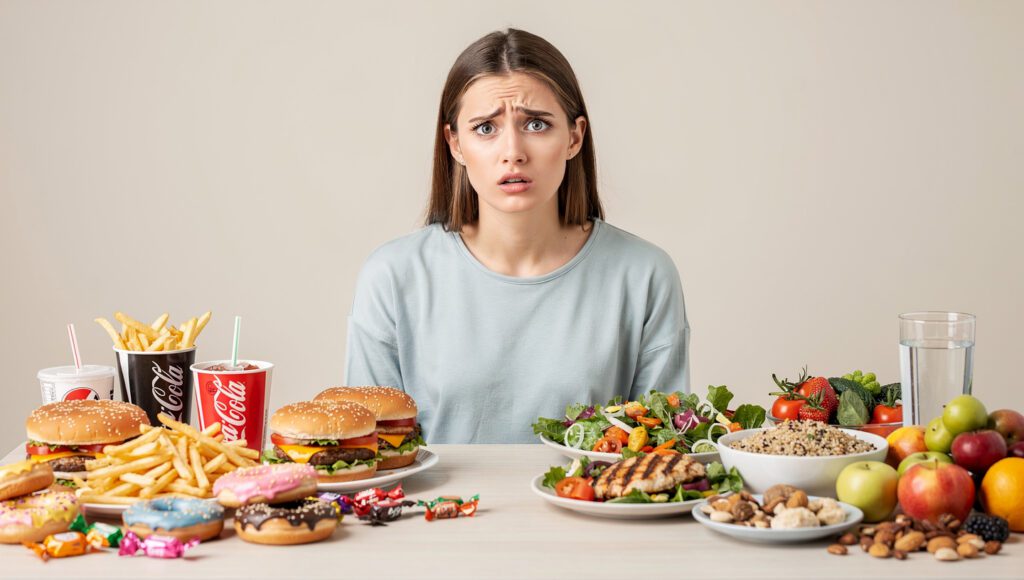
You finish a meal and you actually feel done.
Not stuffed. Not still thinking about food. Just… satisfied.
Two hours later you’re still not hungry. You’re focused, you have energy, and food isn’t taking up mental space.
That’s what eating in a calorie deficit is supposed to feel like when it’s done right.
It’s not about suffering through smaller portions. It’s about building meals that work with your body instead of against it.
Free printable
Hungry again at 9pm?
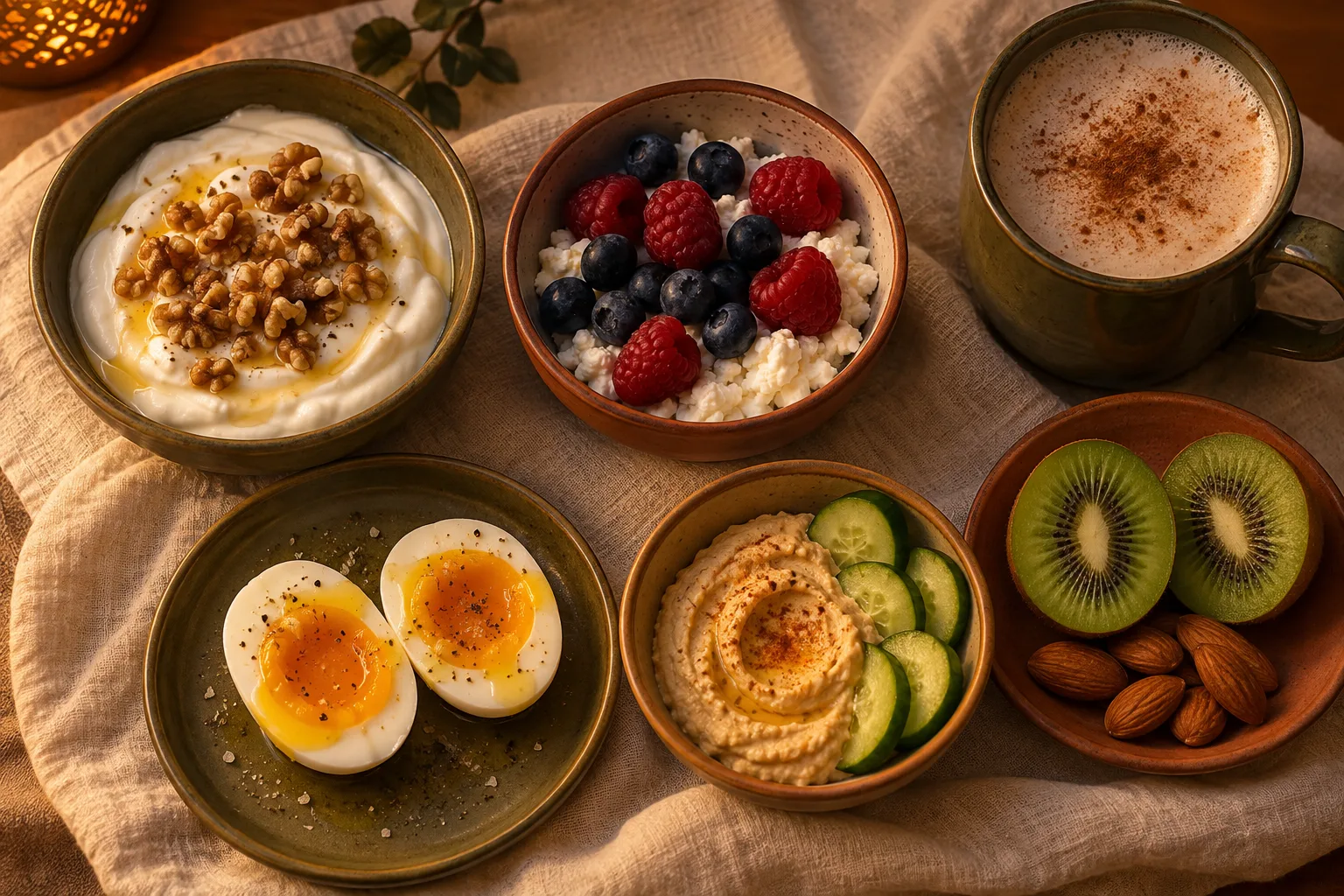
Get the free printable Night Hunger Snack List: 10 Mediterranean snacks with exact portions and protein counts, for the evenings when cravings hit. Enter your email and download it instantly.
Free. No spam. Unsubscribe anytime.
The trick that lets you eat more food on fewer calories
Here is the part that changed how I think about a deficit entirely. Your stomach does not count calories. It measures volume and weight. Stretch receptors in your stomach send the “I am full” signal to your brain based largely on how much food is physically in there, not how many calories that food happens to carry.
That is the whole idea behind energy density, the number of calories packed into each gram of food. A handful of crackers and a giant bowl of vegetable soup can hold the same calories, but the soup fills your stomach many times over. So the move in a deficit is not to eat less food. It is to eat more food that happens to be lighter in calories.
This is one of the most studied ideas in appetite research. Dr. Barbara Rolls at Penn State has spent decades on it, and her work (summarized in Nutrition Bulletin) shows the same result over and over: when people eat meals with a lower energy density, they eat a bigger volume, feel just as full or fuller, and take in fewer total calories without consciously restricting. Starting a meal with a broth-based soup or a big salad reliably lowers how much people eat at the meal that follows.
In practice this looks very Mediterranean. Pile the plate with vegetables, add water-rich foods like tomatoes, cucumber, and citrus, lean on beans and broth-based soups, and treat the calorie-dense stuff (oils, cheese, nuts) as flavor rather than the base. You still get your protein and your healthy fats. You just build the bulk of the plate from foods that let you eat a genuinely satisfying amount. The first week I ate this way, I put away what looked like more food than before and still finished the day under my target, which is the opposite of how a diet is supposed to feel, and exactly why it sticks.
About Ribert Rodriguez
Ribert is the founder of EnergiSource Wellness. He researches and writes every article on this site personally, cross-checking claims against published research rather than relying on generic wellness advice. His approach is rooted in the Mediterranean framework, built from years of testing meal structures on himself after struggling with cravings, late-night eating, and low energy.