
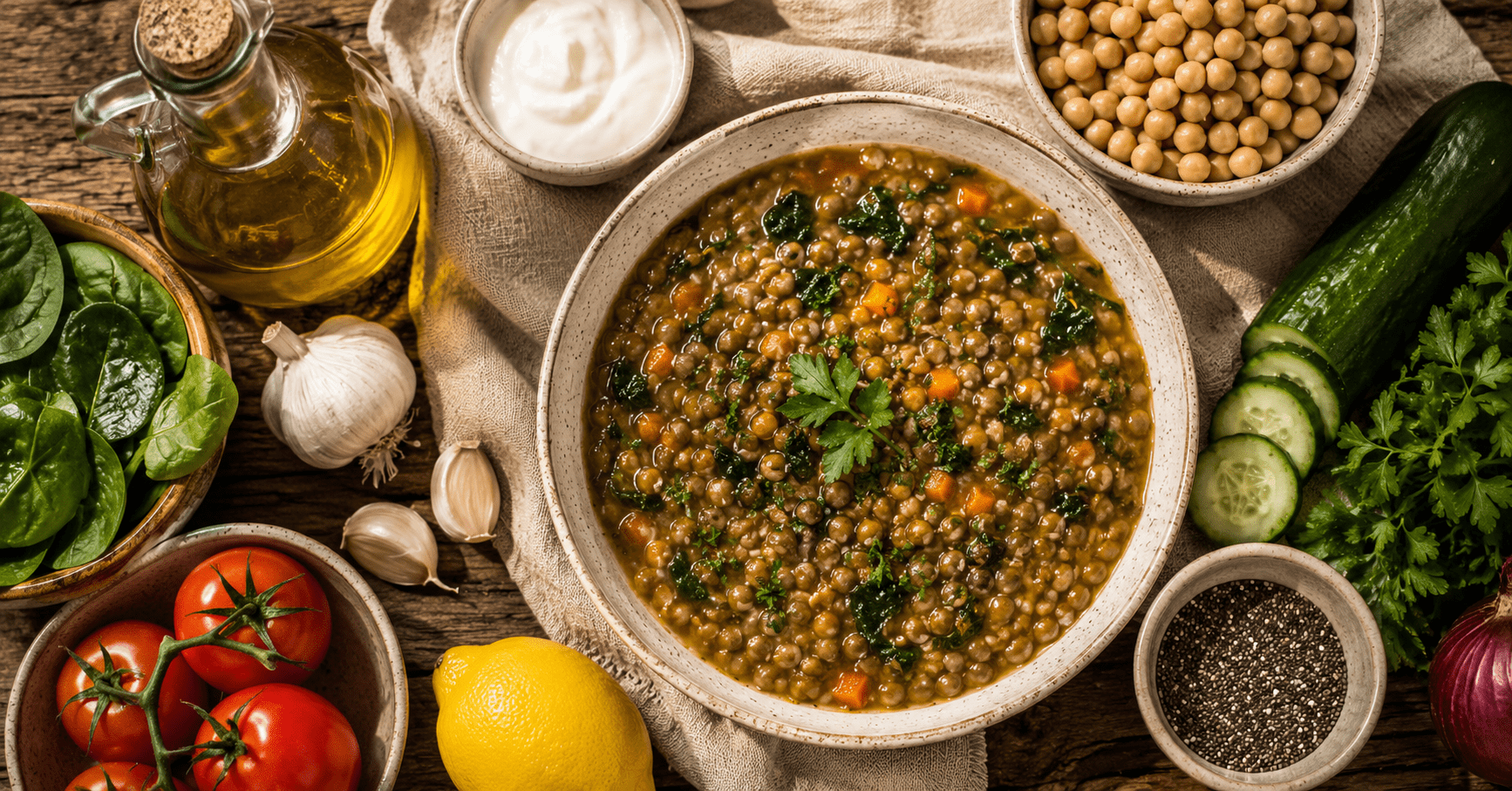
The best gut health recipes for reducing inflammation and improving digestion are built around the same foods that stop hunger and cravings: fiber-rich legumes, fermented dairy, olive oil, leafy greens, and fatty fish. The Mediterranean diet is the most researched eating pattern for gut health because it feeds the beneficial gut bacteria that regulate hunger hormones, reduce inflammation, and stabilize blood sugar simultaneously.
For a long time I thought gut health was a separate conversation from hunger and cravings. I associated it with probiotics and kombucha and digestive supplements. Not with the way my meals were making me feel.
Then I started noticing a pattern. The days I felt most bloated and uncomfortable were also the days my cravings were worst. The days I ate more fiber and fermented foods were the days I felt clearest and hungriest at the right times.
It turns out that connection is not coincidental. An estimated 90 percent of the body’s serotonin is produced in the gut, and gut-derived serotonin plays a role in digestion, motility, and appetite signaling more broadly. When your gut microbiome is imbalanced, your hunger and craving signals become unreliable. You feel hungry when you just ate. You crave sugar at 9pm. You feel tired after meals instead of energized.
The gut health recipes below are built specifically around both outcomes: better digestion and reduced inflammation on one side, and quieter hunger and cravings on the other. The Mediterranean framework delivers both naturally because the foods that feed beneficial gut bacteria are the same foods that stabilize blood sugar and suppress hunger hormones.
Why gut health directly affects hunger and cravings
Your gut is not just a digestive organ. It is the primary production site for several hormones and neurotransmitters that control how hungry you feel, how quickly you feel full, and how intensely you crave certain foods.
When the balance of bacteria in your gut shifts toward less beneficial strains, several things happen. Ghrelin, your hunger hormone, becomes harder to regulate. Serotonin production drops, which increases sugar and carbohydrate cravings because your brain seeks quick dopamine from food. Inflammatory markers rise, which impairs insulin sensitivity and creates the blood sugar instability behind afternoon crashes and late night snacking.
What nobody tells you about gut health is that most people try to fix it with supplements and powders while continuing to eat the foods that caused the imbalance in the first place. Processed food, refined sugar, and low-fiber meals actively deplete beneficial gut bacteria. No probiotic can compensate for three meals a day of food that feeds the wrong bacteria. The fix has to start with food. That is exactly what the Mediterranean diet does for inflammation in a way no supplement stack can replicate.
I noticed this shift clearly around Day 3 of eating this way consistently. The afternoon sugar craving I had experienced almost every day for years simply did not fire. It was not willpower. It was the gut microbiome starting to rebalance.
The best Mediterranean foods for gut health
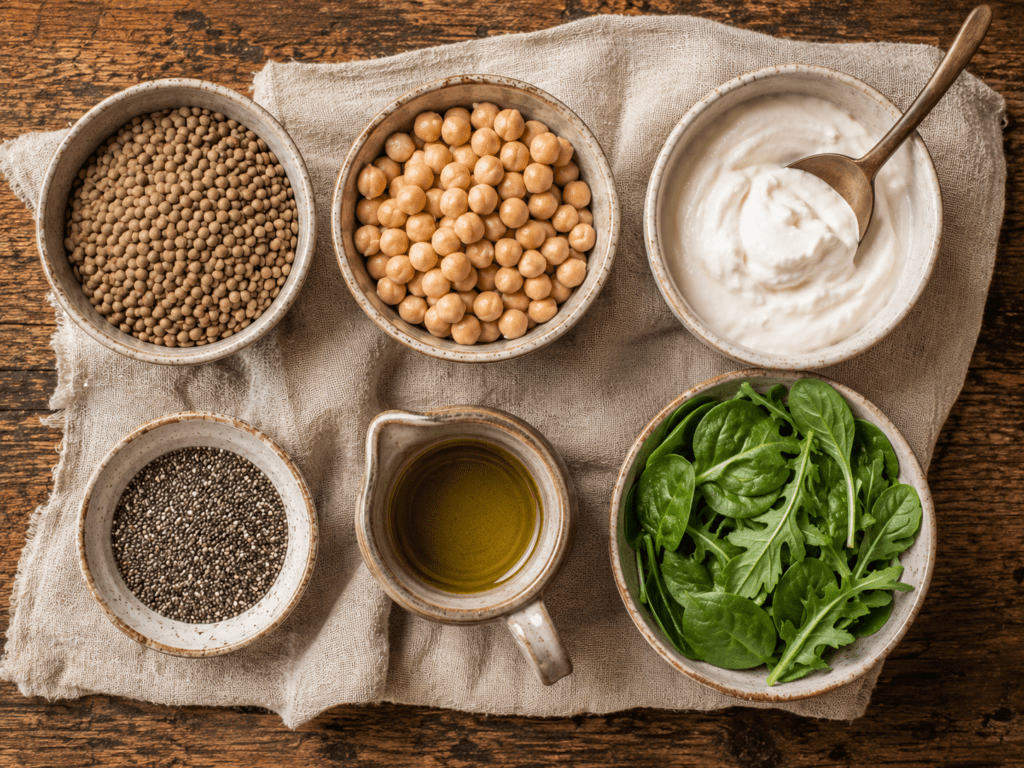
These are the foods that appear consistently in both gut health research and Mediterranean diet studies. Every recipe below is built around at least three of them.
Legumes (lentils, chickpeas, white beans)
Legumes are the most important gut health food in the Mediterranean diet. They are rich in prebiotic fiber, meaning they feed beneficial gut bacteria directly. Lentils in particular contain resistant starch that bypasses digestion in the small intestine and ferments in the colon, producing short-chain fatty acids that reduce gut inflammation and strengthen the gut lining.
I use organic lentils as the base for at least two meals per week. They are one of the cheapest and most nutrient-dense gut health foods available.
Olive oil
Extra virgin olive oil contains polyphenols that act as prebiotics, feeding beneficial gut bacteria in the same way fiber does. It also has direct anti-inflammatory properties that reduce gut lining inflammation. The oleocanthal in olive oil has been compared to ibuprofen in its anti-inflammatory mechanism, though through food rather than medication. I use Atlas olive oil in almost every meal for this reason.
Fermented dairy (Greek yogurt, kefir)
Plain Greek yogurt is one of the most accessible probiotic foods in the Mediterranean diet. The live cultures in Greek yogurt directly replenish beneficial gut bacteria. The protein content also makes it one of the most filling breakfast and snack options you can eat. The combination of probiotics and protein in a single food is why Greek yogurt appears in almost every gut health diet meal plan worth following.
Chia seeds and flaxseeds
Chia seeds are a prebiotic fiber source that feeds gut bacteria and simultaneously creates physical fullness by absorbing liquid and expanding in the digestive tract. One tablespoon of organic chia seeds added to yogurt, oats, or a smoothie provides around 5 grams of fiber from a single small addition. That is significant for gut microbiome diversity.
Leafy greens (spinach, arugula, kale)
Leafy greens contain a specific sugar molecule called sulfoquinovose that feeds a beneficial strain of gut bacteria called Faecalibacterium prausnitzii. This strain is one of the most important for gut lining integrity and reducing systemic inflammation. Low levels of this bacteria are associated with inflammatory bowel conditions and, more relevant for your audience, with heightened food cravings and poor appetite regulation.
Fatty fish (salmon, sardines, mackerel)
Omega-3 fatty acids from fatty fish reduce gut inflammation directly and support the production of short-chain fatty acids by gut bacteria. Sardines in particular are one of the most complete gut health foods because they combine omega-3s with high protein and vitamin D, which plays a role in gut barrier function.
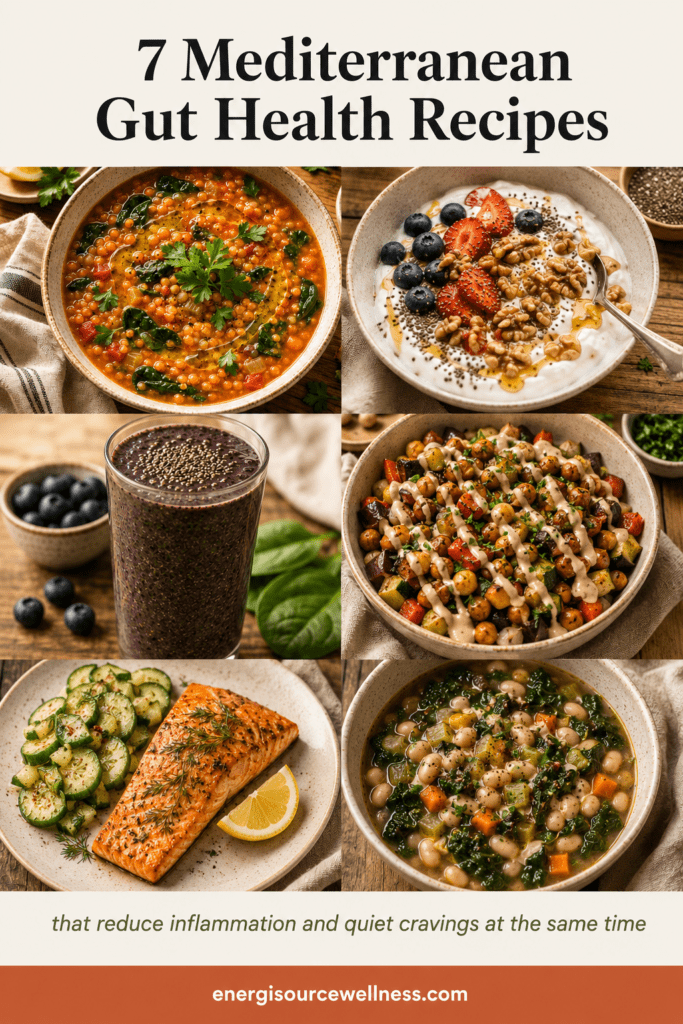
7 Mediterranean gut health recipes
Every recipe below targets the gut-hunger connection directly. Each one includes at least two prebiotic or probiotic foods and follows the Full Plate Method structure so it keeps you full at the same time.
1. Lentil and Spinach Soup (the anti-inflammation gut reset)
This is the most gut-healing recipe in the entire list. Red lentils provide prebiotic fiber and resistant starch. Spinach feeds the beneficial Faecalibacterium prausnitzii bacteria. Olive oil provides polyphenols. Turmeric and cumin add direct anti-inflammatory compounds. This soup consumed three times in a week produces a measurable shift in how you feel by Day 3.
Ingredients:
• 1 cup red lentils, rinsed
• 2 large handfuls fresh spinach
• 1 can diced tomatoes
• 1 onion, diced
• 4 cloves garlic, minced
• 1 teaspoon turmeric
• 1 teaspoon cumin
• Half a teaspoon smoked paprika
• 3 tablespoons olive oil
• Juice of one lemon
• 4 cups vegetable or chicken broth
• Salt and black pepper
Method:
Saute onion and garlic in olive oil until soft. Add spices and stir for 30 seconds. Add lentils, tomatoes, and broth. Simmer 20 minutes until lentils are completely soft. Stir in spinach until wilted. Finish with lemon juice. Serve with a drizzle of raw olive oil on top.
Gut health benefit: prebiotic fiber, polyphenols, anti-inflammatory spices, leafy greens.
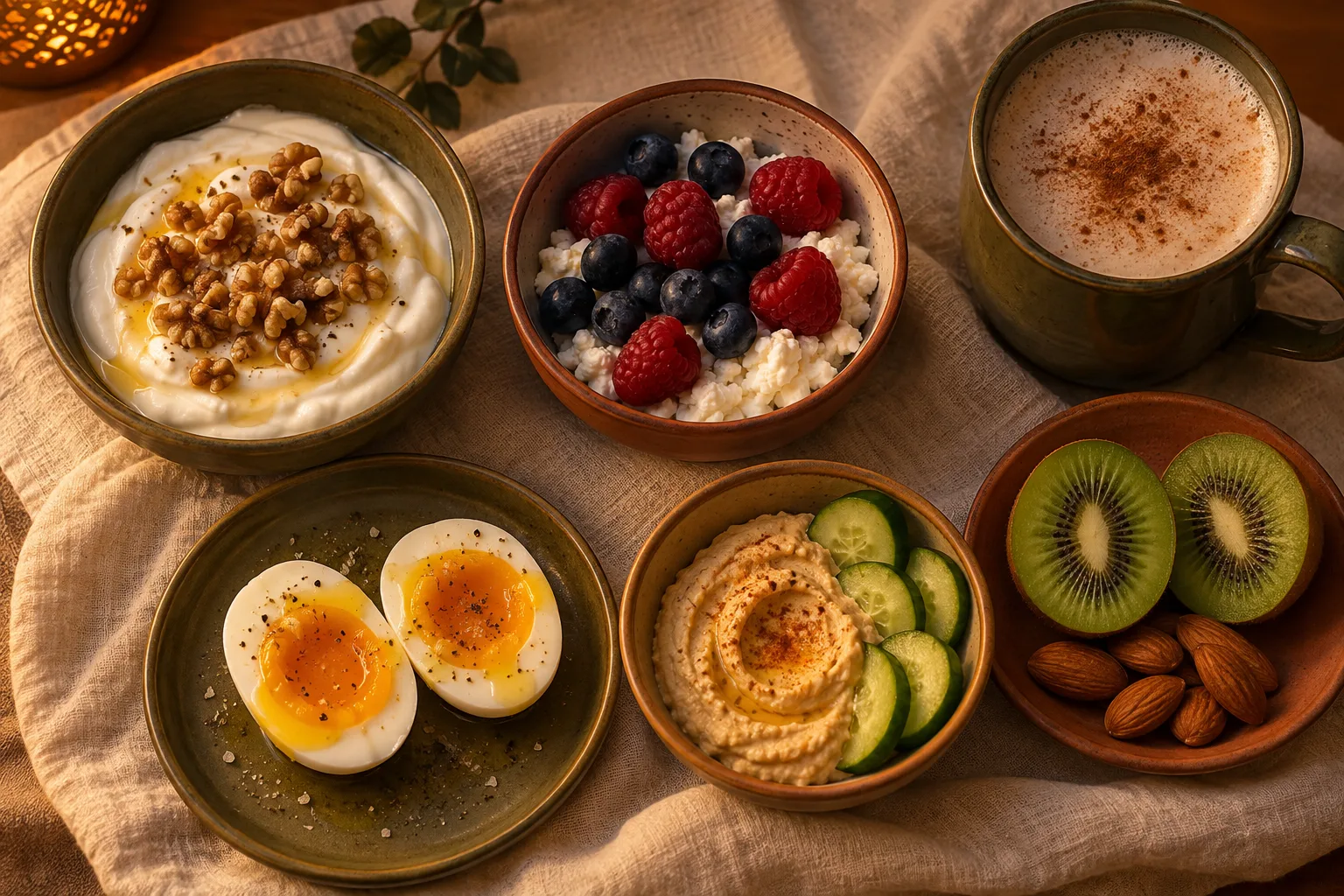
2. Greek Yogurt Gut Health Breakfast Bowl
Plain Greek yogurt with toppings chosen specifically for gut microbiome diversity. This is not a dessert bowl dressed up as health food. Every ingredient has a specific gut health function.
Ingredients:
• 1 cup plain full-fat Greek yogurt (live cultures, no artificial sweeteners)
• 1 tablespoon chia seeds
• 1 tablespoon ground flaxseed
• A small handful of walnuts
• Half a cup mixed berries (blueberries, strawberries, raspberries)
• A drizzle of honey
Gut health benefit: probiotics from yogurt, prebiotic fiber from chia and flax, polyphenols from berries, anti-inflammatory omega-3s from walnuts.
3. Mediterranean Gut Health Smoothie
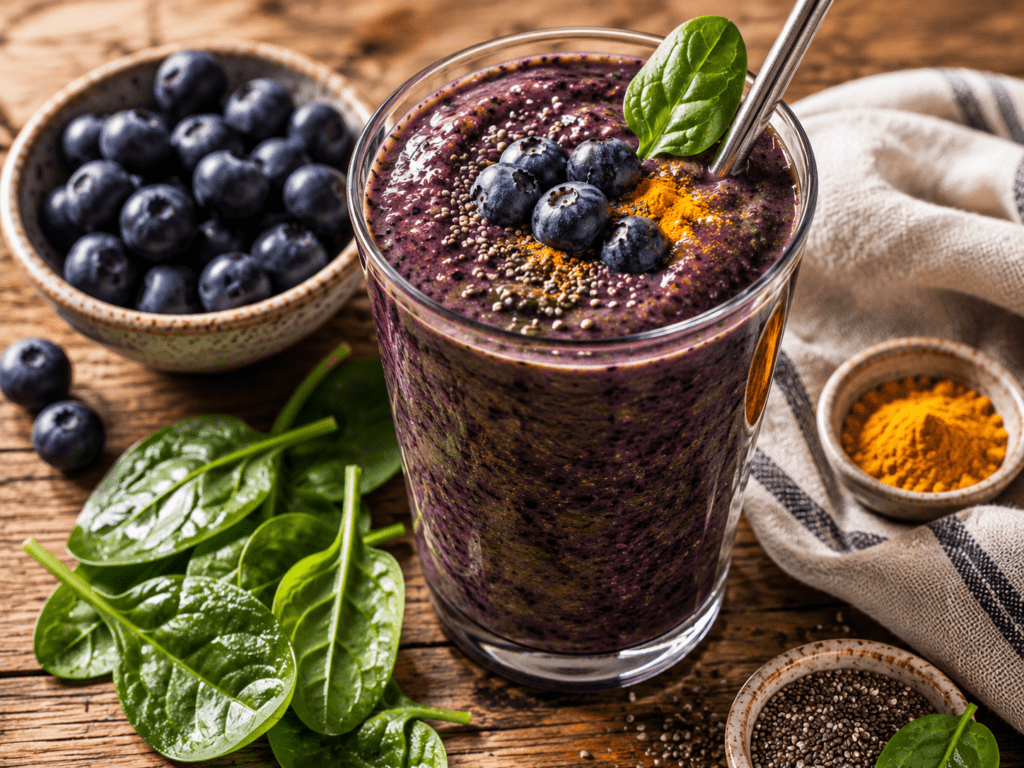
This gut health smoothie is specifically designed to feed beneficial bacteria, reduce gut inflammation, and provide enough protein to keep blood sugar stable for hours. It is not a fruit juice with a handful of spinach. Every ingredient is intentional.
Ingredients:
• Half a cup plain Greek yogurt
• 1 tablespoon chia seeds
• 1 cup spinach or kale
• Half a banana (frozen is best)
• Half a cup blueberries (frozen)
• 1 tablespoon ground flaxseed
• 1 teaspoon turmeric
• A pinch of black pepper (activates turmeric absorption)
• 1 cup unsweetened almond or oat milk
• Optional: 1 scoop clean protein powder
Method:
Blend all ingredients until smooth. Drink immediately or refrigerate for up to 24 hours. The chia seeds continue to absorb liquid and thicken over time.
Gut health benefit: probiotics, prebiotic fiber, curcumin from turmeric, polyphenols from blueberries, leafy greens.
4. Chickpea and Roasted Vegetable Bowl
Chickpeas and roasted vegetables with olive oil and tahini create one of the most complete anti-inflammation gut health meals you can make. The fiber in chickpeas feeds beneficial bacteria. The roasting process in olive oil preserves the polyphenols. Tahini adds additional beneficial fats and minerals.
Ingredients:
• 1 can chickpeas, drained and rinsed
• 1 zucchini, diced
• 1 red pepper, diced
• 1 cup cherry tomatoes
• 3 tablespoons olive oil
• 1 teaspoon cumin, half a teaspoon turmeric, salt
• 2 tablespoons tahini
• Juice of half a lemon
• Fresh parsley
Method:
Toss vegetables and chickpeas in olive oil and spices. Roast at 400F for 25 minutes. Whisk tahini with lemon juice and a little water to make a dressing. Serve over the roasted mix with fresh parsley and a drizzle of raw olive oil.
Gut health benefit: prebiotic fiber from chickpeas, polyphenols from olive oil, anti-inflammatory spices, variety of vegetables for microbiome diversity.
5. Salmon with Fermented Cucumber Salad
Pan-seared salmon with a quick marinated cucumber salad that provides both probiotics and prebiotic fiber. This is the gut health recipe that also directly addresses the hunger-craving connection because salmon provides omega-3s that reduce gut inflammation at the hormonal level.
Ingredients:
• 1 salmon fillet
• 1 cucumber, thinly sliced
• 2 tablespoons apple cider vinegar
• 1 tablespoon olive oil
• Fresh dill
• Salt and black pepper
• Optional: a spoonful of plain Greek yogurt as a sauce
Method:
Marinate cucumber in apple cider vinegar, olive oil, dill, and salt for at least 15 minutes. Pan-sear salmon in olive oil 4 minutes per side. Serve together with a spoonful of Greek yogurt on the side if using.
Gut health benefit: omega-3s from salmon reduce gut inflammation, fermented vinegar supports beneficial bacteria, probiotic yogurt sauce.
6. White Bean and Kale Stew
White beans and kale in olive oil is one of the simplest and most effective gut health diet meals in Mediterranean cooking. Cannellini beans are high in resistant starch. Kale contains the sulfoquinovose that feeds Faecalibacterium prausnitzii directly. This stew is deeply satisfying and keeps you full for hours.
Ingredients:
• 2 cans white cannellini beans, drained
• 3 large handfuls kale, roughly chopped
• 4 cloves garlic, sliced
• 1 can diced tomatoes
• 3 tablespoons olive oil
• 1 teaspoon dried rosemary
• Juice of half a lemon
• Salt and black pepper
Method:
Saute garlic in olive oil until golden. Add beans, tomatoes, rosemary, and a cup of water. Simmer 10 minutes. Add kale and cook until wilted, about 5 minutes. Finish with lemon juice and a raw olive oil drizzle.
Gut health benefit: resistant starch from white beans, sulfoquinovose from kale, polyphenols from olive oil.
7. Mediterranean Overnight Oats for Gut Health
Overnight oats made with prebiotic and probiotic ingredients specifically. This version goes beyond the standard overnight oats recipe to target gut microbiome diversity with every component.
Ingredients:
• Half a cup glyphosate-free rolled oats (resistant starch when cold)
• Half a cup plain Greek yogurt
• 1 tablespoon chia seeds
• 1 tablespoon ground flaxseed
• Half a cup blueberries
• A drizzle of honey
• Milk of choice to cover
Method:
Stir all ingredients together in a jar. Cover and refrigerate overnight. The resistant starch in cold oats acts as a prebiotic. The Greek yogurt provides live cultures. The chia and flax add prebiotic fiber. The blueberries provide polyphenols that feed beneficial bacteria.
Gut health benefit: resistant starch from cold oats, probiotics from yogurt, prebiotic fiber from chia and flax, polyphenols from blueberries.
Simple 7-day gut health diet meal plan
You do not need to follow every recipe in this article every day. Here is a simple framework using Mediterranean gut health principles that you can build your week around.
Breakfast rotation (alternate these three):
• Greek Yogurt Gut Health Breakfast Bowl
• Mediterranean Overnight Oats for Gut Health
• Eggs with spinach, avocado, and olive oil on whole grain toast
Lunch rotation:
• Mediterranean Chickpea Salad (prebiotic fiber)
• Chickpea and Roasted Vegetable Bowl
• Big salad with arugula, sardines, cucumber, olive oil, and lemon
Dinner rotation:
• Lentil and Spinach Soup (make a large batch, eat twice)
• White Bean and Kale Stew
• Salmon with Fermented Cucumber Salad
Daily gut health non-negotiables:
• One tablespoon of olive oil on everything
• One serving of fermented food (Greek yogurt, kefir, or naturally fermented vegetables)
• One serving of prebiotic fiber (legumes, chia, oats, or garlic and onion)
• At least two different vegetables per meal for microbiome diversity
For the full meal prep approach to building this week efficiently, the Mediterranean meal prep guide covers exactly how to prep components rather than full meals so everything stays fresh all week.
>> Want to build gut health meals for any cuisine?
The Full Plate Method app builds Mediterranean meals using the same formula behind every recipe in this article. Free forever. Build your gut health meal free
What damages gut health and makes cravings worse
Understanding what to add is only half the equation. The foods that deplete beneficial gut bacteria are just as important to identify because they directly amplify hunger and cravings.
• Refined sugar feeds harmful gut bacteria and creates the dysbiosis that drives sugar cravings. The more you eat, the more your gut bacteria demand.
• Ultra-processed food contains emulsifiers that damage the gut lining and disrupt the mucus layer that protects beneficial bacteria.
• Refined flour products spike blood sugar, feed harmful bacteria, and provide no prebiotic fiber to feed the beneficial ones.
• Artificial sweeteners alter gut bacteria composition in ways that paradoxically increase glucose intolerance and cravings.
• Alcohol disrupts gut microbiome balance and increases gut permeability, contributing to systemic inflammation.
The inflammation created by these foods is the same inflammation that drives the constant hunger, afternoon crashes, and late-night cravings discussed in how to balance blood sugar to stop hunger and cravings. Gut health and blood sugar regulation are the same problem approached from two different angles.
When food alone is not enough
For most people, consistently eating Mediterranean gut health recipes for two to three weeks produces a noticeable improvement in digestion, inflammation, and cravings. Food is the primary lever.
Frequently asked questions
What are the best gut health recipes for reducing inflammation?
The most effective gut health recipes for reducing inflammation in the Mediterranean diet are lentil-based soups and stews, olive oil-dressed salads with legumes, fatty fish with fermented sides, and Greek yogurt bowls with chia seeds and berries. These foods combine prebiotic fiber, anti-inflammatory polyphenols, omega-3 fatty acids, and live probiotic cultures that work together to reduce gut inflammation at the source.
How does gut health affect hunger and cravings?
Around 90 percent of the body’s serotonin is produced in the gut, and it plays a broader role in appetite signaling, though the direct link to ghrelin specifically is less established than the general gut-appetite connection. When gut microbiome diversity is low and beneficial bacteria are depleted, hunger signals become dysregulated. You feel hungry shortly after eating, crave sugar in the afternoon, and experience strong food urges at night. Restoring beneficial bacteria through prebiotic and probiotic foods may help these signals over weeks of consistent eating.
What is a good gut health diet meal plan for beginners?
Start with three foundational swaps: replace your breakfast with a Greek yogurt bowl or overnight oats with chia seeds, add a serving of legumes at lunch through a chickpea or lentil dish, and cook dinner in olive oil rather than seed oils. Those three changes alone introduce prebiotic fiber, probiotics, and polyphenols into your daily routine without requiring a complete diet overhaul. The 7-day framework above gives you the full rotating plan.
Are gut health smoothies actually effective?
Yes when they are built correctly. A gut health smoothie that combines Greek yogurt (probiotics), chia seeds or flaxseed (prebiotic fiber), leafy greens (sulfoquinovose for Faecalibacterium prausnitzii), berries (polyphenols), and turmeric (curcumin) delivers multiple gut health benefits in one drink. The versions that are just fruit juice with a handful of spinach are not gut health smoothies. They are high-sugar drinks with minimal microbiome benefit.
How long does it take to improve gut health through diet?
A 2014 study in Nature found that gut microbiome composition can shift within a single day of a major dietary change, faster than most people expect. Symptom-level changes tend to lag behind that, though. Many people notice reduced bloating and quieter cravings within the first week of consistent Mediterranean gut health eating, with more significant changes in energy, mood, and appetite regulation typically building over the following weeks. The gut microbiome is more responsive to dietary changes than most people realize.
What is the connection between gut health and cortisol?
Chronic gut inflammation elevates cortisol, your stress hormone, which in turn drives cravings for high-calorie foods and disrupts sleep. It is a compounding cycle: poor gut health raises cortisol, elevated cortisol damages the gut lining, which worsens gut health further. The Mediterranean anti-inflammatory diet addresses both sides of this cycle simultaneously. More on the cortisol side in foods that lower cortisol naturally.
The bottom line
Gut health and hunger control are the same conversation. The foods that feed beneficial gut bacteria are the same foods that stabilize blood sugar, suppress hunger hormones, and quiet cravings. The Mediterranean diet does not separate these outcomes. It addresses all of them through the same eating pattern that people in Mediterranean cultures have followed for generations.
The seven gut health recipes above are the ones I come back to most consistently. Start with the lentil and spinach soup and the Greek yogurt breakfast bowl. Get those two right for a week and notice what changes. The shift in how you feel by Day 3 is usually enough to make the rest of the changes feel obvious rather than effortful.
I grew up eating versions of most of these recipes without ever calling them gut health food. My grandmother in the Dominican Republic made lentil soup and bean stews because that is what real food looked like. It turns out the science has been confirming what traditional cooking already knew for decades.
Ribert
>> Want to reset your hunger and cravings in 7 days?
The Cravings Control Reset PDF covers the full hormonal reset system behind the gut-hunger connection. Get the Cravings Control Reset for $27
This article shares personal experience and general nutrition information, not medical advice. If you have a diagnosed gut condition, consult a healthcare provider before making significant dietary changes.
Free printable
Hungry again at 9pm?
Get the free printable Night Hunger Snack List: 10 Mediterranean snacks with exact portions and protein counts, for the evenings when cravings hit. Enter your email and download it instantly.
Free. No spam. Unsubscribe anytime.
About Ribert Rodriguez
Ribert is the founder of EnergiSource Wellness. He built this site to share what actually worked for him after years of struggling with cravings, late-night eating, and low energy. His approach is rooted in the Mediterranean framework and a belief that food is one of the most powerful tools for how you think and feel.