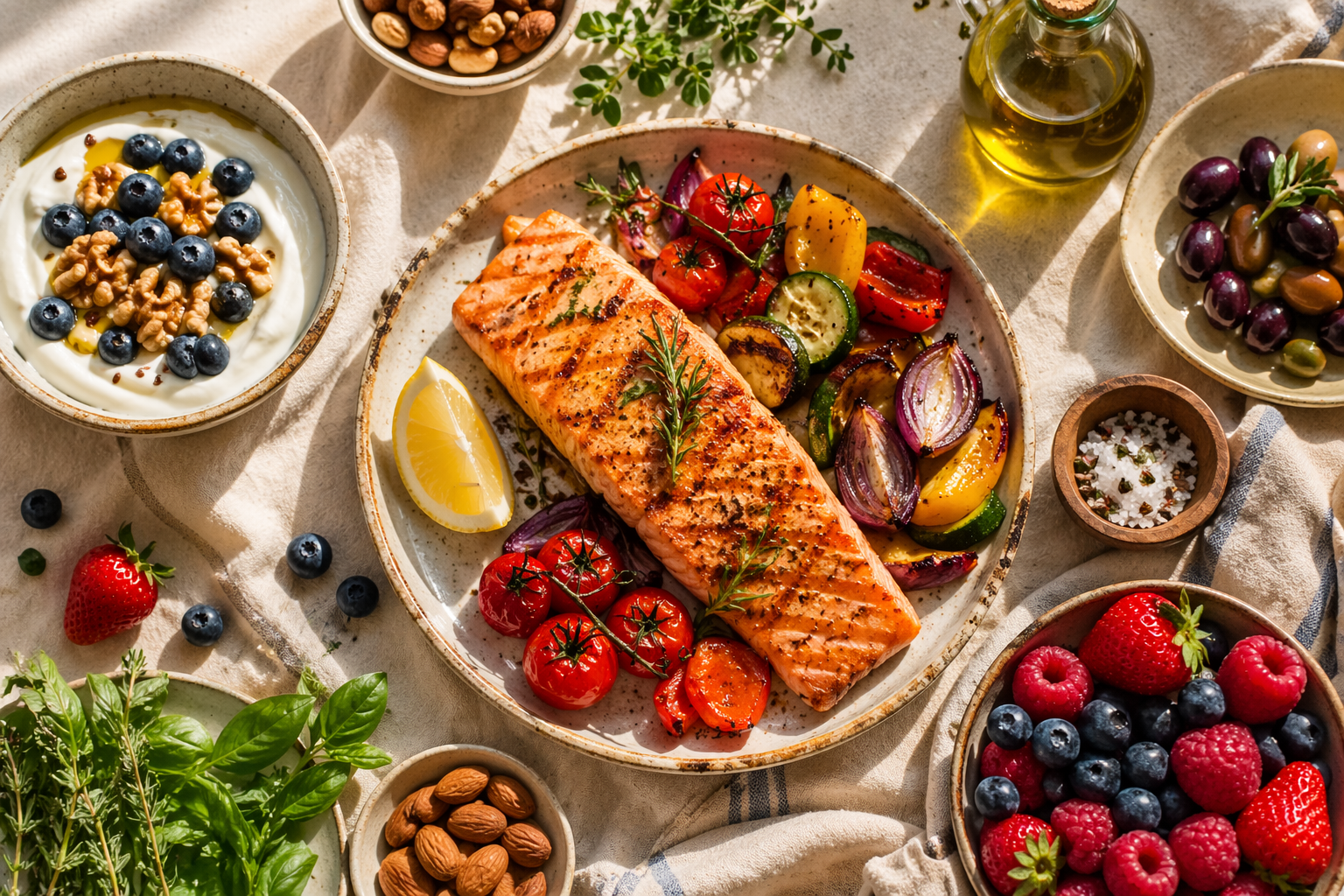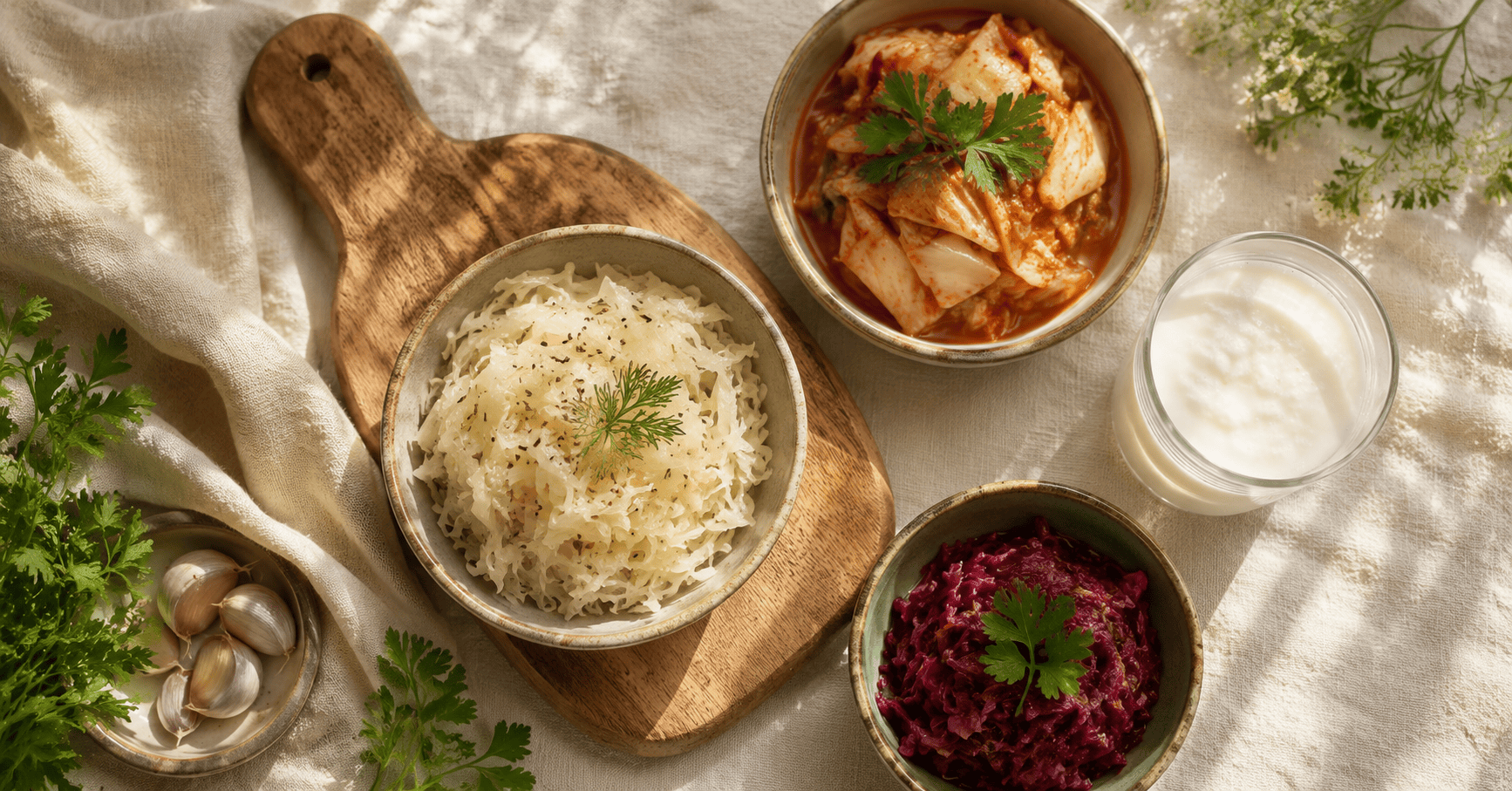
The foods that lower cortisol most reliably are the ones that steady your blood sugar: protein, fiber, healthy fats, magnesium-rich leafy greens, and omega-3s. Refined sugar, excess caffeine, and alcohol are the ones quietly spiking it, so balancing your plate does more for cortisol than any single supplement.
You feel wired but tired.
You wake up exhausted but can’t fall asleep until 1am. You’re craving sugar by 9pm even though you ate dinner. Your belly feels bloated even when you eat clean. Your patience is thin. Your energy crashes for no reason.
If that’s the pattern, your cortisol is probably running the show.
And here’s what nobody’s telling you straight: you don’t need supplements. You don’t need a special program. You don’t need to “manage stress” through meditation alone. The fastest way to bring your cortisol down, for most people, is sitting on your plate three times a day.
I dug into this for over a year. Read the research. Tested it. Watched what happened in my own body and in people close to me. The answer kept pointing back to the same place, food. Specifically, the kind of food the wellness industry hasn’t figured out how to package yet.
Let me show you what’s actually going on.
Water Quality Matters Too
The Clearly Filtered Pitcher
Heavy metals like lead are recognized endocrine disruptors that can interfere with hormone regulation broadly, though the research isn’t specific enough to claim they directly spike cortisol. The Clearly Filtered pitcher removes 365 plus contaminants including lead, fluoride, and PFAS.
See the Clearly Filtered Pitcher →What cortisol actually is (in plain English)
Cortisol is your body’s main stress hormone. It’s not the villain. You need it. It’s what gets you out of bed in the morning, keeps your blood sugar stable, helps you respond to threats.
The problem is when it stays elevated all day, every day. That’s chronic high cortisol. And modern life is basically engineered to produce it.
When cortisol stays high, you feel it as:
- Wired but tired (especially at night)
- Belly fat that won’t move no matter what you do
- Cravings for sugar and refined carbs
- Trouble sleeping or staying asleep
- Brain fog
- Bloating after meals
- Constant low-grade anxiety
- Energy crashes mid-afternoon
Sound familiar?
What most people miss is this: the food you’re eating is one of the biggest cortisol triggers there is. Not stress. Not your job. Not your relationships. The food.
The sneaky foods spiking your cortisol (and you don’t even know it)
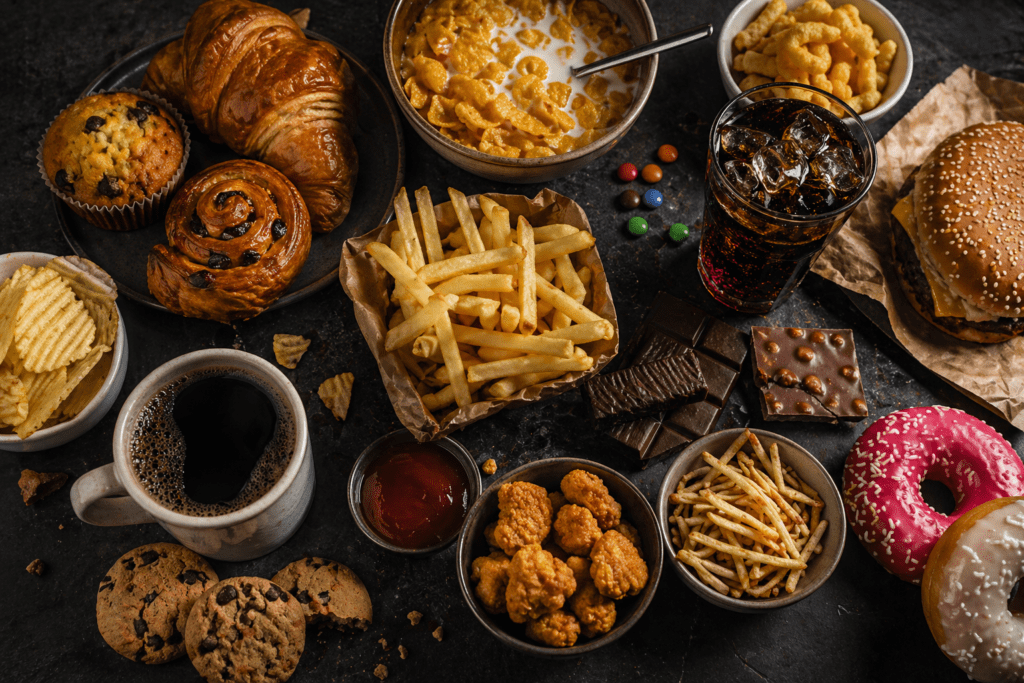
This is the part of the cortisol conversation almost nobody covers. Everyone talks about ashwagandha and meditation. Nobody tells you that your morning routine might be flooding your system with cortisol before noon.
Here’s what’s actually doing it:
Refined sugar and refined carbs. Cereal, pastries, white bread, pasta with no protein, fruit juice, sweetened coffee drinks. They spike your blood sugar fast, which crashes it equally fast, and that kind of crash triggers a cortisol release as your body works to bring glucose back up. A 2025 Stanford Medicine study found that pairing carbs with fiber or protein measurably reduces these swings, which is exactly why refined carbs alone tend to set this cycle off. Multiply that by three meals plus snacks, and your cortisol is on a roller coaster all day.
Caffeine on an empty stomach. Coffee with nothing in your stomach is a cortisol grenade. Your body’s already releasing cortisol naturally in the morning. Caffeine amplifies it. Without food to buffer the response, that surge tends to run longer and crash harder, leaving you reaching for sugar by mid-morning.
Seed oils. Soybean oil, canola oil, corn oil, sunflower oil. They’re in basically every restaurant meal, every packaged snack, every “healthy” dressing. In my own experience cutting these out, and in what I’ve heard from a lot of people who’ve done the same, the difference in how I felt was noticeable. I’ll be straight with you though: the clinical research on seed oils and inflammation is more mixed than most wellness content admits, several controlled trials have found little effect on inflammatory markers in healthy people, so I’m not going to oversell this as settled science. What’s easier to defend either way is that seed oils are cheap, heavily processed, and tend to replace whole-food fats in a diet, which is reason enough on its own to limit them.
Alcohol. Alcohol reliably raises cortisol, and the more you drink, the longer that elevation tends to last, in some cases into the next day. Drinking at dinner specifically means that elevation overlaps with your sleep window, which is when your body is supposed to be doing recovery work instead.
Skipping meals. Going long stretches without eating, especially when your blood sugar isn’t already stable, forces your body to release cortisol just to keep your glucose up. The same blood-sugar-stability principle applies here: the 2025 Stanford Medicine research on glucose swings found that steadier eating patterns reduce the kind of instability that forces this cortisol response in the first place. Most “intermittent fasting” advice ignores this for women specifically, where the cortisol response can be brutal.
Ultra-processed “diet” foods. Sugar-free this, low-fat that, protein bars with 17 ingredients. Some research has explored whether artificial sweeteners and emulsifiers act as low-grade stressors on the body, though that connection is far from settled science. What’s more established is that these products tend to crowd out the real, whole foods that actually support stable cortisol.
Funny how almost every food on this list is sold to people as healthy.
Foods that lower cortisol naturally
Now the real answer.
These are the foods that have been studied repeatedly for their effects on stress hormones, blood sugar stability, and inflammation, three things that all directly affect cortisol. They’re also, conveniently, the foods at the center of how people in the Mediterranean have eaten for thousands of years.
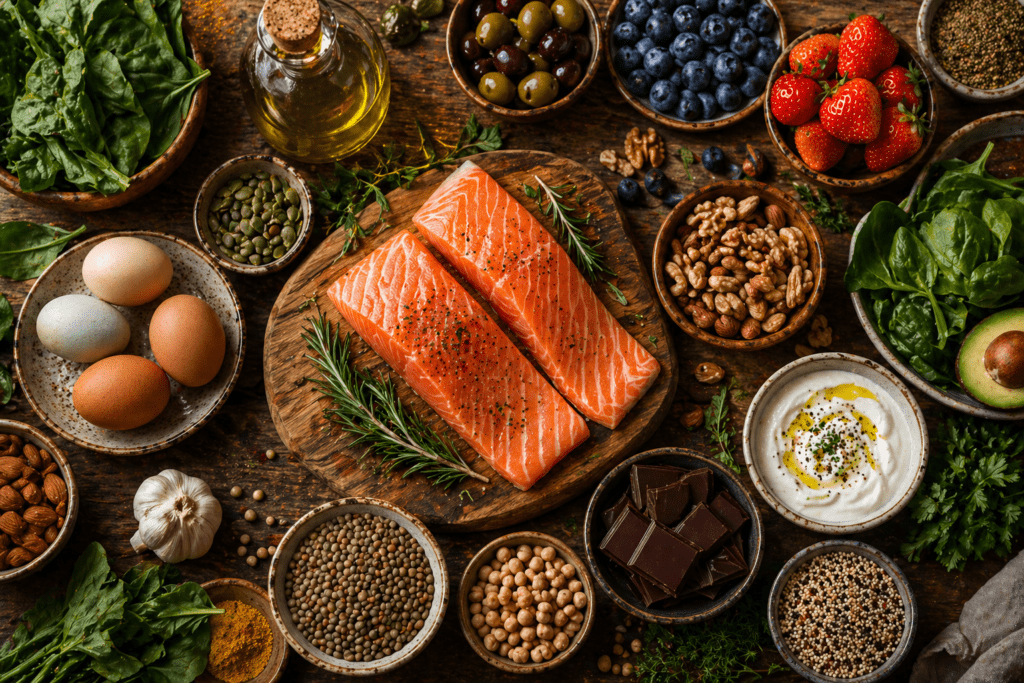
Fatty fish (salmon, sardines, mackerel) Omega-3s are well established for reducing inflammation, and some research has explored a more direct link to cortisol regulation specifically, though that connection is less settled than the inflammation research behind it. Either way, two to three servings per week is a reasonable target for the broader anti-inflammatory benefit.
Eggs Complete protein, choline for brain function, and they don’t spike blood sugar. Eggs at breakfast are one of the simplest ways to start the day without a cortisol surge. The decades of “eggs are bad for you” advice has largely been walked back as the research on dietary cholesterol has evolved. Worth remembering next time a food gets villainized industry-wide.
Greek yogurt and fermented foods Emerging research on the gut-brain axis suggests gut bacteria play a role in regulating the body’s stress hormone response, though most of that evidence so far comes from animal studies, with human research still catching up. A 2023 review in Frontiers in Endocrinology found that gut microbes help modulate the HPA axis, the system that governs cortisol release, throughout life. Fermented foods like Greek yogurt, sauerkraut, kefir, and kimchi support the gut bacteria this research is focused on.
Leafy greens and cruciferous vegetables Spinach, kale, broccoli, arugula. High in magnesium, which is one of the most depleted minerals in chronically stressed people. A 2020 review in the journal Nutrients found that magnesium plays a key inhibitory role in the body’s stress response, and that stress itself depletes magnesium, a cycle the review calls a “vicious circle” that adequate intake can help break.
Berries Blueberries, strawberries, raspberries. Antioxidants help offset inflammation generally, and berries are sweet without spiking blood sugar the way other fruit can.
Olive oil Extra virgin olive oil, not refined. The polyphenols in real olive oil are genuinely anti-inflammatory, and that link is well established. A direct cortisol-lowering effect specifically is a less settled claim than the inflammation research behind it, so olive oil earns its place here more through the inflammation pathway than a proven direct cortisol effect.
Dark chocolate (70%+ cacao) Some research points to dark chocolate blunting cortisol reactivity to stress, though the exact amount that matters isn’t well pinned down, so treat serving size as a rough guide rather than a precise dose. Look for actual cacao content, not “milk chocolate with cocoa.” Most chocolate sold in the US doesn’t qualify.
Legumes Lentils, chickpeas, black beans, white beans. Slow-digesting, blood-sugar-stable, mineral-rich. The food my abuela in DR built every meal around, for good reason.
Nuts and seeds Walnuts (omega-3s), almonds (magnesium), chia seeds (fiber + omega-3s). Small daily portions, big cumulative effect.
Herbal teas, chamomile, green tea Green tea contains L-theanine, an amino acid a 2016 randomized trial in Nutrients found lowered salivary cortisol response to a stressor within a few hours of intake. Chamomile has real evidence behind it too: a systematic review of clinical trials found it improved cortisol patterns, though that specific finding came from people with diagnosed anxiety, not a general population, so treat it as promising rather than settled for everyday stress. Either way, both are more useful than the “stress tea” blends being sold for $30.
The Mediterranean way of eating is essentially a cortisol-lowering protocol
Here’s the thing nobody puts together.
Look at the foods that lower cortisol. Now look at how Mediterranean populations have been eating for thousands of years. It’s the same list.
Olive oil. Fatty fish. Vegetables. Legumes. Whole grains. Yogurt. Nuts. A little wine sometimes. Real food, simply prepared, eaten without rushing.
This isn’t a diet someone invented. It’s the way humans ate before the food industry built itself on cheap seed oils, refined sugar, and processed everything.
When I tested this on myself, the shift was undeniable. Better sleep. No more 9pm sugar cravings. Steadier energy. Less belly bloat. My body composition started shifting without me trying. Mental clarity I hadn’t felt in years.
I wasn’t trying to “lower my cortisol.” I was just eating real food. The cortisol fix happened automatically because cortisol is downstream of how you eat, not the other way around.
→ Related: The Balanced Mediterranean Meal Formula for Stable Energy and Fullness
A simple day of cortisol-lowering meals
Here’s what this actually looks like in practice. No tracking. No app. Just real food in the right combinations.
Breakfast 2 eggs scrambled with spinach + slice of whole grain toast + avocado + black coffee with breakfast (not before)
The protein, fat, and fiber stabilize blood sugar from the start. Coffee with food, not on an empty stomach, prevents the cortisol surge.
Mid-morning (if needed) Greek yogurt + handful of walnuts + berries
Probiotics for the gut. Magnesium and omega-3s from the walnuts. Antioxidants from the berries. Stable energy until lunch.
Lunch Mediterranean bowl: grilled salmon or chicken + quinoa + spinach + cucumber + cherry tomatoes + olive oil + lemon
Omega-3s, complete protein, fiber, polyphenols. Cortisol stays calm through the afternoon.
Afternoon (if needed) Apple + a small handful of almonds OR hummus + carrots
Slow-burning fuel that helps prevent the afternoon energy dip a lot of people associate with rising cortisol.
Dinner Lentil and vegetable stew with olive oil + side of greens + glass of water
Anti-inflammatory, blood-sugar-stable, calming to the nervous system. Sets up better sleep, which sets up better cortisol regulation tomorrow.
Evening (optional) Chamomile tea + small piece of 70%+ dark chocolate
Closes the day on a parasympathetic note instead of a stress note.
That’s it. No supplements required. No fasting protocol. No biohacking.
→ Related: How to Balance Blood Sugar to Stop Hunger and Cravings
Want a done-for-you version of this? The Cravings Control Reset is a 7-day Mediterranean meal system built around blood sugar stability and cortisol regulation. Specific meals, specific portions, no guesswork. Get instant access for $27 →
What about supplements?
Quick honest answer.
The supplement industry would love you to believe you need ashwagandha, rhodiola, magnesium glycinate, phosphatidylserine, L-theanine pills, adaptogens, mushroom blends, and a dozen other things to lower cortisol.
Some of these have real research behind them. Magnesium specifically is worth considering: a 2012 review in Nutrition Reviews found that roughly half of the US population consumes less than the recommended amount of magnesium from food, which is a dietary intake gap, not necessarily a clinically diagnosed deficiency in everyone that describes. L-theanine is in green tea naturally.
But here’s the thing, supplements work better when food is dialed in, and they barely work at all if your food is still spiking your cortisol three times a day. You can’t supplement your way out of a cortisol-driven diet.
Fix the food first. Then if you want to add magnesium glycinate at night for sleep, fine. But don’t start there. Start with your plate. On that note, these are the nighttime snacks that settle it.
The supplement industry is worth tens of billions of dollars a year. It makes zero dollars when you eat real food.
How long until you feel the difference?

This is what I noticed when I tested it on myself, and what I’ve seen in people who’ve tried it consistently:
This is what I noticed on this rough timeline, and it lines up with what several people close to me experienced too, though your own timeline may move faster or slower than this.
Early on: Sleep is usually the first thing to shift. Falling asleep gets easier, and you wake up less.
Within a couple weeks: Afternoon energy crashes tend to lift, and evening sugar cravings show up less often.
A few weeks in: Bloating tends to ease, and your belly can feel flatter even before any real weight change.
A month or two in: Body composition often starts shifting on its own, and mental clarity and mood tend to feel steadier.
Longer term: This becomes how you eat, and the old way starts to feel obviously off.
You don’t need to do this perfectly. You need to do it consistently. The body is forgiving. It just needs the inputs to be right most of the time.
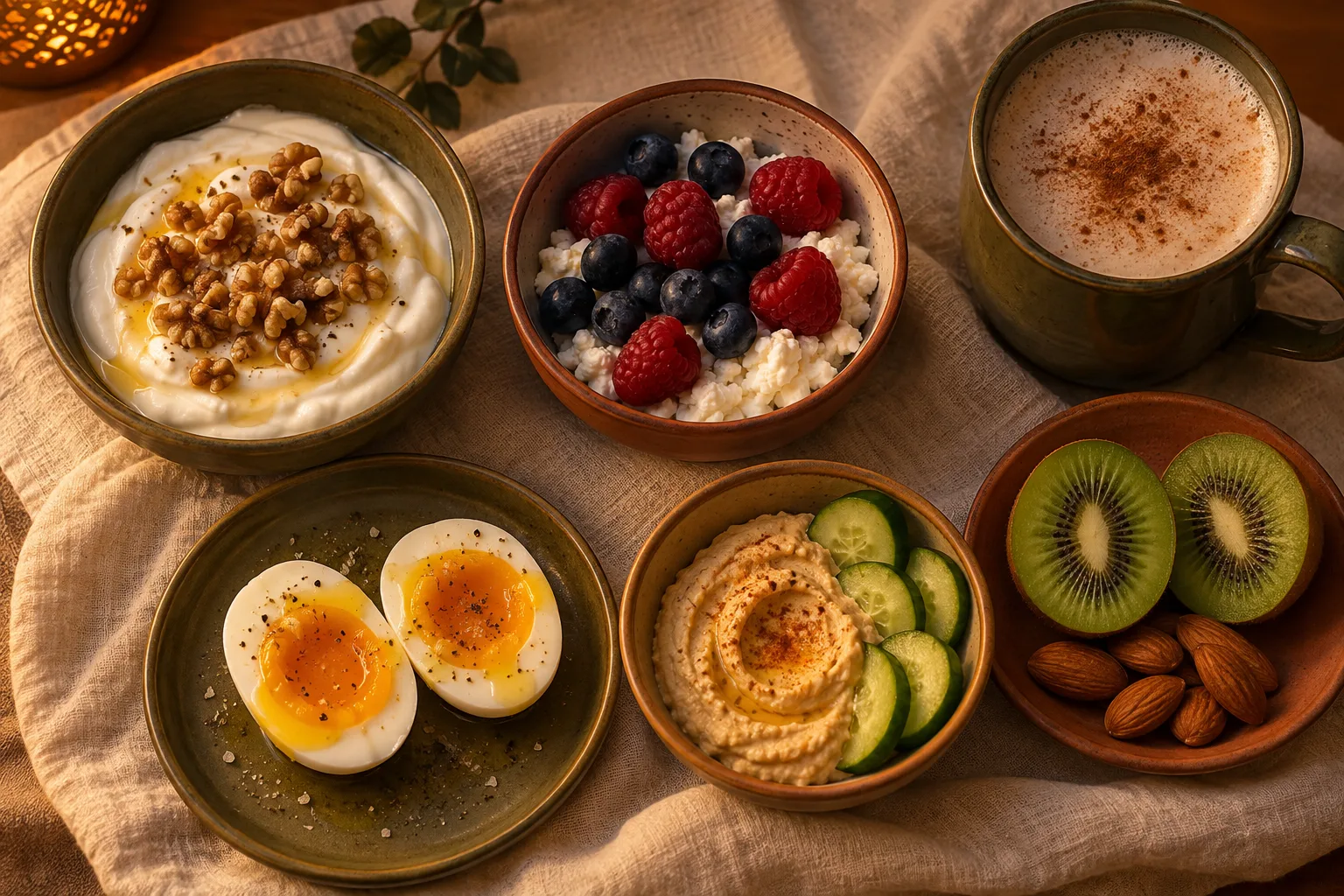
Free printable
Hungry again at 9pm?
Get the free printable Night Hunger Snack List: 10 Mediterranean snacks with exact portions and protein counts, for the evenings when cravings hit. Enter your email and download it instantly.
Free. No spam. Unsubscribe anytime.
Frequently Asked Questions
What food lowers cortisol the fastest? Fatty fish, leafy greens, and dark chocolate have the most direct research. But “fastest” is the wrong question, cortisol regulation is about consistent inputs, not single foods. The faster path is removing what’s spiking it (sugar, seed oils, alcohol, caffeine on empty stomach) than adding any one specific food.
Can foods really lower cortisol naturally? Yes, though the strength of evidence varies by mechanism. Blood sugar stability’s effect on cortisol surges is well-established endocrinology. Magnesium’s role has real research behind it. The gut-bacteria connection is genuinely promising but still an emerging area of research. Omega-3s are strongly linked to reduced inflammation, though a direct cortisol-lowering effect specifically is less settled. Food is still one of the most powerful daily inputs to cortisol regulation. Most doctors don’t bring it up because nutrition isn’t covered in medical school.
Does coffee raise cortisol? Yes, especially on an empty stomach. The cortisol response from coffee is amplified when there’s no food to buffer it, the same blood-sugar-stability mechanism behind the 2025 Stanford Medicine research on food pairing and glucose swings. The fix isn’t quitting coffee. It’s drinking it with breakfast, not before. That single change reduces the cortisol surge.
What’s the worst food for cortisol? Refined sugar combined with seed oils, which describes most ultra-processed foods. Cereal, pastries, fast food, packaged snacks. The combination spikes blood sugar AND drives inflammation, which creates a double cortisol hit.
How do I know if my cortisol is high? Common signs: belly fat that won’t move, wired-but-tired feeling, sugar cravings (especially evening), trouble sleeping, energy crashes, bloating, brain fog, anxiety. You can also get a saliva cortisol test from a functional medicine practitioner if you want concrete numbers, but for most people, the symptoms are clear enough to start addressing it through food.
Can I lower cortisol without giving up coffee? Yes. You don’t have to give up coffee. Just have it with food, not on an empty stomach. And limit it to one cup, ideally before noon.
This isn’t complicated. It’s not even new.
The food that lowers cortisol is the food humans have been eating for thousands of years before the food industry got involved. Real fish. Real eggs. Real vegetables. Real olive oil. Real legumes.
The hard part isn’t knowing what to eat. It’s getting clear on what’s actually been doing the damage all along, and seeing that most of what’s marketed as healthy isn’t.
Try this for two weeks. Just the foods on this list. Watch your sleep. Watch your cravings. Watch your energy. Watch your patience with people. Watch your belly.
Then tell me cortisol is something you need a $80 supplement to fix.
Want a complete done-for-you Mediterranean meal plan that does this work for you? The 3-Day Hunger Reset is free, three full days of breakfast, lunch, and dinner built around blood sugar stability and cortisol regulation. Grab it and start your next three days right.
About Ribert Rodriguez
Ribert is the founder of EnergiSource Wellness. He researches and writes every article on this site personally, cross-checking claims against published research rather than relying on generic wellness advice. His approach is rooted in the Mediterranean framework, built from years of testing meal structures on himself after struggling with cravings, late-night eating, and low energy.