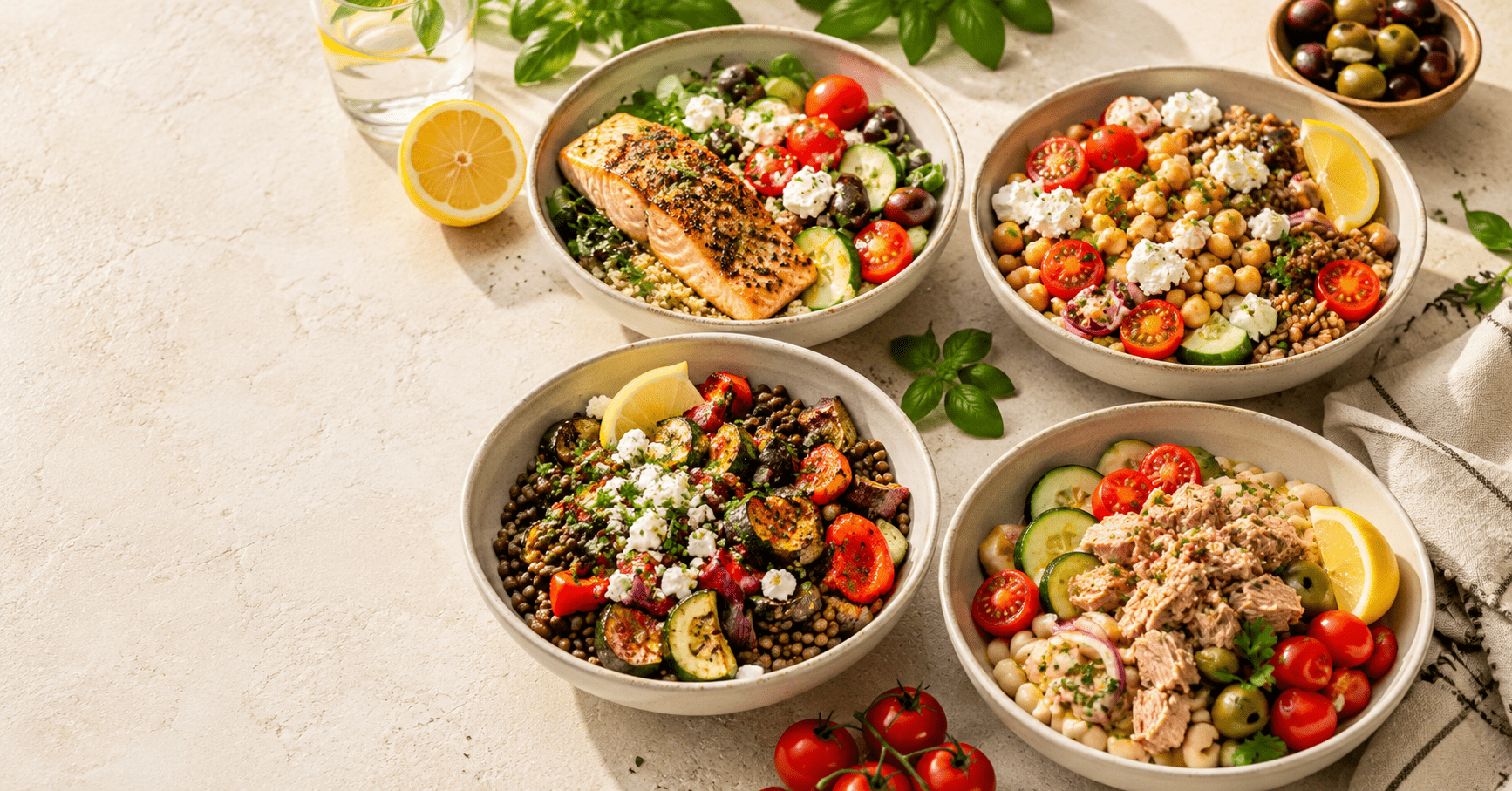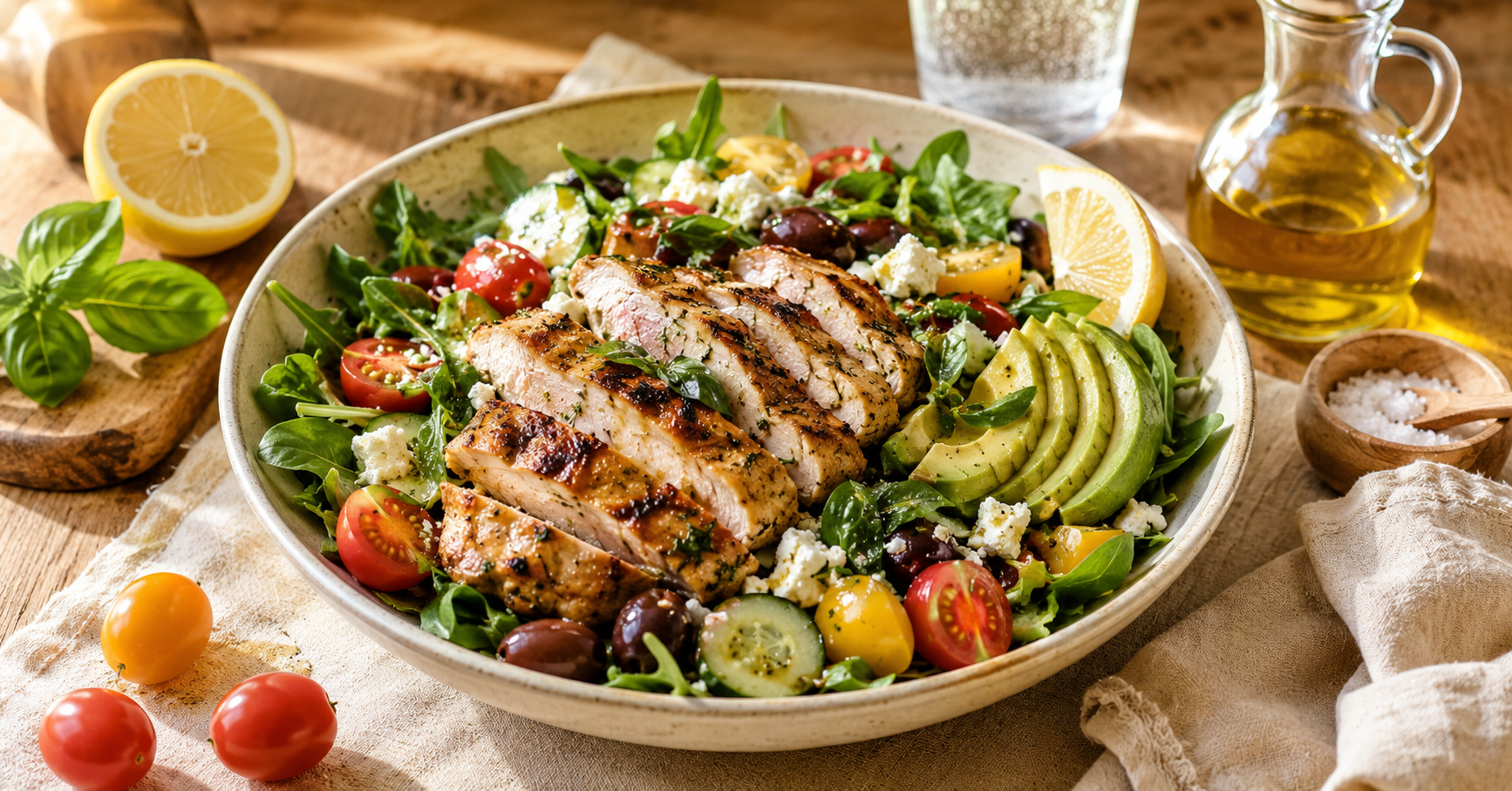
A summer salad only stays filling when it includes real protein and healthy fat alongside the vegetables, not just greens and a light dressing. These five salads are built around that structure specifically.
It is 90 degrees outside. I just got home from the gym. I open the fridge thinking I want something light, something cool, something that does not require me to stand over a hot stove. I pull out a bag of greens, a tomato, a cucumber. I make myself a salad. I sit down to eat it. Twenty minutes later it is gone. An hour later I am standing in front of the open fridge again. Hungry.
This used to happen to me almost every summer. I would convince myself I was being healthy. I would eat the salad. I would feel virtuous for about thirty minutes. Then the hunger would come back hard and I would end up making a second meal anyway, except this time it was usually whatever was easiest, which was almost never the most nourishing option.
If this is the loop you have been stuck in, you are not eating wrong. You are eating salads that were never designed to keep you full in the first place.
It is not a willpower problem. It is a structure problem.
There is a quiet lie in how most of us were taught to think about salads. The lie says salad equals healthy equals filling. That is two true things and one missing piece. A bowl of lettuce, tomato, cucumber, and a drizzle of dressing is technically healthy. It is also technically a salad. But it is not a meal.
Most of what you find in restaurants, on grocery store shelves, or in those big plastic bowls with a tiny packet of dressing on top are built for one thing. They are built to look like a meal. Not to feel like one.
What nobody tells you. The salad industry sells you the visual of health. The portion sizes are intentionally small. The protein on top is sliced thin so it looks generous when it weighs barely four ounces. The dressing packet is sized for marketing photos, not actual coverage. You are eating the idea of a meal, not a meal.
The one reason most summer salads leave you hungry
Most salads do not contain enough protein, fat, or fiber to trigger real fullness signals. I wrote a separate article on exactly why this happens in Why Most Salads Do Not Keep You Full. The short version is your body has a satiety system that runs on protein, fat, and fiber. When a salad delivers mostly water and a few grams of plant carbs, your hunger hormones never get the signal that the meal is over.
Summer makes this worse. We tend to crave lighter foods in the heat. We default to grain bowls and salads because they feel right for the season. But light does not have to mean empty. A summer salad can absolutely be cooling, refreshing, and satisfying. It just has to be built differently than the side-dish salads most of us grew up eating.
I noticed this shift in my own kitchen about a year ago. The summers I felt best, the summers I did not graze all day, the summers I was not opening the fridge at 10pm wondering what to eat, were the summers I made salads big. Generous. Loaded with real protein, real fat, and real fiber. Like a full plate, just cold.
The Full Plate Method for summer salads
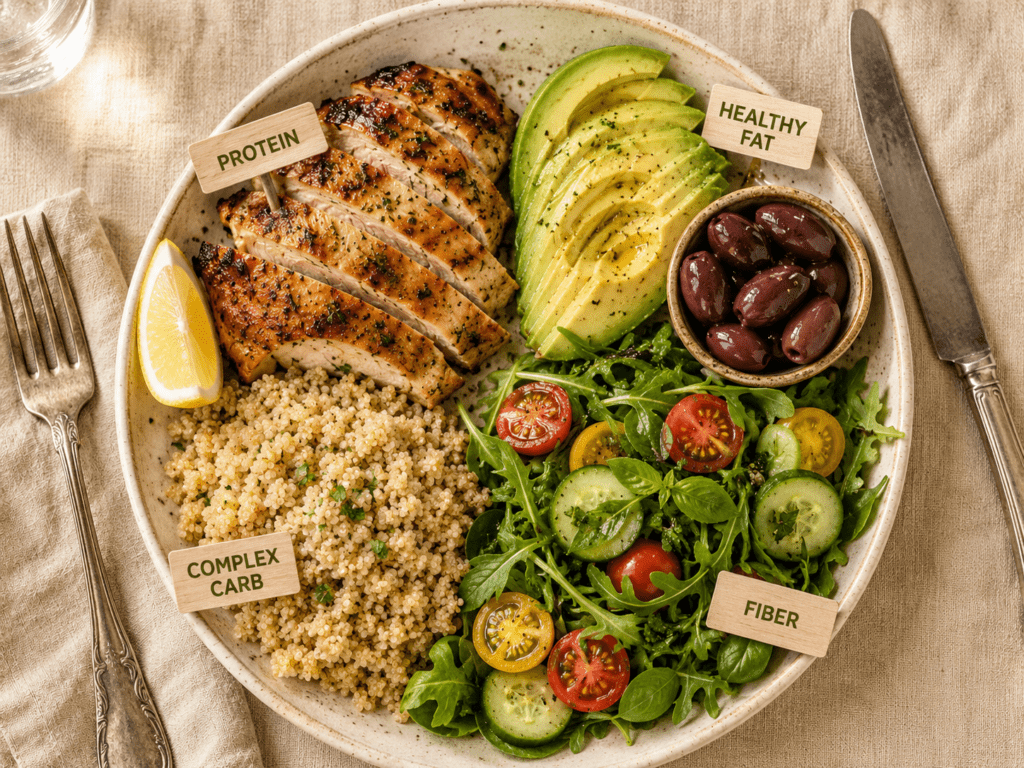
Every salad I build follows the same simple structure I use for every meal. It is what I call The Full Plate Method. Four elements on every plate. The salad version goes like this.
1. A real protein
Not a sprinkle. Not a garnish. A real serving of protein that puts the salad in the meal category. For me that usually means 4 to 6 ounces of grilled chicken, a can of wild caught sardines, a couple of hard boiled eggs, a generous scoop of canned salmon, or a cup of seasoned chickpeas. The protein is the anchor of the bowl, not the topping.
2. A healthy fat
Olive oil, avocado, olives, nuts, seeds, or full fat cheese. I drizzle good extra virgin olive oil on every salad I build. The fat is what carries the flavor and what slows the digestion of everything else in the bowl. Without it your salad goes through you in twenty minutes.
3. A complex carb
This is the piece most salad recipes leave out. A scoop of quinoa, a half cup of cooked lentils, a chunk of roasted sweet potato, a slice of warm sourdough on the side. Complex carbs give the salad real staying power and they make it feel like dinner, not a snack. In summer I lean toward grains served cold or room temperature.
4. A fiber load
Greens, raw vegetables, fresh herbs. This is the part most salads already get right. The trick is to think of fiber as the backdrop, not the whole picture. Three big handfuls of greens plus chopped vegetables plus fresh herbs gives you the volume and the gut benefits without trying to do all the work alone.
The shift. When you stop trying to make a salad healthy by removing things and start making it satisfying by adding things, the salad starts working with your body instead of against it.
The summer salad I actually eat almost every week
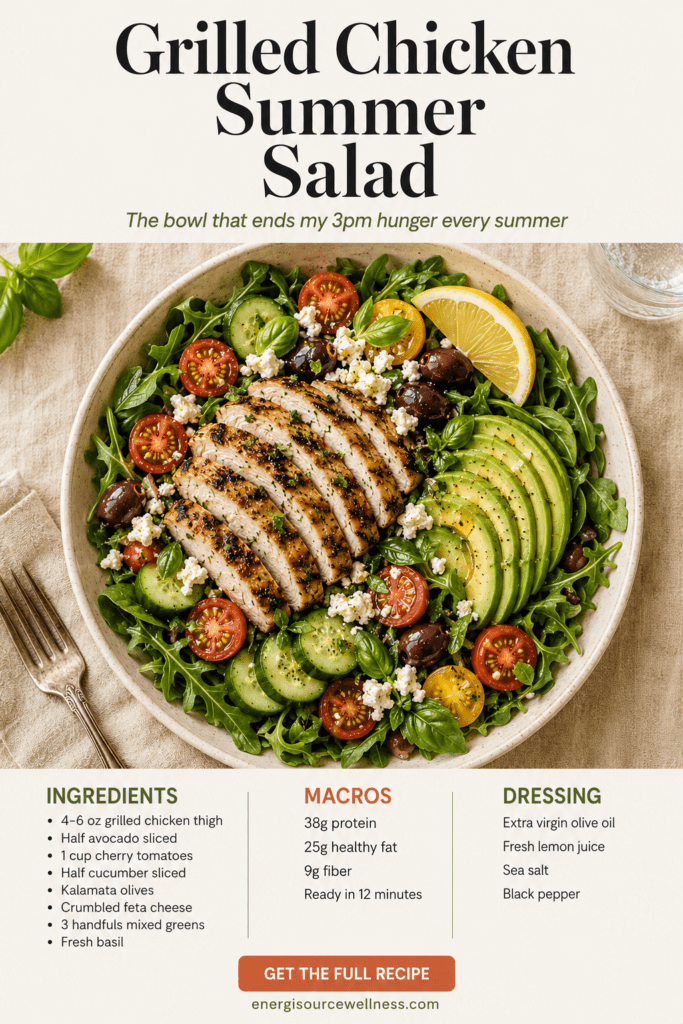
If I had to pick one bowl that has carried me through summer after summer, this is it. Grilled chicken with avocado and tomatoes. Simple. Cooling. Loaded with everything I need to walk away full for three to five hours.
What goes in the bowl
• 4 to 6 ounces of grilled chicken thigh, sliced. I season it with sea salt, garlic, oregano, and a squeeze of lemon before grilling. Thighs stay juicier than breasts and the fat in them adds to the satiety.
• Half an avocado, sliced. This is non-negotiable for me. The fat from the avocado is what makes this bowl feel like a real meal.
• A full cup of halved cherry tomatoes, ideally sun-warmed. Summer tomatoes are different from grocery store tomatoes the rest of the year. Use them while you have them.
• Half a cucumber, sliced thick. The cool crunch is the whole point in summer.
• A small handful of kalamata olives. They bring salt and fat and turn the bowl into something Mediterranean.
• Three big handfuls of greens. I use a mix of arugula and baby spinach. The bitter of the arugula plays well with the rich chicken and the sweet tomatoes.
• A generous drizzle of extra virgin olive oil and a heavy squeeze of fresh lemon. That is the dressing. Done.
Why this bowl works
You are looking at approximately 38 grams of protein, 25 grams of healthy fat, around 9 grams of fiber, and real flavor. It takes about twelve minutes to assemble if the chicken is already grilled. I usually grill four servings of chicken on Sunday so I can build this bowl in five minutes any day of the week.
I have eaten some version of this bowl probably forty times this past summer. I never get tired of it. Because real food does not get boring the way restricted food does. Your body learns to crave what actually fuels it.
Three more summer salads that earn their place
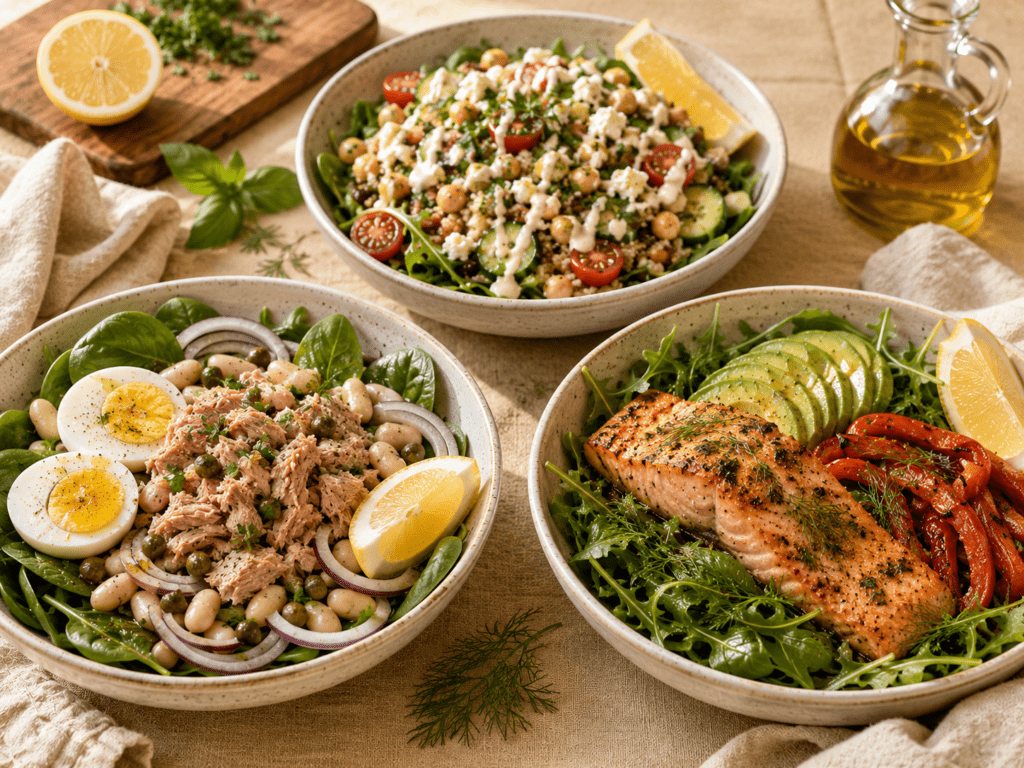
Mediterranean tuna and white bean bowl
A can of good tuna, half a can of cannellini beans, halved hard boiled eggs, sliced red onion, capers, baby spinach, lemon, olive oil. About 35 grams of protein. Cold, briny, satisfying. If you want a budget upgrade, swap the tuna for wild caught sardines. Sardines are one of the most nutrient dense and underused proteins available.
Chickpea quinoa salad with tahini
A cup of cooked quinoa, a cup of seasoned chickpeas, halved cherry tomatoes, sliced cucumber, crumbled feta, fresh parsley, a tahini lemon dressing. Around 24 grams of protein and 14 grams of fiber. Vegetarian-friendly and it holds up beautifully in the fridge for two or three days.
Grilled salmon with roasted vegetables
A grilled salmon fillet over a bed of arugula with roasted bell peppers, sliced avocado, fresh dill, lemon wedges, and good olive oil. About 35 grams of protein. The omega-3 fats from the salmon plus the monounsaturated fats from the avocado make this one of the most anti-inflammatory meals you can put together in summer.
My honest take. You do not need ten salad recipes. You need four good ones that you can rotate without thinking. Pick three or four from this list. Make them often. Stop trying to be creative every single day.
If the salads are not enough
Sometimes the problem is not just the salad. Sometimes you build the perfect bowl, you eat the protein, you do everything right, and you still find yourself snacking three hours later. That is usually a sign that something deeper is going on with your hunger hormones and blood sugar.
I built a small guide called The Cravings Control Reset to walk you through the seven things I changed in my own routine to break the cravings cycle. It is not a diet. It is a quiet reset for women who are tired of being hungry all the time even when they are eating clean.
What this changed for me
Two summers ago I would eat a salad for lunch and be hunting through the kitchen by 3pm. I thought it was a willpower problem. I thought I just had a fast metabolism or some bad habit I needed to break. I tried smaller portions. I tried eating more often. I tried drinking more water. Nothing worked because nothing addressed the actual problem, which was that my salads were structurally incomplete.
Last summer I started building every salad the way I described above. Real protein. Real fat. Real fiber. A complex carb most of the time. I stopped feeling hungry between meals. I stopped opening the fridge in the evening looking for something to nibble on. I stopped feeling like food was something I had to ration.
I am not saying this is magic. I am saying that when the meals you eat actually deliver what your body needs, the constant background hum of hunger goes quiet. That is what real food does.
The change you are looking for is smaller than you think
You do not need a new diet. You do not need an app. You do not need to count anything. You need bigger salads. Salads built like real meals. Salads with real protein and real fat and real fiber and sometimes a real carb.
Start with one bowl this week. Pick the grilled chicken one. Or the tuna and bean one. Or whichever one called to you while you were reading. Make it once. Notice how you feel three hours after eating it. Not full like uncomfortable. Just steady. Like you forgot you ate.
That steady is what you are looking for. That is the feeling of being properly fed. It is available to you. You just need to build the bowl right.
Real food. Real fullness. One bowl at a time.
Ribert
Free printable
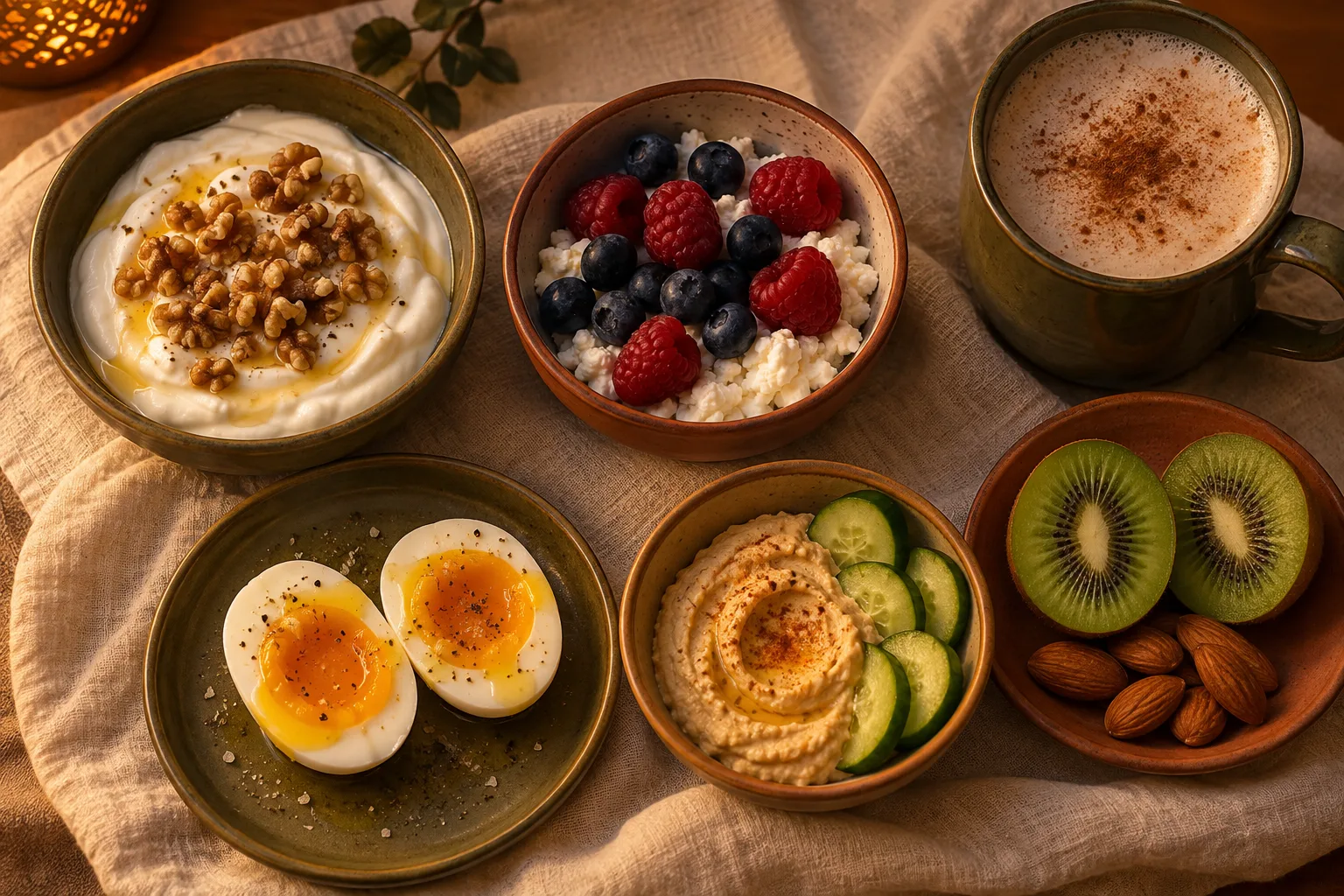
Hungry again at 9pm?
Get the free printable Night Hunger Snack List: 10 Mediterranean snacks with exact portions and protein counts, for the evenings when cravings hit. Enter your email and download it instantly.
Free. No spam. Unsubscribe anytime.
Frequently Asked Questions
Why do most summer salads leave me hungry?
Most salads do not contain enough protein, fat, fiber, or complex carbs to trigger your body’s fullness signals. Lettuce, tomato, cucumber, and a light dressing might be technically healthy but it does not deliver what your body needs to feel satisfied. The fix is adding real protein, healthy fat, and sometimes a complex carb to every salad you build.
How much protein should a salad have?
Aim for 25 to 35 grams of protein per salad if you want it to function as a real meal. That is roughly 4 to 6 ounces of grilled chicken, a can of tuna or salmon, two whole eggs plus a scoop of beans, or a generous serving of chickpeas paired with feta or quinoa. Below 20 grams and the salad will rarely keep you full for more than two hours.
Are summer salads good for weight loss?
Salads can absolutely support a healthy weight when they are built properly. The mistake most people make is treating salads as low calorie when they should be treating them as satisfying. A salad with adequate protein and fat will keep you full longer, which means you eat less throughout the rest of the day. A skimpy salad leaves you hungry and snacking later, which often adds more calories than the salad saved you.
What is the best protein for summer salads?
Grilled chicken thigh, canned tuna or salmon, sardines, hard boiled eggs, and chickpeas are the most practical and most satiating. Grilled chicken thigh is my personal default because it stays juicy and you can meal prep it on Sunday for the whole week. Sardines and tuna are excellent for pantry-based salads. Eggs work for breakfast salads or quick lunches.
Can I eat the same salad every day?
Yes. Rotation matters less than people make it sound. The most important thing is that the salads you eat keep you full and that you actually eat them consistently. Pick three or four formulas you genuinely enjoy. Rotate them. Do not pressure yourself to make something new every day.
About Ribert Rodriguez
Ribert is the founder of EnergiSource Wellness. He researches and writes every article on this site personally, cross-checking claims against published research rather than relying on generic wellness advice. His approach is rooted in the Mediterranean framework, built from years of testing meal structures on himself after struggling with cravings, late-night eating, and low energy.