
This article may contain affiliate links.
Introduction: Why Some Meals Leave You Hungry Again an Hour Later
Many people try to eat healthy but still find themselves hungry shortly after meals.
You might eat a bowl of pasta, a salad, or a smoothie and feel satisfied at first. But an hour or two later, hunger returns — sometimes stronger than before.
This often leads to:
- Constant snacking
- Afternoon energy crashes
- Evening cravings
- Difficulty maintaining a healthy weight
The problem usually isn’t how much you’re eating.
The real issue is how the meal is structured.
Meals built around only one macronutrient — especially refined carbohydrates — digest quickly and fail to keep you satisfied.
The Mediterranean diet naturally solves this by building meals around balance.
Stop energy crashes during the workday.
Download the free Hunger Reset Guide with simple breakfast, lunch, and dinner formulas designed for steady mental energy
Why Energy Crashes and Hunger Happen
Many modern meals are built around refined carbohydrates with very little protein, fiber, or fat.
Common examples include:
- Toast or cereal for breakfast
- Pasta alone for dinner
- Salads without protein or healthy fats
- Fruit smoothies made mostly from fruit
These meals digest quickly and cause rapid changes in blood sugar.
When blood sugar rises quickly, the body releases insulin. Once insulin lowers blood sugar again, hunger returns — often leading to cravings for more quick-energy foods.
This cycle can repeat several times throughout the day.
Mediterranean eating patterns help stabilize this process by combining protein, fiber, and healthy fats in the same meal.
The Mediterranean Meal Formula
The simplest way to build a satisfying Mediterranean-style meal is to follow a three-part structure.
1. Protein
Protein helps regulate appetite hormones and slows digestion.
Mediterranean protein sources include:
- Fish and seafood
- Chicken or turkey
- Eggs
- Greek yogurt
- Beans and lentils
- Chickpeas
- Tofu or tempeh
Aim to include a meaningful protein source in every meal.
2. Fiber-Rich Carbohydrates
Fiber slows digestion and provides steady energy rather than rapid spikes.
Mediterranean fiber sources include:
- Vegetables
- Leafy greens
- Lentils
- Chickpeas
- Beans
- Whole grains such as farro, quinoa, and brown rice
- Whole fruits
Vegetables and legumes form the backbone of many Mediterranean meals.
3. Healthy Fats
Healthy fats increase meal satisfaction and help you stay full longer.
Common Mediterranean fat sources include:
- Extra virgin olive oil
- Olives
- Avocado
- Nuts and seeds
- Tahini
Fat slows stomach emptying and helps keep hunger under control for several hours.
One of the easiest upgrades to Mediterranean meals is using high-quality extra virgin olive oil.
Explore a high-quality option like [Organic Extra Virgin Olive Oil on Amazon].
The Simple Mediterranean Plate Template
Instead of tracking calories or measuring macros, the Mediterranean approach often uses a visual plate structure.
A balanced Mediterranean plate usually looks like this:
- ½ plate: vegetables or fiber-rich plants
- ¼ plate: protein source
- ¼ plate: whole grains or legumes
- Plus: healthy fat such as olive oil, olives, nuts, or seeds
This balance helps meals digest more slowly and maintain stable energy levels throughout the day.
Practical Mediterranean Meal Examples
Once you understand the structure, meals become very easy to build.
Mediterranean Breakfast Example
Greek yogurt bowl with:
- Plain Greek yogurt
- Fresh berries
- Chopped walnuts
- Drizzle of honey
Meal structure:
- Protein: Greek yogurt
- Fiber: berries
- Healthy fat: walnuts
Many Mediterranean breakfasts rely on plain full-fat Greek yogurt, which provides protein and helps keep you satisfied longer.
You can explore high-protein Greek yogurt options or yogurt starter cultures here.
Mediterranean Lunch Example
Mediterranean chickpea salad with:
- Chickpeas
- Cucumber
- Tomato
- Feta cheese
- Olive oil
- Lemon
Meal structure:
- Protein: chickpeas and feta
- Fiber: vegetables and legumes
- Healthy fat: olive oil
Adding olive oil helps improve both flavor and satiety.
Browse Mediterranean pantry staples like chickpeas and olive oil here.
Mediterranean Dinner Example
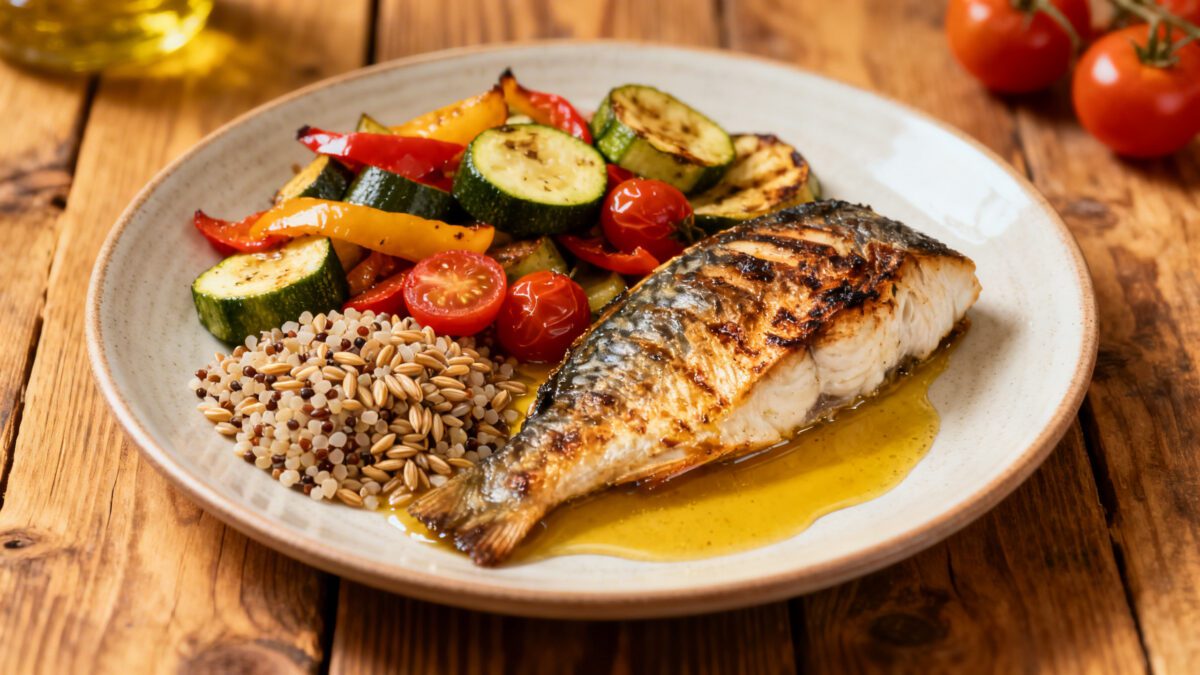
Grilled salmon plate with:
- Grilled salmon
- Roasted vegetables
- Quinoa
- Olive oil and herbs
Meal structure:
- Protein: salmon
- Fiber: vegetables
- Healthy fat: olive oil and salmon
- Steady carbohydrates: quinoa
Roasting vegetables with extra virgin olive oil adds both flavor and healthy fats that support fullness.
See a popular cold-pressed Mediterranean olive oil here.
The Simple Rule: Every Meal Needs Three Things
Instead of complicated nutrition rules, remember this simple guideline:
Every meal should include protein, fiber, and healthy fat.
When those three elements appear together:
- Hunger stays controlled longer
- Energy becomes more stable
- Cravings decrease
- Snacking becomes less frequent
This is one reason Mediterranean-style eating patterns are sustainable long term.
Practical Implementation Tips
Build meals around protein first
Start meal planning by choosing your protein source.
Examples include:
- Fish
- Eggs
- Chicken
- Greek yogurt
- Beans or lentils
Then add fiber and healthy fats around it.
Add vegetables to most meals
Vegetables increase fiber, volume, and nutrients.
Mediterranean cooking often includes vegetables like:
- Tomatoes
- Zucchini
- Eggplant
- Peppers
- Leafy greens
Use olive oil regularly
Extra virgin olive oil is a cornerstone of Mediterranean eating.
It adds flavor, healthy fats, and helps meals feel satisfying.
Explore organic Mediterranean olive oils here.
Helpful Tools for Mediterranean Meal Building
Some simple kitchen tools make balanced Mediterranean meals easier to prepare.
Glass Meal Prep Containers
Preparing meals ahead of time helps you maintain balanced eating during busy weeks.
Browse glass meal prep containers here.
High-Quality Extra Virgin Olive Oil
Olive oil is one of the most important ingredients in Mediterranean cooking.
See organic cold-pressed olive oils here.
Mediterranean Spice Blends
Herbs and spices add flavor without adding extra calories.
Common Mediterranean spices include:
- Oregano
- Thyme
- Rosemary
- Garlic
- Za’atar
Explore Mediterranean spice blends here.
Mediterranean Pantry Staples for Balanced Meals
Keeping a few staple ingredients at home makes Mediterranean eating much easier.
Helpful staples include:
- Extra virgin olive oil
- Chickpeas
- Lentils
- Quinoa or farro
- Nuts and seeds
- Mediterranean herbs and spices
Browse Mediterranean pantry staples here.
Key Takeaway
The secret to Mediterranean eating isn’t strict dieting or complicated rules.
It’s simply meal structure.
When meals combine:
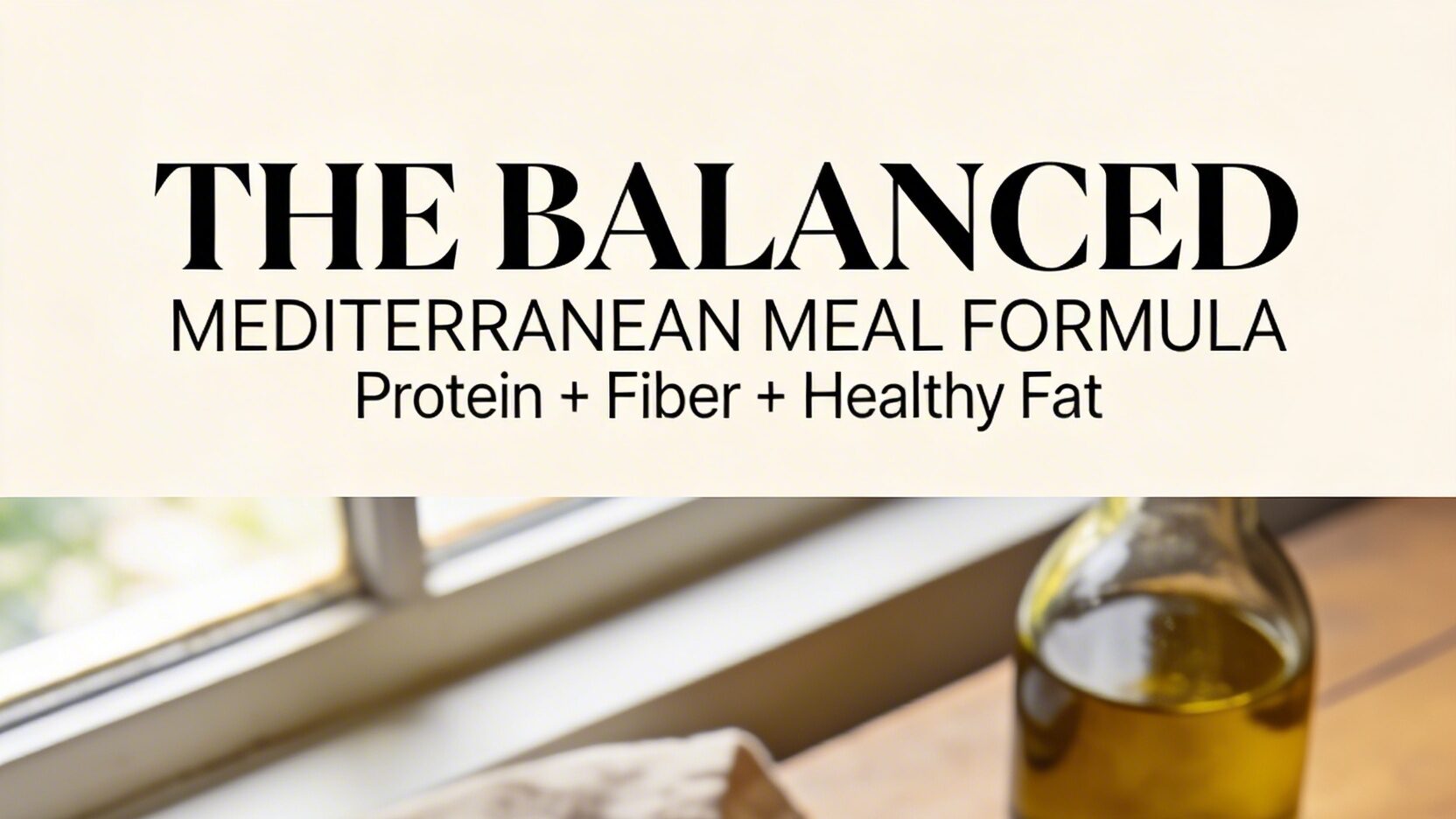
Protein + Fiber + Healthy Fat
they naturally support:
- Stable energy
- Fewer cravings
- Longer fullness
- Easier weight control
This simple formula is one reason Mediterranean-style eating patterns have supported healthy lifestyles for generations.
Make meal prepping this formula easier: Glass meal prep containers , Atlas Olive Oil, Organic, Cold Pressed Extra Virgin , Kitchen food scale
Want the full Hunger Reset System?
Download the free Focus Energy Guide with the meal formulas that keep your energy stable all day.
Related Articles
You may also enjoy: