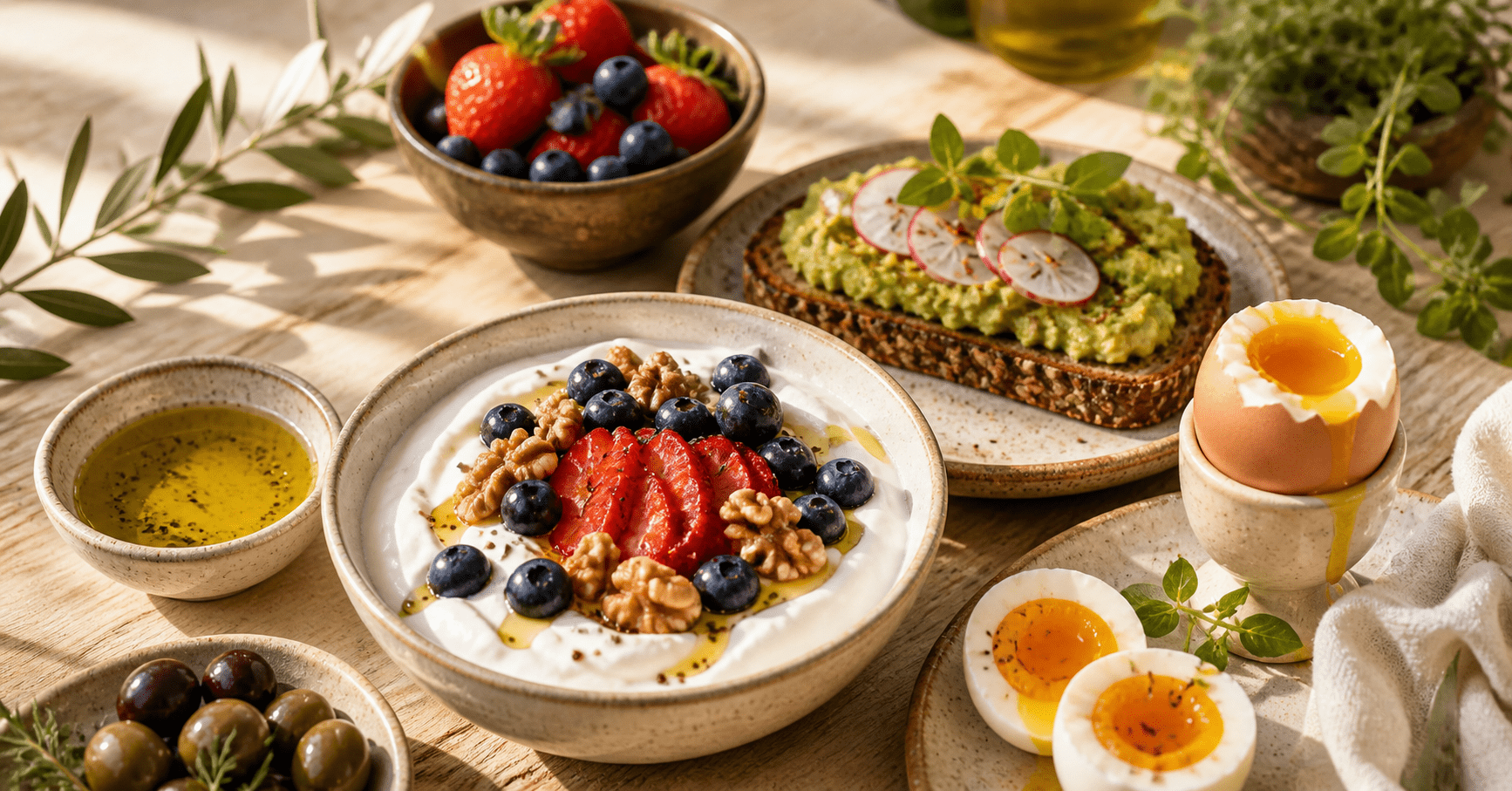
Quick answer: A good Mediterranean breakfast pairs protein (eggs, Greek yogurt, cottage cheese or sardines) with a healthy fat like olive oil or nuts, plus fiber from vegetables, whole grains or fruit. Below are 9 easy Mediterranean breakfast ideas, from a 3-minute yogurt bowl to make-ahead egg muffins.
Mediterranean breakfasts focus on simple whole foods that provide balanced energy throughout the morning. Instead of highly processed breakfast options that can lead to energy crashes, the Mediterranean approach emphasizes protein, healthy fats, fiber, and fresh ingredients.
These foods help keep you full longer and support steady energy levels. Below are several easy Mediterranean-style breakfast ideas you can include in your daily routine.
Why This Actually Works
Here’s the mechanism behind why these ideas work and a typical bowl of cereal doesn’t. A carb-only breakfast digests fast, causing your blood sugar to spike and then drop within an hour or two, which is exactly what triggers the mid-morning energy crash and hunger you’re trying to avoid. A 2025 Stanford Medicine study found that pairing carbohydrates with protein or fiber measurably blunts that spike. That’s the entire logic behind every idea below. Protein, healthy fat, and fiber aren’t optional extras. They’re what keeps the crash from happening in the first place.
Greek Yogurt with Nuts and Honey
Greek yogurt is one of the most popular breakfast foods in Mediterranean countries. It contains a high amount of protein, which helps keep you full longer and supports steady energy levels. A 2015 study published in The Journal of Nutrition found that a high-protein breakfast reduced post-meal blood sugar spikes compared to a carbohydrate-heavy one.
Adding nuts and a small amount of honey provides healthy fats and natural sweetness without excessive sugar.
Simple toppings to try:
- walnuts
- almonds
- berries
- chia seeds
Serving yogurt in breakfast bowls can also make preparing quick Mediterranean breakfasts easier.
Eggs with Olive Oil and Vegetables
Eggs are a filling breakfast option that provide high-quality protein and important nutrients for energy.
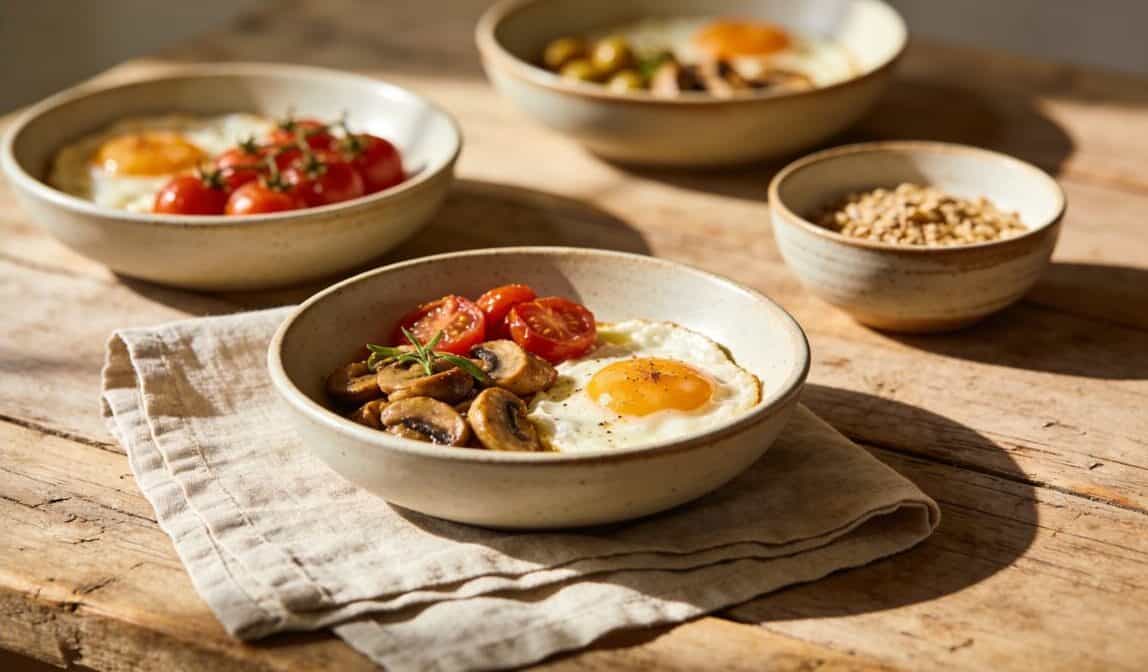
A simple Mediterranean-style breakfast includes eggs cooked in olive oil with vegetables such as tomatoes, spinach, or peppers.
This combination provides protein, healthy fats, and fiber, a balance that can help reduce hunger later in the day.
Cooking eggs in a small non-stick skillet can make preparing quick breakfasts easier.
Still Hungry After Every Meal?
Most people aren’t eating too little. They’re eating the wrong combination. The Cravings Control Reset is a simple 7-day system that stops constant hunger and cravings using real Mediterranean foods.
No calorie counting. No restriction. No willpower battles.
Mediterranean Toast with Avocado and Olive Oil
Whole grain toast topped with avocado and olive oil is another common Mediterranean-style breakfast.
Avocados provide healthy fats and fiber that help slow digestion and keep you satisfied.
You can also add:
- sliced tomatoes
- feta cheese
- olives
Using a high-quality extra virgin olive oil can improve both flavor and nutritional quality.
Oatmeal with Nuts and Fruit
Oatmeal may not traditionally come from the Mediterranean region, but it fits perfectly within the Mediterranean diet style when paired with whole ingredients.
Oats are rich in fiber and can help maintain steady blood sugar levels throughout the morning.
Mediterranean-style oatmeal toppings include:
- walnuts
- almonds
- fresh fruit
- cinnamon
Preparing oatmeal ahead of time using glass meal prep containers can make breakfast easier during busy mornings.
Chickpea and Vegetable Breakfast Bowl
Chickpeas are rich in plant-based protein and fiber, making them a satisfying breakfast option.
A simple Mediterranean breakfast bowl might include:
- chickpeas
- sautéed vegetables
- olive oil
- herbs
Many people also blend chickpeas into spreads like hummus. A small food processor can make preparing homemade hummus quick and simple.
4 More Savory Mediterranean Breakfast Ideas
If sweet breakfasts leave you hungry by 10am, these savory options lead with protein and healthy fat, which is what keeps a Mediterranean breakfast filling until lunch.
Eggs and sweet potato hash with herbs
Two eggs with diced sweet potato sauteed in olive oil with garlic, red onion, and paprika. Fresh herbs added at the end. This is my weekend breakfast when I have 15 minutes instead of 8. The sweet potato provides a slow-digesting complex carbohydrate that keeps energy steady rather than spiking. Paired with eggs and olive oil the glucose response is completely different from eating toast or cereal.
Protein: approximately 18-22 grams. Prep time: 15 minutes.
I noticed something the first time I made this. I had eaten a significant amount of carbohydrate from the sweet potato and I expected to feel the usual post-carb heaviness. Instead I felt clear and energized for hours. The protein and fat present in the same meal changed the entire absorption pattern.
Sardines on whole grain toast with avocado and lemon
Most people raise an eyebrow at sardines for breakfast. I did too. Then I tried it once and never went back. A tin of wild-caught sardines on a single slice of whole grain toast with half an avocado and a squeeze of lemon provides 20 grams of protein, significant omega-3 fatty acids, and a healthy fat combination that produces some of the most sustained morning energy I have experienced from any breakfast. It takes 3 minutes. It requires no cooking.
Protein: approximately 20-22 grams. Prep time: 3 minutes.
The Mediterranean cultures that have some of the longest-documented lifespans eat fish in the morning regularly. It is not a strange habit in that context. It is simply fish, which is a perfectly reasonable morning protein source that happens to be underutilized in Western breakfast culture.
Cottage cheese bowl with cucumber, olive oil, and everything bagel seasoning
This is the savory version of a cottage cheese breakfast and it is significantly more satisfying than the sweet version with fruit. One cup of full-fat cottage cheese with half a sliced cucumber, a generous drizzle of olive oil, and everything bagel seasoning or za’atar. The texture is surprisingly satisfying and the salt and fat combination makes it feel like a complete meal despite the minimal preparation.
Protein: approximately 24-28 grams. Prep time: 2 minutes.
This is the breakfast I eat when I have run out of eggs and need something with no cooking at all. The cottage cheese protein content is higher than most people expect and the fat from the olive oil extends the fullness significantly beyond what plain cottage cheese provides.
Mediterranean egg muffins (meal prep version)
Six eggs whisked with diced bell pepper, spinach, sun-dried tomatoes, crumbled feta, and dried oregano, poured into a muffin tin and baked at 375F for 20 minutes. Makes 12 muffins. Store in the fridge for 4 days. Eat 2 or 3 cold or reheated in 30 seconds. This is the most efficient savory Mediterranean breakfast I have found for weekday mornings when time is the constraint.
Protein: approximately 18-22 grams for 3 muffins. Prep time: 25 minutes active but makes 12 servings.
The key distinction from standard egg muffins is the Mediterranean ingredient additions. Feta provides fat and salt. Sun-dried tomatoes provide umami. Dried oregano provides flavor without cooking time. These three additions are what make the muffins taste like an actual meal rather than a gym meal-prep option. For protein powder add-ons to this kind of meal prep, clean protein options without artificial sweeteners work well stirred into the egg mixture before baking and are undetectable in the final texture.
Simple Mediterranean Breakfast Formula
A balanced Mediterranean breakfast often includes three components:
- Protein
- Healthy fats
- Fiber
Example combinations:
Greek yogurt + nuts + berries
Eggs + vegetables + olive oil
Whole grain toast + avocado + tomatoes
This balance helps support steady energy levels and prevents the mid-morning energy crash many people experience after high-sugar breakfasts.
If you’re interested in foods that support fullness throughout the day, you may also enjoy this guide to Mediterranean foods that keep you full longer.
Free printable
Hungry again at 9pm?
Get the free printable Night Hunger Snack List: 10 Mediterranean snacks with exact portions and protein counts, for the evenings when cravings hit. Enter your email and download it instantly.
Free. No spam. Unsubscribe anytime.
Frequently Asked Questions
What is the healthiest Mediterranean breakfast? Any combination of protein, healthy fat, and fiber works well. Greek yogurt with nuts and eggs with vegetables are two of the simplest options above.
Can I meal prep Mediterranean breakfasts? Yes. Chickpea bowls, overnight oats, and hard-boiled eggs all hold up well in the fridge for three to four days.
Is oatmeal actually Mediterranean? Not traditionally, but it fits the same protein, fat, and fiber structure when you add nuts and skip the added sugar.
Why do I still get hungry after eating a Mediterranean breakfast? Portion size matters. If your breakfast is light on protein specifically, even a Mediterranean-style meal can leave you hungry within a couple hours.
Conclusion
Mediterranean breakfasts focus on simple, nourishing foods that help maintain energy and satiety throughout the morning.
By combining protein, healthy fats, and fiber-rich ingredients, you can create breakfasts that are both satisfying and easy to prepare.
Starting with options like Greek yogurt, eggs, chickpeas, whole grains, and olive oil can help you build a balanced Mediterranean breakfast routine.
Still Hungry After Every Meal?
Most people aren’t eating too little. They’re eating the wrong combination. The Cravings Control Reset is a simple 7-day system that stops constant hunger and cravings using real Mediterranean foods.
No calorie counting. No restriction. No willpower battles.
The quiet reason olive oil keeps you full
Olive oil gets talked about for heart health, but its effect on hunger is the part almost nobody mentions, and it is a big reason a Mediterranean breakfast actually holds you.
When the fat in olive oil reaches your small intestine, your gut turns its main component, oleic acid, into a messenger molecule called oleoylethanolamide, or OEA. OEA acts like a fullness switch. It signals through the vagus nerve to your brain that fat has arrived and the meal was satisfying, which naturally stretches out how long you stay full.
This is not folk wisdom. In a study published in the journal Cell Metabolism, researchers showed that dietary oleic acid drives the gut to make OEA, and that this OEA signal is a direct molecular link between eating fat and feeling satisfied. Cut the fat too low and you lose the signal, which is exactly why bone-dry “healthy” breakfasts leave you hungry an hour later.
Olive oil does double duty here, because the same fat that triggers that fullness signal is one of the most anti-inflammatory foods on the plate. That is a big part of how the Mediterranean diet brings inflammation down.
So the drizzle of good olive oil on your eggs or the handful of olives next to your yogurt is not just for taste. It is doing quiet hormonal work, telling your body the meal counted. That is a big part of why steady-energy Mediterranean breakfasts feel so different from a plain bowl of cereal.
About Ribert Rodriguez
Ribert is the founder of EnergiSource Wellness. He researches and writes every article on this site personally, cross-checking claims against published research rather than relying on generic wellness advice. His approach is rooted in the Mediterranean framework, built from years of testing meal structures on himself after struggling with cravings, late-night eating, and low energy.