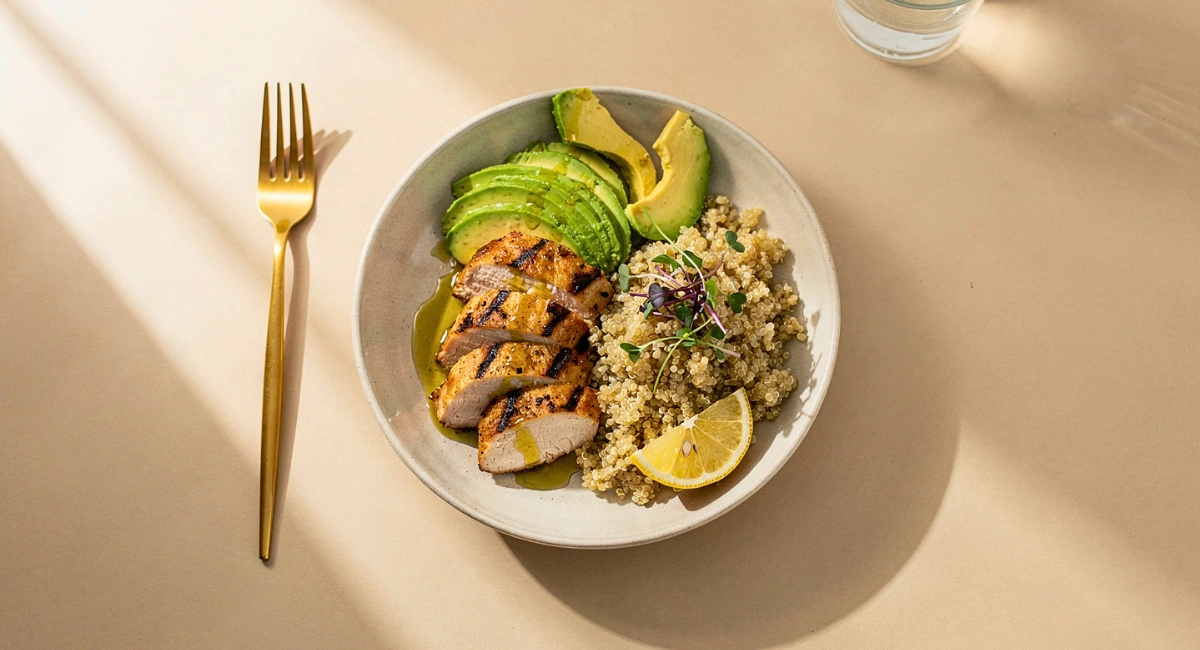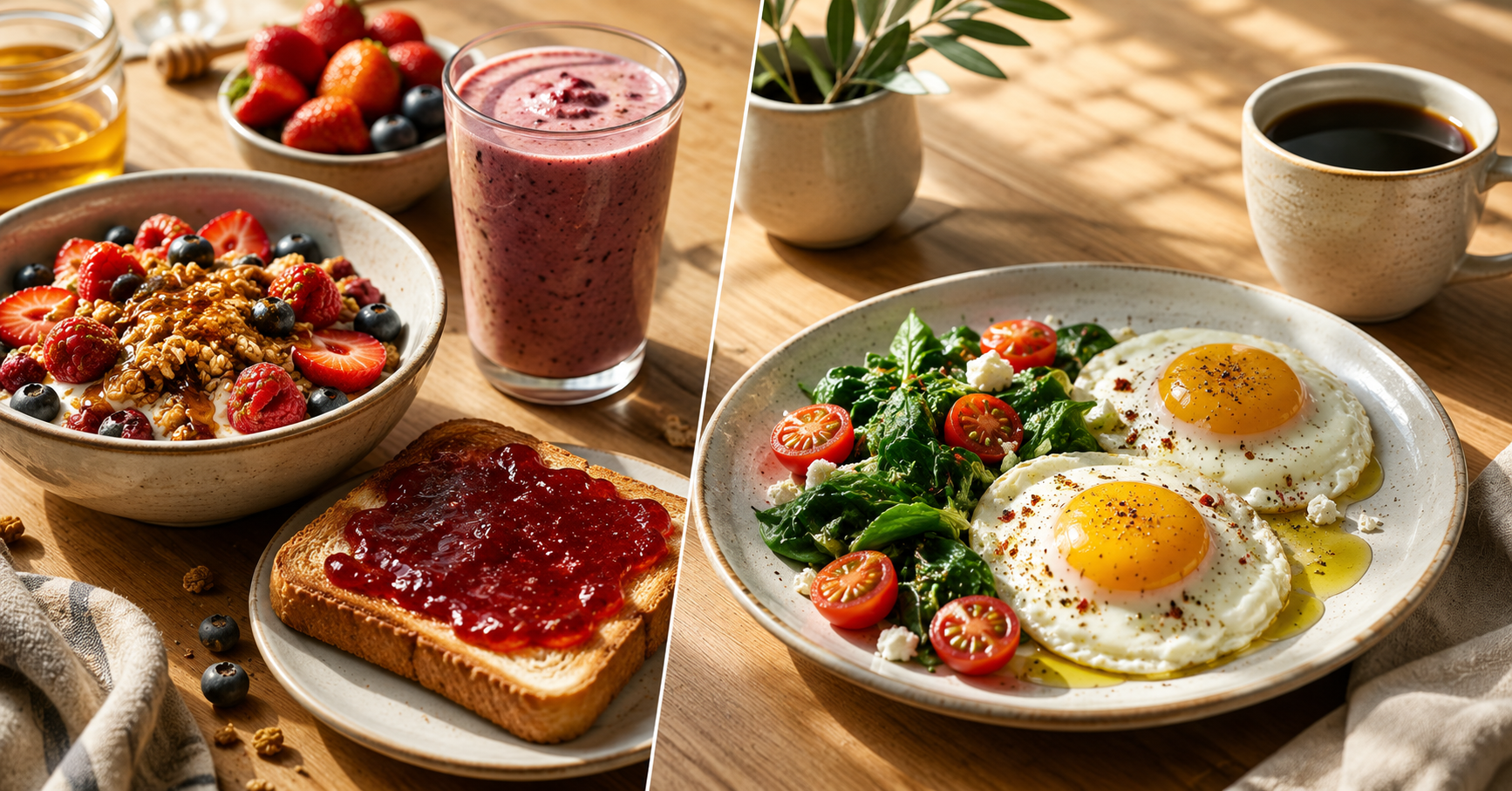
The Mediterranean diet delivers stable energy because it pairs slow carbohydrates with protein and healthy fat, which keeps blood sugar from spiking and crashing through the afternoon. The cause of your 2pm slump is usually meal balance, not portion size.
You’re doing everything right.
You’re eating breakfast. Drinking water. Choosing the salad instead of the burger.
But by 2pm, you’re dragging.
Your eyes are heavy. Your focus is gone. And no matter how much you ate at lunch, your stomach is already sending signals again.
This is one of the most frustrating parts of trying to eat healthy, putting in the effort and still feeling like your body isn’t cooperating.
Here’s what nobody tells you: the problem usually isn’t how much you’re eating. It’s how your meals are structured.
And that’s exactly what the Mediterranean diet for stable energy solves.
Why the Mediterranean Diet Creates Stable, Sustained Energy
The Mediterranean diet is the most studied dietary pattern in the world for sustained energy, and the reason it works comes down to three specific mechanisms that nothing else fully replicates.
Mechanism 1: Stable Blood Sugar from Balanced Macros
Every Mediterranean meal naturally combines protein, fiber, and healthy fat. This combination prevents the blood sugar spike-and-crash cycle that drains energy between meals. Refined carbs alone (cereal, white bread, sugary coffee drinks), cause a sharp glucose rise followed by an equally sharp crash. The crash is what triggers the afternoon slump, the 2pm yawning, the desperate reach for caffeine.
Mediterranean meals avoid this entirely. The protein slows digestion. The fiber buffers glucose absorption. The healthy fat extends satiety. Together, they create a flat, stable blood sugar curve, which translates directly to flat, stable energy throughout the day.
Mechanism 2: Anti-Inflammatory Foundation
Olive oil, fatty fish, leafy greens, and legumes are anti-inflammatory by nature. Chronic low-grade inflammation directly suppresses energy production at the cellular level. Your mitochondria, the energy factories of every cell, work less efficiently when inflammation is elevated.
By reducing baseline inflammation, the Mediterranean diet restores cellular energy capacity over weeks. Most people don’t realize their persistent low energy isn’t about sleep or stress. It’s chronic inflammation from food choices. Replacing seed oils with olive oil, adding fatty fish twice a week, and prioritizing vegetables and legumes systematically reverses this.
Mechanism 3: Steady Mineral and Micronutrient Supply
B vitamins, magnesium, iron, and omega-3 fatty acids are all critical for energy metabolism, and most modern diets are deficient in at least 2-3 of these. The Mediterranean diet is loaded with these exact nutrients:
- B vitamins: whole grains, eggs, leafy greens, legumes
- Magnesium: nuts, leafy greens, whole grains, dark chocolate
- Iron: lentils, beans, leafy greens, fatty fish
- Omega-3: salmon, sardines, walnuts, chia seeds
Filling these gaps creates noticeable energy improvements within 2-3 weeks. People who switch to a Mediterranean diet often report feeling clearer, more focused, and steadier within the first month, not because of any single food, but because the diet collectively addresses every common micronutrient gap.
This is why the Mediterranean diet creates sustained energy. It’s not a single mechanism. It’s three working together at once.
You’re Not Tired Because You’re Lazy. You’re Tired Because of Blood Sugar
If you crash after meals, you’re not imagining it. It’s a real, physical pattern, and it has a name.
When you eat a meal that’s heavy in refined carbohydrates and light on protein, fiber, or fat, your blood sugar spikes quickly. Your body releases insulin to bring it back down. And once it drops? You feel it, fatigue, brain fog, cravings, irritability.
This cycle can repeat 2–3 times a day without you realizing it.
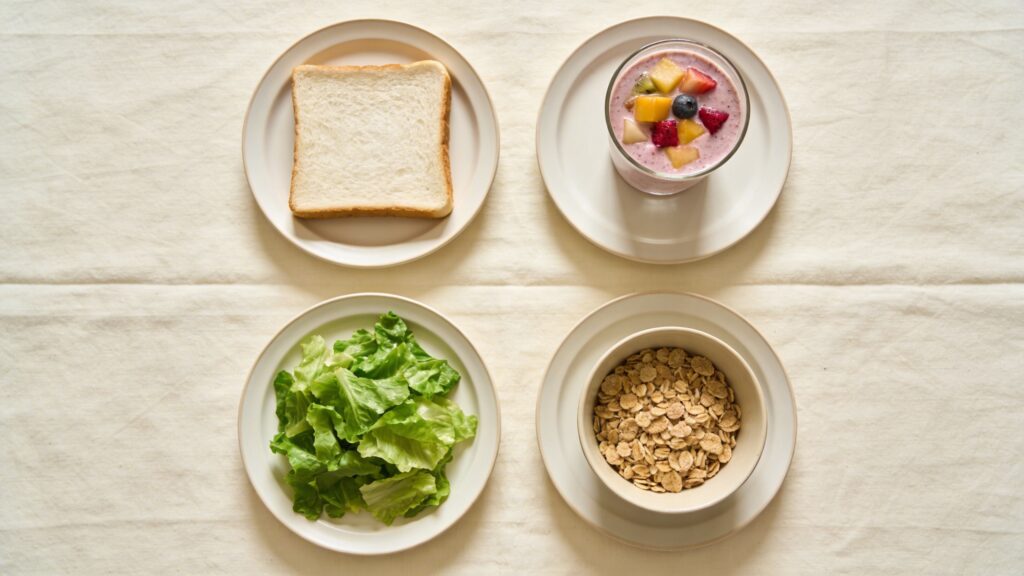
Common meals that trigger it:
- Toast or cereal for breakfast (without protein or fat)
- A light salad for lunch (without chickpeas, eggs, or olive oil)
- Pasta for dinner (without a meaningful protein source)
- Fruit smoothies made mostly from fruit
None of these are “bad” foods. They just aren’t complete meals, and incomplete meals leave your body scrambling for energy all day.
The good news? There’s a simple fix. And it’s been working for people around the Mediterranean for generations.
Some people find that even with strong meal structure, their blood sugar needs extra support during the transition. GlucoTonic is a plant-based supplement combining 24 natural ingredients including Gymnema, Maca Root, and African Mango that work together to regulate glucose metabolism, reduce sugar cravings, and support steady energy throughout the day. It works best as a complement to the Mediterranean meal changes above, not a replacement for them.
Why the Mediterranean Diet Works Differently
The Mediterranean diet isn’t a set of rules. It’s a way of building meals.
One clear example of why this pattern works long term is olive oil. A 2023 review published in the journal Antioxidants found that oleocanthal, a natural compound in extra virgin olive oil, works similarly to a natural anti-inflammatory, which helps explain why Mediterranean-style eating is consistently linked to reduced inflammation and better long-term health. It is not about restriction. It is about combining the three things your body needs to stay satisfied.
Those three things are: protein, fiber, and healthy fat.
When these three appear together in a meal, something important happens:
- Digestion slows down
- Blood sugar rises gradually instead of spiking
- Hunger hormones stay calm for longer
- Energy stays steady for 4–5 hours instead of 1–2
This is why someone eating a Mediterranean lunch of grilled salmon, roasted vegetables, and olive oil feels satisfied until dinner, while someone eating a plain pasta salad is hungry again by 3pm.
It’s not willpower. It’s meal structure.
The 3-Part Mediterranean Energy Formula
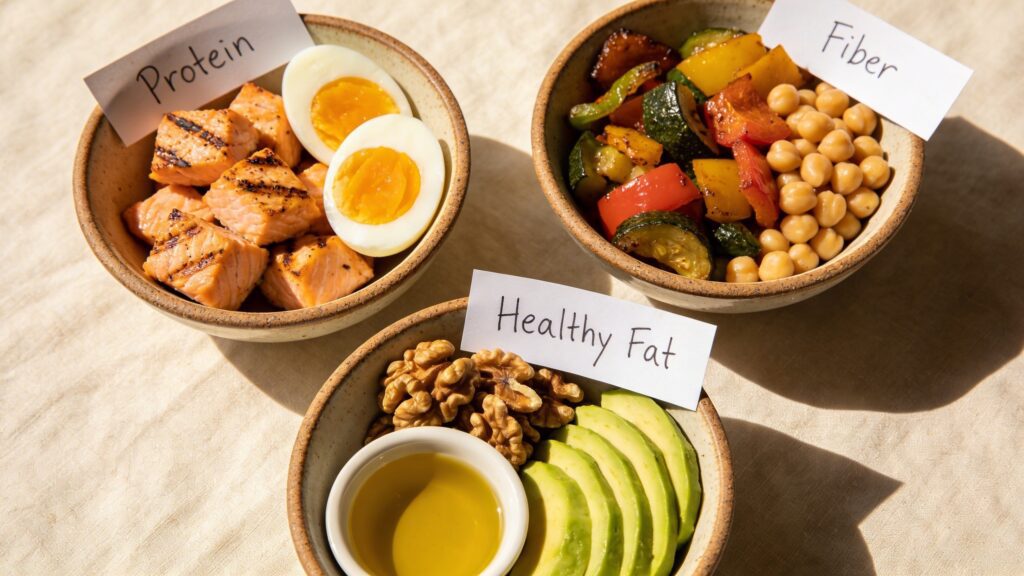
Every meal that keeps you full and energized is built around the same structure. Once you see it, you can’t unsee it.
1. Protein. Your Hunger Anchor
Protein slows digestion and directly regulates your hunger hormones. Without it, your meal digests too fast and leaves you reaching for snacks within the hour.
Mediterranean protein sources:
- Fish and seafood (salmon, sardines, tuna)
- Chicken or turkey
- Eggs
- Greek yogurt
- Beans, lentils, and chickpeas
- Tofu or tempeh
Aim for a meaningful portion at every single meal, not a garnish, but an anchor.
One of the easiest high-protein staples to keep on hand is plain full-fat Greek yogurt. It works for breakfast, snacks, and even as a base for sauces.
2. Fiber. Your Energy Stabilizer
Fiber slows how quickly carbohydrates break down into sugar. This is what keeps your blood sugar from spiking and crashing.
Mediterranean fiber sources:
- All vegetables (especially leafy greens, zucchini, peppers, tomatoes)
- Legumes (chickpeas, lentils, white beans)
- Whole grains (quinoa, farro, brown rice, bulgur)
- Whole fruits (eaten with protein or fat, not alone)
Half your plate should be vegetables or fiber-rich plants at every meal. This is non-negotiable in traditional Mediterranean eating, and it’s one of the main reasons it works.
3. Healthy Fat. Your Satisfaction Signal
Fat gets a bad reputation, but it’s one of the most important satiety signals your body has. Fat slows stomach emptying and tells your brain “we’re full and taken care of.”
Mediterranean fat sources:
- Extra virgin olive oil (the cornerstone of this entire eating pattern)
- Olives
- Avocado
- Nuts and seeds (walnuts, almonds, sunflower seeds)
- Tahini
- Fatty fish like salmon and sardines
A drizzle of high-quality extra virgin olive oil over your vegetables or grain bowl is one of the simplest upgrades you can make to any meal today.
What This Looks Like on a Real Plate
Forget measuring. Forget macros. Here’s the visual you need:
- ½ your plate: vegetables or fiber-rich plants
- ¼ your plate: protein source
- ¼ your plate: whole grains or legumes
- Plus: a healthy fat, olive oil drizzle, avocado slices, or a handful of nuts
That’s it. That’s the Mediterranean plate.
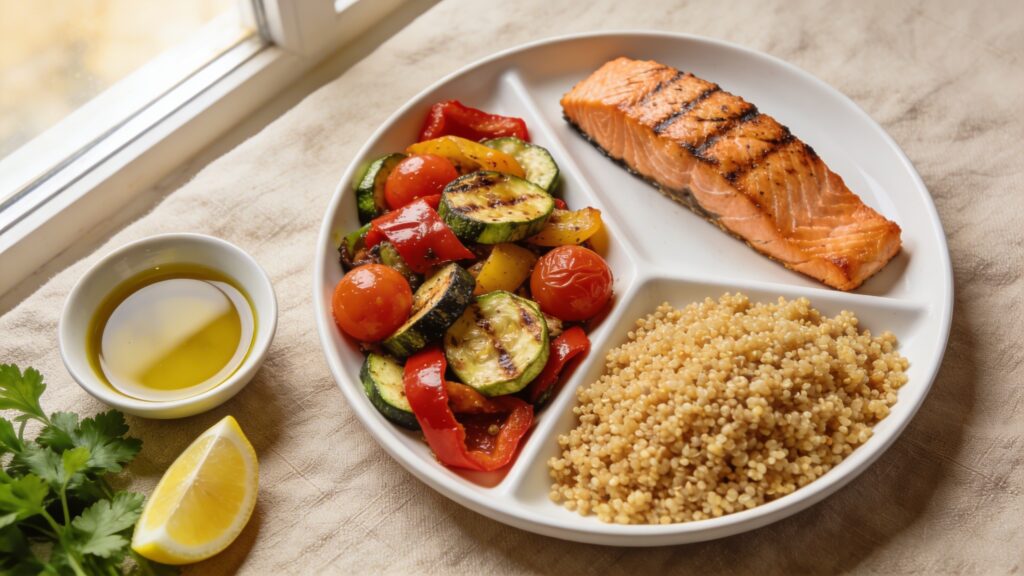
Breakfast example: Greek yogurt + fresh berries + chopped walnuts + drizzle of honey (Protein: yogurt | Fiber: berries | Fat: walnuts)
Lunch example: Chickpea and cucumber salad with feta, cherry tomatoes, olive oil, and lemon (Protein: chickpeas + feta | Fiber: vegetables + legumes | Fat: olive oil)
Dinner example: Grilled salmon + roasted zucchini and peppers + quinoa + olive oil and herbs (Protein: salmon | Fiber: vegetables + quinoa | Fat: olive oil + salmon)
Notice the pattern in every single one: all three components, every time.
If you want to stop guessing and just build your plate the right way from day one, the free Mediterranean Meal Builder walks you through it in minutes.
The Afternoon Crash Fix Nobody Talks About

Most people try to fix the 2pm crash with coffee or a snack. That’s treating the symptom, not the cause.
The real fix happens at breakfast and lunch.
When your first two meals of the day are complete (protein, fiber, fat), your blood sugar stays stable from morning through late afternoon. The crash doesn’t happen because there’s nothing to crash from.
This is the part that surprises people most when they start eating Mediterranean-style. They don’t change how much they eat. They just change the structure, and the afternoon exhaustion quietly disappears within a few days.
A few small shifts that make the biggest difference:
- Swap plain cereal for Greek yogurt with berries and walnuts. Same effort, completely different energy curve.
- Add chickpeas or a boiled egg to your lunch salad. Fiber alone won’t keep you full. It needs protein beside it.
- Don’t skip the olive oil. Fat is not the enemy. It’s the signal that tells your body it’s satisfied.
- Eat fruit with something. An apple alone spikes blood sugar faster than an apple with almond butter.
These aren’t dramatic changes. But they work, because they fix the actual problem.
A Simple Week to Get Started
You don’t need a full meal plan to start this. You just need one week of applying the formula.
Here’s how to approach it:
Day 1–2: Focus only on breakfast. Make sure every breakfast has protein, fiber, and fat before you leave the kitchen. Don’t change anything else yet.
Day 3–4: Apply the same structure to lunch. Add a protein source to whatever you’re already eating if it doesn’t have one.
Day 5–7: Build full plates for all three meals using the ½ vegetables / ¼ protein / ¼ grain structure. Add olive oil to at least two meals per day.
By Day 7, most people notice two things: they’re not thinking about food as much between meals, and the 2–3pm energy slump has started to soften.
If you want the exact meals mapped out for you, the Cravings Control Reset is a 7-day system built around this exact formula, no calorie counting, no restriction, just real Mediterranean meals that keep you full and energized. Get instant access for $27 →
The Bottom Line
Stable energy isn’t about eating less. It’s not about cutting carbs. And it’s definitely not about more willpower.
It’s about building meals that actually work with how your body processes food.
Protein + fiber + healthy fat, every meal, every time.
That’s the Mediterranean formula. And once you start building meals this way, the crashes, the afternoon slumps, and the constant hunger start to fade on their own.
You’re not broken. Your meals just needed better structure.
Start with breakfast tomorrow. See how you feel by lunch.

Frequently Asked Questions
What is the Mediterranean diet for energy? It’s a way of structuring meals around protein, fiber, and healthy fats. The three nutrients that stabilize blood sugar and keep you full for hours. It’s not a restrictive diet. It’s a meal-building pattern.
Why do I crash after eating even healthy food? Most “healthy” meals are built around one macronutrient, usually carbohydrates, without enough protein or fat to slow digestion. Your blood sugar spikes and drops, causing fatigue. Adding protein and fat to every meal fixes this.
How quickly will I feel a difference? Most people notice less afternoon fatigue and fewer cravings within 3–5 days of applying the three-part formula consistently.
Do I need to count calories or track macros? No. The Mediterranean approach uses visual plate structure, not tracking. Half your plate is vegetables, a quarter is protein, a quarter is whole grains, plus a healthy fat. That’s it.
What’s the easiest Mediterranean meal for beginners? Greek yogurt with berries and walnuts for breakfast. It takes 2 minutes, hits all three components, and will change how you feel by mid-morning.
If constant hunger is still an issue even after adjusting your meals, Why You’re Always Hungry After Eating walks through the most common reasons that happens. Mediterranean Foods That Keep You Full Longer can help you choose specific ingredients that reinforce this energy pattern, and Healthy Mediterranean Snacks That Keep You Full covers what to reach for between meals without breaking the formula. For a simple way to structure your plate at every meal, The Balanced Plate Method puts the protein, fiber, and healthy fat combination into practice.
About Ribert Rodriguez
Ribert is the founder of EnergiSource Wellness. He researches and writes every article on this site personally, cross-checking claims against published research rather than relying on generic wellness advice. His approach is rooted in the Mediterranean framework, built from years of testing meal structures on himself after struggling with cravings, late-night eating, and low energy.