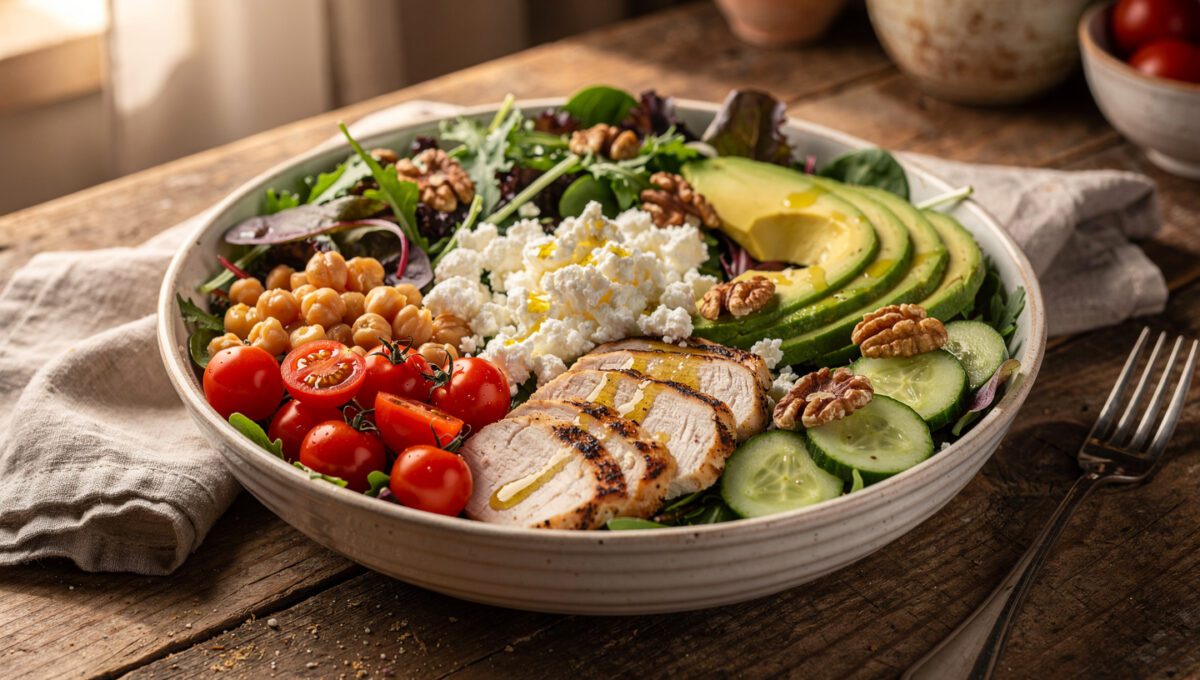
Research summarized by the Harvard School of Public Health shows that balanced meals containing protein, fiber, and healthy fats help regulate hunger and energy levels.
Many people eat a large salad expecting it to be filling, yet they feel hungry again shortly after. If you’ve experienced this, you’re not alone.
The reason most salads don’t keep you full has little to do with portion size and more to do with how the meal is built.
Many salads contain vegetables and light dressings but lack the protein, fiber, and healthy fats that help meals stay satisfying.
Fortunately, small adjustments inspired by the Mediterranean way of eating can transform a salad into a meal that keeps you full for hours.
The Real Problem: Missing Protein and Healthy Fats
A lot of salads are made mostly of:
• leafy greens
• raw vegetables
• low-calorie dressing
While these foods are healthy, they’re very low in satiety.
Nutrition experts often explain that meals that keep you full longer typically include a combination of:
• protein
• fiber
• healthy fats
When one or more of these is missing, digestion happens faster and hunger returns sooner.
Here’s the actual mechanism behind that. Protein and fat slow down gastric emptying, meaning food stays in your stomach longer instead of moving through quickly. A 2018 study in the journal Nutrients found that protein specifically slows stomach emptying and triggers satiety hormones like GLP-1 and CCK, the signals that tell your brain you’ve actually had enough. A salad of just leafy greens and raw vegetables empties out fast because there’s nothing in it to slow that process down, so the fullness signal barely gets sent in the first place.
This is why a bowl of lettuce and tomatoes might look healthy but still leave you hungry soon after eating.
Why Most Salads Don’t Keep You Full
Mediterranean eating patterns focus less on calorie restriction and more on balanced meal structure.
A simple way to think about this is the Mediterranean Plate Formula:
Protein + Fiber + Healthy Fat
When these three elements are present in a meal, digestion slows down and fullness lasts longer.
For salads, this structure turns a light side dish into a complete meal that supports steady energy.
This same balanced structure is explained in the Balanced Mediterranean Meal Formula for Steady Energy and Fullness.
Simple Mediterranean Salad Examples
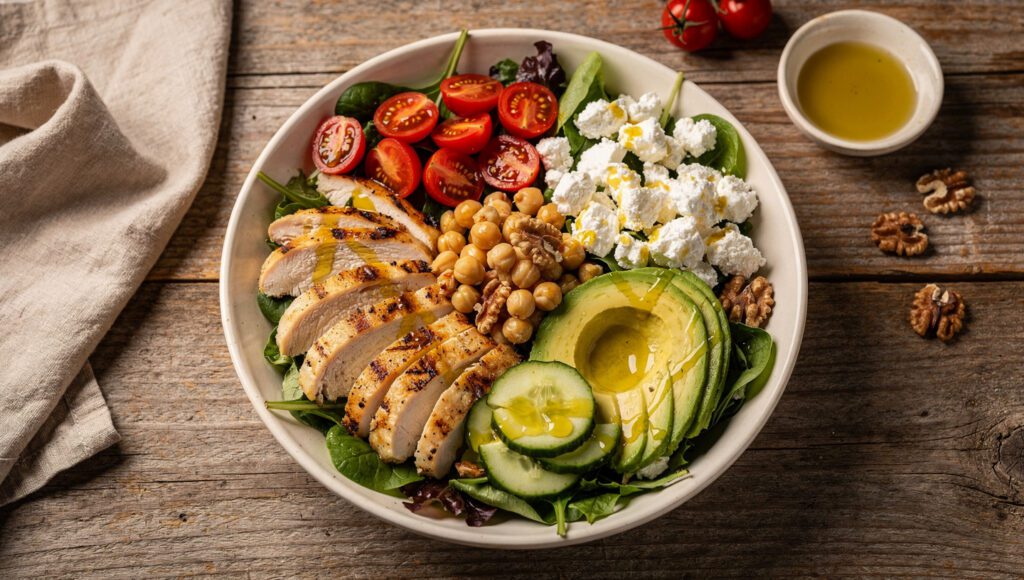
Here are examples of salads that follow this balanced structure.
Mediterranean Chickpea Salad
Fiber
• mixed greens
• cucumber
• tomatoes
Protein
• chickpeas
Healthy fat
• olive oil
• olives
Greek Chicken Salad
Fiber
• romaine lettuce
• tomatoes
• peppers
Protein
• grilled chicken
Healthy fat
• olive oil
• feta cheese
Tuna Mediterranean Salad
Fiber
• spinach
• cucumbers
• tomatoes
Protein
• tuna
Healthy fat
• olive oil
• avocado
Lentil Vegetable Salad
Fiber
• leafy greens
• carrots
• tomatoes
Protein
• lentils
Healthy fat
• olive oil
• nuts
Still Hungry After Every Meal?
Most people aren’t eating too little. They’re eating the wrong combination. The Cravings Control Reset is a simple 7-day system that stops constant hunger and cravings using real Mediterranean foods.
No calorie counting. No restriction. No willpower battles.
The Balanced Salad Rule
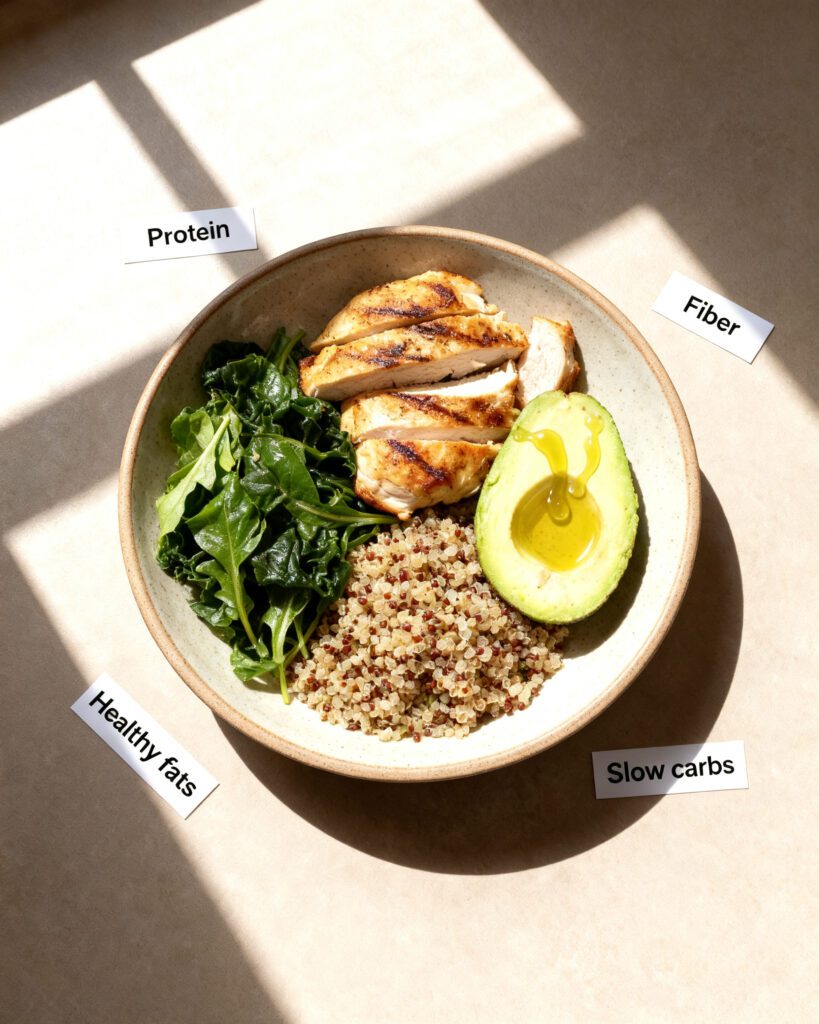
If you want a salad to actually keep you full, remember this simple rule:
Never eat vegetables alone.
Always add:
• a protein source
• a healthy fat
• fiber-rich ingredients
This turns a salad into a balanced Mediterranean meal rather than a low-energy side dish.
For example, many Mediterranean breakfast ideas for steady energy also follow the same protein, fiber, and healthy fat structure.
How to Build a Salad That Actually Keeps You Full
If your salads usually leave you hungry, try these simple upgrades.
Add Protein
• grilled chicken
• tuna
• chickpeas
• lentils
• boiled eggs
Add Healthy Fats
• avocado
• olives
• nuts
• seeds
One of the easiest Mediterranean additions is extra virgin olive oil, which helps slow digestion and improves satiety.
high-quality extra virgin olive oil
Add Fiber-Rich Foods
• beans
• quinoa
• whole grains
• extra vegetables
These additions dramatically improve satiety and energy stability. A systematic review in Nutrition Reviews found that higher fiber intake consistently improves satiety measures compared to lower-fiber meals.
A Simple Salad Prep Trick
Balanced salads are much easier when ingredients are prepared ahead of time.
Many people store chopped vegetables, cooked grains, and proteins in glass meal prep containers so meals can be assembled in minutes during busy days.
glass meal prep containers
One Tool That Makes Salads Better
If you regularly make salads at home, washing and drying greens properly can make a big difference.
Wet lettuce often leads to soggy salads and diluted dressing.
Many home cooks use a salad spinner to quickly dry lettuce and herbs so salads stay crisp and fresh.
salad spinner
Mediterranean Ingredients That Make Salads More Filling
Keeping a few Mediterranean staples on hand makes building balanced salads much easier.
• canned chickpeas
• canned tuna
• lentils
• olives
• extra virgin olive oil
With these ingredients available, you can assemble a balanced Mediterranean salad in just a few minutes.
Many of the ingredients that improve salads also appear in Mediterranean foods that keep you full longer.
What to add to every salad: Atlas Olive Oil, Organic, Cold Pressed Extra Virgin , base of every Mediterranean dressing Raw walnuts , add crunch and healthy fat Eden Organics chickpeas , instant protein in any salad
Summary
Salads are often promoted as a healthy choice, but many versions are missing the nutrients that help keep you satisfied.
By following the Mediterranean approach and combining protein, fiber, and healthy fats, you can turn a simple salad into a meal that supports steady energy and lasting fullness.
Instead of leaving you hungry an hour later, a balanced salad can keep you satisfied for three to five hours.
The bottom line: It’s not about eating less. It’s about eating smarter. If you want a done-for-you system that stops hunger and cravings in 7 days, the Cravings Control Reset was built exactly for this.
Start the 7-Day Reset for $27 →
If you want to keep building on this, the Balanced Mediterranean Meal Formula shows you how to structure every meal, not just salads, around the same protein, fiber, and fat combination. Mediterranean Foods That Keep You Full Longer breaks down which specific ingredients do the most for satiety, and Mediterranean Breakfast Ideas applies the same principle to the start of your day.
Free printable
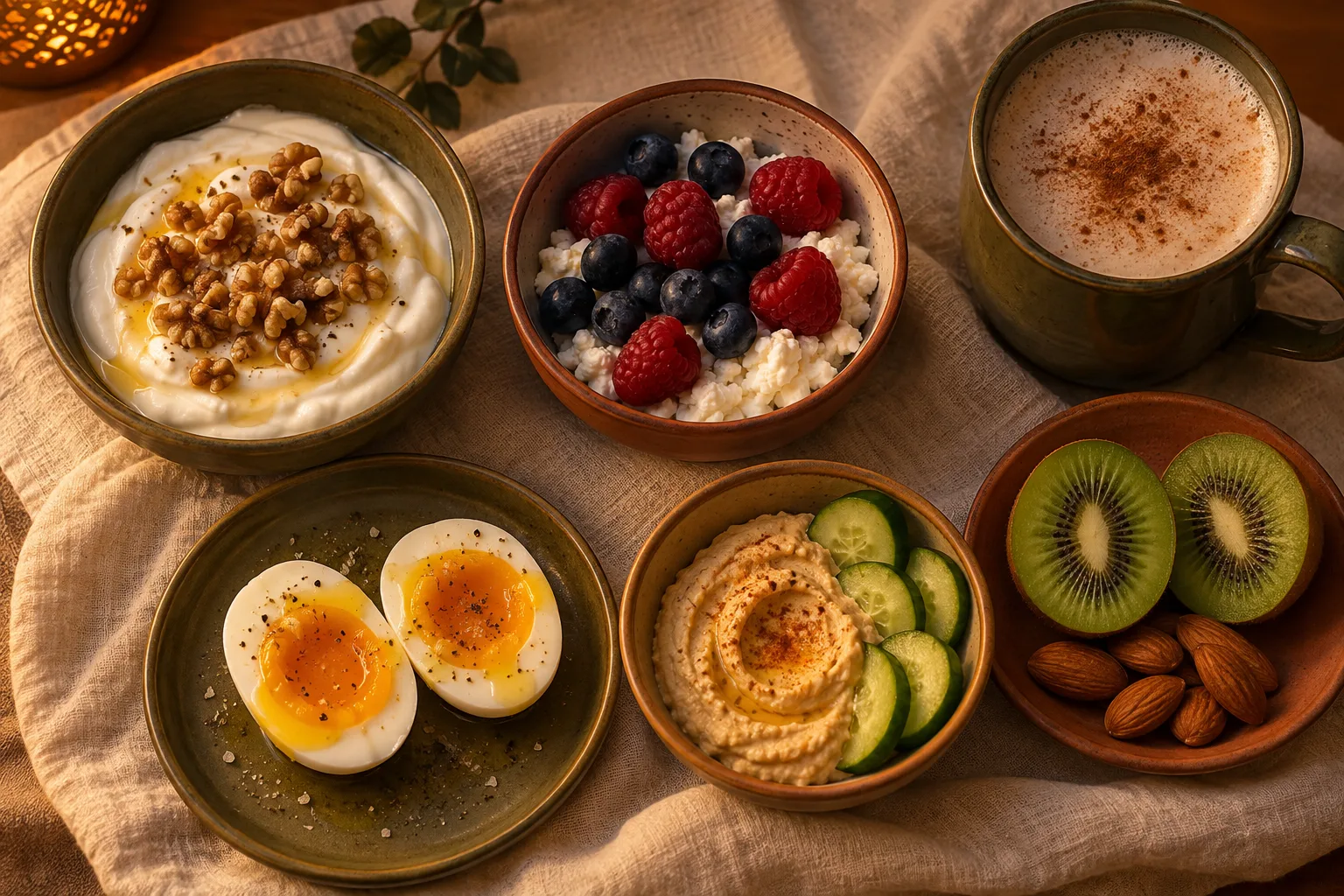
Hungry again at 9pm?
Get the free printable Night Hunger Snack List: 10 Mediterranean snacks with exact portions and protein counts, for the evenings when cravings hit. Enter your email and download it instantly.
Free. No spam. Unsubscribe anytime.
Frequently Asked Questions
Can a salad ever be a full meal? Yes, as long as it includes a real protein source and a healthy fat, not just dressing. Without those, it functions more like a side dish than a meal.
Why do I get hungry an hour after eating a big salad? Large volume isn’t the same as satiety. Vegetables add bulk, but without protein and fat to slow digestion, that bulk empties out of your stomach quickly.
What’s the best protein to add to a salad? Anything you’ll actually eat consistently. Grilled chicken, canned tuna, chickpeas, and hard-boiled eggs all work equally well.
The missing ingredient in every salad that leaves you hungry
Here is the pattern I noticed after watching people eat “healthy” and stay hungry: the salads that fail almost always have the same hole in them. Not enough protein.
Vegetables are wonderful, but leaves and cucumbers are mostly water and fiber. They fill your plate without filling you, because the single most satisfying thing you can put in a meal is protein, and a bowl of greens barely has any.
This is one of the most settled findings in appetite science. In a study published in the American Journal of Clinical Nutrition, researcher David Weigle showed that raising the protein in people’s meals led to sustained drops in hunger and in how much they ate overall, even when they were not trying to eat less. Protein is simply more satiating, calorie for calorie, than carbs or fat.
So the fix for a sad, hungry salad is never “more lettuce.” It is a real protein anchor: grilled chicken, salmon, a can of tuna, eggs, chickpeas, or a block of feta. Get twenty-five to thirty grams of protein into that bowl and it stops being a side dish that leaves you rummaging an hour later and starts being a meal that actually holds you.
About Ribert Rodriguez
Ribert is the founder of EnergiSource Wellness. He researches and writes every article on this site personally, cross-checking claims against published research rather than relying on generic wellness advice. His approach is rooted in the Mediterranean framework, built from years of testing meal structures on himself after struggling with cravings, late-night eating, and low energy.