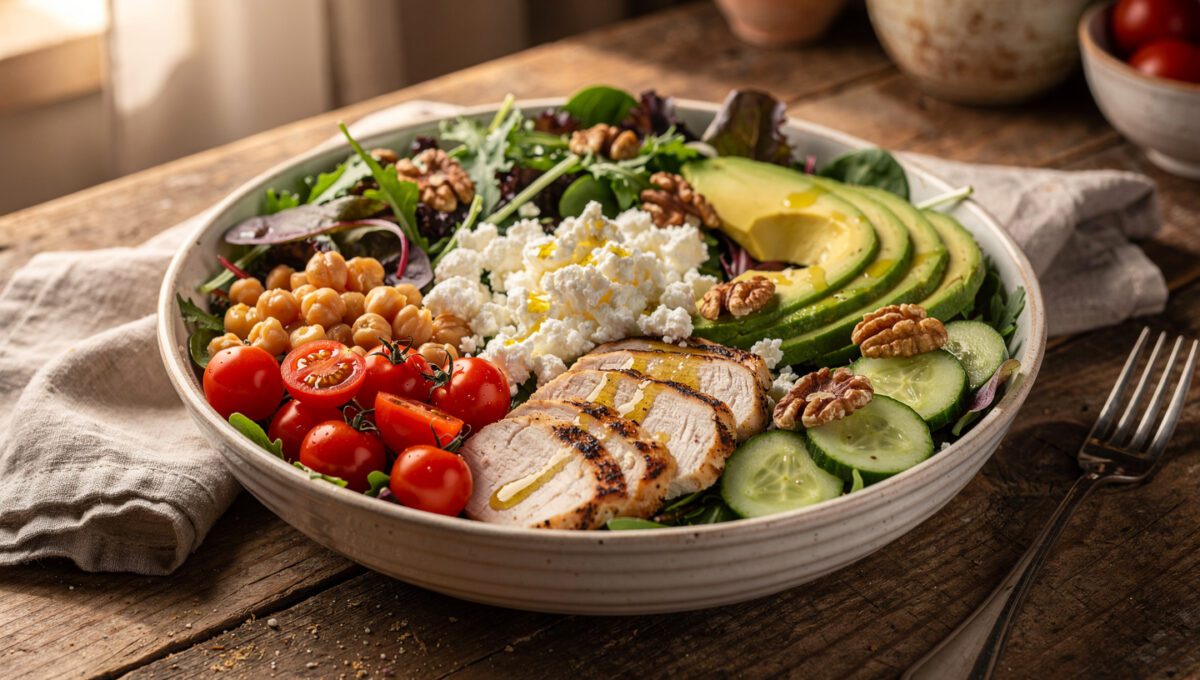
If you’re hungry again 30–60 minutes after finishing a meal, the most common cause is a meal missing enough protein and fiber to trigger real fullness signals, not a willpower problem.
Key Takeaways
- Feeling hungry soon after eating usually points to the meal, not to willpower.
- The most common gap is too little protein and fiber on the plate.
- Eating fast and a sugar-heavy meal can both leave you looking for more within an hour or two.
- Ongoing stress can keep you reaching for food even when you have eaten enough.
- If you are hungry all the time despite balanced meals, check in with your doctor.
Get the free Night Hunger Snack List ↓
I used to think something was wrong with me. I’d finish dinner, clean the kitchen, and twenty minutes later I was back in the fridge like I hadn’t eaten at all. Turns out my plate was the problem, not my discipline.
Here’s exactly why this happens, and what fixes it.
You just finished eating. A real meal, not a handful of crackers, not a protein bar. You sat down, you ate your food, you cleaned your plate.
Twenty minutes later you’re standing in front of the fridge with the door open, wondering what is wrong with you.
Nothing is wrong with you.
But something is off with your meals, and it’s probably not the amount you’re eating.
Most people who feel constantly hungry after eating aren’t eating too little. They’re eating the wrong combination of things. And when that combination is missing, your body doesn’t get the signal that it’s done, so it just keeps asking.
I used to eat what felt like a full dinner and still end up in the kitchen an hour later. Once I understood why that was happening, the constant hunger finally made sense. And fixing it was a lot simpler than I expected.
Here are the five real reasons you’re still hungry after eating, and exactly what to do about each one.
The Real Reason You Feel Hungry After Eating Has Nothing to Do With Willpower
Before we get into the five reasons, here’s the one thing worth understanding first:
Your body doesn’t measure fullness in calories. It measures fullness through hormones and nerve signals, and those signals are triggered by specific nutrients. When those nutrients aren’t in your meal, the fullness signal never fully fires. It doesn’t matter how much food was on your plate.
That’s why you can eat a huge bowl of pasta and be hungry again in an hour. And it’s why a smaller, more balanced meal can keep you satisfied for four or five hours. It’s not about volume. It’s about structure.
Here’s what’s actually going wrong.
Reason 1: Your Meal Was Missing Protein
Protein is the single biggest driver of fullness signals to your brain. Meals under about 25-30g of protein rarely hold you past an hour.
This is the number one reason people feel hungry after eating, and it’s more common than most people realize.
Protein is the most powerful fullness nutrient your body has. When you eat protein, your gut releases hormones (specifically GLP-1, CCK, and peptide YY), that travel to your brain and signal that you’re done eating. Carbs and fat don’t trigger this response nearly as strongly on their own.
When a meal is built mostly around carbohydrates with little to no protein, those signals never fully fire. Your brain keeps waiting. And hunger comes back fast.
Common meals where this happens:
- Toast with jam or peanut butter only
- A big salad with no protein (or just a sprinkle of cheese)
- Pasta with marinara and no chicken or beans
- Cereal or granola in the morning
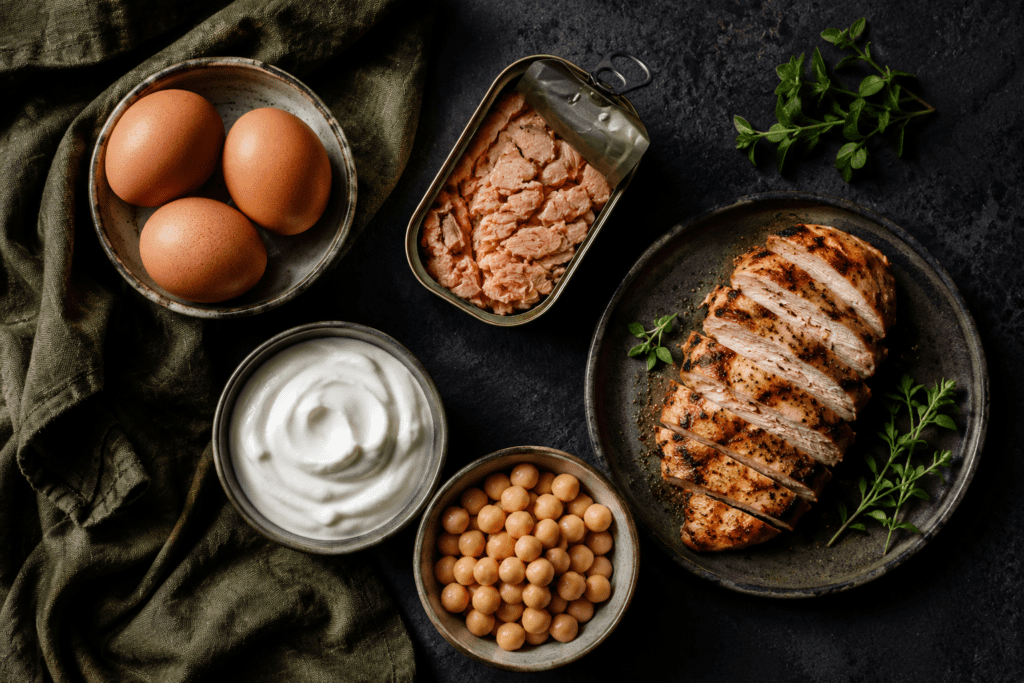
The fix: every single meal needs a clear protein anchor. Eggs, chicken, fish, canned salmon, Greek yogurt, lentils, chickpeas, something that actually triggers those satiety hormones. If you’re eating in a calorie deficit and feeling hungry constantly, aim for 25–30g of protein per meal. That number sounds high until you realize how much it changes everything. It is also why I put together the breakfast approach that kept me full without cutting calories.
A good protein powder can help here, especially at breakfast when cooking feels like too much. I like adding Organic Protein Powder to oatmeal or a smoothie to get that protein foundation without much effort.
Reason 2: You Skipped Fiber
Fiber slows digestion and keeps food in your stomach longer, which is why a meal without vegetables, legumes, or whole grains empties fast and leaves you hungry again quickly. A systematic review in Nutrition Reviews confirmed this pattern, finding that higher fiber intake reliably improved satiety compared to lower-fiber meals.
Here’s something that surprised me when I first learned it: your body takes 15 to 20 minutes to register that you’re full after eating.
Your stomach has stretch receptors that detect how much food is there and send signals to your brain, but that signal takes time to travel. If you eat a full meal in under 10 minutes (which is very easy to do when you’re busy, distracted, or just really hungry), your brain genuinely hasn’t received the message yet. You feel like you could eat more because, as far as your brain knows, you just got started.
Research shows that fast eaters consistently feel less full after meals and eat more food throughout the day, not because of poor willpower, but because the biology is working against them.
The practical fix is simple, even if it feels awkward at first: slow down. Put your fork down between bites. Try eating without your phone for one meal a day. Chew more than you think you need to. Give your body time to talk to your brain before you decide you need seconds.
Reason 3: Blood Sugar Spiked and Crashed
A fast blood sugar spike from refined carbs is always followed by a crash, and that crash is what triggers the hunger signal, not an empty stomach.
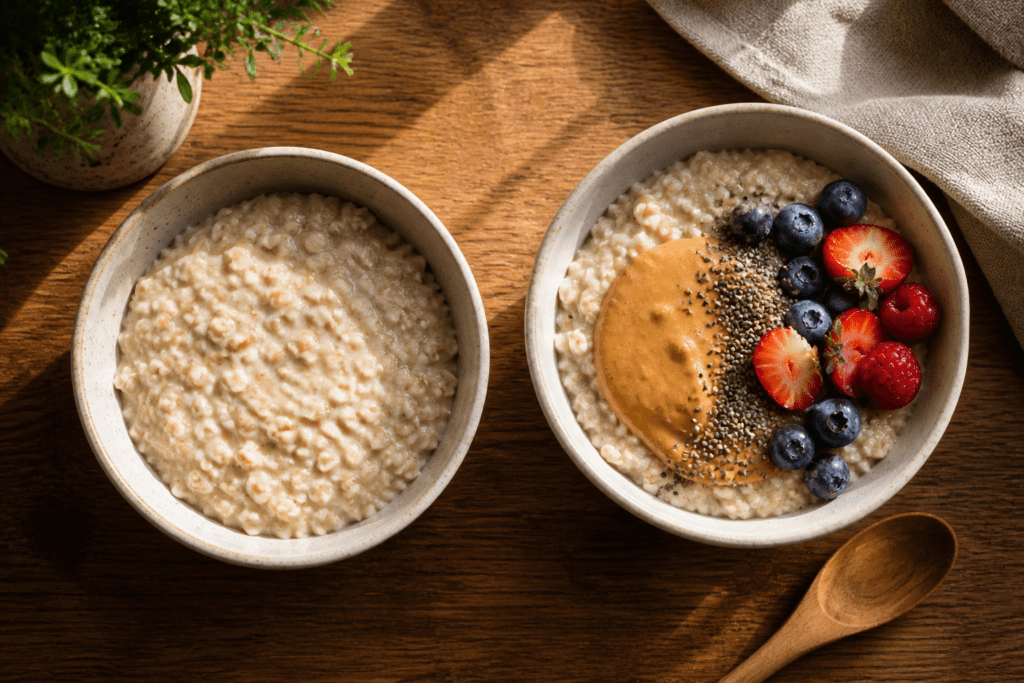
Oatmeal has a reputation for being filling. And technically, it has fiber, which should help. But if you’ve ever eaten a bowl in the morning and found yourself starving by 10am, you’re not imagining things.
Plain oatmeal is mostly carbohydrates with very little protein and almost no fat. Even though it’s a “healthy” carbohydrate, without protein and fat to slow digestion, it moves through your system quickly, and your blood sugar follows a spike-and-crash pattern that sends you back to the kitchen.
This is exactly why eggs and oatmeal together feel different from oatmeal alone. The eggs add the protein your body needs to keep those fullness hormones active.
If you love oatmeal and don’t want to give it up, the fix is easy: don’t eat it alone. Add a scoop of protein powder, a big spoonful of natural almond or peanut butter, or pair it with eggs on the side. Stir in chia seeds for a fiber boost that also slows digestion. That combination turns oatmeal from a one-hour breakfast into a four-hour breakfast.
The same logic applies to any meal built mostly around carbohydrates, even the “good” ones. Whole grain bread, brown rice, sweet potatoes. All great foods. All need protein and fat alongside them to actually keep you full.
Reason 4: You Ate Too Fast
It takes about 20 minutes for fullness signals to reach your brain, so eating quickly means you finish before your body has caught up with how much you’ve eaten.
This one is subtle but it explains a lot, especially the kind of hunger that hits out of nowhere an hour or two after eating, even when you know you ate enough.
When you eat refined carbohydrates (white bread, sweetened drinks, pasta without much else), your blood sugar spikes quickly. Your body releases insulin to bring it back down. But insulin sometimes overshoots, and your blood sugar drops below where it started. That drop sends a panic signal to your brain that reads as hunger, even if your body doesn’t actually need more food.
It’s not real hunger. It’s a blood sugar rebound. But it feels completely real, and it’s one of the main reasons people end up snacking constantly throughout the day even when they’re genuinely trying not to.
The fix is to build meals that slow down how fast glucose enters your bloodstream. That means:
- Pairing carbs with protein and fat at every meal
- Choosing whole food carbs over refined ones when you can
- Adding fiber, Anthony’s chia seeds stirred into anything work well for this
- Not eating carbs on an empty stomach alone
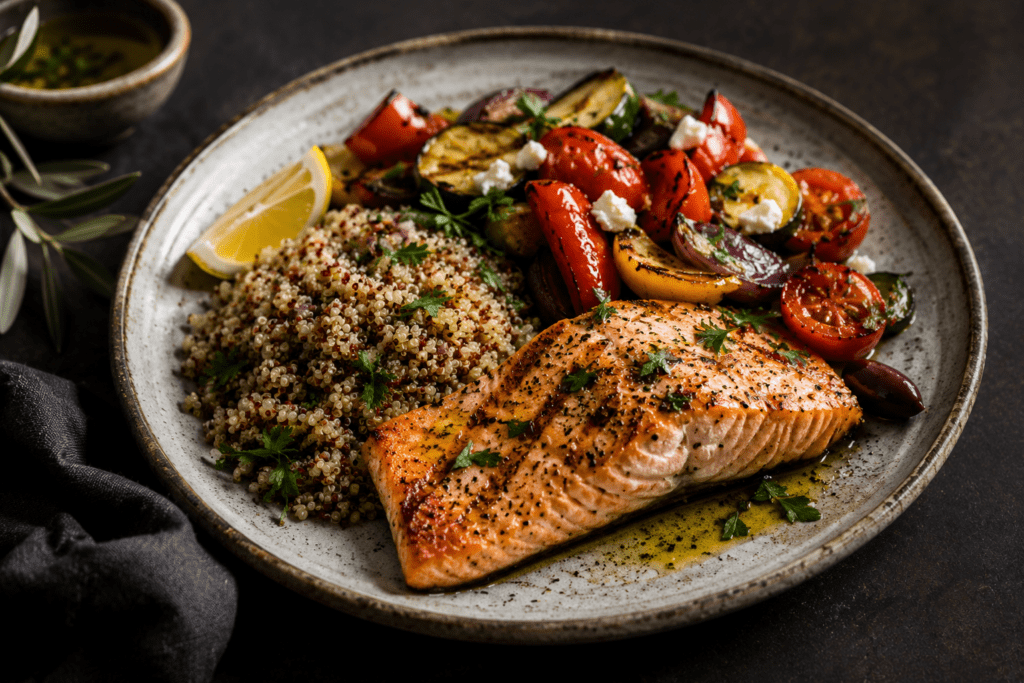
A drizzle of good olive oil over vegetables or grains does more than add flavor, fat slows gastric emptying, which flattens the blood sugar spike and keeps energy stable longer.
Reason 5: Stress Keeps Your Hunger Switched On
If you eat balanced meals and still feel hungry, ongoing stress may be part of it, because stress hormones can keep you reaching for food even when your body has had enough.
This one is easy to miss because it doesn’t feel like a food problem. But if you’re stressed (even low-grade, background stress from a busy day), your cortisol levels stay elevated. And elevated cortisol keeps your hunger signal active even when your body doesn’t need more food.
Cortisol also specifically drives cravings for calorie-dense, high-fat, high-sugar foods, which is why stress tends to send people toward snacks and not toward a handful of carrots.
This doesn’t mean stress is an excuse to eat everything in sight. But it does mean that if you’re doing everything right with your meals and still feeling hungrier than you should, it’s worth asking: what else is going on? Are you sleeping enough? Are you carrying a lot right now?
Managing cortisol isn’t about meditating for an hour every day. Simple things help, a short walk after dinner, a few minutes of slow breathing before eating, not eating at your desk while answering emails. These small shifts can make a real difference in how hungry you feel, separate from anything on your plate.
The Simple Rule That Fixes Most of This
If you read through all five reasons and felt a little overwhelmed, don’t be. The fix for most of them is the same thing:
Every meal should have a protein source, a source of fiber, and a source of healthy fat, together.
That combination slows digestion, triggers your satiety hormones, stabilizes your blood sugar, and gives your stretch receptors time to do their job. When all three are present, meals hold. When one is missing, hunger comes back early.
You don’t need to count every gram or overhaul everything at once. Start with breakfast. It sets the tone for the whole day. Make sure there’s protein in it. Not just oats. Not just toast. Something that will actually anchor you through the morning.
If you want a framework for building meals that actually work this way, one that makes the protein + fiber + fat structure automatic instead of something you have to think about. That’s exactly what the Balanced Plate Method walks through. It’s the simplest version of this I’ve found.
When Hunger After Eating Might Signal Something Else
For most people reading this, constant hunger is a meal structure problem, and fixing that fixes everything.
But occasionally, persistent hunger that doesn’t respond to meal changes can signal something worth looking into: thyroid issues, blood sugar irregularities, or certain medications can all keep hunger signals misfiring. If you’ve cleaned up your meals, added protein and fiber consistently, and still feel hungry all the time, it’s worth mentioning to your doctor.

Hungry 1 to 2 Hours After Eating? Check the Meal
If hunger comes back within an hour or two, the meal itself is almost always the reason. It was mostly fast carbs, it was too small, or it had very little protein. Here is what that looks like on a real plate, and the simple fix.
| Meal that wears off fast | Why | Version that lasts 3 to 4 hours |
|---|---|---|
| Bagel with cream cheese | Mostly refined carbs, about 10 g protein | 2 eggs, whole grain toast, a side of Greek yogurt (about 28 g protein) |
| Green salad with light dressing | High volume, almost no protein or fat | Same salad plus 4 oz chicken or tuna, chickpeas and olive oil (about 35 g protein) |
| Pasta with tomato sauce | Carbs with very little protein | Half the pasta, add white beans or shrimp and a big handful of vegetables (about 30 g protein) |
| Granola bar and fruit | Sugar and carbs, about 3 g protein | Apple with a cheese stick and a handful of almonds (about 13 g protein) |
The pattern is the same every time: keep the food you like, add a real protein, add fiber, and include a little healthy fat. That is the whole idea behind the Full Plate Method.
Always Hungry Even Though You Eat a Lot?
Eating a lot of food is not the same as eating a filling meal. Large portions of rice, pasta, bread, cereal or snack foods add up to plenty of calories, but they digest quickly and bring very little protein, so your body keeps asking for more. Many people in this spot are actually short on protein at breakfast and lunch, then eat most of their food in the evening.
- Check your first two meals. If breakfast and lunch each have less than about 20 grams of protein, start there.
- Swap volume for staying power. A smaller plate with chicken, lentils and olive oil will hold you longer than a large bowl of plain pasta.
- Watch liquid calories and grazing. Juice, sweet coffee drinks and constant small snacks add food without ever making you feel fed.
If you eat balanced meals with enough protein and still feel hungry all the time, see the section above on when hunger might signal something else.
Free printable
Hungry again at 9pm?
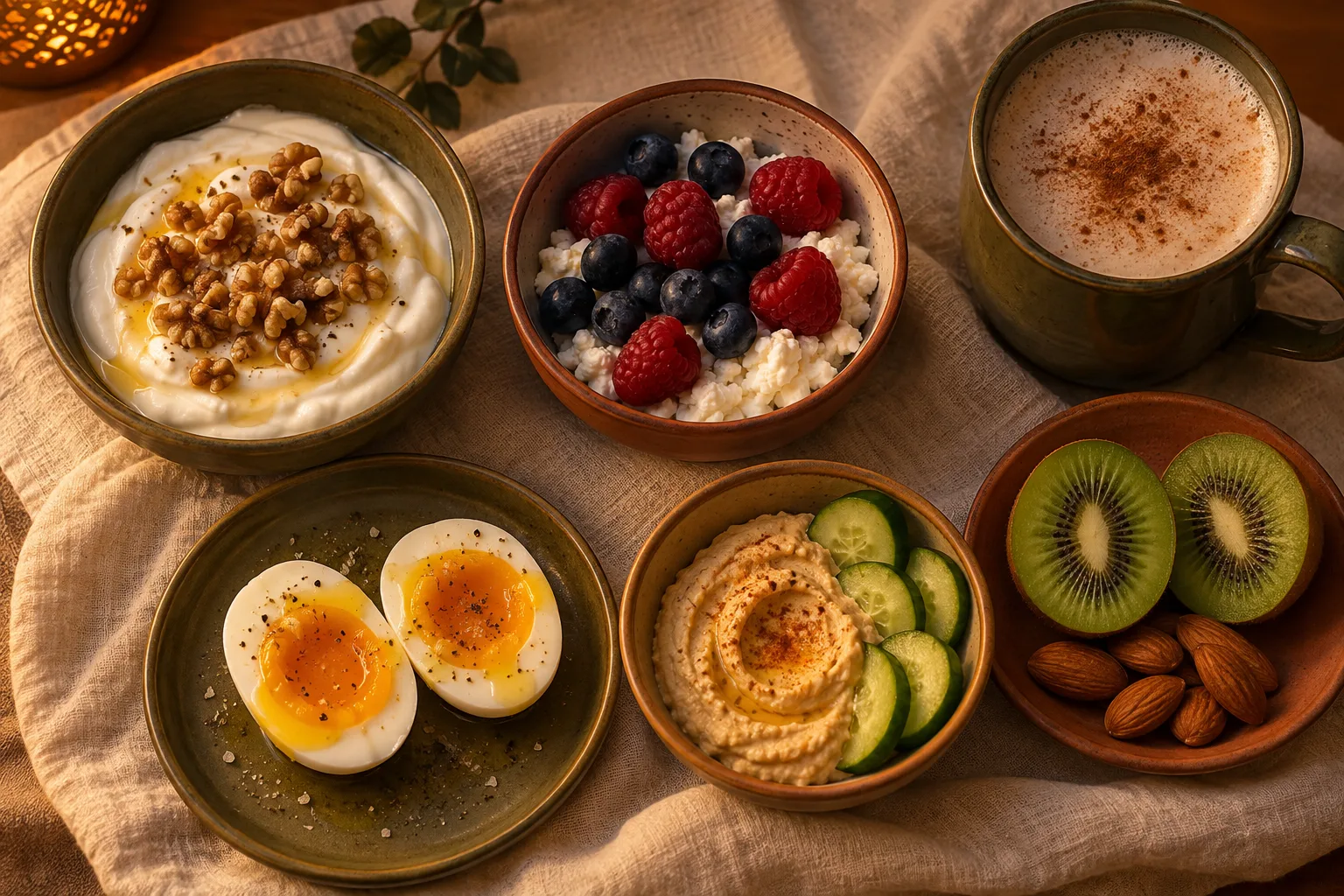
Get the free printable Night Hunger Snack List: 10 Mediterranean snacks with exact portions and protein counts, for the evenings when cravings hit. Enter your email and download it instantly.
Free. No spam. Unsubscribe anytime.
Want to Stop Starting Over Every Week?
If you’re stuck in the cycle of eating well for a few days and then blowing it because hunger gets too loud. That’s exactly the problem the Cravings Control Reset was built for.
It’s a 7-day framework that resets how your body responds to hunger by changing the structure of your meals, not the amount. No restriction. No willpower tricks. Just meals that actually keep you full.
Get the Cravings Control Reset →
Is it normal to be hungry 30 minutes after eating?
It can happen occasionally, but if it’s consistent, it usually means your meals need more protein, fiber, and healthy fat.
What stops hunger fastest after a meal?
Meals built with a protein source, a fiber source, and a healthy fat together, not restriction, and not eating less.
Why do I feel hungry right after I eat?
Most of the time it comes down to meal structure, not portion size. Your body signals fullness through hormones triggered by protein, fiber, and fat, not by calories alone. If your meal is heavy on carbohydrates and light on protein, those fullness hormones never fully fire, so hunger comes back quickly even after a big plate of food.
Why am I hungry after eating oatmeal?
Plain oatmeal is mostly carbohydrates with very little protein and almost no fat. Even though it has fiber, without protein and fat to slow digestion, it moves through your system quickly and causes a blood sugar spike and crash that brings hunger back within an hour or two. The fix is to never eat oatmeal alone, add a scoop of protein powder, nut butter, or pair it with eggs to make it actually hold.
How long after eating should you feel full?
Your stomach’s stretch receptors send fullness signals to your brain, but that signal takes 15 to 20 minutes to arrive. If you eat quickly, your brain hasn’t caught up yet, which is why you can feel like you could eat more right after finishing a meal. Slowing down and giving your body that window makes a real difference in how full you feel.
What foods keep you full the longest?
Foods that combine protein, fiber, and healthy fat keep you full the longest because they slow digestion and trigger satiety hormones together. Good examples include eggs with vegetables and olive oil, Greek yogurt with chia seeds and nuts, salmon with roasted vegetables and quinoa, and lentil-based meals. The combination matters more than any single food.
Can stress make you feel hungry after eating?
Yes. When you’re stressed, cortisol levels stay elevated, and cortisol keeps your hunger signal active even when your body doesn’t need more food. It also drives cravings for high-fat and high-sugar foods specifically. If you’re eating balanced meals and still feeling hungrier than expected, stress and poor sleep are worth looking at as contributing factors.
To put these five reasons into practice, The Balanced Plate Method shows you exactly how to structure a plate so none of them apply to your next meal. The Balanced Mediterranean Meal Formula extends that same structure across a full day, and Mediterranean Foods That Keep You Full Longer covers the specific ingredients worth building meals around.
About Ribert Rodriguez
Ribert is the founder of EnergiSource Wellness. He researches and writes every article on this site personally, cross-checking claims against published research rather than relying on generic wellness advice. His approach is rooted in the Mediterranean framework, built from years of testing meal structures on himself after struggling with cravings, late-night eating, and low energy.
How this was researched: this article draws on published research on how protein, fiber, and fat affect fullness, including the review by Leidy and colleagues, “The role of protein in weight loss and maintenance” (American Journal of Clinical Nutrition, 2015), plus years of testing these meal structures myself. It is general nutrition education, not medical advice. If you are constantly hungry no matter what you eat, check in with your doctor.