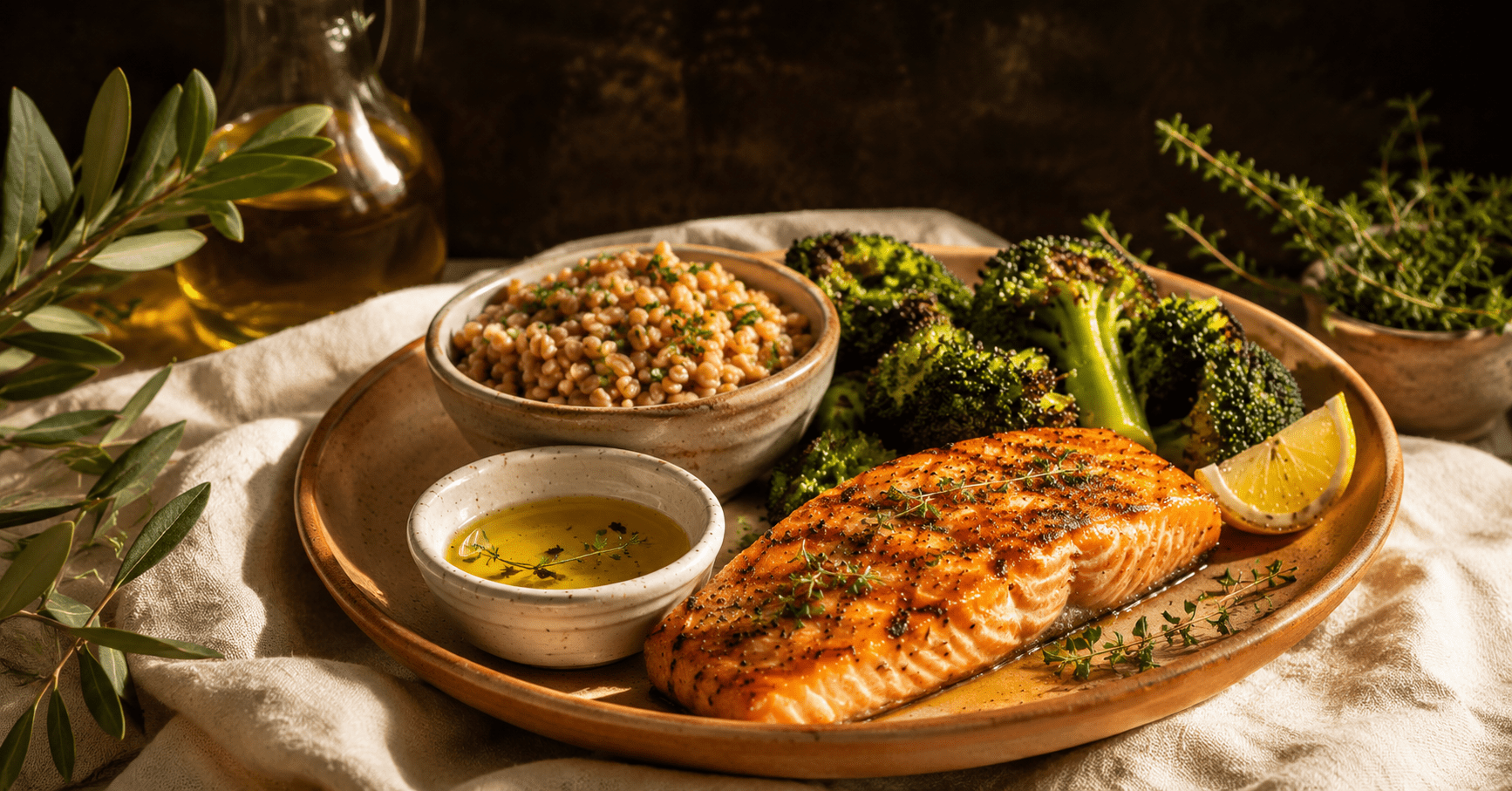
Resetting out-of-balance hunger hormones, ghrelin and leptin, takes about seven days of consistent, protein-and-fiber-first eating, not a supplement or a fast, since the imbalance is caused by meal composition in the first place.
You Ate. You’re Already Hungry Again. What Is Going On?
It’s 10:30 in the morning. You had breakfast. A real breakfast, eggs, maybe some toast, coffee. And yet, right now, your stomach is growling like you haven’t eaten in hours.
You open a drawer and grab a granola bar. Not because you’re being “bad.” Just because the hunger is real, and it’s annoying, and you have work to do.
Sound familiar?
If you’ve ever felt like your hunger has a mind of its own (rising and falling at the worst times, making you reach for food before your last meal has even had time to settle), this article is for you.
Because here’s what I want you to understand right away: this is not a willpower problem. It’s a hormone problem. And the good news is, you can start fixing it in just 7 days.
It’s Not In Your Head. Your Hunger Hormones Are Actually Off Balance
A lot of people walk around thinking they’re just “hungrier than normal” or that they simply have a weak appetite. But constant, creeping hunger isn’t a personality trait. It’s a physiological signal.
Your body has two main hunger hormones working at all times: ghrelin, which tells your brain “feed me,” and leptin, which signals “I’m satisfied, we’re good.” When these two are in sync, hunger feels manageable. You eat, you feel full, you move on with your day.
But when they’re out of balance, which happens more easily than you’d think, ghrelin runs the show. It spikes constantly. It doesn’t wait for your next mealtime. And leptin? It goes quiet, like a radio signal that keeps cutting out.
The result is exactly what you’ve been experiencing: eating but never feeling truly full. Snacking when you don’t even want to. Feeling out of control around food even when you’re trying so hard to eat well.
This isn’t a character flaw. It’s biology, and it responds beautifully to the right changes.
The Root Cause: What’s Actually Disrupting Your Hunger Hormones
Here’s the thing most nutrition advice skips: your hunger hormones don’t get thrown off by one dramatic event. They drift out of balance slowly, quietly, through daily patterns that seem totally harmless.
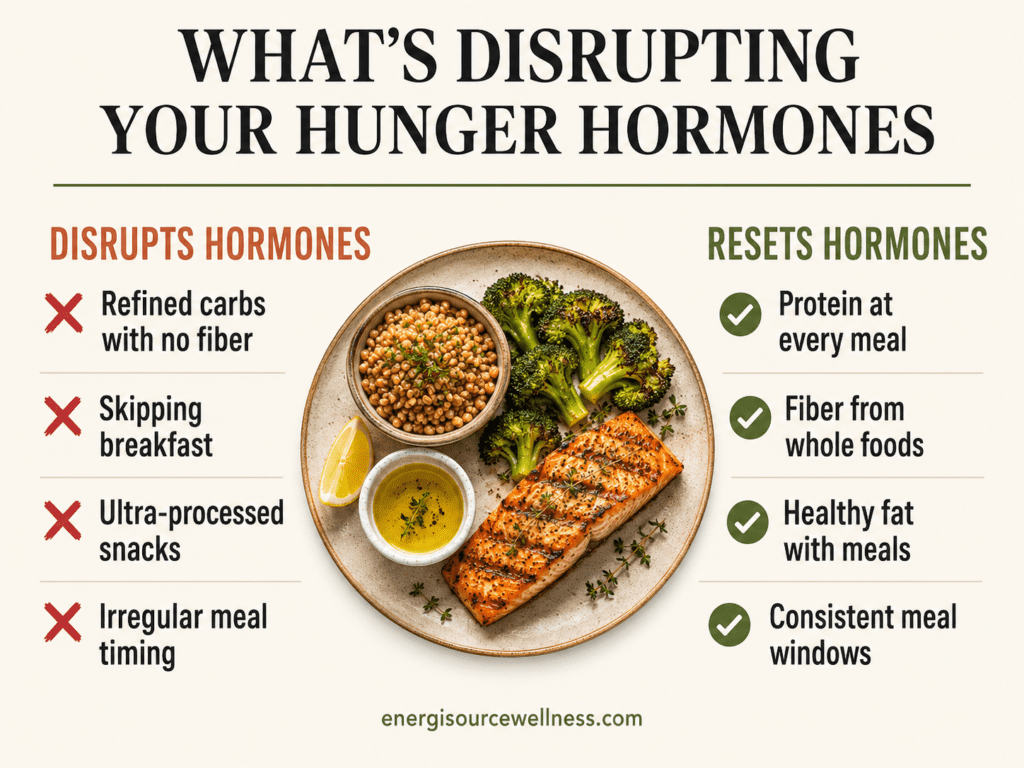
The biggest culprits? Meals that are missing the right combination of protein, fiber, and healthy fat. When your plate is heavy on refined carbs and light on everything else, your blood sugar spikes fast and crashes just as fast, and every crash triggers a ghrelin surge. Your body genuinely believes it needs more food.
Add in irregular mealtimes, skipping breakfast, or loading up on ultra-processed snacks, and your hunger signals get even more scrambled. Your body loses its natural rhythm. And once that rhythm is gone, hunger stops following a logical schedule. It just shows up whenever it wants.
The fix isn’t complicated. But it does require structure. Seven days of intentional eating is enough to start shifting how hungry and full you feel, not through restriction, but through giving it what it actually needs.
Want a done-for-you starting point? Download the free 3-Day Hunger Reset. It gives you the exact meals and timing to begin rebalancing your hunger hormones today.
Your 7-Day Hunger Hormone Reset Plan
This isn’t a detox or a diet. It’s a week of eating in a way that gives your hormones a chance to recalibrate. Each day builds on the last, and by Day 7, most people notice a real shift in how hunger feels.
Day 1–2: Anchor Your Meals with Protein
Start here, because protein is the most powerful lever you have. When you eat enough protein at each meal, especially breakfast, you directly help lower ghrelin and extend the window before hunger returns.
Aim for at least 25–30 grams of protein at breakfast and lunch. Think Greek yogurt with eggs, chicken in your midday meal, or a high-protein Mediterranean bowl with legumes and tahini.
Don’t overthink it. The goal these first two days is simply: every meal has a real protein anchor. Not a sprinkle of seeds. A meaningful protein source.
Day 3–4: Add Fiber to Every Plate
Protein handles the ghrelin side. Fiber handles leptin. It helps your gut send the satiety signal to your brain, so the “I’m full” message actually registers before you’ve overeaten.
The best fiber sources for hunger control are the ones paired naturally with protein: lentils, chickpeas, black beans, roasted vegetables, and whole grains like farro or bulgur. These aren’t diet foods. They’re Mediterranean staples that have kept people satisfied for centuries.
On Days 3 and 4, pair your protein anchor with a fiber source at every meal. A handful of roasted vegetables. Half a cup of lentils. A side of sautéed greens. Small additions that compound into real fullness.
Foods High in Fiber and Protein That Keep You Full
Day 5: Introduce Healthy Fat at Every Meal
Here’s one a lot of people miss. Fat isn’t just calories. It’s a satiety signal. A study in the journal Nutrients found that dietary fat triggers release of CCK, a hormone that slows gastric emptying and tells your brain the meal is satisfying. Without fat, meals tend to feel incomplete, and hunger returns faster.
I’m talking about extra virgin olive oil, avocado, a small handful of walnuts, or a spoonful of almond butter. These aren’t indulgences. They’re functional. They are the reason the Mediterranean diet feels so satisfying compared to low-fat approaches.
Day 5: add one source of healthy fat to every meal. Drizzle olive oil on your salad. Slice half an avocado onto your eggs. Let fat do its job.
Day 6: Get Your Meal Timing Consistent
This one is often underestimated. Your body’s hunger hormones follow a circadian rhythm. They rise and fall based on when you’ve trained your body to expect food. When meal timing is erratic, ghrelin becomes erratic too.
Consistency doesn’t mean eating at exact military-precision times. It means eating roughly within the same windows each day, breakfast within an hour of waking, lunch midday, dinner before it gets too late. Over time, your hunger hormones start anticipating meals instead of ambushing you randomly throughout the day.
On Day 6, look at your natural schedule and set three loose meal anchors. Just starting to bring intention to timing makes a difference.
Day 7: Build a Full Plate Every Time
Today is about putting it all together. The Full Plate Method is simple: every meal should have a protein source, a fiber source, a healthy fat, and a complex carbohydrate. Not four separate components you eat reluctantly, one harmonious plate that happens to contain all four.
Think of it as: grilled salmon + roasted broccoli + olive oil + a small serving of farro. Or: lentil soup with whole grain bread + a drizzle of tahini. Or: scrambled eggs + sautéed spinach + avocado + one slice of sourdough.
When your plate has all four components, your body has everything it needs to regulate hunger hormones naturally. Ghrelin gets suppressed. Leptin gets activated. And for the first time in a while, hunger might actually feel like a gentle signal instead of an urgent alarm.
Balanced Plate Method, Build Satisfying Meals
What You Can Realistically Expect After 7 Days
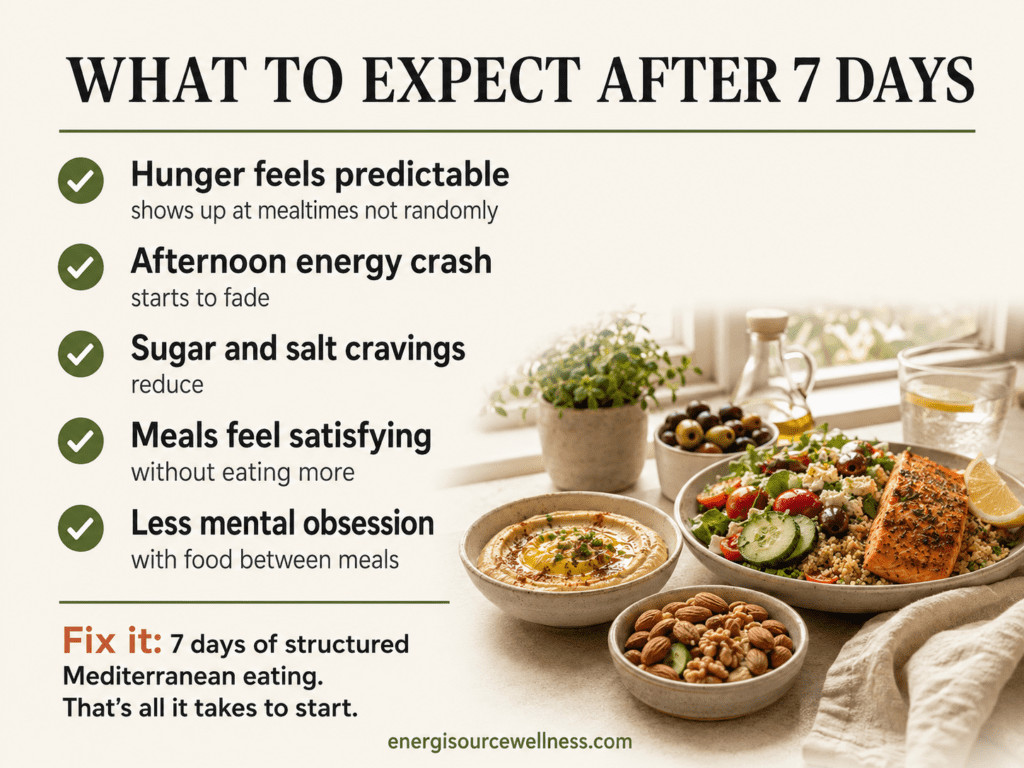
I want to be honest with you here. This isn’t magic, and everyone’s body responds at its own pace. But here’s what most people notice when they follow this kind of structure for a full week:
• Hunger feels more predictable. It shows up at mealtimes instead of constantly
• The afternoon energy crash starts to fade
• Cravings for sugar and salty snacks reduce (not disappear, reduce)
• Meals feel more satisfying, even without eating more food
• There’s less mental obsession with food between meals
These aren’t dramatic overnight changes. They’re the quiet, steady shifts that happen when your body stops running on chaos and starts running on rhythm.
Frequently Asked Questions
How long does it take to reset hunger hormones?
Most people start noticing shifts within the first week or two of consistent, structured eating, though full hormonal recalibration is a slower, more individual process. The early changes (less random hunger, better fullness after meals) tend to show up before the deeper shifts do.
Can I reset my hunger hormones without cutting calories?
Yes. This 7-day plan isn’t about eating less. It’s about eating differently. The focus is on meal structure and food quality, not restriction. Many people find they’re actually eating more volume than before, just from more satisfying sources.
What foods most directly affect hunger hormones?
Protein is the most filling nutrient and has the clearest effect on ghrelin, the hunger hormone. Fiber supports leptin signaling. Healthy fats trigger CCK release. Ultra-processed foods, refined carbs, and added sugars tend to disrupt all three, which is why meal structure matters more than calorie counting.
Why do I feel hungrier when I try to eat healthy?
Often because ‘healthy’ meals are missing protein, fat, or fiber, or all three. A salad with light dressing and grilled vegetables has very little of any of them. Adding a protein source, healthy fat, and fiber-rich carb to that same salad transforms how long it keeps you full.
Why You’re Hungry 1 Hour After Eating
Is this plan suitable for women with hormonal issues like PMS or PCOS?
The foundational principles here (stable blood sugar, adequate protein, anti-inflammatory fats), are beneficial for most hormonal conditions. That said, specific hormonal imbalances deserve personalized attention. This plan is a strong starting point, not a medical protocol.
You Don’t Have to Fight Your Hunger Anymore
I know how exhausting it is to feel like your body is working against you. To do everything “right” and still feel out of control around food. To question your own willpower when the real issue was never willpower at all.
Your hunger hormones got confused somewhere along the way. Maybe it was years of skipping breakfast. Maybe it was eating fast and processed because life was busy. Maybe it was following diet advice that left your meals totally lacking in what your body actually needed.
Whatever it was. It can shift. Seven days isn’t a long time, but it’s long enough to feel the difference. And once you feel it, once hunger becomes a calm, manageable signal instead of a constant companion, everything changes.
That’s what this is really about. Not just feeling less hungry. But feeling like yourself again, clear-headed, energized, in control of your own choices. That’s available to you. And it starts with your next meal.
Ready to go deeper? The Full Plate Method app gives you a complete hunger-reset system (meal structures, food combinations, and daily guidance), for just $27. Day 1 is free to try. Start at energisourcewellness.com
About Ribert Rodriguez
Ribert is the founder of EnergiSource Wellness. He researches and writes every article on this site personally, cross-checking claims against published research rather than relying on generic wellness advice. His approach is rooted in the Mediterranean framework, built from years of testing meal structures on himself after struggling with cravings, late-night eating, and low energy.