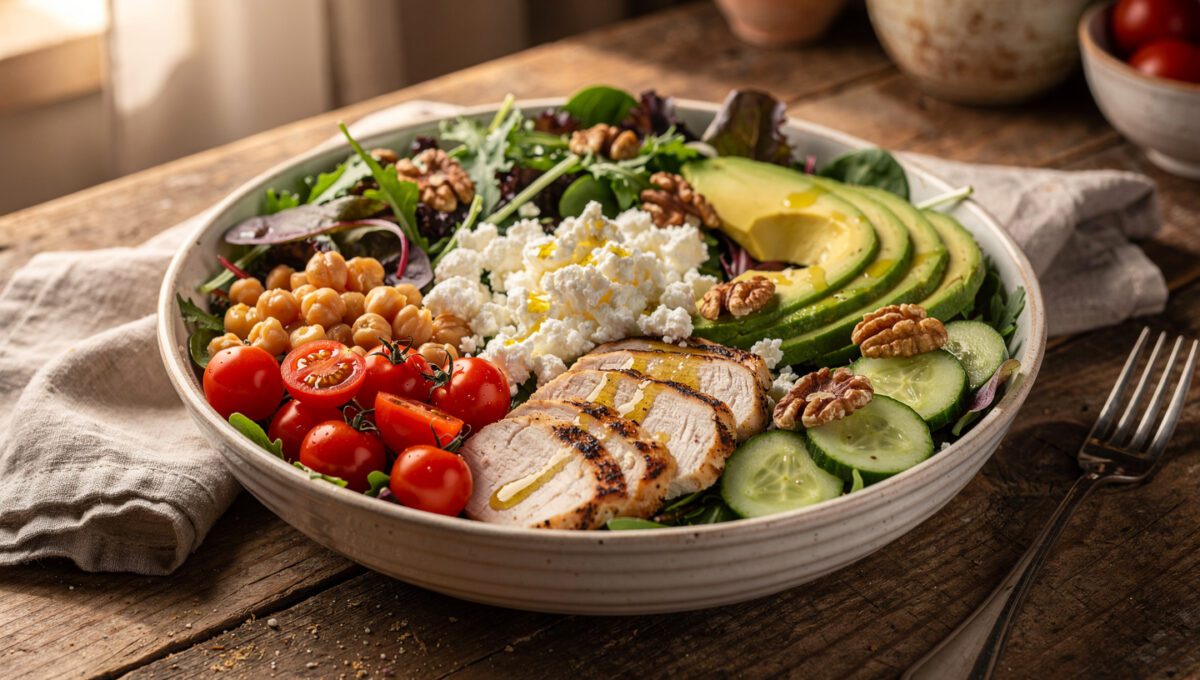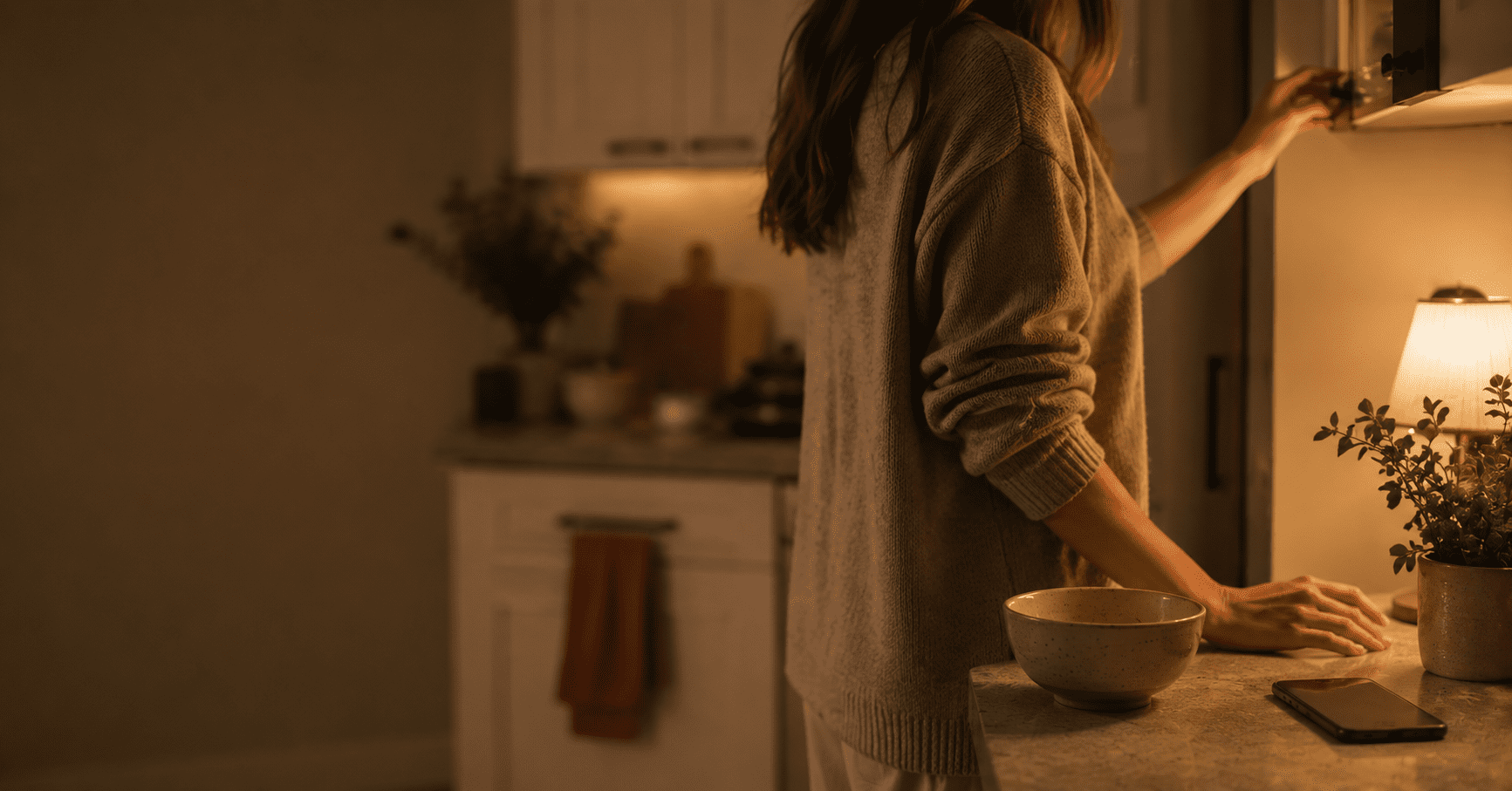
Constant snacking, especially at night, is usually driven by under-built meals earlier in the day combined with boredom or habit, not a lack of willpower. Fixing meal structure removes most of the pull without forcing yourself to white-knuckle it.
For about two years, my most reliable relationship was with the Uber Eats app at 11pm.
I was not hungry. I want to be clear about that, because it took me a long time to admit it. I had eaten dinner. I was not low on fuel. I was sitting on my couch at night with nothing pulling at me, and somewhere around the second hour of scrolling, my thumb would drift to the food app and order a box of doughnuts. Not because my body needed them. Because the night was empty and I did not know what else to do with myself.
The doughnuts would arrive. I would eat three or four standing up in the kitchen, half watching something on my phone, and then go to bed feeling heavy and a little ashamed and promising myself tomorrow would be different. Then tomorrow would come, and the day would pass fine, and the night would get quiet again, and there I was. Thumb on the app.
If you are searching for how to stop snacking so much, I am guessing some version of this is familiar. Maybe it is not doughnuts at 11pm. Maybe it is grazing through the afternoon, or standing at the open fridge at 4pm not even sure what you are looking for, or finishing a meal and reaching for something sweet twenty minutes later. The food changes. The pattern underneath it is almost always the same.
First, you are not weak
Here is the direct answer, since you came here for one: you do not snack constantly because you lack willpower. You snack constantly because snacking is doing a job for you, and until that job gets done another way, no amount of trying harder will make the urge go away.
That is the part nobody tells you. We talk about snacking like it is a discipline problem. Eat less, want less, just say no. But you have already tried saying no. You have said no a hundred times and reached for the snack anyway. That is not because you are broken. It is because saying no does not address the reason your hand reached out in the first place.
I noticed something the year I started building things at night instead of scrolling. The snacking did not require any fighting to stop. It just quietly went away. I was not reaching for food because I was not sitting in the same emptiness anymore.
I will come back to that, because it matters more than any food tip I can give you. But let me start with the food, because the food is real too, and it is the fastest lever you can pull this week.
The two hungers, and why we confuse them
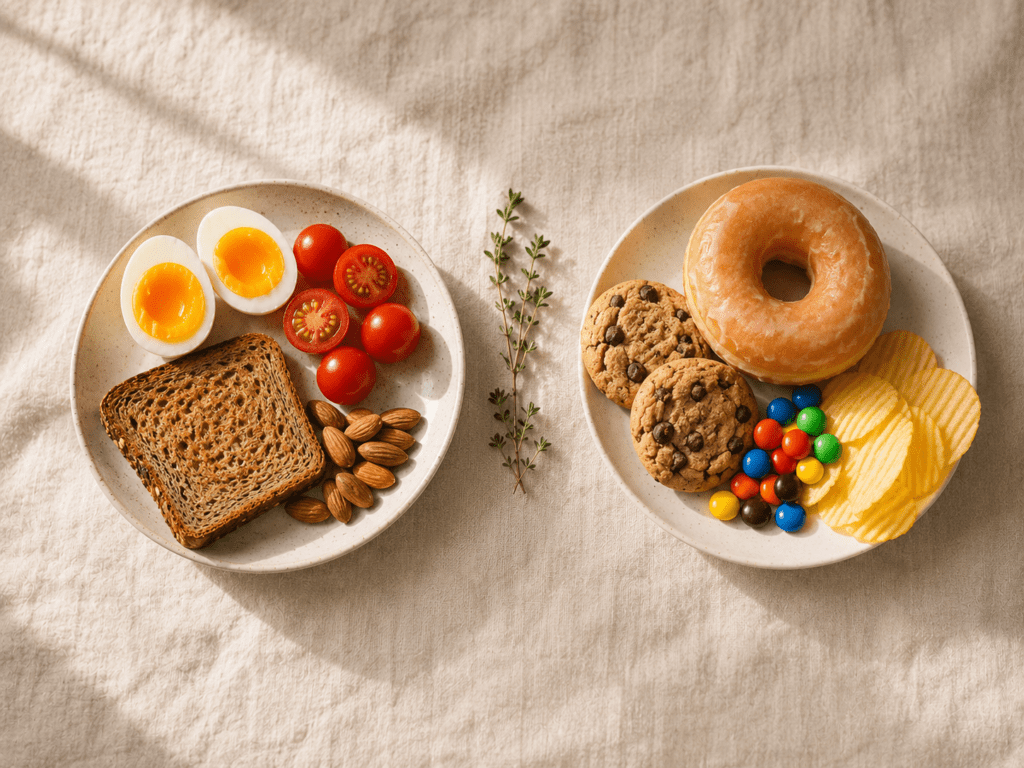
There are really two different things happening when you reach for a snack, and almost all constant snacking comes from mixing them up.
Hunger that comes from your body
This is physical. Your blood sugar has dropped, your last meal was too small or missing something, and your body is genuinely asking for fuel. This kind of hunger builds slowly, it is felt in the body, and it is satisfied by basically any real food. If you are this kind of hungry, an egg sounds as good as a cookie.
Hunger that comes from the empty space
This is the other one. It is not in your stomach. It is in the thirty minutes of nothing before you reached for the snack. It shows up fast, it is felt more in the mind than the body, and only a very specific food will do. You do not want an egg. You want the doughnut. That is the tell. When only the treat will satisfy it, it was never really about food.
Most people trying to stop snacking attack the second kind with tools built for the first kind. They keep carrot sticks around. They drink water. And it does not work, because you cannot feed an empty evening with a carrot. The snack was never the problem. The empty space was the problem, and the snack just happened to be the easiest thing within reach to fill it.
Your body will always find an outlet for restless energy. The only real question is whether you chose the outlet, or whether it chose you.
The food part: make physical hunger stop competing
Before you can tell the two hungers apart, you have to take the first one off the table. If you are genuinely underfed during the day, every quiet moment at night will feel like hunger even when it is not, because real hunger and empty-space hunger feel almost identical once they stack on top of each other. So step one is simple. Stop being actually hungry.
This is where the Mediterranean way of eating quietly does the heavy lifting, not as a diet, but as a structure. Three things at every meal, and the constant grazing loses most of its fuel:
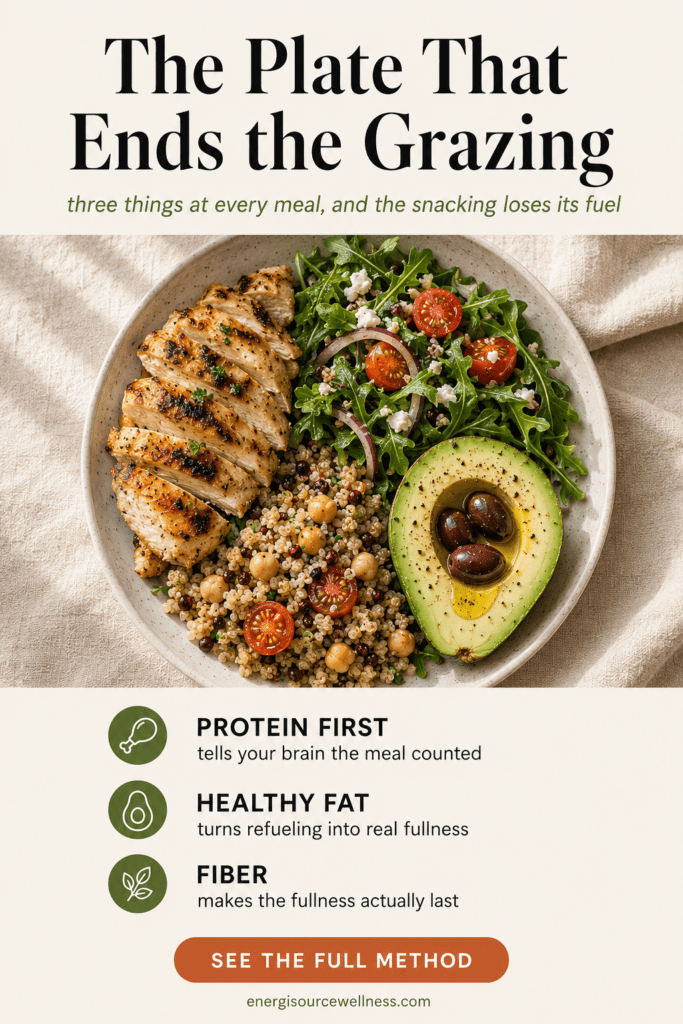
1. Protein first. This is the big one. Protein is what tells your brain the meal counted. A breakfast of just toast and coffee leaves you foraging by 10am. The same breakfast with eggs added holds you for hours. If you change one thing this week, eat protein at breakfast.
2. Fat that satisfies. Olive oil, avocado, a handful of nuts, sardines. Fat slows everything down and turns a meal from a refueling stop into something that actually feels like enough.
3. Fiber that fills. Vegetables, beans, whole grains, fruit with the skin on. Fiber takes up room and slows digestion so the fullness lasts instead of dropping out from under you an hour later.
When your meals are built this way, physical hunger stops showing up between meals. And that is the thing that lets you finally see the other hunger clearly, because it is the only one left.
What nobody tells you about snack food
Snack food is engineered to be eaten when you are not hungry. That is the entire business. A real meal is designed to fill you up, which means you stop buying. A snack is designed around the opposite goal, the bliss point of sugar, salt, and fat tuned so precisely that fullness never quite arrives and your hand keeps going back to the bag. You are not failing to resist them. They were built by very smart people to be impossible to resist. Knowing that does not make them disappear, but it does move the shame off of you, where it never belonged, and onto the design, where it does.
If you want this mapped out for you: I put the exact meal structure that ended my night snacking into a short, no-fluff guide called the Cravings Control Reset. It is the seven day version of everything on this page, with the meals built out so you do not have to think about it.
Take a look at the Cravings Control Reset here
The part that actually changed it for me
Fixing my meals stopped the physical hunger. But the 11pm doughnut runs did not really end until something else shifted, and it had nothing to do with food.
For a long time my evenings were a blank. Work ended, and there was this stretch of hours with no shape to them. I would scroll, and the scrolling never filled anything, so the restlessness would build, and eventually the easiest way to feel something was to eat. The food was not the craving. The food was just the nearest thing to reach for when there was nothing else to reach for.
What changed was almost embarrassingly simple. I started building something at night. This website, actually. I would come home and instead of falling into the couch I would work on an article, or learn how to do something I did not know how to do yet, and the hours that used to be empty suddenly had a direction. And the snacking, which I had fought for years, just stopped asking for my attention. I was not white-knuckling past the doughnuts. I had simply stopped standing in the place where the doughnuts were the only thing happening.
I am not telling you to start a website. I am telling you to notice something. The energy that was driving you to the kitchen does not disappear when you resist it. It has to go somewhere. When you give it nowhere to go, it goes to the snack. When you give it something to move toward, the snack loses its grip without much of a fight.
The snack was never really the problem. The empty thirty minutes before it was. Fill those with something you actually care about, and watch how little the snack matters.
This is why every trick that treats snacking as a willpower contest eventually fails. Willpower is you fighting yourself. But the urge is not your enemy. It is information. It is your own energy telling you it has nowhere to go. You do not need to defeat it. You need to listen to what it is pointing at, and give it a better direction.
What to actually do this week
Here is the whole thing, made simple. Two layers, because there are two hungers.
For the body
• Put protein at breakfast, every day, no exceptions. Eggs, Greek yogurt, cottage cheese, whatever you like. This single change ends more grazing than anything else on this list.
• Build every meal with protein, fat, and fiber together. When a meal has all three, it actually ends, and you are not foraging an hour later.
• Stop keeping the engineered snacks within arm’s reach. Not forever, not with shame. Just make the easy reach a better one. Greek yogurt and berries instead of the cookie that was designed to never fill you.
For the empty space
• When the urge hits and you are not physically hungry, pause for one breath and ask the honest question: am I hungry, or is this just the empty part of the evening? Naming it takes most of its power away.
• Have one thing you are moving toward. A project, a walk, a book, a skill, a person you could call. The point is not distraction. The point is giving your energy somewhere real to go.
• Notice the pattern without judging it. The times, the moods, the moments. Awareness alone changes behavior more than any rule, because you cannot keep doing unconsciously what you have started to see clearly.
What this looked like for me
Before: dinner, two hours of scrolling, doughnuts at 11, heavy and ashamed by midnight, promising tomorrow would be different. Every night, for years.
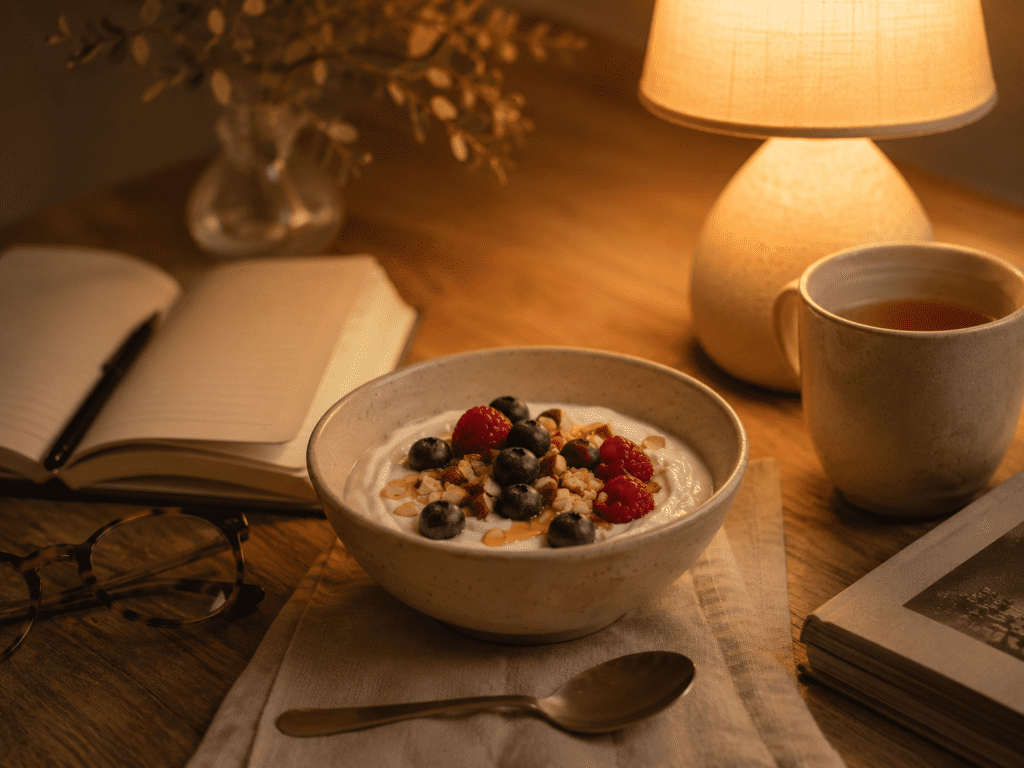
After: real meals with protein during the day so I was not running on empty, and evenings with something in them I actually wanted to do. If I am still hungry at night now, it is yogurt and berries, and most nights I am not hungry at all. The kitchen runs did not get defeated. They just stopped being the most interesting thing in the room.
You are not trying to become someone with more discipline
That is the reframe I want to leave you with. The goal was never to white-knuckle your way into being a person who can resist doughnuts. The goal is to stop being hungry for the wrong reasons, in both senses of the word. Feed your body properly so the physical hunger settles. Give your energy a direction so the empty-space hunger has somewhere better to go. Do those two things and the snacking does not need to be fought. It just quietly loosens its hold.
It took me two years of fighting before I understood I was fighting the wrong thing. You do not have to take that long. The pattern is more visible than it feels, and once you see it, you cannot unsee it. That seeing is most of the work.
I built EnergiSource because I wanted the version of this I never had when I was standing in my kitchen at midnight wondering what was wrong with me. Nothing was wrong with me. Nothing is wrong with you either. You are just ready to see the pattern, and that is the beginning of it changing.
Ribert
Ready to make it concrete? The Cravings Control Reset is the seven day plan I wish someone had handed me. The meals are built, the structure is done, and it is designed for exactly the kind of night snacking I described above.
Get the Cravings Control Reset
Keep reading
Why You Eat at Night Even When You Are Not Hungry
How Much Protein You Need to Stay Full
How to Stop Sugar Cravings Naturally
What to Eat When You Are Hungry at Night
Why You Are Always Snacking in the First Place
Constant snacking is usually a meal problem, not a snack problem. These are the most common reasons it happens:
- Your meals are too small or too low in protein. A light breakfast and a salad for lunch will have you in the pantry by mid-afternoon.
- You go too long between meals. After 5 or 6 hours without food, anything in reach looks good.
- Your snacks are mostly carbs. Crackers, fruit or a granola bar alone wear off within the hour, so one snack turns into three.
- It is habit or boredom, not hunger. Snacking at your desk, in the car or in front of the TV becomes automatic.
- You are short on sleep. Tired days make hunger and cravings louder.
Fix the first three and most of the snacking takes care of itself. For the times you really do need a snack, pair a protein with a fiber, like the ideas in Mediterranean snacks that keep you full.
Free printable
Hungry again at 9pm?
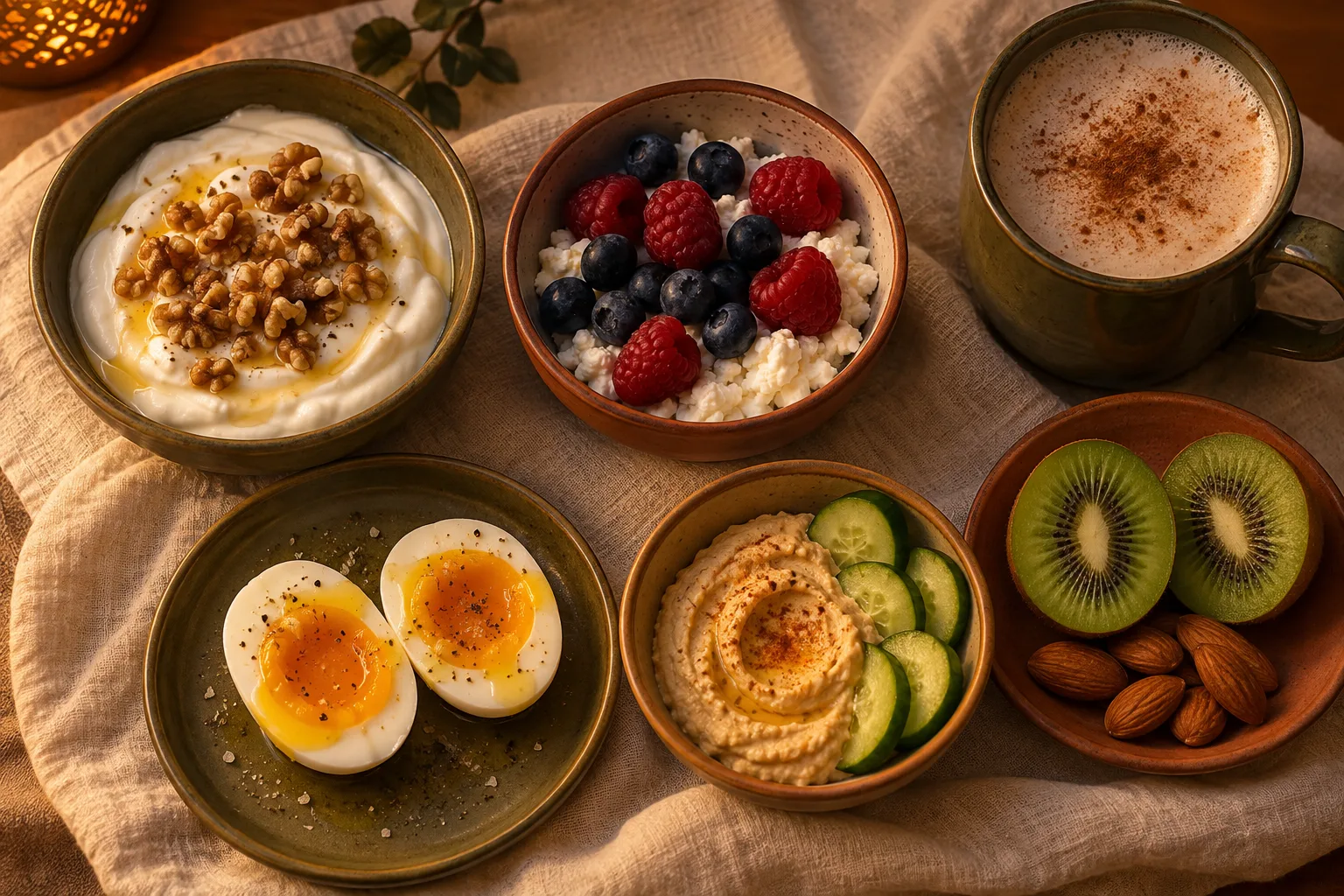
Get the free printable Night Hunger Snack List: 10 Mediterranean snacks with exact portions and protein counts, for the evenings when cravings hit. Enter your email and download it instantly.
Free. No spam. Unsubscribe anytime.
Frequently asked questions
Why do I snack so much even when I am not hungry?
Because snacking is usually filling an emotional or mental gap, not a physical one. When the urge comes on fast and only a specific treat will satisfy it, that is the sign it is not true hunger. It is restlessness, boredom, or stress looking for the nearest outlet. Feeding your body properly during the day and giving your energy somewhere to go in the evening addresses the real cause.
How do I stop snacking so much without feeling deprived?
Do not start by removing snacks. Start by adding protein, fat, and fiber to your actual meals so physical hunger stops driving you between them. Once your meals genuinely fill you, the grazing loses most of its fuel on its own, and you are not white-knuckling past hunger all day.
What is the fastest way to reduce constant snacking?
Eat protein at breakfast. It is the single highest-impact change. A protein-rich first meal steadies your hunger for hours and prevents the mid-morning and afternoon grazing that snowballs into all-day snacking.
Is snacking always bad?
No. A planned snack with protein and fiber when you are genuinely hungry between meals is completely fine. The problem is not snacks. The problem is unconscious, constant grazing that has nothing to do with hunger. The goal is to make snacking a choice again instead of a reflex.
Why do I only crave junk food when I snack, not healthy food?
Because that craving is not about fuel. When your body actually needs energy, most real foods sound appealing. When only the cookie or the chips will do, the urge is emotional, and engineered snack foods are specifically designed to hit that emotional spot and keep you reaching for more.
About Ribert Rodriguez
Ribert is the founder of EnergiSource Wellness. He researches and writes every article on this site personally, cross-checking claims against published research rather than relying on generic wellness advice. His approach is rooted in the Mediterranean framework, built from years of testing meal structures on himself after struggling with cravings, late-night eating, and low energy.