Key Takeaways
- A calorie deficit breakfast should keep you full, not just be small. High protein and fiber keep hunger hormones stable even on fewer calories.
- Aim for 20+ grams of protein plus real fiber and a little healthy fat to stay full for 3 to 4 hours.
- A low-protein or skipped breakfast spikes ghrelin by mid-morning, so you overeat later and undo the deficit.
- All 7 Mediterranean breakfasts below are under 400 calories and built to hold you until lunch.
Quick answer: The best calorie deficit breakfast has 20 to 30 grams of protein, some fiber and a little healthy fat, for about 300 to 400 calories. That combination keeps you full for 3 to 4 hours, which makes the deficit much easier to stick to than a tiny breakfast or none at all. Good options: a Greek yogurt bowl with berries and walnuts, a two-egg spinach omelet with whole grain toast, or cottage cheese with fruit and almonds.
You decided to eat less. So you had a small breakfast, maybe just yogurt, maybe just black coffee, maybe you skipped it entirely because it felt like the fastest way to cut calories.
By 10am you were starving. By noon you’d already eaten three things you didn’t plan on. And by dinner you were so hungry that the deficit you’d been building all day collapsed in about twenty minutes.
Sound familiar?
Here’s the thing: the breakfast wasn’t the problem. The structure was.
A calorie deficit breakfast doesn’t mean a small breakfast. It means a breakfast engineered to keep your hunger hormones suppressed for 3–4 hours, so the rest of your day stays on track without a fight.
That’s exactly what these 7 Mediterranean breakfast ideas do. All under 400 calories. All built to hold you until lunch. No sad rice cakes. No coffee-only mornings. No 10am hunger spiral.
Why Eating Less at Breakfast Is the Worst Calorie Deficit Strategy
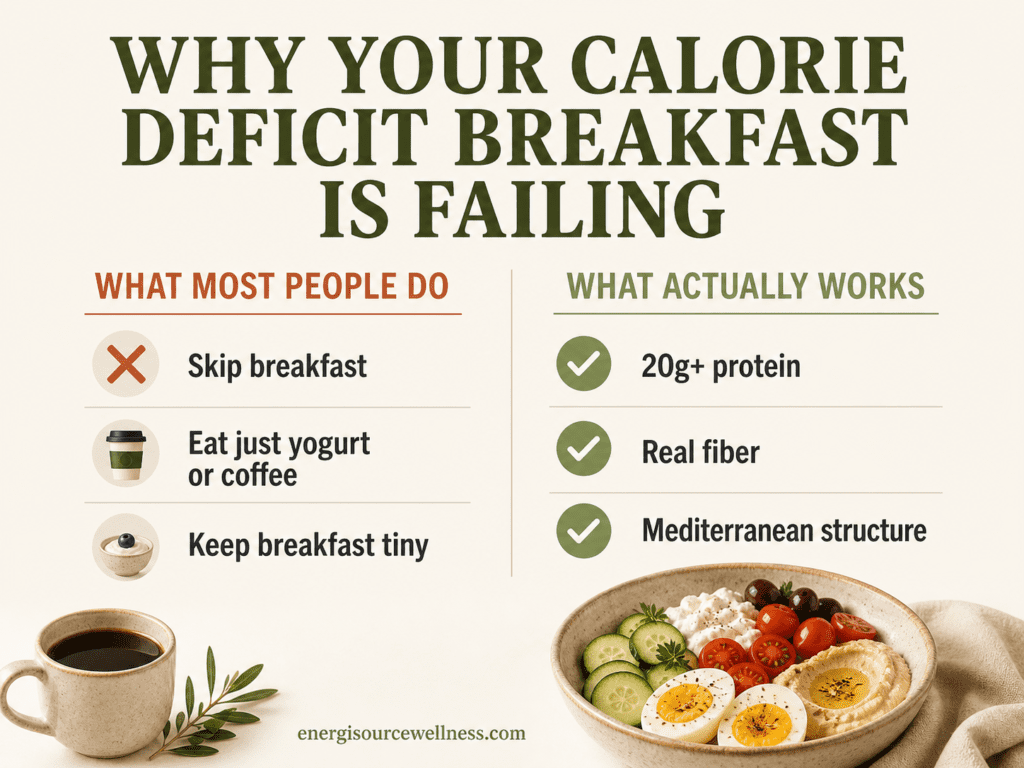
Most people approach a calorie deficit backwards. They slash breakfast because it feels like the easiest place to cut, and then spend the rest of the day fighting hunger they created themselves.
Here’s what’s actually happening physiologically. When breakfast is too low in protein and fiber, your body releases ghrelin, your primary hunger hormone, at full force within 2–3 hours. By mid-morning you’re not just hungry, you’re hormonally driven to eat. Willpower has nothing to do with it.
Research consistently shows that high-protein breakfasts reduce total daily calorie intake more effectively than skipping breakfast or eating a low-protein alternative. One study found that people who ate a protein-rich breakfast consumed significantly fewer calories at lunch and throughout the day compared to those who ate a carbohydrate-heavy breakfast of the same calories.
The math works in your favor when breakfast works for you. A 350-calorie breakfast with 25 grams of protein does far more for your day’s total intake than the calories on the label suggest, since it heads off the unplanned snacking that tends to follow a low-protein or skipped breakfast. That’s a better calorie deficit than skipping breakfast and compensating with snacks by 11am.
The Real Secret: Structure, Not Restriction
Eating in a calorie deficit without feeling deprived comes down to one thing, building meals that are structured to keep your hunger hormones stable, not just meals that are small.
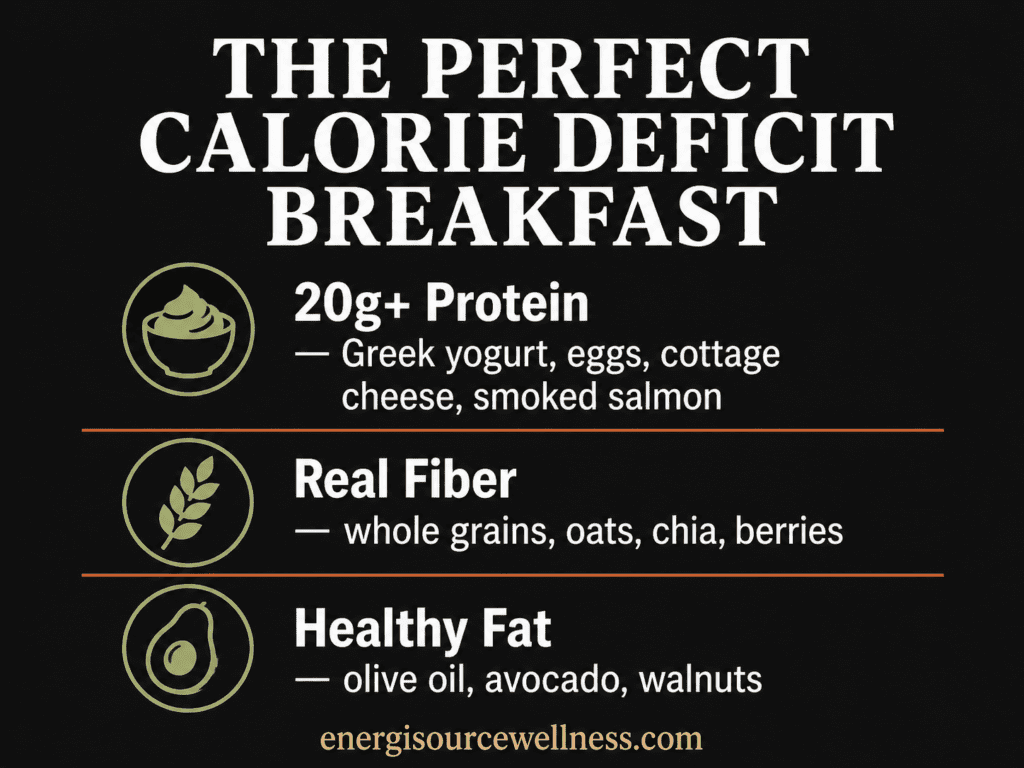
The Mediterranean breakfast does this naturally. It’s not a diet with rules. It’s a structure built around three things your hunger hormones respond to:
Protein (20g+ at breakfast), helps lower ghrelin, signals satiety, preserves muscle while in a deficit. Greek yogurt, eggs, cottage cheese, smoked salmon. These are your anchors.
Real fiber, slows digestion, stabilizes blood sugar, prevents the mid-morning crash that triggers cravings. Whole grain bread, oats, chia seeds, berries, vegetables.
Healthy fat, slows gastric emptying so the meal lasts longer. Olive oil, avocado, walnuts, almonds. A small amount goes a long way.
When you build a breakfast that holds you for hours using these three components, the calorie deficit takes care of itself. You’re not white-knuckling it to lunch. You’re just not hungry.
The exact formula, delivered free.
If you’re finding this useful, the one-page Hunger-Free Day Formula walks through the exact meal structure that keeps hunger from crashing back an hour later. It’ll land in your inbox in under a minute.
7 Mediterranean Calorie Deficit Breakfast Ideas (All Under 400 Calories)
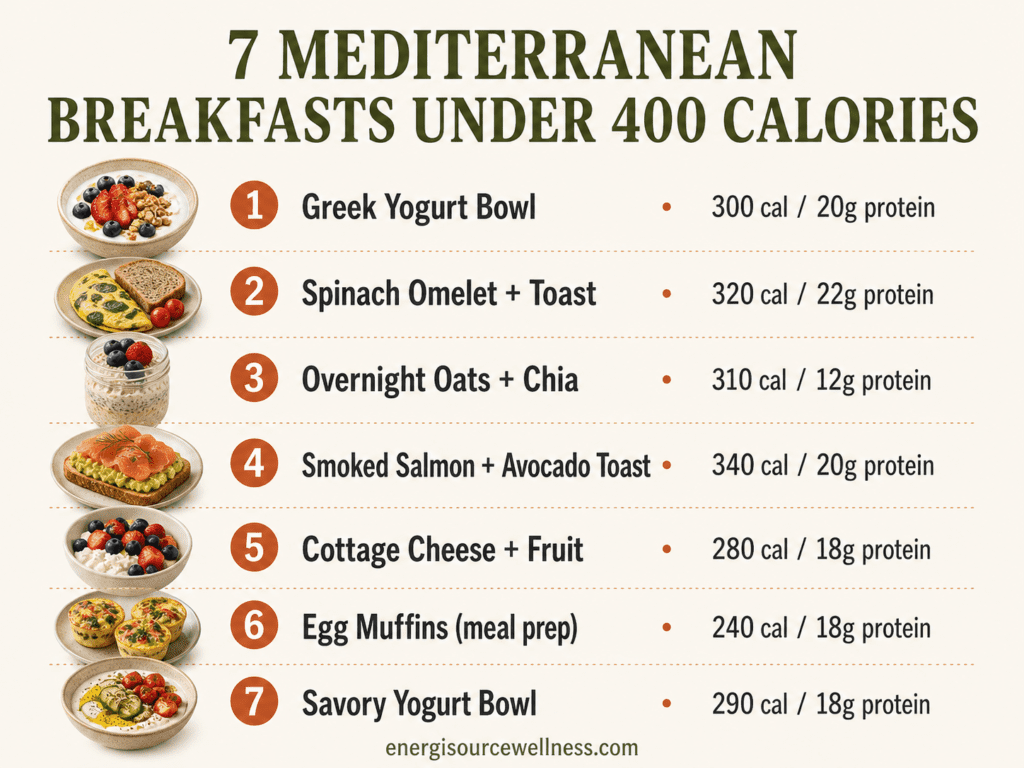
| Breakfast | Calories | Protein | Fiber |
|---|---|---|---|
| Greek Yogurt Bowl With Berries and Walnuts | about 300 | about 20 g | High |
| Two-Egg Spinach Omelet With Whole Grain Toast | about 320 | about 22 g | Moderate |
| Overnight Oats With Chia Seeds | about 310 | about 12 g | Very high |
| Smoked Salmon and Avocado on Whole Grain Toast | about 340 | about 20 g | Moderate |
| Cottage Cheese With Fruit and Almonds | about 280 | about 18 g | Moderate |
| Mediterranean Egg Muffins (2 muffins, meal prep) | about 240 | about 18 g | Low (add fruit or toast) |
| Savory Greek Yogurt Bowl | about 290 | about 18 g | Moderate |
These aren’t diet breakfasts. They’re real breakfasts. The kind that keep you full, give you steady energy, and happen to be under 400 calories because they’re built from whole foods that are naturally satiating without being calorie-dense.
1. Greek Yogurt Bowl With Berries and Walnuts
~300 calories | 20g protein | High fiber
The easiest high-protein breakfast you can make in under 2 minutes. The key is plain full-fat Greek yogurt, not the flavored kind, which is loaded with added sugar and will spike your blood sugar and crash you by mid-morning.
How to build it: ¾ cup plain full-fat Greek yogurt, ½ cup mixed berries, 1 tablespoon crushed walnuts, optional drizzle of honey.
The yogurt provides the protein base. The berries add fiber and antioxidants. The walnuts add healthy fat that slows digestion and extends fullness. This combination holds most people comfortably for 3–4 hours.
2. Two-Egg Spinach Omelet With Whole Grain Toast
~320 calories | 22g protein | Moderate fiber
Eggs are the most satiating breakfast food by a significant margin, research consistently ranks them above almost every other breakfast option for hunger suppression per calorie. Two eggs cooked in olive oil with a handful of spinach gives you a complete protein and micronutrient hit in under 10 minutes.
How to build it: 2 eggs scrambled or folded in 1 tsp olive oil, large handful of spinach wilted in, 1 slice whole grain toast.
The whole grain toast adds the fiber that eggs lack on their own. Together they create the protein-fiber combination that keeps ghrelin suppressed and blood sugar stable through mid-morning.
3. Overnight Oats With Chia Seeds
~310 calories | 12g protein | Very high fiber
Lower in protein than the other options but exceptional for fiber, chia seeds are one of the highest-fiber foods you can add to a meal, and rolled oats digest slowly enough that blood sugar stays stable for hours. This is your best option for mornings when you have zero time.
How to build it: ½ cup rolled oats, 1 tablespoon chia seeds, ¾ cup unsweetened almond milk, ½ cup berries. Mix the night before, refrigerate, eat cold in the morning.
Boost the protein if needed: add 2 tablespoons of plain Greek yogurt on top or stir in a tablespoon of almond butter.
4. Smoked Salmon and Avocado on Whole Grain Toast
~340 calories | 20g protein | Moderate fiber
This is the Mediterranean breakfast that looks indulgent but performs like a diet meal. Smoked salmon is calorie-efficient and extremely high in protein and omega-3 fatty acids, which reduce inflammation and support the gut bacteria that regulate hunger hormones.
How to build it: 1 slice whole grain toast, 2oz smoked salmon, ¼ avocado sliced or mashed, squeeze of lemon, optional capers or fresh dill.
The avocado provides the healthy fat that makes this meal last. The salmon provides the protein. The whole grain provides the fiber. This is the balanced plate structure applied to breakfast, and it works exactly the same way.
5. Cottage Cheese With Fruit and Almonds
~280 calories | 18g protein | Moderate fiber
Cottage cheese is one of the most underrated calorie deficit foods. It’s extremely high in casein protein, a slow-digesting protein that suppresses hunger for longer than whey-based options. Half a cup has roughly 14 grams of protein at around 110 calories, making it one of the most efficient protein sources for breakfast.
How to build it: ½ cup plain cottage cheese, 1 sliced pear or peach, 10–12 almonds.
The fruit adds fiber and natural sweetness without a significant sugar hit. The almonds add crunch and healthy fat. This takes about 90 seconds to assemble and holds most people until lunch without effort.
6. Mediterranean Egg Muffins (Meal Prep)
~240 calories for 2 muffins | 18g protein | Low carb
If your problem is morning time, this is your solution. Make a batch of these on Sunday and you have breakfast ready for 4–5 days. They reheat in 60 seconds and are completely portable.
How to build them: Whisk 6 eggs with a splash of milk. Fold in ¼ cup crumbled feta, 1 cup chopped spinach, ½ cup diced cherry tomatoes, salt, pepper, dried oregano. Pour into a greased muffin tin and bake at 375°F for 18–20 minutes. Makes 12 muffins, 2 per serving.
These are high in protein, naturally low in carbs, and packed with Mediterranean flavors. Add a slice of whole grain toast if you want more fiber and staying power.
7. Savory Greek Yogurt Bowl
~290 calories | 18g protein | Moderate fiber
If you’re someone who doesn’t like sweet breakfasts, this is the one. Most people don’t realize Greek yogurt works brilliantly in a savory context, and it turns out to be one of the most satisfying breakfast options for people who struggle with the sweet-breakfast-then-sugar-craving cycle.
How to build it: ¾ cup plain Greek yogurt, drizzle of olive oil, ¼ sliced cucumber, pinch of za’atar or dried oregano, 4–5 whole grain crackers on the side.
The olive oil adds healthy fat and depth. The cucumber adds freshness and a small amount of fiber. The za’atar (a Mediterranean spice blend of thyme, sesame, and sumac), transforms the whole thing into something that actually feels like a real meal. This is how people in the Mediterranean actually eat, not diet food dressed up to look acceptable.
Built for exactly this
The Mediterranean Meal Plan
Seven days of meals built around protein, fiber, and healthy fat for four to five hour fullness. Complete grocery list included. No calorie counting, no tracking.
Get the plan for $17The Common Mistakes That Wreck a Calorie Deficit Breakfast
Even with the right foods, a few common mistakes can undermine how well breakfast works for the rest of your day.
Choosing flavored yogurt over plain. Flavored Greek yogurt can have 15–20 grams of added sugar per serving. That sugar spike will crash you by 10am and trigger cravings that have nothing to do with hunger. Always buy plain and add your own fruit.
Eating whole grain bread but buying the wrong kind. Many “whole grain” and “multigrain” breads are mostly refined flour with a small amount of whole grain added for marketing. Look for bread where the first ingredient is “whole wheat flour” or “whole grain flour”, not “enriched flour.”
Skipping fat entirely. Fat-free breakfasts digest too quickly. Healthy fat (olive oil, avocado, nuts), slows gastric emptying and significantly extends how long breakfast keeps you full. Don’t be afraid of it in a calorie deficit context.
Eating breakfast while distracted. Eating in front of a screen or while rushing reduces satiety signals. Your brain registers fullness more effectively when you’re eating without distraction. A 10-minute sit-down breakfast holds you longer than the same meal eaten in 3 minutes at the counter.
What a Calorie Deficit Breakfast Actually Does for the Rest of Your Day
This is the part most calorie deficit articles skip. A properly structured breakfast doesn’t just help you not be hungry in the morning. It sets up your entire day’s hormonal environment.
When you eat 20+ grams of protein at breakfast, ghrelin stays suppressed for significantly longer than it would after a carb-heavy or protein-light meal. Your blood sugar rises slowly and falls slowly, which means no 10am crash, no desperate need for something sweet, and no arriving at lunch so hungry that you overeat before your brain can register fullness.
The calorie deficit becomes something that happens to you rather than something you have to fight for. That’s the difference between a breakfast that’s just small and a breakfast that’s actually designed to work.
Start with one of the seven options above. Build the plate right, protein anchor, real fiber, small amount of healthy fat. See how you feel at 10am compared to your usual morning. The difference is usually immediate.
Frequently Asked Questions About Calorie Deficit Breakfasts
What should I eat for breakfast in a calorie deficit? Focus on high-protein, high-fiber options under 400 calories, Greek yogurt, eggs, cottage cheese, smoked salmon, overnight oats. The goal is 20+ grams of protein to suppress hunger hormones and real fiber to stabilize blood sugar, so you don’t compensate with unplanned eating later in the day.
How many calories should breakfast be in a calorie deficit? Aim for 300–400 calories at breakfast. Going lower than 300 calories often backfires, hunger hormones spike hard by mid-morning and you end up eating more across the day than you would have with a proper breakfast.
Will skipping breakfast help my calorie deficit? For most people, no. Skipping breakfast spikes ghrelin, your hunger hormone, which drives overeating at lunch and throughout the day. Research consistently shows that high-protein breakfasts reduce total daily calorie intake more effectively than skipping breakfast.
What is the best high-protein low-calorie breakfast? The most efficient options are plain Greek yogurt (20g protein, ~130 calories per ¾ cup), 2 eggs with spinach (~160 calories, 14g protein), or cottage cheese (14g protein per ½ cup, ~110 calories). Combine any of these with whole grain and a small amount of healthy fat for a complete breakfast under 400 calories.
Can I eat Mediterranean food in a calorie deficit? Yes, Mediterranean eating is naturally suited to a calorie deficit because it’s built around whole foods that are high in protein and fiber and moderate in calories. You’re not counting macros or restricting food groups. You’re just building the plate right, which keeps hunger stable and the deficit effortless.
The Bottom Line
Calorie deficit breakfasts don’t have to be small, sad, or a fight against your own hunger. They just have to be structured right, protein anchor, real fiber, small amount of healthy fat, whole food ingredients your body already knows how to process.
The seven breakfasts above all do that. None of them require complicated prep. None of them will leave you hungry by 10am. And none of them cost you the calorie budget that makes the rest of your day work.
Pick one. Build the plate. Notice how different the rest of your morning feels.
That’s not a diet. That’s just eating in a way that works.
Keep Reading
About Ribert Rodriguez
Ribert is the founder of EnergiSource Wellness. He researches and writes every article on this site personally, cross-checking claims against published research rather than relying on generic wellness advice. His approach is rooted in the Mediterranean framework, built from years of testing meal structures on himself after struggling with cravings, late-night eating, and low energy.
How this was researched: the protein target comes from research showing higher-protein meals increase fullness (Leidy et al., 2015) and that fiber adds to it (systematic review, 2019). Calorie and protein numbers are estimates based on USDA FoodData Central. This is general nutrition education, not medical advice. If you have a medical condition or a history of disordered eating, talk to your doctor or a dietitian before cutting calories. Last updated: October 2, 2026.