Persistent bloating after meals is usually caused by eating too fast, low stomach acid, or food combinations your gut isn’t equipped to break down efficiently, not a single food intolerance. The fix is slowing down and eating simpler, whole-food combinations your gut already recognizes.
You finished a real meal. Not fast food, not candy, an actual meal you made at home. And within 20 minutes, your stomach is tight, distended, uncomfortable. You look like you swallowed a balloon. Your waistband feels like it’s cutting you in half.
And the worst part? This keeps happening. Every. Single. Day.
You’ve tried eating less. You’ve cut gluten. You’ve googled “why am I always bloated after eating” at 11pm while lying on the couch waiting for it to pass. And you still don’t have a real answer.
Here’s what nobody’s telling you: the bloating probably isn’t about the food itself. It’s about what’s been done to the food before it ever reached your plate.
You’re Not Imagining It, and It’s Not Just Sensitivity
Bloating after eating is one of the most common complaints among women, and yet most people get told the same useless things: eat slower, try probiotics, cut dairy, maybe it’s IBS.
Sometimes those things help. Most of the time they don’t, because they’re treating the symptom, not the source.
The reality is that your gut is one of the most sophisticated systems in your body. It knows how to handle real food. It’s been doing it for thousands of years. What it wasn’t designed for is the industrial ingredient list that now shows up in almost everything sold in a package, including the stuff marketed as healthy.
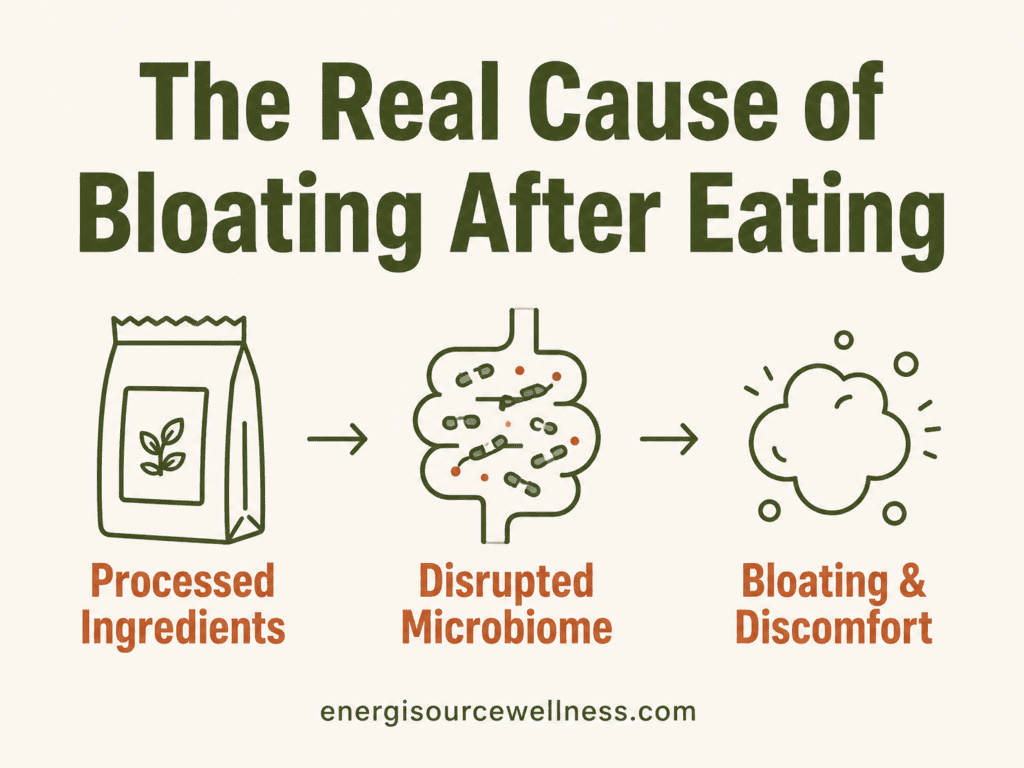
When your gut encounters ingredients it doesn’t recognize, it can’t process them cleanly. The result is fermentation, gas buildup, slowed motility, and that tight, uncomfortable pressure you feel after almost every meal.
That’s not a food intolerance. That’s your body giving you a very clear signal.
The Real Root Cause: It’s What’s Been Done to Your Food
Here’s the part the wellness industry doesn’t talk about enough.
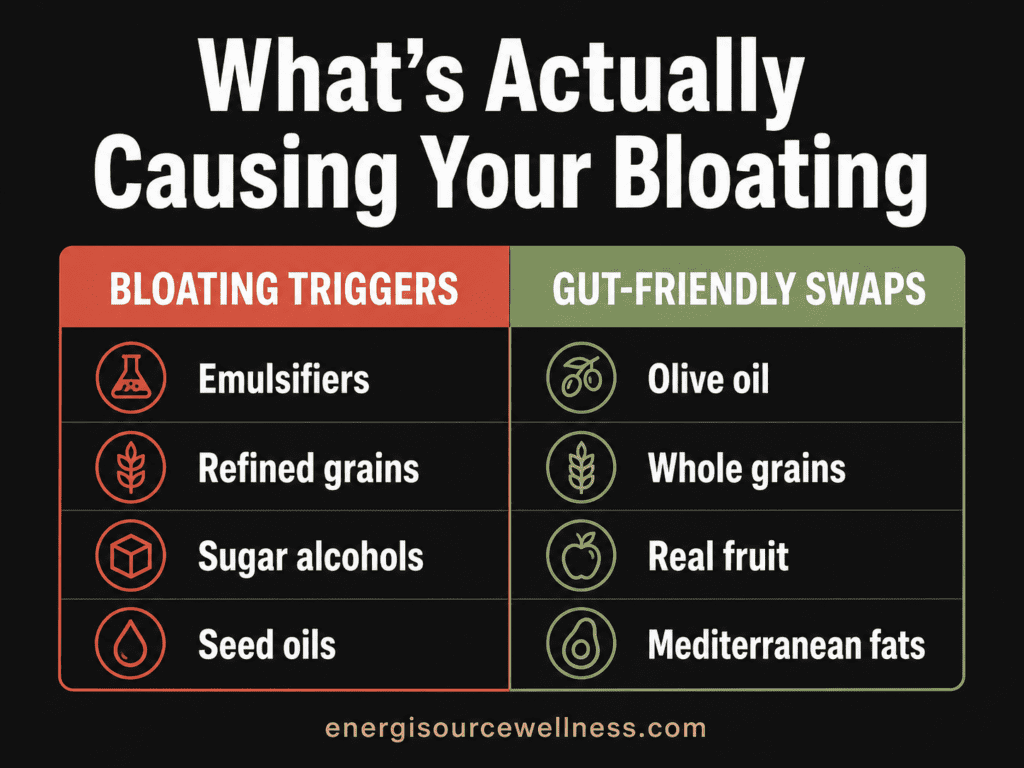
The food industry isn’t designed around your digestive health. It’s designed around shelf life, palatability, and profit. And the ingredients used to achieve those things, emulsifiers, artificial fibers, refined grains, seed oils, sugar alcohols, are primary triggers for bloating that most people never connect to what they’re eating.
Let’s break down the main offenders:
Emulsifiers, these are the ingredients that keep processed foods smooth and creamy. You’ll find them in salad dressings, protein bars, flavored yogurts, low-calorie ice cream, and most packaged sauces. A study testing common emulsifiers directly on human gut microbiota found they can disrupt microbial balance and thin the mucus layer that protects your intestinal wall, which shows up as inflammation and gas, felt as bloating.
Refined grains, white bread, regular pasta, white rice, most crackers and cereals. These break down so fast in your digestive system that your gut bacteria start fermenting them before your body can absorb them properly. That fermentation produces gas. That gas has nowhere to go except to make your stomach swell.
Sugar alcohols, found in anything labeled “sugar-free,” “low carb,” or “keto-friendly.” Sorbitol, xylitol, erythritol. Your body can’t fully absorb these, so they sit in your gut and ferment. Heavily.
Seed oils, soybean oil, canola oil, sunflower oil. These are highly processed, pro-inflammatory fats that slow gut motility, meaning food moves through your system slower than it should, giving it more time to ferment and cause discomfort.
The frustrating truth is that you can be eating what looks like a clean, healthy diet and still be eating all four of these every single day without realizing it.
How to Actually Fix It: The Mediterranean Approach
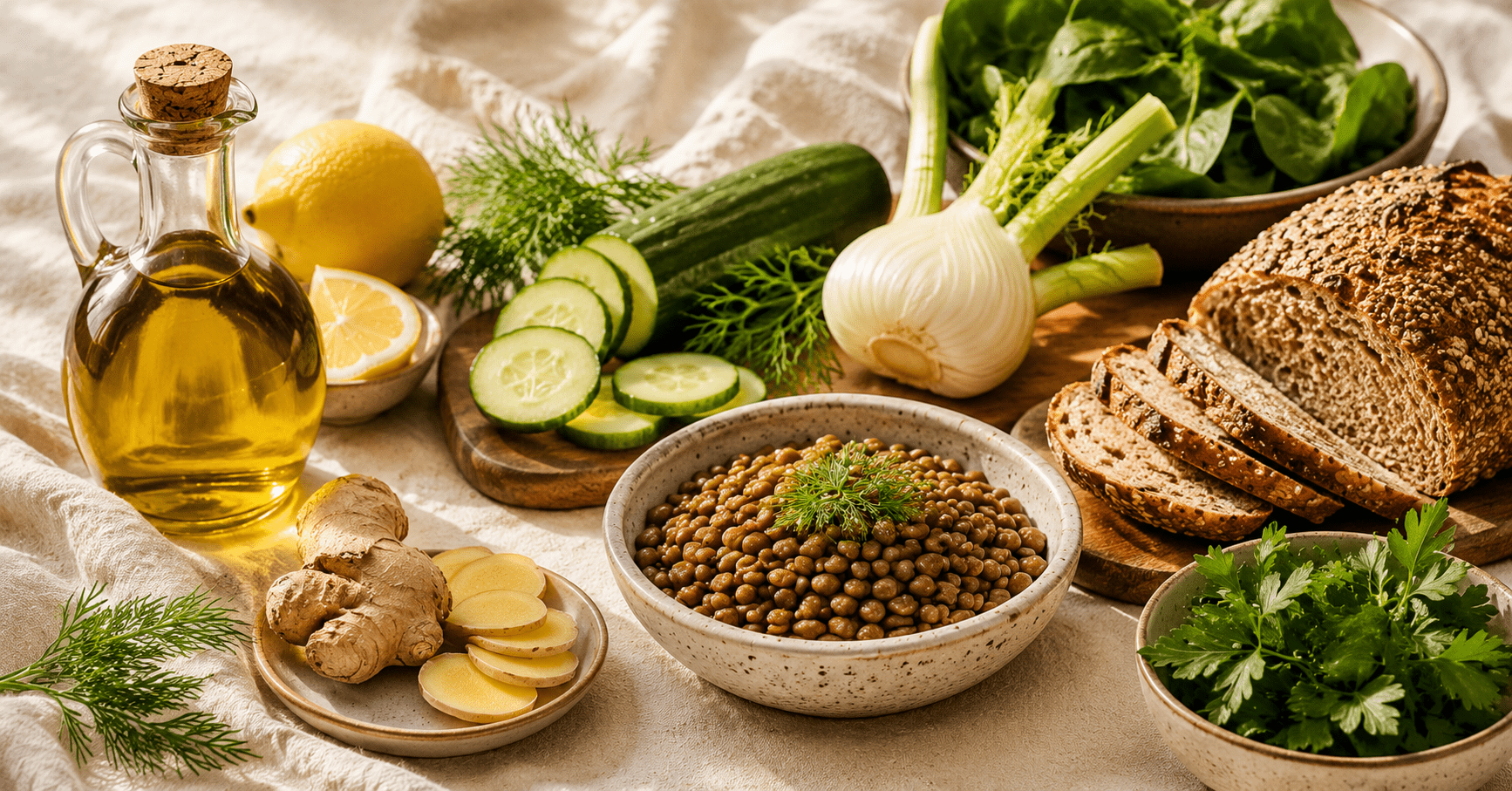
The Mediterranean diet isn’t trending because it’s fashionable. It’s been around for thousands of years because it’s built entirely around ingredients the human gut already knows how to handle, whole foods, real fats, lean proteins, and fiber that feeds your gut bacteria instead of disrupting them.
Here’s exactly what to change:
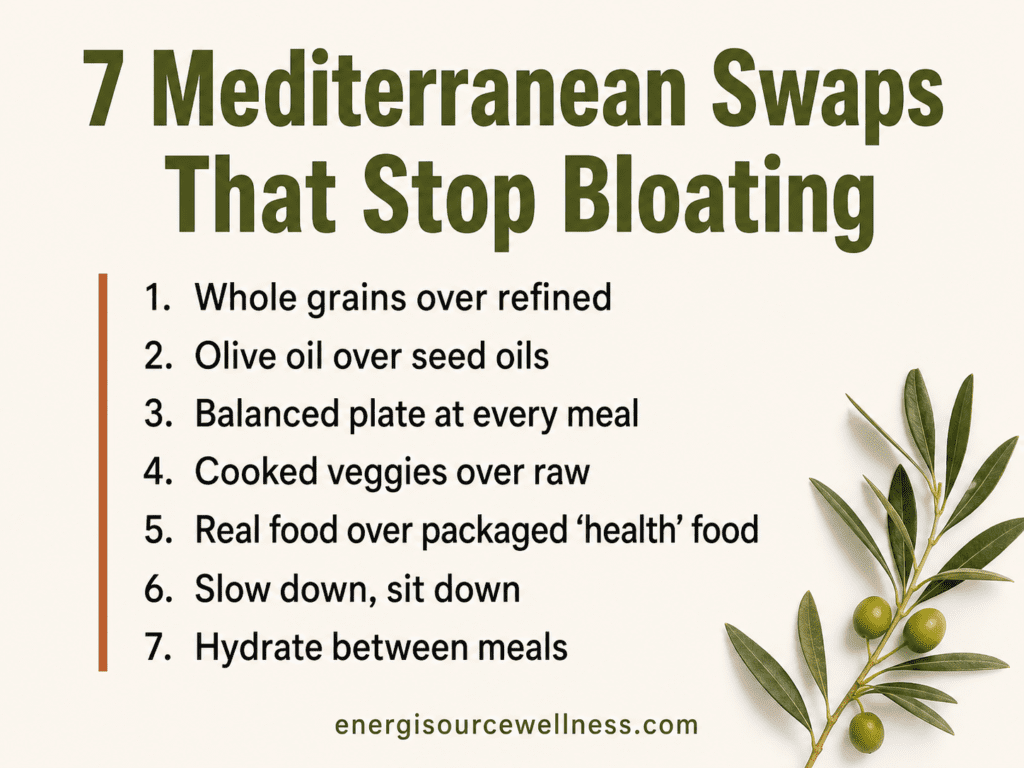
1. Swap refined grains for whole grains
This is the single biggest shift you can make for bloating. Whole grain bread, brown rice, farro, quinoa, and oats digest differently than their refined versions. The fiber in whole grains feeds the right gut bacteria and slows fermentation, which means significantly less gas production.
If you’re currently eating white bread, regular pasta, or white rice daily, start here. You don’t need to eliminate carbs. You need better carbs.
2. Make olive oil your primary cooking fat
Olive oil is naturally anti-inflammatory and one of the most gut-friendly fats you can eat. It supports gut motility, meaning it helps food move through your digestive system at the right pace instead of sitting and fermenting. Replace seed oils and butter with extra virgin olive oil across all your cooking.
This one swap alone makes a noticeable difference for most people within a week.
3. Build every meal around the Balanced Plate Method
Bloating gets worse when meals are unbalanced, too many carbs with no protein or fat to slow digestion, or too much raw fiber with nothing to anchor it. The Balanced Plate Method, protein + whole food carbs + healthy fat at every meal, gives your digestive system the right combination to process food steadily without the fermentation spike.
That post-meal crash you feel an hour after eating? It’s often the same root cause as the bloating, unbalanced meals creating a blood sugar and digestive response your body can’t handle cleanly.
4. Prioritize cooked vegetables over raw
Raw vegetables are healthy. They’re also harder to digest, especially cruciferous ones like broccoli, cauliflower, and cabbage. If you’re eating large salads daily and wondering why you’re bloated, this is likely a contributing factor.
Mediterranean cooking almost always involves cooked vegetables, roasted, sautéed, or lightly steamed. Cooking breaks down the cell walls that your gut has to work harder to get through, dramatically reducing gas production.
Check the foods your gut actually knows how to process. The Mediterranean staples that keep digestion smooth and hunger stable at the same time.
5. Cut the packaged “health” foods
Protein bars, flavored Greek yogurt, low-calorie snacks, sugar-free anything, these are where emulsifiers and sugar alcohols hide. Read the ingredient list on everything you eat for one week. If you see carrageenan, polysorbate 80, sorbitol, xylitol, or any oil that ends in “seed oil” or “vegetable oil”. That’s likely what’s bloating you.
Replace them with whole food alternatives: a handful of almonds, plain Greek yogurt with real fruit, a boiled egg, olives, hummus with cucumber. Simple ingredients, short lists, nothing your gut needs to decode.
6. Eat slowly and sit down
This sounds obvious but it’s not practiced. When you eat fast you swallow air, and that air has to go somewhere. Mediterranean culture treats meals as an event, not a task. Sitting down, eating without screens, chewing fully, these aren’t wellness clichés, they’re digestive mechanics. Slow eating reduces the amount of air you swallow by a significant margin and gives your stomach acid time to start breaking food down before it moves to your intestines.
7. Hydrate between meals, not during
Drinking large amounts of water during meals dilutes your stomach acid and slows the breakdown of food, which means it sits longer, ferments more, and causes more gas. Drink water consistently throughout the day, taper off 20–30 minutes before you eat, and resume after you’ve given your stomach time to start digesting.
What a Bloat-Free Day Actually Looks Like
This isn’t a strict meal plan. It’s a structure. The same one Mediterranean cultures have used for generations without thinking twice about it.
Morning: 2–3 scrambled eggs with sautéed spinach and olive oil, a slice of whole grain toast, black coffee or tea. No flavored protein powder, no store-bought smoothie with 30 ingredients.
Midday: Grilled chicken or canned tuna over a bed of warm roasted vegetables (zucchini, bell pepper, eggplant), drizzled with olive oil and lemon. A small portion of whole grain like farro or brown rice on the side.
Afternoon (if needed): A small handful of almonds or walnuts. Plain Greek yogurt with a few berries. Not a protein bar. Not a “healthy” granola bar.
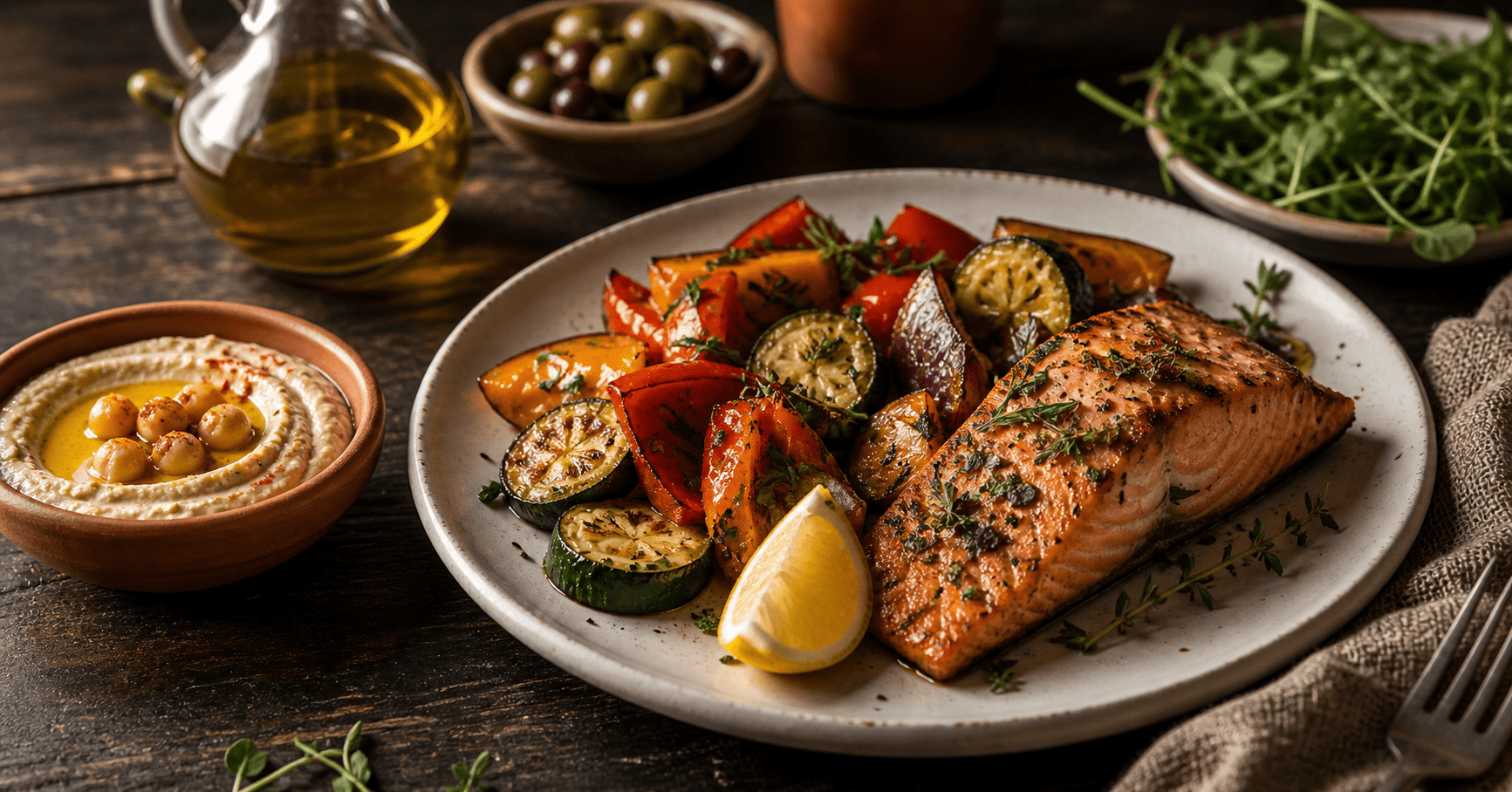
Evening: Salmon or chicken, roasted vegetables, a small portion of whole grains. A side of hummus if you want something extra. Olive oil on everything. No heavy sauces, no seed oil-cooked anything.
Notice what’s not on this list: packaged foods, anything “sugar-free,” processed dressings, refined grains. That’s not restriction. That’s just eating food your gut already knows.
Still dealing with hunger and cravings on top of the bloating? The bloating is usually one piece of a bigger picture, meals that aren’t structured to keep your hunger hormones stable. Get the free 1-Day Hunger Reset Formula and learn the exact daily structure that keeps you full, focused, and bloat-free from morning to night. Get the Free Guide →
The Bottom Line
Your gut isn’t broken. It’s reacting, to ingredients it was never designed to process, in combinations that disrupt the bacteria and mechanics that make digestion work.
The fix isn’t a supplement protocol or an elimination diet. It’s simpler than that: eat food your gut already recognizes. Whole grains, olive oil, lean protein, real vegetables, simple ingredients with short lists.
That’s what Mediterranean eating actually is. Not a diet with rules. A structure built around real food, and your gut knows the difference immediately.
Most people who make these swaps notice less bloating within 3–5 days. Not because the Mediterranean diet is magic. Because they stopped feeding their gut things it was fighting to process.
Start with one meal. Build the plate right. See what happens.
Frequently Asked Questions About Bloating After Eating
Why am I always bloated after eating even healthy food?
Most “healthy” packaged foods contain emulsifiers, sugar alcohols, and refined ingredients that disrupt your gut microbiome and cause fermentation, which produces gas and bloating. The issue is usually the processed ingredients hidden in what you’re eating, not the food category itself.
What causes bloating after eating in women?
The most common causes are refined grains that ferment too fast in the gut, emulsifiers in packaged foods, seed oils that slow digestion, and eating too quickly. Hormonal fluctuations can also increase gut sensitivity, making bloating more noticeable before and during your period.
How do I stop bloating after eating immediately?
The fastest relief comes from walking for 10–15 minutes after eating to stimulate gut motility, avoiding lying down right after meals, and drinking warm water or herbal tea. Long-term, switching to whole grains, olive oil, and real whole foods removes the primary triggers.
Does the Mediterranean diet help with bloating?
Yes. The Mediterranean diet is built around whole foods, olive oil, lean protein, and cooked vegetables, ingredients the gut processes cleanly without excess fermentation. Most people notice a significant reduction in bloating within 3–5 days of switching away from ultra-processed foods.
What foods cause the most bloating after eating?
The biggest culprits are refined grains like white bread and white rice, sugar-free products containing sugar alcohols like sorbitol and xylitol, foods with emulsifiers like carrageenan and polysorbate 80, and anything cooked in seed oils like soybean or canola oil.
About Ribert Rodriguez
Ribert is the founder of EnergiSource Wellness. He researches and writes every article on this site personally, cross-checking claims against published research rather than relying on generic wellness advice. His approach is rooted in the Mediterranean framework, built from years of testing meal structures on himself after struggling with cravings, late-night eating, and low energy.