High protein smoothie bowls reach 20 to 30 grams of protein per bowl when built with plain Greek yogurt, a clean protein powder, and chia seeds as the base. That protein and fiber combination keeps blood sugar stable and hunger quiet for three to four hours, which standard smoothie bowls built only on fruit and granola cannot do. The seven recipes below use Mediterranean ingredients and the Full Plate Method structure to make smoothie bowls that are actually satisfying rather than just visually appealing.
Most smoothie bowls are dessert with a health halo. Frozen acai, banana, mango, honey, granola, more fruit, a drizzle of nut butter for aesthetics. The bowls look incredible. They taste great. And they leave you hungry by 10am because they are mostly sugar with very little protein to keep blood sugar stable.
I resisted smoothie bowls for a long time for exactly this reason. I am a savory breakfast person and I was suspicious of anything that looked like a purple pudding dessert being sold as a nutritious morning meal.
Then I rebuilt the formula. Greek yogurt as the base instead of just frozen fruit. Protein powder blended in. Chia seeds for fiber. The fruit stays but as a topping accent rather than the entire base. The result is a smoothie bowl that hits the same protein range as my egg breakfasts while still being cold, refreshing, and something I actually want to eat on a hot summer morning.
These seven high protein smoothie bowl recipes are what I now make when I want the aesthetics of a smoothie bowl without the 10am hunger that follows the standard versions.
Why most smoothie bowls leave you hungry by mid-morning
The standard smoothie bowl recipe is frozen acai or banana blended with fruit juice or coconut water, topped with more fruit, granola, honey, and sometimes a tablespoon of nut butter. It looks nutritious because it contains fruit and seeds and whole grain granola.
The problem is the macronutrient profile. A standard acai bowl from most recipes has around 3 to 8 grams of protein and 50 to 70 grams of carbohydrate, mostly from fruit sugar. Without a protein anchor, that carbohydrate load spikes blood sugar quickly. The spike produces energy for an hour. Then it crashes. The hunger signal fires. You are reaching for a snack before lunch.
What nobody tells you about smoothie bowls is that the Instagram version and the functional version are completely different meals. The Instagram version is optimized for color and toppings. The functional version is optimized for the protein-fiber-fat structure that keeps you full. You can have both. You just need to build the base differently. That is the same principle behind why breakfast doesn’t keep you full regardless of what you eat.
I noticed the shift immediately when I started adding Greek yogurt and protein powder to the base. The bowl looked almost identical. The satiety was completely different. That is the only change that matters.
The high protein smoothie bowl base formula
Every recipe below is built on a variation of this base. Get the base right and you can add any flavors, toppings, or seasonal fruits you want while keeping the protein and satiety intact.
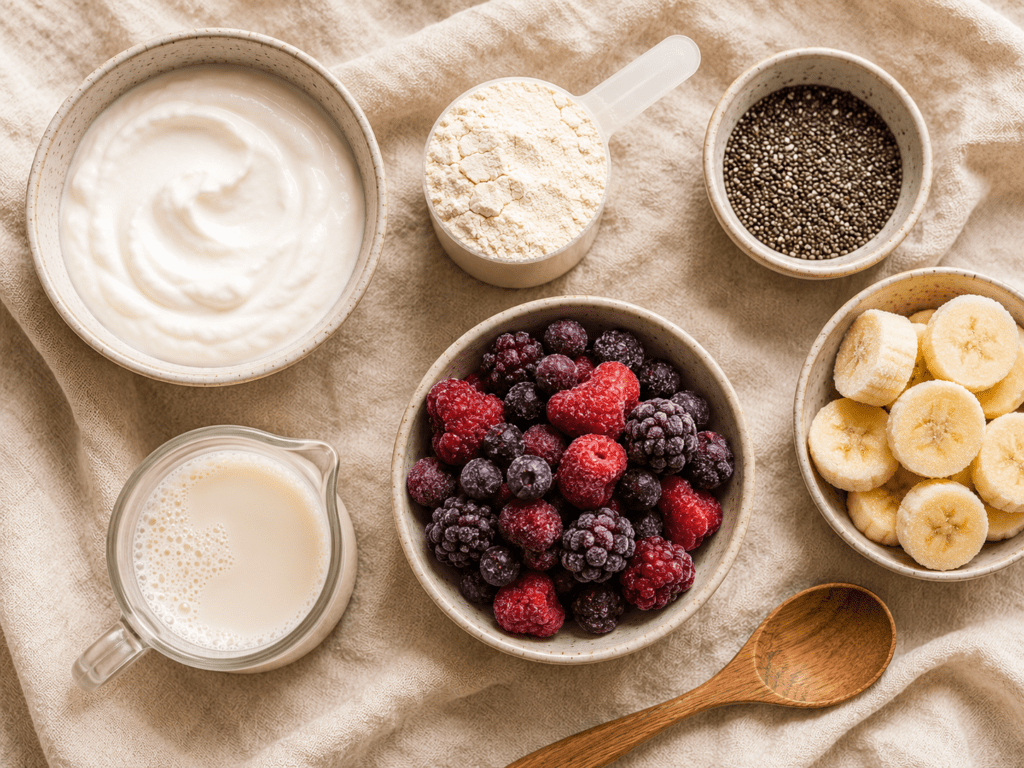
The standard high protein smoothie bowl base:
• Half a cup plain full-fat Greek yogurt (probiotics, ~10g protein)
• One scoop clean protein powder without artificial sweeteners (~20-25g protein)
• One tablespoon chia seeds (prebiotic fiber, omega-3s)
• Half a cup frozen fruit of choice (flavor and natural sweetness)
• A splash of unsweetened almond or oat milk (just enough to blend)
Blend until thick. The consistency should be much thicker than a drinkable smoothie. If it pours it is too thin. Add more frozen fruit or yogurt to thicken. Pour into a wide bowl and add toppings.
Protein: 28 to 35g per bowl depending on protein powder. Fiber: high from chia seeds and fruit.
The two non-negotiables are the Greek yogurt and the chia seeds. Greek yogurt provides the creamy texture and the protein-probiotic combination. Organic chia seeds add fiber that slows the digestion of the fruit sugars and feeds beneficial gut bacteria. Together they transform the bowl from a sugar hit into a structured meal.
For the protein powder I use a clean protein powder with no artificial sweeteners. In a smoothie bowl the protein powder flavor becomes part of the taste profile of the whole bowl so the quality matters more than it does when you are just mixing it into oats.
7 high protein smoothie bowl recipes
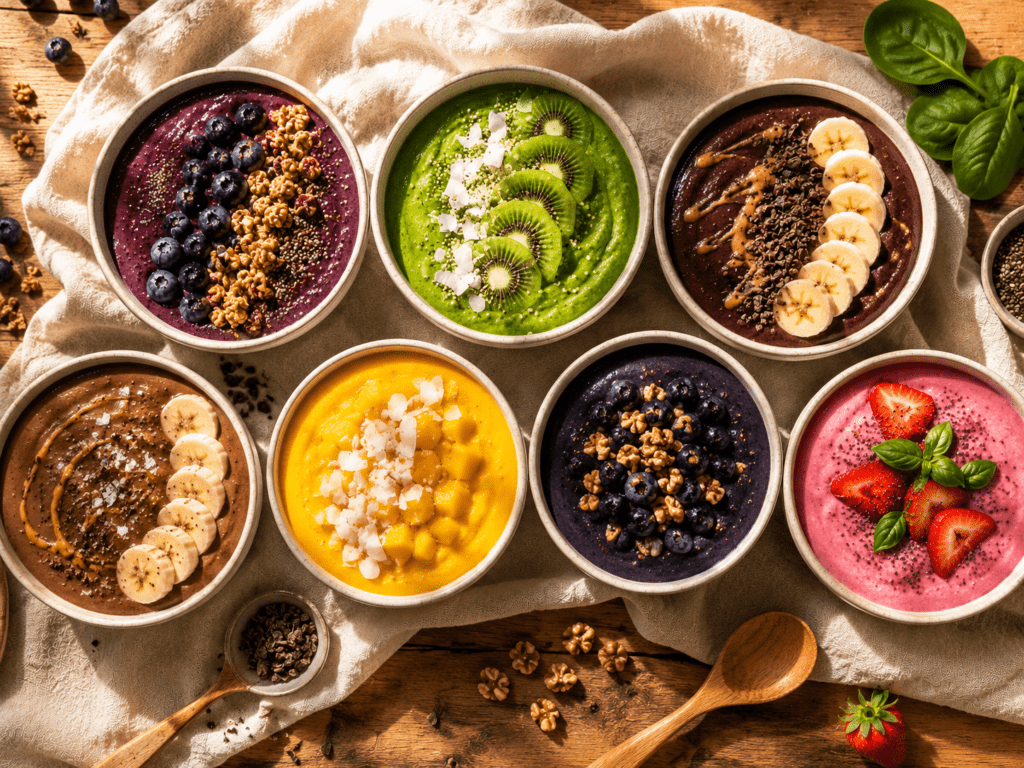
1. Mediterranean Berry Protein Bowl
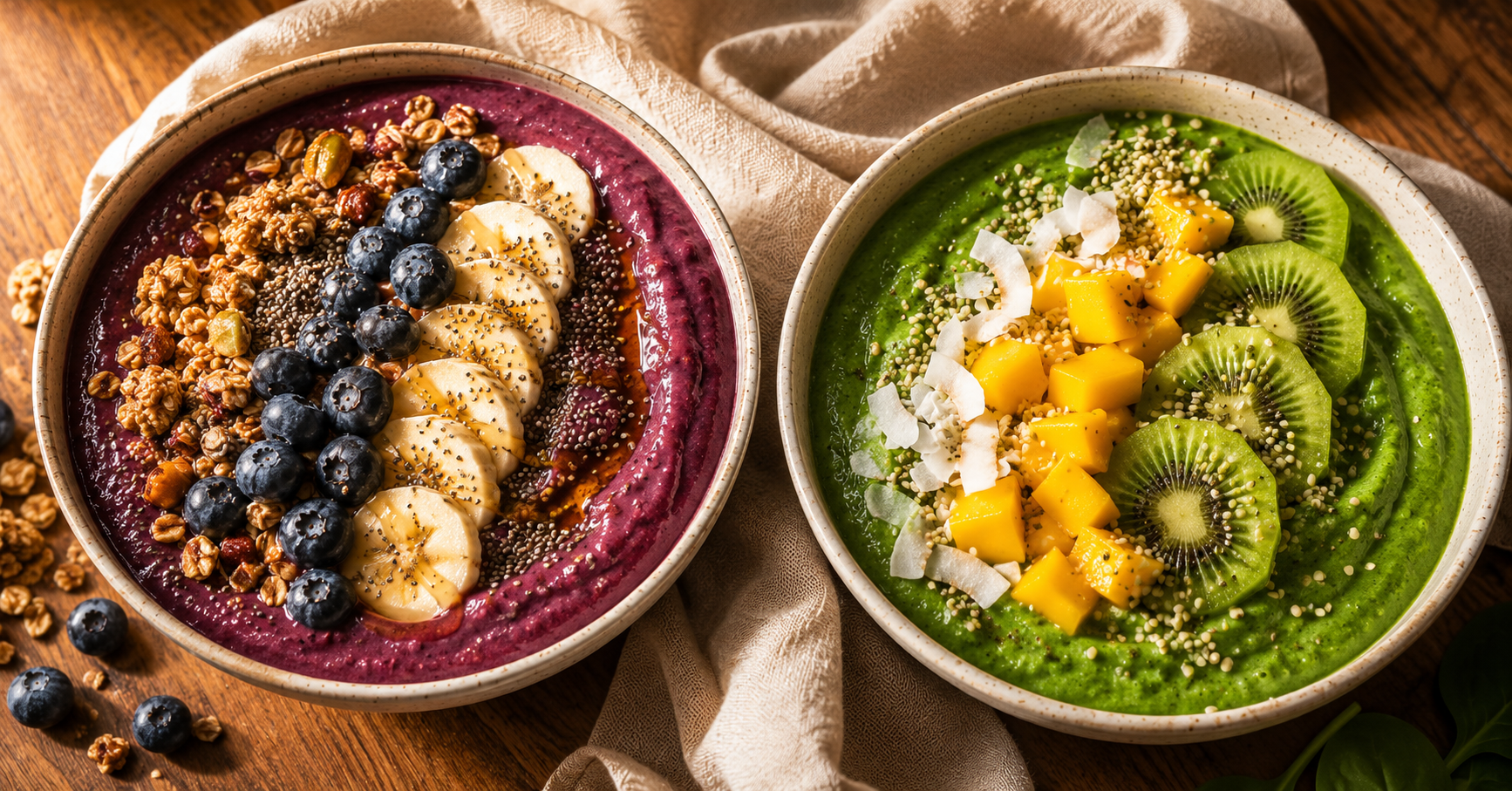
This is the base recipe made beautiful. Blueberries, strawberries, and raspberries provide the polyphenols that feed beneficial gut bacteria. Greek yogurt and protein powder provide the protein anchor. Chia seeds and granola add fiber and texture.
Base:
• Half a cup plain Greek yogurt
• One scoop vanilla protein powder
• One tablespoon chia seeds
• Three quarters of a cup frozen mixed berries
• Splash of almond milk
Toppings:
• Fresh blueberries and sliced strawberries
• Two tablespoons low-sugar granola
• A drizzle of honey
• A few fresh mint leaves
Why it keeps you full: ~28g protein from yogurt and protein powder, prebiotic fiber from chia, polyphenols from mixed berries. Hunger quiet until lunch.
2. Gut Health Green Smoothie Bowl
This is the anti-inflammatory version. Spinach adds the sulfoquinovose that feeds Faecalibacterium prausnitzii, the gut bacteria most associated with reduced inflammation and better appetite regulation. The green color looks dramatic and the flavor is mostly banana and vanilla with a very subtle spinach undertone.
Base:
• Half a cup plain Greek yogurt
• One scoop vanilla protein powder
• One tablespoon chia seeds
• One large handful fresh spinach
• Half a frozen banana
• Half a teaspoon turmeric (optional, anti-inflammatory)
• Splash of almond milk
Toppings:
• Kiwi slices
• Hemp seeds
• Coconut flakes
• A drizzle of almond butter
Why it keeps you full: ~28g protein, leafy greens for gut health, chia fiber, healthy fat from almond butter toppings.
3. High Protein Acai Bowl
Acai bowl has 368,000 monthly searches and peaks in June and July. This version builds the same visual acai bowl aesthetic on top of the high protein base so it captures that search demand while actually keeping you full until lunch.
Base:
• Half a cup plain Greek yogurt
• One scoop chocolate or vanilla protein powder
• One tablespoon chia seeds
• Half a packet of frozen unsweetened acai puree
• Half a cup frozen blueberries
• Splash of almond milk
Toppings:
• Sliced banana
• Fresh blueberries
• Granola
• Cacao nibs
• A drizzle of honey
Why it keeps you full: ~30g protein, acai polyphenols for gut health, chia fiber. Looks identical to a standard acai bowl but with 4x the protein.
4. Chocolate Peanut Butter Protein Bowl
This is the one that feels like dessert and performs like a real meal. Chocolate protein powder with frozen banana, a tablespoon of peanut butter blended into the base, and crunchy toppings. The peanut butter adds healthy fat that slows digestion. The chocolate powder provides the deep flavor without added sugar.
Base:
• Half a cup plain Greek yogurt
• One scoop chocolate protein powder
• One tablespoon chia seeds
• One tablespoon natural peanut butter
• Half a frozen banana
• Splash of almond or oat milk
Toppings:
• Banana slices
• A swirl of peanut butter
• Granola
• Cacao nibs
• A pinch of sea salt
Why it keeps you full: ~32g protein, healthy fat from peanut butter, chia fiber. The most satisfying bowl in the list.
5. Mango Turmeric Anti-Inflammatory Bowl
Mango and turmeric together create one of the most visually striking smoothie bowls you can make. The golden color comes from the turmeric and mango combination. The anti-inflammatory benefit comes from curcumin in the turmeric. Always add a pinch of black pepper which increases curcumin absorption significantly.
Base:
• Half a cup plain Greek yogurt
• One scoop vanilla protein powder
• One tablespoon chia seeds
• Three quarters of a cup frozen mango
• Half a teaspoon turmeric
• A pinch of black pepper
• Splash of coconut milk
Toppings:
• Fresh mango chunks
• Coconut flakes
• Hemp seeds
• A drizzle of honey
Why it keeps you full: ~28g protein, curcumin from turmeric for inflammation, chia fiber, tropical flavor that makes it feel indulgent without the sugar crash.
6. Blueberry Walnut Brain Bowl
Blueberries are now the top ingredient consumers associate with brain health in 2026 research, beating matcha and turmeric. This bowl combines blueberry polyphenols with omega-3s from walnuts and plant-based protein from the Greek yogurt and chia base. It is the gut health and cognitive function bowl in one.
Base:
• Half a cup plain Greek yogurt
• One scoop vanilla protein powder
• One tablespoon chia seeds
• Three quarters of a cup frozen blueberries
• One tablespoon ground flaxseed
• Splash of almond milk
Toppings:
• Fresh blueberries
• Crushed walnuts
• Granola
• A drizzle of honey
Why it keeps you full: ~28g protein, highest polyphenol bowl in the list, omega-3s from walnuts, prebiotic fiber from chia and flax combined.
7. Strawberry Vanilla Summer Bowl
The lightest and most summer-appropriate bowl in the collection. Strawberry and vanilla is a clean, refreshing flavor combination that does not feel heavy on a hot morning. The cottage cheese base option makes this the highest protein bowl in the list if you want to push it further.
Base:
• Half a cup plain Greek yogurt (or substitute half cottage cheese for extra protein)
• One scoop vanilla protein powder
• One tablespoon chia seeds
• One cup frozen strawberries
• Splash of almond milk
Toppings:
• Fresh sliced strawberries
• Granola
• A few basil leaves (unexpected but works beautifully with strawberry)
• A drizzle of honey
Why it keeps you full: ~30g protein with Greek yogurt base, up to 36g with cottage cheese swap. Strawberry anthocyanins for anti-inflammatory benefit. Lightest and most refreshing bowl in the list.
>> Want to build more high protein breakfasts in minutes?
The Full Plate Method app builds balanced meals using the same protein-fiber-fat formula. Free forever, any cuisine. Build your breakfast free
The best smoothie bowl toppings for fullness
Toppings are where most smoothie bowls go wrong. Piling on sweetened granola, dried fruit, chocolate chips, and more honey on top of a fruit-heavy base creates a very high sugar meal regardless of how nutritious the base is.
The best toppings for a high protein smoothie bowl add texture, flavor, and additional nutrients without significantly adding to the sugar load.
Toppings that add protein and fat:
• Crushed walnuts or almonds (omega-3s and protein)
• Hemp seeds (complete plant protein, 10g per 3 tablespoons)
• A small drizzle of almond butter or peanut butter (healthy fat)
• Pumpkin seeds (protein and zinc)
Toppings that add fiber:
• Low-sugar granola, 2 tablespoons maximum
• Coconut flakes, unsweetened
• Extra chia or flaxseed on top
• Cacao nibs (fiber and antioxidants without sugar)
Toppings that add polyphenols:
• Fresh blueberries, strawberries, or raspberries
• Kiwi slices (vitamin C and prebiotic fiber)
• Pomegranate seeds in season
• A few fresh mint or basil leaves
The rule I use: at least one topping from each category per bowl. That keeps the nutritional profile balanced and makes the bowl interesting to eat rather than just pretty to look at.
Can you meal prep smoothie bowls
You can prep the base in advance but the toppings always go on fresh. Here is how I do it when I want the bowls ready to grab during the week.
• Blend the base for two to three bowls at once and store in airtight containers in the freezer
• Take a container out the night before and move it to the fridge to thaw slowly overnight
• In the morning add the toppings and eat immediately
• The texture is best eaten within 24 hours of blending so do not prep more than three days ahead
For a full week of high protein breakfast meal prep that goes beyond just smoothie bowls, the high protein meal prep guide covers the full system including overnight oats, egg breakfasts, and component-based prep that gives you flexibility all week.
Frequently asked questions
How do you make a smoothie bowl high in protein?
The key is building the base around Greek yogurt and a clean protein powder rather than just frozen fruit. Half a cup of plain Greek yogurt provides around 10 grams of protein. One scoop of protein powder adds 20 to 25 grams. Together with chia seeds for fiber the bowl reaches 28 to 35 grams of protein which is what keeps you full until lunch.
Are smoothie bowls actually healthy?
They can be or they can be a sugar bomb dressed up as health food. Standard smoothie bowls built on acai, banana, fruit juice, sweetened granola, and honey with almost no protein will spike blood sugar and leave you hungry within an hour. High protein smoothie bowls built on Greek yogurt, protein powder, and chia seeds with fruit as a flavor accent and low-sugar toppings are a genuinely nutritious and filling breakfast.
What is the best smoothie bowl base for staying full?
Plain full-fat Greek yogurt combined with one scoop of clean protein powder and one tablespoon of chia seeds. That combination provides protein to suppress hunger hormones, probiotics for gut health, and prebiotic fiber to stabilize blood sugar. Frozen fruit is added for flavor and thickness but the protein and fiber base is what determines whether the bowl keeps you full.
How thick should a smoothie bowl be?
Thick enough that a spoon stands upright in it without falling over. Much thicker than a drinkable smoothie. The consistency should be closer to soft-serve ice cream than a beverage. Use minimal liquid and rely on the frozen fruit and Greek yogurt for thickness. If you add too much liquid, add more frozen banana or frozen mango to compensate.
Can I make a smoothie bowl without protein powder?
Yes. Replace the protein powder with an extra half cup of Greek yogurt or a quarter cup of cottage cheese blended in. Both provide high quality protein without powder. The texture will be slightly different but the nutritional profile is similar. For the gut health and anti-inflammatory bowls, adding a tablespoon of hemp seeds to the base also boosts protein meaningfully.
What is the difference between a smoothie bowl and a regular smoothie?
A smoothie bowl is blended much thicker than a drinkable smoothie and eaten with a spoon with toppings added on top. The thicker texture slows eating which supports better satiety signals compared to drinking calories quickly. The toppings add texture, fiber, and additional nutrients. Both can be high protein when built correctly but the bowl format tends to be more satisfying as a meal because it takes longer to eat. For drinkable high protein smoothies, the high protein breakfast smoothies article covers the formula.
Free printable
Hungry again at 9pm?
Get the free printable Night Hunger Snack List: 10 Mediterranean snacks with exact portions and protein counts, for the evenings when cravings hit. Enter your email and download it instantly.
Free. No spam. Unsubscribe anytime.
The bottom line
Smoothie bowls failed me for years because I was making them the wrong way. Fruit-heavy bases that looked beautiful, tasted great, and left me starving by mid-morning.
The rebuild was simple. Greek yogurt and protein powder as the base. Chia seeds for fiber. Fruit as the flavor accent rather than the foundation. The bowls still look exactly the same. The satiety is completely different.
Start with the Mediterranean Berry Protein Bowl or the High Protein Acai Bowl. Both are closest to the standard versions so the change feels minimal. Once you notice the difference in how you feel at 10am, you will not go back to the fruit-only base.
I never thought smoothie bowls would become a permanent part of my breakfast rotation. I am a sardines and eggs person at heart. But the high protein version solved the one problem I had with them: I was hungry again before I even finished getting ready. Now I am not. That is the only benchmark that matters.
Ribert
>> Want a full week of Mediterranean meals including these bowls?
The 7-Day Mediterranean Meal Plan PDF includes the smoothie bowl breakfast rotation alongside 28 full meals and snacks. $17, instant download. Get the 7-Day Mediterranean Meal Plan for $17
This article shares personal experience and general nutrition information, not medical advice.
About Ribert Rodriguez
Ribert is the founder of EnergiSource Wellness. He built this site to share what actually worked for him after years of struggling with cravings, late-night eating, and low energy. His approach is rooted in the Mediterranean framework and a belief that food is one of the most powerful tools for how you think and feel.