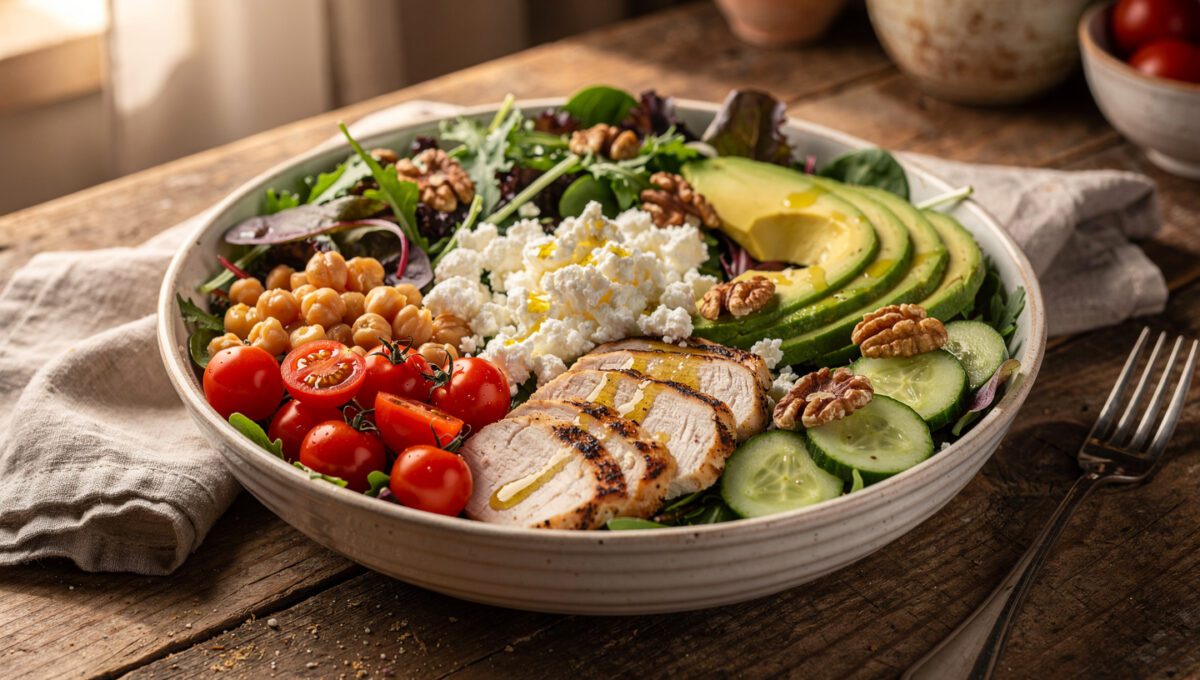
Quick answer: Nighttime hunger almost always comes from meals earlier in the day that didn’t have enough protein, fiber, and fat to keep you satisfied, not from a lack of willpower at 9pm.
I used to think I had zero self-control at night. I’d close the kitchen after dinner, tell myself I was done, and twenty minutes later I was standing in front of the fridge with the door open, not even sure what I was looking for. Sound familiar? When it hits later in the evening, this is what helped my late-night hunger.
For me it was doughnuts. Late-night Uber Eats orders I didn’t even really want. I just couldn’t shut the loop off. It took me a while to realize the problem wasn’t happening at night at all. It was happening at breakfast.
If you’re always hungry at night (standing in front of the fridge after dinner, looking for something sweet or crunchy even though you know you already ate), you’re not alone, and you’re not broken.
This isn’t a willpower problem. It’s a meal structure problem that starts hours before the sun goes down.
The Real Reason You’re Always Hungry at Night

Night hunger doesn’t start at night. It starts at breakfast, or lunch, or that light dinner that looked “healthy” but didn’t actually keep you full.
What nobody tells you: your body doesn’t forget an under-fueled breakfast just because you ate something else for lunch. It keeps a running tab. And at night, when things finally slow down and there’s nothing left to distract you, that tab gets collected all at once. That’s why it feels sudden. It isn’t.
The Hormones Behind It
This isn’t just a feeling. It’s biology. Two hormones run the show: ghrelin and leptin.
Ghrelin is your hunger hormone. It rises before meals to tell your brain it’s time to eat, and it’s supposed to drop after you eat. Leptin is the opposite. Your fullness hormone, released by fat tissue, telling your brain you’ve had enough.
When your meals during the day are too low in protein and fiber, ghrelin doesn’t drop the way it should, and leptin never gets the signal to kick in properly. By nighttime, when cortisol (your stress hormone) is naturally declining and your body has processing time it didn’t have all day, that hormonal imbalance becomes impossible to ignore. It’s not in your head. It’s ghrelin and leptin doing exactly what they’re designed to do when meals upstream don’t hold up their end.
There’s a second driver worth knowing about, separate from what you ate that day: sleep. A landmark study in Annals of Internal Medicine found that just two nights of shortened sleep raised ghrelin by 28 percent and dropped leptin by 18 percent in healthy young men, along with a 24 percent jump in hunger, especially for calorie-dense, high-carb foods. That means even a well-built day of eating can still end in real physical hunger if you’re running on too little sleep. It’s not only about what you ate. It’s also about how you slept the night before.
Why This Feels So Intense at Night
During the day you’re distracted, busy, moving, thinking about a dozen other things. But at night there’s space. Your body finally gets your full attention, and the hunger signal that was quietly building all day gets loud fast.
Ever notice how it always hits the second you finally sit down?
What Actually Stops Night Hunger
You don’t need smaller meals or “lighter” meals. You need better ones, meals that tell your body, “We’re good. You’re taken care of.” That comes down to one formula: protein + fiber + fat, every time you eat.
I noticed this shift firsthand once I started actually hitting protein at breakfast instead of just having coffee and calling it a morning. The 9:30pm kitchen loop I used to have almost every night quietly disappeared within about a week. Not because I was trying harder at night. I wasn’t doing anything differently at night at all. I fixed the mornings instead.
For a deeper breakdown of how to build meals this way, read the Balanced Plate Method.
What This Looks Like in Real Life
Breakfast (this sets the tone for the whole day)
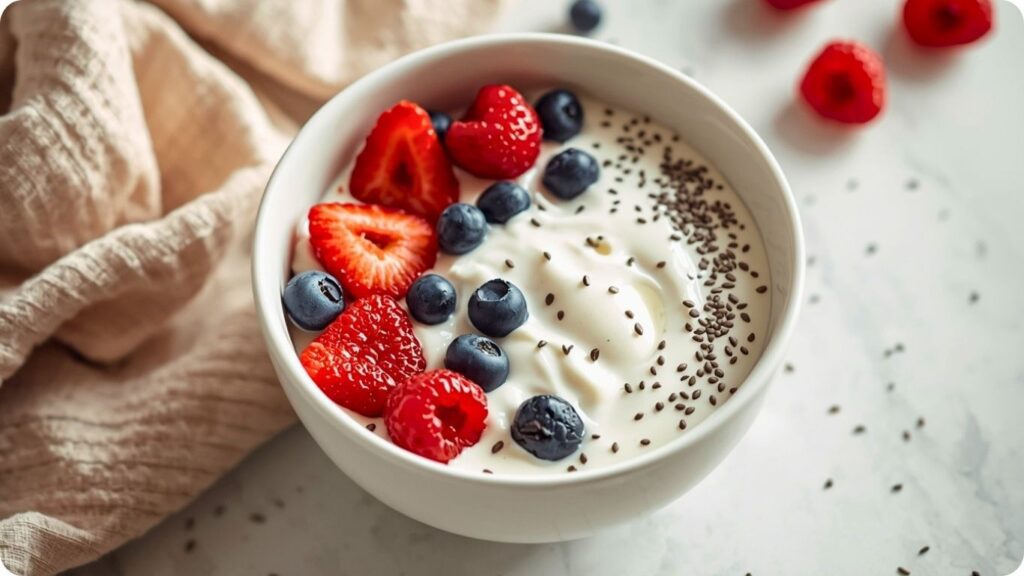
Instead of coffee and something quick, try Greek yogurt with berries and chia seeds, or eggs with avocado and toast. That combination alone can prevent night cravings later. This is the single highest-leverage meal of your day for stopping night hunger before it starts.
Lunch (this is where most people under-eat)

Instead of a light salad that leaves you thinking about food all afternoon, build a real plate: a palm-sized portion of chicken or salmon, vegetables, a drizzle of olive oil, and rice, quinoa, or potatoes. This is simple Mediterranean-style eating, and it works because it actually satisfies you. More combinations like this are in the Mediterranean foods that keep you full longer guide.
Dinner (this is where you fix the night)
Don’t try to eat “light” at dinner. Eat a real meal: protein (chicken, fish, eggs), carbs (rice, potatoes, bread), and fat (olive oil, avocado). This is not the time to hold back. This is exactly where you prevent the 9:30pm kitchen loop before it starts.
The Small Habit That Changes Your Nights
Once your meals are solid, one more thing helps more than you’d expect: a closing ritual after dinner. Not rules, not restriction, just a signal. Herbal tea, brushing your teeth, turning off the kitchen lights. It tells your brain, “We’re done here.”
Still dealing with constant hunger? The Cravings Control Reset is a simple 7-day system built around real Mediterranean foods. No tracking, no restriction. Get instant access for $27.
If You Feel “Out of Control” at Night
You’re not. You’re responding to unmet needs from earlier in the day. That’s it. Once you fix that, the cravings don’t disappear overnight, but they quiet down fast. For a full meal plan that removes the guesswork entirely, the Full Plate Method app builds this out for you automatically.
Try This Tomorrow

Don’t change everything at once. Just this:
- Eat a real breakfast
- Make lunch actually satisfying
- Don’t under-eat at dinner
That alone can change your nights within days.
Free printable
Hungry again at 9pm?
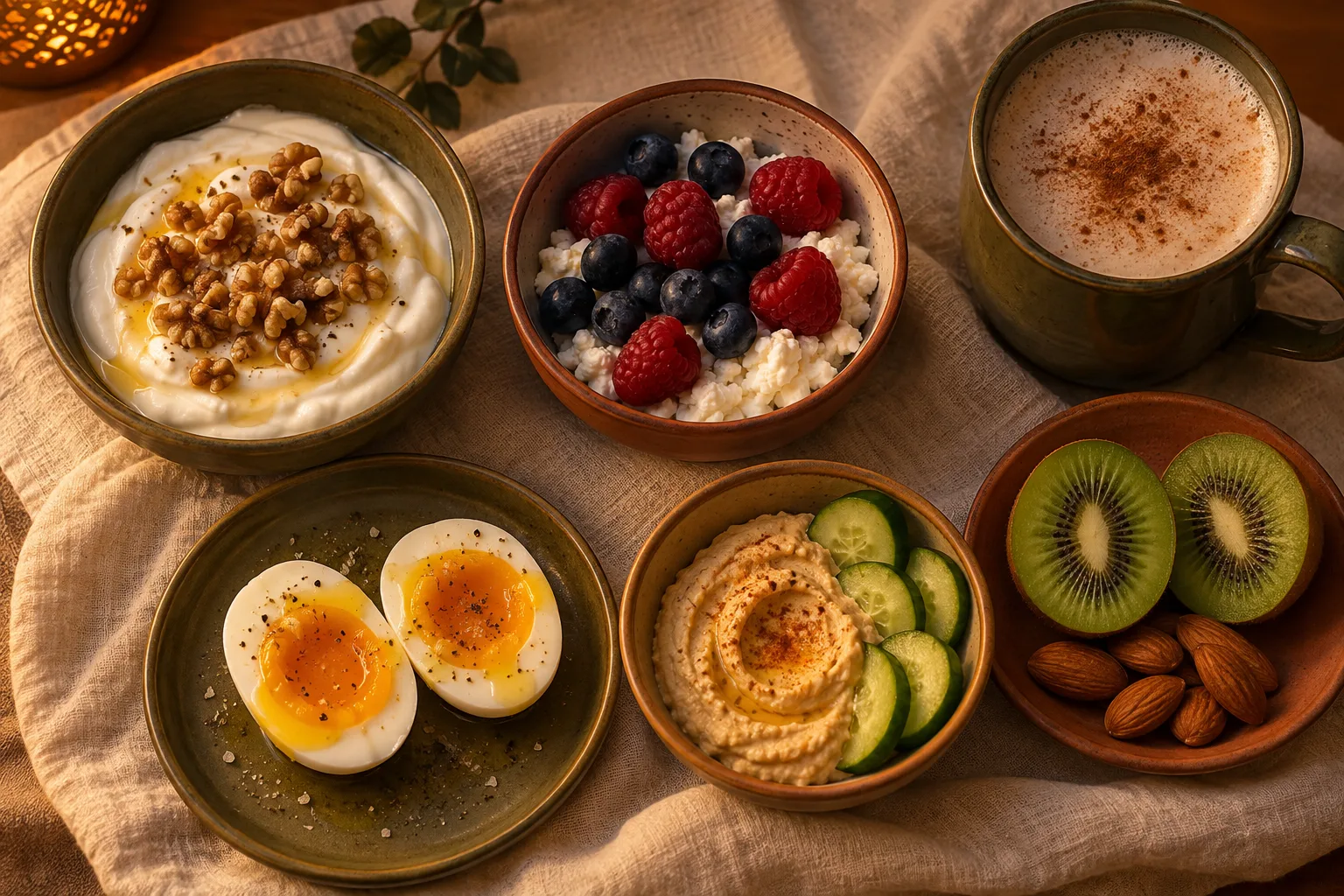
Get the free printable Night Hunger Snack List: 10 Mediterranean snacks with exact portions and protein counts, for the evenings when cravings hit. Enter your email and download it instantly.
Free. No spam. Unsubscribe anytime.
FAQ
Why am I always hungry at night even after dinner?
Your meals earlier in the day likely didn’t fully satisfy you. Your body keeps a running deficit and collects it at night, when there’s less distraction and hunger signals get louder.
How do I stop eating late at night?
Focus on balanced meals with protein, fiber, and fat during the day. When your body is properly fueled by dinner, night cravings naturally decrease.
Is night hunger real or just boredom?
It’s often real, physical hunger, even when it feels emotional, it usually traces back to under-fueling earlier in the day rather than true boredom eating.
What should I eat if I’m hungry at night?
If you’re truly hungry, eat something balanced, Greek yogurt, a small handful of nuts, or a protein-based snack. Ignoring real hunger usually makes it worse the next night.
Why do I feel extreme hunger at night even when I’ve eaten all day?
Extreme nighttime hunger usually means your meals were missing protein, fiber, or healthy fat, or all three. The fix isn’t eating less at night. It’s building more complete meals earlier in the day.
Ready to break the hunger cycle? Start the 7-Day Cravings Control Reset →
Why am I only hungry at night?
Usually because you ate too little earlier. A small breakfast, a light lunch and a long gap before dinner leave a deficit that shows up all at once in the evening. Your body clock also nudges appetite up in the evening, so the two stack together.
Why do I wake up hungry in the middle of the night?
Most often it’s a dinner that was too small or too early, or a day that was low in protein. Have something tiny so you can get back to sleep, like a glass of milk or a few spoonfuls of Greek yogurt (more ideas in what to eat when you’re hungry at night). If it happens most nights, mention it to your doctor.
Your body is wired to get hungrier at night (really)
For the longest time I thought night hunger was a discipline problem. Then I learned it is partly built into your biology, on a clock you did not set.
Your body runs on a circadian rhythm, an internal 24-hour clock that controls far more than sleep. That clock also cranks appetite up in the evening and down in the morning, on purpose, no matter what you have eaten.
This was measured in a striking study published in the journal Obesity, led by circadian researcher Frank Scheer. When people were studied in conditions that stripped out every other variable, their hunger still followed a clear daily wave: lowest around 8 in the morning and highest around 8 at night. The appetite for sweet and starchy foods peaked in the evening too. Same food, same day, and their bodies simply wanted more of it after dark.
That reframes the whole thing. If you feel hungriest at night, you are not broken and you are not weak. You are fighting a built-in tide. Which is exactly why the fix is not willpower at 9pm. It is front-loading real protein and fiber earlier in the day, so when that evening wave rolls in, it has a lot less to work with.
About Ribert Rodriguez
Ribert is the founder of EnergiSource Wellness. He researches and writes every article on this site personally, cross-checking claims against published research rather than relying on generic wellness advice. His approach is rooted in the Mediterranean framework, built from years of testing meal structures on himself after struggling with cravings, late-night eating, and low energy.