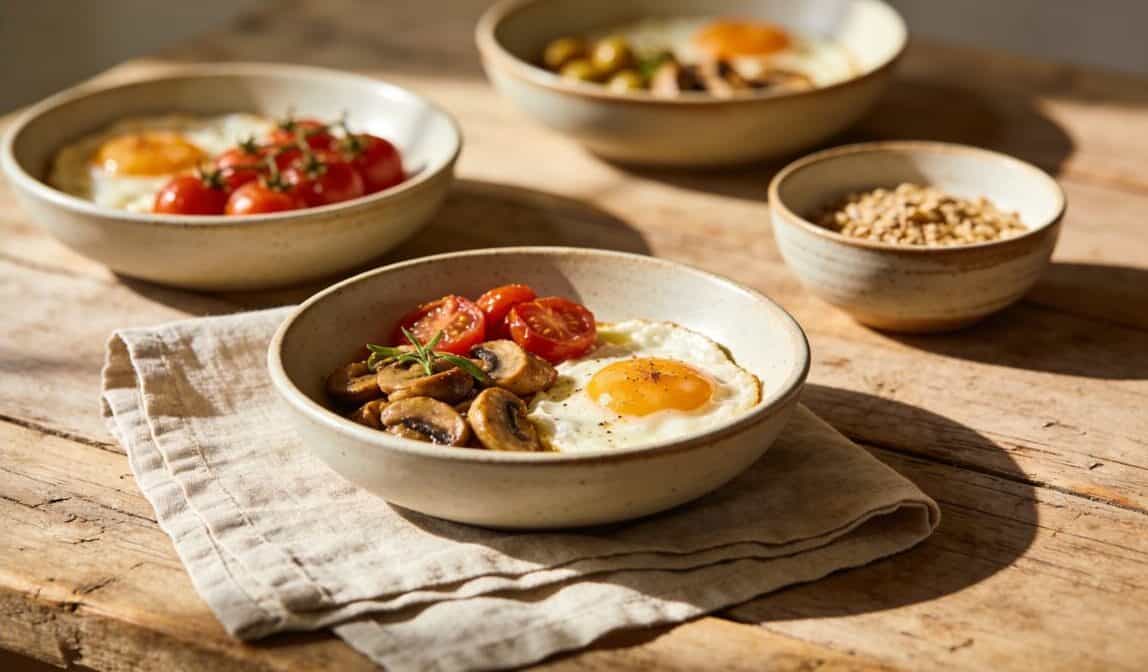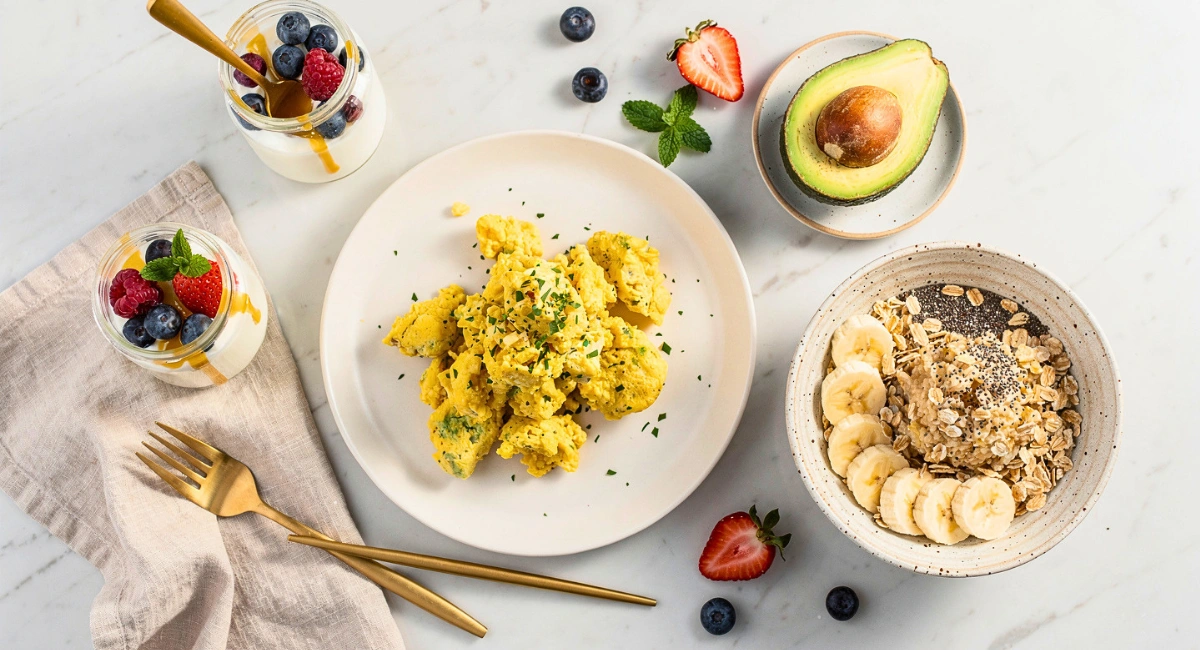
A savory Mediterranean breakfast stabilizes blood sugar all morning by leading with protein and healthy fat instead of carbohydrates. When eggs, olive oil, avocado, or Greek yogurt come before any carbohydrate in the morning, glucose enters the bloodstream slowly rather than spiking and crashing. The result is steady energy and a hunger signal that stays quiet until lunch without any effort. These 7 savory Mediterranean breakfast ideas are the ones I actually rotate through every week.
For most of my life I started the day with something sweet. Cereal, toast with honey, a fruit smoothie if I was being healthy. By 9:30am I was already thinking about my next meal. I assumed this was just how mornings worked.
Switching to a savory breakfast was the single most impactful dietary change I have ever made. Not because I stopped eating carbohydrates in the morning but because I stopped leading with them. The protein and fat came first. The carbohydrate, if I ate one at all, came alongside or after. The blood sugar pattern changed immediately and so did the mid-morning hunger.
I noticed it within three days. The 10am hunger that had been a reliable daily event simply stopped. I would look up from work at 11am and realize I had not thought about food since breakfast. That had never happened before.
What nobody tells you about the traditional sweet breakfast is that it is not just suboptimal for blood sugar. It actively sets up the craving cycle that runs all day. A high-sugar morning meal causes a glucose spike within 30 minutes, a crash by 9:30am, a compensatory snack, another spike, another crash, and by 3pm the sugar craving is firing hard. The entire afternoon craving problem is established before 8am. That is what I describe in detail in what to eat for breakfast to stop cravings all day. The savory Mediterranean breakfast solves it at the source.
Why sweet breakfasts set up blood sugar instability all day
Blood sugar management is not just about what you eat at lunch or dinner. A study on diurnal variation in insulin sensitivity found that the body handles glucose better earlier in the day, which is part of why the first meal sets the tone for the hours that follow. A high-carbohydrate sweet breakfast creates a glucose spike that the body compensates for aggressively, often overshooting and creating a blood sugar level that drops below fasting baseline by mid-morning.
That drop is what creates the 10am hunger, the need for a mid-morning snack, and the 3pm sugar craving. None of those experiences are willpower failures. They are the predictable downstream consequences of how the morning meal was structured.
A savory breakfast built around protein and healthy fat does the opposite. Protein slows gastric emptying, meaning the meal takes longer to digest and glucose enters the bloodstream gradually rather than in a rush. Healthy fat from olive oil or avocado further slows digestion and triggers cholecystokinin, the hormone that signals fullness to the brain. The result is a flat glucose curve rather than a spike-and-crash pattern.
This is also why the time-honored advice to eat a light breakfast does not work for most people. A small sweet breakfast creates the same spike-and-crash on a smaller scale. The problem is not the size of the breakfast. It is the composition. A complete balanced plate at breakfast changes the entire hormonal picture for the morning.
7 savory Mediterranean breakfast ideas
Every breakfast below is built around a protein anchor of at least 20 grams, a healthy fat source, and vegetables where possible. None require more than 15 minutes to prepare. All keep blood sugar stable and hunger quiet until noon.
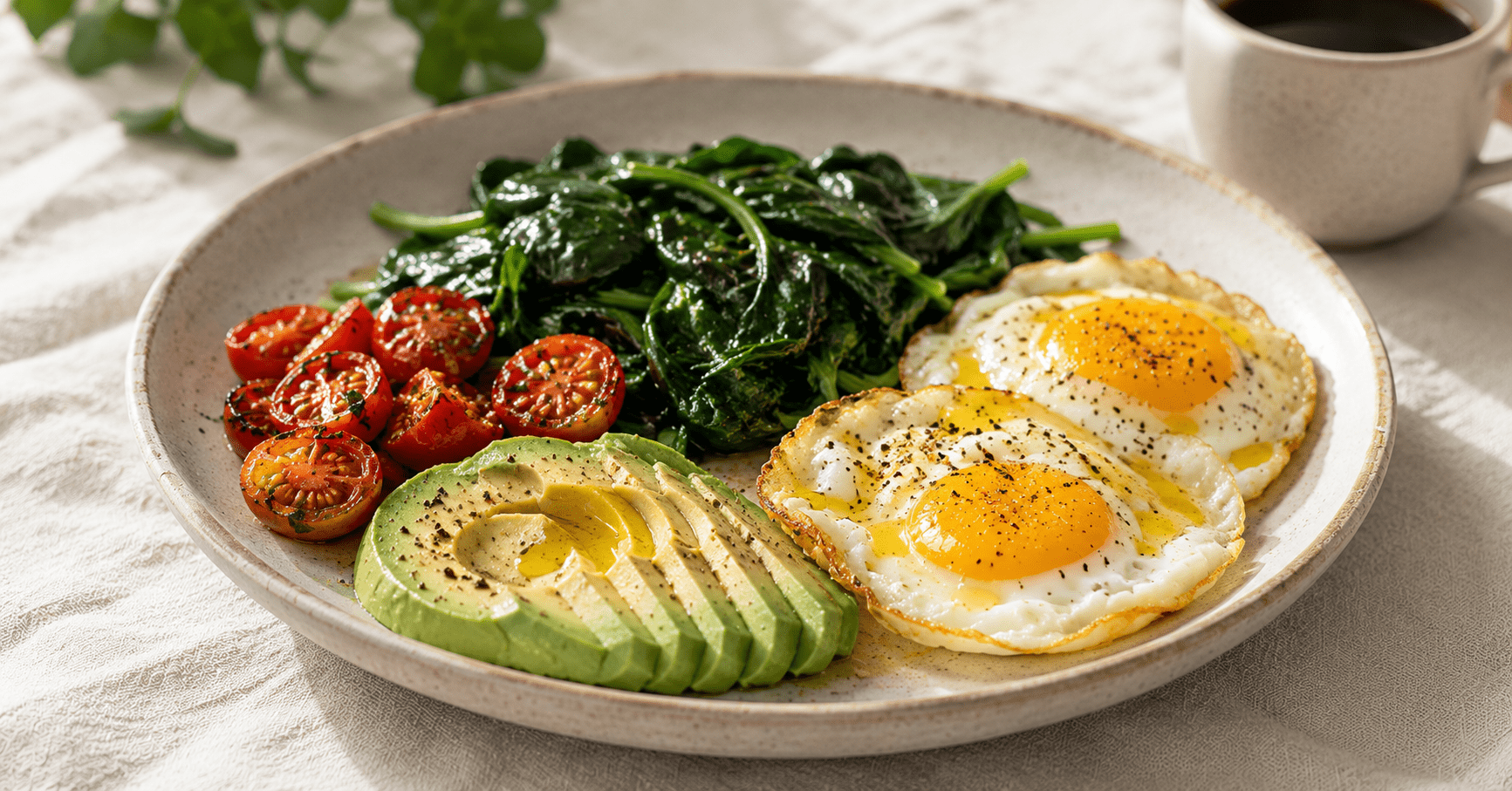
1. Scrambled eggs with spinach, cherry tomatoes, and olive oil
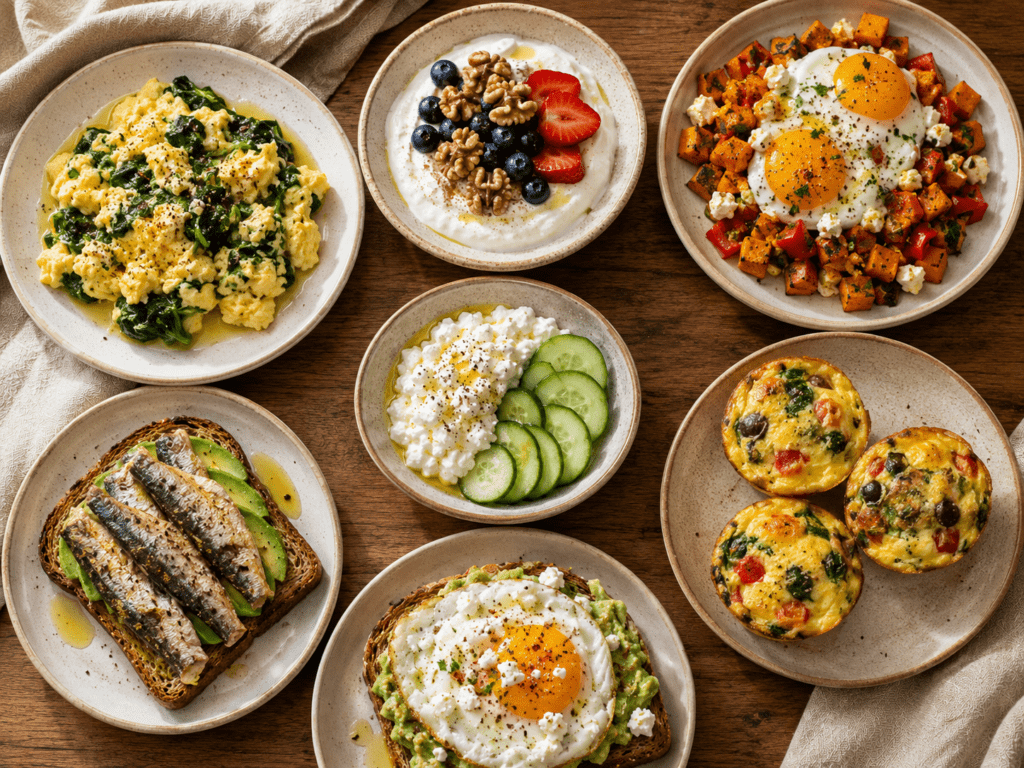
This is my most frequent weekday breakfast. Two or three eggs scrambled with a large handful of spinach in olive oil. Cherry tomatoes added at the end for brightness. The eggs provide complete protein and healthy fat. The spinach provides prebiotic fiber that feeds beneficial gut bacteria. The olive oil contributes polyphenols and additional fat that slows digestion.
Protein: approximately 20-24 grams from eggs. Prep time: 8 minutes.
I use Atlas olive oil for cooking eggs specifically because the flavor is clean enough not to compete with the eggs. A generous tablespoon in the pan, medium heat, eggs in before the oil smokes. The slower cooking temperature with more oil produces a creamier result than high-heat scrambling.
2. Greek yogurt with walnuts, chia seeds, and a small handful of berries
This is the sweet-leaning version of a savory breakfast but it qualifies because the protein content is high enough to function like one. Plain full-fat Greek yogurt provides 22 grams of protein per cup alongside probiotics that support gut health and hunger hormone regulation. Walnuts add omega-3 fatty acids. Chia seeds add prebiotic fiber. The berries are the smallest component, not the star, which is the key distinction from a typical sweet breakfast bowl.
Protein: approximately 22-26 grams. Prep time: 3 minutes.
The difference between this and a standard yogurt breakfast is the ratio. Most yogurt breakfasts are yogurt plus a lot of fruit plus honey plus granola with yogurt as the vehicle rather than the foundation. In this version the yogurt is the foundation and everything else is a small addition.
3. Eggs and sweet potato hash with herbs
Two eggs with diced sweet potato sauteed in olive oil with garlic, red onion, and paprika. Fresh herbs added at the end. This is my weekend breakfast when I have 15 minutes instead of 8. The sweet potato provides a slow-digesting complex carbohydrate that keeps energy steady rather than spiking. Paired with eggs and olive oil the glucose response is completely different from eating toast or cereal.
Protein: approximately 18-22 grams. Prep time: 15 minutes.
I noticed something the first time I made this. I had eaten a significant amount of carbohydrate from the sweet potato and I expected to feel the usual post-carb heaviness. Instead I felt clear and energized for hours. The protein and fat present in the same meal changed the entire absorption pattern.
4. Sardines on whole grain toast with avocado and lemon
Most people raise an eyebrow at sardines for breakfast. I did too. Then I tried it once and never went back. A tin of wild-caught sardines on a single slice of whole grain toast with half an avocado and a squeeze of lemon provides 20 grams of protein, significant omega-3 fatty acids, and a healthy fat combination that produces some of the most sustained morning energy I have experienced from any breakfast. It takes 3 minutes. It requires no cooking.
Protein: approximately 20-22 grams. Prep time: 3 minutes.
The Mediterranean cultures that have some of the longest-documented lifespans eat fish in the morning regularly. It is not a strange habit in that context. It is simply fish, which is a perfectly reasonable morning protein source that happens to be underutilized in Western breakfast culture.
5. Cottage cheese bowl with cucumber, olive oil, and everything bagel seasoning
This is the savory version of a cottage cheese breakfast and it is significantly more satisfying than the sweet version with fruit. One cup of full-fat cottage cheese with half a sliced cucumber, a generous drizzle of olive oil, and everything bagel seasoning or za’atar. The texture is surprisingly satisfying and the salt and fat combination makes it feel like a complete meal despite the minimal preparation.
Protein: approximately 24-28 grams. Prep time: 2 minutes.
This is the breakfast I eat when I have run out of eggs and need something with no cooking at all. The cottage cheese protein content is higher than most people expect and the fat from the olive oil extends the fullness significantly beyond what plain cottage cheese provides.
6. Mediterranean egg muffins (meal prep version)
Six eggs whisked with diced bell pepper, spinach, sun-dried tomatoes, crumbled feta, and dried oregano, poured into a muffin tin and baked at 375F for 20 minutes. Makes 12 muffins. Store in the fridge for 4 days. Eat 2 or 3 cold or reheated in 30 seconds. This is the most efficient savory Mediterranean breakfast I have found for weekday mornings when time is the constraint.
Protein: approximately 18-22 grams for 3 muffins. Prep time: 25 minutes active but makes 12 servings.
The key distinction from standard egg muffins is the Mediterranean ingredient additions. Feta provides fat and salt. Sun-dried tomatoes provide umami. Dried oregano provides flavor without cooking time. These three additions are what make the muffins taste like an actual meal rather than a gym meal-prep option. For protein powder add-ons to this kind of meal prep, clean protein options without artificial sweeteners work well stirred into the egg mixture before baking and are undetectable in the final texture.
7. Avocado toast with a fried egg, feta, and red pepper flakes
The Mediterranean version of avocado toast does three things differently from the standard version. It uses whole grain bread with genuine fiber content rather than sourdough or white bread with minimal fiber. It adds a fried egg on top for the protein anchor the standard version lacks. And it finishes with crumbled feta and a drizzle of olive oil which adds fat and flavor depth that makes the meal feel complete rather than like a small snack.
Protein: approximately 16-20 grams. Prep time: 8 minutes.
This is the breakfast that converted several people in my life from sweet to savory mornings because it still looks and feels like the kind of breakfast food people are comfortable with. It just has the protein and fat additions that make it function differently in the body.
>> Want to build your savory Mediterranean breakfast automatically?
The Full Plate Method app builds balanced breakfast combinations using the same protein-fat-fiber formula. Free forever. Build your breakfast free
The blood sugar science behind savory mornings
The mechanism behind why savory breakfasts stabilize blood sugar better than sweet ones comes down to the order in which macronutrients enter the digestive system and how that affects glucose absorption.
When carbohydrates arrive in the digestive system without protein or fat, they are absorbed rapidly. Glucose enters the bloodstream in a concentrated burst, blood sugar rises sharply, the pancreas releases a large pulse of insulin to manage it, and the overcorrection creates the mid-morning energy drop.
When protein and fat arrive first or alongside carbohydrates, the digestive process slows significantly. Protein triggers the release of digestive hormones that slow gastric emptying. Fat forms a partial physical barrier in the stomach that further delays carbohydrate absorption. The net result is a glucose curve that rises gradually, peaks lower, and descends slowly rather than spiking and crashing.
This is the same mechanism behind why balancing blood sugar stops hunger and cravings throughout the entire day. The morning meal sets the pattern. A stable glucose morning creates stable glucose afternoon. An unstable glucose morning creates the cascade of cravings, snacking, and energy crashes that most people experience as normal but is actually the direct result of what was on the breakfast plate.

Why morning insulin sensitivity matters
Research on circadian biology consistently shows that insulin sensitivity is highest in the morning. This means the body uses glucose most efficiently in the first half of the day. A high-carbohydrate sweet breakfast paired with high morning insulin sensitivity creates the most significant glucose spike you will experience all day because the system is at peak reactivity.
A savory breakfast with protein and fat leading takes advantage of the high morning insulin sensitivity by providing a stable, slow-releasing glucose load that the body handles efficiently without the reactive overcorrection. The same person eating the same carbohydrate foods later in the day would not experience as significant a spike because insulin sensitivity naturally decreases through the afternoon.
This is the single strongest argument for making breakfast savory rather than sweet regardless of what you eat for the rest of the day.
How to transition from sweet to savory mornings
The transition does not need to be immediate or total. Most people find the shift easier when they approach it in stages rather than as an overnight change.
Week 1: Add protein to your current breakfast
Before changing what you eat for breakfast, add a protein source to whatever you currently eat. If you have oatmeal, add Greek yogurt or a scoop of protein powder alongside it. If you have toast, add two eggs. If you have a smoothie, add a tablespoon of almond butter and a scoop of protein powder. This alone often changes the blood sugar pattern enough to reduce mid-morning hunger noticeably.
Week 2: Reduce the sweet element, increase the savory
Replace one sweet component with a savory one. Swap the honey drizzle for olive oil. Replace the fruit in your yogurt bowl with cucumber or tomato slices. Add feta and a fried egg to your avocado toast instead of just avocado. Small substitutions that shift the macronutrient ratio without requiring a complete breakfast overhaul.
Week 3: Try one fully savory breakfast
Choose one of the seven options above and make it your breakfast for three consecutive weekdays. Pay attention to how you feel at 10am, 11am, and noon compared to your previous breakfast. Most people notice the difference clearly enough within three days that the transition becomes self-reinforcing.
For a full account of what this transition looked like in practice, the what I eat in a day Mediterranean article covers my actual daily structure including the morning routine that made this shift feel natural rather than like a sacrifice.
Frequently asked questions
What is a savory Mediterranean breakfast?
A savory Mediterranean breakfast is a morning meal built around protein, healthy fat, and vegetables rather than sweet or starchy foods. Common examples include eggs cooked in olive oil with spinach and tomatoes, Greek yogurt with savory toppings, sardines on whole grain toast with avocado, cottage cheese with cucumber and olive oil, or a Mediterranean egg muffin made with feta and sun-dried tomatoes. The defining characteristic is that protein and fat lead the meal rather than carbohydrates.
Why is a savory breakfast better for blood sugar?
A savory breakfast stabilizes blood sugar because protein and fat slow the absorption of any carbohydrates present in the meal. Without protein and fat, carbohydrates absorb rapidly and create a glucose spike followed by a compensatory drop. That drop is what causes mid-morning hunger, the need for a snack, and the 3pm sugar craving. A savory protein-forward breakfast creates a flat glucose curve instead of a spike-and-crash pattern, keeping energy and hunger hormones stable until lunch.
Can I still eat carbohydrates at breakfast on a savory Mediterranean diet?
Yes. The key is the order and ratio rather than eliminating carbohydrates entirely. A sweet potato hash alongside eggs, a slice of whole grain toast with sardines and avocado, or even a small portion of oats with protein powder all work because the protein and fat are present in sufficient quantities to slow glucose absorption. The problem is not carbohydrates in the morning. The problem is carbohydrates leading the meal without protein or fat to regulate the absorption rate.
How much protein should a savory Mediterranean breakfast have?
Aim for 20 to 25 grams of protein at breakfast to reliably suppress ghrelin, your hunger hormone, for 3 to 4 hours. Under 15 grams and the satiety effect is partial. The seven breakfasts in this article all reach or approach that threshold. Greek yogurt provides 22 grams per cup. Two to three eggs provide 14 to 21 grams. Cottage cheese provides 24 to 28 grams per cup. Sardines provide 20 grams per tin.
What about people who genuinely do not like savory food in the morning?
The Greek yogurt version in this article is the bridge option for people who prefer sweeter mornings. The distinction is the ratio: yogurt as the protein foundation with berries as a small accent rather than fruit as the primary ingredient. This produces a meaningfully different blood sugar response than a fruit-forward yogurt bowl while still feeling like a familiar morning food. Most people who try this specific version find it satisfying in a way that purely savory breakfasts do not require adjustment for.
Is a savory breakfast good for weight management?
A high-protein savory breakfast consistently reduces total daily calorie intake in research studies because it reduces mid-morning snacking and decreases appetite at subsequent meals. The mechanism is the suppression of ghrelin at breakfast which carries forward into the morning rather than resetting quickly as it does after a low-protein sweet breakfast. The framing I prefer is not weight management but hunger management: when the morning meal is structured correctly the entire day becomes easier to navigate without constant food decisions.
The bottom line
The morning meal is the most leveraged dietary decision of the day. A high-protein savory Mediterranean breakfast sets a stable glucose pattern that carries through the morning, reduces the afternoon craving cascade, and makes the entire day easier to navigate without constant snacking or energy management.
Start with the scrambled eggs and spinach or the Greek yogurt bowl. Both are under 5 minutes. Both hit the protein threshold that suppresses hunger hormones through the morning. Both are things you can eat for three consecutive days to experience the difference clearly enough to make the change feel permanent rather than effortful.
Growing up in the Dominican Republic, breakfast was always savory. Plantains, eggs, avocado, salami. Sweet breakfast was not really a concept in the household. When I moved and started eating granola and fruit smoothies I thought I was upgrading to something healthier. It took years to realize I had actually downgraded the morning in a way that made every subsequent hour harder. Getting back to savory was getting back to what worked.
Ribert
>> Want a full week of Mediterranean meals including these breakfasts?
The 7-Day Mediterranean Meal Plan PDF includes the breakfast rotation alongside 28 full meals and snacks. $17, instant download. Get the 7-Day Mediterranean Meal Plan for $17
This article shares personal experience and general nutrition information, not medical advice.
About Ribert Rodriguez
Ribert is the founder of EnergiSource Wellness. He built this site to share what actually worked for him after years of struggling with cravings, late-night eating, and low energy. His approach is rooted in the Mediterranean framework and a belief that food is one of the most powerful tools for how you think and feel.