Quick answer: Yes, being hungrier before your period is real. In the luteal phase (the one to two weeks before your period), most studies find women eat a bit more, on average about 168 extra calories a day, and cravings for chocolate, sweets and salty food tend to peak in the last few days. Your body also burns slightly more energy at rest. The answer is not eating less. It is building every meal that week around protein, fiber and healthy fat, and planning a real evening snack instead of fighting the hunger.
If you have ever finished a full dinner and found yourself back in the kitchen an hour later, and it happens mostly in the days before your period, you are not imagining it.
Nothing is wrong with you. The week before your period comes with real changes in appetite, and they are some of the most consistent findings in nutrition research on the menstrual cycle. This is not a willpower problem. It is your body responding to a different hormonal environment, and once you understand what is going on, you can feed it in a way that works with that week instead of against it.
I am a guy, so I will not pretend to know what this feels like from the inside. But I do know what a craving that will not quit at 9pm feels like. For me it was boredom, not hormones: doughnuts on Uber Eats at 11pm, most nights. What finally changed it was not more discipline. It was understanding why the craving showed up and changing what I ate earlier in the day. That is the same approach that works here.
Is It Normal to Be So Hungry Before Your Period?
Yes. This is one of the better studied parts of the menstrual cycle, and the pattern is consistent:
- You tend to eat more. A 2025 meta-analysis in Nutrition Reviews pooled studies on energy intake across the cycle and found women ate more in the luteal phase than the follicular phase, about 168 extra calories a day on average (Hazell et al., 2025). That is roughly a yogurt with some nuts, not a second dinner, but it adds up to a noticeably hungrier week.
- Cravings peak in the last few days. In the BioCycle Study, which followed 259 women through their cycles, cravings for chocolate, sweets and salty foods, plus overall appetite, were highest in the late luteal phase, right before the period starts (Gorczyca et al., European Journal of Nutrition, 2016).
- You burn a little more energy. A 2020 meta-analysis in PLoS ONE found a small but real increase in resting metabolic rate during the luteal phase (Benton, Hutchins and Dawes, 2020). Some of that extra hunger is your body asking for fuel it is actually using.
So if the week before your period feels like a different appetite, that is because, in a measurable way, it is. If you want the full hormone-by-hormone breakdown, I go deeper in why you are so hungry during your luteal phase. This article is the practical side: what is happening in plain terms, and what to eat that week.
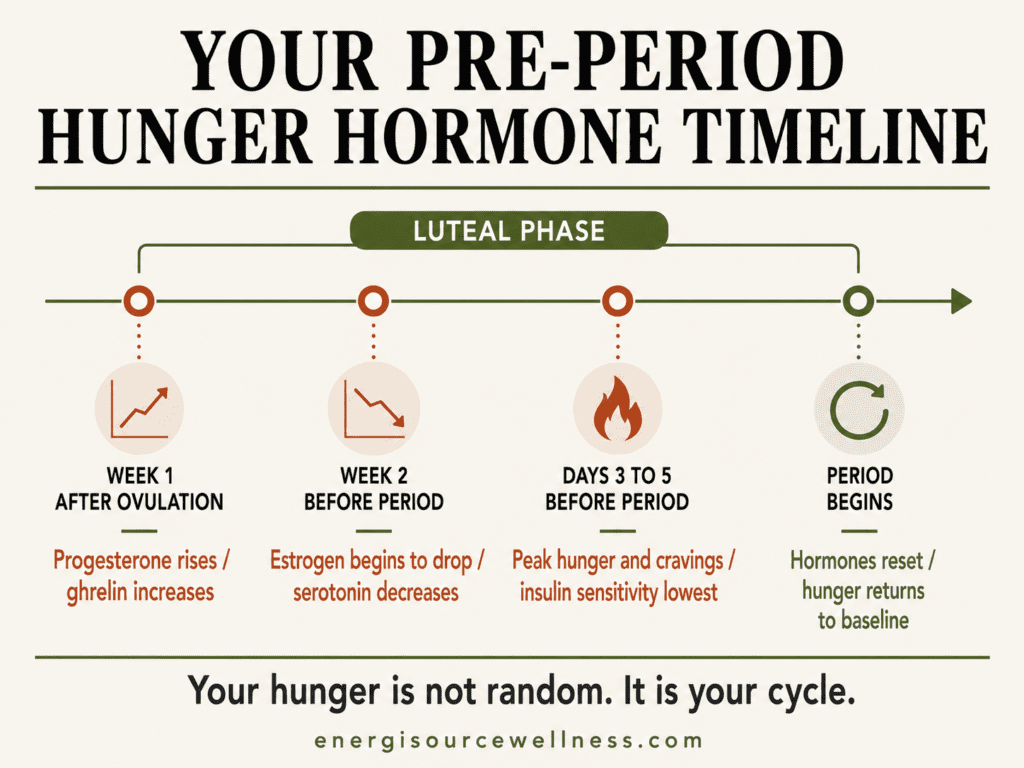
What Is Actually Happening the Week Before Your Period
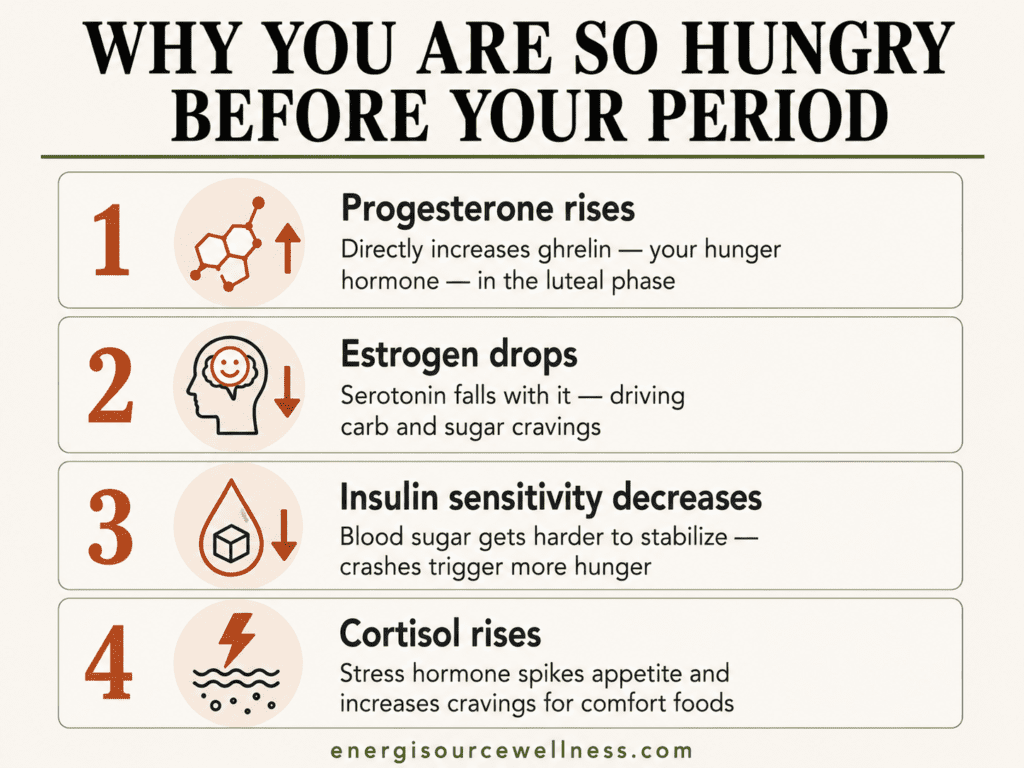
1. Progesterone is high and estrogen is falling
After ovulation, progesterone rises and stays high for most of the luteal phase, while estrogen dips and then drops again in the last few days. The most common explanation for the hunger is this mix: estrogen seems to have a mild appetite-quieting effect, and progesterone does not, so as estrogen falls and progesterone stays high, appetite drifts up. Researchers are still sorting out the exact pathways, so treat this as the leading explanation rather than a settled one.
2. Your body is burning slightly more energy
The small rise in resting metabolism means your body really does need a bit more food that week. Eating a little more before your period is not overeating. It is matching what you burn. Fighting it with smaller meals usually backfires by about 9pm.
3. Mood and cravings shift toward sweets and carbs
The late luteal phase is also when many women notice lower mood, irritability and worse sleep. Those changes and the pull toward chocolate and sweets tend to show up together. One long-standing theory is that falling estrogen lowers serotonin activity, and carbohydrate-rich foods help nudge it back up, which would explain why the cravings are for bread and chocolate, not salad. It is a theory, not a proven mechanism, but the pattern itself is real.
4. Meals may not hold you quite as long
A common experience is that a breakfast that holds you until lunch most of the month leaves you hungry by 10am that week. Hormones do nudge blood sugar control a little: the BioCycle Study found insulin resistance rose slightly in the luteal phase, though the authors noted the change was small and may not be clinically meaningful (Yeung et al., Journal of Clinical Endocrinology and Metabolism, 2010). The practical takeaway is simple: this is the week when meal structure matters most, because a carb-heavy meal with little protein gets less forgiving. More on that in how to balance blood sugar to stop hunger and cravings.
The same hormone shift is also part of why bloating tends to get worse that week, which is covered in what causes bloating in women.
Hunger or Craving? A Quick Way to Tell
Both get louder before your period, but they need different responses. Real hunger builds slowly, and almost any food would do. A craving shows up fast, wants one specific thing, and often arrives with stress, tiredness or boredom. If a plate of eggs and toast sounds good, you are hungry, so eat. If only chocolate will do, it is a craving, and the move is to eat a real meal or snack first and then have the chocolate on purpose, not in a fight with yourself. I break this down further in hunger vs cravings: how to tell the difference.
What to Eat the Week Before Your Period
You do not need a special diet for this week. You need your normal Mediterranean structure with a little more intention behind it.
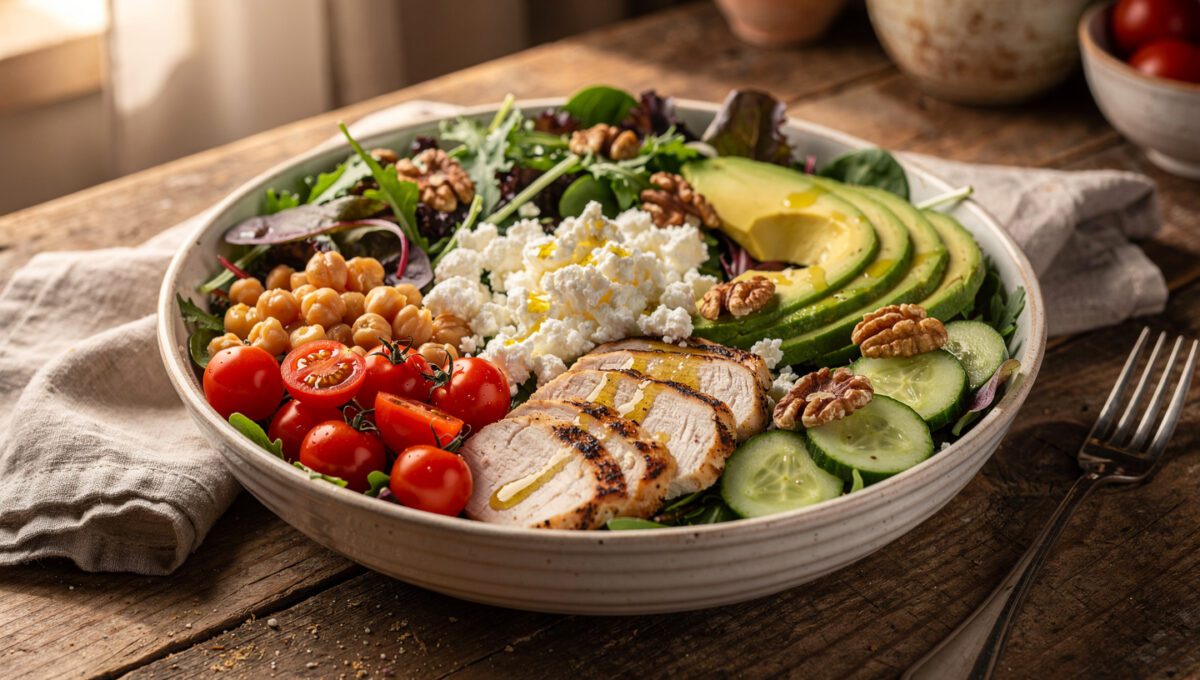
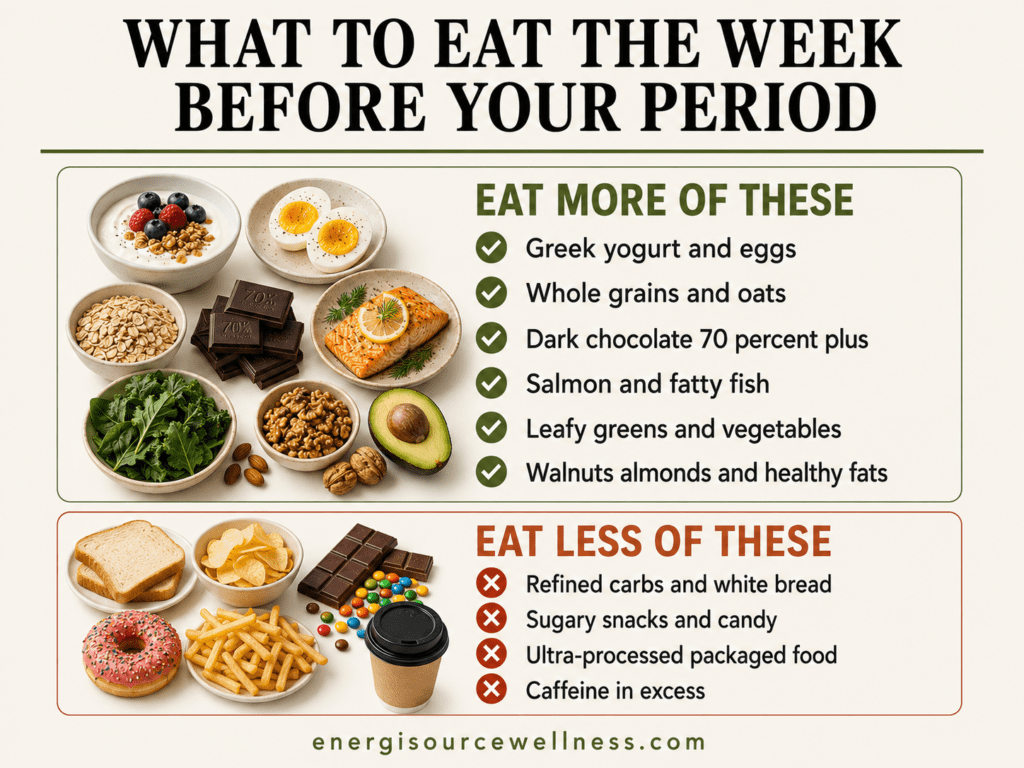
- Protein at every meal, starting with breakfast. Protein is the most filling nutrient, and it is the easiest lever you have. Eggs, Greek yogurt, cottage cheese, salmon, chicken, lentils, chickpeas. Aim for a real portion at breakfast, since a light morning is what most often turns into an out-of-control evening.
- Keep the carbs, change the type. Cutting carbs this week works against the cravings, not for them. Choose ones with fiber: oats, whole grain bread, farro, sweet potato, beans, fruit. They satisfy the pull toward carbs without leaving you hungry an hour later.
- Healthy fat with every meal. Olive oil, avocado, nuts and seeds slow digestion and make meals last longer.
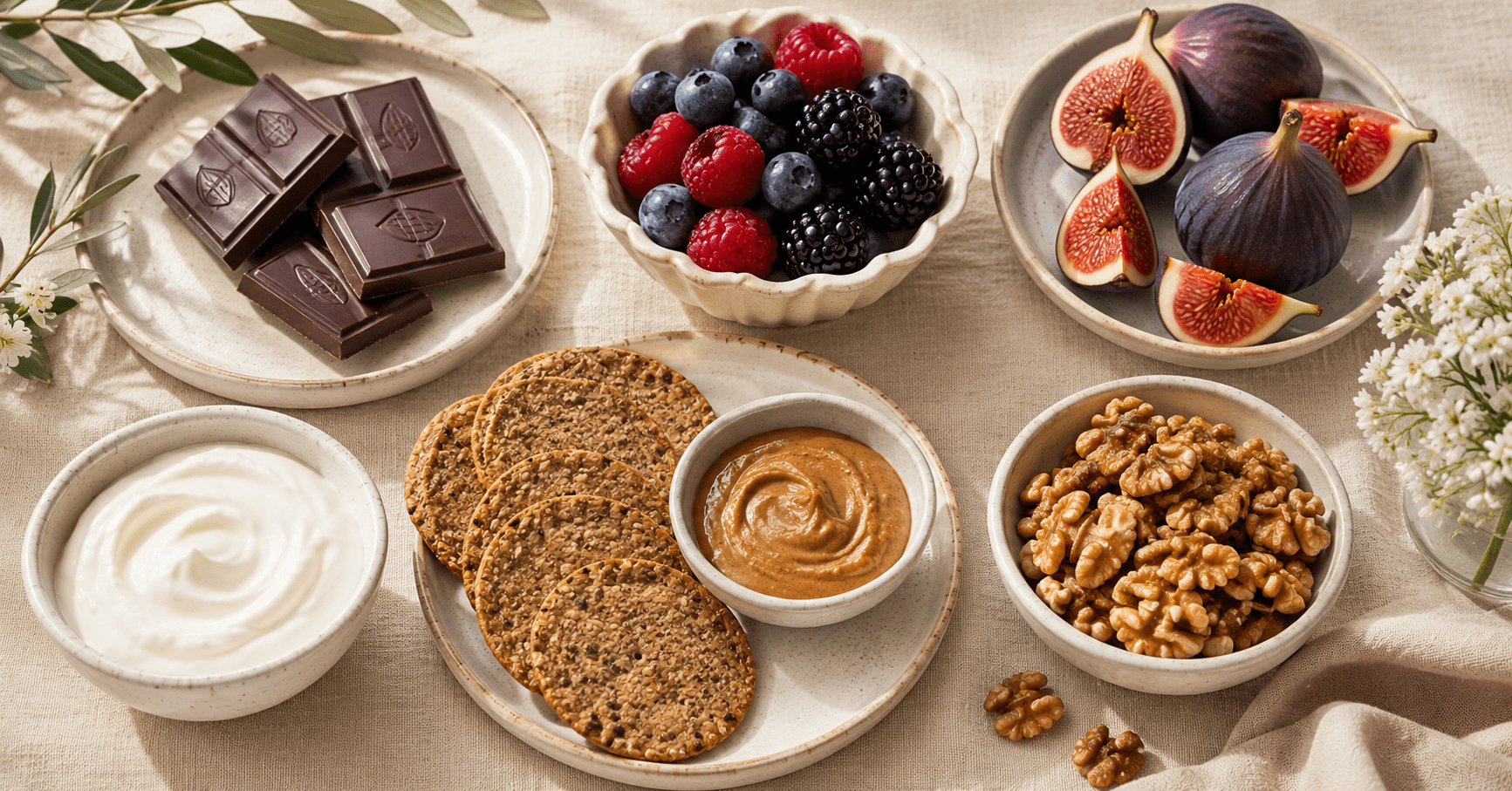
- Plan the evening snack instead of resisting it. Evenings are when this week usually falls apart. Decide in advance: Greek yogurt with walnuts and honey, hummus with crackers, or an apple with peanut butter. Ideas in what to eat when you are hungry at night.
- Let chocolate be chocolate. A couple of squares of dark chocolate after a real meal is not a failure. It is a planned treat, which is very different from eating it out of the bag at 10pm because you skipped lunch.
If you want help putting this on a plate, the free Full Plate Method meal builder builds a balanced meal from what you already have in the fridge, in about a minute. It uses the same balanced plate method this article is built on.
A Sample Day for the Week Before Your Period
This is the kind of day I would build for this week. Adjust portions to your hunger. It is a pattern, not a prescription.
- Breakfast: 2 or 3 scrambled eggs with spinach cooked in olive oil, a slice of whole grain toast with almond butter. Coffee about 90 minutes after waking, which is how I start my own mornings.
- Lunch: Salmon or chicken over roasted sweet potato and greens, olive oil and lemon dressing, a handful of walnuts on top.
- Afternoon: If hunger comes back, a handful of almonds with a piece of fruit. That is not failing. That is your body asking for fuel it is using.
- Dinner: Lentil soup or a chickpea and vegetable stew with whole grain bread. Legumes bring protein and fiber together, which is exactly what this week calls for.
- Evening: Greek yogurt with walnuts and honey, or two squares of dark chocolate with a few almonds.
Notice what is missing: restriction. You are not eating less this week. You are eating differently, and a little more, on purpose.
When It Is More Than Normal Premenstrual Hunger
Increased hunger before your period is normal. A few things are worth bringing to a doctor rather than solving with food alone:
- Hunger or cravings that feel intense all month, not just the week before your period. That usually points to everyday meal structure, or something else worth checking.
- Mood changes before your period that are severe enough to disrupt work or relationships, which can be a sign of PMDD.
- Eating that feels out of control or brings a lot of distress. That deserves real support, not a better snack list.
For deeper reading on the cycle itself, Period Repair Manual by naturopathic doctor Lara Briden is the book I point people to. It explains what each hormone does across the cycle and takes a food-first approach.
If the week before your period is when your evenings fall apart, the Cravings Control Reset was built for exactly that stretch: a 7-day high-protein Mediterranean plan with 28 real-food meals, about 100g of protein a day, and a 5-step evening protocol for the hours when cravings hit hardest.
The Week Before Your Period Does Not Have to Feel Out of Control
The hunger before your period is real, it is measurable, and it is not a character flaw. Your body is burning a little more, your hormones are shifting, and your appetite is following along.
You do not have to win a fight with that. You just have to feed it well. Protein first, carbs with fiber, fat to make meals last, and a planned evening snack. Try it for one cycle and see how different that week feels.
Ribert
Frequently Asked Questions
Why am I so hungry before my period?
Because the luteal phase raises appetite: estrogen falls while progesterone stays high, your body burns slightly more energy, and cravings for sweets and salty foods peak in the last few days before your period.
How many extra calories do you eat before your period?
On average about 168 calories a day more in the luteal phase than the follicular phase, according to a 2025 meta-analysis in Nutrition Reviews, though it varies a lot from woman to woman.
How long does hunger before your period last?
For most women it builds in the last week or so of the cycle and eases within a day or two of the period starting; if it lasts all month, everyday meals are the more likely cause.
Why do I have no appetite before my period?
Some women get the opposite, often from bloating, nausea or stress, and small meals with protein and fiber help keep blood sugar steady so cravings do not hit hard later.
Why do I crave chocolate and sugar before my period?
Cravings for chocolate and sweets reliably peak in the late luteal phase, likely linked to falling estrogen and lower mood; eating a real meal first and then having a planned treat works better than resisting.
Should I eat more before my period?
A little more is reasonable because your body burns slightly more energy that week, so focus on adding protein and fiber rather than cutting back.
What is the best thing to eat when hungry before your period?
A meal or snack with protein, fiber and healthy fat, such as Greek yogurt with walnuts, eggs on whole grain toast, or hummus with vegetables and crackers.
How this was researched: this article draws on a 2025 meta-analysis of energy intake across the menstrual cycle (Hazell et al., Nutrition Reviews), the BioCycle Study on cravings and food intake (Gorczyca et al., 2016) and on insulin resistance (Yeung et al., 2010), and a 2020 meta-analysis on resting metabolic rate (Benton et al., PLoS ONE). I am not a doctor, and this is general nutrition education, not medical advice. If your symptoms are severe, talk to your doctor. Last updated: October 12, 2026.