Bloating in women is most often driven by hormonal fluctuations across the menstrual cycle, along with eating too fast, food combinations, and gut sensitivity, not a single food intolerance that a simple elimination diet can fix.
You wake up feeling fine. By noon your jeans feel two sizes too small. By evening your stomach is so distended you look visibly different than you did that morning.
You did not overeat. You did not eat anything unusual. And yet here you are again, bloated, uncomfortable, wondering what your body is reacting to this time.
If this sounds familiar, you are not alone and you are not imagining it. Bloating is significantly more common in women than in men, and the reasons go deeper than just eating too fast or having a sensitive stomach.
This article is going to give you the real answer. Not a list of foods to eliminate. Not another suggestion to try probiotics. The actual reason your body keeps doing this, and what to change to make it stop.
Your Body Is Trying to Tell You Something
Bloating is not just an inconvenience. It is a signal.
When your stomach swells after a meal, when your waistband feels tight hours after eating, when your body seems to retain water and gas unpredictably throughout the month, your digestive system is reacting to something. The question is what.
Most women spend years trying to figure this out through elimination. No dairy. No gluten. No beans. No cruciferous vegetables. They rotate through food groups one by one, cutting things that have been part of human diets for thousands of years, and still the bloating comes back.
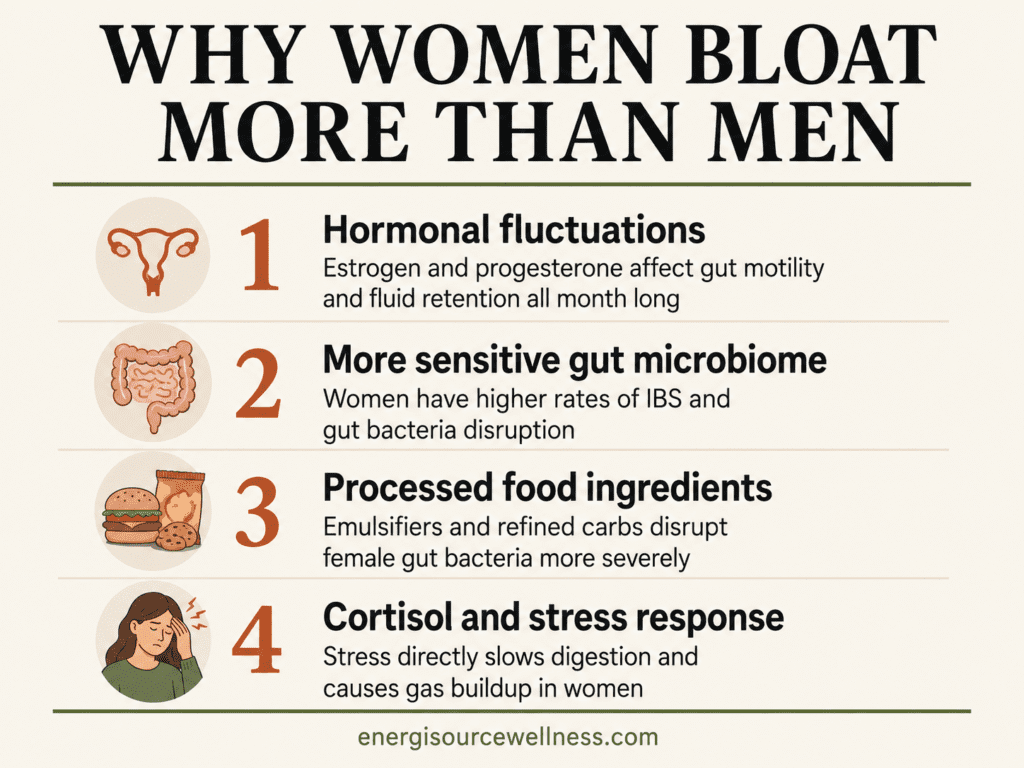
The reason elimination diets often fail is because they treat the symptom without addressing the actual cause. Bloating in women usually comes from one or more of four sources working together. Understanding which ones apply to you is the first step to actually fixing it.
The 4 Real Causes of Bloating in Women
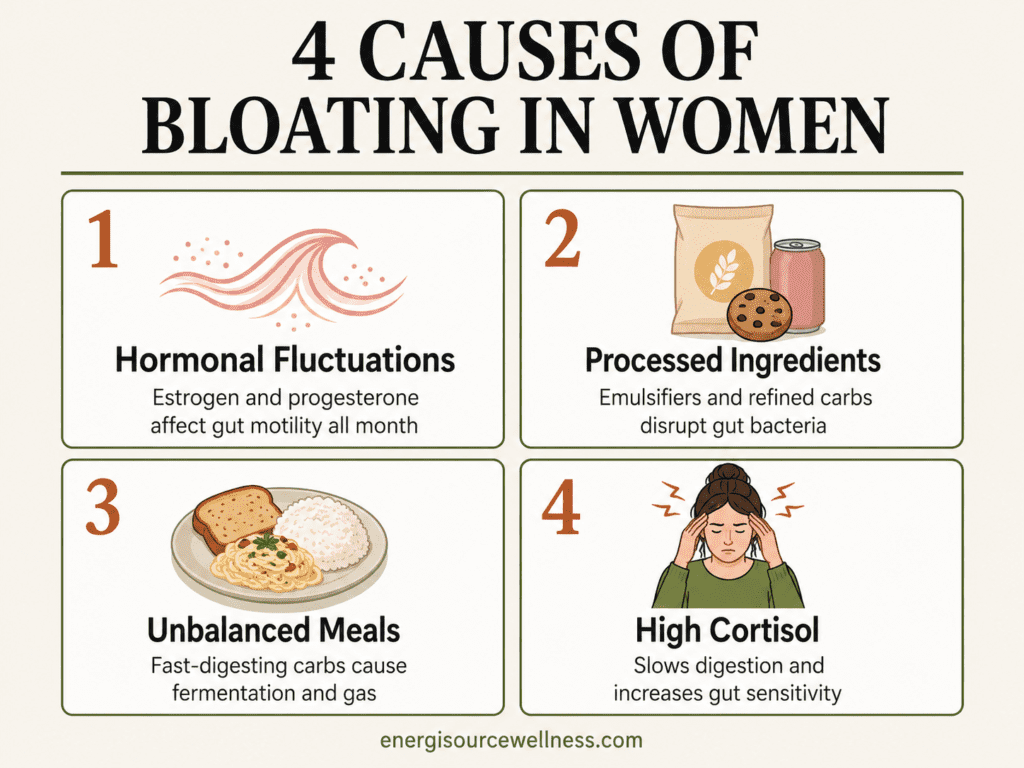
1. Your Hormones Are Changing Your Gut Every Single Month
This is the one most women never hear about clearly enough.
Estrogen and progesterone do not just affect your mood and your cycle. A year-long prospective study on fluid retention across the menstrual cycle found measurable water retention tied to these hormone shifts, and the relative rise and fall of estrogen and progesterone is also linked to changes in gut motility. These hormones fluctuate throughout your entire month, which means your gut is operating differently depending on where you are in your cycle.
In the week before your period, estrogen rises and then drops sharply. That drop causes your body to retain more water and salt, and slows the movement of food through your digestive system. Food moves more slowly, gas builds up, and your abdomen swells. This is why so many women feel significantly more bloated in the days leading up to their period even when they have not changed anything about what they eat.
During your period, lower progesterone can slow digestion even further, causing gas and constipation that compound the bloating you are already experiencing.
This hormonal bloating is real and it is cyclical. Anti-inflammatory eating throughout the month, especially in the week before your period, is a reasonable lever to pull, even though it will not eliminate a hormonally driven pattern entirely.
2. The Ingredients in Your Food Are Disrupting Your Gut Bacteria
This is the one that nobody wants to say out loud because it points at foods that fill entire grocery store aisles.
Your gut microbiome, the trillions of bacteria living in your digestive system, plays a direct role in how much gas your body produces. Certain bacteria ferment food efficiently and quietly. Others produce excess gas as a byproduct. The balance between these bacteria determines whether you bloat after eating or not.
What disrupts that balance? Emulsifiers, found in most packaged dressings, protein bars, flavored yogurts, and ready-made sauces. A study testing common dietary emulsifiers directly on human gut microbiota found that carboxymethylcellulose and polysorbate 80 altered microbiota composition and increased gut inflammation, though most of the deeper research on this is still in mouse models rather than large human trials. Refined grains, which ferment too fast in your gut and create gas before your body can absorb them properly. Artificial sweeteners and sugar alcohols, found in anything labeled sugar-free or low carb, which your gut bacteria ferment heavily because your body cannot absorb them.
These ingredients are in foods marketed as healthy every single day. And they are disrupting the gut bacteria that determine whether you bloat or not.
When you start reading ingredient labels, really reading them, you start to see the same names appearing on everything. Once you see it you cannot unsee it. And once you start removing those ingredients and replacing them with whole foods your gut actually recognizes, the bloating that seemed random and mysterious starts to make sense.
3. Your Meals Are Missing the Structure That Supports Digestion
Here is something that rarely gets mentioned in bloating articles: how your plate is built affects how your gut processes food just as much as what specific foods are on it.
Meals that are heavy in refined carbs and low in protein and fat digest too fast. When carbohydrates move through your digestive system faster than your gut bacteria can process them efficiently, fermentation happens in the wrong place at the wrong time. That fermentation produces gas. That gas has nowhere to go except into your abdomen.
Meals built around protein, fiber from whole food sources, and healthy fat digest at a pace your gut can handle. The protein and fat slow things down. The fiber from legumes and vegetables feeds the right bacteria in the right way. Food moves through your system steadily instead of rushing through and fermenting.
This is why building a balanced plate matters for bloating just as much as it matters for hunger. It is not just about staying full. It is about giving your digestive system the structure it needs to process food cleanly.
4. Cortisol Is Slowing Your Digestion Without You Realizing It
Stress and bloating are more directly connected than most people realize.
When cortisol rises, your body’s stress response shifts blood flow and energy away from digestion, toward muscles and the brain instead. For a lot of people this slows gut motility, meaning food moves more slowly through the system, which leaves more time for fermentation and gas buildup. Cortisol can also make the gut more sensitive, so normal amounts of gas can feel more uncomfortable than they would otherwise. The direction of the effect (slower vs. faster digestion) varies by person, some people experience the opposite under stress, but the underlying mechanism of stress deprioritizing digestion is well established.
The connection between cortisol and bloating is why many women find they bloat more during stressful periods even when eating exactly the same foods. It is not in your head. Your cortisol is literally slowing your digestion down.
Mediterranean eating naturally supports cortisol regulation through anti-inflammatory fats, magnesium-rich whole grains, and polyphenol-rich vegetables that support your body’s stress response system. This is part of why women who shift to Mediterranean eating often notice less bloating fairly early on, since the meal-structure and cortisol effects can kick in before any deeper gut bacteria shifts have had time to take hold.
The Mediterranean Fix That Actually Works
The reason Mediterranean eating has such a strong track record for reducing bloating is not because it eliminates specific foods. It is because it is built around ingredients that support every layer of the problem.
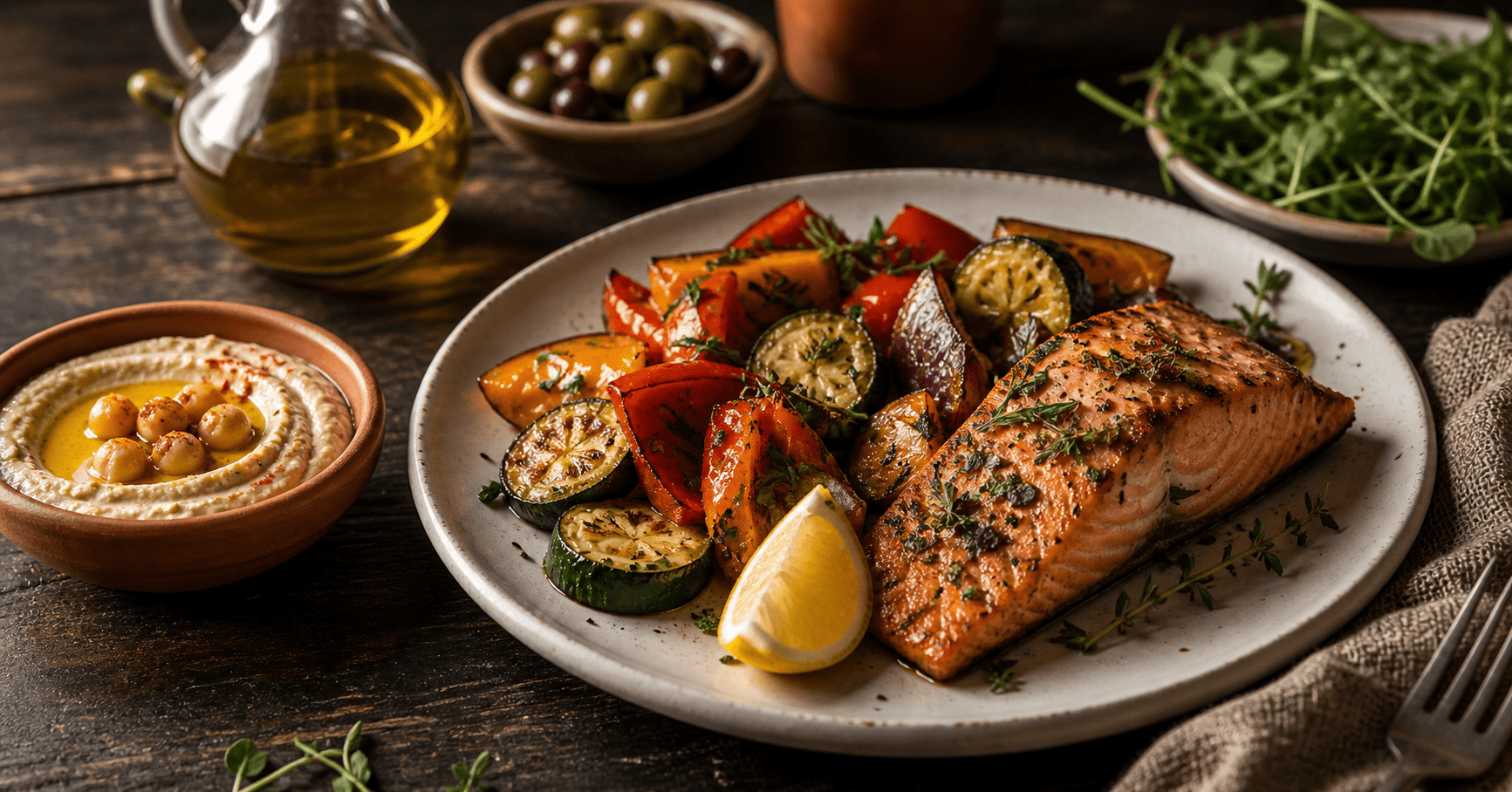
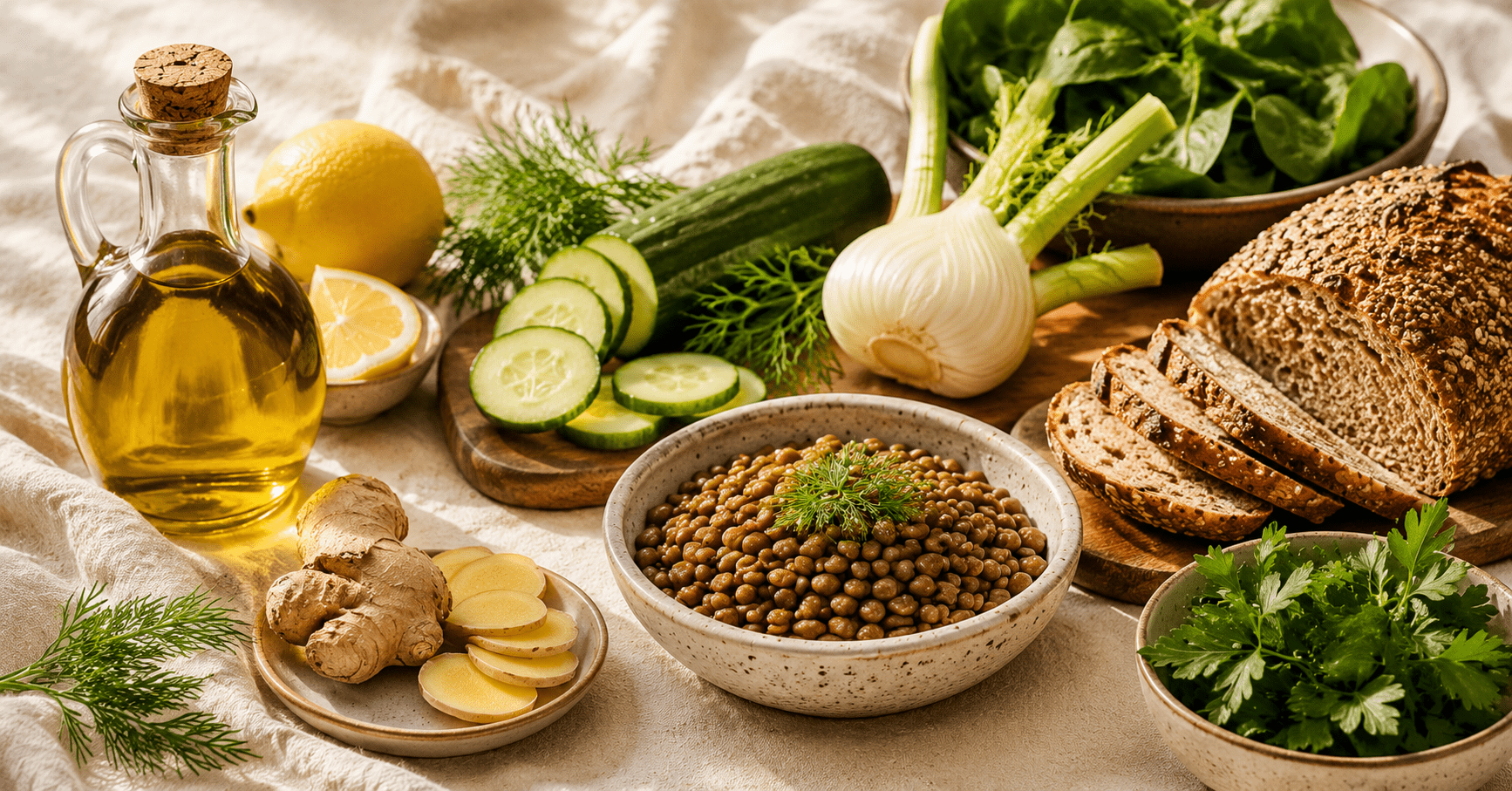
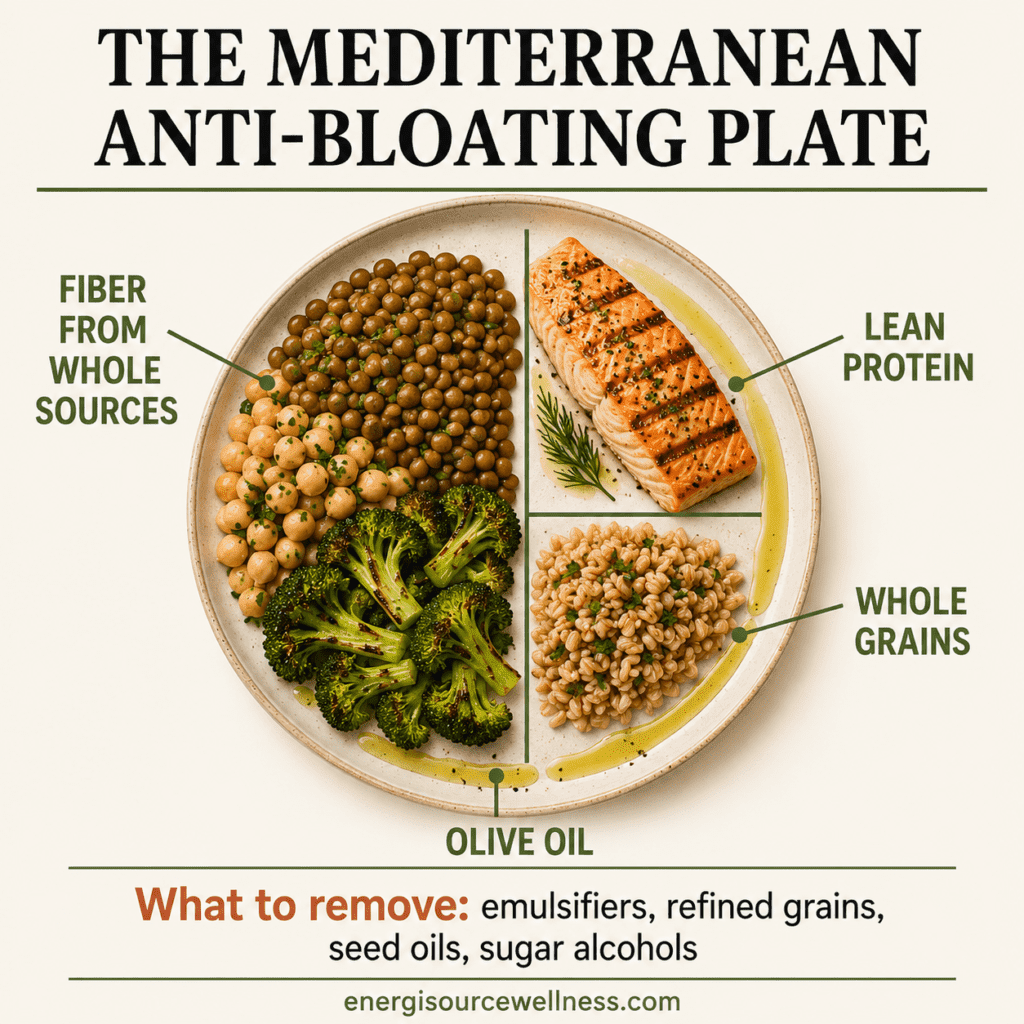
Whole grains instead of refined grains. Olive oil instead of processed seed oils. Legumes prepared simply instead of packaged snacks loaded with emulsifiers. Fresh vegetables cooked simply instead of processed sauces. Real food with short ingredient lists instead of engineered products your gut bacteria do not recognize.
These are not exotic changes. They are just the choices that happen when you start paying attention to what is actually in your food.
Here is what to focus on specifically:
Replace refined grains with whole grains. Whole grain bread, brown rice, farro, quinoa, oats. The fiber structure is intact so they digest at the right pace, reducing the fermentation that creates gas.
Use olive oil as your primary cooking fat. Extra virgin olive oil is genuinely anti-inflammatory. Healthy fats generally support steady, well-paced digestion, which is the kind of pace that helps food move through your system instead of sitting and fermenting.
Build every meal around protein and fiber together. Chickpeas and salmon. Lentils and roasted vegetables. Greek yogurt and berries. When protein and fiber are present together, digestion slows to a pace your gut can handle cleanly. This is exactly what why you’re always bloated after eating comes down to at its core.
Remove the hidden emulsifiers. Read the labels on your salad dressings, your flavored yogurts, your protein bars. If you see carrageenan, polysorbate 80, or any ingredient that ends in -ate or -ite that you cannot identify as a whole food, that ingredient is likely disrupting your gut bacteria.
Eat slowly and sit down. Eating fast causes you to swallow air, which directly increases gas and bloating. Mediterranean culture has always treated meals as something to sit with, not rush through. The pace matters as much as the food.
If you are looking for a complete daily structure that incorporates all of these principles, the 7-day hunger hormone reset covers exactly this, and many people find bloating is one of the first things that eases.
What Most Women Never Get Told About Their Bloating
There is a version of this conversation that never happens.
Nobody sits you down and explains that the ingredients in your protein bar are disrupting the gut bacteria that determine whether you bloat. Nobody connects your premenstrual bloating to the drop in estrogen and explains that anti-inflammatory eating in the week before your period can change how severe it gets. Nobody tells you that the low-fat salad dressing you have been using because it seemed healthier contains three different emulsifiers that your gut bacteria ferment into gas.
You just keep bloating. You keep eliminating foods. You keep wondering why nothing works.
The answer is not in cutting more foods out. It is in understanding what the foods that are already in your daily routine are actually doing inside your body, and making choices from that understanding rather than from fear or frustration.
That is the shift that changes things. Not a 30-day protocol. Not a supplement stack. Just seeing clearly and choosing differently.
Ready to see what a full day of anti-bloating Mediterranean eating actually looks like? Get the free 1-Day Hunger Reset Formula. The complete daily structure that supports your gut, stabilizes your hunger hormones, and reduces bloating from the inside out. Get the Free Guide
Frequently Asked Questions
What causes bloating in women specifically? Women experience bloating more frequently than men primarily because of hormonal fluctuations throughout the menstrual cycle. Estrogen and progesterone directly affect gut motility and fluid retention, meaning digestion changes at different points in the month. On top of this, processed food ingredients like emulsifiers disrupt the gut bacteria that control gas production, and unbalanced meals that are heavy in refined carbs create excess fermentation.
Why am I always bloated no matter what I eat? Persistent bloating regardless of what you eat usually points to one of three things: processed ingredients in foods that seem healthy, like emulsifiers in dressings and protein bars; meals that lack the protein and fat needed to slow digestion to a healthy pace; or hormonal fluctuations that are altering your gut motility throughout the month. Addressing all three simultaneously, rather than eliminating individual foods, tends to produce the most lasting relief.
Does the Mediterranean diet help with bloating? Yes, consistently. The Mediterranean diet removes the processed ingredients most associated with gut bacteria disruption while replacing them with whole foods that support healthy digestion. Whole grains digest at a pace the gut can handle, and legumes feed the right gut bacteria. Many women notice a reduction in bloating within the first week or two of making these shifts, though the timeline varies by person.
Why do I bloat more before my period? In the week before your period, estrogen rises then drops sharply while progesterone also declines. This hormonal shift causes your body to retain more water and salt, and slows the movement of food through your digestive system. Anti-inflammatory eating, particularly reducing processed foods and increasing whole food fiber and healthy fat, in the days before your period can meaningfully reduce how severe this gets.
What foods reduce bloating in women fast? The fastest relief typically comes from cooked vegetables rather than raw, ginger, which a systematic review of clinical trials found improves gastrointestinal motility and reduces bloating and gas, fennel, which some people find relaxes digestive discomfort though the human evidence is thinner, and plain Greek yogurt, which supports healthy gut bacteria. Removing foods with emulsifiers and sugar alcohols simultaneously accelerates the results significantly.
The Bottom Line
Bloating is not something you just have to live with. It is not a permanent feature of your body or your digestive system.
It is a signal. Your gut is reacting to something, whether that is the emulsifiers in your packaged foods, the refined grains that are fermenting too fast, the hormonal shifts happening throughout your cycle, or the cortisol that has been slowing your digestion without you realizing it.
When you start addressing the actual causes instead of just removing foods at random, things change. Not dramatically overnight. But steadily, clearly, within days.
Your body knows how to digest food cleanly. It was built to. It just needs the ingredients it actually recognizes, in a structure that gives digestion the pace and support it needs.
Start with one meal. Build the plate right. See what changes.
About Ribert Rodriguez
Ribert is the founder of EnergiSource Wellness. He researches and writes every article on this site personally, cross-checking claims against published research rather than relying on generic wellness advice. His approach is rooted in the Mediterranean framework, built from years of testing meal structures on himself after struggling with cravings, late-night eating, and low energy.