Blood sugar drops after eating because the meal caused a glucose spike that the body overcorrected for. When a meal is high in refined carbohydrates and low in protein, fiber, and fat, blood sugar rises rapidly, the pancreas releases a large pulse of insulin to manage it, and the correction overshoots, dropping blood sugar below where it was before you ate. The result is shaking, fatigue, irritability, intense hunger, and cravings within 1 to 3 hours of a full meal. This is almost always a food structure problem, not a medical condition, and the Mediterranean meal framework addresses it directly.
The first time I noticed this pattern I was sitting at my desk about two hours after lunch feeling shaky and unable to focus. I had eaten a full meal. I was not hungry in the normal sense. But my hands had a slight tremor and I felt irrationally irritable about nothing in particular. I reached for something sweet and within ten minutes felt fine again.
This happened almost every day for months. I assumed it was blood sugar-related but I had no diagnosis, no medication, and no reason to think there was a medical problem. Everything was normal at my annual checkup. The doctor said nothing concerning.
What nobody explained to me was that blood sugar crashing after eating is not a medical condition for most people who experience it. It is a meal structure response. The crash is the predictable downstream consequence of eating a meal that lacks the protein, fiber, and fat combination that keeps glucose absorption gradual rather than rapid. Change the meal structure and the crash stops. That is it.
I went into detail on the energy side of this in why you feel tired after eating. This article goes deeper into the blood sugar mechanism specifically and what the Mediterranean meal structure does differently to prevent the crash from happening at all.
What actually causes blood sugar to drop after eating
The clinical name for blood sugar dropping after eating is reactive hypoglycemia or postprandial hypoglycemia. The medical literature frames it as a condition that occurs primarily in people with diabetes, prediabetes, or after certain surgeries. This framing is accurate for a specific subset of people but it misses the much larger group of healthy individuals who experience the same symptoms from the same underlying mechanism without any medical diagnosis.
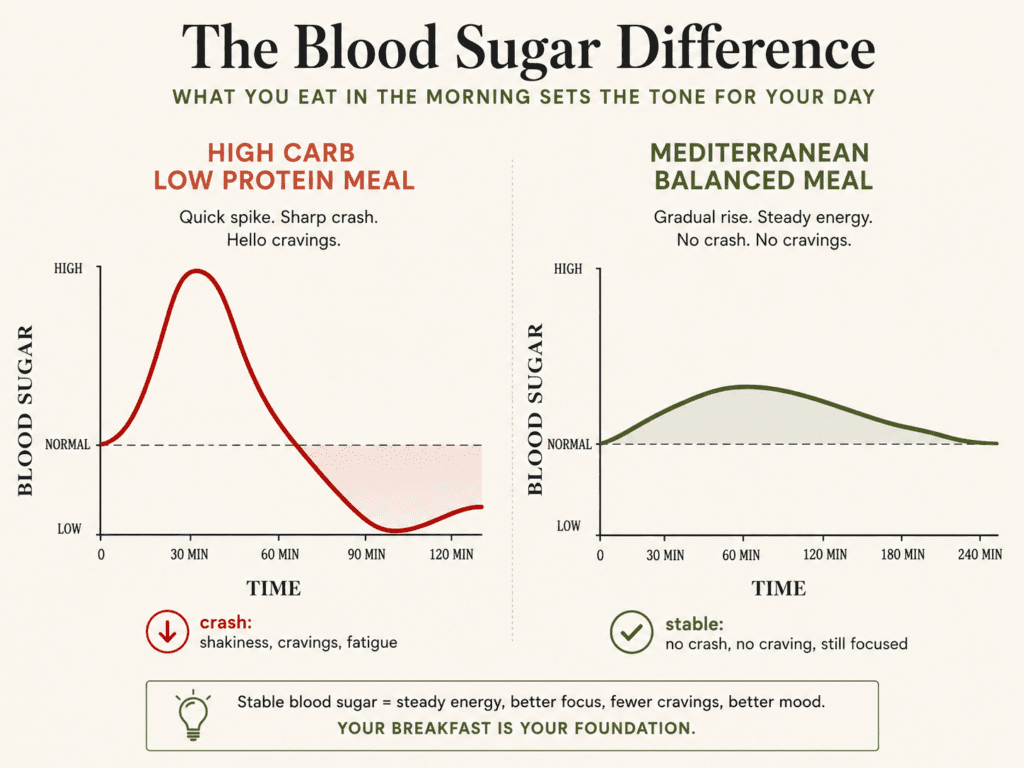
Here is the mechanism in plain terms. You eat a meal that is primarily carbohydrates with minimal protein, fat, or fiber. The carbohydrates digest rapidly. Glucose floods the bloodstream within 30 to 60 minutes. Blood sugar rises sharply. The pancreas detects this and releases a large pulse of insulin to move the glucose out of the bloodstream and into cells.
The problem is that the insulin response is calibrated to the size of the spike. A large, rapid glucose spike triggers a large, rapid insulin release. That insulin clears the glucose from the bloodstream efficiently but often overcorrects, pushing blood sugar below the level it was at before the meal. This is the crash. It typically arrives 1 to 3 hours after eating and feels like shakiness, sudden fatigue, difficulty concentrating, irritability, intense hunger, and strong cravings for sugar or carbohydrates.
What makes this a food structure problem rather than a medical condition for most healthy people is that the same person eating the same amount of food in a different structure, protein and vegetables first, carbohydrates last, with fat present throughout, produces a completely flat glucose curve with no crash. The food order on your plate and the composition of the meal together determine whether the crash happens. The blood sugar is not broken. The meal is.
The three meal mistakes that cause the crash
Mistake 1: Leading with carbohydrates and no protein
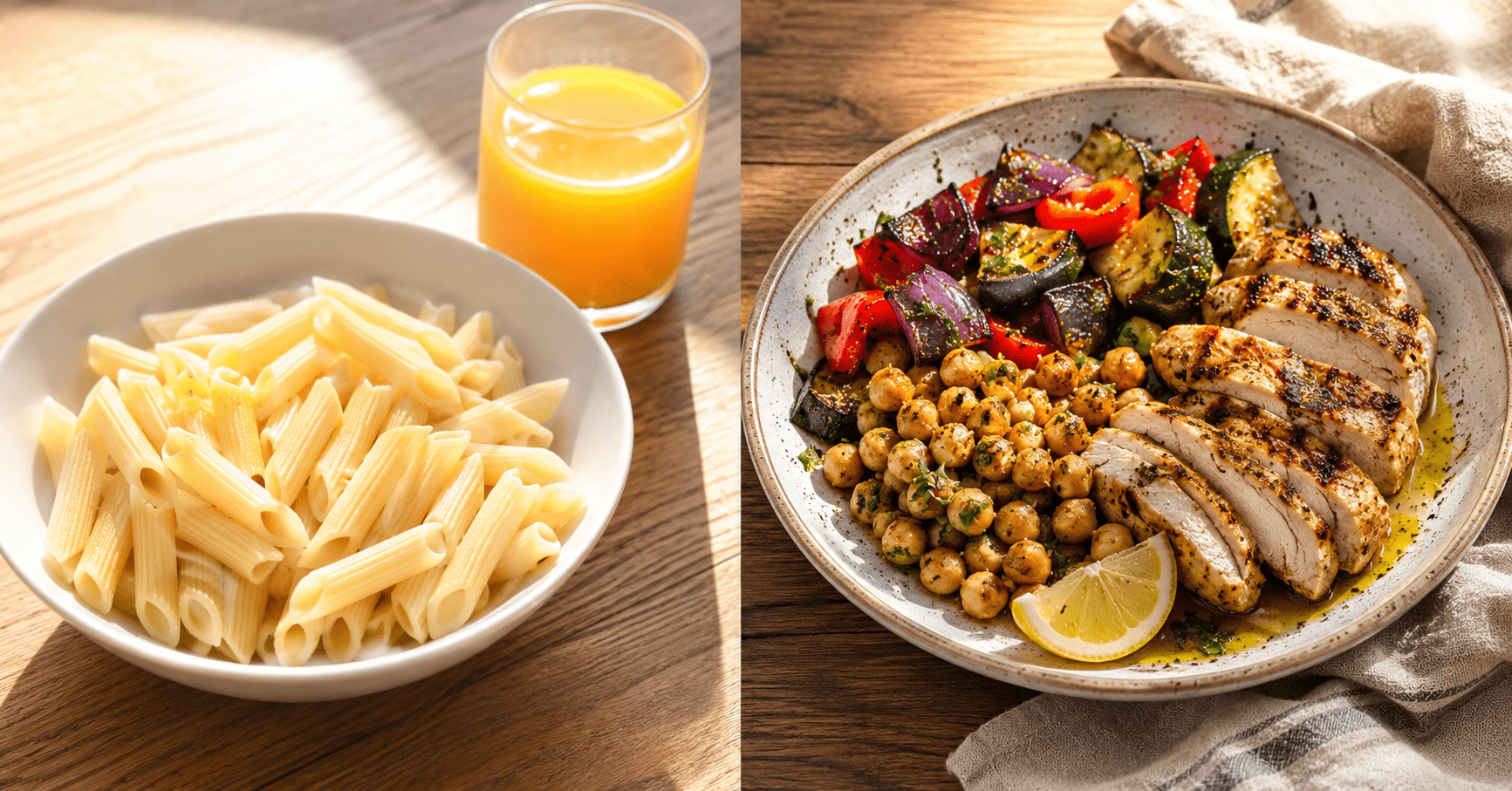
Breakfast of oatmeal with honey and banana, no protein present. Lunch of pasta with tomato sauce, no significant protein. Sandwich with minimal filling. These meals send glucose into the bloodstream rapidly because there is nothing present to slow the absorption. Protein slows gastric emptying. Without it the carbohydrates pass directly into the small intestine and absorb quickly.
Mistake 2: Removing fat in the name of eating healthy
Low-fat dressings, fat-free yogurt, skinless chicken with no olive oil. Fat triggers the release of cholecystokinin which both signals fullness and physically slows the rate at which the stomach empties into the small intestine. When fat is absent from a meal the gastric emptying rate increases and carbohydrates absorb faster. The blood sugar spike is steeper. The crash that follows is harder.
Mistake 3: Eating too fast
Fullness signals and satiety hormones take 20 minutes to communicate from the stomach to the brain. Eating a meal in 5 to 8 minutes means the hunger signal is still firing at the point when a person has already consumed enough food. The brain does not register the meal as complete. People often eat more than they intended. A larger carbohydrate load means a larger spike means a harder crash.
The symptoms of a blood sugar drop after eating
The symptoms of a post-meal blood sugar drop are distinct from regular hunger and it is worth knowing the difference. Regular hunger arrives gradually and feels like an empty sensation in the stomach. A blood sugar crash arrives suddenly and feels systemic, affecting the entire body and brain at once.
• Sudden fatigue or heaviness within 1 to 3 hours of eating
• Difficulty concentrating or brain fog that was not present before the meal
• Irritability or a low mood that feels disproportionate to the situation
• Shakiness or a slight tremor in the hands
• Intense sugar or carbohydrate craving that feels urgent rather than optional
• Heart rate that feels slightly elevated or fluttery
• Feeling anxious or on edge without a clear reason
• Hunger that returns within 90 minutes of finishing a full meal
The sugar craving specifically is worth noting. When blood sugar drops the brain registers it as an emergency and sends a strong signal for the fastest available fuel, which is sugar or refined carbohydrates. This is the 3pm vending machine moment, the afternoon cookie, the handful of crackers that appears from nowhere. It is not a preference. It is a biological response to the blood sugar pattern created by the previous meal.
Why this happens more often in the afternoon
The 3pm crash is the most common time for this pattern to appear because it is typically 2 to 3 hours after lunch. A lunch that was high in refined carbohydrates, a sandwich on white bread, pasta, a wrap with minimal protein, or a salad without a protein anchor, creates the spike-and-crash cycle that lands squarely in the early afternoon. This is also why the 3pm energy crash feels so reliable. It is not bad luck or a slow afternoon. It is the predictable consequence of what was on the lunch plate.
There is a secondary factor that amplifies the afternoon crash specifically. Cortisol, your primary stress hormone, follows a daily rhythm that peaks in the early morning and naturally declines through the afternoon. Lower cortisol in the afternoon means the body has less buffer against blood sugar instability. A meal that might produce a moderate crash in the morning produces a more severe crash at the same time in the afternoon because the cortisol support is lower.
This is why the same person can eat toast with butter for breakfast and feel fine until noon but eat the same meal for lunch and feel completely wrecked by 3pm. The food is identical. The hormonal context is different.
The Mediterranean fix: how to stop blood sugar from dropping after eating
The solution is not to eliminate carbohydrates. It is to change the meal structure so that carbohydrates are always accompanied by protein, fiber, and fat in quantities that slow glucose absorption and produce a gradual rather than rapid blood sugar rise. This is the foundation of the balanced plate method and it is the structural reason Mediterranean eating produces stable energy rather than the spike-and-crash cycle.
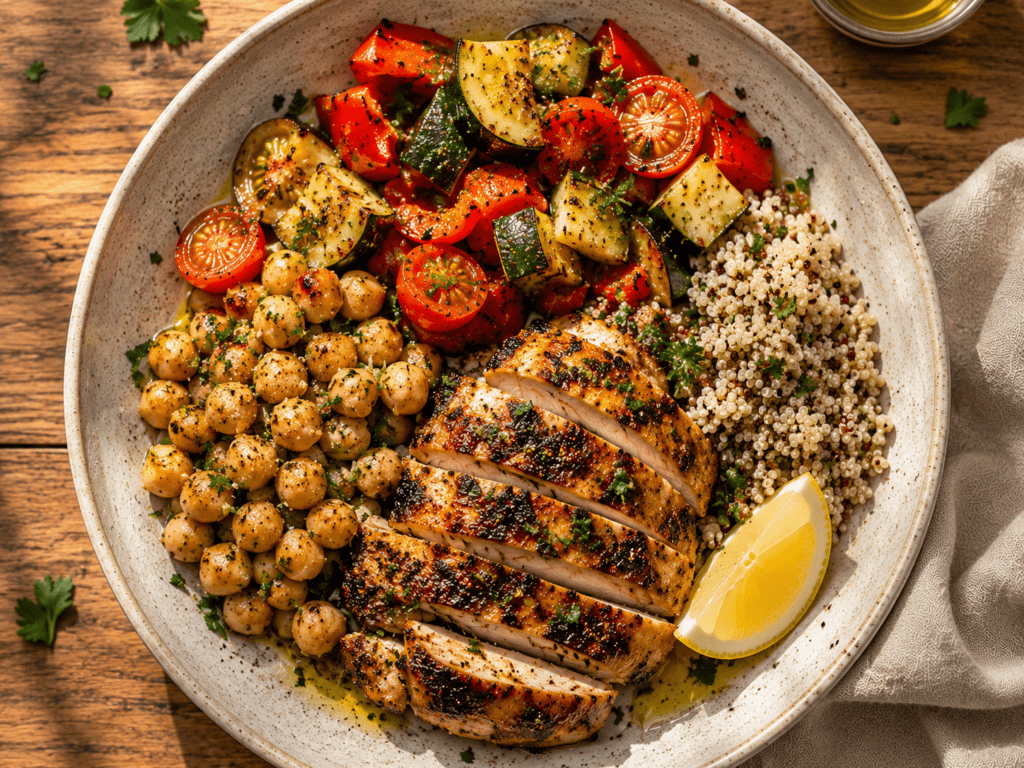
Fix 1: Add a protein anchor to every meal (20 grams minimum)
Protein slows gastric emptying, meaning the entire contents of the stomach empty into the small intestine more slowly. When the stomach empties slowly, glucose enters the bloodstream over a 3 to 4 hour window rather than a 30 to 60 minute window. The spike becomes a gentle rise. The insulin response becomes measured rather than large and rapid. The crash does not happen because there is no overcorrection.
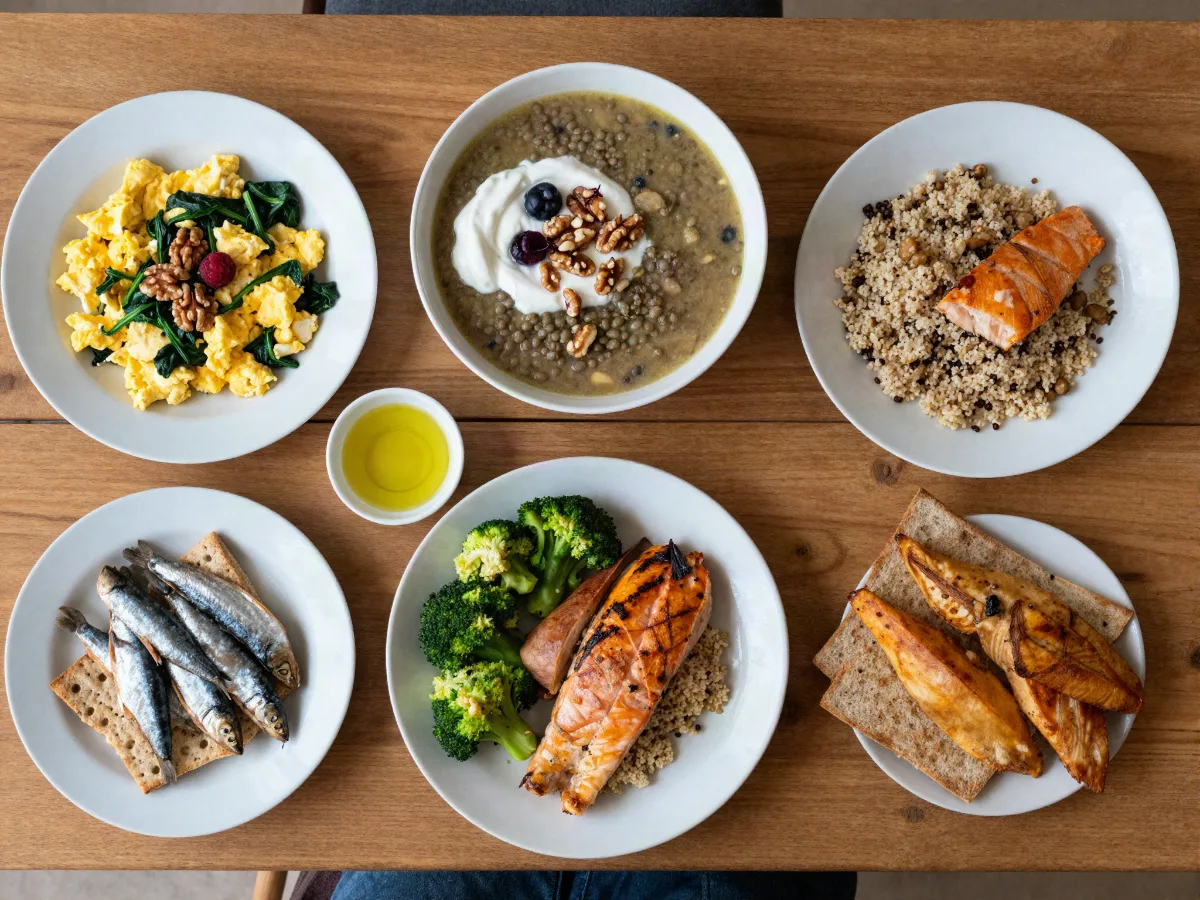
Mediterranean protein sources that work in every meal: eggs, Greek yogurt, salmon, sardines, chicken, tuna, chickpeas, lentils, white beans, cottage cheese, feta. Any of these present in a quantity that reaches 20 grams of protein per meal significantly changes the blood sugar response to the same carbohydrates eaten alongside them.
Fix 2: Include healthy fat in every meal
Fat triggers cholecystokinin release which signals the pyloric valve at the bottom of the stomach to remain partially closed, slowing the rate at which food moves into the small intestine. Extra virgin olive oil as a cooking fat or dressing, avocado, walnuts, olives, or the natural fat in salmon and sardines all contribute this gastric emptying delay. A meal with olive oil dressing absorbs more slowly than the same meal with a fat-free dressing regardless of the carbohydrate content.
Fix 3: Eat vegetables and protein before carbohydrates
The order in which food is eaten within a meal affects the blood sugar response independently of the composition. A 2015 study in Diabetes Care found that eating vegetables and protein before carbohydrates reduced post-meal glucose levels by roughly 30 to 37 percent at the 30 and 60-minute marks compared to eating carbohydrates first. Start every meal with the vegetable component. Move to protein. Address the carbohydrate last. The same plate in a different eating sequence produces a meaningfully different glucose curve.
Fix 4: Replace refined carbohydrates with slow-digesting ones
White bread, white rice, white pasta, and fruit juice all produce rapid glucose absorption because they have been processed in ways that remove the fiber and protein that would otherwise slow digestion. Replacing them with quinoa, sweet potato, whole grain bread, lentils, and oats does not eliminate carbohydrates from the meal. It changes the absorption rate so the glucose curve is gradual rather than sharp.
Fix 5: Eat at consistent times
Blood sugar instability is compounded by irregular meal timing. When meals are skipped or delayed, blood sugar drops before eating and then the body is in a more reactive state when food finally arrives. Eating at consistent times, breakfast, lunch, and dinner within roughly the same 30-minute window each day, allows the body to prepare appropriate hormonal responses rather than reacting to unpredictable inputs.
>> Want meals that prevent the blood sugar crash automatically?
The Full Plate Method app builds Mediterranean meals with the protein-fiber-fat combination that keeps glucose stable all afternoon. Free forever. Build stable blood sugar meals free
What a blood sugar-stabilizing day of eating looks like
This is a practical example of how Mediterranean eating prevents the post-meal blood sugar drop across an entire day. Not a rigid meal plan. A structural template that can be filled with whatever foods you already eat.
Breakfast (7am): Protein and fat first, slow carb alongside
Two eggs scrambled in olive oil with a large handful of spinach and cherry tomatoes. Half an avocado on the side. Optional: a small portion of whole grain toast eaten after the eggs, not before. Result: glucose rises slowly, no spike, steady energy until noon.
Lunch (12:30pm): Complete meal with protein anchor and legumes
Mediterranean bowl with grilled chicken or canned tuna, chickpeas, cucumber, cherry tomatoes, olive oil and lemon dressing, and a small portion of quinoa. The chickpeas provide both protein and fiber. The olive oil slows absorption. The quinoa is eaten after the protein and vegetable components. Result: glucose stays flat through the afternoon, no 3pm crash.
Afternoon (if needed, 3:30pm): Protein and fat snack
If hunger does return in the afternoon, a planned snack of sardines on whole grain crackers with a handful of olives, or Greek yogurt with walnuts, provides protein and fat that prevents another spike-crash cycle before dinner.
Dinner (6:30pm): Light and early
Baked salmon with roasted vegetables and a small portion of quinoa or sweet potato. Olive oil throughout. Eaten before 7pm where possible. Earlier dinner means the body has time to process the meal before sleep rather than digesting actively during the night, which disrupts the overnight blood sugar pattern and sets up the next morning’s stability.
When to actually see a doctor
The post-meal blood sugar drop described in this article is a food structure issue for the majority of healthy people who experience it. However there are situations where medical evaluation is appropriate.
• Symptoms are severe or include confusion, loss of consciousness, or convulsions
• Symptoms occur consistently even after changing meal structure as described above
• You have been diagnosed with diabetes or prediabetes
• You have had bariatric or gastric bypass surgery
• Symptoms include rapid heartbeat or sweating every time you eat regardless of what you eat
• Fasting blood sugar tests show consistently low readings
If you have made the meal structure changes described in this article consistently for two to three weeks and the symptoms persist, that is the point to bring it to a healthcare provider. For most people however the symptoms resolve within the first week of consistent Mediterranean meal structure because the root cause is the meal, not the blood sugar system.
This article is informational and shares personal experience. It is not medical advice. If you have concerns about your blood sugar, speak with your doctor.
Frequently asked questions
Why does blood sugar drop after eating if I just ate?
Blood sugar drops after eating when the meal caused a glucose spike that triggered an overcorrected insulin response. High-carbohydrate meals with minimal protein, fat, or fiber absorb rapidly and produce a sharp blood sugar rise. The pancreas releases a large insulin pulse to clear the glucose. That insulin often clears more glucose than necessary, pushing blood sugar below baseline. The result is a crash within 1 to 3 hours of a full meal. Adding protein, fat, and fiber to the same meal slows glucose absorption and prevents the spike that triggers the overcorrected insulin response.
Is blood sugar dropping after eating a sign of diabetes?
Not necessarily. While reactive hypoglycemia does occur in people with diabetes and prediabetes, it is also common in otherwise healthy people whose meals are structured in ways that cause rapid glucose spikes. If you have concerns about diabetes or prediabetes, a fasting blood glucose test or HbA1c test from your doctor will provide a definitive answer. For most people who experience post-meal crashes without other symptoms, the cause is meal structure rather than a diabetes diagnosis.
How quickly can changing meal structure stop blood sugar crashes?
Many people notice a difference within the first week or two of consistently applying the four fixes described in this article. The change is not gradual. When a meal contains adequate protein, fat, and fiber, the glucose curve is flat from the first meal onward. The crash stops because the spike that causes it does not happen. By the end of the first week of Mediterranean meal structure most people report that the 3pm energy crash either did not happen or was significantly less severe than before.
What foods cause blood sugar to drop after eating?
The foods most likely to cause a post-meal blood sugar drop are those that digest rapidly and produce a sharp glucose spike: white bread, white rice, white pasta, fruit juice, sweetened drinks, sugary cereals, pastries, crackers without protein accompaniment, and fruit eaten alone without protein or fat alongside. The foods that prevent the crash are those that slow glucose absorption: eggs, olive oil, fish, chickpeas, lentils, avocado, Greek yogurt, and vegetables high in fiber.
Can blood sugar drop after eating a healthy meal?
Yes, if the healthy meal is primarily composed of carbohydrates without adequate protein and fat. A large fruit smoothie, a bowl of oatmeal with honey, or a big green salad with fat-free dressing are all examples of meals commonly perceived as healthy that can produce a blood sugar crash because they lack the protein and fat combination that slows glucose absorption. The definition of a blood sugar-stabilizing meal is not about whether the food is healthy in general. It is about whether protein, fat, and fiber are present in quantities sufficient to slow digestion.
What should I eat if my blood sugar drops after eating?
In the immediate moment, eating a small amount of protein and fat, a handful of walnuts, a few sardines on a cracker, or a spoonful of almond butter, helps stabilize blood sugar more durably than eating sugar or carbohydrates, which will produce another spike and crash cycle. For the long term, restructuring the meal that caused the crash to include a protein anchor above 20 grams, a fat source, and fiber from vegetables or legumes prevents the crash from happening at the next meal.
The bottom line
Blood sugar dropping after eating is one of the most common and least discussed nutritional experiences among otherwise healthy people. The symptoms feel alarming because they are systemic: shakiness, brain fog, sudden fatigue, urgent cravings. But for most people without a diabetes diagnosis the cause is straightforward. The previous meal created a rapid glucose spike that triggered an overcorrected insulin response. The crash is the correction. Fix the meal structure and the crash stops. The Mediterranean approach does this by ensuring every meal contains a protein anchor above 20 grams, a healthy fat source, and fiber from vegetables or legumes.
The three changes worth making starting at your next meal: add a protein source above 20 grams, include olive oil or avocado as the fat component, and eat the vegetables and protein before the carbohydrate. Track how you feel at 2 to 3 hours after that meal. Most people feel the difference immediately.
I spent about a year assuming the afternoon shaking and brain fog were just part of how I was built. That my energy was naturally low in the afternoons and my cravings were just hard to manage. None of that turned out to be true. Within the first week of eating protein and fat at every meal the crashes stopped. I have not had a significant post-meal energy crash since. Not because anything changed in my biology. Because what was on my plate changed.
Ribert
>> Want the full blood sugar stabilizing meal plan?
The 7-Day Mediterranean Meal Plan PDF builds every meal around the protein-fiber-fat structure that prevents post-meal crashes. $17, instant download. Get the 7-Day Mediterranean Meal Plan for $17

Free printable
Hungry again at 9pm?
Get the free printable Night Hunger Snack List: 10 Mediterranean snacks with exact portions and protein counts, for the evenings when cravings hit. Enter your email and download it instantly.
Free. No spam. Unsubscribe anytime.
Keep reading
How to Balance Blood Sugar to Stop Hunger and Cravings
Why You Feel Tired After Eating
How to Order Your Food on Your Plate to Avoid the 3pm Crash
What to Eat for Breakfast to Stop Cravings All Day
This article shares personal experience and general nutrition information, not medical advice. If you have concerns about blood sugar or diabetes, speak with your healthcare provider.
About Ribert Rodriguez
Ribert is the founder of EnergiSource Wellness. He built this site to share what actually worked for him after years of struggling with cravings, late-night eating, and low energy. His approach is rooted in the Mediterranean framework and a belief that food is one of the most powerful tools for how you think and feel.