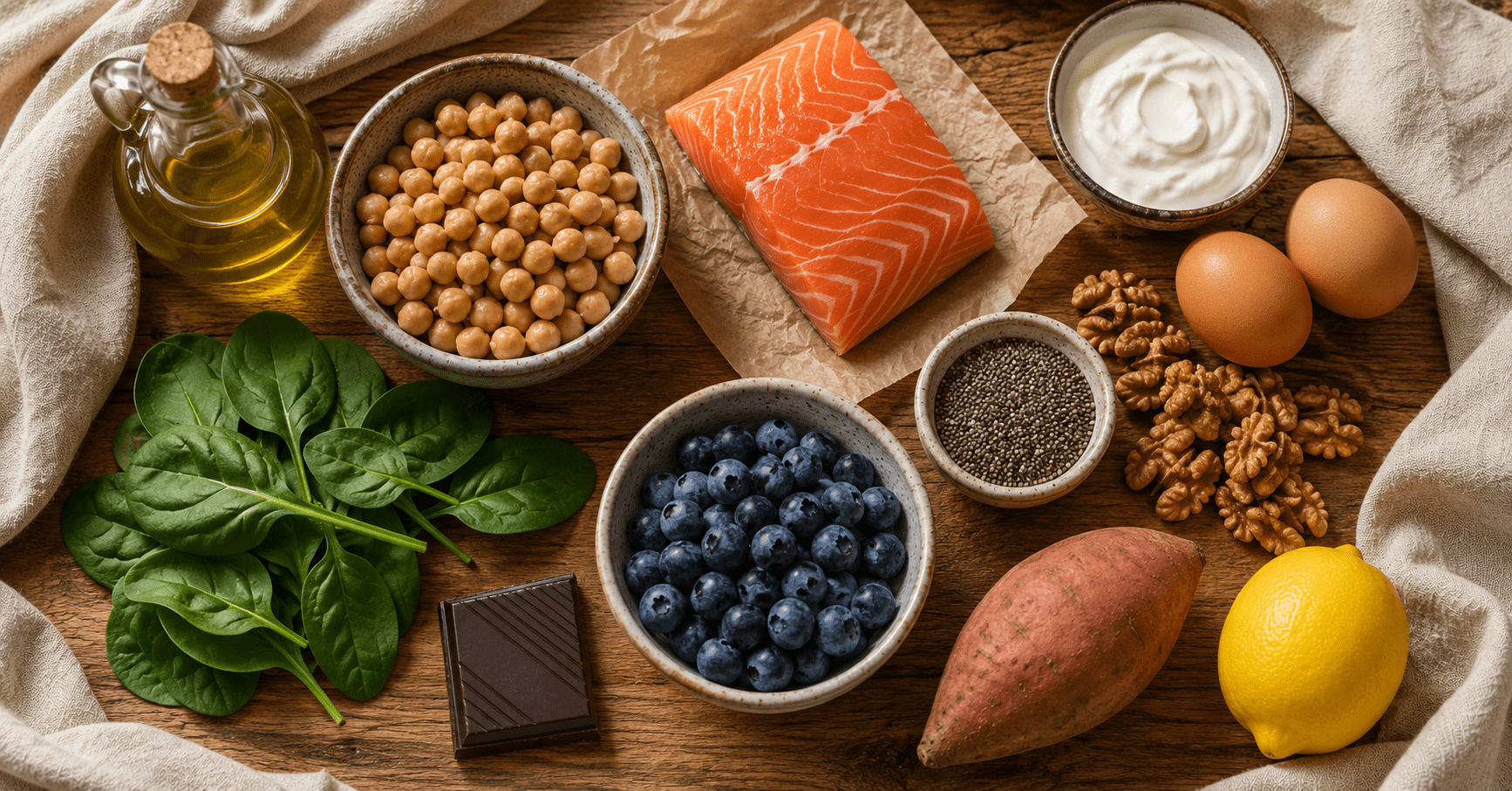
The Mediterranean foods that most effectively stabilize blood sugar are extra virgin olive oil, chickpeas, lentils, salmon and sardines, Greek yogurt, eggs, dark leafy greens, walnuts, chia seeds, sweet potato, blueberries, and dark chocolate above 85 percent cacao. Each works through a specific mechanism: slowing glucose absorption, improving insulin sensitivity, reducing gut inflammation, or providing prebiotic fiber that regulates the hormones controlling hunger and satiety. You do not need a diabetes diagnosis to benefit from these foods. You just need to be tired of crashing at 3pm.
I did not start eating this way because of a blood sugar diagnosis. I started because I was exhausted every afternoon, craving something sweet within an hour of dinner, and unable to focus consistently through a workday without caffeine propping me up. My doctor said everything was normal. My blood sugar was fine. My energy was not.
What I eventually understood was that blood sugar stability is not binary. You do not have normal blood sugar one day and diabetes the next. There is a long spectrum of instability that most people live on without a label for it. The 3pm crash, the evening sugar craving, the brain fog after lunch, the need for coffee by 10am. These are all blood sugar instability experiences that happen to people with entirely normal fasting glucose numbers.
The Mediterranean foods on this list are not diabetes medications or supplements. They are whole foods that change the glucose response to meals through real nutritional mechanisms. Eating them consistently shifts the entire daily blood sugar pattern toward stability without any restriction, calorie counting, or medical intervention.
This is the food side of the same picture described in why blood sugar drops after eating. The mechanism explains why the crash happens. This list is what prevents it.
How blood sugar-stabilizing foods actually work
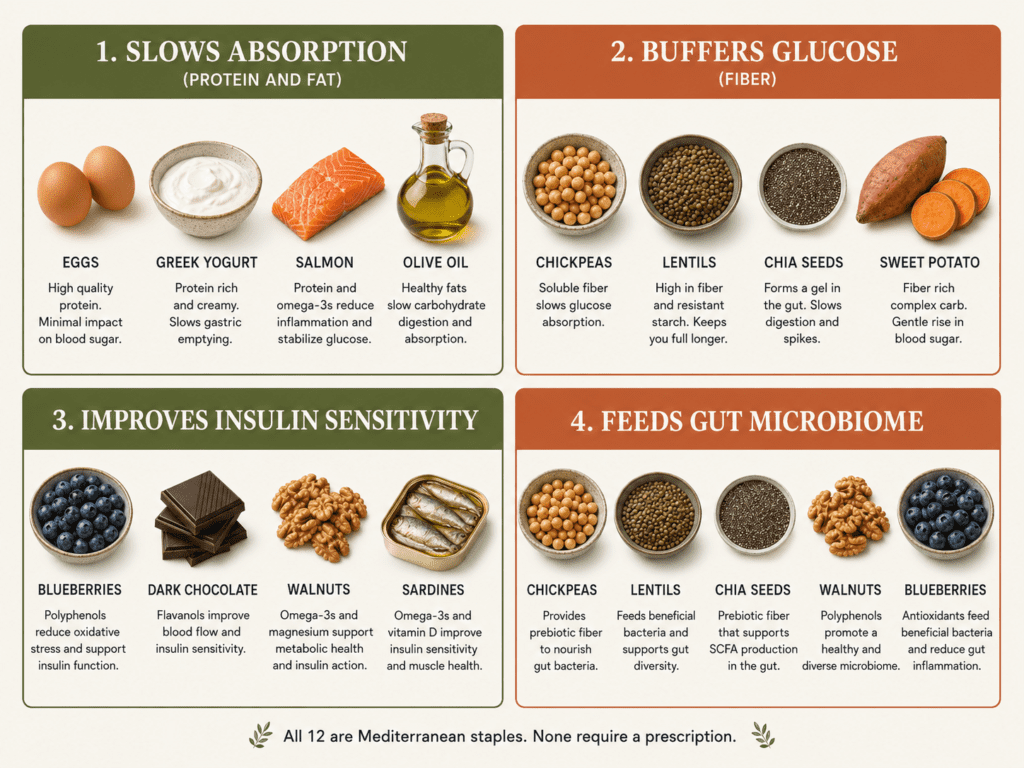
Every food on this list works through at least one of four mechanisms. Understanding the mechanisms helps you combine these foods intelligently rather than just eating each one in isolation.
Mechanism 1: Slowing gastric emptying
Protein, fat, and soluble fiber all slow the rate at which food moves from the stomach into the small intestine. Slower gastric emptying means glucose enters the bloodstream more gradually, producing a gentle rise rather than a sharp spike. Foods high in protein like eggs, Greek yogurt, and sardines, and foods high in healthy fat like olive oil and avocado, are the primary gastric emptying regulators in the Mediterranean framework.
Mechanism 2: Reducing the glycemic response through fiber
Soluble fiber, found in chickpeas, lentils, chia seeds, and oats, forms a gel-like substance in the digestive tract that physically slows carbohydrate absorption. Insoluble fiber from dark leafy greens and vegetables adds bulk that moves food through the digestive system at a more measured pace. Both types buffer the glucose spike from any carbohydrates eaten in the same meal.
Mechanism 3: Supporting insulin sensitivity
Some foods improve how effectively insulin signals cells to absorb glucose. When insulin sensitivity is high, blood sugar regulation requires less insulin for the same glucose load. Extra virgin olive oil polyphenols, omega-3 fatty acids from salmon and sardines, and the antioxidants in blueberries and dark leafy greens have all shown consistent associations with improved insulin sensitivity in the research literature.
Mechanism 4: Feeding the gut microbiome
Beneficial gut bacteria directly regulate the hormones that control hunger and blood sugar. Prebiotic fiber from chickpeas, lentils, and chia seeds feeds the bacteria that produce short-chain fatty acids, which improve gut barrier integrity and reduce the systemic inflammation that impairs insulin signaling. The gut-blood sugar connection is one of the most active areas of nutrition research and the Mediterranean dietary pattern consistently shows the strongest association with beneficial microbiome diversity.
The 12 Mediterranean foods that stabilize blood sugar
1. Extra virgin olive oil
Olive oil is the foundation of Mediterranean blood sugar management. The oleocanthal and oleic acid in high-quality extra virgin olive oil reduce systemic inflammation that directly impairs insulin signaling. A tablespoon of olive oil added to a carbohydrate-containing meal slows gastric emptying and reduces the post-meal glucose peak by slowing absorption. Research on the Mediterranean diet consistently shows that olive oil as the primary cooking fat is one of the most significant variables in its blood sugar benefits compared to diets using butter or seed oils.
How to use it: Cook eggs and vegetables in olive oil. Use it as salad dressing base. Drizzle over finished dishes before serving. More is better than less within reasonable amounts.
2. Chickpeas
Chickpeas are the single most effective blood sugar stabilizing legume in the Mediterranean framework because they combine three mechanisms simultaneously: protein above 15 grams per cup, soluble fiber above 12 grams per cup, and resistant starch that feeds beneficial gut bacteria. A meal containing chickpeas alongside a carbohydrate produces a significantly flatter glucose curve than the same carbohydrate without chickpeas. They are also the most versatile Mediterranean ingredient: salads, soups, bowls, hummus, roasted as a snack.
How to use them: Add half a cup to every lunch. Include in salad bowls as the protein and fiber anchor. Use as the base of hummus for an afternoon snack. Roast with olive oil and spices for a blood sugar-stabilizing snack.
3. Lentils
Lentils have the highest fiber content of any legume and some of the lowest glycemic impact of any carbohydrate-containing food. One cup provides 18 grams of protein and 15 grams of fiber, which together produce a glucose absorption profile that is almost completely flat for 4 to 5 hours. The resistant starch in lentils specifically feeds Akkermansia muciniphila, a gut bacteria species associated with improved metabolic health and insulin sensitivity. Lentil soup is one of the most underrated blood sugar stabilizing meals available.
How to use them: Cook in batches on Sunday for the week. Use as a soup base, a bowl component alongside vegetables, or stirred into a salad with olive oil dressing.
4. Salmon and sardines
Fatty fish provide omega-3 fatty acids that reduce the systemic inflammation that impairs insulin sensitivity. EPA and DHA, the active omega-3 forms found in salmon and sardines, are being studied for a possible role in insulin receptor function. A randomized trial in overweight adults found that high fatty fish intake improved post-meal glucose regulation, though it’s worth being honest that the broader human research on omega-3s and insulin sensitivity is mixed, with many studies not replicating the effect. Sardines specifically are the most efficient Mediterranean blood sugar food: 20 grams of protein, significant omega-3s, and 3 minutes of preparation.
How to use them: Salmon twice a week as a dinner protein. Sardines on whole grain crackers as an afternoon snack or on top of a salad at lunch. Both are among the most blood-sugar-favorable protein sources available.
5. Greek yogurt (plain, full-fat)
Plain full-fat Greek yogurt provides 22 grams of protein per cup alongside live probiotic cultures that directly support the gut microbiome diversity associated with better blood sugar regulation. The protein content makes it one of the most effective breakfast anchors for preventing mid-morning glucose instability. The fat content slows the digestion of any carbohydrates eaten alongside it. The probiotics feed beneficial bacteria that produce short-chain fatty acids, improving gut barrier function and reducing the inflammation that disrupts blood sugar management.
How to use it: As the base of a breakfast bowl with walnuts and chia seeds. As a savory dip with olive oil and herbs. As a post-workout snack that supports both muscle recovery and blood sugar stability.
6. Eggs
Eggs are a complete protein source providing all nine essential amino acids in a form that is efficiently absorbed and immediately available for suppressing ghrelin, the hunger hormone. Two eggs at breakfast provide 14 grams of protein that changes the blood sugar response to any carbohydrates eaten alongside them. The fat in eggs, particularly the yolk, further slows gastric emptying. Research on egg consumption at breakfast consistently shows reduced post-meal glucose spikes and extended satiety compared to carbohydrate-equivalent breakfasts without eggs.
How to use them: Scrambled in olive oil with spinach and cherry tomatoes. Fried alongside avocado and whole grain toast. Hard boiled as a portable snack. Baked into egg muffins for weekly meal prep.. Here is how I prep for the week around this.
7. Dark leafy greens
Spinach, arugula, kale, Swiss chard, and romaine provide insoluble fiber that adds physical bulk to the digestive contents and slows carbohydrate transit through the small intestine. They also provide magnesium, a mineral that directly supports insulin sensitivity and is deficient in a significant proportion of people who experience blood sugar instability. Research has consistently found that magnesium supplementation improves insulin sensitivity, and dark leafy greens are the most effective dietary source of magnesium available.
How to use them: As the base of every lunch salad. Sauteed in olive oil as a dinner side. Added in large handfuls to eggs at breakfast. The volume of greens in a meal matters, a large handful is more effective than a token garnish.
8. Walnuts
Walnuts provide plant-based omega-3 fatty acids, polyphenols that act as prebiotics feeding beneficial gut bacteria, and tryptophan that supports serotonin production and reduces the neurological component of evening sugar cravings. A small handful of walnuts at an afternoon snack or added to a breakfast bowl provides fat and protein that buffer any subsequent glucose absorption and satisfies the craving mechanism through the serotonin pathway rather than through sugar. Walnuts have the strongest research support of any tree nut for blood sugar and metabolic health outcomes.
How to use them: Added to Greek yogurt bowls. As part of an afternoon snack with a piece of dark chocolate. Scattered over salads. Eaten as a small standalone snack when the afternoon craving fires.
9. Chia seeds
Chia seeds expand to 10 times their dry volume when exposed to liquid in the stomach, forming a gel that physically slows the passage of all food through the digestive system. This mechanical slowing of gastric emptying reduces the glucose absorption rate from any carbohydrates consumed in the same meal or in the previous few hours. A tablespoon of chia seeds added to oatmeal, a smoothie, or a yogurt bowl changes the glycemic response of that entire meal. They also provide prebiotic fiber that feeds beneficial gut bacteria and 5 grams of protein per tablespoon.
How to use them: Stirred into overnight oats the night before. Added to smoothies before blending. Mixed into Greek yogurt at breakfast. Sprinkled over salads. One tablespoon per meal is enough to meaningfully change the blood sugar response.
10. Sweet potato
Sweet potato is the only starchy carbohydrate on this list specifically because its fiber content and nutritional density produce a meaningfully lower glucose response than white potato, white rice, or white pasta despite being a carbohydrate-rich food. One cup of cooked sweet potato provides 4 grams of fiber, significant beta-carotene, and a glycemic index approximately 40 percent lower than white potato. It is the carbohydrate component of many Mediterranean-inspired meals specifically because it provides energy without the sharp spike that refined carbohydrates produce. It works best as the last component of a meal, eaten after protein and vegetables, which further reduces its glucose impact.
How to use it: Roasted in olive oil as a dinner side. In a breakfast hash alongside eggs. As a slow-carbohydrate component of a lunch bowl eaten after the protein and vegetable portions.
11. Blueberries
Blueberries are the one fruit on this list specifically because the anthocyanins that give them their color have shown consistent associations with improved insulin sensitivity and reduced post-meal glucose spikes even when consumed alongside other carbohydrates. Research has found that consuming blueberries regularly for several weeks produces measurable improvements in insulin sensitivity in both metabolically healthy and at-risk individuals. They also provide prebiotic fiber that feeds the beneficial gut bacteria involved in blood sugar regulation. A small portion of blueberries added to a Greek yogurt bowl or overnight oats is the most effective fruit addition to a blood-sugar-stabilizing breakfast.
How to use them: Added to Greek yogurt or overnight oats at breakfast. As an afternoon snack alongside a handful of walnuts. Not as a juice or smoothie base where the fiber is diluted or removed.
12. Dark chocolate (85 percent cacao or higher)
Dark chocolate above 85 percent cacao provides flavonoids that improve endothelial function and insulin sensitivity, polyphenols that act as prebiotics feeding beneficial gut bacteria, and enough fat and moderate protein to prevent a glucose spike from the small amount of carbohydrates present. It also addresses the neurological component of evening sugar cravings through a controlled dopamine response that satisfies the craving signal without triggering the blood sugar spike-and-crash cycle that amplifies the next evening’s craving. Two to three squares is the meaningful dose. Below 85 percent cacao the sugar content begins to override the blood sugar benefits.
How to use it: Two to three squares as part of an afternoon snack with walnuts. After dinner as a planned intentional sweet that signals the eating day is complete. The cacao percentage matters: 85 percent or above is where the benefits begin.
>> Want to build meals around these foods automatically?
The Full Plate Method app builds Mediterranean meals using the protein-fiber-fat combination that keeps blood sugar stable all day. Free forever. Build blood sugar-stable meals free
How to combine these foods for maximum blood sugar stability
Eating any one of these foods in isolation produces a benefit. Combining several of them in the same meal multiplies the effect because the mechanisms work synergistically rather than independently.
The most effective breakfast combination
Two eggs scrambled in olive oil with a large handful of spinach and cherry tomatoes, alongside a small cup of Greek yogurt with walnuts and a tablespoon of chia seeds. This combination activates all four mechanisms simultaneously: protein from eggs and yogurt slows gastric emptying, olive oil provides additional fat-based slowing, spinach delivers magnesium and fiber, walnuts provide omega-3s and tryptophan, and chia seeds form the gel that buffers any subsequent glucose absorption. Blood sugar remains flat for 4 to 5 hours after this breakfast in most people.
The most effective lunch combination
A Mediterranean bowl with grilled salmon or sardines as the protein anchor, a generous portion of chickpeas as the fiber and secondary protein source, a large base of arugula or spinach dressed with olive oil and lemon, and a small portion of sweet potato or quinoa eaten last. This combination delivers protein from two sources, fiber from chickpeas and greens, fat from olive oil and salmon, and a slow carbohydrate that absorbs into a system already primed by the fiber and fat from the first two-thirds of the meal.
The most effective afternoon snack combination
A handful of walnuts, two to three squares of dark chocolate at 85 percent or higher, and a few sardines on whole grain crackers if hunger is significant. This combination addresses both the blood sugar component of the afternoon craving through protein and fat, and the neurological component through the dopamine response from dark chocolate and the tryptophan-to-serotonin pathway from walnuts. Most people find this combination stops the 3pm craving without producing another hunger signal before dinner.
What these foods are not
These are not supplements, protocols, or medical treatments. They are whole foods that have been the foundation of Mediterranean eating patterns for generations, eaten by people who historically had lower rates of blood sugar instability, metabolic disease, and energy crashes than populations eating refined-carbohydrate-heavy Western diets.
They do not require eating perfectly. They do not require eliminating other foods. The mechanism is additive rather than subtractive. Adding olive oil to a meal that would otherwise have none changes the blood sugar response of that meal even if the meal is not otherwise Mediterranean. Adding chickpeas to a salad that would otherwise have no legumes changes the digestion rate of that salad. The improvements compound with consistency rather than requiring perfection from the first day.
For people who want additional support alongside these food changes, natural blood sugar supplements can complement the dietary pattern but the foods in this list do most of the work and are the appropriate starting point for anyone who is not managing a medical condition.
Frequently asked questions
What foods stabilize blood sugar quickly?
Protein and fat are the fastest-acting blood sugar stabilizers because they immediately begin slowing gastric emptying and reducing the rate of glucose absorption. If blood sugar has already dropped and you need to stabilize it quickly without creating another spike, a small amount of protein and fat, a handful of walnuts, a spoonful of almond butter, or a few sardines, is more durable than sugar or carbohydrates, which stabilize quickly but create another crash cycle. For ongoing stability across the day, the Mediterranean foods in this list work through consistent daily consumption rather than single-meal interventions.
How long does it take for food to affect blood sugar?
Refined carbohydrates like white bread and sugar begin raising blood sugar within 15 to 30 minutes of eating. The peak typically occurs at 60 to 90 minutes after the meal. Protein-rich and fiber-rich meals produce a much slower and lower peak, often not reaching their maximum glucose influence until 2 hours after eating. The blood sugar stabilizing effects of foods like chia seeds, chickpeas, and olive oil accumulate over consistent daily consumption, with most people noticing meaningful differences in energy, afternoon cravings, and focus within 3 to 7 days of eating these foods consistently.
Can you stabilize blood sugar without cutting carbohydrates?
Yes. The Mediterranean approach does not eliminate carbohydrates. It changes the context in which carbohydrates are consumed. The same carbohydrate load eaten alongside protein, fat, and fiber produces a completely different blood sugar response than the same carbohydrate eaten alone. A bowl of pasta with olive oil, grilled salmon, and a large salad with chickpeas produces a much flatter glucose curve than a bowl of plain pasta. The carbohydrate content is similar. The blood sugar response is entirely different because of the context created by the other foods present.
Are these foods only for people with diabetes?
No. The framing of blood sugar stabilizing foods as a diabetes-specific concern is one of the most significant gaps in mainstream nutrition communication. Blood sugar instability exists on a spectrum from subtle energy fluctuations, occasional afternoon crashes, and evening sugar cravings to clinical conditions like prediabetes and type 2 diabetes. The foods on this list benefit anyone on that spectrum. The healthy 28-year-old who crashes every afternoon is experiencing the same mechanism as someone with prediabetes on a less severe scale. The Mediterranean approach to blood sugar stability is appropriate for both.
How much olive oil should I eat to stabilize blood sugar?
Research on the Mediterranean diet consistently uses olive oil as the primary cooking and dressing fat rather than as an occasional addition. A practical target is 2 to 4 tablespoons daily across cooking, dressings, and finishing. This is significantly more than most people in non-Mediterranean contexts use. The polyphenol and oleic acid content of olive oil that produce blood sugar benefits are dose-dependent to a meaningful extent, which is why the Mediterranean dietary pattern uses olive oil generously rather than sparingly.
The bottom line
Blood sugar stability is not a medical condition to manage. It is a daily experience that determines how you feel at 10am, 3pm, and 9pm. The 12 Mediterranean foods on this list change that experience through real nutritional mechanisms that work whether or not you have a diagnosis. Start with the three most accessible: add olive oil to every meal, include chickpeas or lentils at lunch, and switch to plain full-fat Greek yogurt as your morning protein anchor. Track how you feel at 3pm for the next five days. Most people notice the difference in the first week without changing anything else about what they eat.
Everything on this list was on my grandmother’s table in the Dominican Republic. Olive oil over everything. Chickpeas and lentils at almost every meal. Sardines as a regular protein. Fresh greens. Dark chocolate in small pieces after dinner. She never tracked her blood sugar. She never crashed at 3pm. She never reached for a vending machine. The foods were just there. That is the point of the Mediterranean framework. Not a list of supplements to take. A way of building a plate that makes blood sugar stability a passive outcome rather than an active project.
Ribert
>> Want all 12 of these foods built into a complete week of meals?
The 7-Day Mediterranean Meal Plan PDF uses every food on this list across 28 done-for-you meals and snacks. $17, instant download. Get the 7-Day Mediterranean Meal Plan for $17
Keep reading
Why Does Blood Sugar Drop After Eating?
How to Balance Blood Sugar to Stop Hunger and Cravings
Why You Feel Tired After Eating
How to Order Your Food on Your Plate to Avoid the 3pm Crash
This article shares personal experience and general nutrition information, not medical advice. If you have concerns about blood sugar or diabetes, speak with your healthcare provider.
About Ribert Rodriguez
Ribert is the founder of EnergiSource Wellness. He built this site to share what actually worked for him after years of struggling with cravings, late-night eating, and low energy. His approach is rooted in the Mediterranean framework and a belief that food is one of the most powerful tools for how you think and feel.