Key Takeaways
- Eat This Much works well for macro-focused meal planning, but the most common complaints (rigid macros, repetitive recipes, ballooning grocery lists) point at a bigger issue than the app itself.
- The right alternative depends on what actually stopped working for you. If macros feel exhausting, a structure-based planner may fit better. If you want more recipe variety, an app with a larger content library does.
- Five alternatives that still exist in 2026: Samsung Food, Plan to Eat, Paprika, my free Full Plate Meal Builder, and a done-for-you plan if you’d rather skip apps entirely. PlateJoy has closed, and Mealime shuts down on October 21, 2026.
- This article does not include affiliate links to any of these apps. The comparison is honest, not paid.
I was an Eat This Much user for about six months before I stopped. It wasn’t a dramatic breakup. It was gradual, that slow feeling of the tool becoming another thing I had to manage instead of something making my week easier. If you’re reading this, you’re probably somewhere in that same slow drift.
What nobody says clearly in the endless ‘X vs Y meal planner’ articles: the honest reason someone searches for an Eat This Much alternative usually isn’t just wanting a different macro tracker. It’s often the quiet realization that counting itself is what’s not working, and no amount of switching apps fixes that. That’s worth naming before comparing anything.
The Real Problems With Eat This Much (Not Just Complaints)
Eat This Much has over 6 million users and won CNN Underscored’s ‘Best Meal Planning App’ recognition. It’s a legitimate product. But its most-cited complaints follow a specific pattern that’s worth understanding before choosing an alternative.
Macro rigidity. The app pulls from a fixed database of around 5,000 recipes and filters them through your macro targets. If your macros are strict, the pool shrinks fast, and the same 20 or so recipes cycle through your week.
Grocery list bloat. Because each meal pulls from a different recipe, ingredient overlap is minimal. Users regularly report grocery bills coming in at nearly double the app’s estimate, with items already in the pantry showing up on the list.
Calorie calc accuracy. Multiple reviews document meal totals appearing wildly off, sometimes with a single ingredient like a smoothie showing up as an entire day’s meal.
These aren’t small design bugs. They point at the same underlying model, macro-first meal planning tends to break down for real weekly cooking. That matters for the alternatives, because most ‘better’ options in the SERP are just other macro-first planners promising to fix the same broken model.
The Better Question to Ask
Before comparing apps, honest question worth sitting with: what did you actually hope Eat This Much would do for you?
If the answer is “hit my macros more efficiently,” Eat This Much is honestly still one of the best tools for that model, and there’s nothing wrong with wanting that. The alternatives below are for when the model itself is the problem.
If the answer is closer to ‘stop having to think about what to eat every day,’ then the whole macro model may be what’s not working, and structure-based planning (without counting) is a different, legitimate path.
I’ll flag which category each app falls into, so you can pick based on what you actually need.
Built for structure, not macros
The Mediterranean Meal Plan
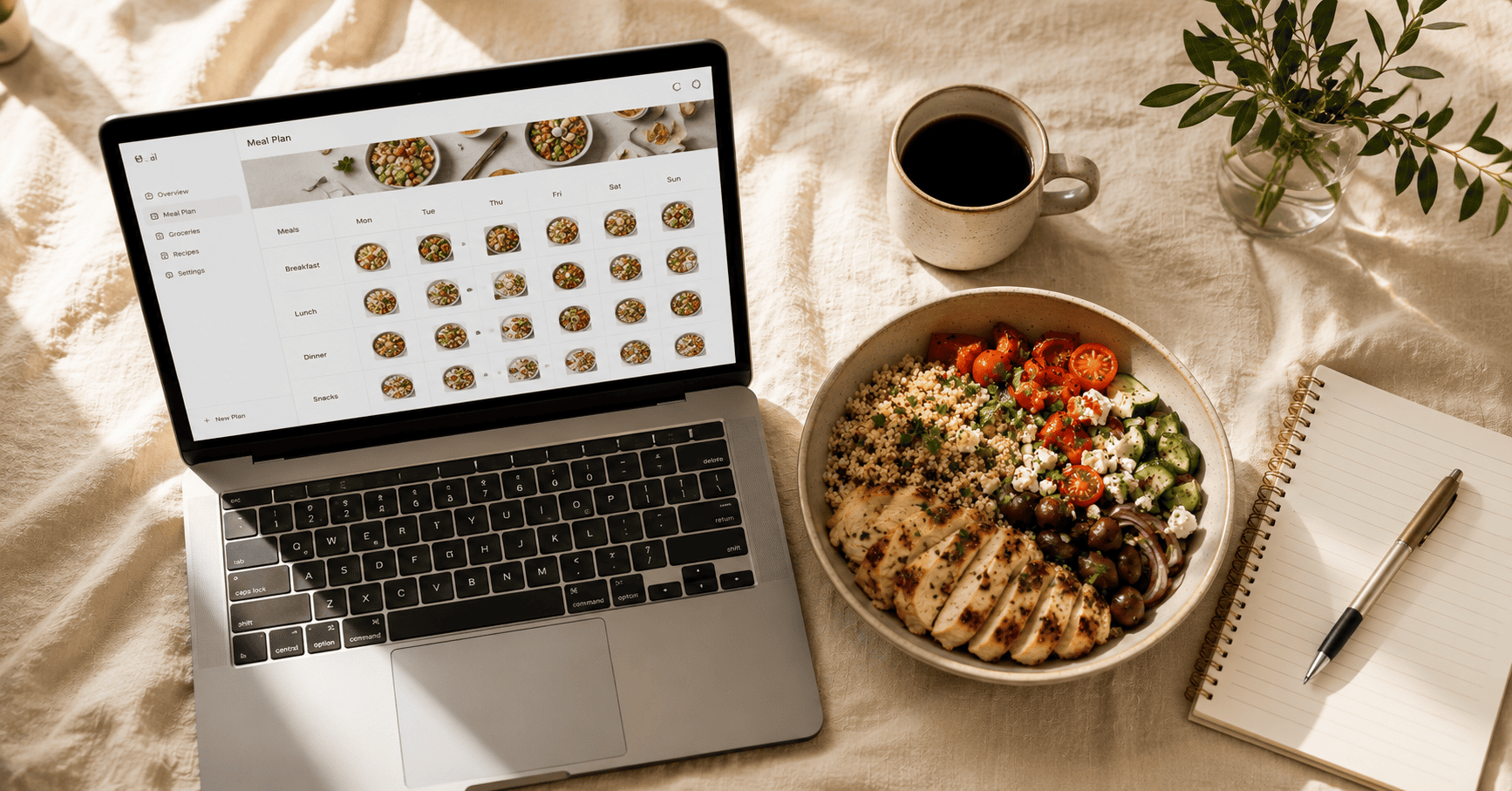
If you’re leaning toward the second answer, structure not macros, the 7-day Mediterranean Meal Plan I built might be what you’re actually looking for. 28 meals and snacks, complete grocery list, no calorie counting. Built around protein, fiber, and healthy fat for 4 to 5 hour fullness.
Get the plan for $175 Honest Alternatives, and Who Each One Is For
Updated September 2026: two apps that used to top every “Eat This Much alternatives” list are gone. PlateJoy closed its consumer app in 2025, and Mealime is shutting down on October 21, 2026 (here’s what Mealime users should do next). The list below only includes options you can actually use today. Prices were checked on each company’s site in September 2026.
1. Samsung Food
Best for: a free, all-in-one planner. Samsung Food (formerly Whisk) lets you save recipes from any website, drag them into a weekly plan and build a shopping list, all on the free plan. It works on any phone, not just Samsung. There’s a paid Food+ tier for extras like personalized plans.
The downside: it doesn’t generate calorie-matched plans the way Eat This Much does, and there’s no Mediterranean-first structure. You’re still choosing the meals.
Free plan: yes, and it’s genuinely usable. Paid: optional Food+ tier.
2. Plan to Eat
Best for: organizing recipes you already love. Plan to Eat is a recipe organizer and meal planner in one. You import recipes from any blog, drop them on a calendar, and it builds a combined grocery list. If Eat This Much kept giving you recipes you didn’t want, this flips it: you only plan what you already like.
The downside: it doesn’t suggest meals or hit nutrition targets for you. It’s a planner, not a generator.
Free trial, no card needed. Then $5.95/month or $49/year.
3. Paprika
Best for: owning your tool, no subscription. Paprika is a recipe manager with meal planning, a pantry and grocery lists. You pay once per platform (phone, tablet or computer) and it’s yours. It’s the most “buy it and forget about billing” option on this list.
The downside: no meal suggestions and no nutrition targets. You bring the recipes and the plan.
One-time purchase per platform. No subscription.
4. The Full Plate Meal Builder (Full Disclosure, This Is Mine)
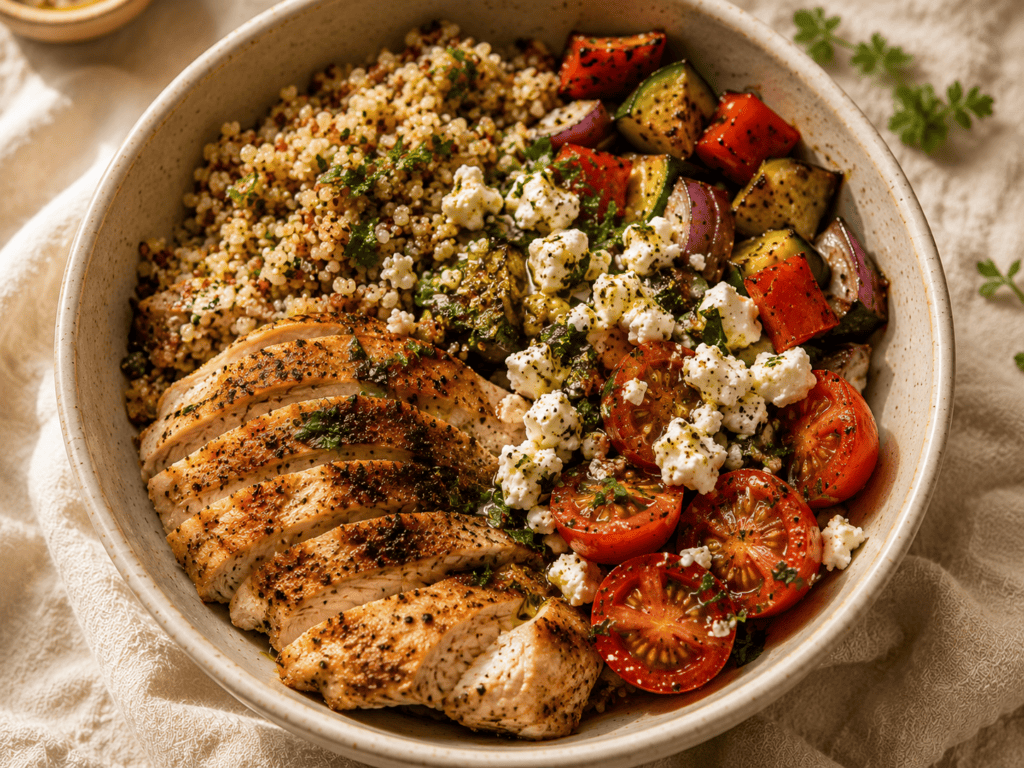
Best for: Mediterranean meals that keep you full, without counting. I built the free Full Plate Meal Builder because I got tired of the macro model. You pick what you have, and it builds a meal with protein, fiber, healthy fat and a smart carb, the same Full Plate Method I use every day. It’s built around staying full between meals, not hitting numbers.
The downside I’ll name honestly: it builds one meal at a time. No weekly automation, no grocery delivery, no macro tracking (by design). If macro tracking is what you want, this isn’t your tool.
Free. No account needed.
5. Skip the App: a Done-for-You Week (Also Mine)
Best for: people who just want to be told what to eat for a week. A lot of people try meal planning apps because they want someone else to do the thinking. If that’s you, a written plan can be simpler than any app. The Cravings Control Reset is my 7-day high-protein Mediterranean plan: 28 meals, a grocery list, a Sunday prep plan and a step-by-step routine for evening cravings.
The downside: it’s a PDF, not software. It won’t regenerate meals or adjust to calorie targets.
$27 one-time.
The Comparison At a Glance
| Option | Price (Sept 2026) | Best for |
|---|---|---|
| Eat This Much | Free daily plans; Premium $5/month billed yearly | Auto-generated plans that hit calorie and macro targets |
| Samsung Food | Free (optional paid tier) | Free all-in-one recipe saving and planning |
| Plan to Eat | $5.95/month or $49/year | Planning around recipes you already love |
| Paprika | One-time per platform | No subscription |
| Full Plate Meal Builder | Free | Mediterranean meals that keep you full, no counting |
| Cravings Control Reset | $27 one-time | A done-for-you 7-day plan, no app |
Frequently Asked Questions
Is Eat This Much still worth using in 2026?
If you want strict macro-driven meal planning and can tolerate the recipe repetition and grocery list bloat, yes. If either of those complaints resonate with you, an alternative built on a different model is worth looking at.
Which alternative is genuinely free?
Samsung Food has a genuinely usable free plan, and the Full Plate Meal Builder is free with no account. Paprika is a one-time purchase, so you never pay a subscription. Plan to Eat has a free trial, then charges monthly or yearly.
What’s the best Mediterranean-specific alternative?
The Full Plate Meal Builder is built only for Mediterranean-style meals. Eat This Much and Samsung Food both support Mediterranean eating through filters and recipe choices, but aren’t built around it.
Do I really need a meal planning app at all?
Honest answer, no. Some people need one, some don’t. If you’re already comfortable planning meals and enjoy the process, an app just adds friction. If planning is what stops you from eating well, then an app can genuinely help.
The exact formula, delivered free.
If you’re finding this useful, the one-page Hunger-Free Day Formula walks through the exact meal structure that keeps hunger from crashing back an hour later. It’ll land in your inbox in under a minute.
The Bottom Line
The best Eat This Much alternative depends on what stopped working for you. If you still want automatic, calorie-matched plans, stay with Eat This Much. If you want free and flexible, try Samsung Food. If you already have recipes you love, Plan to Eat or Paprika are the practical picks. And if you want to stop counting and just eat meals that keep you full, start with the free Full Plate Meal Builder.
The one honest thing worth saying that most ‘X vs Y’ articles won’t: sometimes the reason a meal planning app stops working isn’t the app. It’s that you’ve outgrown the model it’s built on. That’s not a bug, it’s progress.
Ribert
Keep Reading
This article shares personal experience and general information, not medical or professional software advice.
About Ribert Rodriguez
Ribert is the founder of EnergiSource Wellness. He researches and writes every article on this site personally, cross-checking claims against published research and real user experience rather than relying on generic wellness advice. His approach is rooted in the Mediterranean framework, built from years of testing meal structures on himself after struggling with cravings, late-night eating, and low energy.