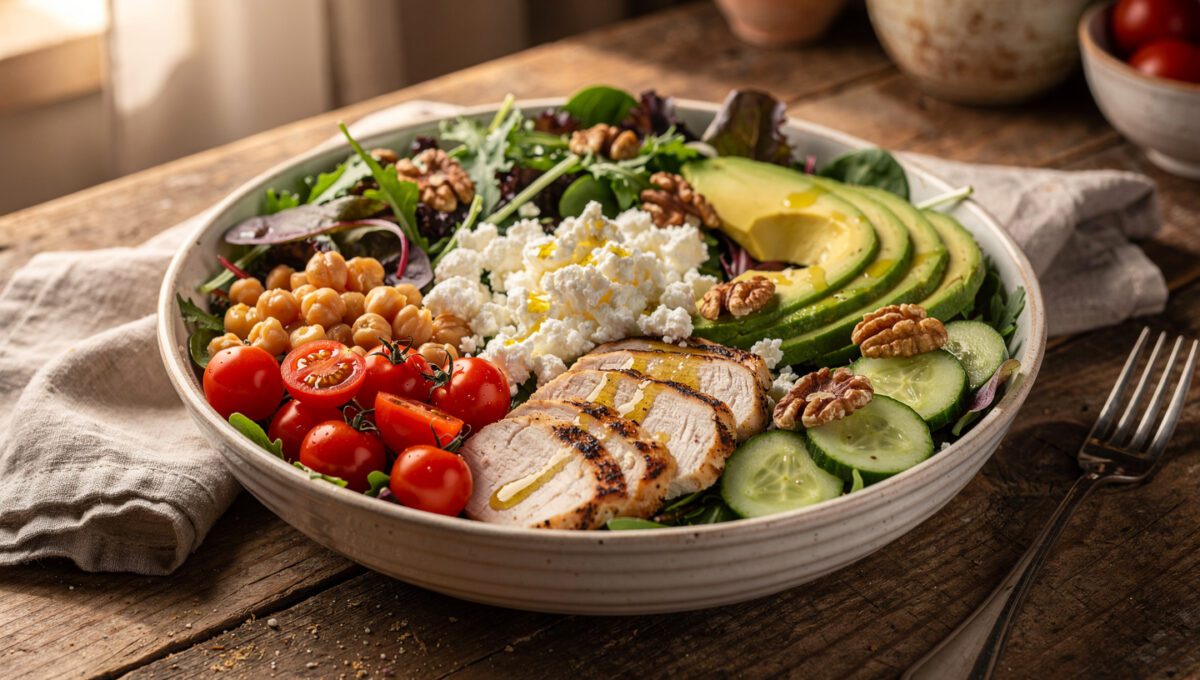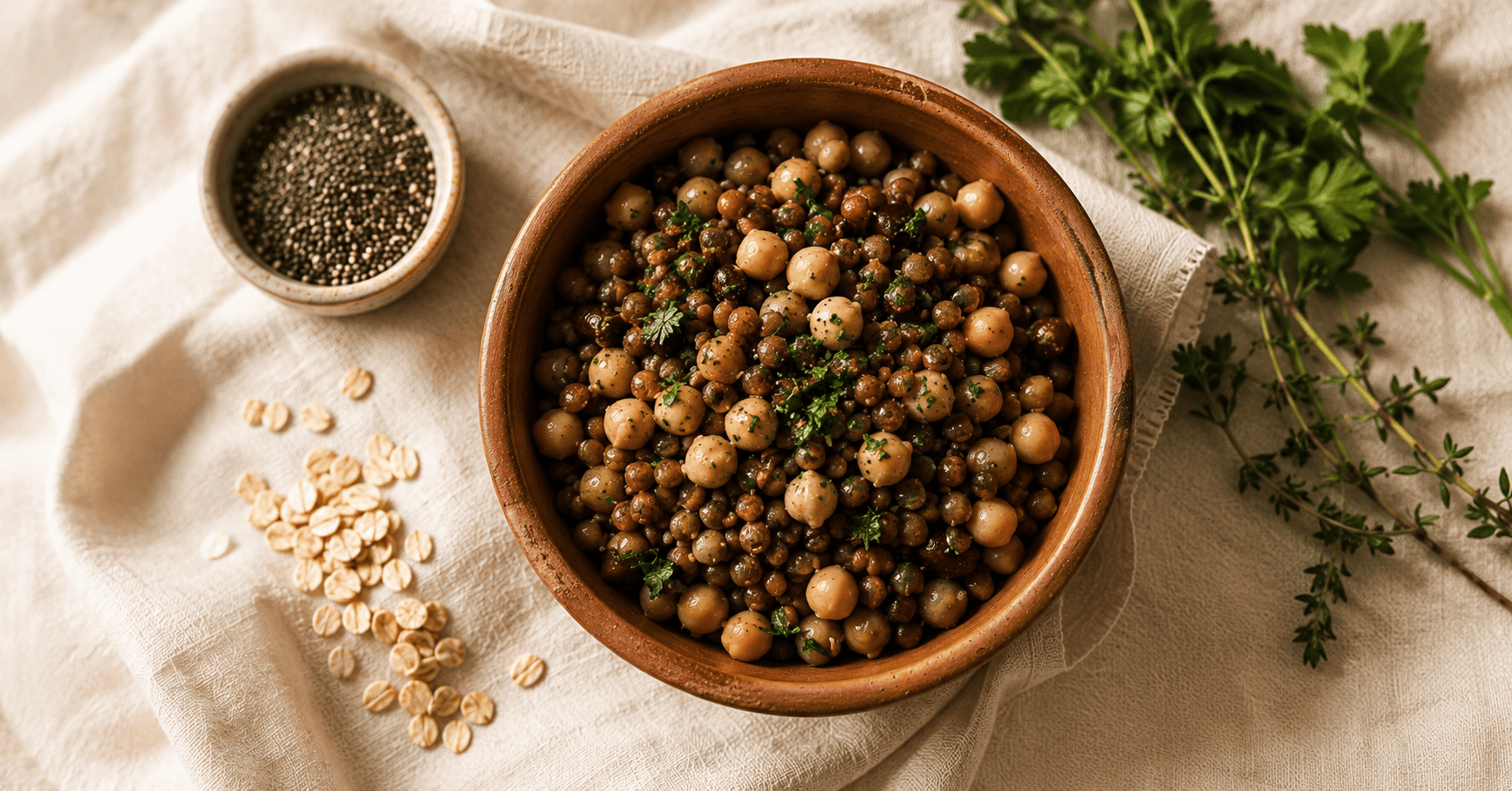
Fiber keeps you full by slowing digestion and triggering the release of two hormones, GLP-1 and peptide YY (PYY), which signal fullness to your brain. Viscous fibers (oats, chia, beans) do this more powerfully than bulking fibers (wheat bran), which is why some high-fiber foods hold you longer than others. Pairing fiber with protein and healthy fat at each meal is the most effective way to use this mechanism.
I spent years assuming protein was the only thing that mattered for staying full. I’d build a meal around chicken or eggs and still find myself hungry an hour later, wondering what I was doing wrong. It took me a long time to realize fiber wasn’t a side character in that story. It was doing half the work I was crediting entirely to protein.
Related: why you’re still hungry after eating (and the fix)
What nobody explains clearly: fiber doesn’t just add bulk and slow you down mechanically. It actually triggers your gut to release specific hormones that tell your brain you’re full, the same category of signal protein sends, just through a completely different pathway.
What Fiber Actually Does to Make You Feel Full
Fiber creates fullness through two separate mechanisms working together: it physically slows how fast food leaves your stomach, and it triggers your gut to release hormones that tell your brain to stop being hungry.
The first part is mechanical. Fiber-rich foods take up more space in your stomach and slow gastric emptying, according to a peer-reviewed review of dietary fiber and appetite regulation published in the journal Appetite. That delay alone buys you time before hunger signals start again.
The second part is hormonal, and it’s the piece most people have never heard of. As fiber moves through your digestive tract, it stimulates cells in your gut to release **GLP-1 and peptide YY (PYY)**, two hormones that travel to your brain and directly signal satiety. Fermentation of fiber in your gut also produces short-chain fatty acids, which trigger even more of these same fullness hormones. This is a real, measurable hormonal response, not a vague wellness claim.
Not All Fiber Works the Same Way
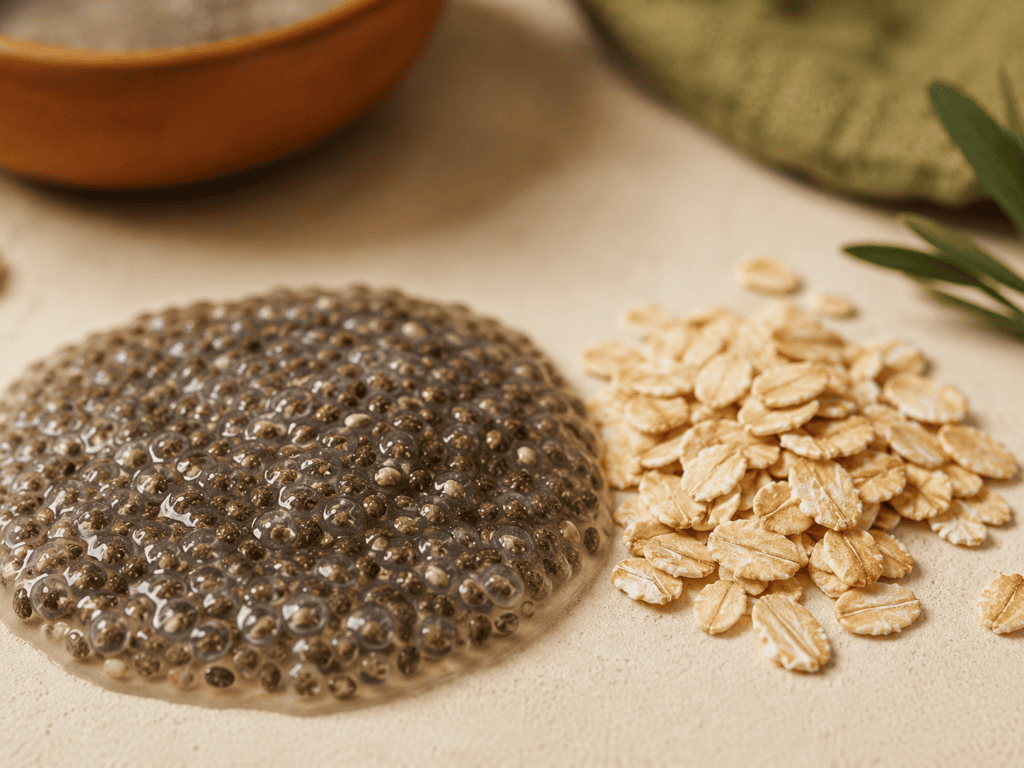
Viscous fiber, the kind found in oats, chia seeds, and beans, is significantly more effective at suppressing hunger than bulking fiber, like wheat bran, which primarily affects how full you feel during a meal rather than how long that fullness lasts.
A systematic review of cereal fibers and satiety published in Nutrition Reviews found that fiber type and physicochemical properties, meaning how it behaves once it’s actually in your gut, mattered more than simply how many grams you ate. This is why two people can both eat 10 grams of fiber and have completely different experiences of fullness afterward.
I noticed this firsthand once I started paying attention to which fiber sources actually held me versus which ones didn’t. A bowl of oats or a lentil-based meal kept me satisfied for hours. A slice of whole wheat bread, technically also a fiber source, did much less.
Why This Matters More Than Protein Alone
Protein and fiber are not competing strategies for fullness. They work through different pathways and are most effective combined, which is exactly why a meal with only protein and no fiber often falls short of true satiety.
Before I understood this, my meals leaned almost entirely on protein: chicken, eggs, sardines, all good choices, but incomplete on their own. Once I started deliberately pairing every meal with a viscous fiber source alongside the protein, the difference wasn’t subtle. The 3pm hunger that used to derail my afternoon largely disappeared, not because I was eating less, but because I was finally using both fullness pathways instead of just one.
The Best Fiber Sources for Real Satiety
Chickpeas
Chickpeas combine viscous soluble fiber with a meaningful dose of protein, making them one of the most efficient single foods for triggering both fullness pathways at once. I use them in salads, blended into dips, or roasted as a snack. If you want a reliable source on hand, this is the organic chickpeas I keep stocked
Lentils
Lentils are similarly high in viscous fiber and cook quickly compared to other legumes, which makes them realistic for actual weeknight meals rather than a theoretical health food you never get around to using. Here’s the organic lentils I use most often
Chia Seeds
Chia seeds form a gel when combined with liquid, which is a visible, literal demonstration of viscous fiber in action. Adding a tablespoon to yogurt, oatmeal, or a smoothie is a simple way to add this mechanism into a meal you’re already making. This is the chia seeds I keep in my pantry
Oats
Oats are one of the most researched sources of viscous fiber for satiety specifically, and they’re genuinely simple to build a whole breakfast around.
Vegetables With Skin On
Vegetables like sweet potatoes and zucchini, eaten with the skin intact, add meaningful fiber without requiring you to think about it as a separate step in a meal.
How to Actually Use This
The most effective way to use fiber for satiety is to include a viscous fiber source at every meal, not just occasionally, and to pair it deliberately with protein rather than treating them as separate strategies.
This is the same logic behind the Balanced Plate Method, which builds every meal around protein, fiber, and healthy fat together rather than any one nutrient carrying the whole load.
Frequently Asked Questions
Does fiber really make you feel full, or is that a myth?
It’s real and measurable. Fiber triggers the release of GLP-1 and PYY, hormones directly tied to feelings of fullness, in addition to physically slowing digestion.
What’s the best fiber for fullness specifically?
Viscous fiber, found in oats, chia seeds, and legumes like chickpeas and lentils, is more effective for sustained fullness than bulking fiber like wheat bran.
How much fiber do I need to notice a difference?
Consistency matters more than a specific number. Including a viscous fiber source at each meal tends to produce a noticeable difference within days.
Can I get too much fiber?
Increasing fiber intake gradually and drinking enough water alongside it helps avoid digestive discomfort, which is the most common issue with a fast increase.
Free printable
Hungry again at 9pm?
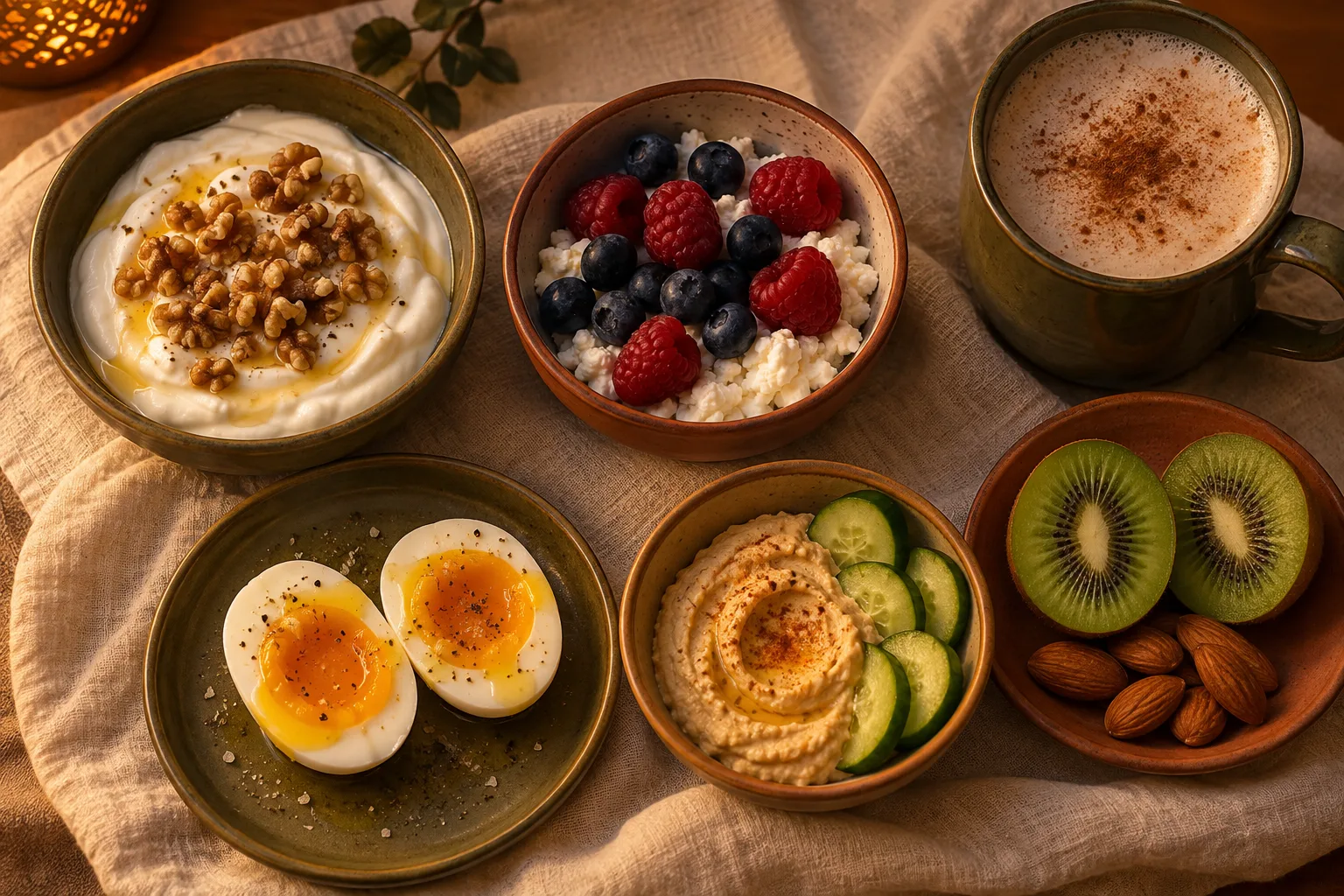
Get the free printable Night Hunger Snack List: 10 Mediterranean snacks with exact portions and protein counts, for the evenings when cravings hit. Enter your email and download it instantly.
Free. No spam. Unsubscribe anytime.
The Bottom Line
Fiber isn’t a supporting player to protein when it comes to fullness. It works through its own hormonal pathway, and viscous fiber sources like chickpeas, lentils, chia, and oats are the ones actually worth building meals around.
Once I stopped treating fiber as an afterthought and started building it into every meal alongside protein, the hunger that used to hit predictably in the afternoon mostly stopped showing up. Not because I was restricting anything, just because I was finally using the mechanism that was there all along.
Ribert
>> Want this built into a full meal plan instead of figuring out fiber pairings yourself?
The Full Plate Method app builds Mediterranean meals around protein, fiber, and healthy fat automatically. Free forever. Build your fullness-focused meals free.
>> Still dealing with cravings that just won’t quit?
The Cravings Control Reset is a simple 7-day system built around real Mediterranean meals. No tracking, no restriction. Get instant access for $27.
This article shares personal experience and general nutrition information, not medical advice. Talk to a doctor before making significant changes to your diet, especially if you have a digestive condition.
About Ribert Rodriguez
Ribert is the founder of EnergiSource Wellness. He researches and writes every article on this site personally, cross-checking claims against published research rather than relying on generic wellness advice. His approach is rooted in the Mediterranean framework, built from years of testing meal structures on himself after struggling with cravings, late-night eating, and low energy.