Morning sugar cravings happen because blood sugar is at its lowest point after overnight fasting, cortisol peaks within 30 to 45 minutes of waking, and the brain responds to both by sending an urgent signal for fast fuel. That signal is not a sweet tooth. It is a biological survival response that your breakfast either resolves or amplifies depending on what you eat. A high-protein savory breakfast quiets the signal within the first meal. A sweet or carbohydrate-led breakfast satisfies it briefly and then makes the next craving stronger and earlier in the day.
I used to start every morning reaching for something sweet. Not because I had a sugar addiction or no willpower. Because I was genuinely experiencing an urgent physical pull toward sweetness before I had eaten anything. A fruit smoothie felt like a healthy choice. Yogurt with honey and granola felt like a responsible breakfast. By 9:30am I was already hungry again and by 3pm the sugar craving was back harder than it had been in the morning.
What I eventually understood was that the morning sweet choice was not a neutral decision. It was the first link in a chain that determined how the entire day would feel. The breakfast I chose at 7am was setting up the 3pm crash I was experiencing at my desk every single day.
This connects directly to what I wrote about in what to eat for breakfast to stop cravings all day. The morning craving is the starting point of the whole pattern. Understanding why it happens is the first step to breaking it.
The three reasons morning sugar cravings happen
Reason 1: Blood sugar is at its lowest point of the day
During sleep your body continues using glucose to fuel essential functions including brain activity, temperature regulation, and cell repair. By morning after 7 to 9 hours without eating, blood sugar has dropped to its lowest point of the day. The brain, which runs almost exclusively on glucose and uses about 20 percent of the body’s total energy, detects this drop and sends an urgent signal for fast fuel.
The fastest available fuel is sugar or refined carbohydrates. That is not a design flaw. It is exactly what the system is supposed to do in a food-scarce environment. The problem is that we live in a food-abundant environment where the fast fuel is a granola bar or a fruit smoothie rather than a piece of fruit foraged during a morning walk. The biological signal is working correctly. The food environment has changed around it.
Reason 2: Cortisol peaks within 30 to 45 minutes of waking
Cortisol, your primary stress hormone, follows a predictable daily rhythm. It rises sharply in the early morning as part of the natural waking process, peaking within 30 to 45 minutes of waking in what researchers call the cortisol awakening response. This morning cortisol surge is healthy and necessary. It is what provides the alertness and motivation to start the day. But cortisol also affects blood sugar regulation. As described in the foods that lower cortisol article, elevated cortisol promotes glucose release from the liver to provide morning energy. When combined with the already-low blood sugar from overnight fasting, the early morning hormonal state creates a significant demand for glucose that the body interprets as an urgent need for sweet or starchy food.
What makes this worse is that most common breakfast foods amplify the cortisol response rather than moderating it. Caffeine on an empty stomach elevates cortisol further. Refined sugar causes a glucose spike that then crashes and creates a secondary cortisol response. Skipping breakfast entirely extends the low blood sugar state and keeps the cortisol signal running longer into the morning.
Reason 3: The previous evening set up the morning craving
Morning sugar cravings are not only caused by what happens overnight. They are also influenced by what happened the previous evening. A dinner that was low in protein, high in refined carbohydrates, or eaten late created a blood sugar pattern that extended into sleep and produced a steeper morning glucose drop than a well-structured dinner would have.
The evening sugar craving that fires after dinner and the morning sugar craving that fires before breakfast are part of the same daily blood sugar pattern. They reinforce each other. A sweet dinner creates a worse morning craving. A sweet breakfast creates a worse afternoon craving. The entire day is connected by the same glucose instability cycle.
Why giving in to the morning sugar craving makes it worse
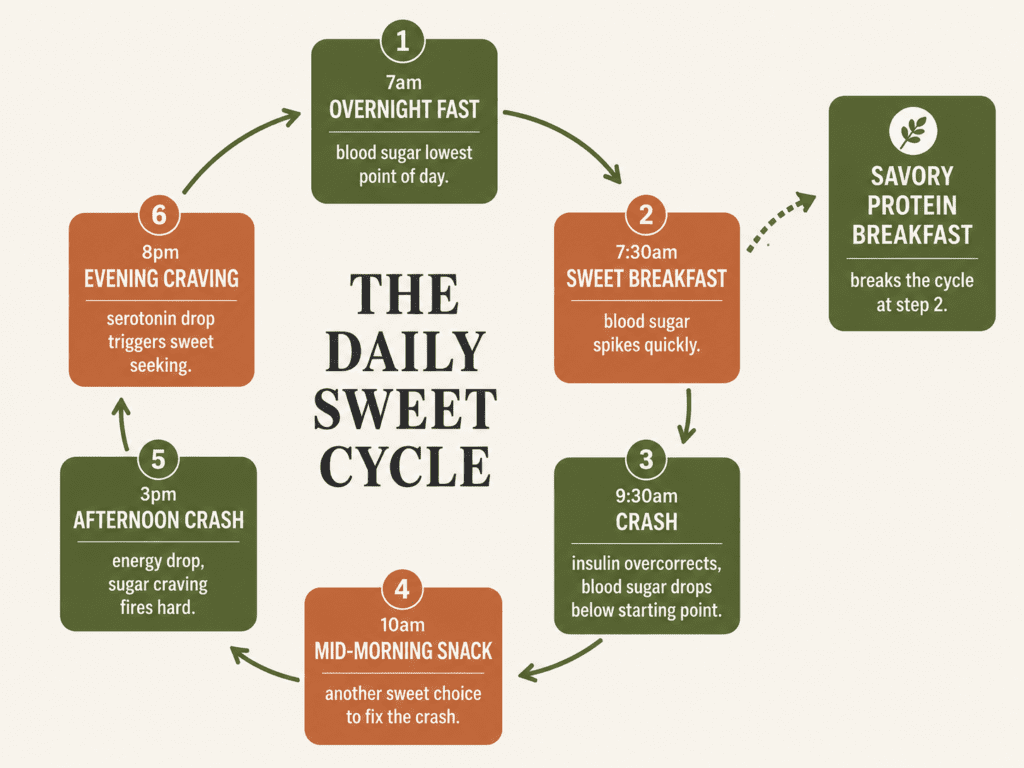
The immediate response to a morning sugar craving is almost always to eat something sweet: fruit juice, flavored yogurt, granola, pastry, sweetened coffee. This feels like a logical solution because it temporarily resolves the low blood sugar signal. Blood sugar rises, the urgent craving feeling passes, and for about 30 to 60 minutes things feel better.
Then the crash happens.
The sweet morning choice caused a rapid blood sugar spike. The pancreas released a significant insulin pulse to manage it. Blood sugar fell back down, often to a level below where it was before eating. By 9:30am the craving is back, often stronger than it was in the original morning moment. By noon the person is ravenous rather than normally hungry. By 3pm the afternoon sugar craving fires hard. By evening the pattern is winding up for another late-night sweet craving.
What nobody tells you is that the sweet breakfast is not a solution to the morning craving. It is the cause of every subsequent craving that day. This is the same mechanism behind why blood sugar drops after eating, applied to the morning specifically. The sweet response to the morning craving sets up the spike-and-crash cycle that runs all day.
The Mediterranean fix: what to eat in the morning instead
The solution to morning sugar cravings is not more willpower applied to the same sweet breakfast. It is changing what the first meal of the day communicates to the blood sugar and cortisol systems. A savory Mediterranean breakfast with protein above 20 grams and healthy fat changes the entire morning hormonal response.
Why protein is the key morning ingredient
Protein at breakfast suppresses ghrelin, your hunger hormone, more effectively than any other macronutrient. It also triggers glucagon-like peptide-1 release which extends the satiety window and stabilizes blood sugar. Most importantly for morning sugar cravings specifically, protein at breakfast reduces the dopamine-driven reward signal that drives sweet seeking. When the brain receives an adequate protein signal early in the day it reduces the urgency of the craving response for the hours that follow.
The research on this is consistent. Studies comparing high-protein breakfasts to high-carbohydrate breakfasts of equal calories show that the high-protein group reports significantly fewer cravings by mid-morning and consumes less total food through the rest of the day. The morning protein signal is the single highest-leverage dietary change for managing all-day cravings.
Why olive oil at breakfast matters
Fat at breakfast, specifically from extra virgin olive oil used to cook eggs or drizzled over vegetables, slows gastric emptying and triggers cholecystokinin which signals fullness to the brain. It also moderates the cortisol awakening response by providing a slow-burning fuel source that reduces the urgency of the morning glucose signal. A breakfast cooked in olive oil produces a different cortisol and blood sugar response than the same breakfast cooked without fat or with refined oils.
The Mediterranean breakfast swap that changed my mornings
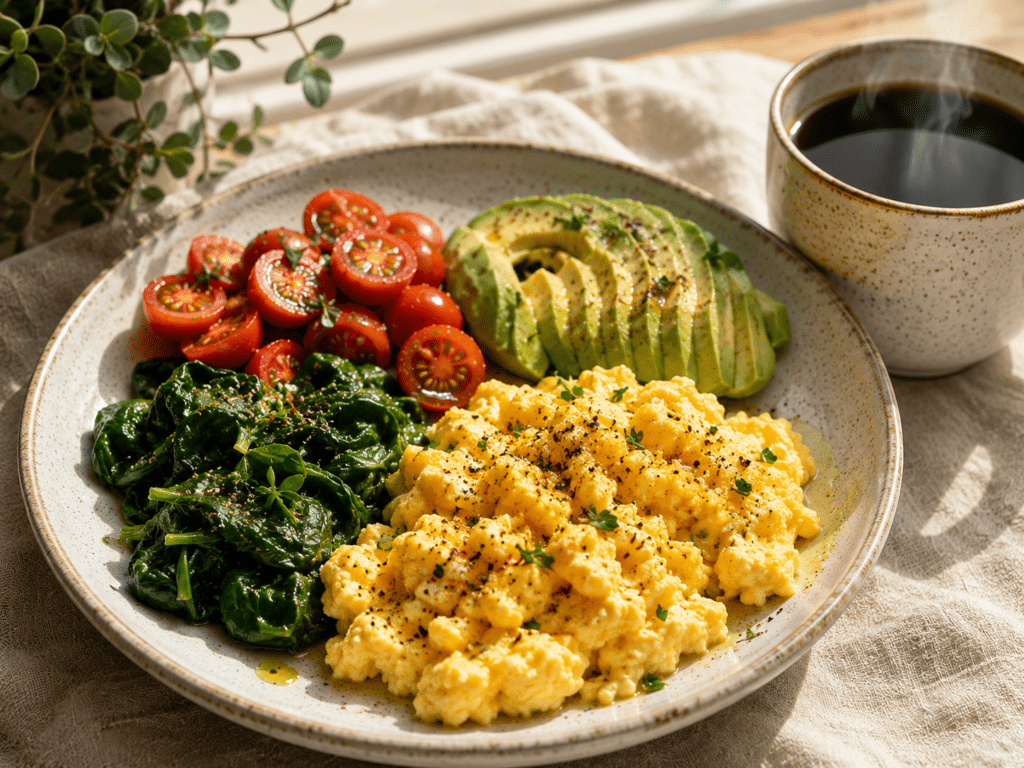
I switched from a fruit smoothie and granola breakfast to two eggs scrambled in olive oil with a large handful of spinach and cherry tomatoes. The first morning I noticed something unusual: I made it to 11am without thinking about food. Not because I was forcing myself to wait. Because the hunger signal simply did not fire. The morning sugar craving that had been a daily event for months did not appear. That experience is exactly what the research on savory high-protein breakfasts consistently shows. And it is why the savory Mediterranean breakfast article exists. The specifics of what to eat and exactly how to build it are all there.
What to eat in the morning to stop the sugar craving
• Scrambled or fried eggs in olive oil with spinach and cherry tomatoes (20 to 24 grams protein)
• Plain full-fat Greek yogurt with walnuts and a tablespoon of chia seeds (22 to 26 grams protein)
• Sardines on whole grain crackers with avocado and lemon (20 grams protein)
• Cottage cheese with cucumber, olive oil, and dried herbs (24 grams protein)
• High protein overnight oats with chia seeds and Greek yogurt stirred in (28 to 30 grams protein)
Every option above hits 20 grams of protein minimum, includes a fat source, and avoids the refined carbohydrate spike that amplifies the morning craving rather than resolving it.
>> Want the full savory Mediterranean breakfast rotation?
The Full Plate Method app builds protein-first Mediterranean breakfasts that stop morning sugar cravings before they start. Free forever. Build your craving-free morning free
Other factors that make morning sugar cravings worse
Coffee before food
Drinking coffee on an empty stomach amplifies the cortisol awakening response. Caffeine is a cortisol stimulant and consuming it during the natural morning cortisol peak, without food to buffer it, can significantly intensify the sugar craving signal. The Mediterranean habit of eating before or alongside the first coffee of the day is not arbitrary. It is a practical response to how cortisol and caffeine interact in the morning.
The adjustment is not to stop drinking coffee. It is to eat something with protein and fat before or with the first cup. Even a small amount of food changes the cortisol and blood sugar context significantly. Having a cup of water and a handful of walnuts before coffee, then eating breakfast within 30 minutes, is enough to change the morning craving pattern for most people.
Poor sleep the night before
Sleep deprivation significantly increases ghrelin and decreases leptin, producing a stronger hunger and craving signal the following morning. One night of poor sleep can increase sweet food cravings the next morning by a measurable amount. This is not weak willpower after a bad night. It is a biological consequence of altered hunger hormones from insufficient sleep.
The morning after a poor night of sleep is specifically when a high-protein savory breakfast matters most. The craving signal will be stronger than usual. The protein and fat at breakfast provide the hormonal counterbalance that a less-deprived morning does not require as urgently.
Skipping breakfast entirely
Skipping breakfast extends the overnight fasting state and keeps blood sugar low and cortisol elevated well into the morning. By the time the first meal of the day arrives, the blood sugar and cortisol signals have been running in emergency mode for 12 to 16 hours. The craving that fires at that point is significantly more powerful than the moderate morning craving that appears after a normal 7 to 9 hour overnight fast. Skipping breakfast is often promoted as a healthy habit but for people experiencing regular morning sugar cravings it almost always makes the craving worse rather than better.
Frequently asked questions
Is it normal to crave sugar in the morning?
It is extremely common, which is different from being inevitable. The biological mechanism that produces morning sugar cravings, overnight blood sugar drop combined with the cortisol awakening response, is present in everyone. Whether it produces an intense craving depends on what happened the evening before, how much sleep was achieved, and critically what the first meal of the day is. A savory protein-forward breakfast consistently reduces or eliminates the morning sugar craving for most people within the first week of consistent application.
Why do I crave sugar in the morning before I have eaten anything?
The craving before eating is specifically caused by the overnight blood sugar drop and the cortisol awakening response. Blood sugar is at its lowest point of the day and cortisol is peaking simultaneously, creating a compound signal that the brain interprets as an urgent need for fast fuel. The craving before eating is actually the clearest signal that the first meal needs to be protein and fat forward rather than sweet, because a sweet response amplifies the cortisol-glucose cycle rather than resolving it.
Can stopping morning sugar cravings help with afternoon cravings too?
Yes, significantly. The morning breakfast choice sets the blood sugar pattern for the entire day. A sweet breakfast creates a spike-and-crash cycle that produces the 10am hunger, the 3pm crash, and the evening sweet craving as downstream consequences. A savory protein-forward breakfast creates a flat glucose curve that prevents all three of those subsequent cravings. Most people who switch to a high-protein savory breakfast notice that the afternoon sugar craving either disappears or becomes significantly more manageable within the first three to five days.
How long does it take to stop craving sugar in the morning?
Most people notice a meaningful reduction in morning sugar cravings within three to five days of consistently eating a savory high-protein breakfast. The biological mechanisms respond quickly because they are driven by the immediate hormonal context of the morning meal rather than long-term adaptation. The first morning you eat eggs and olive oil instead of granola and juice you will likely notice the difference in how you feel at 10am. By the end of the first week the morning craving pattern is typically significantly changed.
Does drinking coffee cause morning sugar cravings?
Coffee on an empty stomach amplifies the cortisol awakening response and can intensify morning sugar cravings. The combination of high morning cortisol and caffeine without food creates a stronger glucose demand signal than either alone. The practical fix is to eat before or with the first coffee of the day rather than eliminating coffee. Even a small amount of protein and fat before the first cup changes the cortisol and blood sugar context enough to reduce the craving amplification effect.
The bottom line
Morning sugar cravings are not a character flaw or a lack of discipline. They are a biological response to overnight fasting and the cortisol awakening response that most people make worse by choosing a sweet breakfast. The sweet breakfast feels like it resolves the craving. It actually sets up every craving that follows for the rest of the day. A savory Mediterranean breakfast with protein above 20 grams and healthy fat from olive oil changes the entire morning hormonal context and breaks the daily craving cycle at its starting point. For additional support alongside the breakfast change, natural blood sugar stabilizing support works best when layered on top of a protein-forward breakfast rather than used as a substitute for changing it.
Start tomorrow morning. Eggs in olive oil with spinach. Or Greek yogurt with walnuts and chia. Or sardines on whole grain crackers with avocado. Notice how you feel at 10am. Notice whether the 3pm craving is different. The shift happens faster than most people expect.
I grew up watching my grandmother eat a savory breakfast every single morning. Eggs, vegetables, a little cheese, olive oil. She never reached for something sweet in the morning. She never seemed to fight cravings the way I did in adulthood. I thought her breakfast habits were old-fashioned. They turned out to be the most metabolically intelligent thing I could have learned and I had to figure it out the long way around.
Ribert
>> Want a full week of morning meals that stop the craving cycle?
The 7-Day Mediterranean Meal Plan includes breakfast combinations built to keep blood sugar flat and cravings quiet all day. $17, instant download. Get the 7-Day Mediterranean Meal Plan for $17
Keep reading
What to Eat for Breakfast to Stop Cravings All Day
Savory Mediterranean Breakfast Ideas That Keep Blood Sugar Stable
Why Blood Sugar Drops After Eating
Foods That Lower Cortisol Naturally
How to Balance Blood Sugar to Stop Hunger and Cravings
This article shares personal experience and general nutrition information, not medical advice.
About Ribert Rodriguez
Ribert is the founder of EnergiSource Wellness. He built this site to share what actually worked for him after years of struggling with cravings, late-night eating, and low energy. His approach is rooted in the Mediterranean framework and a belief that food is one of the most powerful tools for how you think and feel.