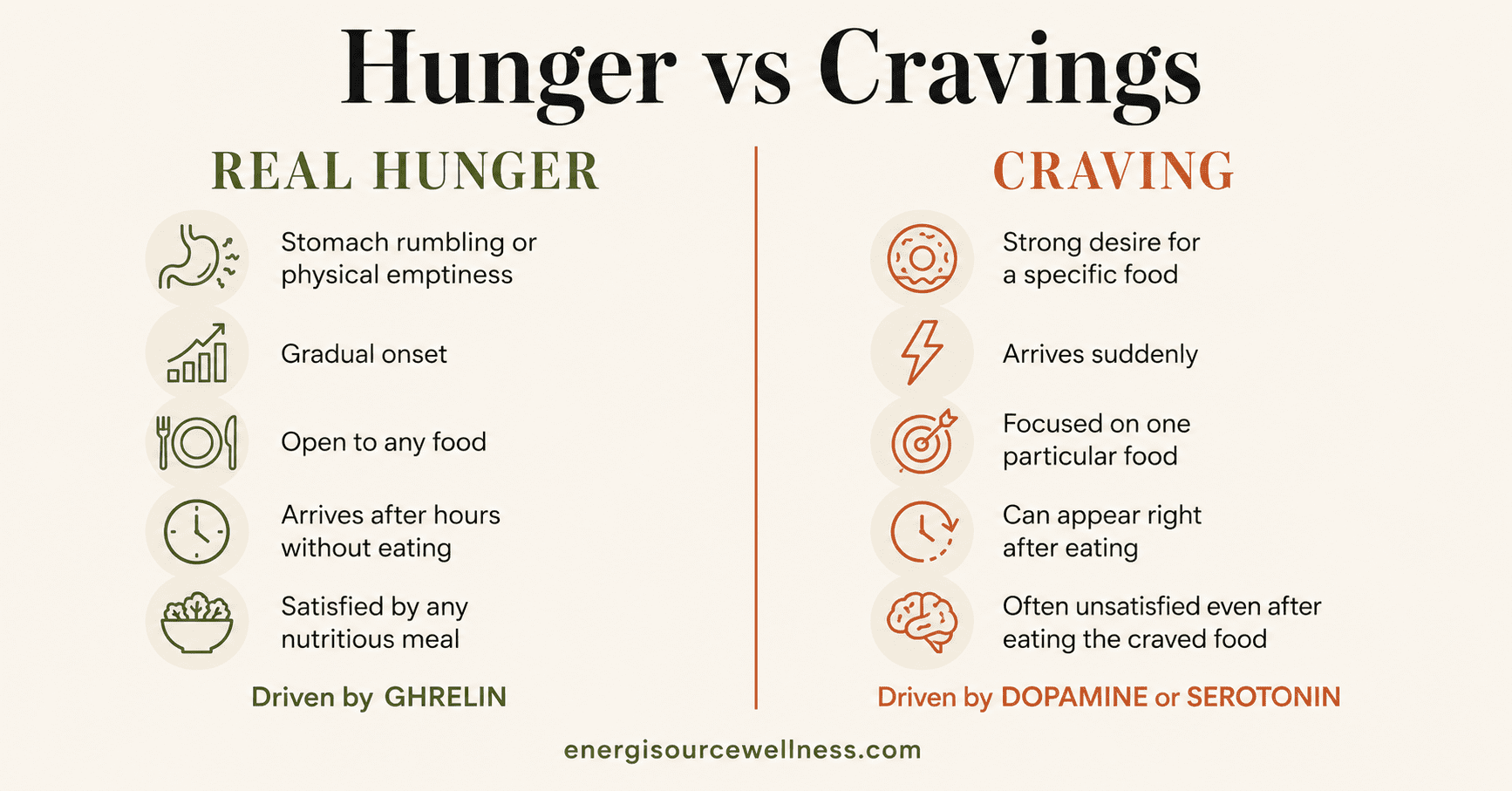
Real hunger and food cravings feel similar but come from completely different hormone systems. Real hunger is driven by ghrelin rising as the body needs fuel. Cravings are driven by dopamine seeking reward or serotonin dropping in the evening. The physical sensation of each is distinct once you know what to look for and the food response that addresses each one is different. Getting this distinction right is what separates someone who manages their appetite from someone who feels controlled by it.
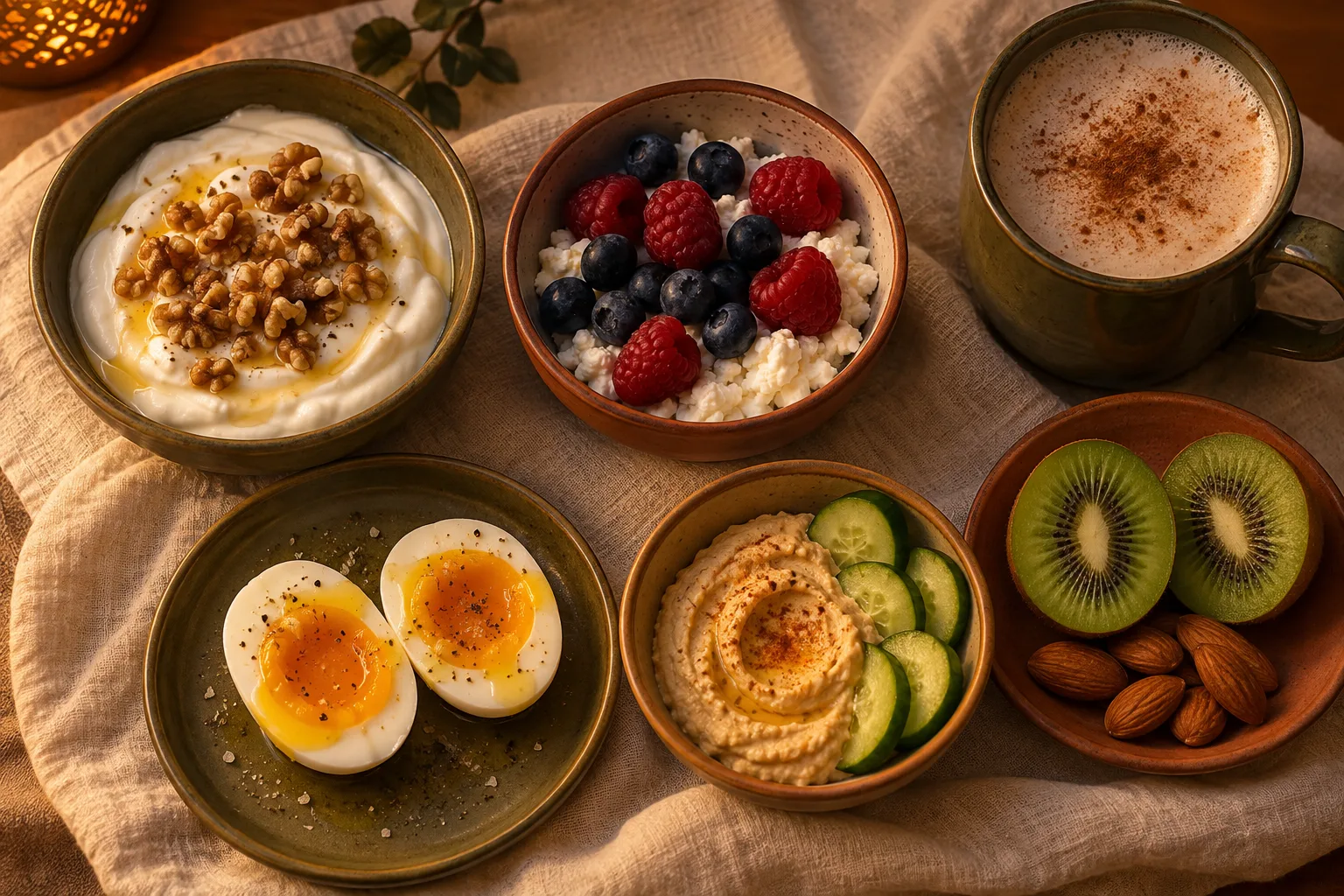
For years I could not tell the difference. I would feel what I interpreted as hunger and eat in response to it, only to feel the same pull toward food 20 minutes later. I was not in a calorie deficit. I was not undereating. Something else was creating the signal and I was responding to it as if it were physical hunger every time. If that is you, here is what a filling breakfast looks like without cutting calories.
Related: why you’re still hungry after eating (and the fix)
The shift happened when I started distinguishing between the two types of signal based on their actual characteristics. Real hunger has a specific set of physical signs. Cravings have a completely different set. Once I could tell them apart I stopped responding to every food signal as if it required immediate eating and started addressing each type of signal appropriately.
This connects directly to the work in how to stop food cravings naturally and why do I crave sugar in the morning. The cravings do not stop when you recognize them. But you stop being controlled by them.
The hormone difference between hunger and cravings
Understanding hunger versus cravings starts at the hormonal level rather than the psychological one. Most discussions of this topic frame cravings as an emotional or mental experience and hunger as a physical one. Both are physical. They just involve different hormones and different brain systems.
Ghrelin: what drives real hunger
Ghrelin is produced primarily in the stomach and signals the hypothalamus that the body needs fuel. It rises gradually as time passes since the last meal and produces the physical sensations associated with genuine hunger: stomach rumbling, a hollow or empty feeling in the abdomen, difficulty concentrating, mild irritability, and a general openness to any available food. Ghrelin does not care what you eat. It just wants the body to be refueled.
Genuine ghrelin-driven hunger builds gradually over 3 to 5 hours after a meal and does not typically arrive suddenly. It is also satisfied by eating almost anything nutritious. If you eat a meal of grilled chicken and vegetables and the hunger resolves, it was real hunger. Ghrelin was doing its job.
Dopamine: what drives most food cravings
Food cravings are primarily driven by the brain’s reward system and the neurotransmitter dopamine. When you eat something highly palatable, sugar, fat, salt, or any combination of these, the brain releases dopamine which creates a pleasurable response and reinforces the desire to repeat the experience. Over time the brain begins anticipating the dopamine release and sends a craving signal before you have even encountered the food, simply based on environmental cues, emotions, or habit patterns.
Dopamine-driven cravings are highly specific. You do not crave food in general. You crave a particular food: that specific chocolate, the exact chips from the vending machine, the precise pastry you had last Tuesday. This specificity is the clearest diagnostic signal that separates a craving from real hunger. Real hunger is open to anything. Cravings have already made their decision.
Serotonin: what drives evening and sweet cravings
A third hormone system drives the specific sweet craving that fires in the evening even after a full dinner. Serotonin, a neurotransmitter associated with mood and contentment, drops naturally as daylight fades. When serotonin is low the brain seeks quick dopamine from sweet or starchy food as a compensatory mechanism. This is the evening chocolate craving, the post-dinner sweet, the late-night reach into the freezer. It is serotonin-driven and it explains why the craving is almost always for something sweet specifically rather than for any food. As covered in why you crave sugar at night, the evening sweet craving is a chemistry event, not a willpower failure.
How to tell if you are hungry or craving: the 5-question test
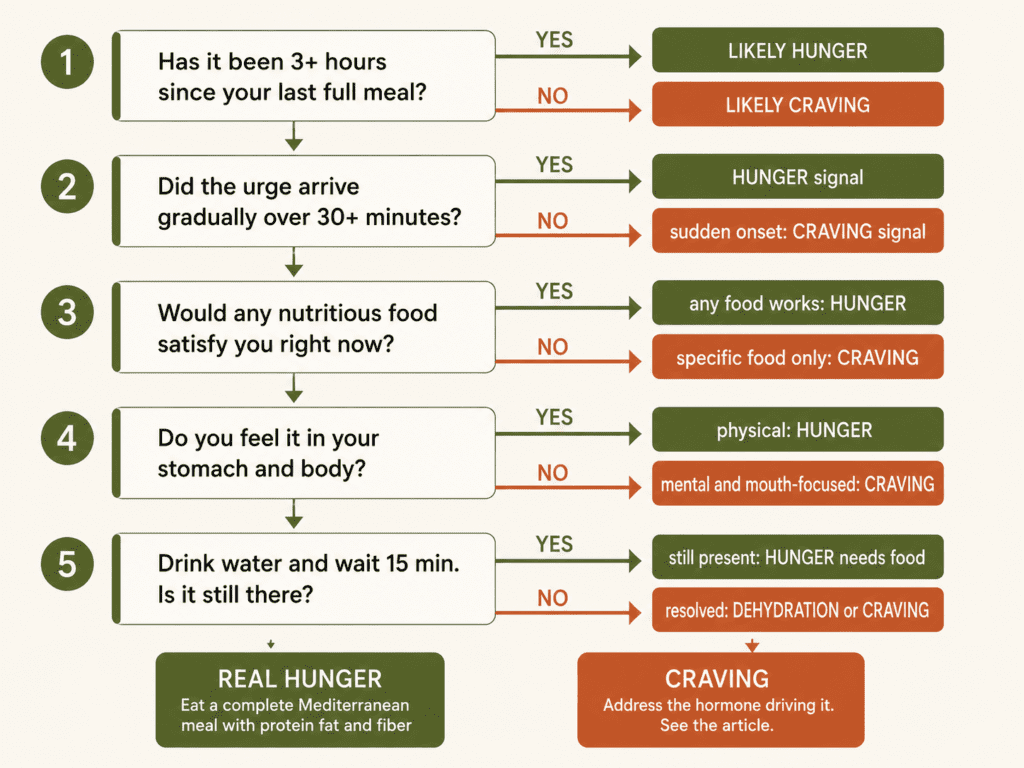
These five questions identify which type of signal you are experiencing in the moment. Run through them the next time you feel the urge to eat outside of a planned meal.
Question 1: When did you last eat?
Real hunger builds over time. If it has been 3 to 5 hours since your last complete meal and you feel the urge to eat, the signal is more likely real hunger driven by rising ghrelin. If it has been less than 2 hours since eating a full meal and you feel the urge to eat, it is almost certainly a craving rather than genuine hunger. Ghrelin cannot produce true physiological hunger within 2 hours of a complete protein-fiber-fat meal.
Question 2: Did the urge come on gradually or suddenly?
Real hunger builds gradually over 30 to 60 minutes before becoming urgent. You notice it as a mild awareness of wanting food which intensifies slowly. A craving arrives suddenly and intensely. One moment you are not thinking about food. The next moment you are urgently focused on a specific food. The sudden onset is the clearest marker of a dopamine-driven craving rather than ghrelin-driven hunger.
Question 3: Are you open to any food or one specific food?
This is the single most reliable diagnostic question. Real hunger is flexible. If someone offered you grilled chicken and vegetables, overnight oats, a sardine salad, or a lentil soup and all of them sounded equally acceptable, you are probably genuinely hungry. Ghrelin does not care which food satisfies it. If only one specific food sounds right, if you are thinking about that particular thing in the freezer or that specific snack from the store, you are in craving territory. Cravings are always specific.
Question 4: Where do you feel it in your body?
Real hunger is felt in the stomach and the body. Stomach rumbling, a hollow feeling below the ribs, physical weakness, mild headache from low blood sugar, difficulty concentrating. These are body-based signals originating from ghrelin communicating with the hypothalamus. Cravings are felt in the mind and mouth. A pull toward a specific food, an anticipatory sensation in the mouth, a mental image of the food and how it will taste. The location of the sensation tells you which system is driving the signal.
Question 5: What happens if you drink water and wait 15 minutes?
Dehydration produces a signal that is frequently mistaken for hunger because the hypothalamus processes both hunger and thirst signals in close proximity. Drinking 500ml of water and waiting 15 minutes resolves dehydration-driven false hunger signals. Real ghrelin-driven hunger does not resolve from water alone and will be clearly still present after 15 minutes. A craving may persist but will often reduce in intensity within 15 minutes if you move away from the environmental cue that triggered it.
>> Want a meal structure that reduces both hunger and cravings?
The Full Plate Method app builds Mediterranean meals that help lower ghrelin and address dopamine cravings simultaneously. Free forever. Build craving-reducing meals free
What to do when you identify real hunger
Real hunger has a straightforward response: eat a complete meal. The mistake most people make when responding to genuine hunger is eating something that satisfies the hunger temporarily but does not help lower ghrelin adequately for 3 to 5 hours. A piece of fruit, a handful of crackers, or a small snack relieves the immediate discomfort but does not hit the protein threshold needed to switch ghrelin off properly. The hunger returns within 60 to 90 minutes.
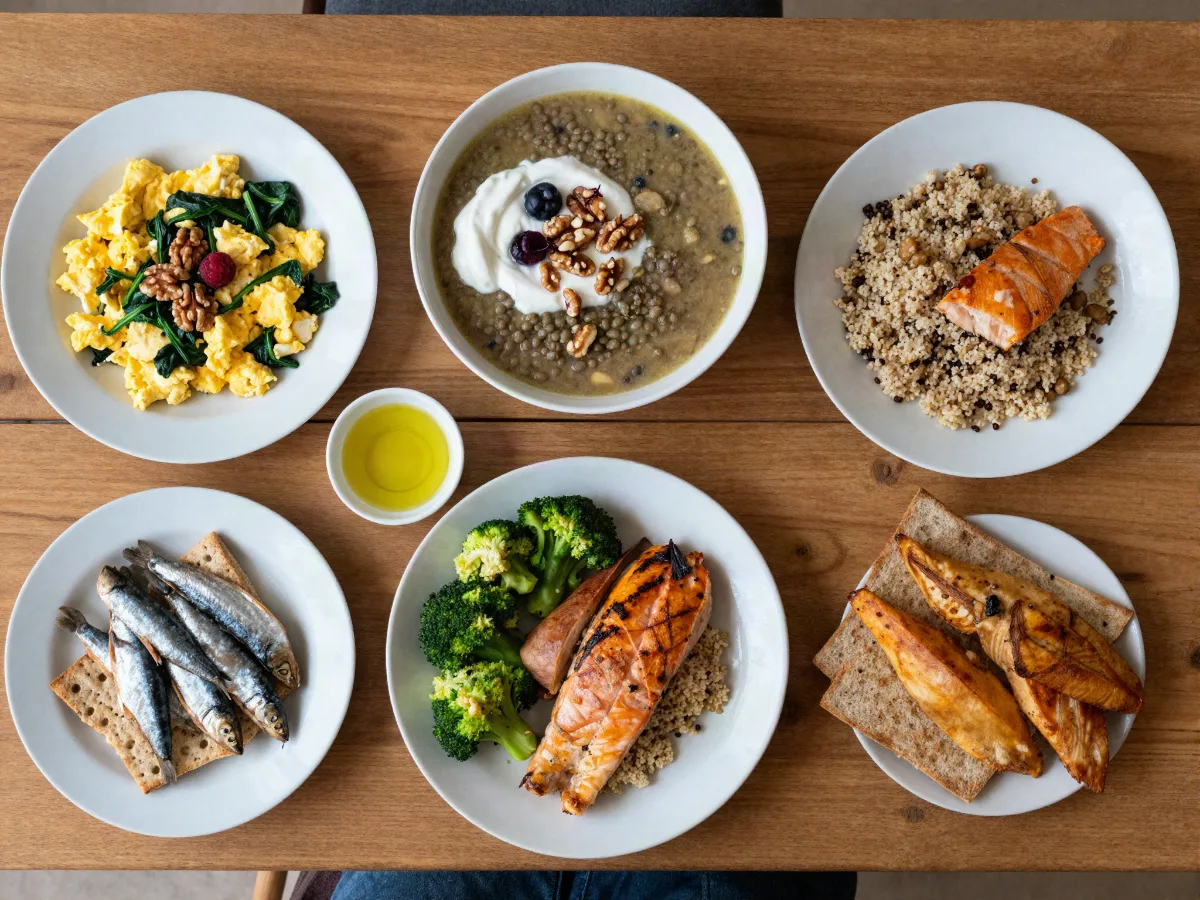
The response to real hunger is a complete meal or snack with at least 15 to 20 grams of protein, a healthy fat source, and fiber. In Mediterranean terms: Greek yogurt with walnuts and chia seeds, sardines on whole grain crackers with avocado, a chickpea salad bowl, or a proper lunch built around the protein-fiber-fat formula. These address real hunger at the hormonal level rather than just providing temporary calorie relief.
The timing also matters. Eating in response to real hunger at the appropriate meal interval, rather than delaying eating until extreme hunger drives poor food choices, is one of the most underappreciated aspects of hunger management. Letting ghrelin run too high by waiting too long to eat produces an urgency that overrides food quality decisions.
What to do when you identify a craving
Cravings require a different response from real hunger because they are driven by a different hormone system. Eating in response to a craving does not necessarily resolve the craving. Eating the wrong food in response to a craving can intensify the next craving by reinforcing the dopamine reward cycle.
For a dopamine-driven craving
The goal is to provide a small, intentional dopamine response without triggering the blood sugar spike that amplifies subsequent cravings. Two to three squares of dark chocolate at 85 percent or higher provides a dopamine response through flavonoids and the pleasurable sensory experience without the sugar load that feeds the craving cycle. A handful of walnuts alongside it provides tryptophan that supports serotonin and reduces the neurological urgency of the craving within 20 to 30 minutes.
Alternatively, addressing the dopamine craving through a non-food outlet, movement, a brief walk, a task change, cold water, or any activity that provides a small reward signal, can interrupt the craving loop without feeding it. The craving dissipates within 10 to 15 minutes in most cases when the environmental trigger is removed and attention is redirected. This is the mechanism behind the common observation that many cravings peak and then fade within about 20 minutes if not acted upon. For more on breaking the craving cycle at its biological root, how to stop sugar cravings naturally covers the gut bacteria component that amplifies dopamine cravings over time.
For a serotonin-driven evening craving
The evening sweet craving that fires after dinner responds to a different approach. Because it is driven by a serotonin drop the most effective response is to provide tryptophan, the serotonin precursor, in a form that crosses the blood-brain barrier rather than just suppressing the craving through willpower or substitution.
Greek yogurt, walnuts, and a small portion of complex carbohydrate at dinner specifically support tryptophan conversion to serotonin in the hours that follow. Planning a small intentional evening sweet, two squares of dark chocolate or a small portion of Greek yogurt with honey, signals the brain that the eating day is complete and removes the open-ended decision that willpower typically loses. Prebiotic fiber from chickpeas at dinner also feeds the gut bacteria that produce serotonin precursors, with the gut producing approximately estimated 90 percent of the body’s serotonin. Rebuilding gut microbiome diversity through Mediterranean foods directly reduces evening sweet cravings within weeks of consistent application.
For a stress or cortisol-driven craving
Stress triggers cortisol which directly stimulates appetite for high-calorie, high-reward foods. This craving pattern is identified by its connection to a stressful event, a difficult conversation, a work deadline, or emotional tension. The food is being sought for comfort or stress relief rather than for genuine fuel. Adding Lactobacillus Gasseri to a Mediterranean dietary pattern has specifically shown associations with reduced stress-eating behavior in research on this probiotic strain, connecting gut microbiome health to the stress-craving response pathway.
The Mediterranean approach to both hunger and cravings
The reason Mediterranean eating reduces both genuine hunger frequency and craving intensity simultaneously is that it addresses the hormonal systems driving each one through different mechanisms operating in parallel.
For ghrelin and real hunger:
Protein above 20 grams at every meal helps lower ghrelin for 3 to 5 hours. Olive oil slows gastric emptying. Legumes provide prebiotic fiber that regulates ghrelin production at the gut bacteria level. The result is genuine hunger arriving at appropriate 4 to 5 hour intervals rather than continuously.
For dopamine and food cravings:
Prebiotic fiber from chickpeas and lentils feeds the beneficial gut bacteria that regulate dopamine production in the gut. Reducing refined sugar and processed food removes the primary reinforcers that drive the dopamine reward cycle. Dark chocolate and walnuts provide small intentional dopamine and serotonin support without the blood sugar spike that amplifies subsequent cravings.
For serotonin and evening cravings:
Tryptophan-rich foods at dinner, Greek yogurt, eggs, walnuts, and salmon, support serotonin production in the hours following the evening meal. The gut microbiome diversity built through consistent Mediterranean prebiotic fiber consumption increases the gut’s serotonin production capacity over time. For many people, evening cravings ease over the first few weeks of consistent Mediterranean eating.
Frequently asked questions
What is the main difference between hunger and cravings?
Real hunger is driven by ghrelin rising in the stomach as the body needs fuel. It builds gradually, produces physical body sensations, and is satisfied by any nutritious food. Cravings are driven by dopamine or serotonin systems in the brain. They arrive suddenly, are focused on a specific food rather than food in general, and often persist even after eating. The location of the sensation is also different: hunger is felt in the stomach and body while cravings are felt in the mind and mouth.
Can you be hungry and have a craving at the same time?
Yes. Genuine ghrelin-driven hunger and dopamine-driven cravings can occur simultaneously, which is why this combination is particularly difficult to navigate. If it has been 4 hours since eating and you are specifically craving pizza, the hunger component is real but the specificity is craving-driven. The most effective response is to eat a complete protein-fiber-fat Mediterranean meal that addresses the ghrelin component while providing enough satiety that the dopamine craving does not drive overeating.
Why do I crave food right after eating a full meal?
Craving food immediately or within 30 minutes of finishing a meal is almost always a dopamine or serotonin signal rather than genuine hunger. Ghrelin cannot produce true physiological hunger within 30 minutes of a full meal. The most common triggers for post-meal cravings are: the meal was low in tryptophan so serotonin is not rising as expected, blood sugar spiked and is beginning to fall from a high-carbohydrate meal, a habit or environmental cue associated with eating something sweet after a meal, or the meal did not include enough fat to trigger the CCK fullness signal properly.
Is emotional hunger the same as cravings?
Emotional hunger is a subset of cravings driven specifically by emotional states rather than biological reward seeking. Stress triggers cortisol which drives appetite for high-calorie comfort foods. Boredom reduces dopamine and the brain seeks stimulation through food. Loneliness or sadness depletes serotonin and the brain seeks sweet food as a compensatory mechanism. All of these are craving-type signals rather than genuine ghrelin-driven hunger, and all are addressed more effectively through the underlying emotional or hormonal need than through the food that is being craved.
How long do food cravings last if you do not act on them?
Research on food craving duration consistently shows that most cravings peak in intensity within 3 to 5 minutes of onset and diminish significantly within 10 to 20 minutes if the environmental trigger is removed and attention is redirected. The craving does not disappear immediately but its urgency reduces substantially within that window. This is why the 15-minute water test is useful: it provides enough time for the craving peak to pass while also addressing potential dehydration-driven false hunger.
The bottom line
Hunger and cravings are not the same experience. They come from different hormones, feel different in the body, respond to different foods, and require different interventions. Real hunger driven by ghrelin needs a complete Mediterranean meal with protein above 20 grams. Dopamine-driven cravings need a small intentional response that satisfies the reward signal without feeding the craving cycle. Serotonin-driven evening cravings need tryptophan-rich foods and gut microbiome support from prebiotic fiber. The five-question test in this article identifies which signal you are experiencing in real time.
The next time you feel the urge to eat, run through the five questions. Give yourself 90 seconds to assess rather than reacting immediately. The answer will become faster and more automatic within a week of consistent practice. Many people find that a real chunk of what they interpreted as hunger was actually a craving once they start distinguishing between the two, more than they expected going in.
I used to eat every time I felt anything that resembled a food signal. I had no framework for distinguishing between ghrelin telling me I needed fuel and dopamine telling me I wanted a reward. Once I understood that these were two completely different biological systems sending two completely different signals, the relationship with food changed. Not because I restricted anything. Because I finally understood what was actually being communicated and could respond to it appropriately. That clarity is worth more than any specific diet rule.
Ribert
>> Want to build meals that address both hunger and cravings?
The 7-Day Mediterranean Meal Plan structures every meal to help lower ghrelin, support serotonin, and reduce dopamine cravings simultaneously. $17, instant download. Get the 7-Day Mediterranean Meal Plan for $17
Free printable
Hungry again at 9pm?
Get the free printable Night Hunger Snack List: 10 Mediterranean snacks with exact portions and protein counts, for the evenings when cravings hit. Enter your email and download it instantly.
Free. No spam. Unsubscribe anytime.
Keep reading
How to Stop Food Cravings Naturally
Why Do I Crave Sugar in the Morning?
How to Stop Sugar Cravings Naturally
Why Am I Always Hungry Even Though I Eat a Lot?
How to Balance Blood Sugar to Stop Hunger and Cravings
This article shares personal experience and general nutrition information, not medical advice.
About Ribert Rodriguez
Ribert is the founder of EnergiSource Wellness. He built this site to share what actually worked for him after years of struggling with cravings, late-night eating, and low energy. His approach is rooted in the Mediterranean framework and a belief that food is one of the most powerful tools for how you think and feel.