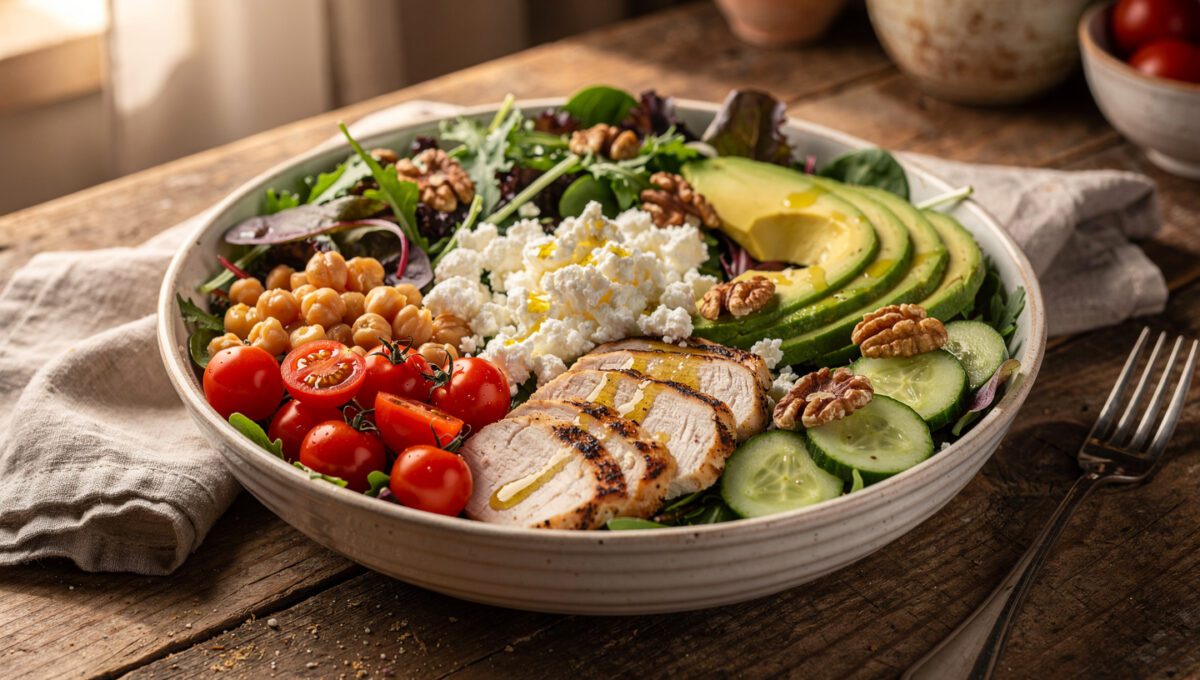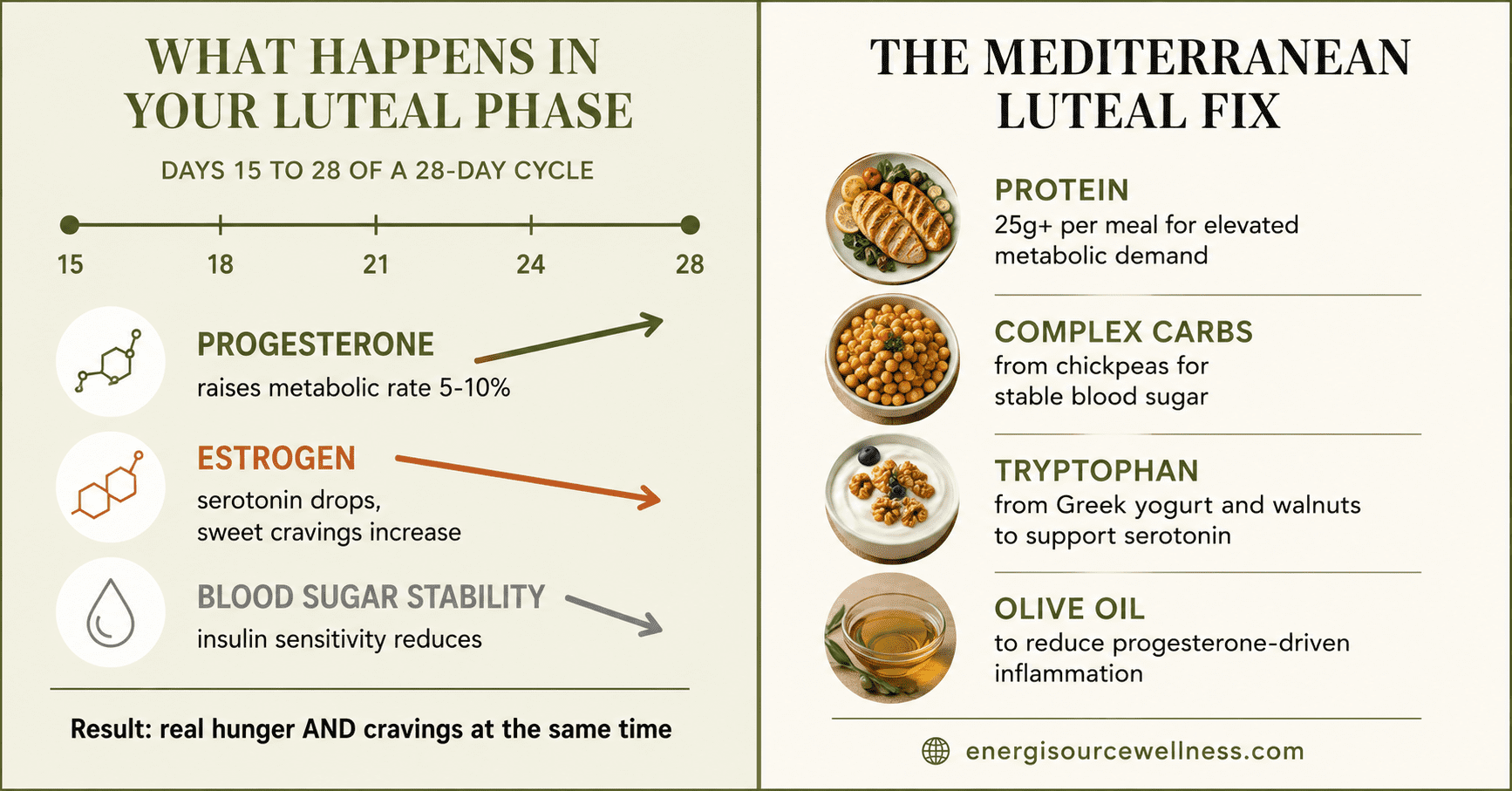
Luteal phase hunger is not a lack of willpower or discipline. After ovulation, progesterone rises and increases the metabolic rate by 5 to 10 percent, meaning the body genuinely needs more fuel. Simultaneously, estrogen begins to decline which drops serotonin levels and drives specific cravings for sweet and starchy foods as a compensatory mechanism. The result is increased real hunger plus intensified cravings happening at the same time for two separate biological reasons. The Mediterranean approach addresses both by providing the protein and complex carbohydrates that support progesterone-driven energy needs alongside the tryptophan-rich foods that support serotonin and quiet the carb craving.
One of the most common questions I get from women on this site is some version of this: why am I completely unable to stop eating for the entire week before my period? I hear it described as feeling out of control around food, feeling like nothing satisfies the hunger, and feeling genuinely guilty about it afterward.
I want to address that guilt directly before anything else. None of it is deserved. The hunger is real. The cravings are biological. Neither of them is a personal failing.
I do not experience the luteal phase personally, but I have studied this pattern extensively because it comes up more consistently than almost any other hunger topic from women reading this site. The mechanism behind it is clear. The Mediterranean approach that addresses it is specific. And the relief most women feel when they finally understand what is actually happening is significant.
What is actually happening is this: progesterone is raising the metabolic rate and estrogen decline is dropping serotonin simultaneously. Two separate biological events creating both real hunger and specific sweet cravings at the same time. The hunger is the body asking for more fuel. The craving is the brain asking for serotonin. Both have specific food-based solutions.
This connects to the framework in hunger vs cravings: how to tell the difference. During the luteal phase both signals are firing simultaneously which is why the experience feels so much more intense than hunger at other times of the month.
What the luteal phase is and why it changes hunger
The luteal phase is the second half of the menstrual cycle. It begins immediately after ovulation, typically around day 14 of a 28-day cycle, and continues until menstruation begins around day 28. This is the phase when the body prepares for a potential pregnancy, which requires significant hormonal changes that have direct effects on appetite, energy, and cravings.
Two hormonal events happen during the luteal phase that explain why hunger and cravings increase specifically during this window. Understanding both makes the experience make sense rather than feeling like a personal failure.
Event 1: Progesterone rises and raises metabolic rate
Immediately after ovulation, the empty follicle that released the egg transforms into a structure called the corpus luteum which begins producing progesterone. This hormone rises through the first half of the luteal phase and serves multiple functions in preparing the body for potential pregnancy.
One of progesterone’s direct effects is raising the basal metabolic rate. A systematic review of resting metabolic rate across the menstrual cycle found consistent increases during the luteal phase, though the size varies a lot by study, commonly in the 5 to 10 percent range, with some studies reporting higher. This is a real, measurable metabolic change. Women naturally consume between 250 and 500 additional calories per day during the luteal phase when eating to satisfy hunger without restriction, and this increase corresponds almost precisely to the metabolic increase from progesterone.
This means the increased hunger in the luteal phase is, in significant part, real ghrelin-driven hunger from a genuinely elevated metabolic demand. The body is not malfunctioning. It is asking for more fuel because it is using more fuel. Eating more during the luteal phase is not a failure of willpower. It is an appropriate response to a biological need.
Event 2: Estrogen declines and serotonin drops with it
Estrogen rises in the first half of the cycle, peaks around ovulation, and then begins declining during the luteal phase. This estrogen decline directly affects serotonin production because estrogen supports serotonin synthesis and receptor sensitivity. As estrogen drops in the second half of the luteal phase, serotonin levels fall with it.
Lower serotonin produces two hunger-related effects. First it reduces the natural appetite suppression that adequate serotonin provides, making hunger signals feel more intense and urgent. Second it drives specific cravings for carbohydrates and sweet foods because consuming carbohydrates temporarily raises tryptophan availability in the brain, which converts to serotonin, providing brief relief from the low-serotonin state.
This is the biological mechanism behind the specific sweet and carb craving that fires in the days before menstruation. It is the same serotonin-driven craving pattern discussed in why you crave sugar in the morning but amplified by the luteal phase estrogen decline. The craving is a serotonin request, not a sugar addiction.
Event 3: Blood sugar becomes less stable
The luteal phase also produces changes in insulin sensitivity. Higher progesterone in the mid-luteal phase has been associated with reduced insulin sensitivity, which means blood sugar responds more dramatically to the same carbohydrate load during this phase compared to earlier in the cycle. The spike-and-crash cycle from refined carbohydrates becomes more pronounced, producing more intense hunger signals at the 90-minute to 2-hour mark after eating.
This is why the same lunch that held hunger for 4 hours earlier in the cycle might only last 2 hours during the week before the period. The food is identical. The blood sugar response to it has changed because of the hormonal context. The fix is the same blood sugar stabilizing approach described in foods that stabilize blood sugar naturally applied with extra intention during the luteal window specifically.
Why luteal phase hunger feels different from regular hunger
Women who track their hunger across the month consistently notice that luteal phase hunger has a specific quality that distinguishes it from hunger at other cycle phases.
It feels more urgent:
Regular ghrelin-driven hunger builds gradually and can be delayed comfortably for 30 to 60 minutes. Luteal phase hunger driven by both elevated ghrelin from higher metabolic rate and lower serotonin feels more pressing because the serotonin component adds neurological urgency to the physical hunger signal.
It comes with specific cravings:
Regular hunger at other cycle phases is relatively open to any food. Luteal phase hunger frequently arrives with a specific pull toward sweet, starchy, or salty foods because the serotonin and dopamine systems are more active during this phase.
It returns faster after eating:
The reduced insulin sensitivity during the luteal phase means blood sugar rises and falls more rapidly after meals, producing a shorter satiety window. The same meal that held hunger for 4 hours during the follicular phase may only hold for 2 to 3 hours during the luteal phase.
It feels emotionally charged:
Low serotonin affects mood as well as appetite. The urgency around food during the luteal phase is partly neurological: the brain is seeking serotonin and food is the fastest available source it knows. This can feel like emotional eating even when it is primarily a serotonin-deficit-driven biological response.
The Mediterranean approach to luteal phase hunger
The Mediterranean eating framework addresses all three hormonal drivers of luteal phase hunger simultaneously without restriction or calorie counting. It works by providing more of the specific nutrients the luteal phase body is asking for rather than trying to suppress hunger that is a legitimate biological signal.
For progesterone-driven real hunger: increase protein and healthy fat
Since the luteal phase raises metabolic rate by 5 to 10 percent, the appropriate response is to eat more, specifically more protein and fat which provide sustained fuel without the blood sugar instability that worsens luteal phase symptoms.
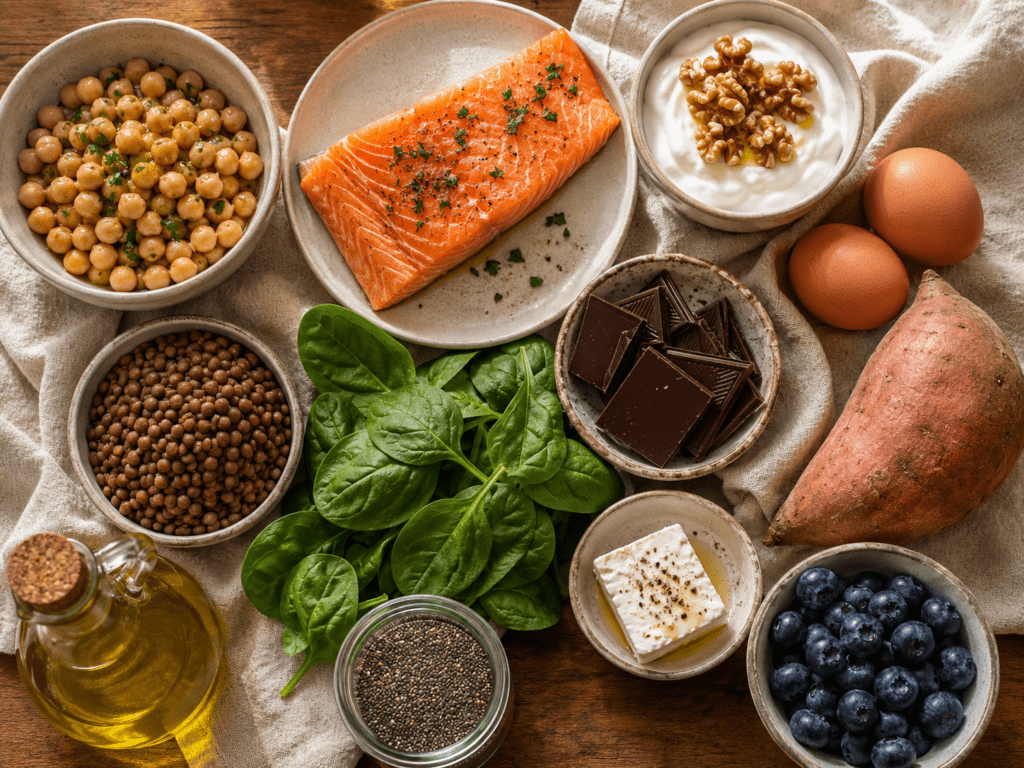
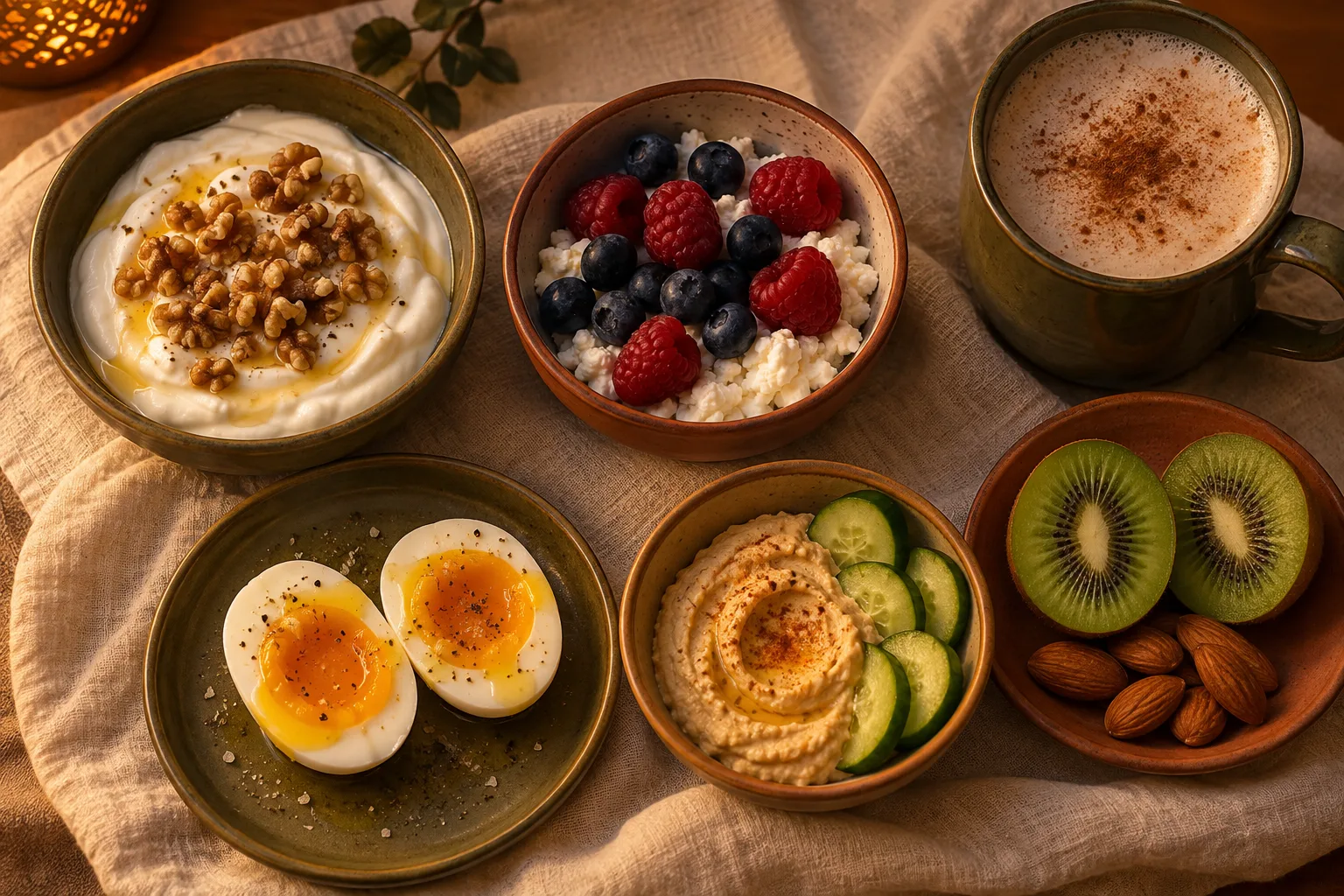
Increasing protein at every meal during the luteal phase from 20 grams to 25 to 30 grams provides the additional energy substrate the higher metabolism requires while also helping lower ghrelin more effectively. Mediterranean protein sources that work particularly well: salmon (omega-3s also support progesterone production), Greek yogurt (provides tryptophan alongside protein), eggs (complete protein with B vitamins that support hormone metabolism), and sardines (omega-3s and protein in one efficient package).
For serotonin-driven carb cravings: provide tryptophan and complex carbohydrates
The craving for sweet and starchy foods during the luteal phase is a serotonin request. The most effective response is to provide tryptophan, the serotonin precursor, alongside a small amount of complex carbohydrate that facilitates tryptophan crossing the blood-brain barrier.
Tryptophan-rich Mediterranean foods: Greek yogurt, eggs, salmon, walnuts, and feta. When eaten alongside a moderate portion of complex carbohydrate such as chickpeas, sweet potato, or oats, the tryptophan converts to serotonin more efficiently and the sweet craving diminishes within 30 to 60 minutes. This is more effective than eating the craved sweet food because a biscuit or chocolate provides a brief dopamine hit but does not address the underlying serotonin deficit driving the craving.
The gut microbiome also plays a significant role in serotonin production. Approximately estimated 90 percent of the body’s serotonin is produced in the gut, and beneficial gut bacteria are essential to that production. A Lactobacillus Gasseri probiotic taken consistently through the month supports the gut microbiome diversity that maintains serotonin production capacity, which can reduce the severity of luteal phase sweet cravings by improving the gut’s baseline serotonin output.
For blood sugar instability: increase fiber and eat carbohydrates last
The reduced insulin sensitivity during the luteal phase makes blood sugar stabilization more important, not less. Increasing fiber from legumes and vegetables during this phase directly buffers the glucose response to carbohydrates. Half a cup of chickpeas at lunch provides 12 grams of fiber that slows the absorption of any other carbohydrates in the meal, preventing the sharper spike-and-crash cycle that luteal phase insulin changes would otherwise produce.
Using extra virgin olive oil generously during the luteal phase provides two benefits simultaneously: oleic acid slows gastric emptying which stabilizes blood sugar, and the polyphenols reduce the systemic inflammation that progesterone can amplify during this phase.
What to eat during the luteal phase: a practical Mediterranean guide
Breakfast adjustments:
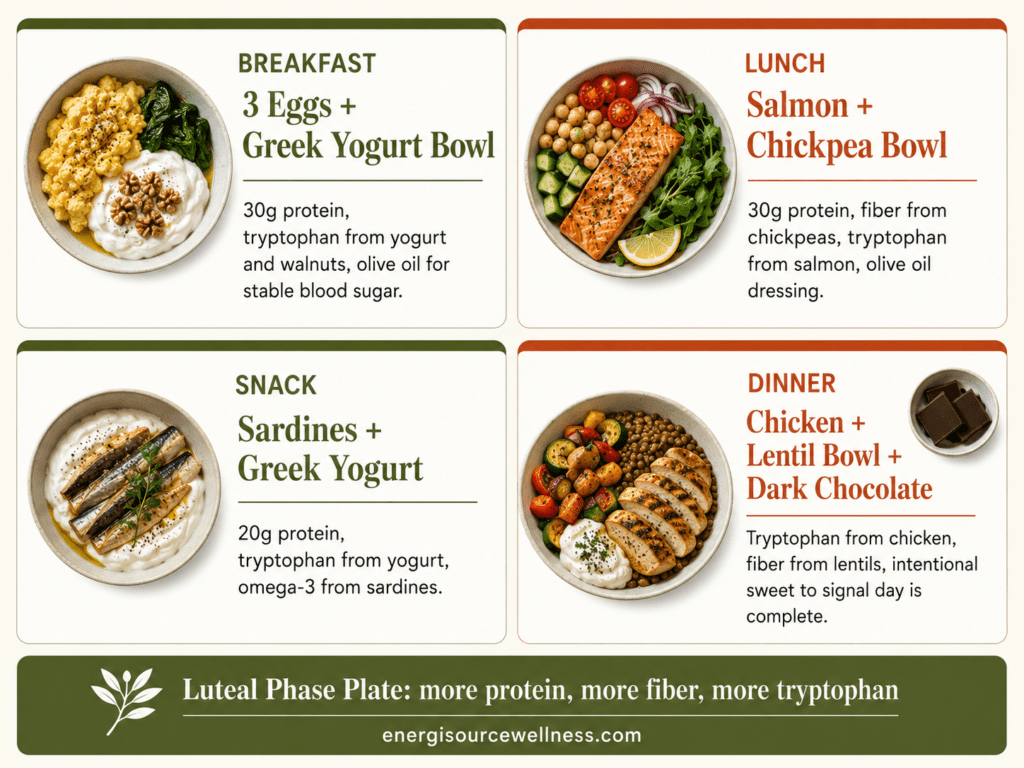
Increase protein from the standard 20 grams to 25 to 30 grams. Add a small portion of complex carbohydrate alongside the protein to support tryptophan conversion. Three eggs scrambled in olive oil with spinach and avocado alongside half a cup of Greek yogurt with walnuts provides 30 grams of protein, generous tryptophan, and fat that slows digestion and stabilizes blood sugar.
Lunch adjustments:
Make chickpeas or lentils a non-negotiable lunch component during the luteal phase specifically. A Mediterranean bowl with grilled salmon, half a cup of chickpeas, a large base of arugula, olive oil dressing, and a small portion of sweet potato eaten last is the most complete luteal phase lunch available. It provides protein above 30 grams, tryptophan from salmon, fiber from chickpeas that buffers blood sugar, and anti-inflammatory olive oil.
Dinner adjustments:
Add a deliberate tryptophan source to dinner specifically to support overnight serotonin production and reduce the evening sweet craving. Greek yogurt as a small side, a handful of walnuts, or a piece of salmon provides the tryptophan that converts to serotonin in the hours after dinner. Eating two squares of dark chocolate at 85 percent or higher as a planned intentional sweet signals the brain that the eating day is complete and addresses the serotonin component without triggering a blood sugar spike.
Snack adjustments:
During the luteal phase the afternoon snack becomes more important than at other cycle phases because the shorter satiety window means lunch holds for less time. A planned afternoon snack of sardines on whole grain crackers with a handful of olives, or Greek yogurt with walnuts and a few blueberries, prevents the extreme hunger that drives poor food quality choices before dinner.
>> Want a full luteal phase meal structure built automatically?
The Full Plate Method app builds Mediterranean meals with the protein-tryptophan-fiber combination that addresses luteal phase hunger and cravings. Free forever. Build your luteal phase meals free
Frequently asked questions
Is it normal to be very hungry during the luteal phase?
Yes, completely. A systematic review of resting metabolic rate across the menstrual cycle found consistent increases during the luteal phase, commonly in the 5 to 10 percent range, which means the body genuinely requires more fuel. Women naturally consume 250 to 500 additional calories per day during the luteal phase when eating to satisfy hunger, and this increase corresponds closely to the actual metabolic increase. The hunger is real. The response to it is what can be optimized.
Why do I crave carbs and sweets specifically before my period?
The specific craving for carbohydrates and sweets during the luteal phase is driven by declining estrogen which reduces serotonin levels. When serotonin drops, the brain actively seeks carbohydrates because eating them temporarily increases tryptophan availability in the brain, which converts to serotonin. The craving is a serotonin request dressed up as a food preference. Providing tryptophan from Mediterranean foods like Greek yogurt, walnuts, salmon, and eggs alongside a small complex carbohydrate addresses the serotonin need more durably than eating the craved sweet food.
How many more calories should I eat during the luteal phase?
Research suggests eating 200 to 500 additional calories per day during the luteal phase is consistent with the actual metabolic increase from progesterone. Rather than tracking calories specifically, the Mediterranean approach recommends increasing protein by 5 to 10 grams per meal and adding a planned afternoon snack during the luteal phase specifically. These adjustments naturally provide the additional fuel the elevated metabolism requires without the blood sugar instability from additional refined carbohydrates.
Why does blood sugar feel less stable before my period?
Progesterone in the mid-to-late luteal phase reduces insulin sensitivity, which means blood sugar responds more dramatically to the same carbohydrate load during this phase. The same meal that produced a moderate blood sugar curve earlier in the cycle can produce a sharper spike and faster crash during the luteal phase. Increasing fiber from legumes and eating carbohydrates last within the meal are the most effective adjustments for managing this luteal-phase-specific blood sugar instability.
Does the Mediterranean diet help with PMS hunger specifically?
The Mediterranean dietary pattern addresses the three primary drivers of PMS-related hunger and cravings simultaneously. High protein content addresses ghrelin-driven hunger from elevated metabolism. Tryptophan-rich foods support serotonin production to reduce sweet cravings from estrogen decline. Prebiotic fiber from legumes rebuilds the gut microbiome diversity that maintains serotonin production capacity. Anti-inflammatory olive oil and omega-3 fatty acids from fatty fish reduce the systemic inflammation that progesterone can amplify during the late luteal phase.
The bottom line
Luteal phase hunger is not a character flaw, an eating disorder, or a PMS symptom to manage through restriction. It is a predictable biological response to progesterone raising the metabolic rate and estrogen declining which drops serotonin and drives specific carbohydrate cravings as a compensatory mechanism. The women who have shared this experience with me describe it the same way almost every time: a week of feeling like nothing is enough, a week of reaching for food they would not normally want, a week of wondering what is wrong with them. Nothing is wrong. The Mediterranean approach addresses both hormonal drivers by providing more protein for the elevated metabolic demand, tryptophan-rich foods for the serotonin component, and prebiotic fiber from legumes for the blood sugar stability and gut-based serotonin production that reduces cravings at their biological source. Supporting gut microbiome health throughout the month with Lactobacillus Gasseri alongside consistent Mediterranean eating builds the serotonin production capacity that makes each luteal phase progressively less intense.
The practical starting point: during the next luteal phase, increase protein by 5 grams per meal, add chickpeas to lunch every day, include a tryptophan source at dinner deliberately, and plan an afternoon snack rather than waiting until extreme hunger drives the decision. Most women notice meaningful improvement within the first luteal phase of consistent application.
I wrote this one from research and from the consistent pattern I hear from women on this site rather than from lived experience. But the biology is clear, the mechanism is real, and the Mediterranean food structure that addresses it is specific and actionable. The hunger is legitimate. The cravings are a hormone signal. Both deserve a response that works with the biology rather than against it.
Ribert
>> Want the full Mediterranean meal plan including luteal phase adjustments?
The 7-Day Mediterranean Meal Plan PDF builds every meal around the protein-tryptophan-fiber structure that supports hormonal hunger throughout the cycle. $17, instant download. Get the 7-Day Mediterranean Meal Plan for $17
Free printable
Hungry again at 9pm?
Get the free printable Night Hunger Snack List: 10 Mediterranean snacks with exact portions and protein counts, for the evenings when cravings hit. Enter your email and download it instantly.
Free. No spam. Unsubscribe anytime.
Keep reading
Hunger vs Cravings: How to Tell the Real Difference
Why Do I Crave Sugar in the Morning?
Foods That Stabilize Blood Sugar Naturally
Why Am I Always Hungry Even Though I Eat a Lot?
How to Stop Sugar Cravings Naturally
This article shares research and general nutrition information, not medical advice. Speak with your healthcare provider about any menstrual cycle health concerns.
About Ribert Rodriguez
Ribert is the founder of EnergiSource Wellness. He built this site to share what actually worked for him after years of struggling with cravings, late-night eating, and low energy, and to research and share the nutritional patterns that help the women in his community do the same. His approach is rooted in the Mediterranean framework and a belief that food is one of the most powerful tools for how you think and feel.