Always feeling hungry despite eating plenty of food is almost never a large appetite. It is ghrelin staying active because meals are missing the protein threshold that switches it off, combined with leptin resistance that prevents the fullness signal from reaching the brain properly. Both are driven by specific dietary patterns and both respond to the Mediterranean meal structure within days of consistent application. The problem is not how much you eat. It is what the food is communicating to your hunger hormone system.
There was a period in my life where I was eating three full meals a day, snacking between them, and still feeling hungry constantly. Not bored hungry. Not craving-something-specific hungry. Genuinely physically hungry, stomach growling, difficulty focusing kind of hungry. I was eating more food than I ever had and feeling less satisfied than I ever had.
I thought at the time that I must have a large appetite or a fast metabolism. Neither turned out to be accurate. What I had was a pattern of eating that was keeping my hunger hormone ghrelin permanently active and preventing my fullness hormone leptin from communicating properly with my brain. The food volume was high. The hormonal off-signals were absent.
The shift happened when I stopped trying to eat more and started changing what the food was communicating to my hormonal system. Within a week of restructuring meals around the protein-fiber-fat combination the constant hunger quieted to normal, predictable hunger that arrived at appropriate intervals and left when I ate. That change in the hunger experience is one of the most meaningful quality-of-life improvements I have made.
This article covers the six specific reasons constant hunger persists despite eating enough food and the Mediterranean approach that addresses each one. For context on the hormonal mechanism, how to reset your hunger hormones in 7 days goes deeper on the reset protocol.
The two hormones behind constant hunger
Understanding why you are always hungry despite eating enough requires understanding two hormones specifically. Most hunger advice treats hunger as a calorie problem. Constant hunger is almost always a hormone signal problem.
Ghrelin: your hunger-on hormone
Ghrelin is produced in the stomach and signals the brain that it is time to eat. It rises before meals and falls after them. In a well-functioning system, eating a meal that contains adequate protein, fat, and fiber suppresses ghrelin for 3 to 5 hours. The hunger signal stays quiet until it is genuinely time to eat again.
In a dysregulated system, ghrelin does not fall properly after eating because the meal was missing the signals that switch it off. Protein above 20 grams per meal is the primary ghrelin suppressor. Fat is the secondary one. When a meal lacks both, ghrelin stays elevated or returns to pre-meal levels within 60 to 90 minutes. The brain continues receiving a hunger signal despite the stomach being full of food. This is the experience of eating a large meal and feeling hungry again almost immediately.
Leptin: your fullness-off hormone
Leptin is produced by fat cells and signals the brain that the body has enough energy stored and does not need more food. It is the long-term satiety hormone that regulates overall appetite across days rather than across individual meals. When leptin is functioning correctly, periods of eating enough food reduce hunger across subsequent days as leptin signals abundance to the brain.
Leptin resistance develops when the brain stops responding to leptin signals properly. The fat cells are producing leptin normally. The brain is not receiving or acting on the signal. The result is persistent hunger even in people who are eating enough or even eating more than enough. Leptin resistance is driven by chronic inflammation from processed food, poor gut microbiome diversity, irregular sleep, and chronically elevated insulin from refined carbohydrate-heavy eating.
The Mediterranean diet specifically addresses leptin resistance through its anti-inflammatory foods, prebiotic fiber content that restores gut microbiome diversity, and low refined carbohydrate load that reduces chronic insulin elevation. This is the deeper mechanism behind why Mediterranean eating reduces constant hunger beyond simply providing the right macronutrients at each meal.
6 reasons you are always hungry even though you eat a lot
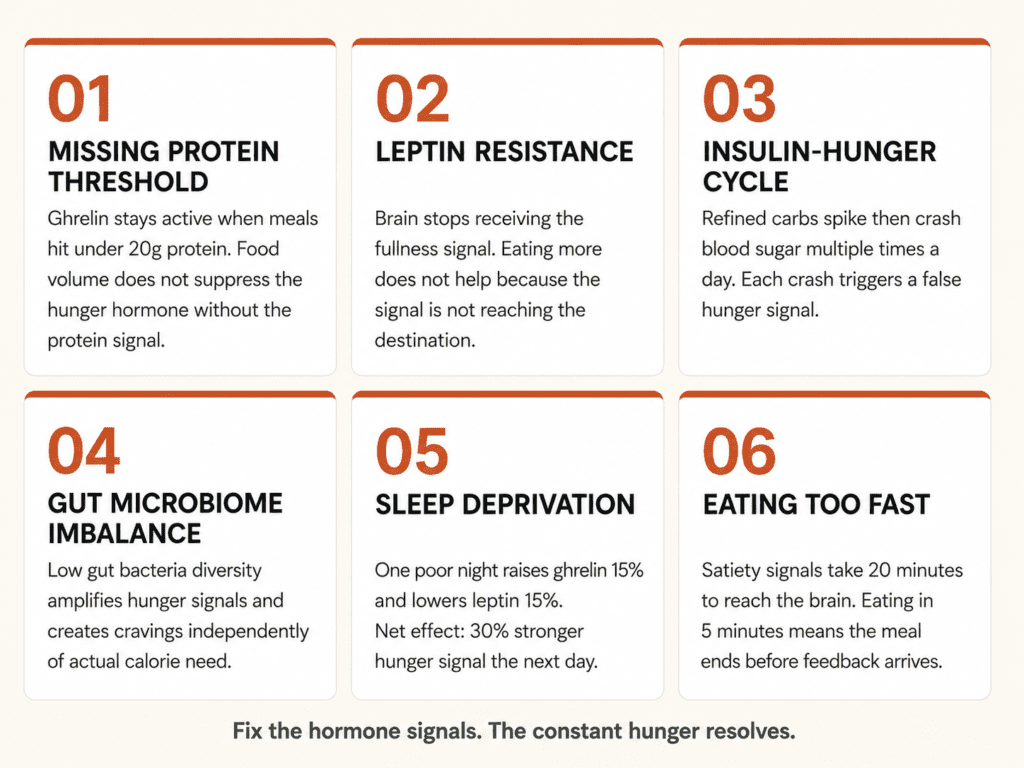
Reason 1: Your meals are hitting volume but missing protein
This is the most common single cause of constant hunger despite eating a lot. A large plate of food that is primarily carbohydrates and vegetables with minimal protein does not suppress ghrelin adequately. The stomach stretches from the volume, which provides brief satiety. But ghrelin, which requires a specific protein signal to switch off, stays elevated or rebounds within 90 minutes.
The person eating a large pasta bowl, a big grain salad, or a substantial vegetable stir-fry without a meaningful protein anchor is eating a lot of food without providing the hormonal off-signal. The 20-gram protein threshold per meal is the minimum needed for complete ghrelin suppression. Below that threshold, hunger persists regardless of food volume. How much protein you need to stay full covers this threshold in detail with specific food sources.
Reason 2: Leptin resistance from chronic inflammation
When the brain stops receiving leptin’s fullness signal properly, appetite does not regulate normally across the day. You feel hungry more often, crave higher-calorie foods, and feel less satisfied after eating than you should. Leptin resistance is not a medical diagnosis most people receive but it is extremely common in people eating a standard Western diet high in processed food and refined carbohydrates.
The anti-inflammatory Mediterranean foods that directly support leptin sensitivity include omega-3 fatty acids from salmon and sardines, polyphenols from extra virgin olive oil and blueberries, and prebiotic fiber from chickpeas and lentils that feeds the gut bacteria involved in leptin signaling. A Swanson Lactobacillus Gasseri probiotic specifically has research connecting this strain to improved leptin sensitivity and metabolic support, making it a relevant addition alongside the food changes for people whose constant hunger has a gut microbiome component.
Reason 3: Refined carbohydrates are driving an insulin-hunger cycle
A diet high in refined carbohydrates, white bread, white rice, pasta, crackers, sweetened drinks, creates a chronic pattern of blood sugar spikes followed by insulin-driven drops. Each time blood sugar drops the brain sends an urgent hunger signal for fast fuel. If the diet is consistently carbohydrate-heavy the person experiences multiple blood sugar drops through the day, each one producing a hunger signal. The total food volume can be high but the blood sugar pattern produces constant hunger regardless.
This is the same spike-and-crash pattern described in why blood sugar drops after eating. When it happens multiple times a day from a consistently refined-carbohydrate-heavy diet the person experiences what feels like constant hunger that never resolves regardless of how much they eat.
Reason 4: Gut microbiome imbalance is amplifying hunger signals
Beneficial gut bacteria directly regulate hunger hormone production. When gut microbiome diversity is low, the bacteria that produce short-chain fatty acids and regulate ghrelin production are underrepresented. The result is amplified hunger signals that fire more frequently and more intensely than they should from a well-regulated microbiome.
Harmful gut bacteria that thrive on sugar and processed food also send craving signals to the brain directly, which are experienced as hunger or food cravings independent of actual calorie need. Rebuilding gut microbiome diversity through prebiotic fiber from chickpeas, lentils, oats, and chia seeds, alongside probiotic foods like Greek yogurt and fermented foods, reduces these amplified hunger signals within days to weeks of consistent dietary change.
Reason 5: Poor sleep is elevating ghrelin and suppressing leptin
Sleep deprivation produces a reliable and measurable hormonal effect on hunger. A landmark study in Annals of Internal Medicine found that just two nights of shortened sleep raised ghrelin by 28 percent and dropped leptin by 18 percent, alongside a 24 percent increase in reported hunger. Multiple nights of poor sleep create cumulative hormonal disruption that produces the experience of constant hunger regardless of food intake.
This is why people report significantly increased appetite and food cravings after periods of poor sleep even when they are eating the same foods they normally eat. The hormones that regulate hunger have shifted independently of diet. The Mediterranean approach addresses the sleep-hunger connection through the specific nutrients that support sleep quality: tryptophan from Greek yogurt and walnuts that converts to serotonin and melatonin, magnesium from dark leafy greens that supports sleep onset, and the anti-inflammatory effect of the overall dietary pattern that reduces the inflammation-disrupted sleep cycle.
Reason 6: Eating too fast prevents satiety signals from registering
Satiety signals travel from the stomach to the brain via the vagus nerve and take approximately 20 minutes to complete the journey. A person who eats a large meal in 5 to 8 minutes has consumed a significant amount of food before the brain has received any information about how much has been eaten. The meal ends. The brain finally receives the satiety signal 15 minutes later. But the eating has already stopped. Because the satiety signal arrived late relative to the eating, the person often feels the meal was insufficient and reaches for more food.
This pattern creates a situation where large quantities of food are consumed because the satiety signal never registers during the eating window. The person is not overeating out of greed or lack of discipline. They are eating to a hunger signal that the brain is still sending because the feedback loop has not completed. Slowing eating pace to 15 to 20 minutes per meal and pausing for 10 minutes before reaching for more food resolves this pattern for most people within a week.
>> Want a meal structure that resets hunger hormones within a week?
The Full Plate Method app builds Mediterranean meals that address ghrelin, leptin, and gut bacteria simultaneously. Free forever. Build hunger-resetting meals free
The Mediterranean approach to constant hunger
Every element of traditional Mediterranean eating addresses at least one of the six causes of constant hunger listed above. This is not coincidental. Mediterranean populations have historically had lower rates of metabolic dysfunction, hunger dysregulation, and obesity than populations eating refined-carbohydrate-heavy Western diets. The food pattern is doing multiple things simultaneously.
Protein at every meal addresses ghrelin directly
Greek yogurt, eggs, sardines, salmon, chickpeas, lentils, cottage cheese, and feta as regular meal components ensure that the 20-gram protein threshold is consistently reached. When ghrelin receives an adequate protein signal at every meal it stays suppressed for 3 to 5 hours and the constant hunger pattern breaks within days.
Olive oil and healthy fat support leptin sensitivity
The polyphenols in extra virgin olive oil reduce the systemic inflammation that drives leptin resistance. The oleic acid in olive oil has been specifically associated with improved leptin signaling in multiple observational studies of Mediterranean populations. Using olive oil as the primary cooking and dressing fat rather than seed oils or butter is one of the most direct dietary changes for leptin sensitivity.
Prebiotic fiber rebuilds the gut microbiome that regulates hunger
Chickpeas, lentils, and chia seeds feed Akkermansia muciniphila and other beneficial bacteria that directly regulate ghrelin and produce the short-chain fatty acids that support leptin signaling. A diet that includes legumes daily rebuilds the gut microbiome diversity associated with healthy hunger regulation within 2 to 4 weeks of consistent consumption. Adding a targeted probiotic strain like Lactobacillus Gasseri alongside the prebiotic fiber from Mediterranean foods accelerates the microbiome restoration by directly introducing one of the most researched strains for metabolic and hunger hormone support.
Low refined carbohydrate load breaks the insulin-hunger cycle
Mediterranean eating naturally replaces refined carbohydrates with slow-digesting alternatives: quinoa and sweet potato instead of white rice and white bread, whole grain pasta eaten in smaller quantities alongside protein and vegetables, legumes as carbohydrate components that digest over 4 to 5 hours rather than 60 to 90 minutes. The blood sugar pattern produced by this carbohydrate substitution eliminates most of the false hunger signals produced by the insulin-driven crash cycle.
The 7-day protocol for resetting constant hunger
These seven daily changes address all six causes simultaneously. Most people notice meaningful reduction in constant hunger within three to five days. By day seven the hunger pattern is typically significantly more regulated and predictable.
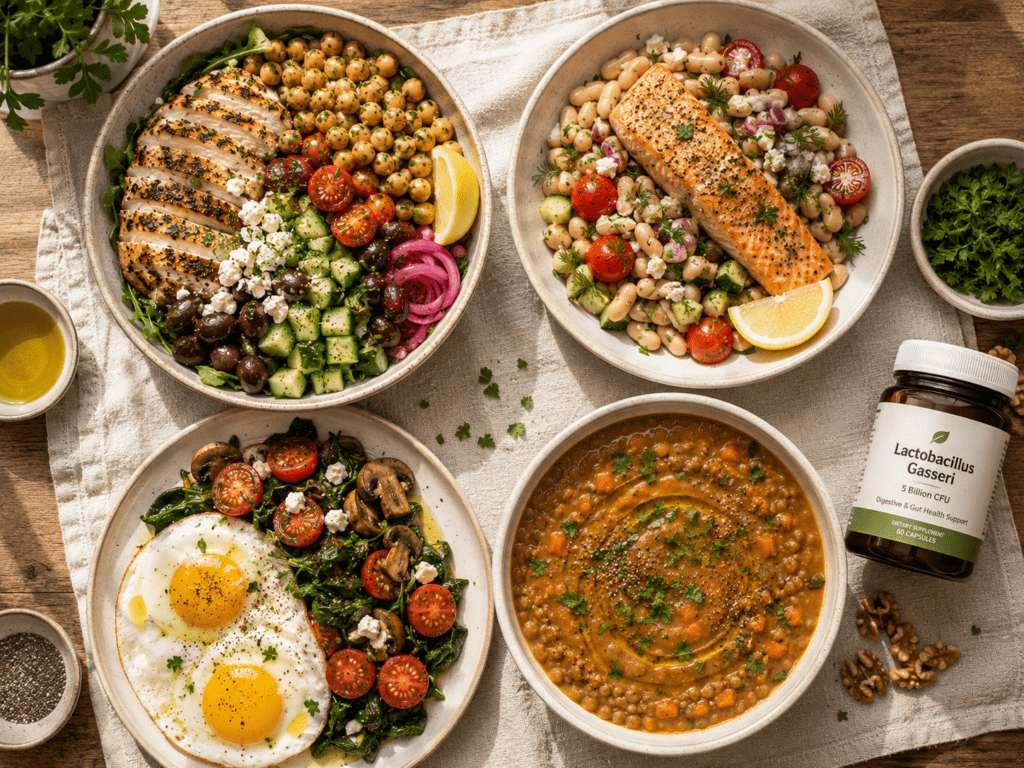
Day 1 to 3: Protein threshold at every meal
Ensure every breakfast, lunch, and dinner hits 20 grams of protein minimum. This alone addresses the most common single cause of constant hunger and produces the fastest initial reduction in hunger frequency.
Day 1 to 7: Add chickpeas or lentils at lunch daily
Half a cup of chickpeas or lentils at every lunch provides the prebiotic fiber that begins rebuilding gut bacteria diversity and regulating the hunger hormone signals that come from the gut microbiome.
Day 2 to 7: Replace refined carbohydrates with slow-digesting alternatives
Quinoa instead of white rice. Sweet potato instead of white potato. Whole grain bread instead of white bread. This breaks the insulin-hunger cycle that produces multiple false hunger signals throughout the day.
Day 3 to 7: Add olive oil to every meal
Two tablespoons minimum as cooking fat or dressing. The polyphenols begin reducing systemic inflammation that drives leptin resistance. This change takes longer than the protein change to show results but is foundational for the long-term hunger regulation.
Day 4 to 7: Slow eating pace to 15 to 20 minutes per meal
Set a timer if necessary. Put down utensils between bites. The satiety signal needs time to reach the brain. This change produces the most immediate subjective improvement in meal satisfaction for people who eat quickly.
Day 5 to 7: Sleep 7 to 9 hours
Even two to three nights of adequate sleep measurably reduces ghrelin and restores leptin sensitivity compared to the sleep-deprived baseline. Sleep quality matters alongside duration: the tryptophan from Greek yogurt and walnuts at dinner supports melatonin production that improves sleep quality.
Day 7: Assess the hunger pattern
By day seven most people report that the constant hunger has shifted to predictable hunger that arrives at appropriate meal intervals and resolves after eating rather than persisting regardless of food intake. The hormonal system has begun recalibrating.
Frequently asked questions
Is it normal to be hungry all the time even when eating enough?
It is common but it is a signal that something in the hunger hormone system is not functioning optimally rather than a normal state. Constant hunger despite adequate food intake almost always indicates either insufficient protein at meals, leptin resistance from chronic inflammation or poor gut microbiome health, blood sugar instability from refined carbohydrate-heavy eating, or sleep deprivation affecting ghrelin and leptin levels. All of these are addressable through dietary and lifestyle changes rather than simply eating more food.
Why am I always hungry even though I eat healthy food?
Healthy food that is low in protein and high in carbohydrates, even whole food carbohydrates, can still produce constant hunger because healthy food does not automatically mean hunger-hormone-optimized food. A large vegetable smoothie, a big grain bowl with minimal protein, or a fruit-heavy breakfast can all be nutritionally healthy and still leave ghrelin unsuppressed because the protein threshold required to switch off the hunger hormone was not reached. Healthy eating and hunger-hormone-optimized eating are not always the same thing.
Can gut health cause constant hunger?
Yes, directly. Gut bacteria produce and regulate hunger hormones including ghrelin. Low gut microbiome diversity, which is extremely common in people eating processed food-heavy diets, produces amplified and more frequent hunger signals than a diverse, balanced microbiome does. Harmful gut bacteria also send craving signals to the brain that are experienced as hunger independent of calorie status. Rebuilding gut microbiome diversity through prebiotic fiber from legumes and probiotic foods like Greek yogurt and fermented vegetables reduces these hunger-amplifying signals within weeks of consistent application.
Does drinking water help with constant hunger?
Yes, partially. Dehydration produces a signal in the hypothalamus that is sometimes interpreted as hunger because the same brain region processes both hunger and thirst. Drinking 500ml of water before reaching for food when hunger arrives unexpectedly often reduces the urgency of the hunger signal if dehydration was the underlying cause. However water does not address protein deficit, leptin resistance, blood sugar instability, or gut microbiome imbalance, which are the primary drivers of constant hunger in most people. Water is a useful first check but not a comprehensive solution.
How long does it take to stop feeling constantly hungry?
Most people notice meaningful reduction in constant hunger within three to five days of consistently applying the protein threshold at every meal. The blood sugar-related hunger signals improve within the first week of replacing refined carbohydrates with slow-digesting alternatives. Leptin resistance and gut microbiome-related hunger take two to four weeks of consistent Mediterranean eating to show significant improvement because these involve structural changes in gut bacteria populations and inflammatory markers rather than immediate hormonal shifts. The full hunger hormone reset typically completes within three to four weeks of consistent application.
The bottom line
Constant hunger despite eating a lot is one of the most demoralizing nutritional experiences because it feels like the body is broken or the appetite is out of control. Neither is true for most people experiencing it. The hunger is a signal from a hormonal system that is not receiving the protein off-switch at meals, is experiencing leptin resistance from inflammation or poor gut health, is generating false hunger signals from blood sugar instability, or is amplified by sleep deprivation. The Mediterranean meal structure addresses all six of these causes through its natural combination of protein anchors, olive oil, prebiotic fiber from legumes, and anti-inflammatory foods. For additional gut microbiome support alongside the dietary changes, natural blood sugar and hunger support works best as a complement to the food structure rather than a substitute for it.
Start with the protein threshold. Every meal, 20 grams minimum. That single change addresses the most common cause and produces the fastest result. Add chickpeas at lunch for the gut bacteria component. Replace one refined carbohydrate with a slow-digesting alternative. Within three to five days the constant hunger pattern will begin to shift toward something more predictable and manageable.
The period when I was eating the most food and feeling the most hungry was also the period when I was eating the least protein and the most refined carbohydrates. The quantity of food I was consuming was high. The hormonal signal it was producing was hunger rather than fullness because the composition was wrong. When I finally understood that the hunger was a hormone signal problem rather than a calorie problem the approach changed completely. I stopped eating more and started eating differently. The constant hunger that had been my daily experience for over a year cleared within the first week. The mechanism was simple once I understood it. The experience of that shift was one of the most clarifying moments I have had around food.
Ribert
>> Want the complete 7-day hunger hormone reset meal plan?
The 7-Day Mediterranean Meal Plan PDF builds every meal to address ghrelin, leptin, and gut bacteria simultaneously. $17, instant download. Get the 7-Day Mediterranean Meal Plan for $17
Keep reading
How to Reset Your Hunger Hormones in 7 Days
Why Am I Hungry 2 Hours After Eating?
Foods That Stabilize Blood Sugar Naturally
How to Stop Snacking So Much Without White-Knuckling It
This article shares personal experience and general nutrition information, not medical advice. If you experience extreme or sudden changes in appetite, speak with your healthcare provider.
About Ribert Rodriguez
Ribert is the founder of EnergiSource Wellness. He built this site to share what actually worked for him after years of struggling with cravings, late-night eating, and low energy. His approach is rooted in the Mediterranean framework and a belief that food is one of the most powerful tools for how you think and feel.