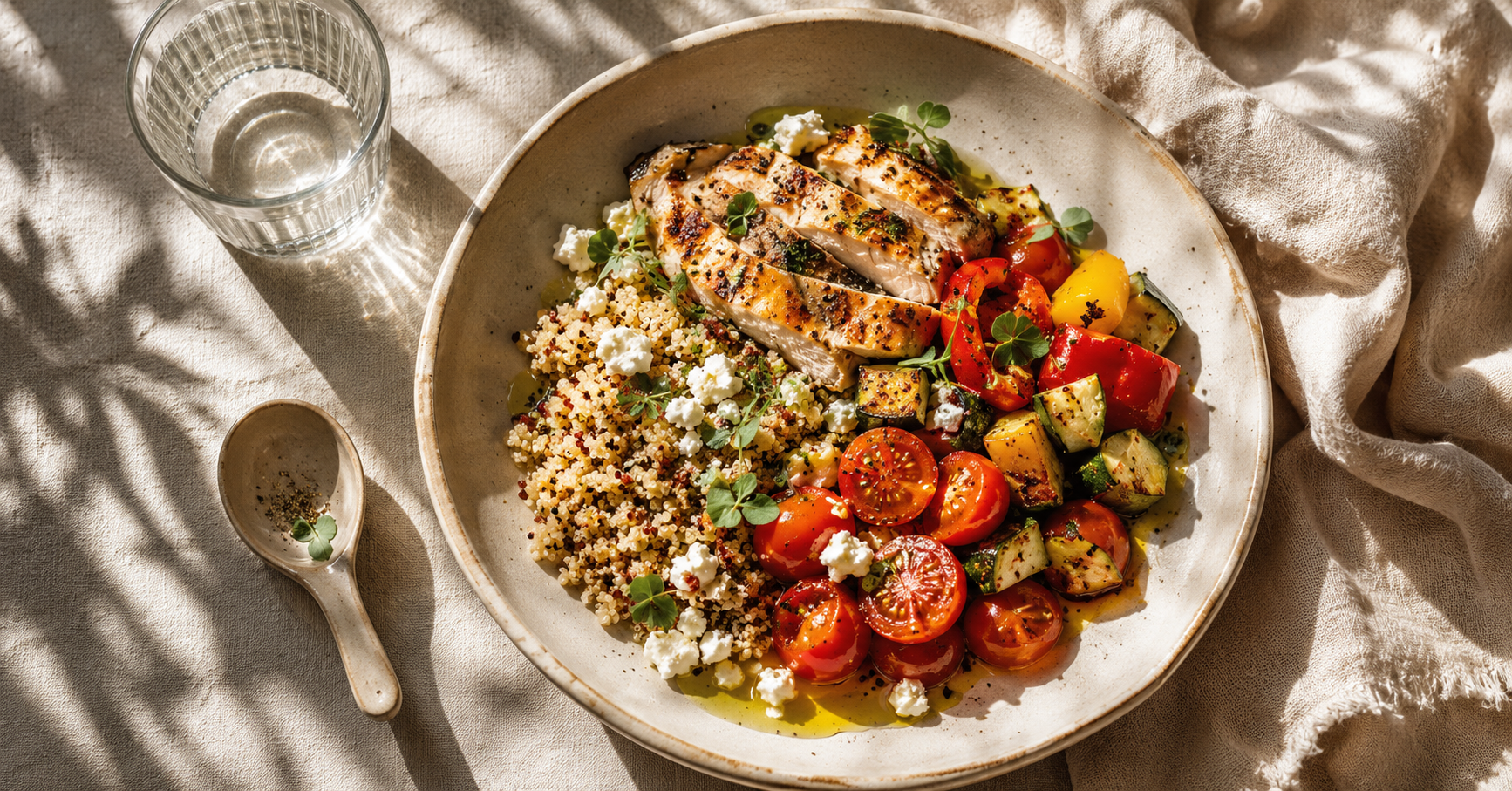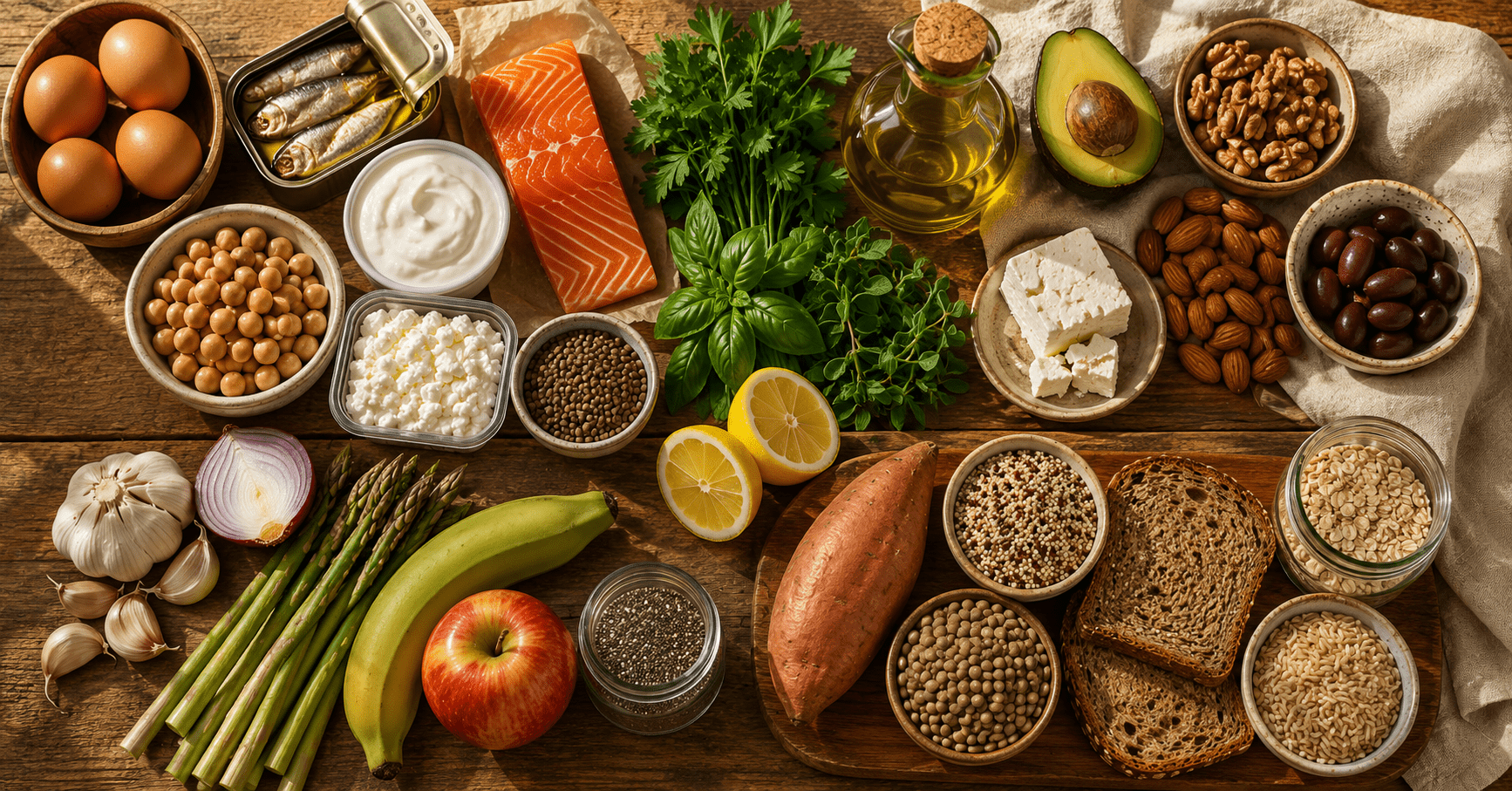
The Mediterranean diet food list that most sites publish is organized around heart health, anti-inflammatory benefits, and general wellness. This one is organized around hunger control and fullness. Same foods. Completely different frame. The Mediterranean diet keeps you full for 4 to 5 hours not because of what it avoids but because of how the specific foods it emphasizes work on ghrelin, leptin, serotonin, and the short-chain fatty acids that signal satiety to the brain. Understanding which foods do which job makes the Mediterranean diet a precision tool for hunger management rather than just a general healthy eating pattern.
When I first came across the Mediterranean diet I read the standard explanation. Heart health. Longevity. Anti-inflammatory. Those things are all true and they matter. But none of them explained what I was actually experiencing when I started eating this way, which was that I stopped thinking about food between meals. The afternoon craving that had been a reliable daily event simply stopped firing. The hunger that used to return within 2 hours of lunch moved to 4 or 5 hours consistently.
The reason was not the Mediterranean diet in the abstract. It was specific foods within the Mediterranean pattern doing specific jobs in the hunger hormone system. Once I understood which foods did which job the food list became a toolkit rather than a collection of ingredients.
This article organizes the Mediterranean food list the way I wish someone had organized it for me: by what each food category does for hunger and fullness, not by what it does for cardiovascular risk. The 40 foods on this list are the ones that collectively produce the 4 to 5 hour fullness window that makes the Mediterranean eating pattern the most effective natural approach to hunger management available.
For the meal structure that uses these foods correctly, the balanced plate method explains exactly how to combine protein, fat, fiber, and slow carbohydrate at every meal. This food list gives you the ingredients. The balanced plate method gives you the assembly.
Why the Mediterranean food list works differently for hunger than other diets
Most dietary approaches to hunger management work by restriction: eating less, eating fewer carbohydrates, eating at specific times, or eliminating food categories. The Mediterranean approach works differently because it adds the specific nutritional elements that the hunger hormone system requires to regulate itself properly rather than removing the elements that disrupt it.
The hunger hormone system has four primary mechanisms that determine how long you feel full after eating. Ghrelin must be adequately suppressed through protein intake above 20 grams per meal. The gastric emptying rate must be slowed through fat and fiber presence. The short-chain fatty acids that signal satiety to the brain must be produced through prebiotic fiber fermentation in the gut. Blood sugar must be stabilized through the combination of protein, fat, and slow-digesting carbohydrates that prevents the spike-and-crash cycle that produces false hunger signals.
The Mediterranean diet addresses all four simultaneously through its natural food composition. Protein from fish, legumes, eggs, and dairy. Fat from olive oil, avocado, and nuts. Prebiotic fiber from legumes, garlic, onions, and whole grains. Slow carbohydrates from quinoa, sweet potato, and oats rather than refined grains. No single food or meal does all four. The combination of foods across the day does.
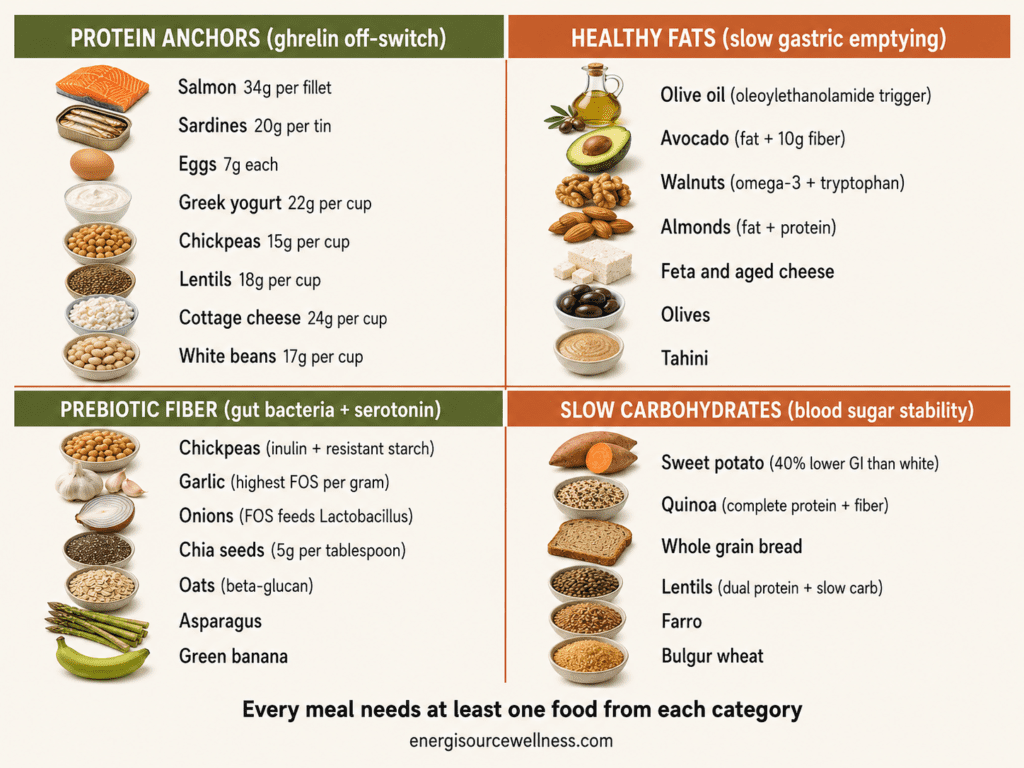
Category 1: Protein anchors (ghrelin off-switch)
These are the foods that suppress ghrelin, your hunger hormone, for 3 to 5 hours after eating. The 20-gram protein threshold per meal is the minimum needed for complete ghrelin suppression. Below this threshold ghrelin partially rebounds within 90 minutes regardless of food volume consumed.
Fatty fish (salmon, sardines, mackerel, tuna)
Fatty fish provide the highest quality combination of protein and hunger-regulating nutrients available in the Mediterranean food list. Salmon provides 34 grams of protein per fillet alongside omega-3 fatty acids that directly improve insulin sensitivity and leptin receptor signaling. Sardines provide 20 grams of protein per tin with significant omega-3s in a format that requires no cooking. Both keep ghrelin suppressed for 4 to 5 hours consistently. Aim for fatty fish two to three times per week as the primary protein anchor for lunch or dinner. Wild Planet Sardines are the most convenient daily option and have become a signature part of my own eating routine.
Eggs
Eggs provide complete protein (all nine essential amino acids) in a form that produces one of the strongest ghrelin suppression responses of any single food. Two eggs provide 14 grams of protein. Three eggs provide 21 grams, crossing the fullness threshold. The fat in egg yolks triggers cholecystokinin release which slows gastric emptying alongside the protein-based ghrelin suppression. A crossover study in overweight and obese adults found egg breakfasts produced greater satiety and lower subsequent energy intake than an equivalent carbohydrate breakfast. Eggs are the most versatile Mediterranean protein: scrambled, fried, baked into frittatas, boiled for salads, or made into egg muffins for weekly meal prep.
Greek yogurt (plain, full-fat)
Plain full-fat Greek yogurt provides 22 grams of protein per cup alongside live probiotic cultures that support the gut bacteria involved in hunger hormone regulation. The full-fat version specifically provides the fat that slows gastric emptying alongside the protein that suppresses ghrelin. Fat-free Greek yogurt loses this gastric emptying benefit and is not an equivalent substitute from a hunger management perspective. Greek yogurt is the fastest Mediterranean protein: no cooking, no preparation, immediate protein delivery at any meal or snack.
Chickpeas and lentils
Legumes are the most nutritionally efficient hunger management foods on the Mediterranean list because they provide protein AND prebiotic fiber simultaneously. One cup of chickpeas provides 15 grams of protein and 12 grams of fiber. One cup of lentils provides 18 grams of protein and 15 grams of fiber. Both deliver dual ghrelin suppression from protein and short-chain fatty acid production from prebiotic fiber fermentation. Eaten daily at lunch they produce the most consistent hunger extension of any food on this list.
Cottage cheese
Cottage cheese provides 24 to 28 grams of protein per cup making it one of the highest-protein foods on the Mediterranean list per serving. It is the fastest Mediterranean protein option alongside Greek yogurt: no cooking, no preparation, immediate protein delivery. The slightly higher protein content compared to Greek yogurt per cup makes it particularly effective for the morning meal where crossing the 20-gram threshold sets the hunger pattern for the entire day.
White beans and cannellini
White beans and cannellini beans provide protein and fiber in a Mediterranean comfort food format that works particularly well in soups, stews, and warm grain bowls. One cup provides 17 grams of protein and 11 grams of fiber. They are the most versatile legume for Mediterranean cooking beyond chickpeas and lentils, appearing in traditional Mediterranean white bean soup, pasta e fagioli, and alongside roasted vegetables as a complete protein and fiber meal.
Category 2: Healthy fats (gastric emptying delay)
These are the foods that slow how quickly the stomach empties its contents into the small intestine. Fat triggers cholecystokinin release which keeps the pyloric valve at the bottom of the stomach partially closed. The gastric emptying delay from adequate fat at every meal changes a 2-hour meal into a 4-hour meal without adding additional protein.
Extra virgin olive oil (the foundation)
Olive oil is not just a cooking fat in the Mediterranean framework. It is a functional hunger management ingredient. The oleic acid in high-quality extra virgin olive oil triggers the production of oleoylethanolamide in the small intestine, a compound that directly signals the brain to reduce appetite and slow gastric emptying. Two tablespoons of olive oil as a cooking fat or salad dressing base changes the satiety window of any meal it is added to. Using olive oil generously as the primary cooking fat rather than as an occasional addition is one of the most impactful single changes in the Mediterranean approach to hunger management.
Avocado
Avocado provides monounsaturated fat alongside 10 grams of fiber per fruit, making it the only food on the Mediterranean list that provides significant quantities of both gastric-emptying-slowing fat and fullness-signaling fiber simultaneously as a single ingredient. Half an avocado added to any meal extends the satiety window independently of the other foods present. It also provides potassium and magnesium which support the blood pressure and nervous system effects associated with the Mediterranean diet.
Walnuts and almonds
Tree nuts provide fat, protein, and fiber in a format that is particularly effective for afternoon snacking because the combination addresses all three primary hunger signals (ghrelin, gastric emptying, short-chain fatty acid production) in a small, portable portion. Walnuts additionally provide the highest plant-based omega-3 fatty acid content of any nut and tryptophan that supports serotonin production, making them specifically useful for the afternoon craving that is often serotonin-driven. A small handful (approximately 28 grams) provides meaningful hunger management benefit without the caloric density that comes from eating larger quantities.
Feta and aged cheeses
Feta and aged cheeses provide fat and protein alongside live probiotic cultures (in traditionally produced varieties) that support gut bacteria involved in hunger hormone regulation. Feta is the most traditional Mediterranean cheese and appears in salads, egg dishes, grain bowls, and as a standalone snack component. The fat and protein combination in cheese produces a meaningful gastric emptying delay that extends the satiety window from any meal it accompanies.
Olives
Olives are one of the most calorie-efficient fat sources on the Mediterranean list because the fat is bound within the olive flesh rather than extracted as oil, meaning the fiber of the olive itself adds to the satiety effect alongside the fat content. A small portion of olives as part of an afternoon snack provides fat-based gastric emptying delay alongside the fiber benefit. They are also one of the most convenient portable snack components requiring no preparation and no refrigeration.
Category 3: Prebiotic fiber (gut bacteria and serotonin)
These are the foods that feed beneficial gut bacteria which produce the short-chain fatty acids and serotonin precursors that regulate hunger hormones from the gut. As covered in the prebiotic foods article, this category is the one most people are missing even when they eat a generally healthy diet.
Garlic (highest FOS concentration)
Garlic contains inulin and fructooligosaccharides in higher concentrations per gram than almost any other common food. These prebiotic fibers specifically feed Bifidobacterium species that produce butyrate and support serotonin precursor production. One to two cloves of garlic used as a cooking foundation provide meaningful prebiotic benefit. Raw garlic in salad dressings provides more prebiotic activity than cooked garlic but both are beneficial. Using garlic as the flavor foundation of every Mediterranean meal is one of the simplest ways to build daily prebiotic intake without any additional planning.
Onions and leeks
Onions and leeks contain fructooligosaccharides that feed Lactobacillus species, the gut bacteria most directly involved in serotonin precursor production. Eating onions and leeks daily alongside garlic provides a combined prebiotic dose that feeds multiple beneficial bacteria species simultaneously rather than a single strain. Onions sauteed as the base of Mediterranean soups, stews, and grain dishes provide this benefit at every meal where they appear as a cooking foundation.
Chia seeds
Chia seeds expand to 10 times their dry volume in liquid, forming a gel that physically slows gastric emptying and delivers concentrated prebiotic fiber to the large intestine. One tablespoon provides 5 grams of prebiotic-active fiber that feeds beneficial gut bacteria for hours. The gel formation begins in the stomach and contributes to the physical fullness signal alongside the hormonal prebiotic benefit. One tablespoon stirred into overnight oats, Greek yogurt, or a smoothie every morning provides meaningful daily prebiotic fiber without any additional meal planning effort. If you want an app to do the planning, this is how Eat This Much held up when I tried it.
Oats (beta-glucan)
Oats contain beta-glucan, a specific soluble fiber that feeds Lactobacillus and Bifidobacterium species and triggers the release of GLP-1 and peptide YY in the gut. These are the same fullness hormones that GLP-1 medications work on. Oats specifically prepared as overnight oats with Greek yogurt and chia seeds added provide the most complete prebiotic-probiotic-fiber breakfast available in the Mediterranean framework. The overnight soaking partially breaks down phytic acid while preserving the beta-glucan prebiotic activity.
Dark leafy greens
Spinach, arugula, kale, and Swiss chard provide insoluble fiber that adds physical bulk to the digestive contents and slows carbohydrate transit, alongside magnesium that directly supports insulin sensitivity and serotonin synthesis. A large handful of leafy greens at every meal provides meaningful fiber benefit regardless of the other foods present. The volume of greens matters more than the specific variety for the fiber effect.
Category 4: Slow carbohydrates (blood sugar stability)
These are the foods that provide carbohydrate-based energy without the blood sugar spike and crash that produces false hunger signals within 90 minutes of eating. The key distinction is absorption rate: these carbohydrates digest slowly because of their fiber content, protein content (in the case of legumes), or structural complexity.
Sweet potato
Sweet potato has a glycemic index approximately 40 percent lower than white potato and provides 4 grams of fiber per cup alongside significant beta-carotene and potassium. Eaten as the last component of a meal, after protein and vegetables, its glucose impact is further reduced by the fiber and fat already present in the digestive system from the earlier parts of the meal. It is the most nutrient-dense slow carbohydrate on the Mediterranean list and the one that provides the most consistent energy across the 3 to 4 hours following the meal.
Quinoa
Quinoa is one of the few plant foods that provides complete protein alongside slow-digesting carbohydrates and meaningful fiber. One cup provides 8 grams of protein, 5 grams of fiber, and a glycemic index lower than white rice or pasta. Its protein content means it contributes to both the protein-based ghrelin suppression and the slow carbohydrate blood sugar stability simultaneously. It is the most versatile slow carbohydrate on the Mediterranean list, working equally well as a breakfast base, a lunch bowl component, and a dinner grain.
Farro and bulgur wheat
Farro and bulgur wheat are traditional Mediterranean whole grains that provide fiber, protein, and nutrients in a format that was the dietary staple of Mediterranean populations for centuries before refined grains became widely available. Both digest significantly more slowly than white rice or white pasta because of their intact grain structure and fiber content. They work as alternatives to quinoa for people who prefer a more neutral grain flavor or a denser texture in grain bowls.
Whole grain bread (eaten last in the meal)
Whole grain bread with intact fiber produces a significantly flatter blood sugar response than white bread. The key is eating it last in the meal sequence after protein and vegetables so that the fiber and fat from earlier in the meal are already slowing digestion when the bread’s carbohydrates begin absorbing. Whole grain bread eaten first in the meal sequence as many people do, picking at bread before the meal arrives, produces a faster glucose absorption than the same bread eaten after protein and vegetables.
The Mediterranean foods to minimize
The Mediterranean food list is defined as much by what it minimizes as by what it emphasizes. These are not eliminated foods. They are occasional rather than daily foods in the traditional Mediterranean pattern.
• White bread, white rice, and white pasta: refined grains that absorb rapidly and produce blood sugar spikes that drive hunger signals within 90 minutes
• Sweetened drinks including fruit juice: liquid carbohydrates that produce the fastest glucose absorption available and bypass the gastric emptying delay from the Mediterranean fats and fibers
• Processed snack foods: high in refined carbohydrates and industrial seed oils that feed harmful gut bacteria and amplify hunger signals
• Added sugar in significant quantities: feeds the harmful gut bacteria that compete with the beneficial bacteria the prebiotic foods are trying to support
• Red meat as a daily protein: occasional rather than weekly in traditional Mediterranean eating, replaced by fish, legumes, and eggs as primary protein sources
The minimization is not restriction in the typical diet sense. It is the natural consequence of eating more of the foods on the full list above. When protein, fat, fiber, and slow carbohydrates are present at every meal there is simply less room and less drive for the refined carbohydrates and processed foods that disrupt the hunger hormone system.
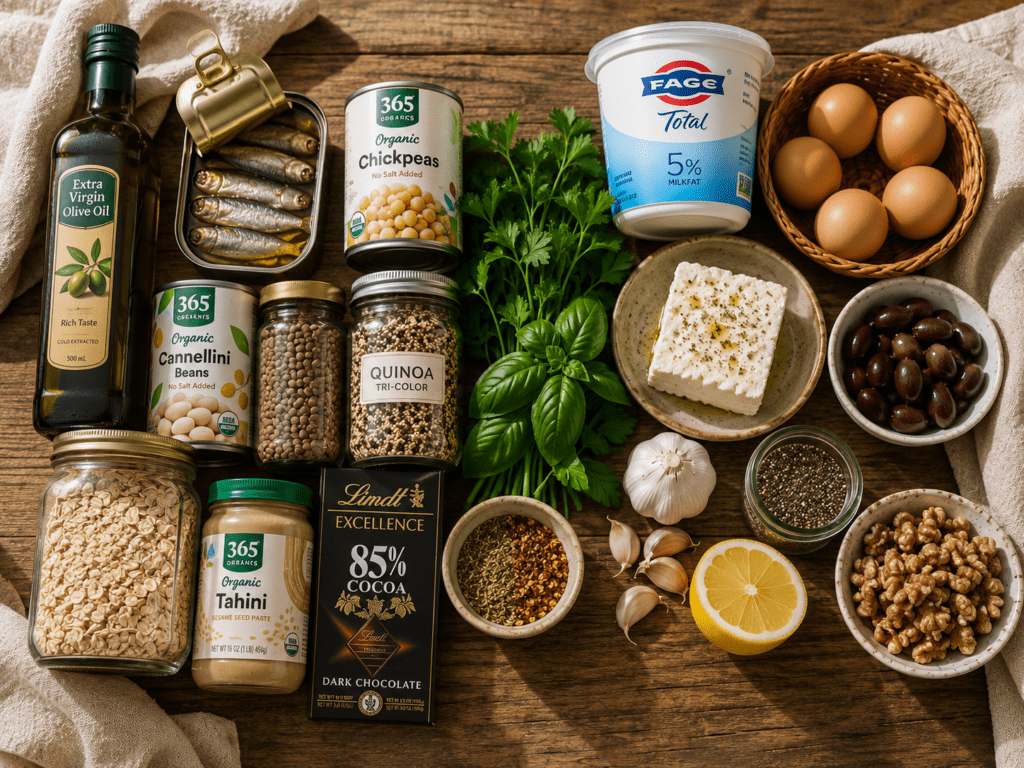
The Mediterranean pantry essentials
These are the core pantry staples that make Mediterranean eating practical on a daily basis without requiring specialty ingredients or extensive planning.
Oils and fats:
• Extra virgin olive oil (use generously, not sparingly)
• Tahini for dressings and dips
Canned and dried proteins:
• Canned sardines and tuna
• Canned and dried chickpeas
• Canned and dried lentils
• Canned white beans and cannellini
Whole grains:
• Quinoa
• Rolled oats
• Farro or bulgur wheat
• Whole grain bread
Refrigerator staples:
• Plain full-fat Greek yogurt
• Eggs (always on hand)
• Feta cheese
• Kalamata olives
• Fresh garlic and onions
Prebiotic fiber staples:
• Chia seeds
• Walnuts and almonds
• Dark chocolate 85 percent or higher
Flavor foundations:
• Dried oregano, cumin, smoked paprika, za’atar
• Lemons (juice and zest)
• Capers and sun-dried tomatoes
>> Want these foods built into a complete week of meals automatically?
The Full Plate Method app uses every food on this list to build Mediterranean meals with the protein-fiber-fat formula that keeps you full for 4-5 hours. Free forever. Build Mediterranean meals free
How to use this food list practically
Knowing the food list is the first step. Using it in a meal structure that activates all four hunger management mechanisms is the second. The balanced plate method gives you the assembly formula.
The one-plate rule for every meal:
Every meal should include at least one food from each of the four categories above: a protein anchor above 20 grams, a healthy fat source, a prebiotic fiber source, and a slow carbohydrate eaten last. This is not a rigid prescription. It is a structural check that takes 30 seconds to apply to any meal before eating.
The daily rotation that builds gut bacteria diversity:
Rotate the protein source daily (salmon Monday, eggs Tuesday, chickpeas Wednesday, sardines Thursday, Greek yogurt Friday) and the prebiotic fiber source daily (garlic and onions always as cooking foundation, chia seeds at breakfast, chickpeas at lunch, oats in overnight oats). This rotation feeds multiple beneficial bacteria species rather than the same species repeatedly, building gut microbiome diversity that makes the hunger regulation more robust over time.
The grocery shopping shortcut:
Stock the pantry staples listed above once per month. Restock the refrigerator staples (Greek yogurt, eggs, fresh vegetables, lemons, garlic) weekly. With these items in the kitchen, every Mediterranean meal can be assembled in 10 to 15 minutes without planning. For ongoing meal planning beyond the initial structure, Eat This Much generates customized Mediterranean meal plans with grocery lists automatically, which removes the planning friction that is the most common reason people revert to less structured eating.
Frequently asked questions
What foods are on the Mediterranean diet food list?
The Mediterranean diet food list includes four primary food categories: protein anchors (salmon, sardines, eggs, Greek yogurt, chickpeas, lentils, cottage cheese, white beans), healthy fats (extra virgin olive oil, avocado, walnuts, almonds, feta, olives), prebiotic fiber foods (chickpeas, garlic, onions, chia seeds, oats, asparagus, dark leafy greens), and slow carbohydrates (sweet potato, quinoa, farro, bulgur wheat, whole grain bread). Foods to minimize include white bread, white rice, white pasta, sweetened drinks, processed snack foods, and red meat as a daily staple.
Is the Mediterranean diet hard to follow?
The Mediterranean diet is significantly easier to follow than restriction-based diets because it works by adding foods rather than eliminating them. The practical challenge is changing the default pantry and shopping routine rather than managing restriction or calorie counting. Once the pantry staples listed in this article are stocked, Mediterranean meals can be assembled in 10 to 15 minutes from available ingredients without following specific recipes. The eating pattern becomes easier to maintain over time rather than harder because the foods genuinely suppress hunger for 4 to 5 hours.
How quickly does the Mediterranean diet reduce hunger?
Most people notice meaningful hunger reduction within the first 3 to 5 days of consistently eating Mediterranean meals with protein above 20 grams, healthy fat, and prebiotic fiber from legumes at every meal. The blood sugar stability improvements that prevent false hunger signals appear within the first week. The gut bacteria changes that support longer-term hunger hormone regulation take 2 to 4 weeks to produce consistent improvement. The full hunger regulation benefit from the Mediterranean pattern is typically established within 4 to 8 weeks of consistent daily application.
Can I eat Mediterranean diet foods on a budget?
Yes. The most effective hunger management foods on the Mediterranean list are among the most affordable foods available: canned chickpeas, dried lentils, eggs, rolled oats, canned sardines, plain Greek yogurt, garlic, onions, and sweet potato. The perception that Mediterranean eating is expensive comes from focusing on the fresh fish and specialty items rather than the legume, egg, and whole grain staples that form the foundation of traditional Mediterranean eating in the countries where this dietary pattern originated.
Do I need to eat fish to follow the Mediterranean diet?
No. Fish is beneficial in the Mediterranean framework primarily because of its omega-3 fatty acid content and high-quality protein. Both benefits can be achieved through other foods: omega-3 from walnuts, chia seeds, and flaxseeds, and protein from eggs, legumes, Greek yogurt, and cottage cheese. Traditional Mediterranean populations in landlocked regions ate Mediterranean diets without significant fish consumption. The essential structure is protein above 20 grams, healthy fat from olive oil, prebiotic fiber from legumes, and slow carbohydrates eaten last.
The bottom line
The Mediterranean diet food list most sites publish is organized around heart health and longevity. This one is organized around what the foods actually do in the hunger hormone system. The 40 foods across four categories described in this article collectively produce the 4 to 5 hour fullness window that makes Mediterranean eating the most effective natural approach to hunger management available. Protein anchors suppress ghrelin. Healthy fats slow gastric emptying. Prebiotic fiber from legumes feeds gut bacteria that regulate serotonin and short-chain fatty acid production. Slow carbohydrates stabilize blood sugar and prevent the false hunger signals from the spike-and-crash cycle.
The practical application is simpler than the mechanism suggests. Stock the pantry staples. Include one food from each category at every meal. Eat the carbohydrate last. Use olive oil generously. Eat chickpeas or lentils every day at lunch. These five practices implement the majority of what the Mediterranean food list does for hunger without requiring meal plans, calorie counting, or restriction of any kind.
The foods on this list were not invented by nutritionists. They have been on Mediterranean tables for centuries. My grandmother cooked with olive oil, chickpeas, garlic, onions, and eggs every single day without thinking about hunger hormones or prebiotic fiber. The hunger regulation was a natural consequence of the food she was eating rather than a goal she was pursuing. That is the point of the Mediterranean food list. Not a protocol to follow. A way of stocking the kitchen that makes hunger regulation the default outcome of daily eating.
Ribert
>> Want a complete 7-day Mediterranean meal plan using these foods?
The 7-Day Mediterranean Meal Plan PDF uses every food on this list across 28 done-for-you meals and snacks. $27, instant download. Get the 7-Day Mediterranean Meal Plan for $27
Keep reading
The Balanced Plate Method: Build Meals That Keep You Full for 4-5 Hours
Mediterranean Pantry Essentials: The 15 Staples That Make Healthy Eating Automatic
Foods That Stabilize Blood Sugar Naturally
Best Probiotic Foods for Gut Health and Hunger Control
Mediterranean Meal Prep for the Week
This article shares personal experience and general nutrition information, not medical advice.
About Ribert Rodriguez
Ribert is the founder of EnergiSource Wellness. He built this site to share what actually worked for him after years of struggling with cravings, late-night eating, and low energy. His approach is rooted in the Mediterranean framework and a belief that food is one of the most powerful tools for how you think and feel.