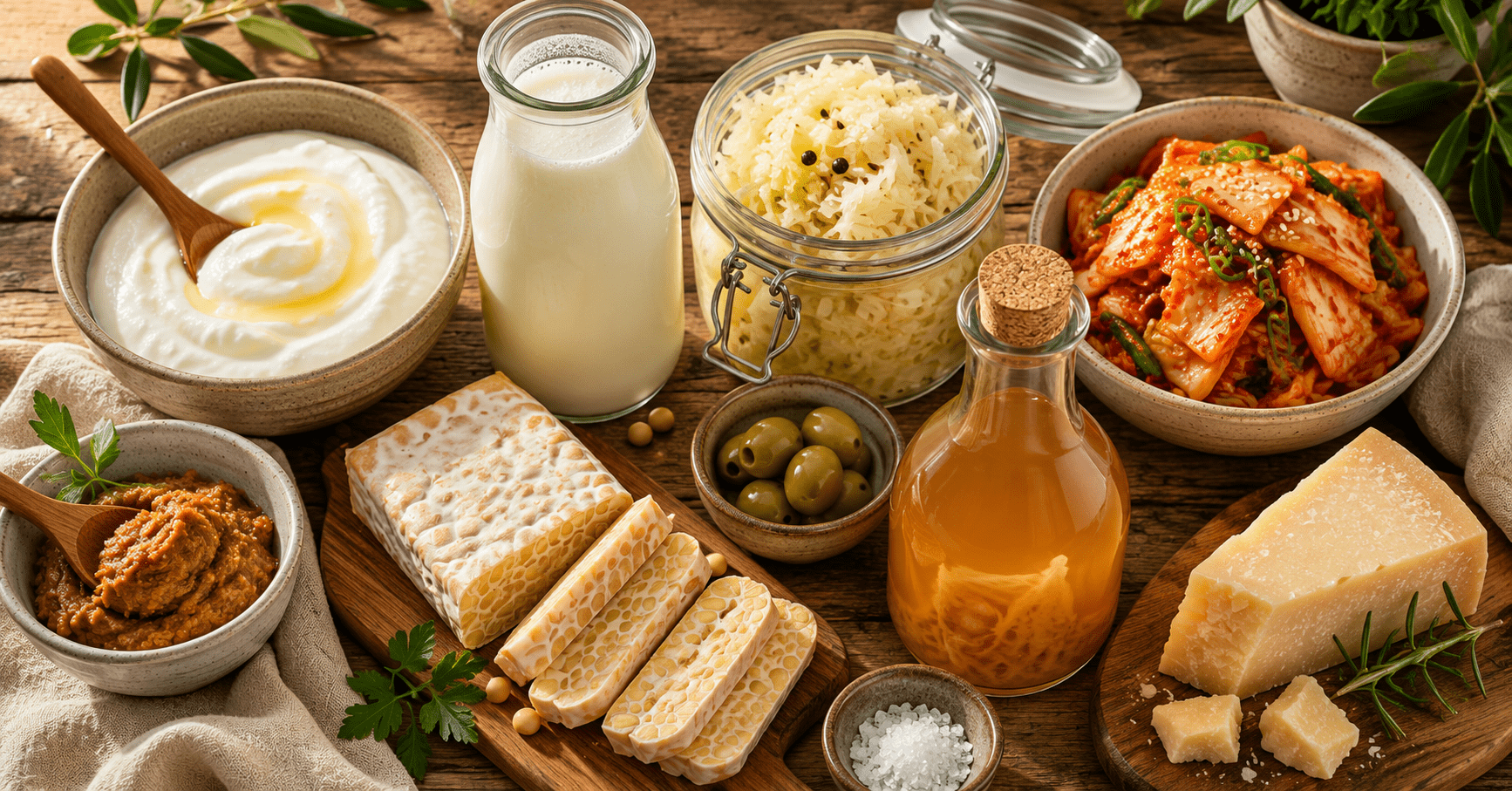
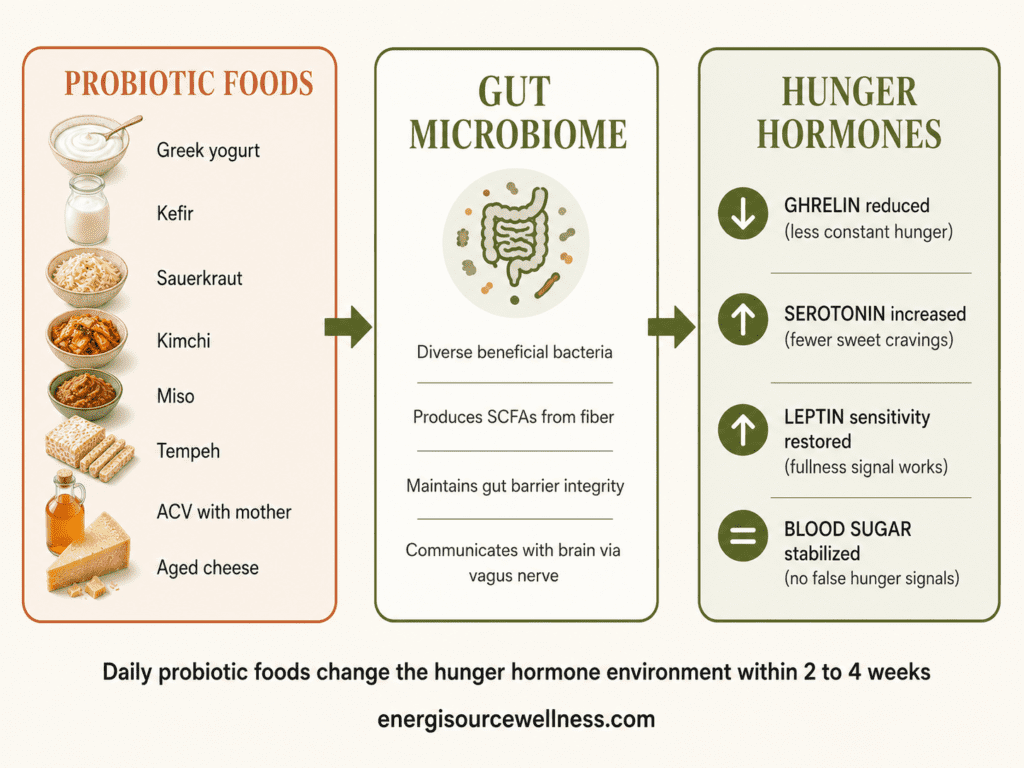
The best probiotic foods for gut health and hunger control are plain Greek yogurt, kefir, raw unpasteurized sauerkraut, kimchi, miso, tempeh, raw apple cider vinegar with the mother, and aged cheeses with live cultures. Each introduces specific beneficial bacteria strains that do far more than aid digestion. They are linked with appetite signaling and help produce approximately estimated 90 percent of your body’s serotonin, and generate the short-chain fatty acids that signal fullness to the brain. Gut bacteria are not a secondary player in hunger management. They are one of the primary systems controlling whether you feel hungry or full.
I added plain Greek yogurt to breakfast every morning for a week without changing anything else. By day four something was different about the afternoon. The craving that usually fired around 3pm was either not there or significantly quieter than normal. I could not explain it at the time because I had not yet understood the gut-hunger connection.
What I eventually learned was that the live cultures in Greek yogurt, specifically Lactobacillus bulgaricus and Streptococcus thermophilus, were feeding the beneficial bacteria that regulate serotonin production in the gut. More serotonin meant the evening and afternoon sweet craving signal was quieter. The change was not dramatic but it was consistent and it started within the first week.
What nobody in the mainstream gut health conversation talks about is that the benefit of probiotic foods for most people is not primarily about digestion. It is about the hunger and craving hormones that gut bacteria regulate. Digestion may improve. But the more immediate and noticeable change for most people is that food cravings become less urgent and hunger becomes more predictable.
This connects directly to what I wrote about in why am I always hungry even though I eat a lot. The gut microbiome is one of the six primary drivers of constant hunger. Building it through probiotic foods is one of the most effective and most underused tools for managing appetite.
If you want to put these foods to work, I pulled the easiest ones into a set of gut health recipes that also curb hunger so you are not just eating yogurt out of the tub.
Why gut bacteria control hunger and cravings
The connection between gut bacteria and hunger is one of the most significant nutritional discoveries of the past decade. The gut microbiome is not a passive digestive system. It is an active endocrine organ that produces hormones, neurotransmitters, and signaling molecules that directly communicate with the brain about hunger, fullness, and food cravings.
Gut bacteria and ghrelin regulation
Ghrelin is your primary hunger hormone, produced mainly in the stomach and rising before meals to signal the brain that it is time to eat. Gut bacteria directly influence how much ghrelin is produced and how efficiently it is cleared after eating. People with diverse, balanced gut microbiomes tend to have healthier appetite signaling in early research, though the findings are still developing.
When gut bacteria are imbalanced, typically from a processed food heavy diet low in fermented foods and fiber, ghrelin production becomes dysregulated. The hunger signal fires more frequently, more intensely, and takes longer to suppress after meals. This is a primary reason that the same food volume feels less satisfying for some people than others. It is not appetite size. It is gut bacteria influencing how the hunger hormone behaves.
Gut bacteria and serotonin production
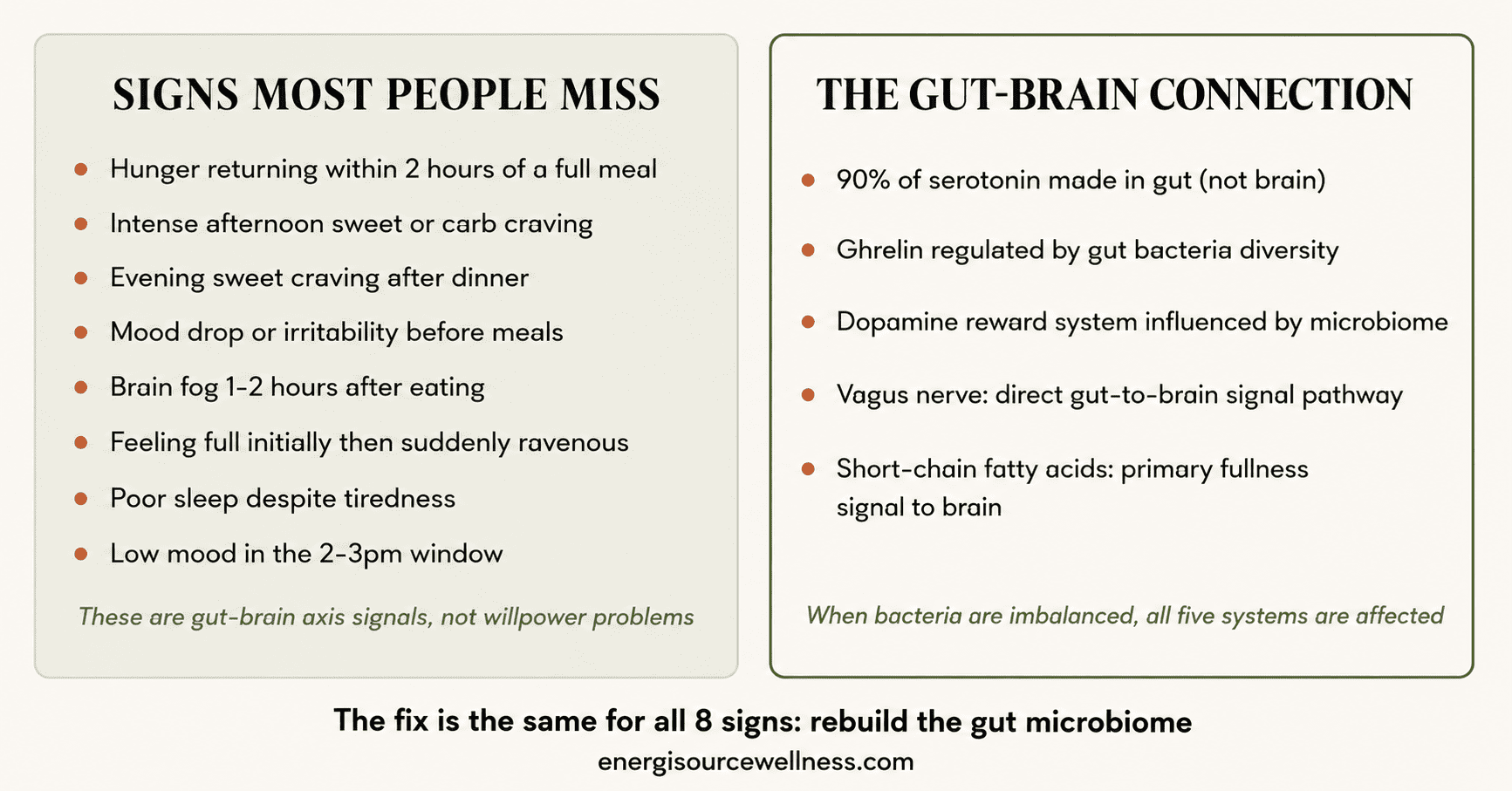
Approximately 90 percent of the body’s serotonin is produced in the gut rather than the brain. Beneficial gut bacteria are essential to this production. Specifically, the short-chain fatty acids produced when gut bacteria ferment prebiotic fiber trigger enterochromaffin cells in the gut lining to produce serotonin.
Serotonin in the gut directly suppresses appetite and reduces the drive for sweet and carbohydrate-rich foods. When serotonin is low, which happens with low gut bacteria diversity, the craving for carbohydrates and sweets intensifies as the brain seeks to restore serotonin through the fastest available route. This is the gut bacteria mechanism behind the evening sugar craving and the afternoon sweet craving that fires consistently in people with low microbiome diversity.
Gut bacteria and leptin sensitivity
Leptin is your fullness hormone, produced by fat cells to signal the brain that the body has enough energy stored. Leptin resistance, where the brain stops responding to leptin signals properly despite adequate leptin production, is linked with inflammation, and gut bacteria imbalance may play a part.
Beneficial gut bacteria reduce the inflammatory markers that interfere with leptin receptor signaling. When the microbiome is diverse and balanced, leptin communicates more effectively with the brain and the overall appetite signal across the day is more regulated. Researchers are still working out how much gut bacteria imbalance contributes to persistent hunger.
That same anti-inflammatory effect is why I lean on Mediterranean staples so heavily. I broke down exactly how to reduce inflammation with the Mediterranean diet in a separate guide, and the overlap with gut-friendly eating is almost total.
The 8 best probiotic foods for gut health and hunger control
1. Plain Greek yogurt (the daily staple)
Plain full-fat Greek yogurt is the most practical and most impactful daily probiotic food available for hunger control. It contains live cultures of Lactobacillus bulgaricus and Streptococcus thermophilus alongside 22 grams of protein per cup that is linked to lower ghrelin. The combination of probiotic bacteria and high protein makes it unique among probiotic foods: it addresses both the gut bacteria component of hunger regulation and the fullness that a protein-rich food provides. Always choose plain rather than flavored varieties. Flavored yogurts contain added sugar that feeds harmful gut bacteria and partially undermines the probiotic benefit. Check the label for ‘live and active cultures’ to confirm the probiotic content is present.
How to use it: As a breakfast base with walnuts and chia seeds. As a savory sauce base with olive oil and herbs. As an afternoon snack with a small portion of berries. Daily consistency over weeks builds the gut bacteria benefit more effectively than large occasional portions.
2. Kefir (more strains than yogurt)
Kefir is fermented milk that contains a significantly more diverse set of probiotic strains than Greek yogurt, typically 10 to 34 distinct bacterial and yeast strains compared to 2 to 4 in yogurt. The diversity of strains matters because different bacteria perform different functions in hunger hormone regulation. Kefir specifically contains strains of Lactobacillus kefiri which have shown associations with reduced ghrelin production and improved blood sugar stability in research. Kefir also contains less lactose than yogurt due to the fermentation process, making it accessible to many people with mild lactose sensitivity.
How to use it: Drink plain as a morning probiotic dose before breakfast. Blend into a smoothie with protein powder and chia seeds. Use as a base for overnight oats. The tangier flavor takes some adjustment but most people adapt within a week.
3. Raw unpasteurized sauerkraut
Raw unpasteurized sauerkraut is one of the richest probiotic sources available with billions of colony-forming units per serving when properly fermented. The critical distinction is raw and unpasteurized. The shelf-stable sauerkraut in the canned goods aisle has been heat treated which kills all live cultures. The probiotic sauerkraut is in the refrigerated section, cloudy in appearance, and labeled with live cultures. Sauerkraut also provides significant prebiotic fiber that feeds the beneficial bacteria it introduces, making it a dual-action gut health food. The Lactobacillus strains in sauerkraut are specifically associated with improved gut barrier integrity which may help reduce inflammation.
How to use it: Two tablespoons as a side with lunch or dinner. On top of eggs at breakfast. Added to a Mediterranean grain bowl. Start with small amounts and increase gradually as the gut adjusts.
4. Kimchi
Kimchi is a spicy fermented vegetable dish, traditionally made from cabbage, radish, garlic, and chili, that is particularly rich in Lactobacillus kimchii alongside multiple other beneficial Lactobacillus strains. Research on kimchi specifically has found associations with improved insulin sensitivity, reduced inflammatory markers, and reduced body fat in addition to the gut microbiome benefits. For hunger control, the combination of probiotic bacteria, prebiotic fiber from the cabbage, and the metabolism-supporting compounds from garlic and chili make kimchi one of the most comprehensive gut health foods available. It is also the most flavorful option on the list, which makes consistent daily consumption easier for most people than plain sauerkraut.
How to use it: As a side dish alongside any Mediterranean protein meal. Mixed into scrambled eggs. On top of a grain bowl. Added to a Mediterranean style taco or wrap. A quarter cup daily provides meaningful probiotic benefit.
5. Miso
Miso is a fermented soybean paste that contains Aspergillus oryzae, a probiotic-friendly fungus that supports digestion and gut health, alongside multiple Lactobacillus strains. Unlike most fermented foods where heat kills the live cultures, miso retains its probiotic benefit when dissolved in warm (not boiling) water or used as a seasoning in uncooked preparations. The key is to add miso after cooking rather than cooking with it. Miso also provides significant protein, B vitamins, and the prebiotic fiber that feeds the bacteria it introduces. Miso soup with a piece of salmon and a small portion of rice is one of the most nutritionally complete gut-health-supporting meals available.
How to use it: Dissolved in warm water for miso soup alongside a protein-rich meal. As a dressing base with olive oil, lemon, and garlic. Stirred into salad dressings or marinades without heating. One tablespoon per serving provides a meaningful dose of live cultures.
6. Tempeh
Tempeh is fermented soybeans pressed into a firm cake that provides both probiotic bacteria and 31 grams of protein per cup, making it the highest protein probiotic food on this list. The fermentation process that creates tempeh partially breaks down the phytic acid in soybeans, which improves mineral absorption from the food. Tempeh also provides prebiotic fiber that feeds the gut bacteria it introduces. For hunger control specifically, the protein content makes tempeh a particularly effective probiotic food because it addresses both the gut bacteria component of hunger regulation and the fullness that high protein foods provide, in the same way that Greek yogurt does.
How to use it: Sliced and pan-cooked in olive oil with garlic and herbs as a protein component of a Mediterranean bowl. Crumbled into a salad as a protein anchor. Marinated and grilled alongside vegetables. The slightly nutty fermented flavor works well with Mediterranean seasonings.
7. Raw apple cider vinegar with the mother
Raw apple cider vinegar that contains the mother, the cloudy sediment visible in the bottle that contains acetic acid bacteria, provides a concentrated probiotic and prebiotic benefit in a small dose. The acetic acid bacteria in raw apple cider vinegar with the mother directly feed beneficial gut bacteria and have been associated with improved blood sugar stability, reduced post-meal glucose peaks, and reduced appetite in several human studies. The blood sugar benefit is particularly relevant for hunger control because stable blood sugar reduces the false hunger signals from the spike-and-crash cycle.
How to use it: One tablespoon diluted in a large glass of water before a carbohydrate-containing meal. As part of a salad dressing with olive oil, lemon, and herbs. Never drink it undiluted as the acidity can damage tooth enamel and the esophagus. Always choose the variety that contains the mother rather than filtered, clear apple cider vinegar.
8. Aged cheese with live cultures
Certain aged cheeses including aged cheddar, parmesan, gouda, and gruyere contain live probiotic cultures that survive the aging process. These cheeses are also high in protein which helps you feel full, and they provide fat that slows gastric emptying and extends the satiety window. The key is aged and unprocessed. Processed cheese products and cheese slices do not contain live cultures. Look for aged varieties and check labels for live cultures when available. Feta, which is used extensively in Mediterranean cooking, also contains beneficial bacteria from its brine-fermentation process and is one of the most versatile probiotic-supporting cheeses available.
How to use it: Added to Greek salads, egg dishes, and Mediterranean bowls where feta is the traditional choice. A small portion of aged cheddar or parmesan as part of an afternoon snack provides both probiotic benefit and protein that extends the satiety window to the next meal.
>> Want to build gut-health meals that regulate hunger automatically?
The Full Plate Method app builds Mediterranean meals that combine probiotic foods with the protein-fiber-fat structure that keeps hunger hormones regulated all day. Free forever. Build hunger-regulating meals free
How to add probiotic foods to your daily Mediterranean routine
The most common mistake with probiotic foods is eating them occasionally in large portions rather than consistently in small amounts. Gut bacteria diversity builds through consistent daily exposure to diverse strains over weeks, not through occasional large doses. The goal is to include at least one probiotic food at every meal across the day.
A gut-health-supporting Mediterranean day
Breakfast: Greek yogurt base
One cup of plain full-fat Greek yogurt with a tablespoon of chia seeds and a handful of walnuts alongside two eggs scrambled in olive oil. The yogurt provides the daily probiotic dose and 22 grams of protein that helps lower ghrelin for the morning. The eggs and olive oil complete the protein and fat that extends the satiety window.
Lunch: Sauerkraut or kimchi alongside a protein bowl
A Mediterranean bowl with grilled chicken, chickpeas, greens, and olive oil dressing alongside two tablespoons of raw sauerkraut or kimchi as a side. The fermented vegetable provides the second daily probiotic dose with a completely different strain from the morning yogurt. Diverse strains from multiple sources build microbiome diversity more effectively than large amounts of one source.
Afternoon snack: Apple cider vinegar water and cheese
A glass of water with one tablespoon of raw apple cider vinegar before a small portion of aged cheese and a handful of olives. The ACV stabilizes post-lunch blood sugar and reduces the false hunger signal that fires in the mid-afternoon. The cheese provides probiotic bacteria alongside the protein and fat that bridge to dinner without a blood sugar crash.
Dinner: Miso alongside a Mediterranean protein meal
A cup of miso soup (miso stirred into warm not boiling water) alongside grilled salmon, roasted vegetables, and a small portion of quinoa. The miso provides the third daily probiotic source from a completely different bacterial family than the morning and lunch choices. Three diverse probiotic sources per day is the target for meaningful gut bacteria diversity building within the first 2 to 4 weeks.
When to consider a probiotic supplement
Probiotic foods are the best primary source of beneficial bacteria because they provide fiber, protein, and nutrients alongside the live cultures. However there are specific situations where a targeted probiotic supplement makes sense alongside the food approach.
• After a course of antibiotics which significantly disrupts gut bacteria diversity
• When traveling to regions with different food environments that expose the gut to unfamiliar bacteria
• During periods of high stress which elevate cortisol and disrupt gut bacteria balance
• When adding probiotic foods consistently for 4 weeks has not produced meaningful change in hunger or craving patterns
• When specific strains with research backing for hunger hormone regulation are needed beyond what food sources provide
For targeted probiotic support, the Physician’s Choice Probiotics 60 Billion CFU provides 10 diverse strains plus organic prebiotic fiber including Jerusalem Artichoke Root, Gum Arabic, and Chicory Root in one capsule. It is formulated without dairy, soy, gluten, GMOs, artificial sweeteners, or preservatives, making it the closest supplement equivalent to the food-first approach this site recommends. It addresses both the probiotic and prebiotic components of gut bacteria diversity in a single daily capsule.
For those specifically interested in the hunger hormone and metabolic research on a single strain, Swanson Lactobacillus Gasseri is the most research-backed targeted strain for hunger regulation and metabolic support available at an accessible price point. It can be taken alongside the food-first approach for targeted additional support of the hunger hormone regulation pathway.
Frequently asked questions
How quickly do probiotic foods affect hunger?
Some people notice steadier hunger and cravings over several weeks of eating probiotic foods daily, though research on this specific effect is still limited. The mechanism requires time because gut bacteria diversity builds gradually through consistent daily exposure rather than through a single large dose. The first changes most people notice are reduced afternoon sweet cravings and a quieter post-dinner craving signal. These are serotonin-mediated effects that respond relatively quickly to improved gut bacteria diversity. Blood sugar stability improvements and ghrelin regulation changes typically take the full 2 to 4 week window to become noticeable.
Which probiotic food is best for reducing cravings specifically?
For reducing sweet and carbohydrate cravings specifically, plain Greek yogurt and kefir are the most effective probiotic foods because their Lactobacillus strains are most directly associated with serotonin production in the gut. Serotonin deficiency is the primary driver of sweet cravings and the Lactobacillus bacteria in yogurt and kefir support the gut’s serotonin-producing cells more directly than the bacteria in vegetable-based fermented foods like sauerkraut and kimchi. Both yogurt and kefir also provide protein alongside the probiotic bacteria, which addresses the ghrelin component of cravings simultaneously.
Can probiotic foods replace a probiotic supplement?
For most healthy people eating a varied Mediterranean diet that includes daily probiotic foods, a supplement is not necessary. Food-based probiotics provide fiber, protein, and nutrients alongside live cultures that supplements cannot replicate. The bacterial diversity from rotating multiple probiotic food sources (yogurt one meal, sauerkraut another, miso at dinner) also exceeds what most supplements provide in terms of strain variety. Supplements become useful when specific therapeutic strains are needed, when food-first approaches have not produced expected changes after 4 weeks, or during specific situations like post-antibiotic recovery where higher CFU counts are temporarily beneficial.
Do I need to eat probiotic foods every day?
Yes, consistency matters more than quantity. The beneficial bacteria introduced through probiotic foods are transient residents in the gut rather than permanent colonizers. They pass through within a few days and need to be replenished regularly to maintain their hunger hormone regulating effects. Daily small amounts from diverse sources is significantly more effective than weekly large amounts from a single source. Think of it the same way as eating vegetables: the benefit comes from daily consistency rather than occasional large doses.
What ruins the benefit of probiotic foods?
Several common dietary and lifestyle factors reduce the effectiveness of probiotic foods. Refined sugar and processed foods feed the harmful bacteria that compete with the beneficial bacteria probiotic foods introduce. Alcohol in significant amounts directly reduces gut bacteria diversity. Chlorinated tap water can reduce probiotic food effectiveness when consumed alongside them because chlorine is an antimicrobial that affects gut bacteria. High stress elevates cortisol which disrupts gut bacteria balance and can undermine the benefit of consistent probiotic food consumption. The Mediterranean dietary pattern addresses most of these factors naturally by emphasizing whole foods, olive oil, and vegetables that support rather than undermine the probiotic food benefit.
Free printable
Hungry again at 9pm?
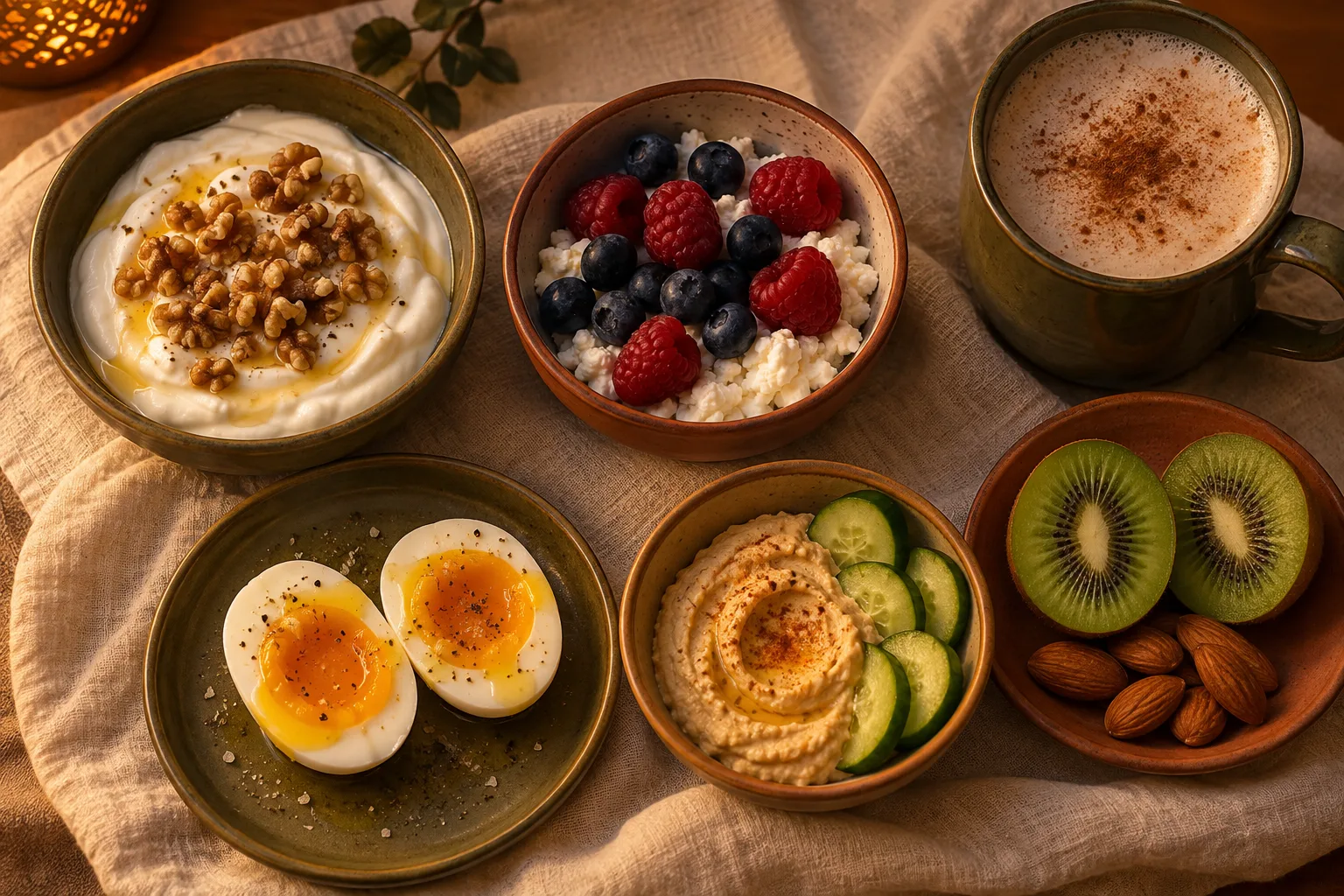
Get the free printable Night Hunger Snack List: 10 Mediterranean snacks with exact portions and protein counts, for the evenings when cravings hit. Enter your email and download it instantly.
Free. No spam. Unsubscribe anytime.
The bottom line
Probiotic foods are not just for digestion and bloating. They are one of the most effective tools for regulating the hunger hormones that determine whether you feel constantly hungry or comfortably full. Greek yogurt, kefir, sauerkraut, kimchi, miso, tempeh, raw apple cider vinegar, and aged cheeses all introduce beneficial bacteria that are linked with healthier appetite signaling. The practical starting point is adding one probiotic food to each meal daily and rotating sources to build microbiome diversity through multiple bacterial strains. Over several weeks, the gut bacteria diversity that results may support steadier appetite. For additional targeted support alongside the food approach, Physician’s Choice Probiotics 60 Billion CFU provides 10 diverse strains with organic prebiotic fiber in one clean capsule.
I add plain Greek yogurt every morning, sauerkraut or kimchi at lunch, and miso at dinner on most evenings. Three different probiotic sources, three different bacterial families, every single day. The afternoon craving that used to be a reliable daily event is now occasional and mild rather than urgent. The change did not happen overnight. But it happened consistently and it has stayed.
I built this site around the idea that food is a more powerful tool than most people have been told. Probiotic foods are one of the clearest examples. Not because they are a supplement or a protocol. Because they are real whole foods that change the bacterial environment in the gut and through that change, shift the hormones that control hunger and cravings. Greek yogurt. Sauerkraut. Miso. Kefir. These are not medical interventions. They are ingredients. And they work.
Ribert
>> Want the full gut health meal plan that combines probiotic and prebiotic foods?
The 7-Day Mediterranean Meal Plan PDF builds every meal around gut-health-supporting probiotic and prebiotic combinations. $17, instant download. Get the 7-Day Mediterranean Meal Plan for $17
This article shares personal experience and general nutrition information, not medical advice. Consult your healthcare provider before starting any new supplement.
About Ribert Rodriguez
Ribert is the founder of EnergiSource Wellness. He built this site to share what actually worked for him after years of struggling with cravings, late-night eating, and low energy. His approach is rooted in the Mediterranean framework and a belief that food is one of the most powerful tools for how you think and feel.