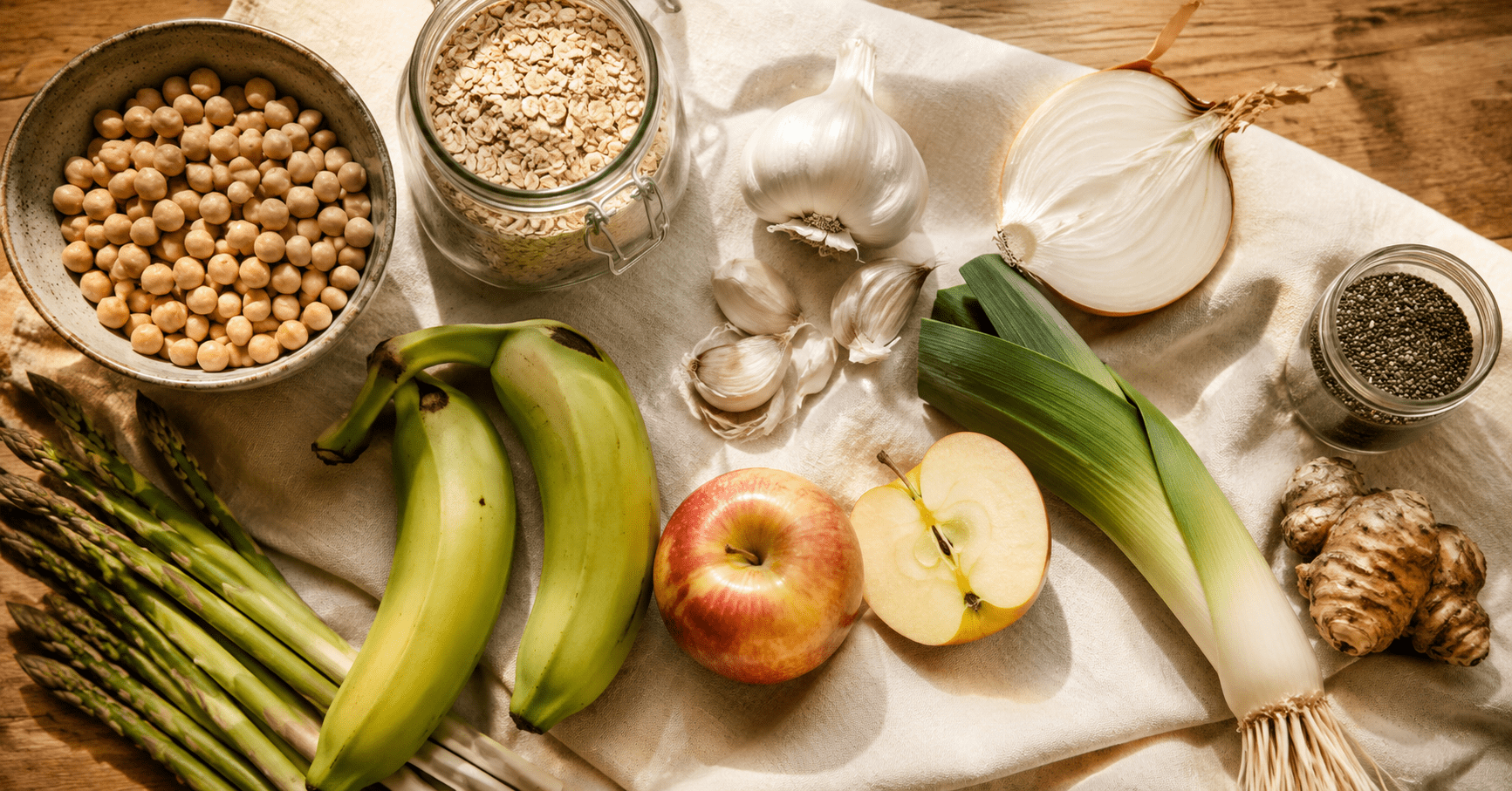
Prebiotic foods are the indigestible fibers that feed beneficial gut bacteria and keep them alive and functioning. Without adequate prebiotic fiber the probiotic bacteria introduced through yogurt, kefir, and sauerkraut die within 3 to 5 days. The best prebiotic foods for hunger control and craving reduction are chickpeas, chia seeds, oats, garlic, onions, leeks, asparagus, green bananas, Jerusalem artichoke, and apples. Each provides specific fiber types including inulin, fructooligosaccharides, resistant starch, and beta-glucan that selectively feed the beneficial bacteria which regulate ghrelin, produce serotonin, and generate the short-chain fatty acids that signal fullness to the brain.
I spent several weeks eating Greek yogurt every morning without understanding why the hunger and craving benefits were inconsistent. Some weeks the afternoon craving was noticeably quieter. Other weeks nothing changed. The variable turned out to be not the yogurt itself but what else I was eating alongside it.
The weeks when I was eating chickpeas at lunch, oats in my overnight oats, and plenty of garlic and onions in my cooking, the gut bacteria from the yogurt thrived. The weeks when those foods were absent the bacteria died off within days and the hunger and craving benefits disappeared with them.
What nobody in mainstream gut health content talks about is that probiotic foods are only half of the equation. The prebiotic fiber that feeds those bacteria is equally important and arguably more important because without it even the most consistent probiotic food routine produces minimal lasting benefit.
This article is the direct companion to the best probiotic foods for gut health and hunger control. Probiotics introduce the bacteria. Prebiotics keep them alive and productive. Both are essential. This article covers the prebiotic side of that equation with the specific hunger and craving reduction mechanism that makes it relevant to everything this site is about.
What prebiotics are and why most people are missing them
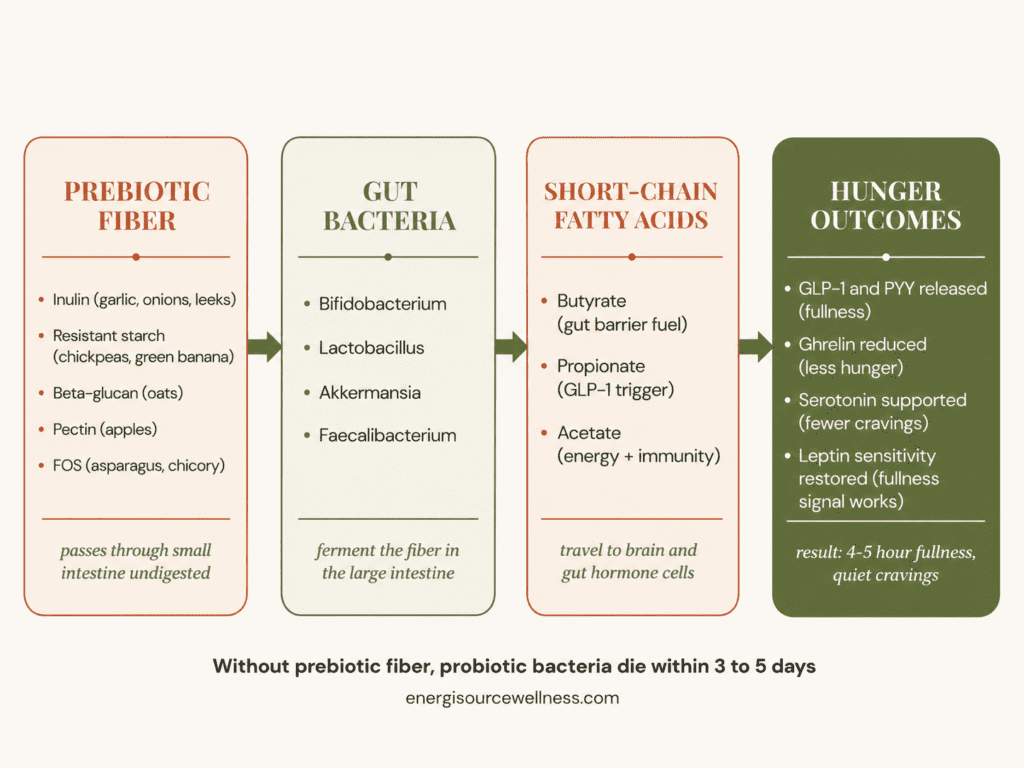
A prebiotic is a specific type of indigestible fiber that passes through the small intestine undigested and reaches the large intestine where it becomes food for beneficial gut bacteria. When beneficial gut bacteria ferment prebiotic fiber they produce short-chain fatty acids including butyrate, propionate, and acetate. These short-chain fatty acids are the primary mechanism through which gut bacteria communicate with the brain about hunger, fullness, and cravings.
The key word is selectively. Not all fiber is prebiotic fiber. Prebiotics are specific fiber types that selectively feed beneficial bacteria while not feeding harmful bacteria. Inulin found in garlic, onions, leeks, and Jerusalem artichoke is a classic prebiotic. Fructooligosaccharides in asparagus and chicory root are prebiotics. Resistant starch in green bananas, cooled cooked potatoes, and lentils is a prebiotic. Beta-glucan in oats is a prebiotic. Regular insoluble fiber from leafy greens supports digestion but does not have the same selective feeding effect on beneficial bacteria.
Most people eating a standard Western diet get approximately 3 to 5 grams of prebiotic fiber per day. Research on gut microbiome health consistently finds that 10 to 20 grams per day is the range associated with a diverse, well-functioning microbiome. The gap between what most people consume and what beneficial gut bacteria need is significant and it directly affects hunger hormone regulation, craving intensity, and the effectiveness of any probiotic foods or supplements being consumed.
Why prebiotics matter more than probiotics for most people
The probiotic bacteria introduced through probiotic foods like Greek yogurt, kefir, and sauerkraut are transient residents in the gut. They do not permanently colonize. They pass through within 3 to 5 days. Without a consistent supply of prebiotic fiber to sustain them during their transit, their ability to produce hunger-regulating short-chain fatty acids and support serotonin production is significantly reduced.
The beneficial bacteria that are already permanently resident in the gut, the ones that have been there for years and are part of your established microbiome, also need prebiotic fiber to function optimally. When prebiotic fiber intake is low these resident bacteria produce fewer short-chain fatty acids, less gut-based serotonin, and fewer of the peptide signals that communicate fullness to the brain. Increasing prebiotic fiber intake feeds both the transient bacteria from probiotic foods and the permanent resident bacteria that regulate hunger hormones daily.
How prebiotic foods reduce hunger and cravings specifically
The hunger and craving reduction mechanism of prebiotic foods works through four specific pathways. Understanding these makes it clear why prebiotic fiber is not just a digestive supplement but a direct appetite regulation tool.
Pathway 1: Short-chain fatty acids signal fullness to the brain
When prebiotic fiber ferments in the large intestine, the beneficial bacteria produce short-chain fatty acids, primarily butyrate, propionate, and acetate. These molecules travel through the gut wall into the bloodstream and act directly on the hypothalamus and brainstem regions that regulate appetite. Propionate specifically triggers the release of peptide YY and GLP-1, two hormones that signal fullness to the brain and suppress appetite for hours after a meal. This is the same pathway that GLP-1 weight loss medications like Ozempic work through, except prebiotic fiber stimulates it naturally through bacterial fermentation rather than through pharmacological intervention.
Pathway 2: Serotonin production requires prebiotic fiber
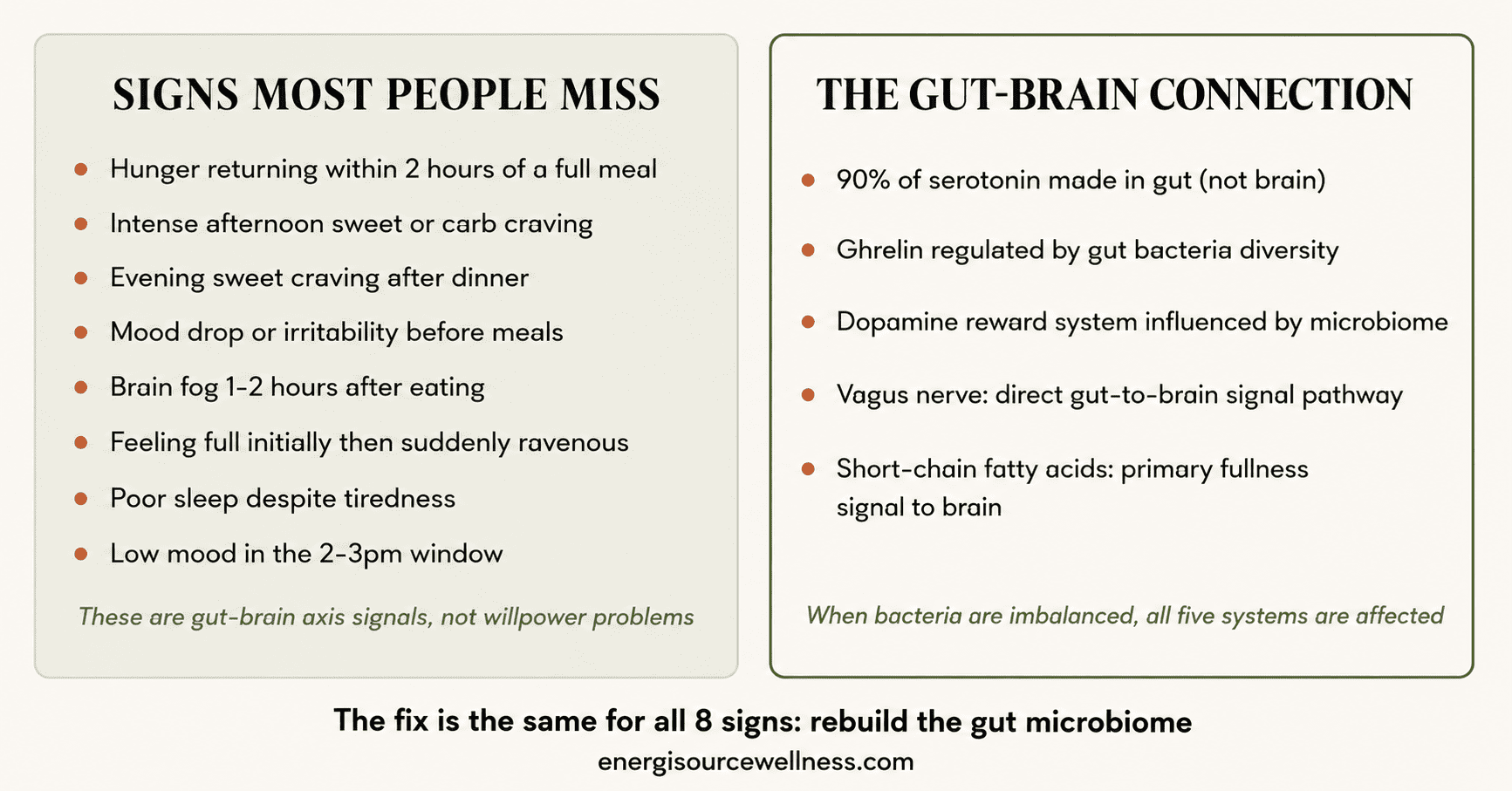
Approximately estimated 90 percent of the body’s serotonin is produced in the gut, and prebiotic fiber is essential to that production. The short-chain fatty acids produced from prebiotic fermentation stimulate enterochromaffin cells in the gut lining to release serotonin. More prebiotic fiber means more bacterial fermentation means more serotonin production. Since low serotonin is the primary driver of sweet and carbohydrate cravings, increasing prebiotic fiber intake directly addresses the craving mechanism at its source.
Pathway 3: Ghrelin is regulated by gut bacteria diversity
Ghrelin, your primary hunger hormone, is not only produced by the stomach. Its production and clearance rate are also influenced by gut bacteria diversity. People with diverse, well-fed microbiomes show lower overall ghrelin levels throughout the day and more efficient ghrelin clearance after meals. When beneficial gut bacteria are well-nourished by prebiotic fiber they produce compounds that modulate ghrelin signaling in ways that reduce the frequency and intensity of hunger signals. Conversely people with low microbiome diversity from inadequate prebiotic fiber intake show elevated ghrelin levels and more frequent hunger signals regardless of food intake.
Pathway 4: Gut barrier integrity reduces inflammation that impairs leptin
Prebiotic fiber strengthens the gut barrier by feeding the bacteria that produce butyrate, the primary fuel for the cells lining the large intestine. A strong gut barrier prevents inflammatory molecules from leaking into the bloodstream. Systemic inflammation from a compromised gut barrier is linked with leptin resistance, which may make hunger harder to switch off. By strengthening the gut barrier through prebiotic fiber, you may reduce some of the inflammation linked with leptin resistance.
The 10 best prebiotic foods for hunger control and craving reduction
1. Chickpeas (the Mediterranean prebiotic anchor)
Chickpeas are the single most effective prebiotic food for hunger control because they combine three prebiotic mechanisms simultaneously: resistant starch, inulin, and soluble fiber. One cup of cooked chickpeas provides 12 grams of fiber, approximately 8 grams of which has prebiotic activity. The resistant starch in chickpeas specifically feeds Akkermansia muciniphila, a bacteria species associated with gut barrier integrity, reduced inflammation, and healthier metabolism in early research. The inulin feeds Bifidobacterium species which are among the primary producers of butyrate and the short-chain fatty acids that signal fullness. The combination of these three prebiotic fiber types in a single food makes chickpeas the highest-leverage prebiotic addition to any Mediterranean meal.
How to use them: Half a cup at every lunch as a non-negotiable. In Mediterranean bowls, salads, and soups. As a roasted snack with olive oil and spices. The daily consistency matters more than the quantity per serving.
2. Chia seeds (the fastest prebiotic delivery)
Chia seeds expand to 10 times their dry volume when exposed to liquid in the stomach and small intestine, forming a gel made primarily of soluble prebiotic fiber. One tablespoon of organic chia seedsprovides 5 grams of fiber that is almost entirely prebiotic-active. The gel formation physically slows gastric emptying and delivers a concentrated dose of prebiotic fiber to the large intestine where it feeds beneficial bacteria for hours. Chia seeds are also one of the fastest-acting prebiotic foods in terms of hunger reduction because the gel formation begins in the stomach and immediately contributes to the physical fullness signal alongside the hormonal prebiotic benefit.
How to use them: One tablespoon stirred into overnight oats, Greek yogurt, or a smoothie every morning. The prebiotic benefit requires liquid to activate the gel formation. Dry chia seeds eaten without adequate liquid have significantly reduced prebiotic effect.
3. Oats (the beta-glucan powerhouse)
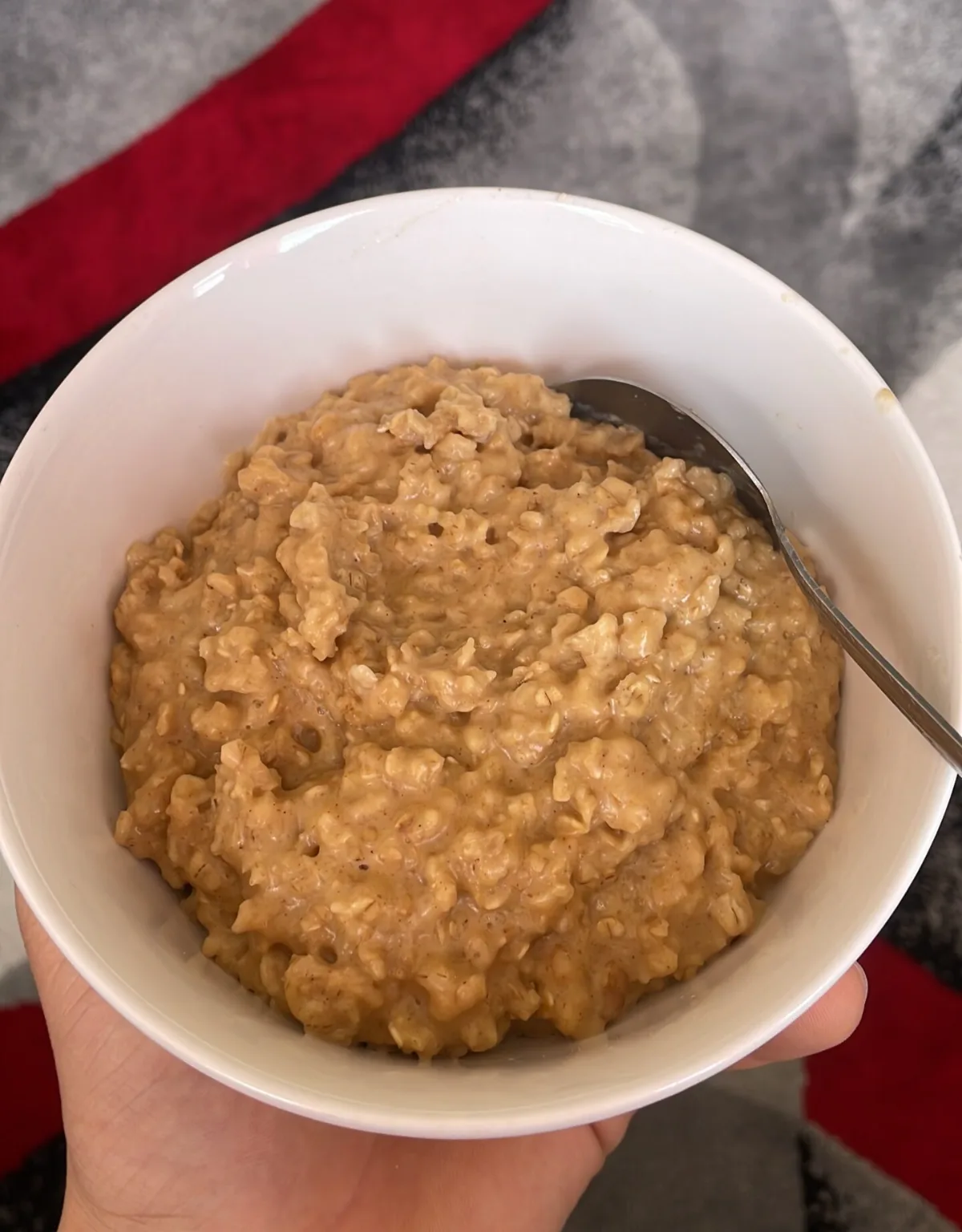
Oats contain beta-glucan, a specific soluble fiber with particularly strong prebiotic effects on Lactobacillus and Bifidobacterium species. Beta-glucan also triggers the release of PYY and GLP-1 in the gut, producing a direct fullness signal that extends the satiety window after eating. The prebiotic benefit of oats is maximized when they are prepared as overnight oats rather than cooked because the overnight soaking process partially breaks down the phytic acid in oats while preserving the beta-glucan content. Cooking at high temperatures reduces the beta-glucan prebiotic activity compared to cold preparation.
How to use them: As overnight oats prepared the night before with Greek yogurt and chia seeds added. The combination of oat beta-glucan, chia prebiotic fiber, and Greek yogurt probiotic bacteria in one breakfast bowl is the most complete prebiotic-probiotic combination available in a single meal.
4. Garlic (the Bifidobacterium feeder)
Garlic contains inulin and fructooligosaccharides that specifically and selectively feed Bifidobacterium species, the gut bacteria most directly associated with reduced inflammation, improved mood, and healthy serotonin production. A 2024 study on garlic’s effect on gut microbiota found it increases Bifidobacterium populations in the gut for most people, though the effect size varies depending on someone’s existing gut bacteria makeup, while reducing the populations of harmful bacteria that compete with beneficial bacteria for resources. Raw garlic provides more prebiotic benefit than cooked garlic because heat partially degrades the inulin content, but both raw and cooked garlic provide meaningful prebiotic activity.
How to use it: Added raw to salad dressings with olive oil and lemon. Cooked into Mediterranean dishes, soups, and sauces. As a foundational flavor component of hummus alongside chickpeas for a double prebiotic dose. One to two cloves daily is sufficient for meaningful prebiotic benefit.
5. Onions (the FOS source)
Onions contain both inulin and fructooligosaccharides in significant concentrations, particularly in the outer layers and when eaten raw. The fructooligosaccharides in onions specifically feed Lactobacillus species, the bacteria most directly involved in serotonin precursor production and the bacteria introduced through probiotic foods like yogurt and kefir. Eating onions alongside probiotic foods creates a synbiotic effect where the prebiotic fiber from the onion directly feeds the bacteria the probiotic food has just introduced. This combination is more effective than eating prebiotic and probiotic foods at separate meals.
How to use them: Raw in Mediterranean salads where the FOS content is highest. Cooked into grain bowls, soups, and roasted vegetable dishes. Combined with chickpeas and garlic in the same meal for a triple prebiotic effect that feeds multiple beneficial bacteria species simultaneously.
6. Leeks
Leeks are from the same botanical family as onions and garlic and contain similar inulin and FOS concentrations alongside a higher water content that makes them gentler on the digestive system for people who find raw onions and garlic difficult to tolerate. The prebiotic fiber in leeks is accessible at lower temperatures than garlic, meaning lightly sauteed leeks retain more prebiotic activity than heavily cooked versions. Leeks also provide kaempferol, a polyphenol that itself acts as a prebiotic by feeding beneficial bacteria in a different fiber pathway than inulin-based prebiotics.
How to use them: Lightly sauteed in olive oil as a base for Mediterranean soups and stews. Added to egg dishes at breakfast for a morning prebiotic dose alongside the probiotic bacteria from eggs. Combined with chickpeas and garlic in a Mediterranean white bean soup for a concentrated prebiotic meal.
7. Asparagus
Asparagus contains inulin alongside saponins, compounds that act as prebiotic-like substances that selectively support beneficial bacteria while inhibiting certain harmful bacterial species. Asparagus is particularly notable because it maintains meaningful prebiotic activity even when cooked, making it one of the most practical prebiotic vegetables for regular Mediterranean cooking. It also provides folate and vitamin K2 alongside its prebiotic activity, making it a nutritionally dense addition to any meal.
How to use it: Roasted with olive oil, lemon, and garlic as a dinner side that delivers prebiotic fiber from three sources simultaneously. Added to Mediterranean egg frittatas. As a lunch side alongside a protein-rich Mediterranean main.
8. Green bananas (resistant starch)
Green or slightly underripe bananas contain significantly more resistant starch than ripe yellow bananas. As bananas ripen, the resistant starch converts to digestible simple sugars. This means the prebiotic benefit of bananas is inversely related to their ripeness. A green banana provides 6 to 7 grams of resistant starch with strong prebiotic activity. A fully ripe yellow banana provides less than 1 gram of resistant starch with minimal prebiotic effect. The resistant starch in green bananas specifically feeds the beneficial bacteria associated with butyrate production and gut barrier maintenance.
How to use them: Sliced into overnight oats where the slightly firmer texture works well. Added to smoothies where ripeness is less noticeable. Eaten as a planned snack before becoming fully ripe for maximum resistant starch content.
9. Jerusalem artichoke
Jerusalem artichoke, also called sunchoke, has the highest inulin content of any commonly available food, providing 14 to 19 grams of inulin per 100 grams of root. This makes it the most concentrated single prebiotic food source available. However this same concentration means Jerusalem artichoke can cause digestive discomfort including gas and bloating in people whose gut microbiome is not accustomed to high inulin loads. The approach is to start with small amounts of approximately 30 grams and increase gradually over 2 to 3 weeks as the gut bacteria population adapts to the higher inulin intake.
How to use it: Roasted in olive oil as a side dish. Added to Mediterranean soups. Used sparingly as a flavor and prebiotic addition to grain bowls. Start small and increase gradually to allow the gut microbiome to adapt without digestive discomfort.
10. Apples (pectin)
Apples contain pectin, a soluble fiber that ferments in the large intestine and acts as a prebiotic specifically for Bifidobacterium and Lactobacillus species. Pectin also slows gastric emptying and reduces the post-meal glucose response from carbohydrates eaten in the same meal, making apples one of the few fruits that provide both a prebiotic benefit and a blood sugar stabilizing effect simultaneously. The prebiotic benefit of apples is highest when eaten with the skin, which contains most of the pectin content, and when eaten whole rather than juiced.
How to use them: Eaten whole with the skin as a mid-morning snack alongside a protein source to provide both prebiotic fiber and blood sugar stabilization. Diced into a Mediterranean yogurt bowl with walnuts. Added to an overnight oats preparation for a prebiotic combination of apple pectin, oat beta-glucan, and chia seed fiber in one breakfast.
>> Want meals that combine prebiotic and probiotic foods automatically?
The Full Plate Method app builds Mediterranean meals that combine prebiotic fiber and probiotic foods in the same meal for maximum gut bacteria benefit. Free forever. Build prebiotic-rich meals free
Prebiotics vs probiotics: which do you need more?
The prebiotics versus probiotics question misses the point. Both are necessary and neither works optimally without the other. The practical question is which one most people are more deficient in.
For the majority of people eating a modern diet, prebiotic fiber deficiency is the more significant gap. Most people eating yogurt or taking probiotic supplements are already getting some probiotic bacteria. Far fewer are consuming the 10 to 20 grams of prebiotic fiber per day that those bacteria need to thrive. The gut bacteria from a morning yogurt that are not fed with prebiotic fiber through the rest of the day will not survive to regulate hunger hormones the following morning.
The Mediterranean dietary pattern solves this problem naturally because it includes prebiotic-rich foods like chickpeas, garlic, onions, and oats as daily staples alongside the probiotic foods like yogurt and aged cheese. The combination is not deliberate in traditional Mediterranean cultures. It is simply what happens when the diet is built around whole plant foods and fermented dairy products simultaneously.
For people who want a targeted probiotic supplement to work alongside their prebiotic food intake, the Physician’s Choice Probiotics 60 Billion CFU is particularly well-matched to a prebiotic-rich Mediterranean diet because it contains organic prebiotics including Jerusalem Artichoke Root, Gum Arabic, and Chicory Root alongside the 10 probiotic strains. It is essentially delivering both components in one capsule, which mirrors the synbiotic effect of eating prebiotic and probiotic foods together.
How to build a day of prebiotic-rich Mediterranean eating
The goal is 10 to 15 grams of prebiotic fiber per day from diverse sources. This is achievable within the Mediterranean meal framework without tracking or supplementing.
Breakfast (target 4 to 5 grams prebiotic fiber):
Overnight oats made with half a cup of rolled oats, one tablespoon of chia seeds, half a cup of Greek yogurt, and a sliced green or slightly underripe banana. This combination provides beta-glucan from oats, soluble prebiotic gel from chia seeds, resistant starch from the green banana, and probiotic bacteria from the yogurt. It is the most prebiotic-dense breakfast available within the Mediterranean framework and takes 5 minutes of preparation the night before.
Lunch (target 5 to 6 grams prebiotic fiber):
A Mediterranean bowl with grilled chicken or salmon, half a cup of chickpeas, a large base of arugula or spinach, diced raw onion, roasted asparagus, and olive oil and lemon dressing with minced raw garlic. This combination delivers prebiotic fiber from chickpeas, onion FOS, asparagus inulin, and raw garlic inulin simultaneously. The diversity of prebiotic types feeds multiple beneficial bacteria species rather than just one.
Dinner (target 3 to 4 grams prebiotic fiber):
A Mediterranean lentil or white bean soup with leeks, garlic, and onion as the base, alongside roasted vegetables and olive oil. The leeks, garlic, and onion together provide a concentrated inulin and FOS dose. The lentils add resistant starch. A side of sauerkraut or kimchi alongside dinner provides probiotic bacteria that the prebiotic fiber from dinner will sustain through the overnight period.
Snack (target 2 grams prebiotic fiber):
A whole apple with the skin alongside a handful of walnuts and a tablespoon of almond butter. The apple pectin provides prebiotic fiber. The walnuts provide polyphenols that feed a different beneficial bacteria population than the fiber-based prebiotics. The fat from walnuts and almond butter slows digestion and extends the satiety window.
Frequently asked questions
What is the difference between prebiotic and probiotic foods?
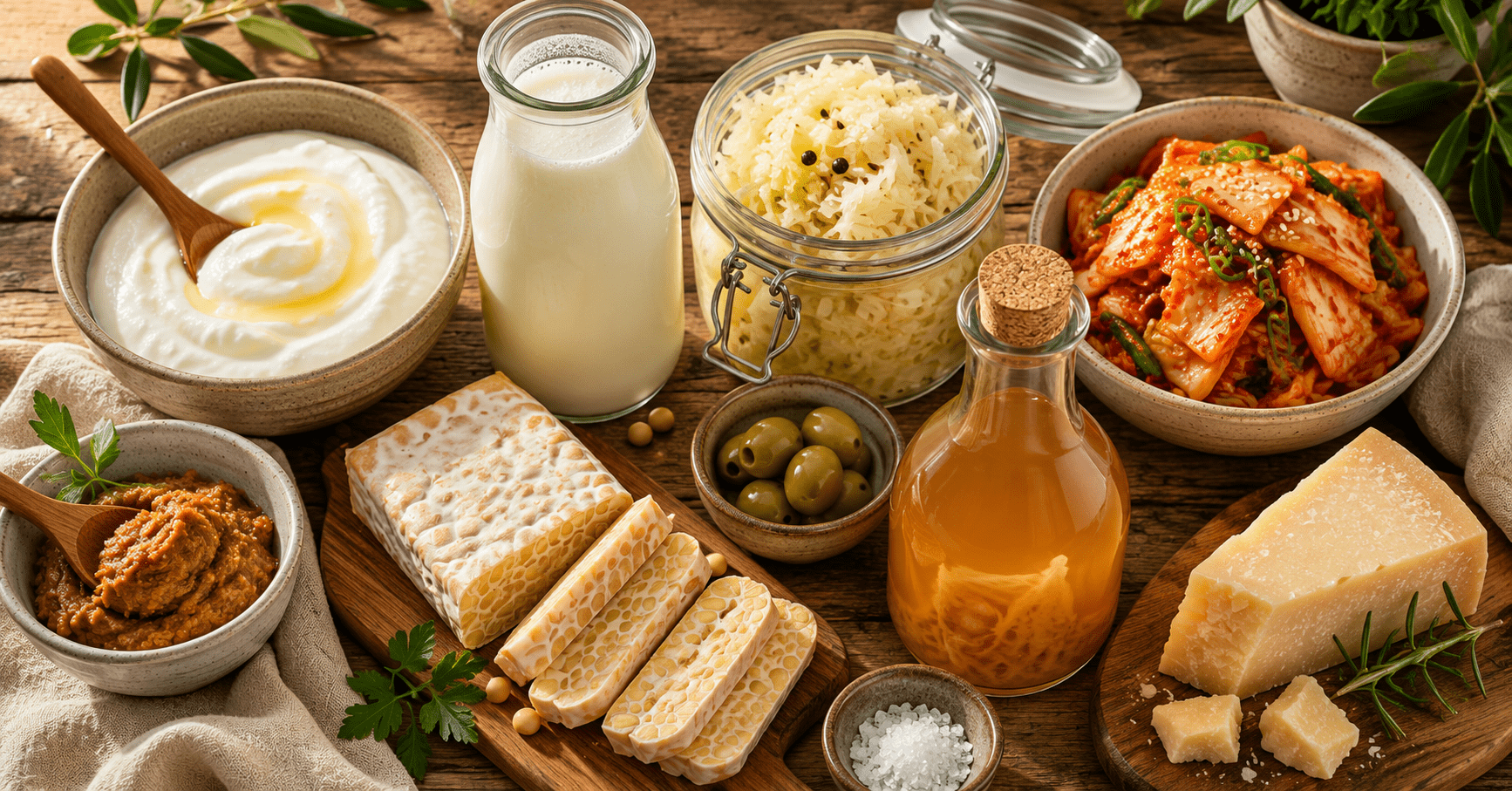
Probiotic foods contain live beneficial bacteria that are introduced into the gut when you eat them. Examples include Greek yogurt, kefir, sauerkraut, kimchi, and miso. Prebiotic foods contain specific indigestible fibers that feed and sustain the beneficial bacteria already living in the gut and the bacteria introduced through probiotic foods. Examples include chickpeas, oats, garlic, onions, and green bananas. The simplest way to remember the distinction is that probiotics are the bacteria and prebiotics are the bacteria’s food. Both are needed for optimal gut health and hunger regulation.
How quickly do prebiotic foods reduce cravings?
Some people notice changes in craving intensity over several weeks of consistently increasing prebiotic fiber intake to 10 to 15 grams per day. The mechanism requires time because the beneficial bacteria population needs to grow in response to the increased fiber supply. The first changes people typically notice are reduced afternoon sweet cravings and quieter post-dinner food urges. These are serotonin-mediated effects that respond relatively quickly to improved prebiotic fiber intake. The blood sugar stability and ghrelin regulation changes typically take the full 2 to 4 week window to become consistently noticeable.
Can I get enough prebiotics from supplements instead of food?
Prebiotic supplements including inulin, FOS, and resistant starch powders can provide meaningful prebiotic fiber, but whole food sources are generally preferable because they provide diverse fiber types from a single food that supplements typically do not replicate. A serving of chickpeas provides inulin, resistant starch, and soluble fiber simultaneously feeding multiple beneficial bacteria species. A single-fiber prebiotic supplement feeds primarily one type of bacteria. Diversity of prebiotic fiber types is associated with greater gut microbiome diversity and more comprehensive hunger hormone regulation than high doses of a single fiber type.
Which prebiotic food has the most fiber?
Jerusalem artichoke has the highest prebiotic fiber concentration of any commonly available food at 14 to 19 grams of inulin per 100 grams. However it can cause significant digestive discomfort when introduced too quickly due to its high fermentation rate. For practical daily use without digestive adjustment concerns, chickpeas provide the most accessible high-prebiotic-fiber option at 12 grams of total fiber per cup with multiple prebiotic fiber types present. Oats and chia seeds are close behind and are easier to incorporate daily than chickpeas for some people.
Do prebiotic foods need to be eaten with probiotic foods to work?
Prebiotic foods provide benefit regardless of whether probiotic foods are eaten alongside them because they feed the beneficial bacteria that are already permanently resident in the gut. However eating prebiotic and probiotic foods in the same meal or on the same day creates a synbiotic effect where the prebiotic fiber directly sustains the bacteria introduced by the probiotic food, producing a more complete benefit than either alone. The Mediterranean dietary pattern creates this synbiotic effect naturally by including chickpeas and garlic alongside Greek yogurt across the same day of eating.
The bottom line
Prebiotic foods are not a supplement or a protocol. They are the whole plant foods that have been the foundation of Mediterranean eating for generations. Chickpeas, garlic, onions, oats, asparagus, and green bananas were on Mediterranean tables long before the word prebiotic existed. They produced gut microbiome diversity, hunger hormone regulation, and reduced craving intensity for traditional Mediterranean populations not because those populations were following a gut health protocol but because those foods were simply what they ate every day.
The practical starting point is adding half a cup of chickpeas to every lunch, one tablespoon of chia seeds to breakfast, and using garlic and onions as cooking foundations rather than as occasional additions. Those three changes alone bring daily prebiotic fiber intake from the typical modern 3 to 5 grams toward 10 to 12 grams per day. Studies show the gut microbiome responds to diet changes, sometimes within days. The hunger and craving changes follow.
I noticed the prebiotic effect before I understood the mechanism. My grandmother in the Dominican Republic ate chickpeas almost every day, cooked with garlic and onions as the base of everything. She was not following a gut health protocol. She was just cooking the way she had always cooked. Her appetite was regulated. Her cravings were manageable. Her energy was consistent. The foods she was eating every day were doing for her microbiome what I eventually had to learn to do deliberately. The knowledge is worth having. But the foods themselves are simple, affordable, and as old as the Mediterranean.
Ribert
>> Want a full week of meals combining prebiotic and probiotic foods?
The 7-Day Mediterranean Meal Plan PDF builds every meal around the prebiotic-probiotic combination that feeds beneficial gut bacteria and reduces hunger and cravings. $17, instant download. Get the 7-Day Mediterranean Meal Plan for $17
Free printable
Hungry again at 9pm?
Get the free printable Night Hunger Snack List: 10 Mediterranean snacks with exact portions and protein counts, for the evenings when cravings hit. Enter your email and download it instantly.
Free. No spam. Unsubscribe anytime.
Keep reading
Best Probiotic Foods for Gut Health and Hunger Control
Why Am I Always Hungry Even Though I Eat a Lot?
How to Stop Food Cravings Naturally
Foods That Stabilize Blood Sugar Naturally
Hunger vs Cravings: How to Tell the Real Difference
This article shares personal experience and general nutrition information, not medical advice.
About Ribert Rodriguez
Ribert is the founder of EnergiSource Wellness. He built this site to share what actually worked for him after years of struggling with cravings, late-night eating, and low energy. His approach is rooted in the Mediterranean framework and a belief that food is one of the most powerful tools for how you think and feel.