Key Takeaways
- A GLP-1 meal plan works best when every small meal leads with protein, because a smaller appetite leaves less room for anything else.
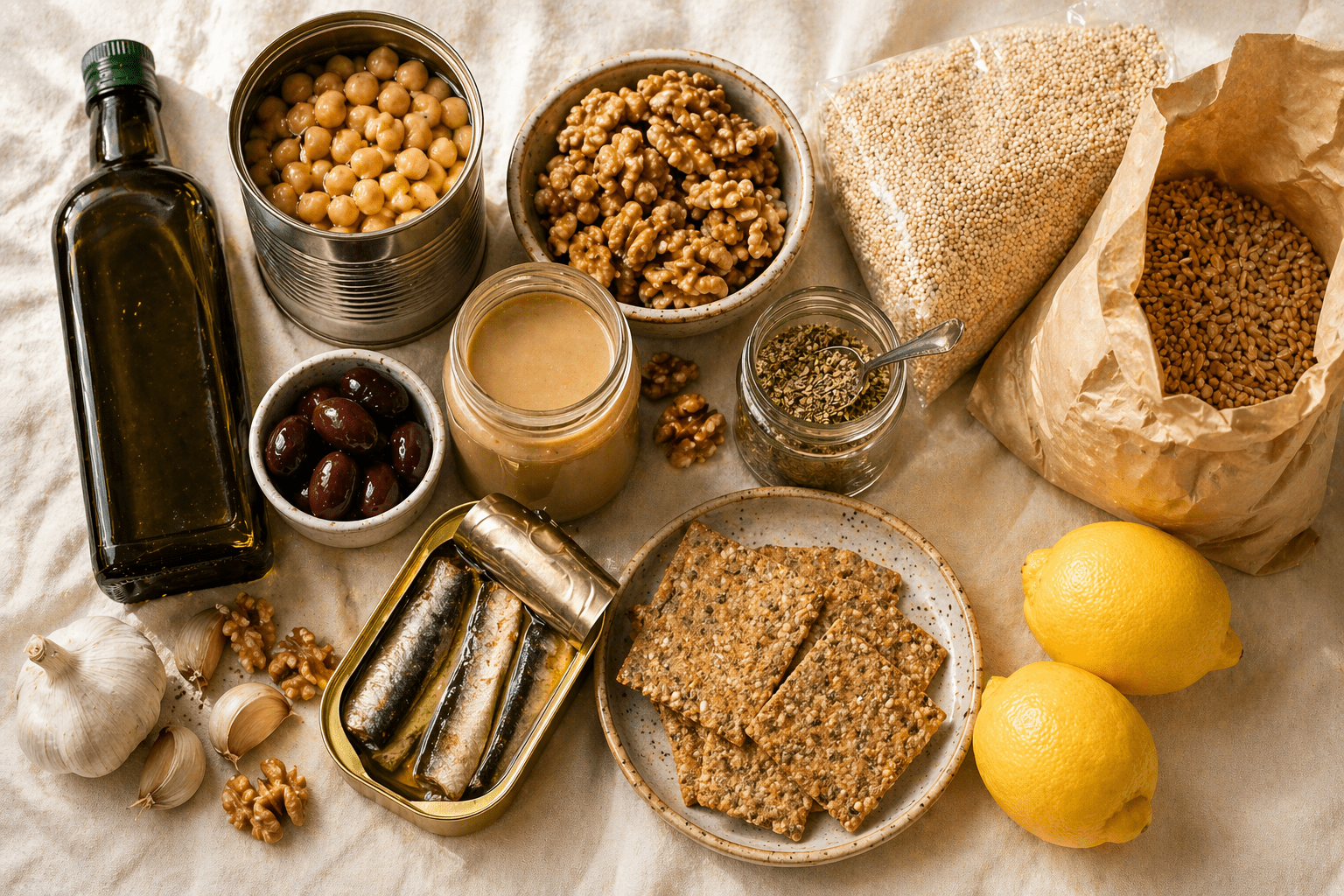
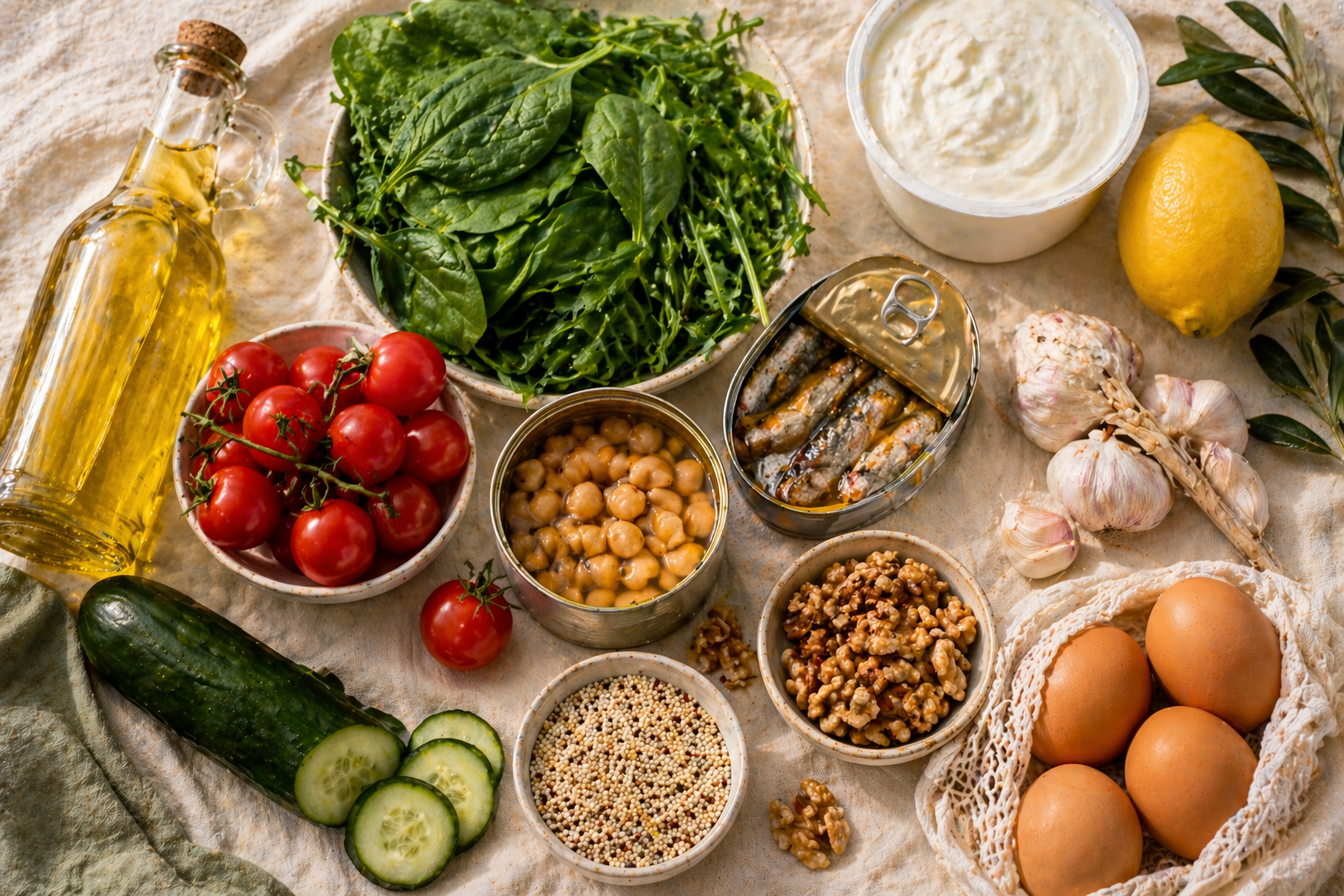
- Mediterranean eating fits GLP-1 medications well: fish, eggs, Greek yogurt, beans, vegetables, and olive oil in small amounts are easy to eat and easy to digest.
- Below is a full 7-day menu with three small meals and two mini meals a day, landing around 78 to 93 grams of protein daily.
- On nausea days, go cold, go small, and skip greasy food. Swaps are included for each meal.
Quick answer: A good GLP-1 meal plan is built on small, protein-first meals eaten three to five times a day, with fiber from beans, lentils, and vegetables, plenty of fluids, and very little greasy or heavily processed food. The Mediterranean diet already works this way, which is why the 7-day plan below uses it as the base. Each day hits roughly 78 to 93 grams of protein without ever asking you to eat a big plate.
Picture this. It’s 1pm, you know you should eat lunch, and the thought of food feels like homework. You had three bites of toast this morning. You’re not hungry, but you’re also running on fumes by 4pm and you can’t figure out why.
I’m not on a GLP-1, and I’m not going to pretend I know exactly what that feels like. But the question I keep getting is some version of the same thing: “I barely want to eat anymore. What am I supposed to eat?” So I went looking for a real answer.
Want this plan on your fridge? Grab the free printable 7-day PDF further down.
Why a GLP-1 Meal Plan Needs to Look Different
GLP-1 medications like semaglutide and tirzepatide slow down how fast your stomach empties and turn the volume down on appetite. That’s the point of them. The side effect nobody plans for is that when you eat less, every bite has to do more work.
If you only have room for half your usual food, and that half is crackers, toast, and coffee, you end up short on protein, fiber, and fluids. In 2025, four major nutrition and obesity medicine groups published a joint advisory in The American Journal of Clinical Nutrition on exactly this. Their priorities include managing stomach side effects, eating nutrient-dense and minimally processed food, getting enough protein, and doing strength training to protect muscle.
Registered dietitians at UCHealth put the practical version simply: if you can only eat about half of what you used to, make every bite as nutritious as possible.
I noticed something when I read the top articles on this
When I went through the articles ranking for “Mediterranean diet GLP-1,” almost all of them explained why the Mediterranean diet fits. Almost none of them told you what to actually put on your plate on a Tuesday. No menu. No portions. No protein counts. That’s the gap this article fills.
Why the Mediterranean Diet Fits GLP-1 Medications
The Mediterranean way of eating was never about big portions. It’s built around a few things that happen to line up with what GLP-1 users need most:
- Easy protein: eggs, Greek yogurt, cottage cheese, fish, chicken, and canned tuna or salmon. Soft, simple, and quick.
- Gentle fiber: lentils, chickpeas, white beans, oats, and cooked vegetables, which help with the constipation many people notice on these medications.
- Healthy fat in small amounts: a drizzle of olive oil, a few olives, a spoon of nuts. Enough for flavor, not enough to sit heavy.
- Very little ultra-processed food: which is exactly what dietitians suggest limiting while your stomach adjusts.
One honest note: the Mediterranean diet is known for generous olive oil. On a GLP-1, heavy or greasy meals are more likely to cause nausea, so keep the olive oil to a drizzle, not a pour.
What Nobody Tells You: Muscle Is the Real Risk
Here’s what nobody tells you. When appetite drops, the foods that disappear first are usually the ones that take effort: the chicken, the eggs, the fish. The foods that survive are the easy ones, like toast, crackers, and snack bars. They go down easy, but they’re mostly carbohydrate.
That matters because your body needs protein to hold on to muscle while you’re eating less. UCHealth’s dietitians suggest aiming for around 1.2 grams of protein per kilogram of body weight per day, which works out to about 82 grams for a 150-pound person. If you want to go deeper on this, I broke down how much protein you actually need to stay full.
The simplest rule I’ve found: eat the protein on your plate first. If you only get through half the meal, you got through the half that mattered.
Free tool
How Much Protein Do You Need to Stay Full?
Enter your weight and pick what fits you best. You’ll get a daily target, how to split it across meals, and a sample Mediterranean day that hits it.
Enter your weight to see your target.
Want this planned for you?
The 7-Day Mediterranean Meal Plan gives you 28 meals and snacks built around protein, fiber, and healthy fat, plus the grocery list.
Prefer to start free? Get the free high-protein snack list
Estimates for healthy adults, based on common dietitian ranges (about 1.0 to 1.6 g per kg of body weight, higher for active people). If you’re in a larger body, entering a goal or reference weight gives a more realistic number. If you have kidney disease, are pregnant, or take GLP-1 medication, check your target with your doctor or dietitian. This is general information, not medical advice.
How This 7-Day GLP-1 Meal Plan Works
- Three small meals and two mini meals a day. Smaller, more frequent meals are easier on the stomach than two big ones.
- Every meal has a protein anchor, usually 15 to 28 grams.
- Beans, lentils, or oats show up every day for fiber.
- Portions are small on purpose. If you’re full before you finish, stop. Save the rest for later.
- Protein numbers are estimates based on standard nutrition data for the portions listed. Brands vary a bit.
Drink water between meals rather than a lot with them. UCHealth suggests 8 to 10 glasses of water or sugar-free drinks a day, since these medications can quiet your thirst signals too.
Day 1: Easy Start
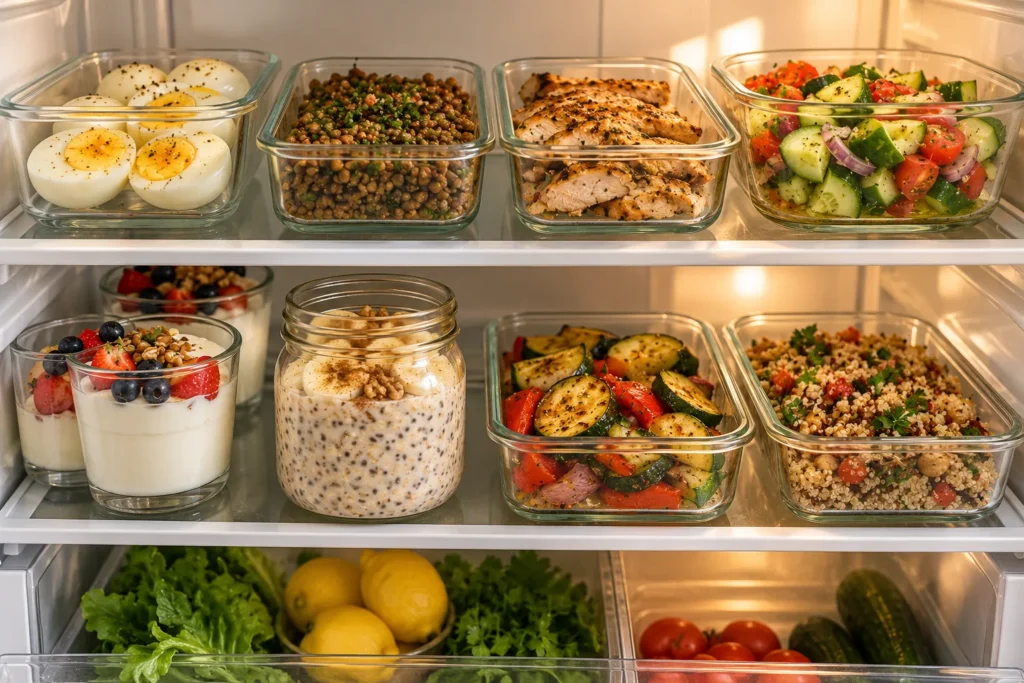
- Breakfast: 3/4 cup plain Greek yogurt, 1/4 cup berries, 1 tbsp chopped walnuts, small drizzle of honey (about 18g protein)
- Mini meal: 1 hard-boiled egg with cucumber slices (6g)
- Lunch: Half a can of tuna mixed with 1/4 cup chickpeas, diced tomato, cucumber, lemon, and a little olive oil, in half a whole wheat pita (about 20g)
- Mini meal: 1/2 cup cottage cheese with cherry tomatoes and black pepper (about 12g)
- Dinner: 3 oz baked salmon, 1/2 cup roasted zucchini, 1/3 cup quinoa (about 25g)
Day total: about 81g protein
Day 2: Greek Flavors
- Breakfast: 2 eggs scrambled with spinach, 1/4 cup cottage cheese, and 1 tbsp feta, with half a slice of whole grain toast (about 22g)
- Mini meal: 1/2 cup shelled edamame with sea salt (about 9g)
- Lunch: 1 cup lentil soup topped with 1 oz crumbled feta (about 16g)
- Mini meal: 1/4 cup roasted chickpeas and 10 almonds (about 8g)
- Dinner: 3 oz chicken souvlaki with 2 tbsp tzatziki and a small tomato cucumber salad (about 27g)
Day total: about 82g protein
Day 3: Make-Ahead Day
- Breakfast: Overnight oats with 1/3 cup oats, 1/2 cup Greek yogurt, 1/2 cup milk, and 1 tsp chia seeds (about 20g)
- Mini meal: 1/2 cup cottage cheese with sliced peach (about 12g)
- Lunch: Greek chicken bowl with 2.5 oz chicken, 1/4 cup farro, cucumber, tomato, and 1 tbsp feta (about 26g)
- Mini meal: 1 hard-boiled egg (6g)
- Dinner: 3 oz garlic shrimp with 1/2 cup white beans and wilted spinach (about 28g)
Day total: about 92g protein
Day 4: Gentle Day (Good for Nausea)
- Breakfast: Smoothie with 3/4 cup kefir, 1/2 cup Greek yogurt, 1/2 banana, and a handful of spinach (about 20g). Cold food is often easier on queasy mornings.
- Mini meal: 1/2 cup shelled edamame (about 9g)
- Lunch: Half a can of tuna mixed with 2 tbsp Greek yogurt, chopped olives, and 1/4 cup chickpeas over greens, with a few whole grain crackers (about 21g)
- Mini meal: 1 string cheese and a small handful of grapes (about 7g)
- Dinner: 3 oz turkey meatballs in 1/2 cup tomato sauce with roasted eggplant (about 21g)
Day total: about 78g protein
Day 5: One-Pan Day
- Breakfast: Simple shakshuka: 2 eggs poached in 1/2 cup tomato sauce with 1 oz feta and a small piece of pita (about 18g)
- Mini meal: 3/4 cup plain Greek yogurt with cinnamon (about 17g)
- Lunch: White bean and tuna salad with 1/2 cup white beans, half a can of tuna, arugula, lemon, and olive oil (about 21g)
- Mini meal: 1 hard-boiled egg with 3 tbsp hummus and carrot sticks (about 9g)
- Dinner: 3 oz cod baked with tomatoes and olives, with 1/2 cup cooked lentils (about 28g)
Day total: about 93g protein
Day 6: Savory Breakfast Day
- Breakfast: 3/4 cup cottage cheese with sliced tomato, cucumber, a drizzle of olive oil, and za’atar or oregano (about 21g)
- Mini meal: 1/2 cup kefir and a few walnuts (about 7g)
- Lunch: 3 oz canned salmon with 1/4 cup white beans over greens with lemon (about 21g)
- Mini meal: 1/4 cup roasted chickpeas (about 5g)
- Dinner: 1.5 cups chicken and vegetable orzo soup with about 2.5 oz chicken (about 24g)
Day total: about 78g protein
Day 7: Batch Cook Day
- Breakfast: 2 Mediterranean egg muffins made with eggs, spinach, and feta, plus 1/2 cup berries (about 14g)
- Mini meal: 3/4 cup plain Greek yogurt (about 17g)
- Lunch: Lentil feta salad with 3/4 cup cooked lentils, 1 oz feta, cucumber, and parsley (about 17g)
- Mini meal: 1 hard-boiled egg and a few olives (6g)
- Dinner: 3 oz grilled chicken or salmon with tzatziki, roasted peppers, and 1/3 cup couscous (about 25g)
Day total: about 79g protein
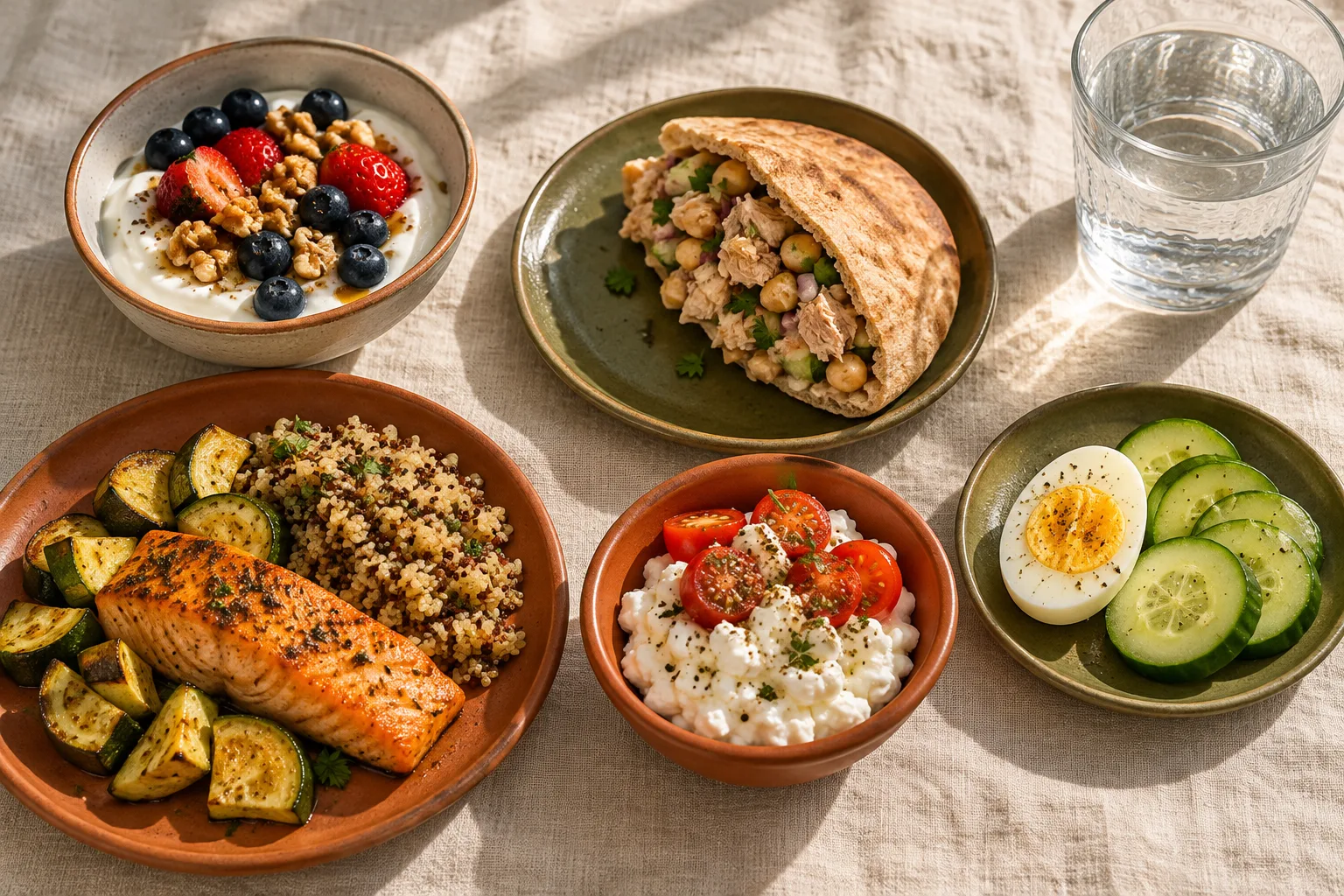
Want this prepped ahead instead of cooked daily? My Mediterranean meal prep for the week guide shows how to batch the proteins, grains, and beans in about an hour, and the Mediterranean diet grocery list covers everything on this menu.
Free printable
Get this 7-day plan as a printable PDF
All 7 days on two fridge-friendly pages, with small-appetite portions, the 4 rules, and the swaps for queasy and low-appetite days. Enter your email and download it instantly.
Free. No spam. Unsubscribe anytime.
A Before and After Example
Here’s what a typical small-appetite day often looks like, next to one day from this plan:
| Meal | Typical small-appetite day | Protein-first Mediterranean day |
|---|---|---|
| Breakfast | Coffee and half a piece of toast | Greek yogurt with berries and walnuts |
| Lunch | A few crackers and cheese | Tuna and chickpea half pita |
| Afternoon | Snack bar | Cottage cheese with tomatoes |
| Dinner | Half a bowl of pasta | Salmon, zucchini, and quinoa |
| Protein | Roughly 25 to 30g | About 81g |
Same appetite. Similar amount of food. Roughly three times the protein, plus real fiber from the chickpeas, quinoa, and vegetables.
Swaps for Nausea, Constipation, and Low-Appetite Days
When you feel queasy
- Choose cold or room-temperature foods: yogurt, smoothies, cottage cheese, chilled tuna salad.
- Skip fried or greasy food, and keep olive oil light.
- Eat slowly and stop at the first sign of fullness, not when the plate is empty.
When things slow down
- Add fiber gradually with lentils, beans, oats, and berries. For more ideas, see these high fiber foods that keep you full.
- Drink more water as you add fiber. Fiber without fluid can make constipation worse.
When you can barely eat
- Drink your protein: a kefir and Greek yogurt smoothie is easy to sip over an hour.
- Keep ready-to-eat protein in the fridge: hard-boiled eggs, cottage cheese, and single-serve Greek yogurt.
- Three tiny meals still beat one skipped day.
The full week, done for you
The Mediterranean Meal Plan
If you want a week that’s already planned, the 7-day Mediterranean Meal Plan gives you 28 meals and snacks built around real protein, fiber, and healthy fat, plus a complete grocery list. No calorie counting. The portions are easy to scale down for a smaller appetite.
Get the plan for $17Frequently Asked Questions
What is the best diet to follow on a GLP-1?
There’s no single required diet, but most guidance points to the same pattern: enough protein, plenty of fiber and fluids, minimally processed food, and small meals. The Mediterranean diet already follows that pattern, which is why many providers like it for people on GLP-1 medications.
How much protein should I eat on a GLP-1?
Needs vary by body size and activity, so ask your provider or a registered dietitian for your number. As a reference point, UCHealth dietitians suggest about 1.2 grams per kilogram of body weight per day, or roughly 82 grams for someone who weighs 150 pounds.
Can I eat olive oil on a GLP-1?
Yes, in small amounts. A drizzle adds flavor and healthy fat. Large amounts of oil or greasy meals are more likely to trigger nausea while your stomach empties more slowly.
How many meals a day should I eat on a GLP-1?
Many people do better with three small meals plus one or two mini meals instead of two large ones. That’s how this plan is set up.
Is this meal plan medical advice?
No. It’s a general, food-first example. Always follow the guidance of the provider who prescribes your medication, especially if you have other health conditions.
Keep Reading
Your appetite changed. Your body’s need for real food didn’t. You don’t need a perfect week. You need small plates where the protein comes first, a pot of lentils in the fridge, and permission to stop when you’re full. Start with Day 1 tomorrow and see how it feels.
Ribert
How this was researched: This article draws on the 2025 joint nutrition advisory on GLP-1 therapy from the American College of Lifestyle Medicine, the American Society for Nutrition, the Obesity Medicine Association, and The Obesity Society, practical guidance from UCHealth registered dietitians, and a review of the top-ranking articles on Mediterranean eating with GLP-1 medications. Protein estimates use standard nutrition data for the listed portions.
Last updated: September 26, 2026
This article shares general nutrition information, not medical advice. If you take a GLP-1 medication, talk with your prescriber or a registered dietitian before changing how you eat.
About Ribert Rodriguez
Ribert is the founder of EnergiSource Wellness. He researches and writes every article on this site personally, cross-checking claims against published research rather than relying on generic wellness advice. His approach is rooted in the Mediterranean framework, built from years of testing meal structures on himself after struggling with cravings, late-night eating, and low energy.