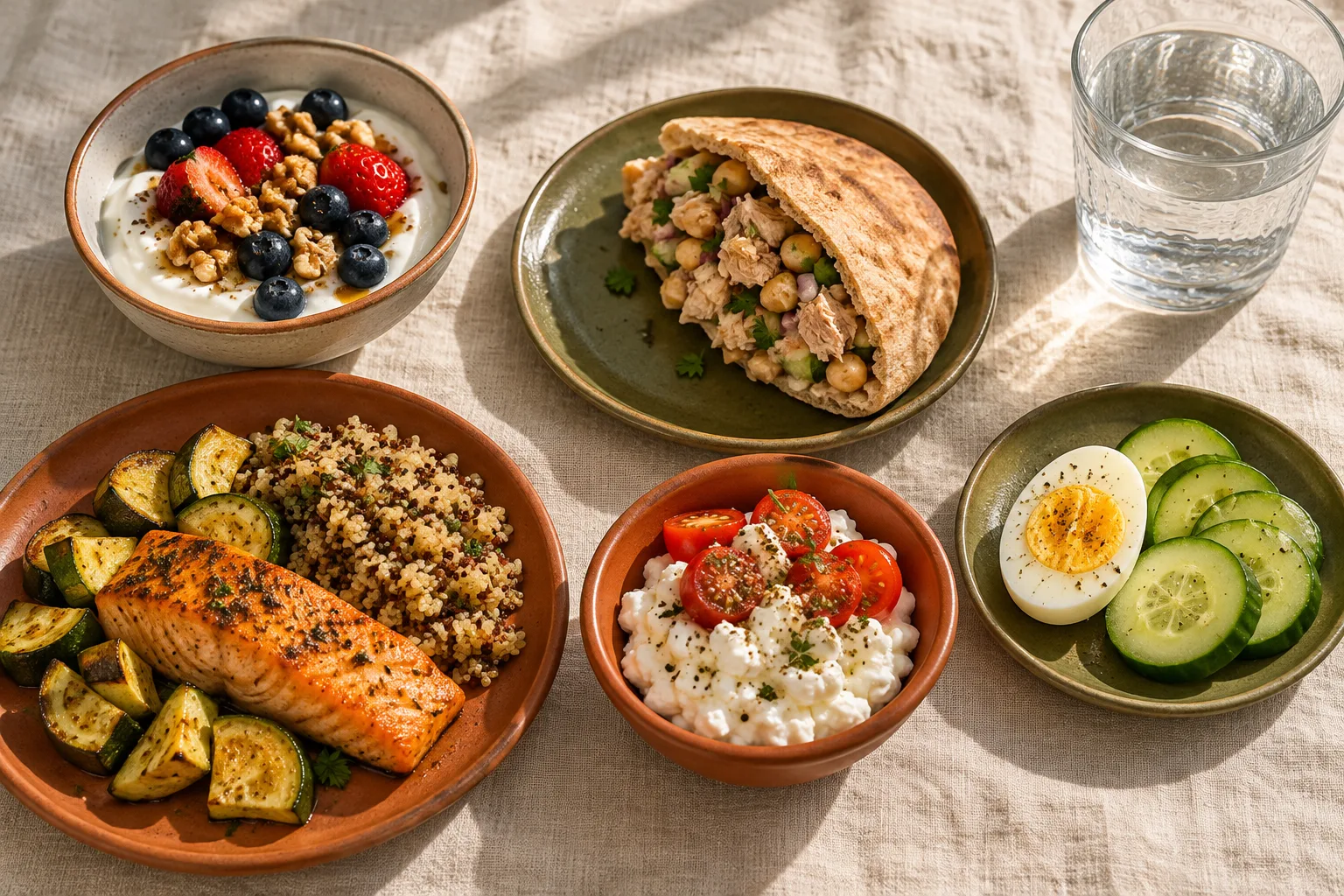
Key Takeaways
- Most work lunches quietly fail at the specific moment you need them most: the 3pm afternoon slump.
- The problem isn’t usually what you’re eating. It’s how the meal is structured. Real protein (25 to 35g), real fiber, and real healthy fat working together is what actually holds you through the afternoon.
- Six Mediterranean lunch templates that meet this structure, with real protein counts and honest prep times.
- Meal prep once, eat well all week without spending your Sunday cooking.
If you’re reading this at your desk right now already thinking about a snack even though you just ate lunch two hours ago, you’re not doing anything wrong. It’s happening because of what your lunch was actually built out of, not because of you.
What nobody names clearly: most work lunches are engineered to leave you hungry by 2pm. A sandwich, a bag of chips, maybe an apple. It looks like a real meal. It hits the 500-calorie target. And yet, an hour later, you’re at the vending machine or eyeing the office snacks with something that feels like willpower failure.
Planning the whole week? The full plan is in high-protein meal prep for the week.
It isn’t. It’s meal structure.
Why Your Current Work Lunch Isn’t Holding You
Real satiety research is genuinely clear on this. A study on afternoon snack composition published in the Nutrition Journal found that a high-protein snack containing 14 grams of protein produced significantly greater reductions in afternoon hunger compared to a high-fat, low-protein snack. And that was just a snack. A lunch built the same way (mostly fat, minimal protein) has the same problem, just amplified.
Another study on gut hormones and satiety showed that combining fat with fiber increases the release of the actual satiety hormones your body uses to signal fullness: cholecystokinin (CCK), peptide YY (PYY), and glucagon-like peptide-1 (GLP-1). These are the hormones that tell your brain you’re actually done eating. A lunch that doesn’t trigger them well leaves you hungry two hours later, no matter how many calories were on the plate.
The real reason a typical work lunch fails isn’t calories. It’s that the structure doesn’t hit the mechanisms your body actually uses to feel full.
The Balanced Plate Structure That Actually Works
The Mediterranean approach naturally hits all three satiety mechanisms because the meals are built on the same underlying structure:
Real protein (25 to 35 grams per meal): grilled chicken, salmon, tuna, chickpeas, lentils, feta, eggs, Greek yogurt. This is the number that triggers the fullness signal.
Real fiber (8 to 12 grams per meal): whole grains like quinoa or farro, legumes, vegetables. Fiber slows gastric emptying, which is a mechanical reason you stay full longer.
Real healthy fat (from olive oil, avocado, nuts, seeds, or fatty fish): triggers the CCK/PYY/GLP-1 satiety hormones directly.
All three together is what keeps you full through the 3pm slump. Missing any one of them, and the whole structure quietly fails.
6 Mediterranean Lunch Templates That Meet the Structure
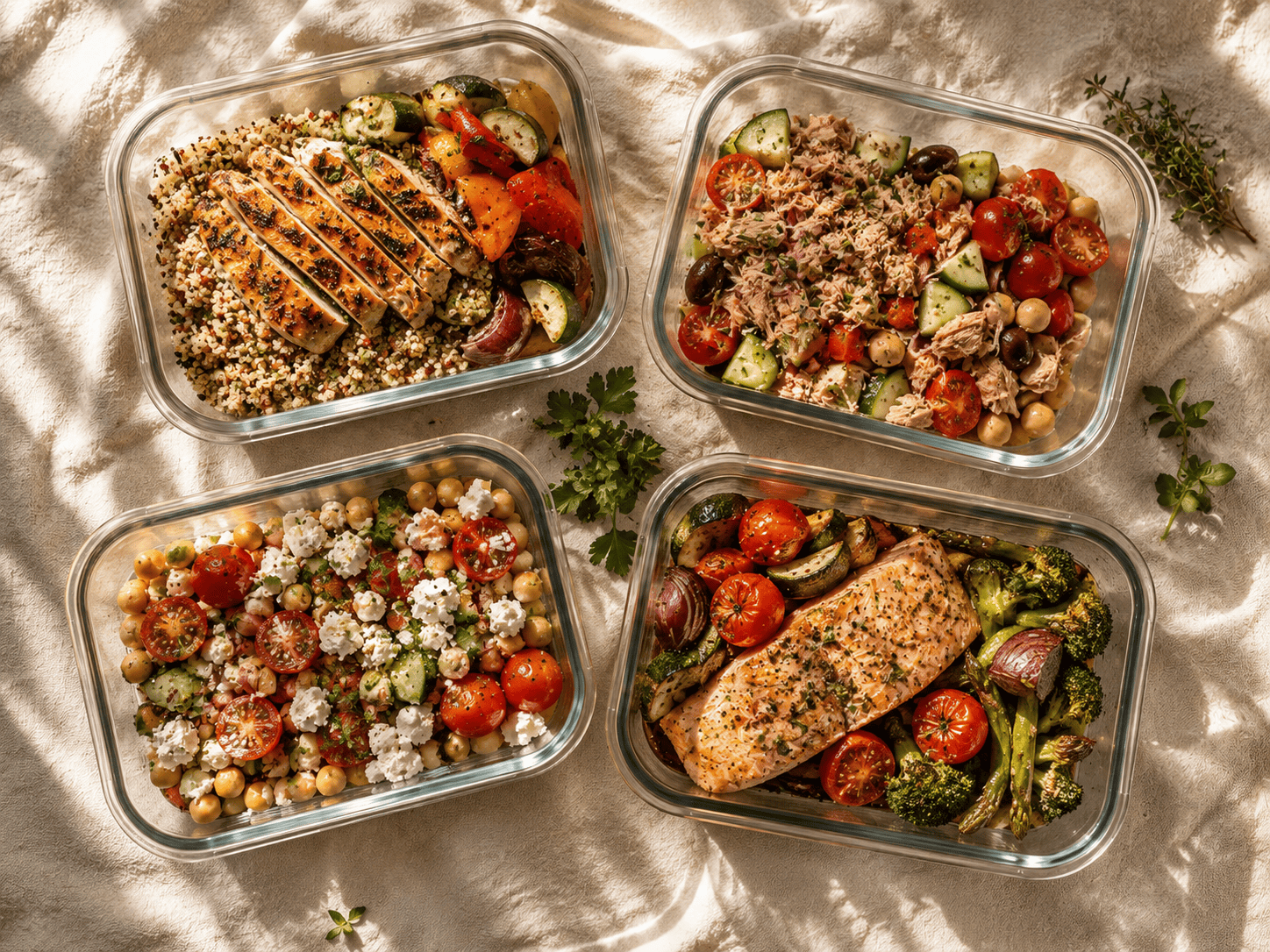
These aren’t strict recipes. Think of them as templates you can rotate through the week. Each hits the balanced structure and lands in the 30 to 40g protein range.
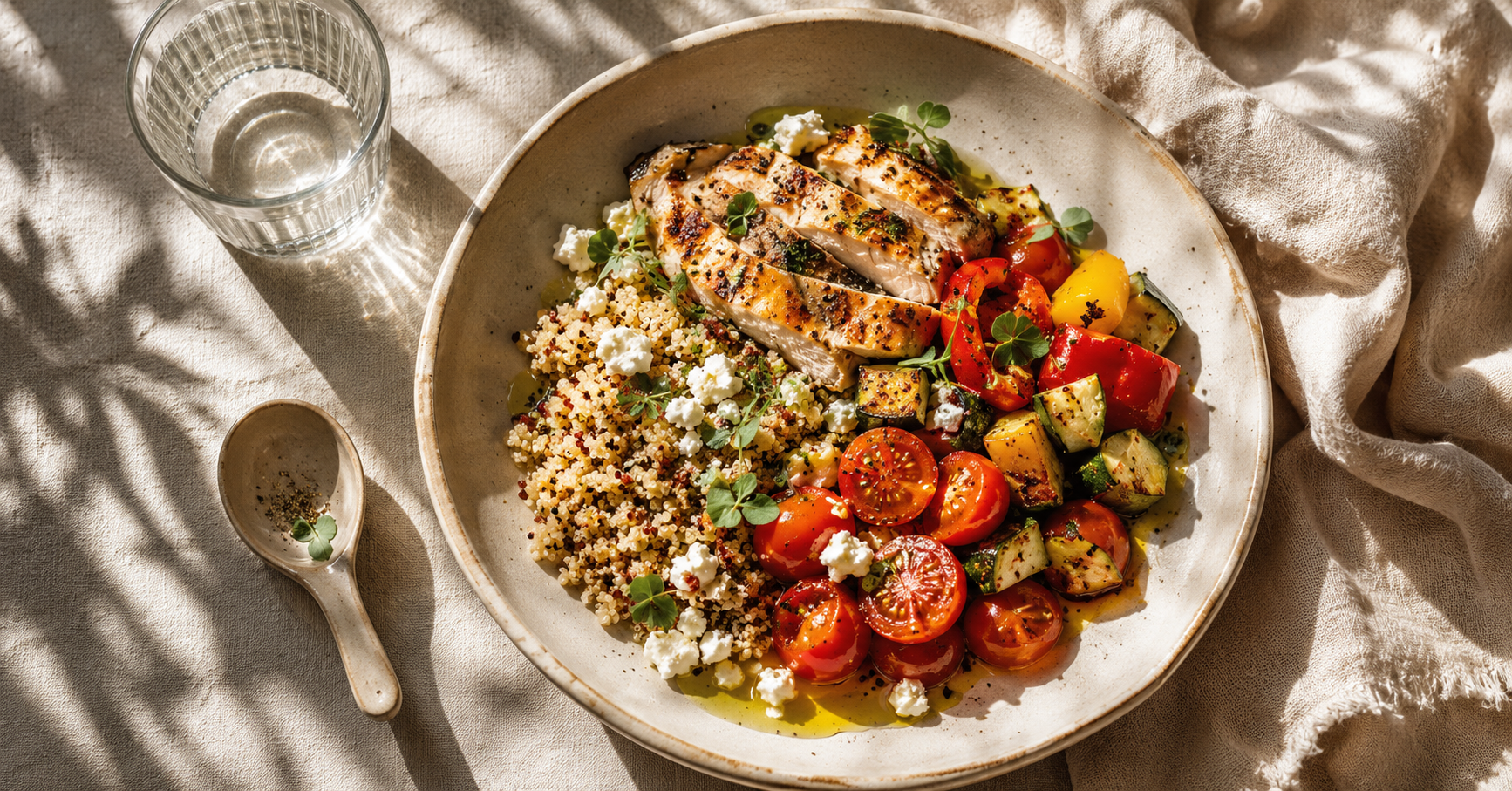
1. Grilled Chicken and Quinoa Bowl
~34g protein, prep once for 4 to 5 days
Cooked quinoa base, grilled chicken breast, cucumber, cherry tomatoes, red onion, crumbled feta, olive oil, and lemon juice. The classic Mediterranean bowl for a reason. Real protein anchor, complete-protein grain, fresh vegetables, and the olive oil doing the satiety-hormone work.
Prep note: cook quinoa and chicken on Sunday. Assemble each morning in about 3 minutes.
2. Mediterranean Tuna Bowl
~30g protein, 10-minute assembly
Canned tuna (in olive oil), white beans, chopped cucumber, cherry tomatoes, red onion, kalamata olives, olive oil, and lemon. No cooking required. Genuinely one of the fastest real-lunch options that still holds you through the afternoon.
3. Chickpea and Feta Salad
~26g protein, plant-forward option
Chickpeas as the protein anchor, feta for additional protein and fat, sliced cucumber, tomatoes, red onion, fresh parsley, olive oil, and lemon. Fiber-dense, no meat, still hits real satiety numbers.
4. Sheet-Pan Salmon and Roasted Vegetables
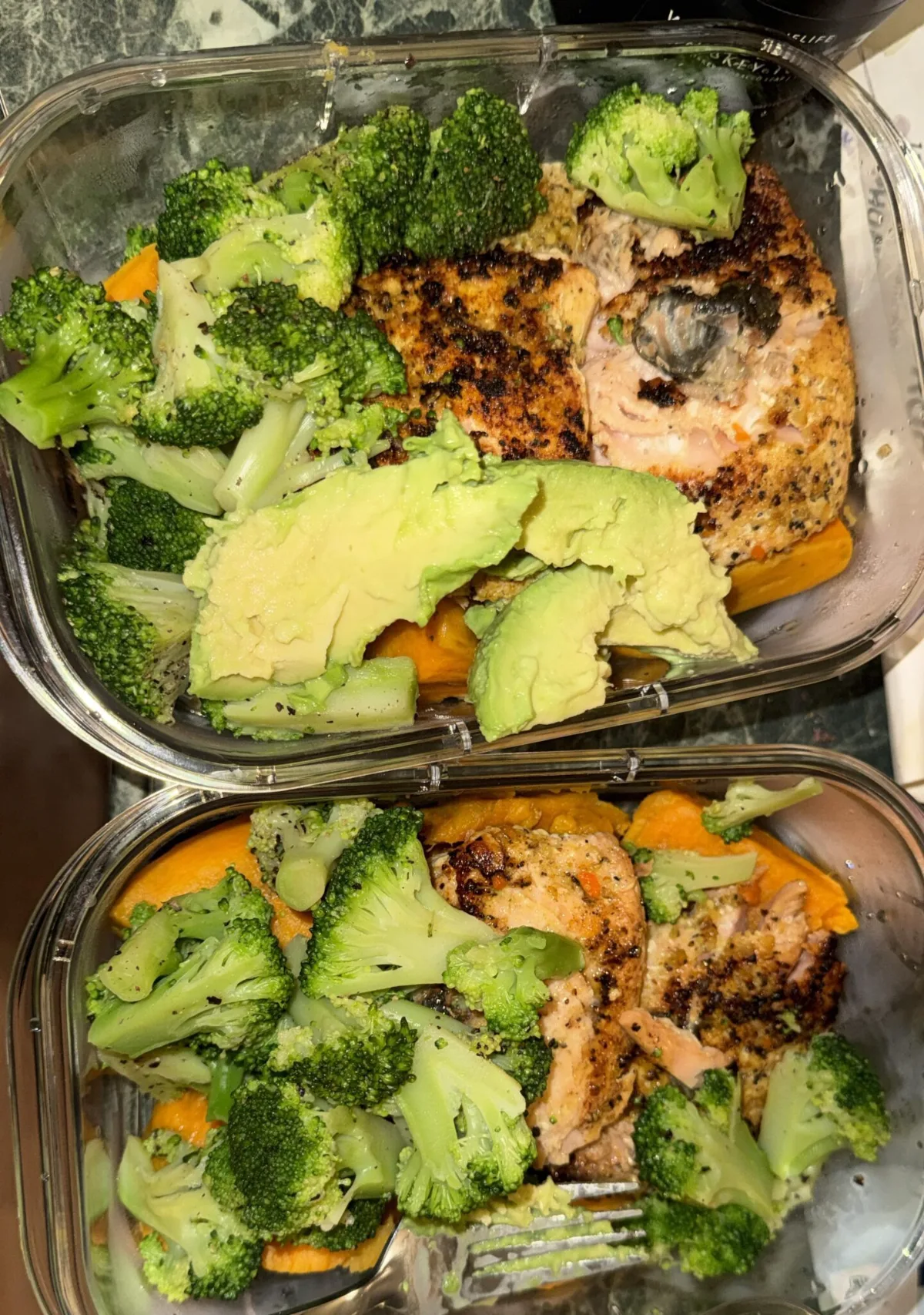
~32g protein, meal-prep friendly
Salmon fillets and mixed vegetables (asparagus, bell peppers, red onion) roasted on one sheet pan on Sunday. Portion into containers with a base of quinoa or farro. The salmon delivers protein and omega-3s, the vegetables and grain provide fiber, the olive oil ties it all together.
5. Chicken Shawarma with Tabbouleh
~35g protein, higher-effort meal prep
Marinated chicken thighs, tabbouleh (bulgur wheat with parsley, tomato, olive oil, lemon), and a side of hummus with pita. This is a Sunday-cook meal that then holds for 4 to 5 days. Genuinely satisfying, higher protein than most Mediterranean options.
6. Greek Yogurt Savory Lunch Bowl
~25g protein, 3-minute assembly
Plain Greek yogurt (3/4 cup) as the base, topped with cucumber, cherry tomatoes, olives, crumbled feta, a scatter of chickpeas, olive oil, and fresh herbs (dill or parsley). Real research published in the Journal of Dairy Science found that dairy-based protein meals increase satiety and improve afternoon cognitive concentration compared to carb-heavy meals. Fast, cold, holds you well.
The Real Meal-Prep Question
The honest truth about meal prep: you don’t need to spend your entire Sunday cooking for the week. Component prep is more sustainable than making five identical containers of the same meal, which usually leads to bored-of-it-by-Wednesday syndrome and a takeout order.
Component prep looks like this: Sunday afternoon, cook a big batch of quinoa or farro (30 minutes, mostly hands-off). Grill or bake enough chicken for 3 lunches. Roast a sheet pan of vegetables. Chop cucumber, red onion, and cherry tomatoes into a container. That’s it.
Through the week, you’re not cooking. You’re assembling. Different combinations of the same components mean each day feels different even though nothing new is being made. Chicken + quinoa + veggies + feta on Monday. Tuna + white beans + veggies + olives on Tuesday. Yogurt + chickpeas + veggies + herbs on Wednesday. Real variety, real prep efficiency.
The full system, done for you
The Mediterranean Meal Plan
If work lunches are the piece that keeps failing, the 7-day Mediterranean Meal Plan gives you the whole week structured this way. 28 meals and snacks built around real protein, fiber, and healthy fat, plus a complete grocery list so you’re not standing in the store guessing. Designed exactly for people who need their lunch to actually hold them through the afternoon.
Get the plan for $17What NOT to Do (Even If Pinterest Suggests It)
Being honest here rather than pretending everything with ‘Mediterranean’ in the title works:
Avoid the giant pasta salad as a work lunch. Even Mediterranean-styled pasta salads are heavy on refined carbs and light on protein. You’ll be hungry by 2pm.
Skip the wraps that are 90% bread with a smear of hummus. Great for a snack, not a real lunch. Not enough protein, not enough of anything that actually holds you.
Be wary of grain-bowl recipes with tiny protein portions. A restaurant-style grain bowl with 6 pieces of chicken doesn’t hit the 25 to 35g protein target. Add double the protein at home, or the whole structure fails.
The exact formula, delivered free.
If work lunches are the specific problem you’re trying to solve, the one-page Hunger-Free Day Formula walks through the exact meal structure that keeps hunger from crashing back an hour later. It’ll land in your inbox in under a minute.
Short on time this week? Here is how to choose pre-made Mediterranean meals that still keep you full, with the label check I use.
Frequently Asked Questions
How much protein should a work lunch have?
25 to 35 grams is the range that consistently shows up in satiety research as the point where afternoon hunger is meaningfully reduced. Under 20g, and you’ll be hungry again quickly.
Can I do this if I’m vegetarian?
Yes. Chickpeas, lentils, feta, Greek yogurt, eggs, and cottage cheese all deliver real protein at Mediterranean-friendly amounts. The chickpea feta salad and Greek yogurt savory bowl above are both vegetarian and hit the structural target.
What if I don’t have time to meal prep on Sunday?
The tuna Mediterranean bowl and Greek yogurt savory bowl require zero cooking and assemble in under 5 minutes. Both hit the balanced structure. Keep the ingredients stocked and you have real lunches even without prep.
Why not just eat a big lunch?
Because volume without structure doesn’t fix the problem. A 900-calorie sad-desk lunch with 15g of protein still leaves you hungry an hour later. It’s the protein + fiber + healthy fat combination that actually triggers satiety hormones, not the total calories.
The Bottom Line
If your work lunches keep failing you at the 3pm mark, the fix isn’t willpower or a different diet. It’s structure.
Real protein, real fiber, real healthy fat, working together. The Mediterranean approach happens to naturally hit that structure, which is why the lunches above actually hold you through the afternoon instead of ushering you toward the vending machine.
Pick two or three of the templates above, do a small component prep on Sunday, and you’ll notice the difference by Wednesday.
Ribert
Keep Reading
This article shares personal experience and general nutrition information, not medical advice. Individual protein and calorie needs vary; adjust based on your activity level and body size.
About Ribert Rodriguez
Ribert is the founder of EnergiSource Wellness. He researches and writes every article on this site personally, cross-checking claims against published research rather than relying on generic wellness advice. His approach is rooted in the Mediterranean framework, built from years of testing meal structures on himself after struggling with cravings, late-night eating, and low energy.