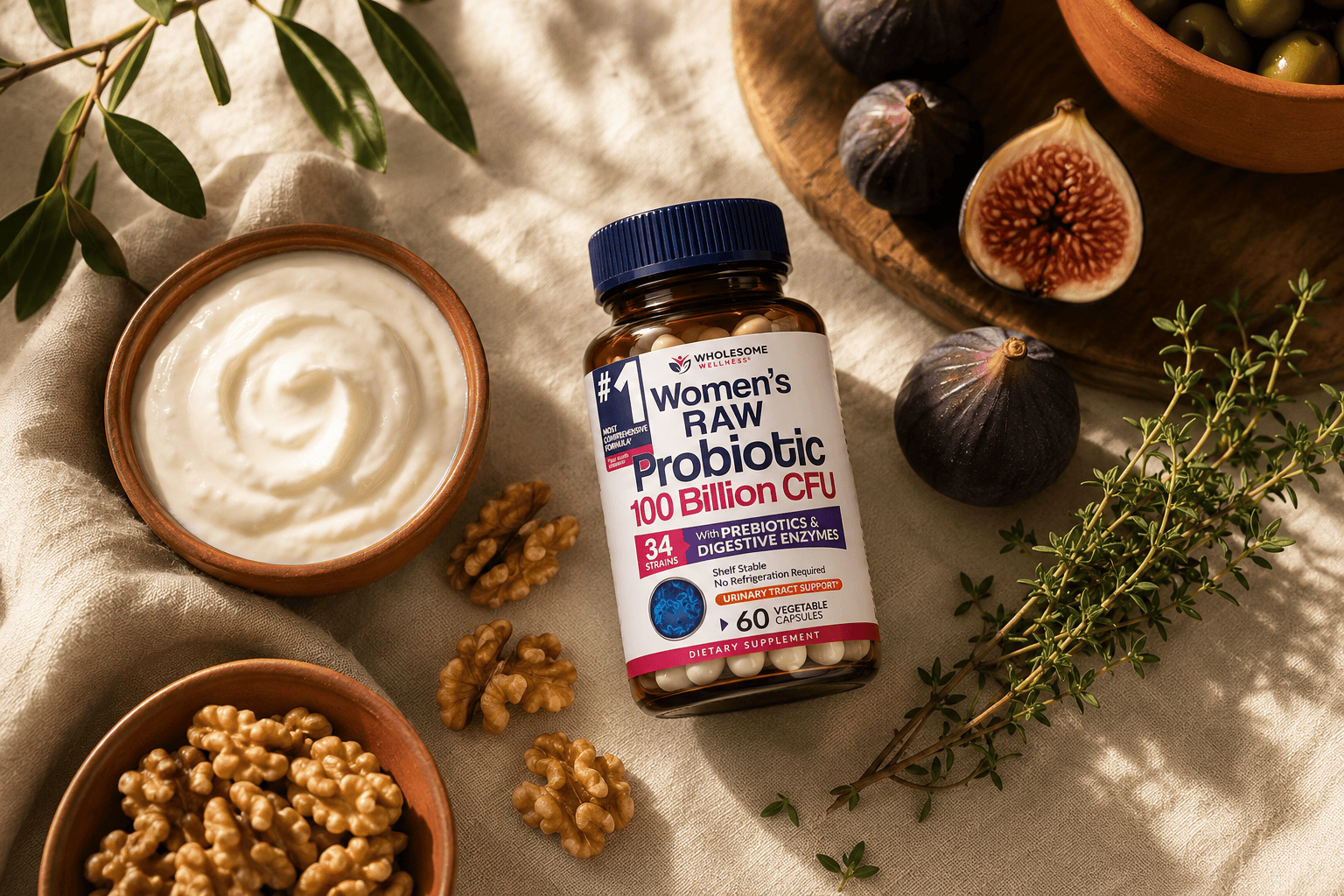
Quick verdict: Is Physician’s Choice a good probiotic? For most people, yes. It’s a solid, fairly priced option with 60 billion CFU across 10 strains plus a prebiotic fiber blend, which is more than many budget probiotics offer. What it won’t do is fix cravings on its own. It works best as a support to fiber-rich, real-food meals, not a replacement for them. The full breakdown is below.
Probiotics won’t fix cravings that are coming from a meal missing protein and fiber, but gut health genuinely does influence hunger signals, and that’s a connection most reviews of this product never make.
I get asked a lot whether a gut health supplement is worth adding on top of the meal changes I already talk about here. The honest answer is: it depends what’s actually driving your cravings. So I dug into Physician’s Choice Probiotics specifically to figure out where it actually fits.
The belief flip here is simple: your gut isn’t separate from your cravings. It’s part of the same system. But a probiotic is support, not a replacement for the meal structure that’s actually doing the heavy lifting.
What’s Actually in It
Physician’s Choice delivers 60 billion CFU across 10 probiotic strains, including Lactobacillus acidophilus and plantarum, plus Bifidobacterium lactis and longum, alongside an organic prebiotic blend of inulin and arabinogalactan. The prebiotic piece matters more than people realize; probiotics without something to feed them tend to pass through without doing much.
What nobody tells you about most gut health advice: the supplement gets all the credit, but the food you’re eating around it is what determines whether it actually works. Prebiotics feed the bacteria you’re introducing. Without fiber-rich meals alongside it, you’re working against the exact thing you’re trying to fix. For a full breakdown of what those meals should look like, I put together the Balanced Plate Method.
The capsules are delayed-release and acid-resistant, meaning they’re built to survive stomach acid and actually reach the gut instead of breaking down before they get there. No refrigeration needed, one capsule a day.
The Gut-Cravings Connection, Explained Simply
Your gut bacteria influence more than digestion. They play a role in hunger signaling, mood regulation, and how your body processes the food you eat. An imbalanced gut microbiome has been linked to increased cravings, particularly for sugar and refined carbs, because certain less-beneficial bacteria strains actually thrive on that kind of fuel and can influence you to crave more of it.
I noticed this firsthand once I started paying attention to my own gut health alongside meal structure. It wasn’t an overnight fix, but the more erratic craving days became less frequent once digestion evened out.
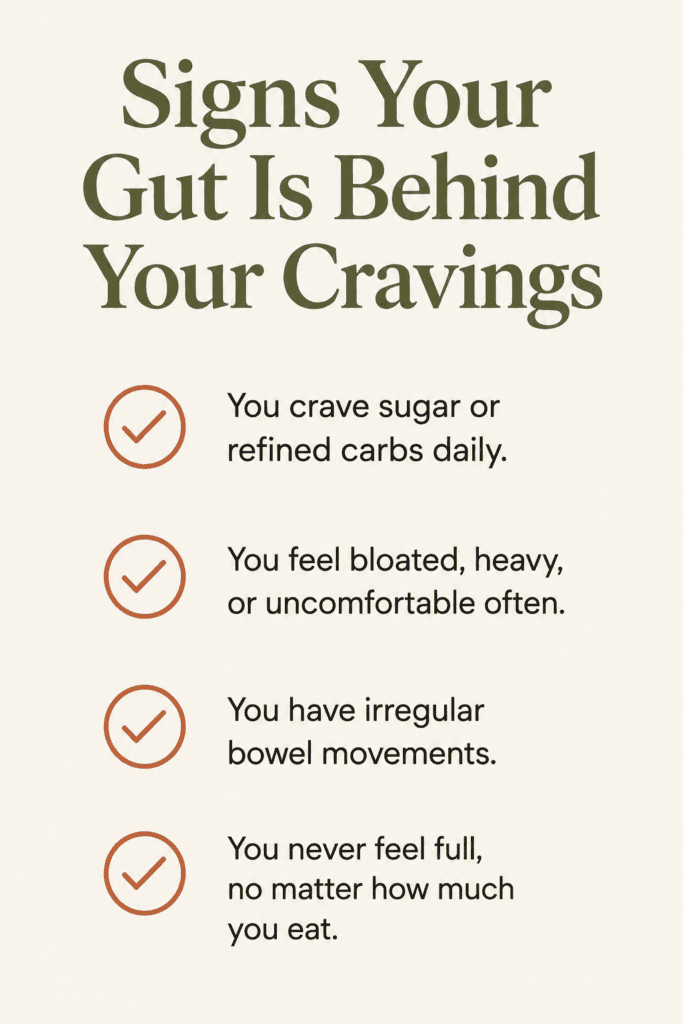
If you’re not sure whether your gut is actually part of the problem, these are the signs worth paying attention to.
Who This Actually Helps
If you deal with regular bloating, inconsistent digestion, or cravings that seem to spike out of nowhere even when your meals are solid, this is the kind of support worth considering. It’s not a replacement for fixing meal structure first; it’s a layer on top of it once that’s already in place.
Where It Falls Short
Being fully transparent here: Physician’s Choice is manufactured in GMP-certified facilities, but it doesn’t carry third-party purity certifications like NSF or USP, which some more expensive brands do. Some users report mild bloating or gas during the first week or two as their gut adjusts. That’s common with most high-CFU probiotics, not unique to this one, but worth knowing going in.
How It Compares to Strain-Specific Alternatives
Physician’s Choice takes a broad-spectrum approach: 10 strains at high volume, aimed at general gut support rather than one specific clinical outcome. That’s different from something like a single-strain Lactobacillus gasseri product, which some research ties more specifically to visceral fat and appetite regulation. If you already know you’re targeting something specific rather than general gut support, Swanson’s Lactobacillus Gasseri is worth comparing before you buy. For most people dealing with general bloating, inconsistent digestion, and craving spikes, the broad-spectrum approach is the more sensible starting point.
Who This Is Not For
If you’re dealing with a diagnosed digestive condition like SIBO, severe IBS, or an autoimmune gut condition, this is a general-support formula, not a clinical-strain product built for those situations, and it’s worth talking to a doctor about strain-specific options instead.
If cravings are your main problem and your meals aren’t yet consistent, start with food first. A probiotic on top of inconsistent meals won’t move the needle much on its own.
Timing matters more than people expect with probiotics generally. Taking it with your first meal of the day, rather than on an empty stomach, gives the acid-resistant capsule a more stable environment to survive the trip through your stomach. Consistency matters more than the exact time of day, missing a day here and there won’t undo progress, but stopping and restarting repeatedly will.
My Honest Take
For the price point, typically $25-35 depending on where you buy it, this sits in a reasonable middle ground. It’s not the most premium probiotic on the market, but it’s not cutting corners either. If you’re already eating consistently and want to address the gut piece of the cravings puzzle, this is a reasonable place to start.
Before you add a supplement, make sure your meal structure is actually solid first. A probiotic layered on top of inconsistent meals won’t do much on its own. If food is still the bigger gap for you, these gut-supportive foods are the place to start before reaching for a bottle.

Free printable
Hungry again at 9pm?
Get the free printable Night Hunger Snack List: 10 Mediterranean snacks with exact portions and protein counts, for the evenings when cravings hit. Enter your email and download it instantly.
Free. No spam. Unsubscribe anytime.
FAQ
Is Physician’s Choice a good probiotic?
It’s a good mid-range choice. The combination of multiple Lactobacillus and Bifidobacterium strains with a prebiotic blend is well designed, and the price is reasonable. It’s not a cure for cravings or digestive issues, and results depend heavily on what else you eat.
Does Physician’s Choice Probiotics help with cravings directly?
Not directly. It supports gut health, which can influence craving patterns over time, but it’s not a standalone fix for cravings coming from meal structure.
How long before you notice a difference?
Most people report noticing digestive changes within 1-3 weeks of consistent daily use.
Is it safe to take alongside a real food approach to cravings?
Yes. It works best as a support layer on top of consistent, balanced meals, not as a replacement for them.
Does it need to be refrigerated?
No. The capsules are shelf-stable and don’t require refrigeration.
Should I take it with food or on an empty stomach?
With food, ideally your first meal of the day. This gives the capsule a more stable environment to survive digestion intact, though the delayed-release design means it’s built to handle either.
Bottom Line
If your gut health feels like the missing piece after your meals are already dialed in, Physician’s Choice Probiotics is worth a look. If cravings are still your main issue, start with meal structure first. The Cravings Control Reset walks through exactly that.
Ribert
About Ribert Rodriguez
Ribert is the founder of EnergiSource Wellness. He researches and writes every article on this site personally, cross-checking claims against published research rather than relying on generic wellness advice. His approach is rooted in the Mediterranean framework, built from years of testing meal structures on himself after struggling with cravings, late-night eating, and low energy.