The signs your gut health is affecting your hunger and mood are almost never the ones people expect. Most people think of gut health problems as digestive symptoms: bloating, gas, irregular bowel movements, and stomach discomfort. Those are gut health signals. But they are not the ones that most directly impact how hungry you feel, how urgently you crave sugar, and how your mood shifts through the afternoon and evening. The hunger and mood signs of poor gut health are the afternoon energy crash, the sweet craving that fires 90 minutes after a full meal, the inexplicable irritability before dinner, and the constant low-grade hunger that no meal seems to fully resolve. If these are your daily experience, your gut bacteria are almost certainly involved.
I spent a long time treating the afternoon craving and the evening mood drop as separate problems with separate causes. The craving was a willpower issue. The irritability was stress. The hunger that returned too fast after lunch was a portion size problem. None of those framings were accurate.
When I started reading about the gut-brain axis and specifically about how gut bacteria regulate serotonin, ghrelin, and dopamine, the pattern became clear. Every single symptom I was attributing to separate causes was downstream of the same root: gut bacteria imbalance that was disrupting the hormone signals controlling hunger, mood, and cravings simultaneously.
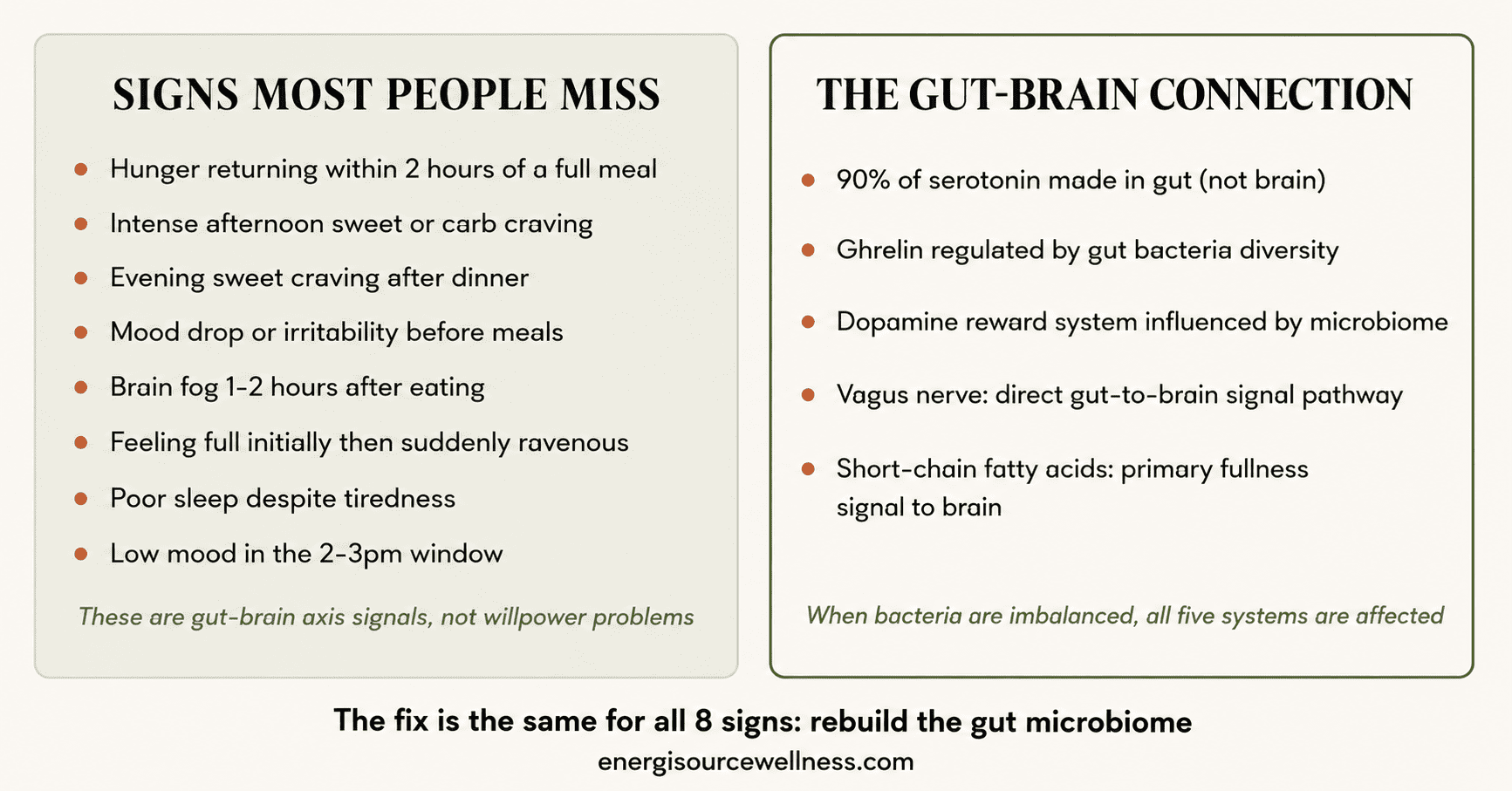
What nobody tells you is that the gut-brain connection is bidirectional and constant. Your gut bacteria are not just processing food. They are producing estimated 90 percent of your body’s serotonin, regulating your hunger hormone ghrelin, influencing your dopamine reward system, and communicating with your brain through the vagus nerve on a second-by-second basis. When those bacteria are imbalanced the downstream effects show up not just in your digestion but in your hunger patterns, your craving intensity, your mood stability, and your energy across the day.
This article connects the signs to the mechanisms so you can recognize whether your gut health is involved in what you are experiencing and know what to do about it. For the full probiotic food and prebiotic food frameworks that address these signs at the root, best probiotic foods for gut health and hunger control and prebiotic foods that feed gut bacteria and reduce cravings cover those in detail.
Why gut bacteria affect hunger and mood simultaneously
The gut-brain axis is the bidirectional communication network between the gut and the brain. It operates through four primary pathways: the vagus nerve (a direct neural connection running from the brainstem to the intestines), the immune system (inflammatory signals that travel from the gut to the brain), the endocrine system (hormones produced in the gut that affect appetite and mood), and the enteric nervous system (the 500 million neurons lining the digestive tract that process and transmit information independently).
Gut bacteria are not passive residents in this system. They actively produce neurotransmitters, regulate hormone output, modulate immune signaling, and influence which messages travel through the vagus nerve to the brain. When gut bacteria are diverse and balanced the signals they send support stable mood, predictable hunger, and manageable cravings. When gut bacteria are imbalanced the signals shift and the hunger and mood effects are often the most noticeable downstream consequences.
Three specific mechanisms explain most of the hunger and mood signs associated with poor gut health.
Mechanism 1: Serotonin production
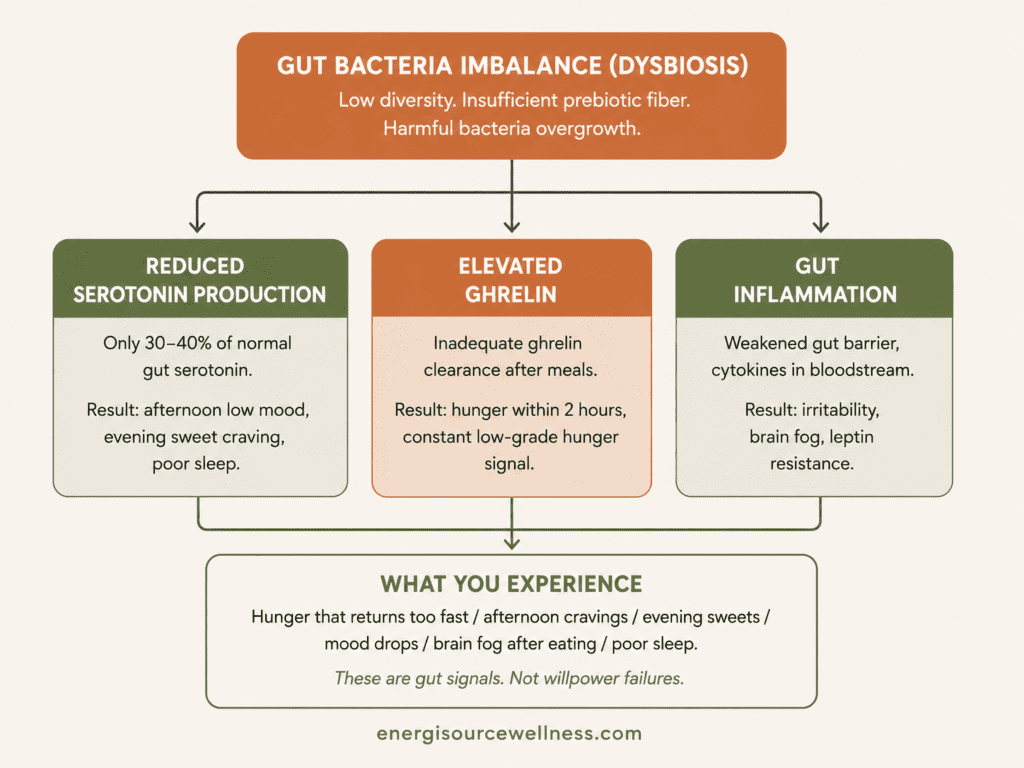
Approximately 90 percent of the body’s serotonin is produced in the gut, not the brain. Enterochromaffin cells in the gut lining produce serotonin in response to short-chain fatty acids generated when gut bacteria ferment prebiotic fiber. When gut bacteria are diverse and well-nourished by prebiotic fiber, serotonin production is adequate and the mood, appetite suppression, and sleep quality effects of normal serotonin levels are maintained. When gut bacteria are imbalanced and prebiotic fiber is inadequate, serotonin production falls, and the brain compensates by driving cravings for carbohydrates and sweets as the fastest available route to raising tryptophan levels and restoring serotonin through a dietary pathway.
Mechanism 2: Ghrelin and hunger hormone regulation
Ghrelin, the primary hunger hormone, is not only produced by the stomach. Its production rate and clearance rate are both influenced by gut bacteria diversity. People with diverse, well-nourished gut microbiomes tend to have healthier appetite signaling in early research, though the findings are still developing. Gut bacteria imbalance produces chronically elevated ghrelin that makes hunger signals more frequent, more intense, and more difficult to suppress through normal meal eating.
Mechanism 3: Inflammation and the gut-brain barrier
When gut bacteria are imbalanced and prebiotic fiber is insufficient, the cells lining the large intestine are inadequately fueled by butyrate (a short-chain fatty acid produced from prebiotic fermentation). The gut barrier weakens and inflammatory molecules leak into the bloodstream. These inflammatory cytokines travel to the brain where they lower the threshold for amygdala activation (the brain’s threat detection center), producing the irritability and mood instability that many people experience between meals. They are also linked with leptin resistance, which may make hunger harder to switch off.
8 signs your gut health is affecting your hunger and mood
Sign 1: Hunger returns within 2 hours of a full meal
This is the most direct and consistent sign that gut bacteria are involved in your hunger pattern. When gut bacteria are imbalanced, ghrelin is inadequately suppressed after eating. The meal does not trigger the same degree of ghrelin clearance that a well-nourished microbiome would produce. By 90 to 120 minutes after eating, ghrelin has returned to near pre-meal levels and the hunger signal fires again regardless of how much food was consumed. This is the mechanism described in detail in why am I hungry 2 hours after eating. When meal structure improvements (protein above 20 grams, healthy fat, prebiotic fiber from legumes) do not fully resolve the 2-hour hunger pattern after 2 to 3 weeks of consistent application, gut bacteria imbalance is likely contributing to the persisting ghrelin dysregulation.
Sign 2: Intense afternoon sweet or carb craving
A sweet or carbohydrate craving that fires reliably in the 2 to 4pm window and feels more urgent than a preference for something sweet is a serotonin signal from the gut. Afternoon is when serotonin naturally begins its daily decline alongside falling cortisol. In a person with adequate gut bacteria diversity and serotonin production, this decline is gradual and manageable. In a person with gut bacteria imbalance and reduced gut-based serotonin production, the serotonin decline feels more dramatic and the compensatory craving for carbohydrates and sweets is more intense and urgent. The craving is the gut-brain axis requesting carbohydrates as a fast route to raising tryptophan and restoring serotonin.
Sign 3: Evening sweet craving after dinner despite eating enough
The evening sweet craving that persists even after a complete, satisfying dinner is one of the most reliable signs of gut-based serotonin insufficiency. Serotonin reaches its daily low point in the evening hours, and people with low gut bacteria diversity experience this drop more severely than people with diverse, well-nourished microbiomes. The brain responds to the serotonin low by driving cravings for sweet or starchy food as the fastest available dopamine and serotonin boost. If the evening sweet craving persists despite eating properly structured dinners with tryptophan-rich foods, the gut bacteria producing serotonin precursors are likely insufficient in number or diversity.
Sign 4: Irritability or mood drop before meals
Feeling irritable, short-tempered, or emotionally flat in the period before eating is a hunger signal that has been amplified by gut bacteria imbalance. Ghrelin, when chronically elevated from gut bacteria dysregulation, produces not just physical hunger but neurological effects including increased irritability, reduced stress tolerance, and heightened emotional reactivity. The gut-derived inflammatory cytokines from a compromised gut barrier lower the amygdala threshold simultaneously, making the same emotional stimulus feel more threatening than it would in a well-regulated gut environment. The person who becomes disproportionately irritable when slightly hungry is frequently experiencing this gut-driven amplification of a normal hunger signal.
Sign 5: Brain fog 1 to 2 hours after eating
Cognitive impairment, difficulty concentrating, or a heavy mental fog arriving within 1 to 2 hours of a meal is the blood sugar crash pattern amplified by gut bacteria imbalance. Poor gut health reduces insulin sensitivity and impairs the regulation of glucose absorption from meals. The same meal that produces a moderate blood sugar curve in a person with good gut health produces a sharper spike and faster crash in a person with gut bacteria imbalance. The brain, which runs almost exclusively on glucose, experiences the blood sugar drop as a cognitive emergency that manifests as brain fog. Gut bacteria imbalance does not cause blood sugar instability directly but it amplifies the blood sugar response to meals through the insulin sensitivity pathway.
Sign 6: Feeling full initially then suddenly ravenous
The pattern of feeling completely satisfied immediately after eating and then becoming intensely hungry within 45 to 60 minutes without warning is a specific gut bacteria signal. It represents inadequate short-chain fatty acid production that means the initial fullness signal from the meal is not being sustained by the gut-derived GLP-1 and peptide YY release that normally extends satiety for 3 to 5 hours. When butyrate and propionate production is low from inadequate prebiotic fiber and gut bacteria diversity, the gut-derived fullness signals fade quickly and hunger returns abruptly rather than gradually.
Sign 7: Poor sleep despite tiredness
Difficulty falling asleep or staying asleep despite feeling tired is connected to gut health through two pathways. The first is melatonin: approximately 400 times more melatonin is produced in the gut than in the pineal gland, and gut bacteria are essential to this production through the same serotonin-to-melatonin conversion pathway. The second is cortisol: gut bacteria imbalance and the resulting gut inflammation activate the HPA (hypothalamic-pituitary-adrenal) axis, producing elevated evening cortisol that directly suppresses melatonin and disrupts sleep onset. Poor sleep then further disrupts gut bacteria balance and worsens ghrelin and leptin dysregulation the following day, creating a self-reinforcing cycle.
Sign 8: Low mood or flat energy in the 2 to 3pm window
A consistent mood or energy low in the early to mid afternoon that feels more like an emotional flatness than physical tiredness is the combined effect of falling serotonin, declining cortisol (which naturally drops in the afternoon), and the gut bacteria imbalance that amplifies both. In people with healthy, diverse gut microbiomes, the afternoon serotonin and cortisol decline is gradual and the mood and energy effects are minimal. In people with gut bacteria imbalance, the afternoon window exposes the inadequacy of gut-based serotonin production in a way that feels like a daily low point.
>> Want to rebuild the gut bacteria that regulate hunger and mood?
The Full Plate Method app builds Mediterranean meals combining prebiotic and probiotic foods that address gut bacteria imbalance at the root. Free forever. Build gut-health meals free
How to tell if gut health is the primary cause
Most of the signs above can have causes other than gut bacteria imbalance. Hunger returning within 2 hours can be a meal composition problem independent of gut health. Afternoon sweet cravings can be a blood sugar pattern from refined carbohydrates in the lunch rather than gut bacteria serotonin deficit. The distinction matters because the primary fix differs.
Gut bacteria imbalance is likely a significant factor if the following are true simultaneously.
• Multiple signs from the list above are present, not just one in isolation
• Improving meal structure (adding protein above 20 grams, healthy fat, legume fiber) has not fully resolved the hunger and craving pattern after 2 to 3 weeks of consistent application
• The patterns are consistent across days regardless of what was eaten the previous day
• The mood and energy effects (irritability before meals, afternoon low mood, brain fog after eating) are present alongside the hunger signs
• Poor sleep is a regular feature alongside the hunger and mood signs
When these five conditions are present together, gut bacteria imbalance is almost certainly contributing to the overall pattern and the dietary fix needs to address the microbiome directly rather than just the meal structure.
The Mediterranean fix for gut-driven hunger and mood signs
The Mediterranean dietary pattern addresses gut bacteria imbalance through three simultaneous actions: introducing beneficial bacteria through probiotic foods, feeding those bacteria with diverse prebiotic fiber sources, and reducing the refined sugar and processed food that feeds harmful bacteria and amplifies the dysbiosis.
Step 1: Add daily probiotic foods for 2 to 4 weeks
Plain Greek yogurt at breakfast, sauerkraut or kimchi at lunch, and miso at dinner provides three different bacterial strains at three meals daily. This diversity of sources feeds different beneficial bacteria populations more effectively than a single probiotic source consumed in large quantities. For targeted strain support alongside food sources, Physician’s Choice Probiotics 60 Billion CFU provides 10 diverse strains with organic prebiotic fiber in one capsule, making it the most complete supplement equivalent to the food-first approach for people who want additional targeted support.
Step 2: Add prebiotic fiber from legumes daily
Half a cup of chickpeas or lentils at every lunch provides the prebiotic fiber that feeds the beneficial bacteria introduced through probiotic foods and sustains the existing resident beneficial bacteria. Without adequate prebiotic fiber the probiotic bacteria from yogurt and kefir die within 3 to 5 days and the gut bacteria population cannot produce the short-chain fatty acids that drive the fullness, serotonin, and mood benefits.
Step 3: Add a targeted probiotic strain for the hunger-hormone axis
For the specific connection between gut bacteria and hunger hormone regulation, Swanson Lactobacillus Gasseri is the most research-backed targeted strain for metabolic support and hunger hormone regulation available at an accessible price point. It can be taken alongside the food-first approach for targeted support of the ghrelin and leptin regulation pathway specifically.
Step 4: Remove the primary gut bacteria disruptors
Refined sugar and processed food feed harmful gut bacteria that compete with beneficial bacteria for resources. Reducing these foods is not about restriction. It is about removing the food supply of the harmful bacteria that are producing the inflammatory cytokines and disrupting the serotonin and ghrelin pathways. The Mediterranean framework does this naturally by replacing processed food with whole Mediterranean ingredients rather than requiring explicit elimination of any food category.
The timeline of improvement
Some people notice changes in craving intensity and hunger over several weeks of consistent daily probiotic and prebiotic food consumption. The mood and energy effects take slightly longer, typically 3 to 5 weeks, because the serotonin production capacity of the gut increases gradually as beneficial bacteria populations grow in response to consistent prebiotic fiber supply. The inflammation-mediated effects (irritability, brain fog, poor sleep) may improve over several weeks as gut barrier integrity improves with adequate butyrate production from prebiotic fermentation.
Frequently asked questions
Can gut health really cause mood problems?
Yes, directly and through multiple mechanisms. Approximately 90 percent of the body’s serotonin is produced in the gut. When gut bacteria are imbalanced this serotonin production falls, and the mood effects of lower serotonin (flat affect, increased emotional reactivity, reduced stress tolerance) become apparent. Gut bacteria imbalance also produces inflammatory cytokines that travel to the brain and lower the threshold for amygdala activation, making emotional responses feel more intense and harder to regulate. The connection between gut health and mood runs through real biology. An estimated 90 percent of the body’s serotonin is produced in the gut, and the gut-brain axis, the two-way communication line between digestive and nervous systems, is an active and growing area of research rather than a settled, fully mapped pathway.
How do I know if my hunger is gut-related or just meal structure?
The clearest distinction is whether improving meal structure (adding protein above 20 grams, healthy fat, and legume fiber to every meal) eases the hunger pattern over a few weeks. If meal structure improvements significantly reduce hunger within that window, the primary cause was meal composition. If the hunger and craving patterns persist despite consistent meal structure improvement for 3 or more weeks, gut bacteria imbalance is likely contributing and addressing the microbiome directly through probiotic and prebiotic foods becomes the necessary next step.
How long does it take to fix gut health for hunger and mood?
Some people notice changes in craving intensity and hunger over several weeks of consistent daily probiotic food and prebiotic fiber consumption. Changes in mood and energy, if they come, tend to take longer. The full restoration of gut bacteria diversity to the level that produces optimal hunger hormone regulation and serotonin production takes 6 to 12 weeks of consistent Mediterranean eating with daily probiotic and prebiotic food inclusion. The changes are not linear. Most people report that the improvement feels gradual until a point around week 3 to 4 when the changes become noticeably consistent rather than intermittent.
Do I need a probiotic supplement or will food work?
For most people starting from a low gut bacteria diversity baseline, probiotic foods are sufficient when consumed consistently from multiple sources daily (yogurt at one meal, sauerkraut or kimchi at another, miso at a third). The diversity of strains from rotating multiple food sources typically exceeds what single-strain supplements provide. A multi-strain supplement like Physician’s Choice Probiotics becomes useful when food-first approaches have not produced expected changes after 4 weeks, when recovering from antibiotic use, or when specific strain support for the hunger hormone axis is wanted alongside the food approach.
Can stress cause gut bacteria imbalance?
Yes. Elevated cortisol from chronic stress directly disrupts gut bacteria balance through two pathways. First, cortisol reduces the blood flow to the gut and slows the motility that moves food and bacteria through the digestive system, creating an environment where harmful bacteria are more likely to proliferate. Second, the stress-induced changes in gut motility alter the pH and oxygen levels in different gut compartments, which selectively favors bacteria that thrive in those altered conditions over the beneficial bacteria that prefer stable gut conditions. This is why stress management is always part of the Mediterranean approach to gut health, not just diet.
Free printable
Hungry again at 9pm?
Get the free printable Night Hunger Snack List: 10 Mediterranean snacks with exact portions and protein counts, for the evenings when cravings hit. Enter your email and download it instantly.
Free. No spam. Unsubscribe anytime.
The bottom line
The signs your gut health is affecting your hunger and mood are almost never the obvious digestive symptoms. They are the afternoon craving that feels urgent, the hunger that returns within 2 hours of a full meal, the evening sweet pull that persists despite a complete dinner, the irritability before meals that feels disproportionate, and the brain fog that arrives reliably after eating. All eight signs described in this article are connected to the same root: gut bacteria imbalance that disrupts serotonin production, amplifies ghrelin, and generates the inflammatory cytokines that make mood and hunger harder to regulate.
The Mediterranean approach addresses all eight signs simultaneously by introducing beneficial bacteria through probiotic foods, feeding those bacteria with prebiotic fiber from legumes, and replacing the refined sugar and processed food that feeds harmful bacteria and sustains the dysbiosis. The timeline is 2 to 5 weeks for meaningful improvement in the hunger and mood signs. The foods that drive the improvement are the same foods that have been at the center of Mediterranean eating for generations: Greek yogurt, sauerkraut, chickpeas, garlic, onions, olive oil, salmon, and whole grains.
I did not realize how many of my daily experiences were gut signals until I understood the mechanism. The afternoon craving I had blamed on willpower. The irritability before dinner I had attributed to stress. The mood flatness in the 2pm hour I had assumed was just how I was built in the afternoons. None of those framings were accurate. They were all gut-brain axis signals from a microbiome that was not adequately supported by prebiotic fiber and probiotic foods. The shift that happened when I started eating consistently for gut bacteria diversity was one of the most significant daily quality of life improvements I have experienced around food.
Ribert
>> Want to rebuild gut health that supports hunger and mood?
The 7-Day Mediterranean Meal Plan PDF builds every meal around the probiotic and prebiotic combination that addresses gut bacteria imbalance and the hunger and mood signs it produces. $27, instant download. Get the 7-Day Mediterranean Meal Plan for $27
This article shares personal experience and general nutrition information, not medical advice. If you are experiencing significant mood disorders or digestive health concerns, speak with your healthcare provider.
About Ribert Rodriguez
Ribert is the founder of EnergiSource Wellness. He built this site to share what actually worked for him after years of struggling with cravings, late-night eating, and low energy. His approach is rooted in the Mediterranean framework and a belief that food is one of the most powerful tools for how you think and feel.