Hunger returning 2 hours after a full meal almost always means the meal was missing one or more of the four elements that keep the hunger hormone ghrelin switched off: adequate protein above 20 grams, a healthy fat source, prebiotic fiber from legumes or vegetables, and a slow-digesting carbohydrate. When any of these are absent the meal digests in 90 to 120 minutes instead of 4 to 5 hours and the hunger signal fires again on schedule. This is a meal structure problem, not an appetite problem, and it has a straightforward fix.
I used to eat what felt like a substantial lunch and be genuinely hungry again by 2pm. Not a little peckish. Actually hungry. Stomach growling, difficulty focusing, the kind of hunger that made it hard to think about anything except food. I had eaten a full meal less than two hours earlier.
For a long time I assumed this meant I needed to eat more. So I ate more. The hunger still returned at the same interval. More food was not the answer because volume was not the problem. The composition of what I was eating was the problem.
When I started building meals around the four-element structure that keeps ghrelin suppressed, the 2-hour hunger window disappeared. The same approximate amount of food, structured differently, held me for 4 to 5 hours consistently. The change was not in how much I ate. It was in what I ate and in what combination.
This article explains exactly why hunger returns at the 2-hour mark specifically, which of the four elements your meals are most likely missing, and how to fix it using Mediterranean food principles. For context on how the blood sugar mechanism connects to this pattern, why blood sugar drops after eating covers that in detail.
Why hunger comes back at exactly 2 hours
The 2-hour hunger return is not coincidental. It corresponds precisely to the digestion timeline of a meal that lacks the elements needed to slow gastric emptying and keep ghrelin suppressed.
Here is what happens in the body after a meal that is low in protein, fat, and fiber. Digestion begins immediately in the stomach. Without protein and fat to slow gastric emptying, the stomach empties its contents into the small intestine relatively quickly, typically within 60 to 90 minutes. Blood sugar rises as carbohydrates are absorbed, then falls as insulin clears the glucose from the bloodstream. By the 90 to 120 minute mark, blood sugar has peaked and is falling back toward baseline. Ghrelin, which was temporarily suppressed by the act of eating, begins rising again as the stomach empties. By the 2-hour mark, the brain is receiving a clear hunger signal.
When a meal contains adequate protein, fat, and fiber, the same timeline extends to 4 to 5 hours. Protein slows gastric emptying. Fat does the same and triggers the fullness hormone cholecystokinin. Fiber from legumes or vegetables physically buffers glucose absorption and feeds the gut bacteria that regulate hunger hormones. Together they turn a 2-hour meal into a 4-hour meal without adding calories.
The specific 2-hour window is meaningful because it is exactly how long a refined carbohydrate dominant meal takes to fully digest and clear the satiety signals. It is the blood sugar response timeline of a meal without adequate protein, fat, or fiber, as explained in how to balance blood sugar to stop hunger and cravings. The 2-hour hunger is the blood sugar crash pattern presented as hunger rather than as energy drop.
The 5 reasons your meal is not keeping you full
Reason 1: Not enough protein (the most common cause)
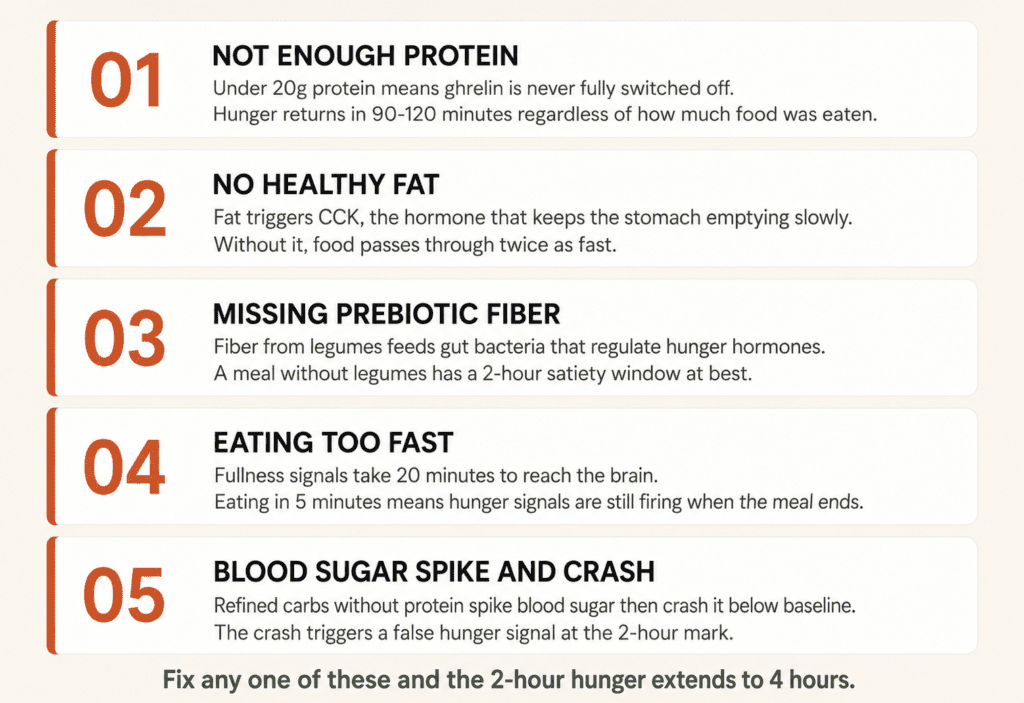
Protein is the most powerful single variable in meal satiety. It suppresses ghrelin directly, triggers GLP-1 release which extends the fullness signal, and slows gastric emptying which delays the hunger return. The threshold matters. A review of the clinical evidence on high-protein diets found that protein in the 20-gram-plus range reliably raises satiety hormones and lowers ghrelin, while lower amounts produce a weaker, shorter-lived effect. The exact hour-by-hour curve varies by person more than the confident numbers thrown around online suggest.
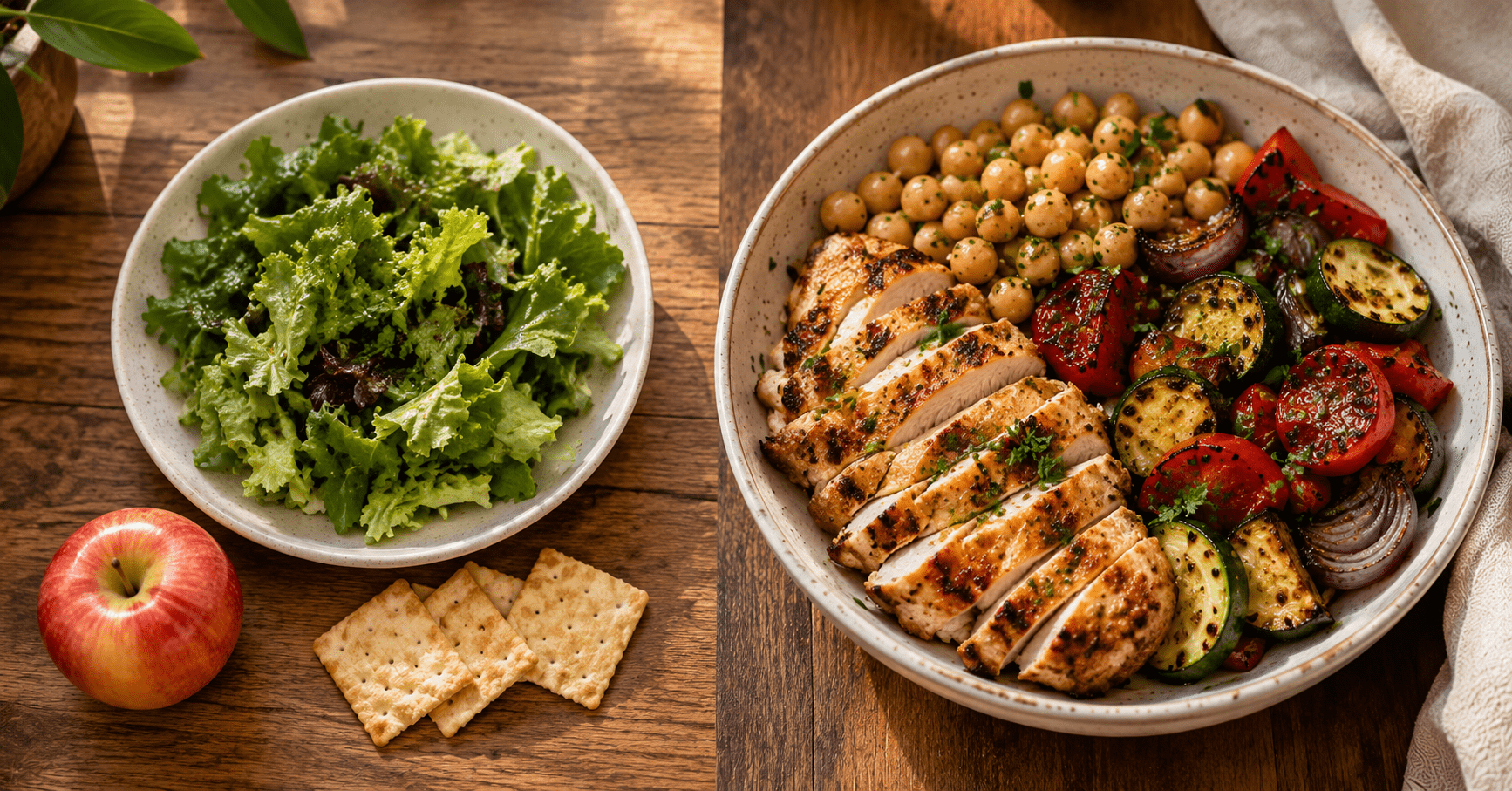
The most common lunches that fall below the threshold: a plain salad without a protein anchor, a sandwich with minimal filling, a soup without protein, and a grain bowl without legumes or meat. Any of these eaten without a meaningful protein source will return hunger within 2 hours regardless of the calorie content. For a complete breakdown of how much protein you need to stay full the answer is 20 grams per meal minimum, distributed consistently across the day rather than concentrated in one meal.
Reason 2: No healthy fat in the meal
Fat triggers cholecystokinin release, a hormone that signals the pyloric valve at the bottom of the stomach to remain partially closed, physically slowing the rate at which food moves into the small intestine. When fat is absent from a meal, food passes through the stomach significantly faster and the hunger signal returns sooner. This is the nutritional mechanism behind the observation that low-fat meals leave most people feeling unsatisfied and hungry relatively quickly after eating.
The Mediterranean approach uses olive oil as the primary fat vehicle because it provides additional blood sugar and anti-inflammatory benefits alongside the satiety mechanism. A salad with olive oil and lemon dressing digests more slowly than the same salad with a fat-free vinaigrette regardless of the other ingredients present.
Reason 3: Missing prebiotic fiber from legumes
Fiber from vegetables provides bulk and some digestive slowing. But prebiotic fiber specifically from legumes, oats, and chia seeds does something additional. It feeds the beneficial gut bacteria that produce short-chain fatty acids, which directly regulate hunger hormone production. A meal without legumes or chia seeds is missing the prebiotic fiber that keeps ghrelin regulated beyond the immediate post-meal window. This is why chickpeas appear in almost every Mediterranean lunch in this site. They are not just a protein source. The 12 grams of fiber per cup specifically extends the satiety window by feeding the gut bacteria involved in hunger hormone regulation.
For people who want to support the gut bacteria side of hunger regulation with a targeted probiotic strain alongside the food changes, Lactobacillus Gasseri has the most direct research connection to metabolic and hunger hormone support. Swanson makes a well-reviewed version at an accessible price.
Reason 4: Eating too fast
Fullness signals take 20 minutes to travel from the stomach to the brain via the vagus nerve. A meal eaten in 5 to 8 minutes means the hunger signal is still firing at the point when a person has consumed enough food. The brain has not yet received the satiety signals and the person often eats more than needed or stops eating before the satiety signal arrives and then feels hungry again quickly because the meal was smaller than it appeared in the moment of eating.
This is one of the reasons that Mediterranean eating culture traditionally involves a longer meal duration, conversation, and a slower eating pace. The practice is not arbitrary. Eating more slowly over 15 to 20 minutes gives the satiety hormones time to communicate with the brain so the meal feels complete rather than incomplete at the end.
Reason 5: Blood sugar spiked and crashed
A meal high in refined carbohydrates and low in protein and fat produces a blood sugar spike followed by a compensatory insulin response that overshoots and drops blood sugar below baseline. The drop in blood sugar registers as hunger even if the total calories consumed were adequate. This is the reactive hypoglycemia pattern that produces the 2-hour hunger window most reliably. The hunger at the 2-hour mark in this case is not a calorie deficit. It is a blood sugar signal asking for fast fuel to recover from the crash. For mornings specifically, the breakfast fix that stuck for me is worth a look.
The fix for this specific pattern is changing the meal composition so that carbohydrates are eaten alongside protein and fat, which slows their absorption and prevents the spike-and-crash cycle. Eating carbohydrates last within the meal, after protein and vegetables, reduces the glucose peak by up to 40 percent as established in the food sequencing research.
>> Want meals that automatically stay full for 4-5 hours?
The Full Plate Method app builds Mediterranean meals with the protein-fiber-fat combination that keeps ghrelin switched off. Free forever. Build a 4-hour meal free
The Mediterranean fix: how to extend every meal to 4-5 hours
Every meal that keeps hunger quiet for 4 to 5 hours consistently has all four elements present. The Mediterranean framework makes this automatic because the traditional meal structure includes protein, olive oil, legumes, and vegetables as the default components of any lunch or dinner. Here is how to apply it.
The four-element meal formula
Element 1: Protein anchor above 20 grams
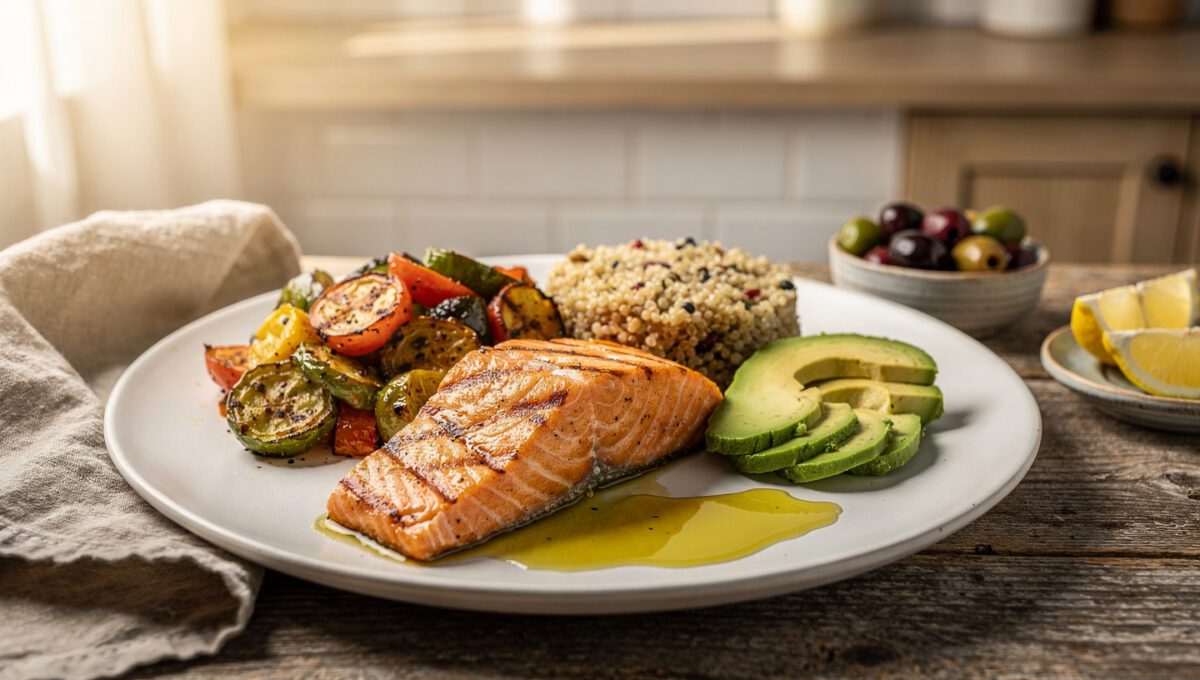
Choose one: grilled chicken (30g per thigh), canned tuna (25g per can), sardines (20g per tin), salmon (34g per fillet), Greek yogurt (22g per cup), eggs (7g each, 2 eggs provides 14g so add a second protein source), cottage cheese (24g per cup), or chickpeas and lentils (15 to 18g per cup as a plant-based option combined with feta or yogurt to reach 20g+).
Element 2: Fat source
Two tablespoons of olive oil as the cooking fat or dressing base. Or avocado. Or walnuts. Or the natural fat in salmon and sardines. The fat does not need to be a large addition. It needs to be present in a quantity sufficient to trigger the CCK response, which two tablespoons of olive oil achieves reliably.
Element 3: Prebiotic fiber from legumes or chia seeds
Half a cup of chickpeas or lentils, or one tablespoon of chia seeds added to a yogurt or smoothie. Chia seeds are particularly efficient because one tablespoon provides 5 grams of prebiotic fiber and expands to 10 times its volume in the stomach, physically slowing digestion for hours. Adding chia seeds to any meal that otherwise lacks fiber is the fastest single-ingredient fix for the 2-hour hunger return.
Element 4: Slow-digesting carbohydrate
Quinoa, sweet potato, whole grain bread, lentils, or oats rather than white rice, white pasta, white bread, or crackers. The slow carbohydrate is eaten last within the meal, after protein and vegetables, which further reduces its glucose impact. This is not about eliminating carbohydrates. It is about choosing the ones that absorb slowly and positioning them at the end of the eating sequence.
What a complete meal looks like in practice
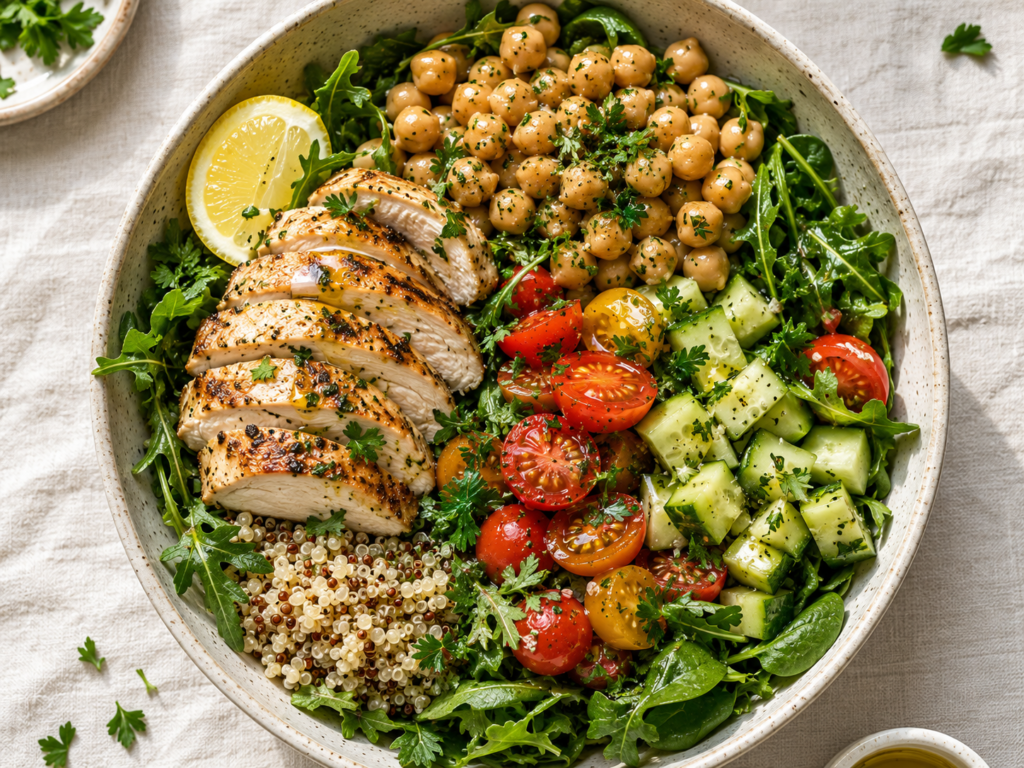
Lunch that lasts 4-5 hours:
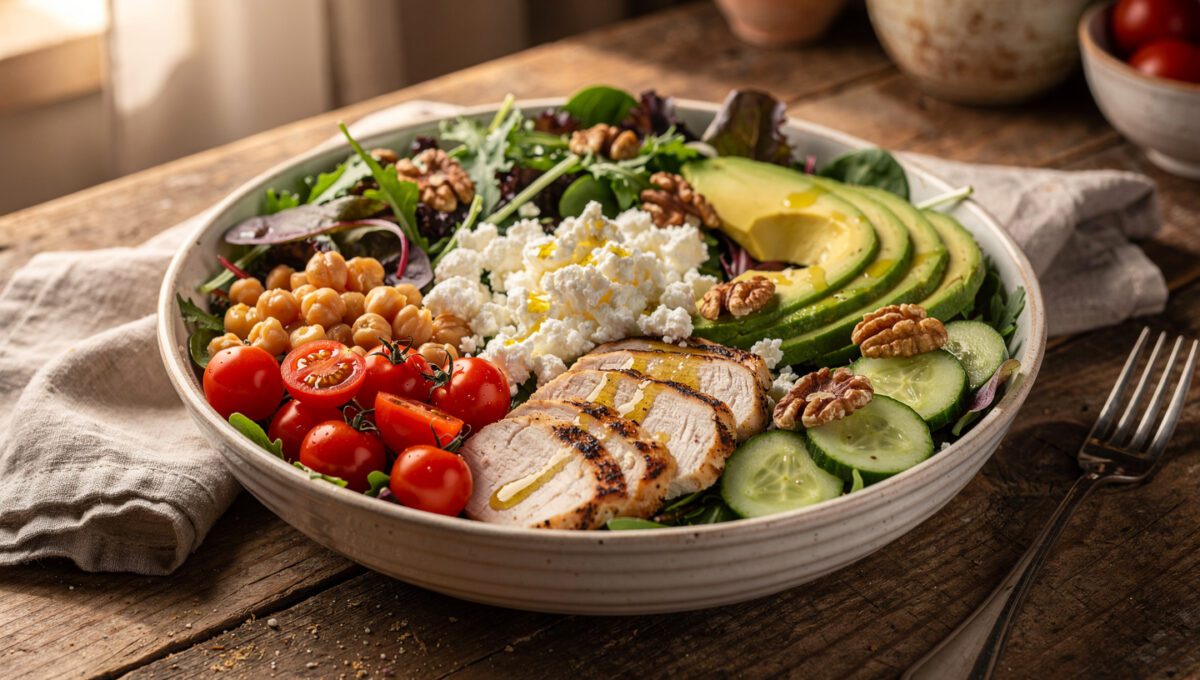
Mediterranean bowl: grilled chicken or tuna, half cup chickpeas, large base of arugula or spinach, diced cucumber and cherry tomatoes, olive oil and lemon dressing, small portion of quinoa eaten last. This hits all four elements: protein above 25g from chicken plus chickpeas, fat from olive oil, prebiotic fiber from chickpeas, slow carb from quinoa eaten after the rest.
Breakfast that lasts 4-5 hours:
Two eggs scrambled in olive oil with spinach and cherry tomatoes, alongside a small cup of Greek yogurt with one tablespoon of chia seeds. Protein from eggs and yogurt combined reaches 30g. Fat from olive oil and full-fat yogurt. Fiber from chia seeds and spinach. No refined carbohydrate spike.
Snack that lasts 2-3 hours:
Sardines on whole grain crackers with a handful of olives. Protein 20g from sardines. Fat from sardine oil and olives. Fiber from crackers. This snack format holds hunger for 2 to 3 hours because it has all three elements in a smaller format.
Quick diagnostic: which element is your meal missing?
Most people’s meals are missing the same one or two elements consistently. Here is a quick way to identify which one is causing the 2-hour hunger pattern.
If you are hungry exactly 2 hours after eating:
Blood sugar crash pattern. Your meal was likely high in refined carbohydrates without enough protein or fat to slow absorption. The glucose peaked and crashed at the 2-hour mark. Fix: add a protein anchor and olive oil to the same meal and eat the carbohydrate last.
If you are hungry within 90 minutes of eating:
Low protein pattern. Ghrelin was never fully suppressed because the protein threshold was not reached. Fix: ensure the meal hits 20 grams of protein minimum from a real food source before adding anything else.
If you are hungry 2-3 hours after eating even when the meal felt substantial:
Missing prebiotic fiber. The meal digested well initially but the gut bacteria did not receive the prebiotic signal that extends the satiety window. Fix: add half a cup of chickpeas, lentils, or a tablespoon of chia seeds to the meal.
If you feel hungry immediately after finishing a meal:
Eating too fast. The satiety signals have not reached the brain yet. The meal is complete but the signal is still in transit. Fix: slow the eating pace to 15 to 20 minutes minimum and wait 10 minutes after finishing before reaching for more food.
Frequently asked questions
Is it normal to be hungry 2 hours after eating?
It is common but not inevitable. Most people who experience consistent 2-hour hunger are eating meals that are missing one or more of the four fullness elements. When meals are structured to include protein above 20 grams, a healthy fat source, prebiotic fiber from legumes, and a slow-digesting carbohydrate, hunger typically does not return for 4 to 5 hours. The 2-hour pattern is a signal about meal composition, not about having an unusually large appetite.
Why am I hungry 2 hours after a big meal?
Volume and satiety are not the same thing. A large meal with the wrong composition digests in 2 hours the same way a small meal with the wrong composition does. If the big meal was primarily carbohydrates with minimal protein and fat, the blood sugar spike and crash pattern produces hunger at the 2-hour mark regardless of total food volume. Ghrelin responds to meal composition, not to meal size.
What foods keep you full the longest?
The foods that keep you full longest are the ones that combine protein, prebiotic fiber, and fat in the same meal or ingredient. Chickpeas provide 15 grams of protein and 12 grams of fiber per cup. Greek yogurt provides 22 grams of protein and probiotics that regulate hunger hormones. Salmon provides 34 grams of protein and omega-3 fatty acids that improve insulin sensitivity. Chia seeds expand in the stomach and provide 10 grams of fiber per two tablespoons alongside 5 grams of protein. Combined in a single meal these ingredients produce a 4 to 5 hour satiety window for most people.
Should I eat more if I’m hungry 2 hours after eating?
Not necessarily more food, but different food. If the 2-hour hunger is consistently present despite eating adequate portions, the issue is composition not quantity. Adding more of the same meal composition will produce more blood sugar instability and the same hunger cycle. The effective response is to restructure the next meal to include a proper protein anchor, fat source, and prebiotic fiber, and to observe whether the hunger pattern changes within three to five days of consistent application.
Can stress make you hungry 2 hours after eating?
Yes. Elevated cortisol from stress directly stimulates ghrelin production and reduces the effectiveness of leptin, your fullness hormone. Stress eating and post-meal hunger can both be amplified by high cortisol regardless of meal composition. The Mediterranean approach addresses this through the foods that directly lower cortisol, including dark leafy greens for magnesium, salmon and sardines for omega-3s, and dark chocolate for flavonoids, alongside the meal structure that keeps blood sugar stable.
The bottom line
Hunger returning 2 hours after a full meal is one of the most consistent and most fixable nutritional patterns. It is almost always caused by a meal that was missing protein above 20 grams, a fat source, or prebiotic fiber from legumes or chia seeds. The Mediterranean meal structure addresses all three in every meal by default, which is why people eating this way consistently report that hunger becomes predictable and manageable rather than constant and urgent. For additional support alongside the meal structure changes, natural hunger hormone support works best as a complement to a properly structured meal rather than a substitute for one.
Start at your next meal. Look at your plate. Ask: is there a protein source above 20 grams? Is there a fat source? Is there a legume or chia seed fiber component? If any of these are missing, add one. Track how you feel at the 2-hour mark. Most people notice the shift within three to five days of consistent application.
The 2-hour hunger cycle was one of the most frustrating daily experiences I had before I understood what was causing it. I was eating full meals. I was not restricting. And I was genuinely hungry again within two hours every single day. When I finally built the four elements into every lunch the pattern stopped so completely that I remember being surprised by it. I looked up at 3pm one afternoon and realized I had not thought about food since noon. That had never happened before. The meal structure was the only thing that changed.
Ribert
>> Want a full week of Mediterranean meals that hold you for 4-5 hours?
The 7-Day Mediterranean Meal Plan PDF builds every meal around the four-element formula that prevents the 2-hour hunger return. $17, instant download. Get the 7-Day Mediterranean Meal Plan for $17
Keep reading
Why Blood Sugar Drops After Eating (And the Mediterranean Fix)
How to Balance Blood Sugar to Stop Hunger and Cravings
The Balanced Plate Method: Build Meals That Keep You Full for 4-5 Hours
How Much Protein Do You Need to Stay Full
Why You Are Always Snacking (And How to Build Meals That Last)
This article shares personal experience and general nutrition information, not medical advice.
About Ribert Rodriguez
Ribert is the founder of EnergiSource Wellness. He built this site to share what actually worked for him after years of struggling with cravings, late-night eating, and low energy. His approach is rooted in the Mediterranean framework and a belief that food is one of the most powerful tools for how you think and feel.